

The modern kitchen is a fascinating landscape, constantly evolving with innovative gadgets designed to simplify our lives and elevate our culinary experiences. Among the most popular and versatile countertop appliances are the slow cooker and the multi-cooker. While they might seem similar at a glance, offering the promise of effortless meals, they each bring unique strengths and functionalities to the table. Deciding which one is the right fit for your home and family can be a culinary conundrum. This comprehensive guide aims to demystify the differences, explore the benefits of each, and help you make an informed decision that suits your cooking style, budget, and kitchen space.
In today’s fast-paced world, kitchen appliances are no longer just tools; they’re partners in creating delicious, wholesome meals efficiently. From air fryers to stand mixers, each gadget promises to streamline your cooking process. However, the sheer volume of choices can be overwhelming, especially when it comes to appliances that appear to overlap in function, such as the classic slow cooker and the increasingly popular multi-cooker. I recently had the opportunity to extensively test a multi-cooker, and its versatility quickly became apparent. This experience highlighted the need for a clear comparison between these two essential countertop devices, illuminating their individual capabilities and helping home cooks understand where each truly shines.
While the specific KitchenAid Multi-Cooker referenced in my initial review may no longer be available, the insights into its functionalities and the broader category of multi-cookers remain highly relevant. This article focuses on the general characteristics and typical features of both slow cookers and multi-cookers available on the market today, ensuring the advice is applicable regardless of specific brands or models.
Slow Cooker vs. Multi-Cooker: Understanding the Core Differences
At first glance, both appliances promise the convenience of unattended cooking, but their operational principles and range of capabilities differ significantly. Understanding these distinctions is crucial for selecting the right one for your culinary needs.
The Traditional Slow Cooker: A Master of Low and Slow
Most home cooks are well-acquainted with the slow cooker, an appliance celebrated for its ability to transform tough cuts of meat and humble ingredients into tender, flavorful dishes with minimal effort. Its primary function is to cook food slowly over several hours at a consistently low temperature. This gentle, prolonged cooking process is ideal for breaking down fibers in meats, melding flavors in stews and soups, and creating incredibly moist results.
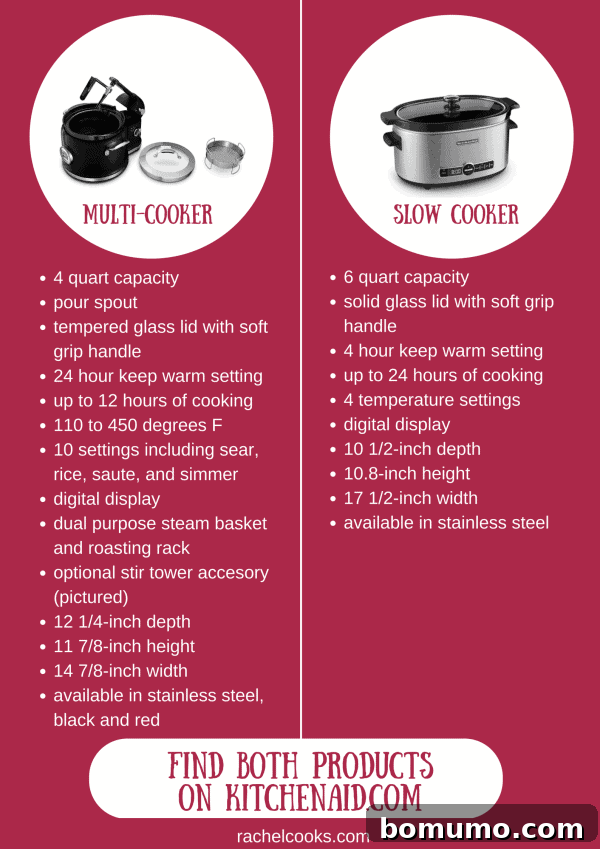
Typical slow cooker settings include ‘Low,’ ‘High,’ and ‘Warm.’ The ‘Low’ setting is perfect for longer cooking times, often 6-8 hours, while ‘High’ speeds up the process to 3-4 hours. The ‘Warm’ setting is invaluable for keeping food at a safe serving temperature after it’s cooked, making it a favorite for potlucks and family gatherings. Some advanced models, like the KitchenAid slow cooker I’ve used, even offer a “medium” setting, providing a nuanced level of control that can be particularly useful for delicate dishes or when adjusting cooking times more precisely. The simplicity of a slow cooker is one of its greatest assets – just add ingredients, set the time, and walk away, returning to a delicious, ready-to-eat meal. Beyond savory dinners like pot roasts and chilis, slow cookers are surprisingly versatile for making hearty breakfast oatmeals, comforting desserts, and even homemade bread.
The Multi-Cooker: A Culinary Swiss Army Knife
The multi-cooker, often colloquially referred to by popular brand names, is a more recent innovation designed to consolidate multiple kitchen appliances into one compact unit. It’s a true jack-of-all-trades, capable of performing a wide array of cooking functions that extend far beyond traditional slow cooking. While it typically includes a slow cooking function, its standout feature is often pressure cooking, which dramatically reduces cooking times by using steam pressure to cook food at higher temperatures.
Beyond pressure and slow cooking, a typical multi-cooker can also sear, sauté, steam, make rice, warm food, and sometimes even make yogurt or sterilize bottles. Many models come with handy accessories like a steamer basket (which often doubles as a roasting rack) and offer digital controls with pre-set programs for various dishes, making cooking incredibly intuitive. The ability to perform several steps of a recipe, such as searing meat and then slow cooking or pressure cooking it in the same pot, significantly reduces cleanup and simplifies meal preparation. Its sleek design and multi-functional capabilities often make it a prime candidate for a permanent spot on your kitchen counter, even serving as a convenient kitchen timer when not actively cooking.
Key Features and Benefits: A Deeper Dive
While both appliances excel at making life easier in the kitchen, their unique attributes cater to different priorities and cooking styles.
The Enduring Appeal of the Slow Cooker
The slow cooker’s charm lies in its simplicity and capacity. Its generous size, often ranging from 4 to 8 quarts, makes it ideal for preparing meals for larger families, entertaining guests, or batch cooking for meal prep throughout the week. Dishes like hearty stews, large roasts, or a big batch of chili truly benefit from its expansive cooking volume.
One of the most significant benefits is its “set it and forget it” nature. You can load ingredients in the morning, go about your day, and return to a perfectly cooked meal without constant supervision. This hands-off approach makes slow cookers indispensable for busy weekdays or when you want to minimize active cooking time. The ‘Keep Warm’ setting, which often activates automatically once cooking is complete, is another fantastic feature, ensuring your meal is ready to serve whenever your family gathers for dinner, without overcooking. The even, low heat also tenderizes less expensive cuts of meat, making them incredibly succulent and flavorful, which can be a boon for budget-conscious cooks.
The Irresistible Versatility of the Multi-Cooker
The multi-cooker has truly captured my affection, primarily due to its astounding versatility and efficiency. The ability to sear, sauté, and simmer all in a single pot is a game-changer for reducing cleanup and creating complex flavors. Imagine browning your meat and vegetables right in the cooking pot before adding liquids and pressure cooking a stew in a fraction of the time it would take on the stovetop or in a slow cooker. This one-pot capability streamlines the cooking process significantly.
Furthermore, the multi-cooker excels at tasks that can be finicky on the stovetop. For instance, it consistently produces perfectly cooked rice—fluffy, distinct grains every time—a feat I often struggled to achieve with traditional methods. The nonstick coating found in many multi-cooker pots also contributes to easier cooking and cleanup. Beyond its practical functions, many multi-cookers boast a sleek, modern design that makes them an attractive addition to any kitchen counter, enhancing both functionality and aesthetics.
Real-World Applications: What You Can Create
To illustrate the practical benefits, let’s look at the diverse range of dishes possible with each appliance, highlighting their unique strengths.
Culinary Creations with the Slow Cooker
My slow cooker has been a workhorse in my kitchen for years, yielding countless delicious meals. I’ve curated an extensive collection of slow cooker recipes on my site, showcasing its incredible versatility across various categories. For more inspiration, you can always explore my slow cooker archives. With the KitchenAid slow cooker, some of my recent favorites include:
- Creamy Cheesy Potatoes: A comforting side dish perfect for gatherings, cooked to perfection with minimal fuss.
- Hearty Beef Stew: The low, slow cooking breaks down tough beef into melt-in-your-mouth tenderness, while flavors meld beautifully.
- Pulled Pork/Chicken: Ideal for sandwiches, tacos, or salads, offering a truly hands-off way to achieve perfectly shredded meat.
- Chili and Soups: Develops deep, rich flavors over hours, resulting in ultimate comfort food.
- Overnight Oats or Breakfast Casseroles: Wake up to a warm, ready-to-eat breakfast.
The slow cooker is truly a champion for large batches and meals that benefit from extended cooking times, consistently delivering tender and flavorful results.
Innovative Dishes with the Multi-Cooker
The multi-cooker quickly became a go-to appliance, allowing me to experiment with its various functions and significantly speed up or simplify cooking processes. Here are some of the dishes I’ve enjoyed making:
- Sautéed and Slow-Cooked Lebanese Green Beans and Beef: I leveraged the multi-cooker’s sauté function to beautifully sear the beef, locking in flavors, before transitioning to the slow cook setting to create a rich and tender beef and green beans recipe. This one-pot method truly showcases its efficiency.
- Speedy Spaghetti Sauce with Browned Meat: Instead of using a separate pan, I browned the ground meat and sautéed vegetables directly in the multi-cooker, then added the sauce ingredients and simmered it for a few hours. This resulted in a deeply flavored, rich sauce with minimal dirty dishes. For a truly quick version, the pressure cook function could also be used after browning. You can see an example of this process on my Instagram.
- Perfectly Steamed Broccoli: Using the dedicated steamer basket, I’ve consistently achieved vibrant, crisp-tender fresh broccoli, retaining maximum nutrients and flavor. This also works wonderfully for other vegetables, fish, or even dumplings.
- Fluffy, Consistent Rice: I’ve made rice numerous times (white, brown, basmati) in the multi-cooker, and the results are always impeccable. The precision of the multi-cooker for rice cooking is so superior that I find myself rarely, if ever, returning to the stovetop for this task.
- Quick Chicken and Vegetable Curries: The ability to sauté aromatic spices and then pressure cook chicken and vegetables results in a flavorful curry in under 30 minutes.
- Hard-Boiled Eggs: Using the pressure cook setting makes peeling hard-boiled eggs incredibly easy and consistent.
Making Your Choice: The Final Verdict
Ultimately, the decision between a slow cooker and a multi-cooker (or both!) depends on your individual cooking habits, kitchen space, and budget. If circumstances permit both the space and financial investment, I enthusiastically recommend owning both appliances. They are highly complementary, each filling distinct roles in the kitchen, allowing you to tackle any recipe with the most appropriate tool. However, if you must choose just one, consider these recommendations:
- Opt for the Multi-Cooker if:
- You have a smaller family (4 members or less) and desire maximum functionality in a single appliance.
- Your kitchen space is limited, and you need one gadget to perform the tasks of many (pressure cooker, slow cooker, rice cooker, steamer, sauté pan).
- You often find yourself short on time for meal preparation and would benefit from the speed of pressure cooking.
- You appreciate the convenience of one-pot cooking, from searing to simmering.
- You already own a basic slow cooker and are looking to expand your culinary capabilities with more advanced features and greater versatility. You will undoubtedly find yourself using it constantly for a wide array of dishes.
- Choose the Slow Cooker if:
- You frequently cook for a larger family, host gatherings, or attend numerous potlucks, where its generous capacity is invaluable.
- Your primary focus is on hands-off, long-duration cooking methods, such as making stews, roasts, and large batches of soups.
- You are budget-conscious, as slow cookers generally represent a more affordable investment compared to multi-cookers.
- You appreciate simplicity and don’t require the advanced functions like pressure cooking or intricate digital presets.
Both slow cookers and multi-cookers are designed to simplify your cooking and bring delicious meals to your table. Your ideal choice will empower you to cook more efficiently and enjoyably, transforming your kitchen into a hub of culinary creativity.
Disclaimer: I received free products from KitchenAid for the purpose of this review. I was not compensated monetarily and was not required to write a positive review. All opinions are always my own.