
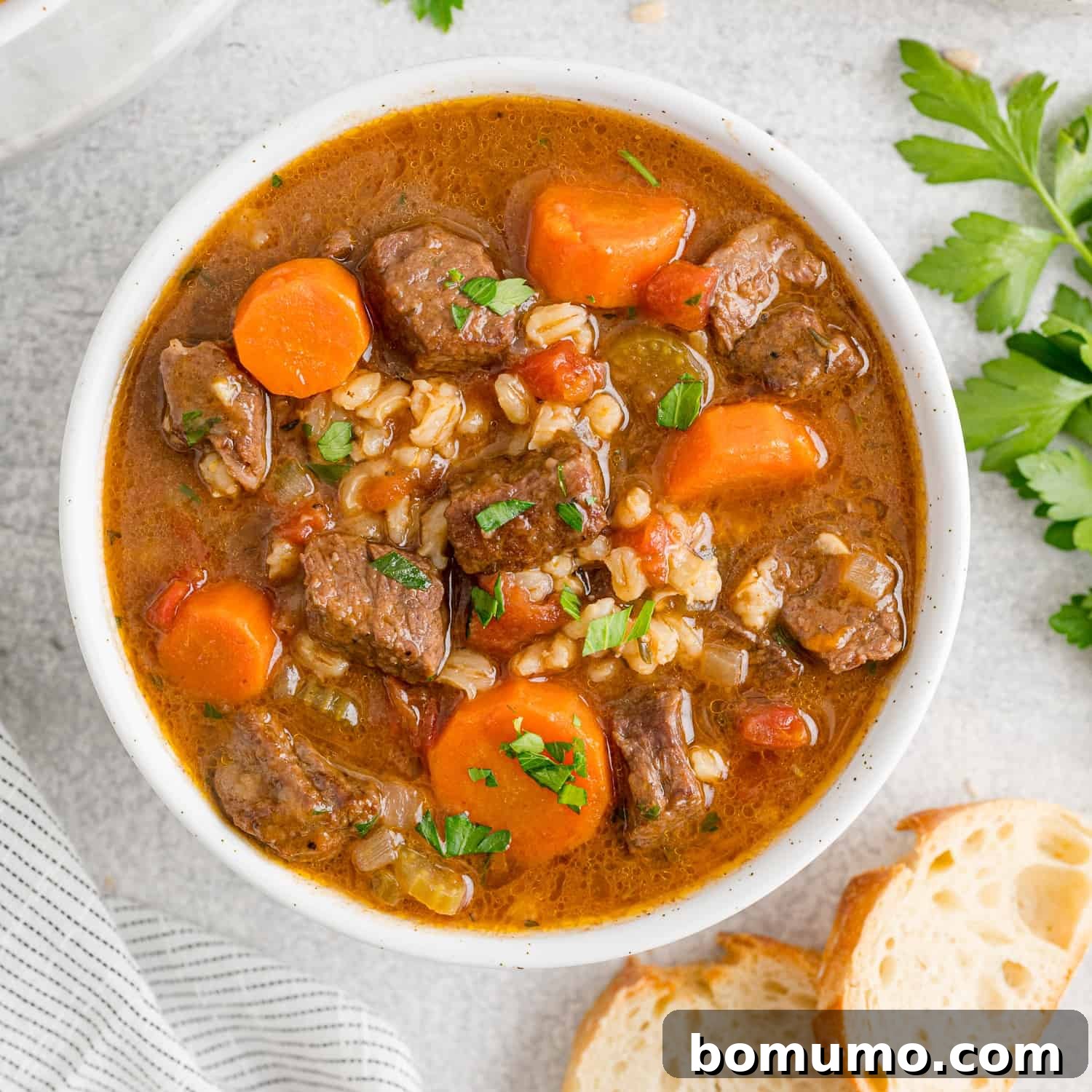
Recipe Overview: Your Guide to Hearty Beef Barley Soup
Why you’ll love it: Prepare to be enchanted by the comforting aroma of hearty beef barley soup as it slowly simmers in your kitchen. This timeless classic is a celebration of robust flavors, brimming with tender, slow-cooked beef, a medley of savory vegetables, and wholesome pearl barley. Every spoonful offers a deeply satisfying and delicious experience, perfect for warming you from the inside out. The secret lies in its gentle, prolonged simmer, allowing the beef to become unbelievably tender and infused with rich flavor.
How long it takes: Approximately 2.5 hours (mostly hands-off simmering)
Equipment you’ll need: A sturdy Dutch oven or a large, heavy-bottomed pot with a lid
Servings: 5 generous servings
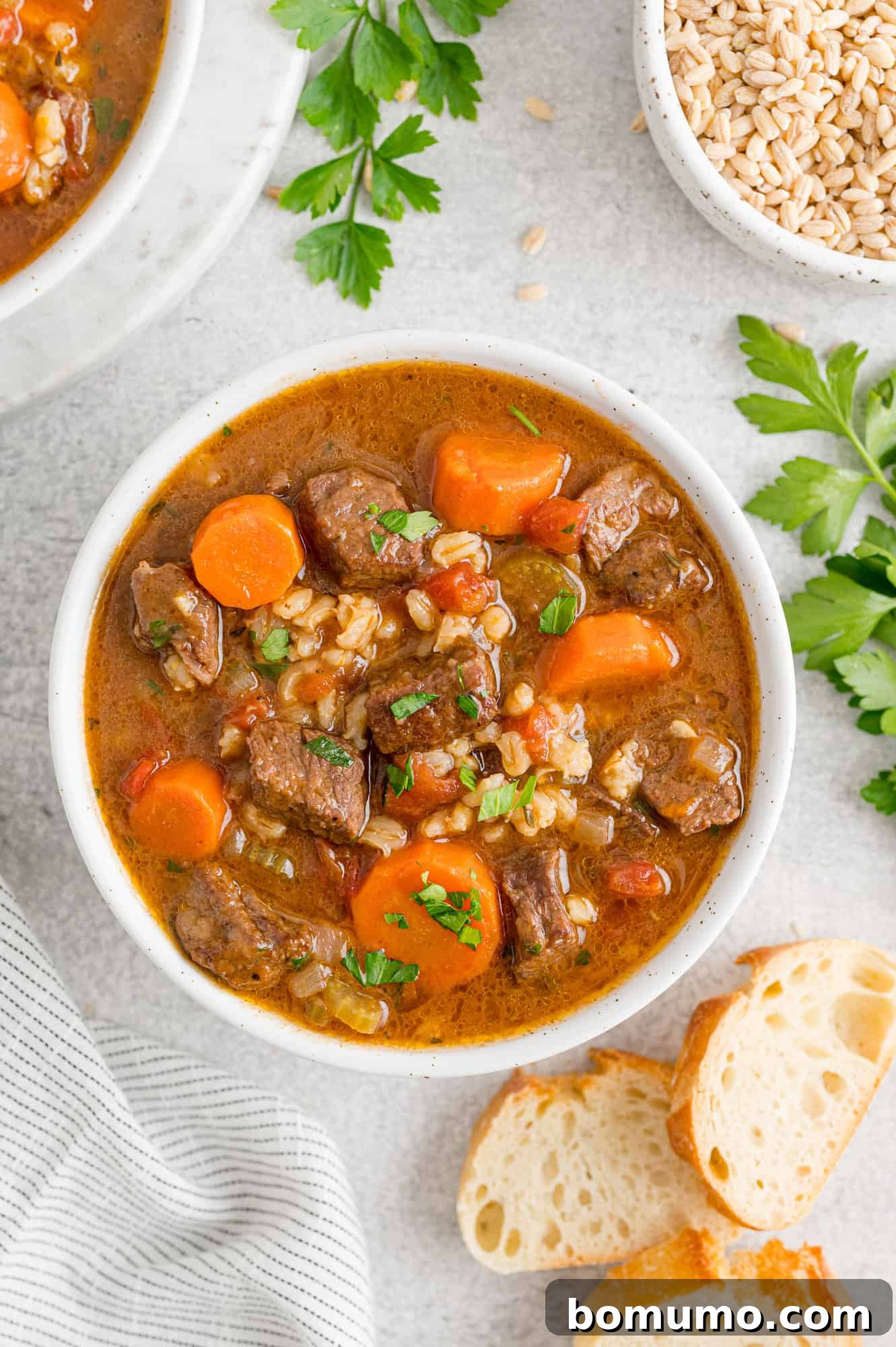
Step into the world of timeless culinary traditions with this authentic beef and barley soup recipe. Far from ephemeral food trends and fleeting fads, this dish embodies a heritage of simple, honest, and profoundly satisfying cooking. It’s a culinary hug in a bowl, a testament to quality ingredients working in harmony to create something truly spectacular without any unnecessary fuss or pretense. This isn’t haute cuisine; it’s hearty, comforting home cooking at its very finest, reminding us of the enduring appeal of classic dishes.
The lineage of beef barley soup stretches back centuries, with its roots often traced to the traditional “Scotch broth” that gained popularity in Scotland. This nutritious and filling soup also found its way into American colonial kitchens, evolving over time into countless beloved variations that have nourished families for generations. Our recipe honors this rich history, offering a well-loved rendition that promises not just flavor and warmth, but also a deep sense of nourishment and contentment.
Why Our Hearty Beef Barley Soup is a Must-Try
A Universal Comfort That Everyone Loves: There’s a profound reason why beef barley soup remains a perennial favorite across generations and cultures. It embodies the ultimate comfort food – simultaneously nutritious, incredibly flavorful, and wonderfully filling, making it a perfect meal for any occasion. Beyond its delightful taste, this soup is remarkably straightforward to prepare, making it an ideal choice for bustling weeknights when you need a wholesome meal, or for relaxed weekend cooking when you can savor the process. What’s more, it’s a convenient one-pot meal, minimizing cleanup and maximizing your enjoyment. Just one look at the rich, inviting broth, tender beef, and vibrant vegetables, and your appetite will undoubtedly be awakened.
Slow-Cooked to Perfection: The Art of Patience and Flavor Development: Don’t let the cooking time of this soup deter you from creating this masterpiece; the end results are absolutely worth the wait. While it requires a couple of hours, the vast majority of this time is passive simmering. Your main role is simply to prepare the initial ingredients, and then the magic happens on its own. The soup quietly simmers on the stove, infusing your entire home with an incredibly savory and warm aroma that acts as a delightful promise of the deliciousness to come. This extended, gentle cooking period is the secret to unlocking unparalleled depth of flavor and achieving a truly tender texture that distinguishes a great beef barley soup.
The Secret to Tender Beef: The Science of Slow Simmering: The deliberate, longer cooking time for this beef barley soup serves a crucial purpose: it transforms an economical cut of meat, like beef chuck roast, into unbelievably melt-in-your-mouth tenderness. Chuck roast is highly prized for its rich, beefy flavor, but it contains significant amounts of connective tissues that can be tough if cooked too quickly. A slow, gentle simmer over an extended period meticulously breaks down these tough fibers. This process converts the collagen in the meat into gelatin, which not only renders the beef incredibly tender, but also enriches the broth with body and a silky mouthfeel. It’s an investment of time that pays off immensely in both taste and texture, allowing you to maximize the flavor from more affordable cuts of meat.
Essential Cooking Tip: Mastering Braising for Ultimate Tenderness
The best method for cooking tough meat is braising. This highly effective culinary technique involves first browning the meat deeply to develop rich, complex flavors through the Maillard reaction. Following the initial sear, the browned meat is slowly simmered or baked in a covered pot with ample liquid, such as broth, wine, or water. This moist-heat cooking method gradually breaks down tough muscle fibers and connective tissues, resulting in wonderfully succulent, fork-tender, and incredibly flavorful meat. If you’re looking to perfect this technique and experience its transformative power firsthand, I highly recommend trying my recipes for braised lamb shanks or slow cooker Italian pot roast – I’m confident you’ll agree that slow and low cooking yields exceptional results.
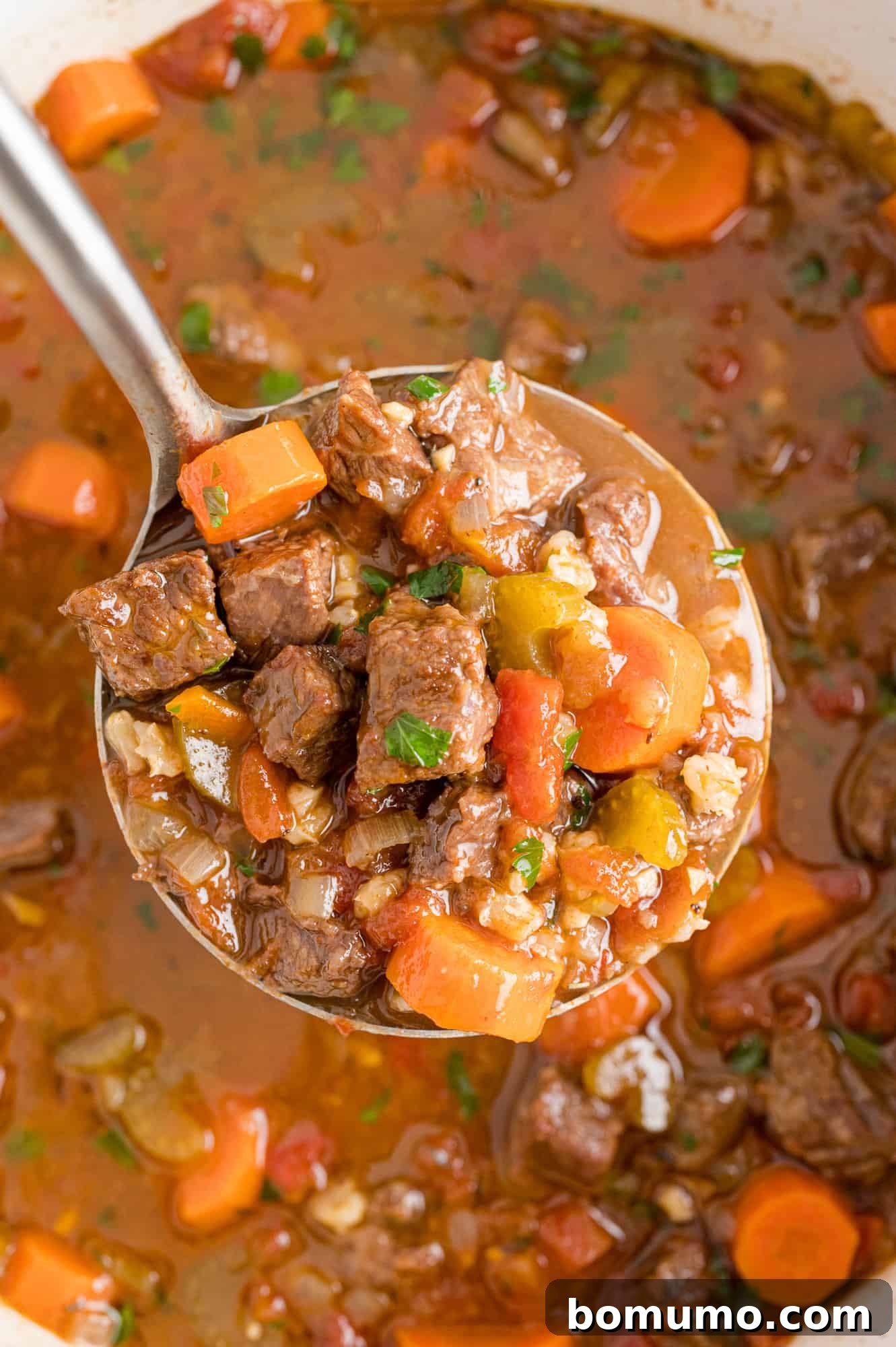
Key Ingredients for an Exceptional Beef Barley Soup
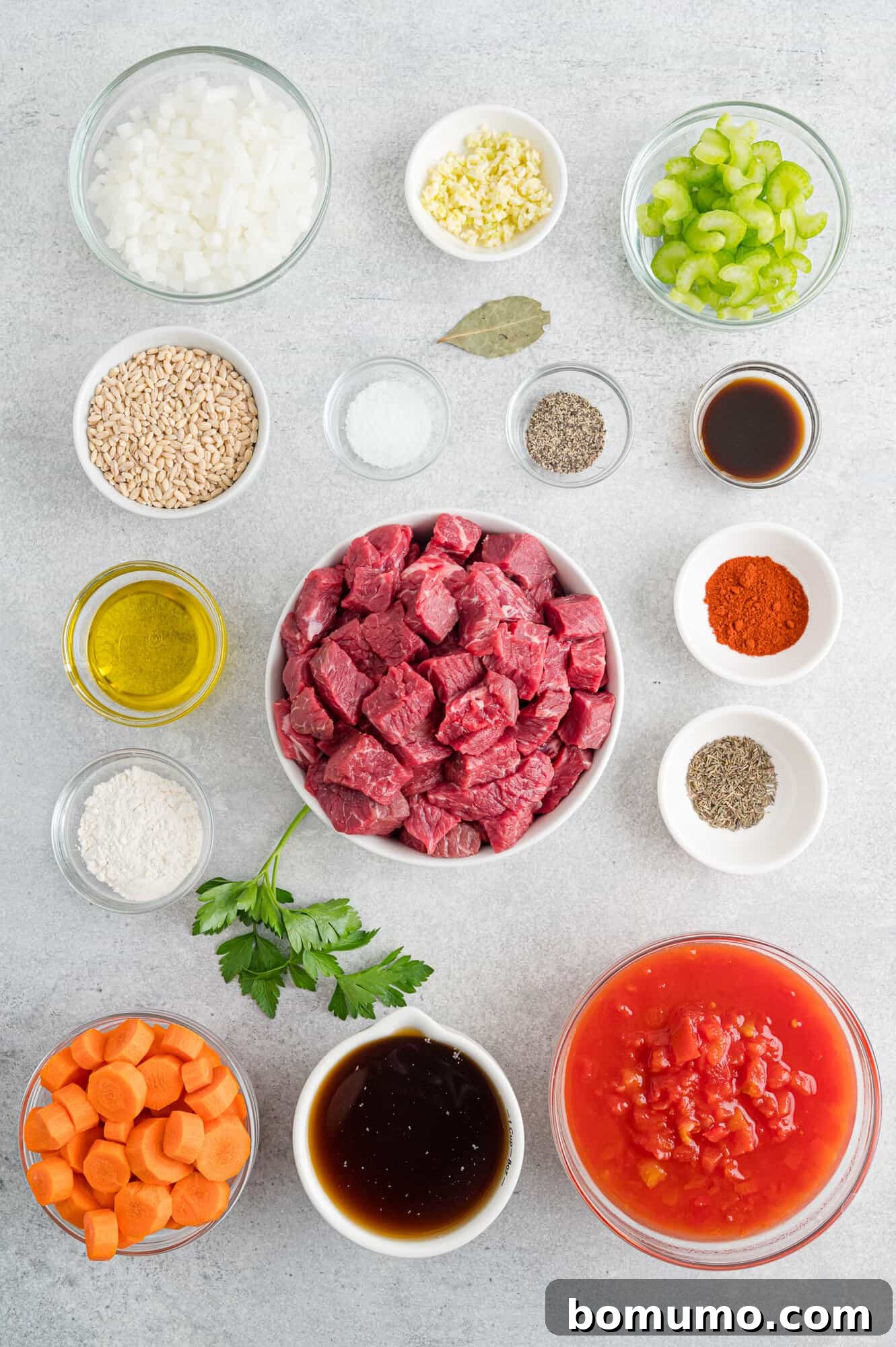
- Beef Chuck Roast: The star of our soup, a 2-pound beef chuck roast, is ideal for its rich beefy flavor and its ability to become incredibly tender when slow-cooked. Look for a well-marbled piece for maximum flavor. While most chuck roasts are boneless, if yours happens to include a bone, you can either remove it before cutting the meat into cubes or simply fish it out before serving the soup. For added convenience, pre-cut beef stew meat can be used, though it’s typically a pricier option. Cutting the beef into uniform, approximately one-inch cubes ensures even cooking and perfect bite-sized pieces for your hearty soup.
- All-Purpose Flour, Salt, Pepper, Olive Oil: These foundational ingredients play a crucial role in building the soup’s flavor and texture. Tossing the beef cubes in a seasoned flour mixture before browning achieves two important goals: the flour helps create a beautiful, caramelized crust on the beef (the Maillard reaction), which significantly deepens the overall flavor of the soup. Furthermore, this flour coating acts as a natural thickener, giving the broth a desirable body as it simmers. Browning the beef in olive oil adds another layer of richness and ensures a proper sear, developing vital “fond” at the bottom of the pot.
- Onion, Carrots, Celery, Garlic: Often referred to as the ‘holy trinity’ of soup bases (or mirepoix), these aromatic vegetables form the essential flavor foundation of our beef barley soup. Chopped onion, carrots, and celery provide a sweet, earthy depth, while minced garlic adds a pungent warmth and complexity. Beyond their incredible flavor contributions, these vegetables also boost the nutritional value of the soup, offering essential vitamins and minerals. Cutting them into slightly larger, uniform pieces ensures they hold their shape and texture beautifully through the long simmering process, rather than completely disintegrating.
- Pearl Barley: A highly nutritious grain, pearl barley brings a delightful chewy texture and a subtle, earthy, nutty flavor that complements the robust beef perfectly. It’s a fantastic source of both soluble and insoluble fiber, crucial for digestive health, and is packed with various vitamins, minerals, and antioxidants (Healthline). While not gluten-free, its health benefits and unique texture make it an indispensable component of this classic soup. We use pearl barley, which has had its outer husk removed, making it quicker to cook than hulled barley.
- Beef Broth: The quality of your beef broth significantly impacts the final flavor profile of the soup. Opt for a good-quality, low-sodium or unsalted beef broth to give you precise control over the overall seasoning of your dish. This rich liquid forms the robust base of the soup, expertly carrying and blending all the wonderful flavors of the tender beef, savory vegetables, and aromatic spices. If possible, consider using homemade beef broth for an even deeper flavor.
- Canned Tomatoes: A 15 oz. can of diced tomatoes, undrained, adds a welcome acidity and a touch of sweetness that beautifully brightens the rich, savory flavors of the beef and broth. The tomatoes also contribute to the soup’s lovely rustic texture and provide additional depth and umami, balancing the richness of the meat. Choosing low-sodium or no-salt-added canned tomatoes further helps in managing the soup’s overall saltiness.
- Worcestershire Sauce: This complex, dark brown condiment is a secret weapon in many savory dishes, and it truly shines in beef barley soup. Made with a unique blend of fermented ingredients, spices, and herbs, Worcestershire sauce provides a powerful umami punch and a subtle tang that significantly deepens the savory notes of the beef and broth. It also contributes to the soup’s inviting, rich color, enhancing its overall visual appeal and making it even more appetizing.
- Seasonings: A thoughtfully chosen blend of seasonings elevates this soup from good to extraordinary. Paprika adds a mild, peppery warmth and a beautiful red hue, contributing to the soup’s inviting appearance. Dried thyme leaves infuse the soup with earthy, herbaceous notes that complement beef perfectly, bringing a touch of classic savory flavor. A single bay leaf works wonders during simmering, imparting a subtle, almost floral aroma that enhances the overall fragrance and complexity of the broth. Finally, a generous handful of fresh chopped parsley stirred in right before serving provides a burst of vibrant color and a fresh, clean finish, brightening all the rich flavors and adding a hint of herbaceousness.
Crafting Your Perfect Beef Barley Soup: A Step-by-Step Guide
Creating this comforting beef barley soup is a rewarding culinary journey that yields incredible results. You’ll need a sturdy, large pot with a tight-fitting lid – a Dutch oven is ideal for its even heat distribution and ability to go from stovetop to oven, though any large, heavy-bottomed pot will work beautifully.
1. Prepare Your Vegetables: Begin by gathering all your ingredients. Take care to thoroughly prep your carrots, celery, and onion by chopping them into approximately half-inch pieces. Mince the garlic cloves. A key tip here is to avoid cutting your vegetables into excessively small pieces; they will be simmering for a significant duration, and slightly larger, uniform cuts will ensure they retain their texture and don’t completely disintegrate into the broth, adding body to the soup. Set these vibrant chopped vegetables aside for later.
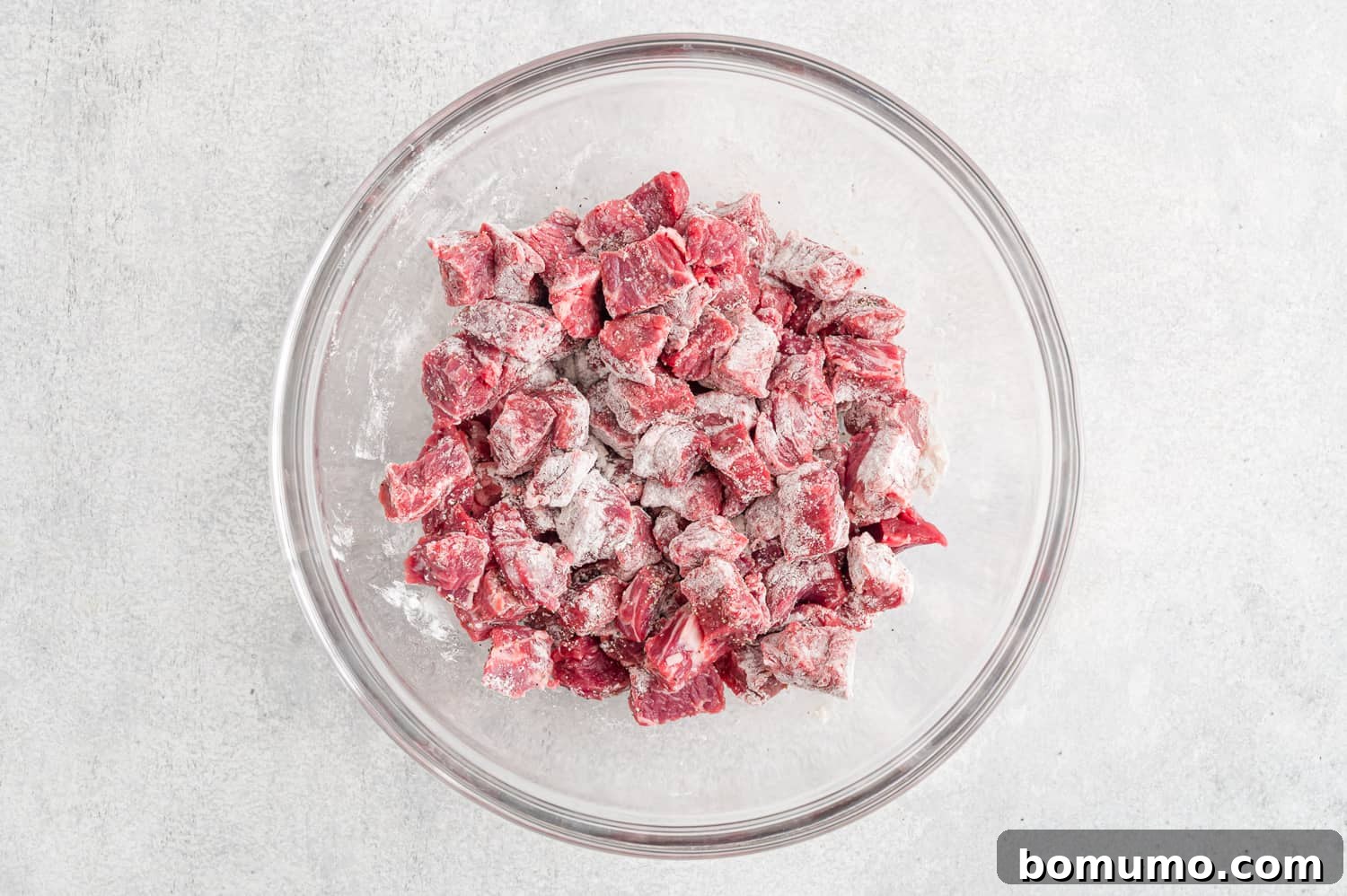
2. Prepare and Season the Beef: Carefully trim any significant excess fat from your beef chuck roast. Using a sharp knife, cut the beef into uniform, bite-sized cubes, roughly one inch in size. A little trick for easier cutting: if your meat is super chilled, almost with a slight frost, it becomes considerably easier to cut cleanly and evenly. In a medium bowl, combine the all-purpose flour with kosher salt and coarse ground black pepper. Add the beef cubes to this mixture and toss thoroughly, ensuring each piece is fully coated with the seasoned flour. This coating is vital for both achieving a beautiful brown crust and contributing to the soup’s thickening.
Cooking Tip: Prioritize Food Safety with Meat Handling
Always use a separate cutting board dedicated solely to raw meat to prevent cross-contamination in your kitchen. Non-porous materials like plastic or acrylic are excellent choices for this purpose due to their ease of cleaning. Immediately after using it, clean your meat cutting board and any utensils thoroughly in hot, soapy water, or run them through the dishwasher. This simple step is crucial for maintaining kitchen hygiene and ensuring food safety for you and your family.
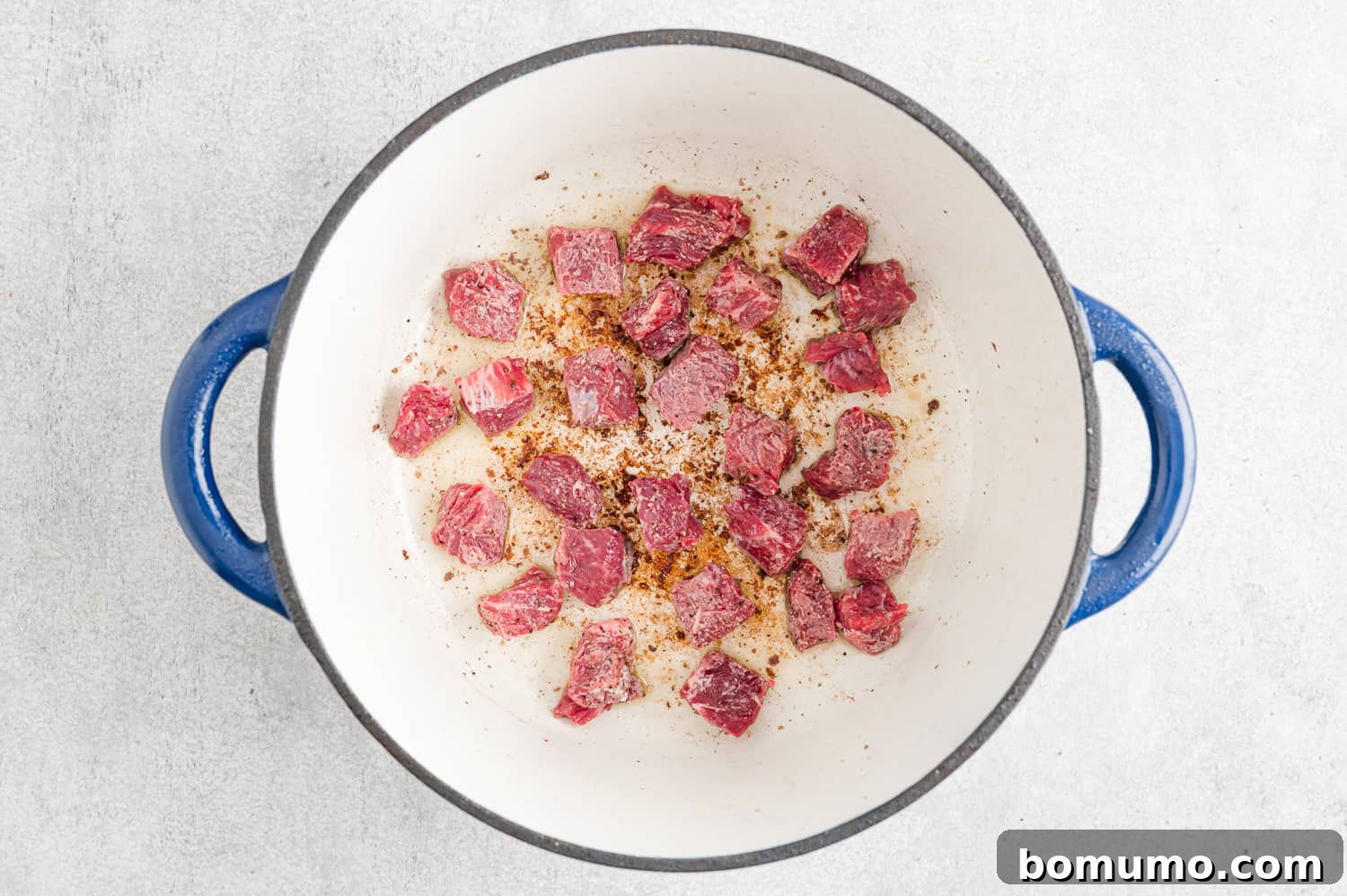
3. Brown the Beef: Heat one tablespoon of olive oil in the bottom of your Dutch oven or large pot over medium-high heat. Once the oil is shimmering and hot, add the flour-coated beef cubes in a single layer, being careful not to overcrowd the pan. If necessary, work in batches to ensure proper browning; overcrowding can steam the meat instead of searing it. Allow the beef to sear undisturbed for 2 to 3 minutes to develop a rich, dark crust, and then stir to brown the other sides of the beef cubes for another 2 to 3 minutes. Remember, the goal here is to develop flavor through browning, not to cook the beef all the way through. As each batch browns, remove the beef to a clean plate and set aside, adding a little more oil to the pot if needed for subsequent batches.
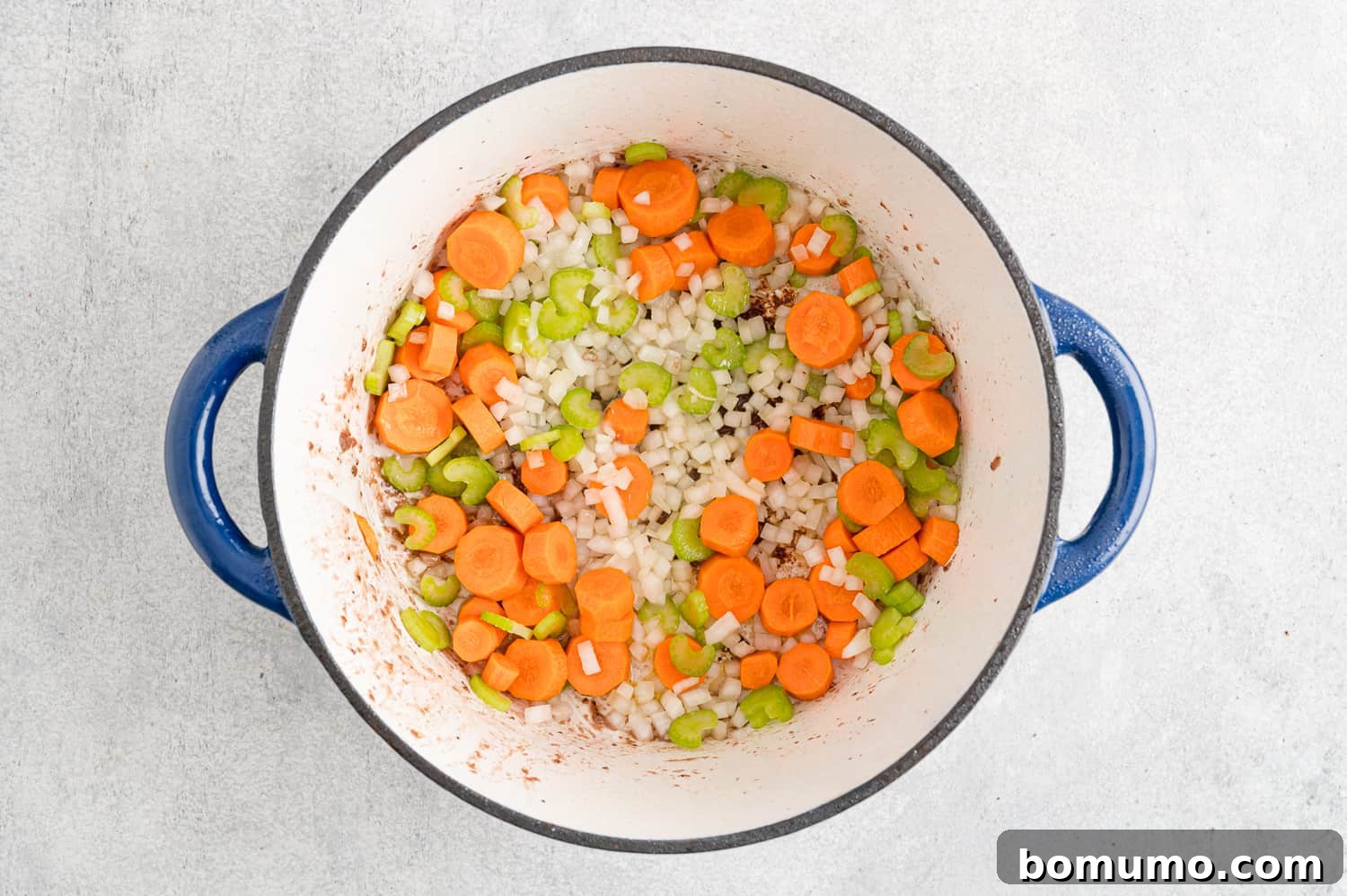
4. Sauté the Aromatics: With the browned beef set aside, add the remaining olive oil to the same pot. Reduce the heat slightly to medium. Add the chopped onions, carrots, and celery to the pan. Sauté these vegetables for 5 to 6 minutes, stirring occasionally, until the onions become translucent and the vegetables begin to soften. This step sweetens the vegetables and builds another foundational layer of flavor for your soup.
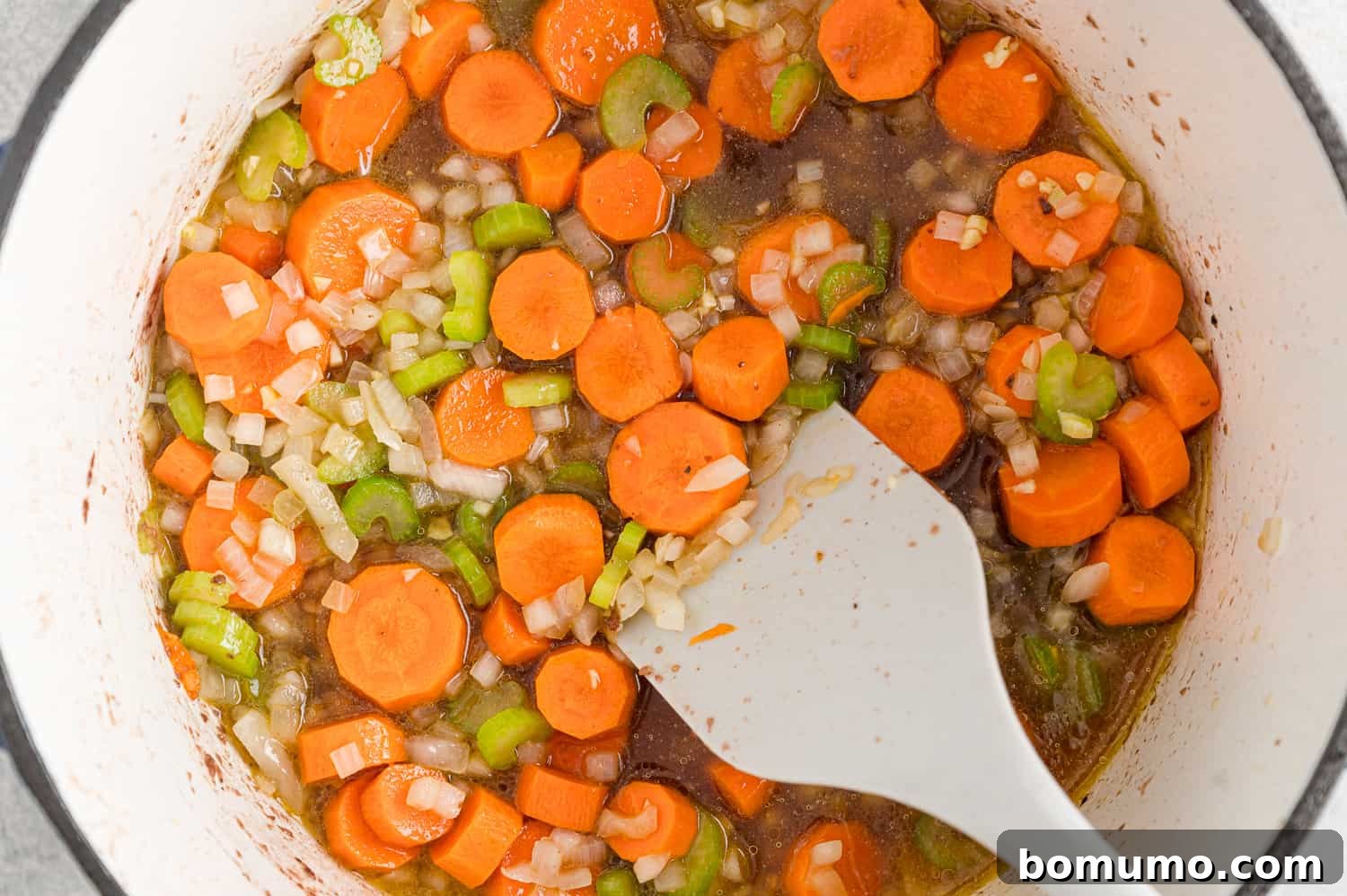
5. Introduce the Garlic & Deglaze: Stir in the minced garlic and cook for just one minute more, stirring constantly, until it becomes wonderfully fragrant. Be careful not to burn the garlic, as this can turn it bitter. Next, pour a half cup to one cup of beef broth into the hot pan. Using a wooden spoon or spatula, vigorously scrape up all the delicious brown bits (known as ‘fond’) that have stuck to the bottom of the pot. This crucial step, called deglazing, incorporates those highly concentrated, caramelized flavors back into your soup base, adding immense depth and richness that cannot be achieved otherwise.

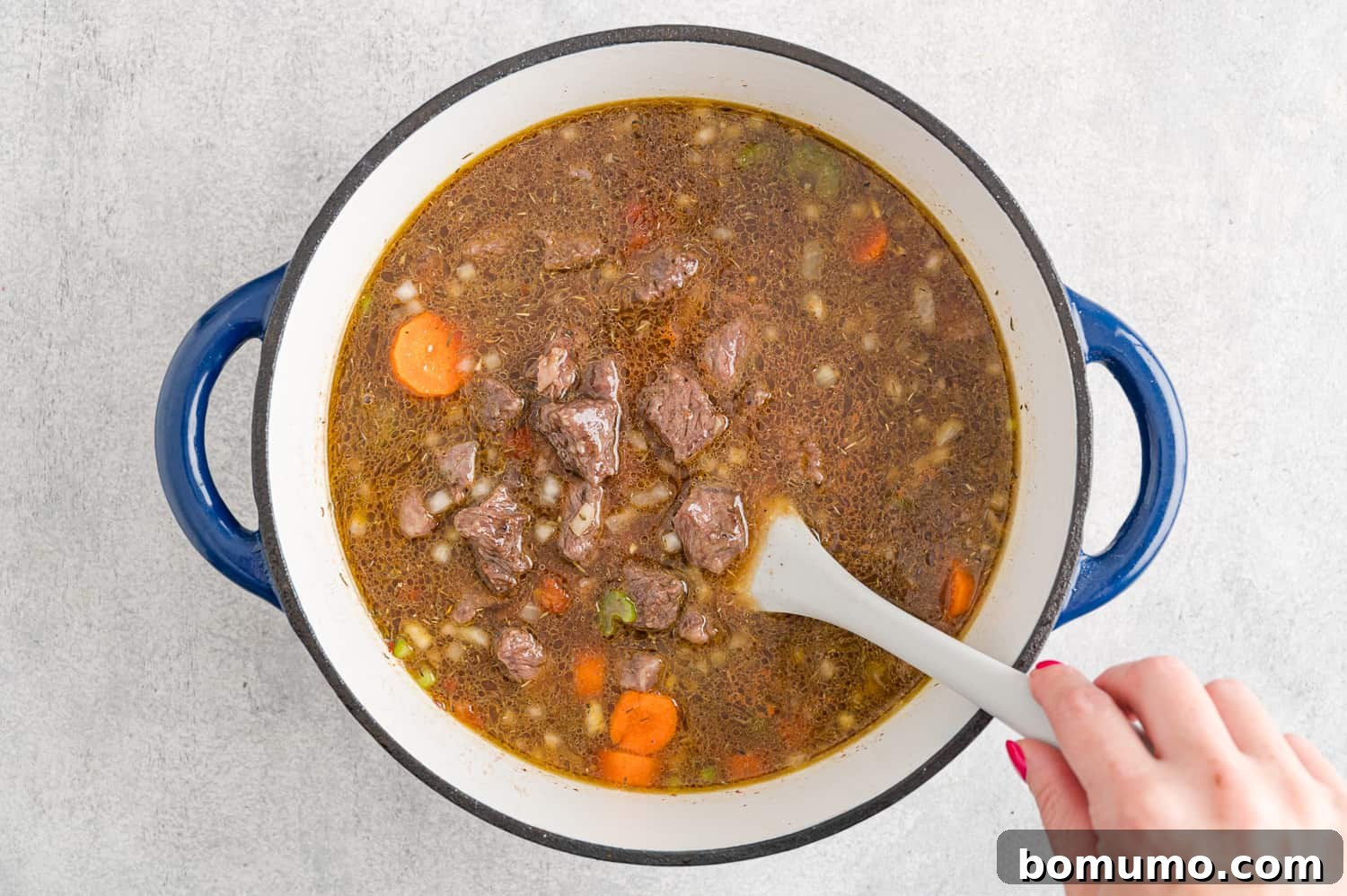
6. Simmer for Flavor Development: Return the seared beef to the pot. Add the remaining beef broth, the can of undrained diced tomatoes, Worcestershire sauce, paprika, dried thyme leaves, and the bay leaf. Stir everything together gently to combine all the ingredients. Bring the contents of the pot to a gentle simmer over medium-high heat, and then immediately reduce the heat to medium-low or low, ensuring it maintains a steady, gentle bubble. Cover the pot with its lid and let the soup simmer patiently for approximately 60 minutes. This initial simmer is essential for tenderizing the beef and allowing all the wonderful flavors to meld and deepen beautifully.
7. Add the Pearl Barley: After the initial hour of simmering, it’s time to add the pearl barley. We highly recommend rinsing the barley under cold water before adding it to remove any excess starch, which can sometimes make the soup cloudy. Stir the rinsed barley into the soup. Cover the pot again and continue to cook, stirring occasionally, for an additional 35 to 40 minutes, or until the barley is tender with a pleasant chew, and the beef is truly melt-in-your-mouth tender. Adding the barley later in the cooking process is important to prevent it from becoming mushy and ensures it retains its delightful texture. If you find the soup is thickening too much for your preference, feel free to add a little more beef broth or water to reach your desired consistency.
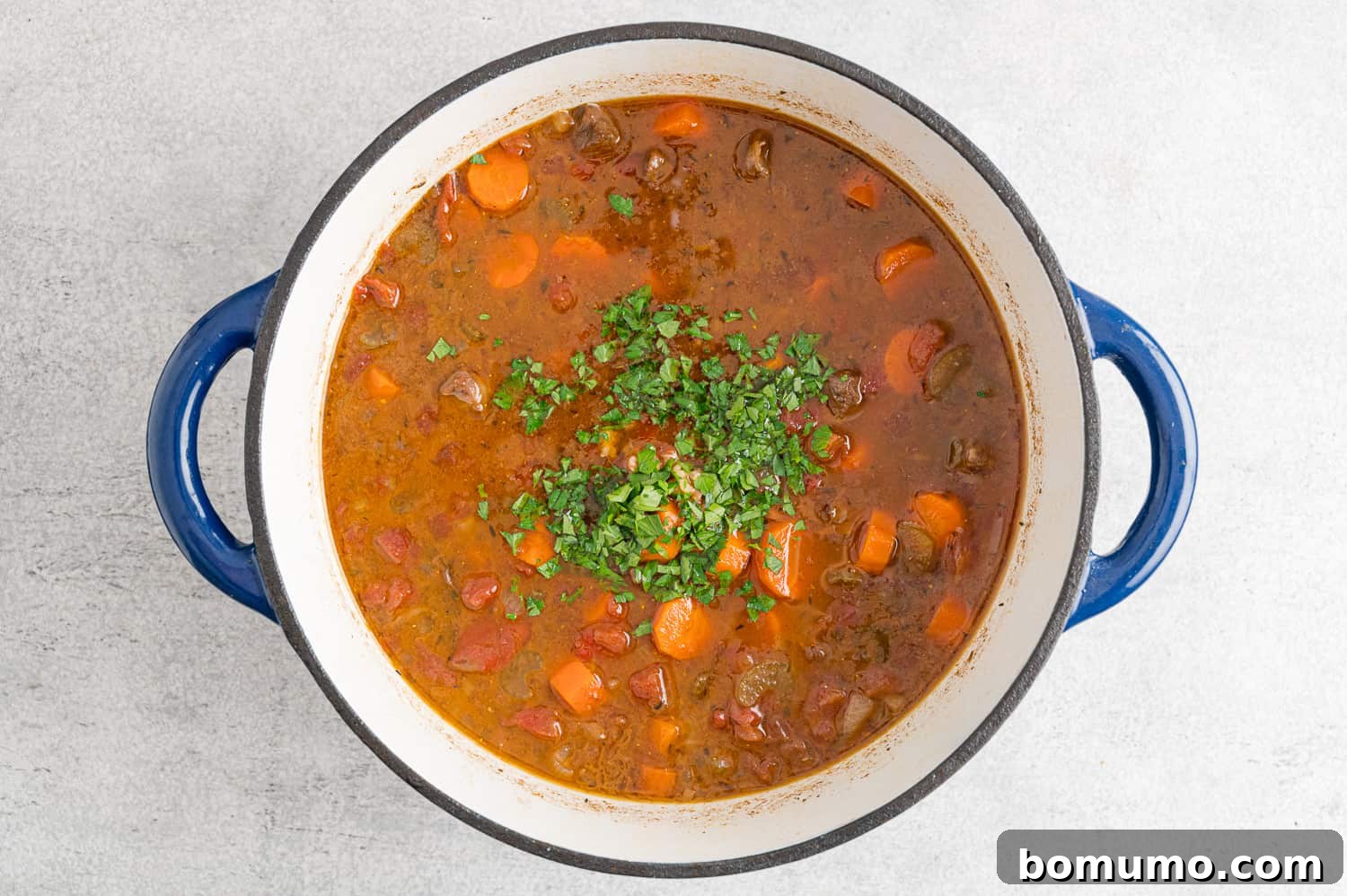
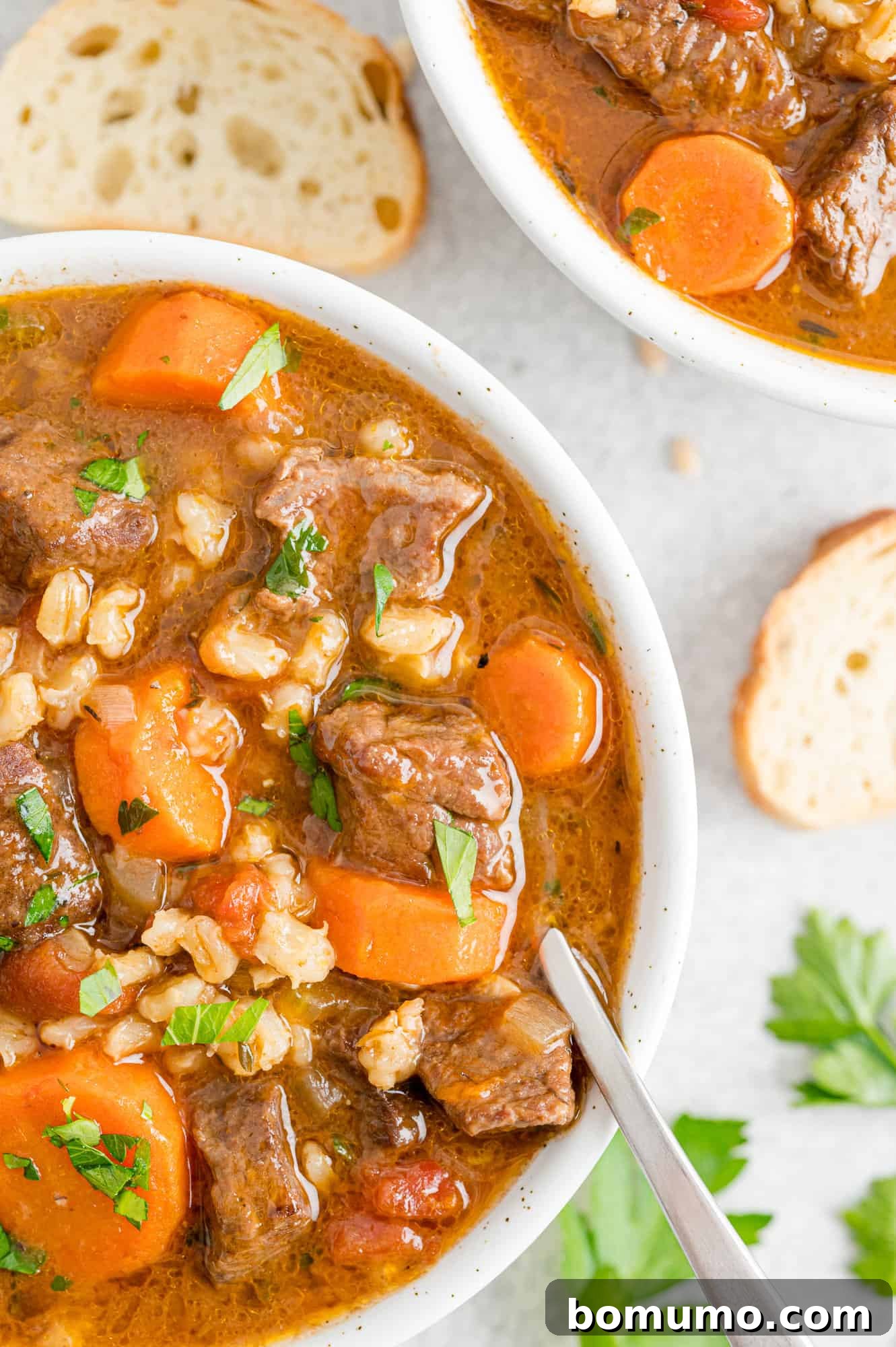
8. Final Touches and Serve: Before serving, carefully remove and discard the bay leaf from the soup. Taste the soup and adjust the seasoning with additional salt and pepper if needed, ensuring the flavors are perfectly balanced. Stir in a generous handful of freshly chopped parsley; its vibrant color and fresh herbaceous notes provide a beautiful contrast to the rich, savory soup. Ladle the hot soup into bowls and serve immediately, perhaps alongside warm, crusty bread – a slice of no-knead Dutch oven bread is an excellent choice for dipping. Enjoy this truly comforting and satisfying meal!
Creative Ways to Customize Your Beef Barley Soup
This beef barley soup recipe is incredibly adaptable, inviting you to put your own spin on this classic dish. Feel free to experiment with different ingredients to suit your taste and dietary preferences:
Amp Up the Vegetables: Elevate the nutrition and flavor by adding your favorite vegetables to the mix. Chopped cabbage or hearty kale (added in the last 15-20 minutes of cooking) makes wonderful additions. Green beans, parsnips, or turnips can be added along with the initial root vegetables. For a quick boost of color and vitamins, stir in frozen green peas or fresh spinach during the last 5-10 minutes of simmering until just tender. Each addition will bring its unique character and health benefits to the broth.
Try a Different Grain: If you don’t care for barley, or simply want to explore other textures, several alternative grains work wonderfully in this soup. Consider using farro for a similarly chewy and nutty texture, millet for a milder, quicker-cooking option, or brown rice for a familiar, wholesome choice. Lentils are another fantastic addition, adding protein and a creamy texture. Remember to adjust cooking times according to the specific grain’s package directions to ensure it cooks perfectly without becoming overdone or mushy.
Make it Chicken Soup: For those who prefer poultry or are simply looking for a delicious variation, transforming this recipe into a chicken barley soup is effortless and equally satisfying. Simply substitute boneless, skinless chicken thighs or breast (cut into cubes) for the beef chuck roast and use chicken broth instead of beef broth. You’ll find a fantastic recipe for my chicken barley soup with kale and butternut squash that offers a lighter, yet equally comforting, take on this classic.
Make-Ahead Ideas
Get a Head Start on Prep: One of the best ways to streamline your cooking process and make meal prep a breeze is to prepare your vegetables in advance. The carrots, onions, and celery can be chopped up to a day or two ahead of time and stored in an airtight container in the refrigerator. This simple step can save you valuable time when you’re ready to cook the soup, making assembly much quicker and more enjoyable on cooking day.
Make a Double Batch for Future Meals: This beef barley soup is a meal prepper’s dream, as it freezes exceptionally well without any significant loss of quality or texture. Unlike some stews with potatoes, which can become mushy after freezing and thawing (like my Instant Pot beef stew), this barley-based soup maintains its delicious consistency. Consider making a double batch to enjoy one portion now and freeze the other for a convenient, wholesome meal on a busy day. It’s truly a gift to your future self when you need a quick, comforting option.
Storage & Reheating Tips
Refrigerate/Freeze for Longevity: Proper storage is key to extending the life of your delicious beef barley soup. Promptly refrigerate any leftover soup in an airtight container within two hours of cooking. It will keep fresh and flavorful in the refrigerator for up to four days. For longer storage, this soup freezes beautifully for up to 4 months when properly stored in a freezer-safe container, minimizing freezer burn. To enjoy your frozen soup, simply thaw it overnight in the refrigerator before reheating. Note that the soup may thicken slightly upon cooling, which is a normal and expected change in consistency.
Effortless Reheating: Reheating your beef barley soup is simple and convenient. For individual portions, transfer the soup to a microwave-safe bowl, cover it loosely with a paper towel (to prevent splatters), and heat on high in 60-second intervals, stirring in between, until it is thoroughly hot. For larger quantities, gently reheat the soup in a saucepan on the stove over medium-low heat, stirring occasionally, until it reaches your desired temperature. If the soup appears too thick after refrigeration or freezing, you can easily thin it down to your preferred consistency by adding a splash of beef broth or water during the reheating process.

Free Meal Plan
Interested in a weekly meal plan that includes this recipe? Take a look at Meal Plan #94. You’ll find a wholesome recipe for each weekday plus a categorized grocery list. We add a new meal plan weekly.
More Hearty Soups & Stews
Crockpot Beef Stew
Zuppa Toscana
Easy Hamburger Soup Recipe
Lentil Soup Recipe with Pasta
Beef Barley Soup
Ingredients
- 2 pounds beef chuck roast (or beef stew meat)
- 2 tablespoons all-purpose flour
- 1 teaspoon kosher salt
- 1 teaspoon coarse ground black pepper
- 2 tablespoons olive oil, divided
- 1 cup chopped onion (about 1 medium onion)
- 1 ½ cups chopped carrot (about 4 carrots)
- ¾ cup celery, chopped (about 2 stalks)
- 3 cloves garlic, minced
- 4 cups low-sodium or unsalted beef broth, more as needed
- 1 can (15 oz.) diced tomatoes, undrained (low sodium or no-salt-added)
- 1 tablespoon Worcestershire sauce
- 1 teaspoon paprika
- ½ teaspoon dried thyme leaves
- 1 bay leaf
- ¾ cup pearl barley, uncooked
- ¼ cup fresh parsley
Instructions
-
Trim any excess fat from the beef chuck roast and cut it into uniform, bite-sized cubes of approximately one inch. In a medium-sized bowl, toss the cubed beef with the all-purpose flour, kosher salt, and coarse ground black pepper until the meat is completely and evenly coated.2 pounds beef chuck roast, 2 tablespoons all-purpose flour, 1 teaspoon kosher salt, 1 teaspoon coarse ground black pepper
-
In a large Dutch oven or heavy-bottomed pot, heat 1 tablespoon of olive oil over medium-high heat. Add the beef cubes in a single layer, ensuring not to overcrowd the pan; you may need to do this in batches to achieve proper browning. Cook without stirring for 2 to 3 minutes to form a crust, then stir to brown the other sides of the beef cubes for another 2 to 3 minutes. The beef does not need to be cooked through at this point, just beautifully browned. Remove the browned beef to a plate and set aside, adding more oil if necessary for subsequent batches.2 tablespoons olive oil, divided
-
Once all the beef has been seared and removed, add the remaining 1 tablespoon of olive oil to the same pot. Add the chopped onion, carrot, and celery. Cook over medium heat, stirring occasionally, for 5 to 6 minutes or until the onion is translucent and the vegetables begin to soften.1 cup chopped onion, 1 ½ cups chopped carrot, ¾ cup celery, chopped
-
Add the minced garlic and cook for just 1 minute, stirring constantly, until it becomes fragrant. Be careful not to burn it.3 cloves garlic, minced
-
Pour in ½ cup to 1 cup of beef broth and immediately scrape any delicious brown bits (fond) off the bottom of the pan with a wooden spoon or spatula. This crucial step, known as deglazing, incorporates concentrated flavors back into your soup base.
-
Return the seared beef to the pot. Add the remaining beef broth, the can of undrained diced tomatoes, Worcestershire sauce, paprika, dried thyme leaves, and the bay leaf. Stir gently to combine all ingredients.4 cups low-sodium or unsalted beef broth, more as needed, 1 can (15 oz.) diced tomatoes, undrained, 1 tablespoon Worcestershire sauce, 1 teaspoon paprika, ½ teaspoon dried thyme leaves, 1 bay leaf
-
Bring the soup to a gentle simmer over medium-high heat, then reduce the heat to medium-low or low, ensuring it maintains a steady, gentle bubble. Cover the pot with its lid and let the soup simmer patiently for 60 minutes. This step tenderizes the beef and allows the flavors to deepen.
-
Rinse the pearl barley under cold water, if desired (this helps remove excess starch and prevents cloudiness). Add the rinsed barley to the soup, stir well, and then cover and cook, stirring occasionally, for an additional 35 to 40 minutes, or until the barley is tender with a pleasant chew and the beef is very tender and easily falls apart. If you prefer a thinner soup, feel free to add more beef broth or water to reach your desired consistency.¾ cup pearl barley, uncooked
-
Before serving, carefully remove and discard the bay leaf. Stir in a generous handful of freshly chopped parsley for a burst of vibrant color and fresh flavor, and serve the soup hot. Taste and adjust seasoning with extra salt and pepper if needed.¼ cup fresh parsley
Notes
- For the best texture, avoid cutting the root vegetables (onions, carrots, celery) too small, as they may disintegrate during the long cooking time. Larger, uniform pieces will hold their shape better.
- Storage: Leftover beef barley soup is excellent for meal prepping. It can be refrigerated in an airtight container for up to four days. For longer preservation, the soup freezes beautifully for up to 4 months when stored in a freezer-safe container. If the soup appears too thick when reheating, simply thin it as desired with additional beef broth or water to reach your preferred consistency.
Video
Nutrition
Nutrition information is automatically calculated, so should only be used as an approximation.
This hearty beef barley soup isn’t just a recipe; it’s a culinary journey rooted in tradition, designed for modern comfort. Its rich flavors, tender beef, and wholesome ingredients make it an unforgettable dish that brings warmth and satisfaction to any table. We invite you to experience the joy of slow cooking and savor every delicious spoonful of this enduring classic. It’s truly a timeless meal that will quickly become a cherished favorite in your own home.