
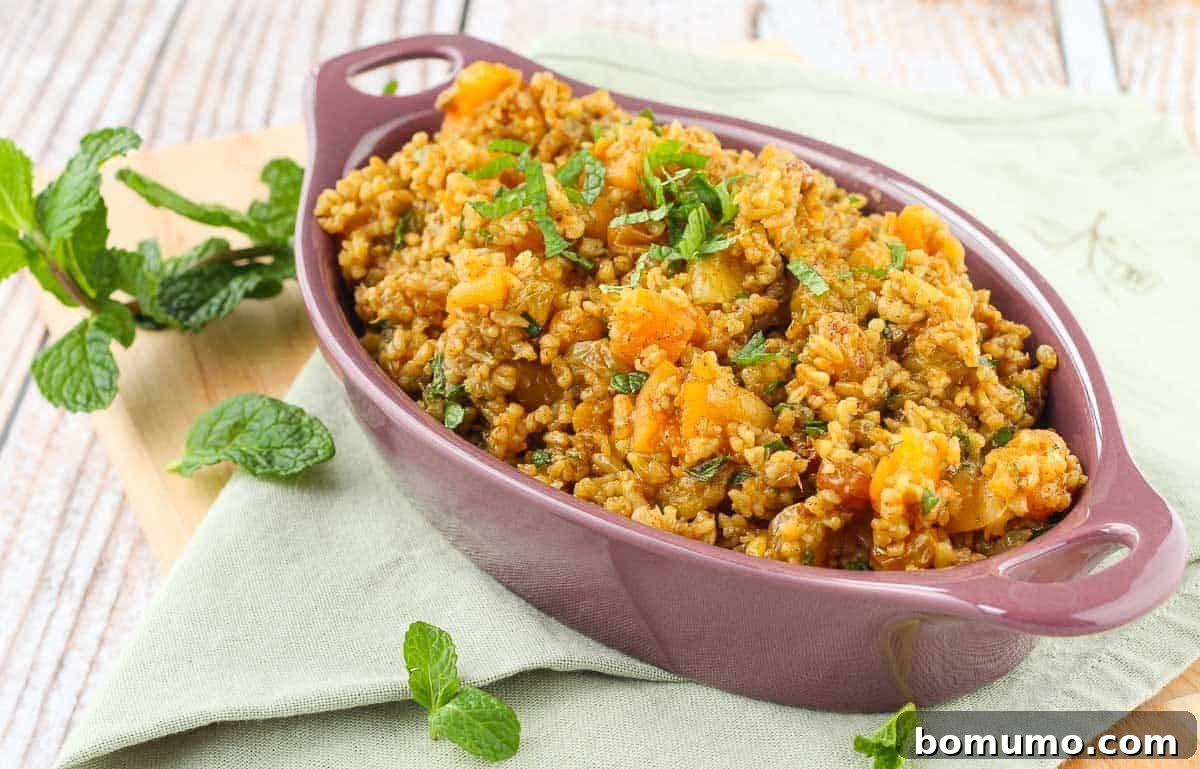
Moroccan Freekeh Pilaf with Golden Raisins and Apricots: A Vibrant and Nutritious Side Dish
Tired of the same old rice? It’s time to elevate your plate with something truly extraordinary. This Moroccan Freekeh Pilaf recipe is a culinary delight, bursting with aromatic spices and the sweet tang of dried fruits. It’s not just a side dish; it’s an experience that promises to transform any meal into a flavorful adventure. Prepare to embark on a journey of taste that is both vibrant and deeply satisfying.
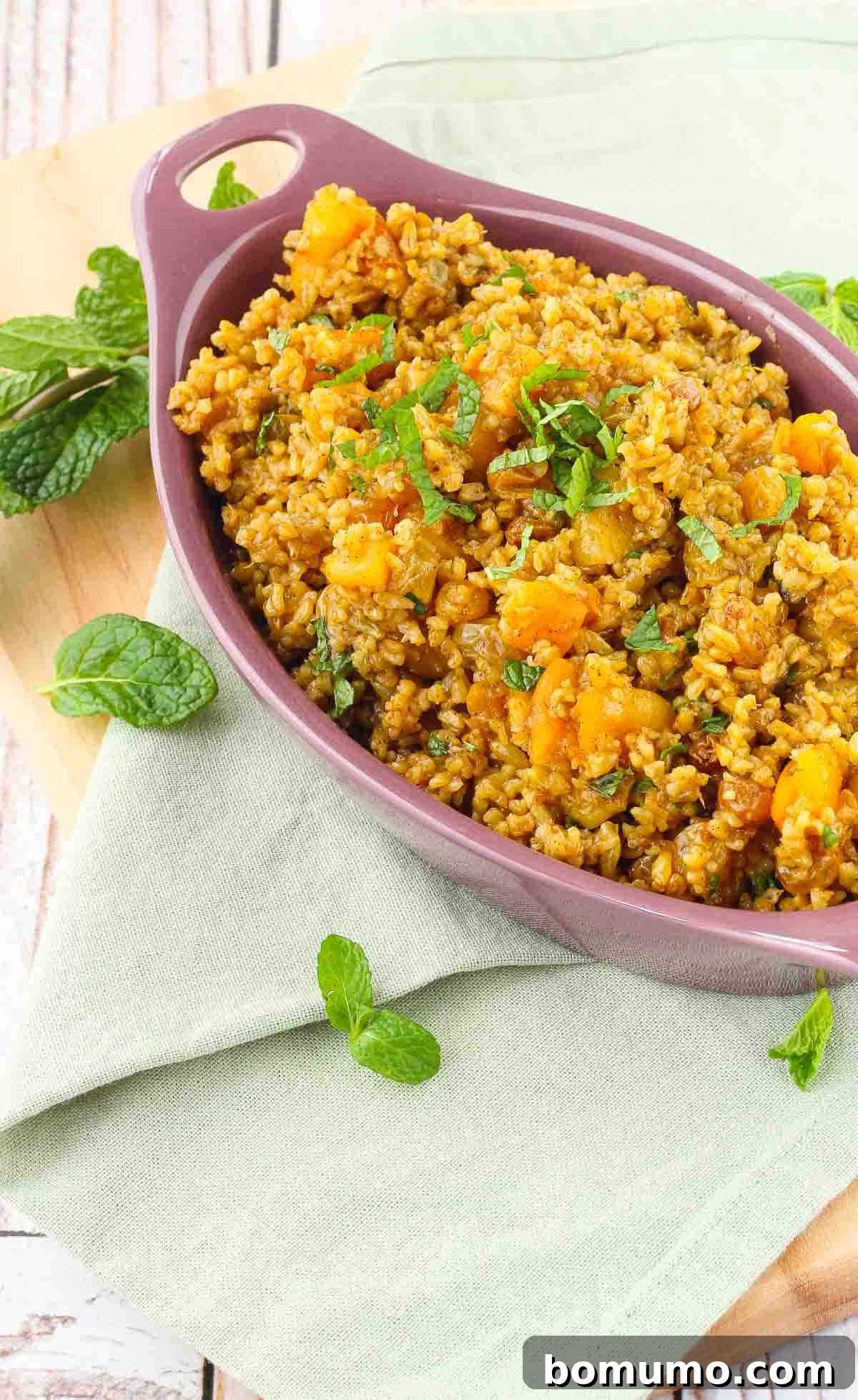
The Golden Hue: Unpacking Turmeric and Moroccan Spices
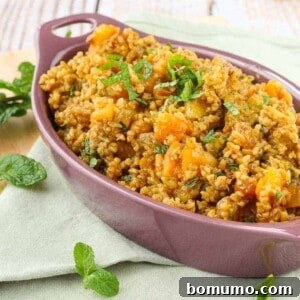
One of the first things you’ll notice about this pilaf is its striking, almost luminous, golden-orange hue. This captivating color is all thanks to a star ingredient: turmeric. Often referred to as “nature’s yellow crayon,” turmeric not only adds visual appeal but also brings a wealth of health benefits to the table. This ancient spice has gained immense popularity in recent years for its potent anti-inflammatory and antioxidant properties, making it a powerful addition to a healthy diet. Beyond its vibrant pigment, turmeric contributes a subtle, earthy warmth that forms the foundation of this dish’s complex flavor profile.
But turmeric is just one note in the symphony of Moroccan spices that define this freekeh pilaf. A carefully curated blend creates a tapestry of flavors that dance on the palate. Warm cinnamon, earthy cumin, pungent ginger, fragrant cloves, exotic cardamom, bright coriander, and a hint of allspice combine to build a rich, aromatic base. A touch of cayenne pepper introduces a gentle warmth, balancing the sweetness of the dried fruits without overpowering the other spices. This vibrant medley of flavors transports your taste buds straight to the bustling markets of Marrakech, making this pilaf truly unforgettable. Each spoonful offers a harmonious blend of sweet, savory, and subtly spicy notes, ensuring a deeply satisfying culinary journey.
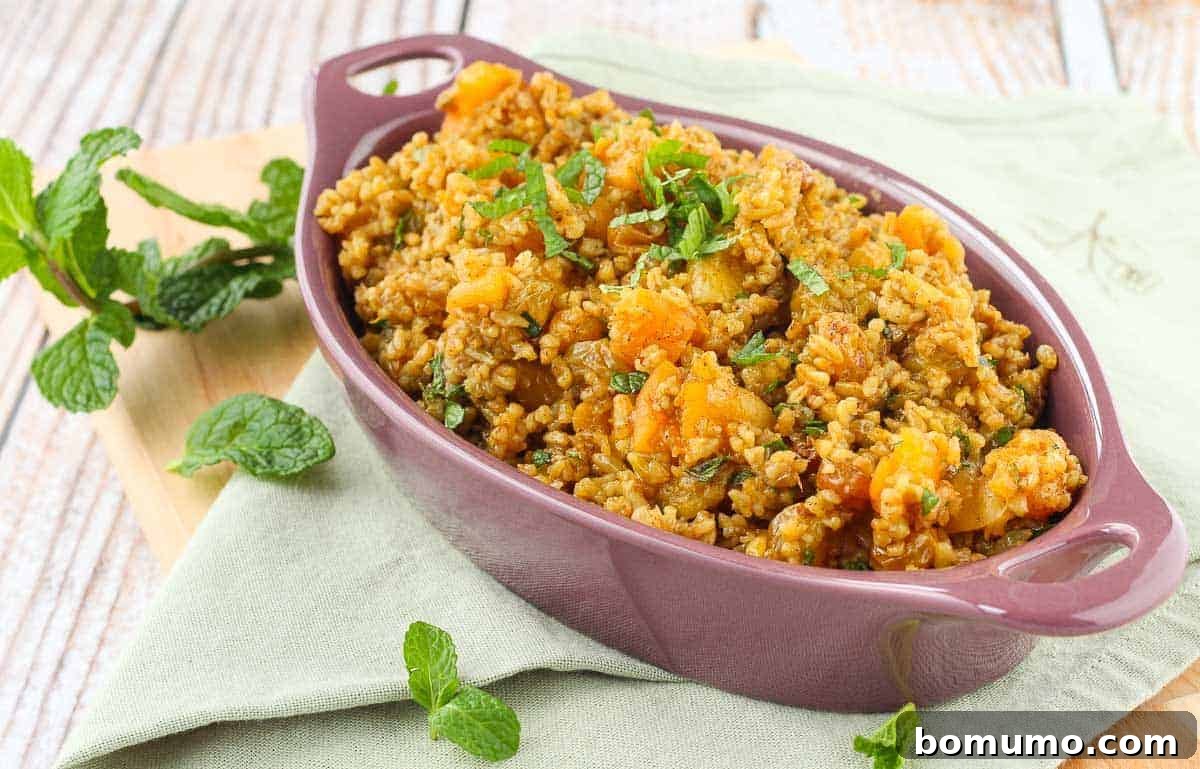
Discovering Freekeh: An Ancient Grain Reimagined
At the heart of this extraordinary pilaf is freekeh, an ancient grain that has recently experienced a resurgence in popularity among health-conscious food enthusiasts. Freekeh is a unique form of wheat, harvested while still young and green, then roasted over an open fire. This traditional process imparts a distinctive smoky flavor and a satisfyingly chewy texture that sets it apart from other grains. After roasting, the outer layer (chaff) is rubbed off, leaving behind a nutritious and flavorful grain.
Often hailed as a superfood, freekeh is an excellent source of plant-based protein, making it a fantastic choice for supporting muscle health and providing sustained energy. It’s also remarkably high in dietary fiber, which is crucial for digestive health and can help keep you feeling full longer, aiding in weight management. Its low glycemic index makes it a favorable option for maintaining steady blood sugar levels. Beyond its nutritional prowess, freekeh’s slightly nutty and robust flavor adds incredible depth to the pilaf, creating a wholesome and hearty foundation that complements the vibrant spices and sweet fruits beautifully. You can typically find freekeh in the grain or international foods aisle of larger grocery stores or specialty food shops, as well as online retailers.
While freekeh offers a unique profile, its versatility means that if you’re unable to find it or simply prefer another grain, this Moroccan-inspired dish is incredibly adaptable. You can easily prepare this recipe with quinoa, couscous, or even traditional rice, and still achieve delicious results. The key is to adjust the cooking instructions to suit your chosen grain. In step two of the recipe, simply follow the specific cooking directions provided on the packaging of your substitute grain. Pay close attention to the liquid requirements; the combined amount of orange juice and broth should match the total liquid specified for your chosen grain. While the cooking time may vary slightly, the rich, aromatic spices and sweet dried fruits will ensure a flavorful and satisfying pilaf no matter which grain you choose.
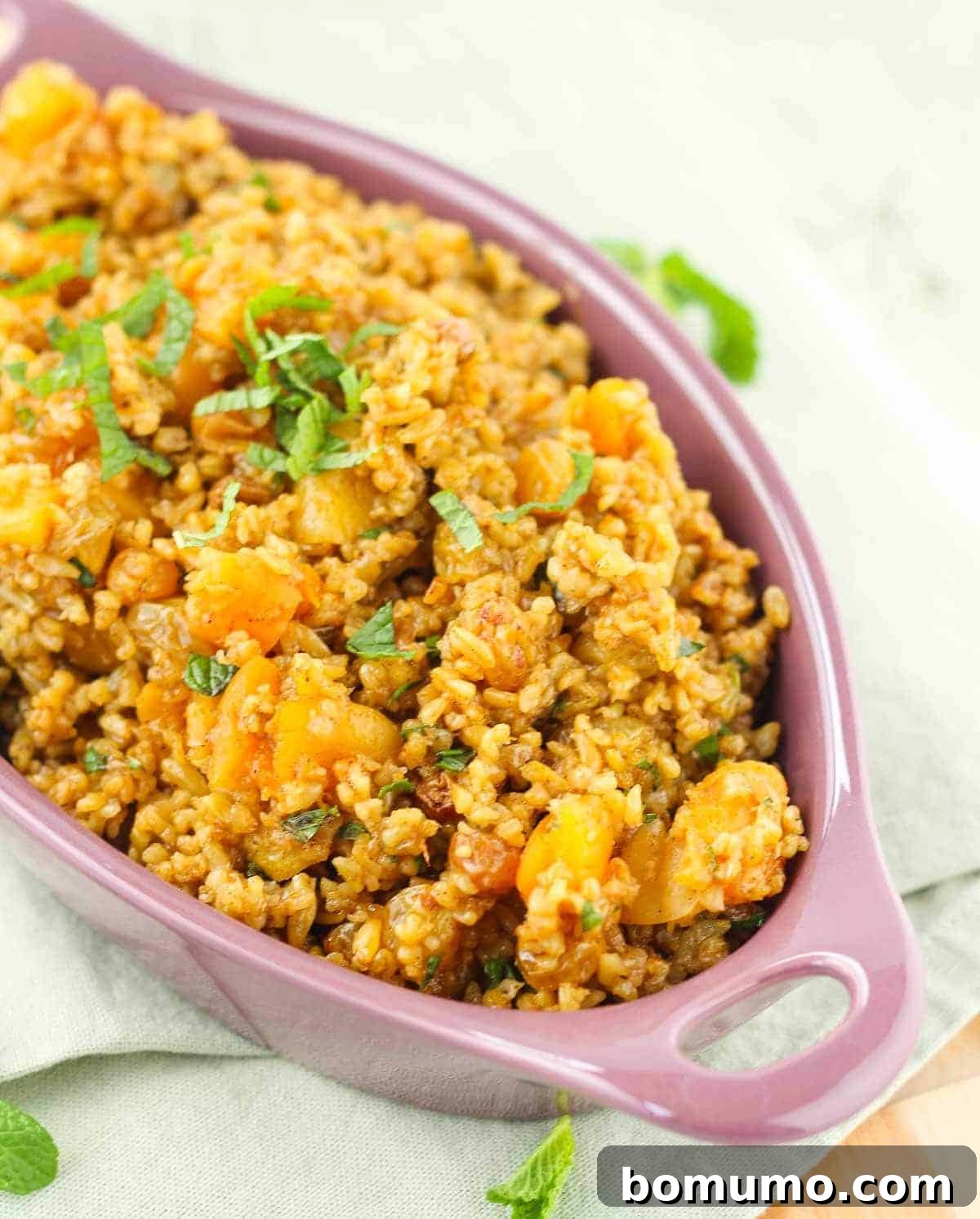
Elevate Your Meal: Inspired Serving Suggestions
This Moroccan Freekeh Pilaf is incredibly versatile and makes a magnificent accompaniment to a variety of main courses. Its warm spices and sweet undertones pair exceptionally well with robust flavors. For a truly cohesive meal, I highly recommend serving it alongside tender Slow Cooker Moroccan Chicken Thighs, creating a harmonious blend of Moroccan-inspired flavors. The juicy chicken perfectly complements the chewy freekeh and vibrant spices. Another fantastic pairing is with Roasted Radishes, which add a delightful peppery crunch and earthy balance to the meal. Beyond these suggestions, consider grilled lamb chops, pan-seared halloumi, or even a simple baked white fish. It’s also hearty enough to be the star of a light vegetarian lunch, served perhaps with a dollop of cooling Greek yogurt or a sprinkle of toasted nuts.
Make This Pilaf Your Own: Creative Customization Ideas
One of the best aspects of this Moroccan Freekeh Pilaf is its incredible flexibility. It’s a canvas for culinary creativity, allowing you to tailor it to your dietary preferences or what you have on hand.
- Hearty Meatless Main: Transform this side dish into a substantial vegetarian entrée by simply adding a can of drained and rinsed chickpeas (garbanzo beans). Their creamy texture and plant-based protein boost make the pilaf even more filling and satisfying. Lentils or black beans could also be excellent additions.
- For Meat Lovers: Incorporate already cooked chicken, ground lamb, ground beef, or turkey for a more robust meal. Sauté ground meats with the spices before adding liquids, or stir in shredded cooked chicken or turkey at the end to warm through. This adds another layer of flavor and protein.
- Grain Alternatives: As mentioned, freekeh can be substituted with quinoa, couscous, or rice. Each grain offers a slightly different texture and nutritional profile, allowing you to customize the dish to your liking. Remember to adjust liquid amounts and cooking times according to package directions.
- Boost Your Veggies: Stir in a handful of chopped spinach or kale during the last few minutes of cooking for added nutrients and a touch of green. Other great additions include finely diced carrots, bell peppers, or zucchini, which can be sautéed lightly with the spices before adding the liquids.
- Nutty Crunch: For extra texture and flavor, fold in some toasted slivered almonds, chopped pistachios, or walnuts just before serving.
- Spice Level: If you enjoy more heat, increase the amount of cayenne pepper. For a milder version, reduce it or omit it entirely.
Explore More Moroccan Flavors
If this Freekeh Pilaf has sparked your interest in Moroccan cuisine, you’ll be delighted to discover other recipes that capture the essence of this vibrant culinary tradition:
- Slow Cooker Moroccan Chicken Thighs: A perfect main dish to pair with this freekeh pilaf, offering tender, flavorful chicken with minimal effort.
- Moroccan Stew with Butternut Squash and Chickpeas: A hearty and comforting vegetarian stew, rich in spices and nourishing ingredients.
- Moroccan Carrot Noodle Salad: A refreshing and vibrant salad that offers a lighter take on Moroccan flavors.
Moroccan Freekeh Pilaf Recipe
Print Recipe
Ingredients
- 1 teaspoon ground cumin
- 1/2 teaspoon turmeric
- 1/2 teaspoon ground ginger
- 1/4 teaspoon ground cloves
- 1/8 teaspoon ground cayenne pepper
- 1/2 teaspoon ground cardamom
- 1/2 teaspoon ground cinnamon
- 1/4 teaspoon ground coriander
- 1/4 teaspoon ground allspice
- 1 tablespoon olive oil
- 1/2 cup golden raisins
- 1/2 cup diced dried apricots
- 1 teaspoon kosher salt
- Grated zest of one orange (about 1 teaspoon)
- 2 cups chicken broth
- 1/2 cup orange juice (fresh squeezed is best)
- 1 cup uncooked cracked freekeh
- 3 tablespoons chopped fresh mint
Instructions
- Heat a large saucepan over medium heat. Stir in the cumin, turmeric, ginger, cloves, cayenne, cardamom, coriander, and allspice; toast until fragrant, stirring, about 2 to 3 minutes. Stir in oil, raisins, apricots, salt, orange zest, chicken broth, orange juice. Bring to a boil.
- Once boiling, stir in the freekeh and reduce to simmer (medium-low). Cover and cook for 20 minutes or until liquid is absorbed. Keep covered and remove from heat – let stand 5 minutes.
- Fluff with a fork, and fold in chopped mint. Serve warm or cold.
Notes
- Serving size: 1/2 cup as a side dish.
- Use vegetable broth instead of chicken broth to make this recipe vegan or vegetarian.
- Use low sodium or no salt added broth to reduce sodium content.
- You may substitute rice, couscous, or other grains for the freekeh. Follow package directions for cooking time and use a mixture of broth and orange juice that reflects the amount of liquid called for on the package.
Nutrition
Serving: 1/2 cup, Calories: 224kcal, Carbohydrates: 47g, Protein: 5g, Fat: 4g, Saturated Fat: 1g, Polyunsaturated Fat: 3g, Cholesterol: 2mg, Sodium: 1001mg, Fiber: 6g, Sugar: 26g
Nutrition information is automatically calculated, so should only be used as an approximation.
We hope you enjoy creating and savoring this delightful Moroccan Freekeh Pilaf. It’s a dish that embodies the rich culinary heritage of Morocco, bringing warmth, flavor, and nourishment to your table. Don’t forget to share your creations and feedback with us!