Seasonings
Curry Powder
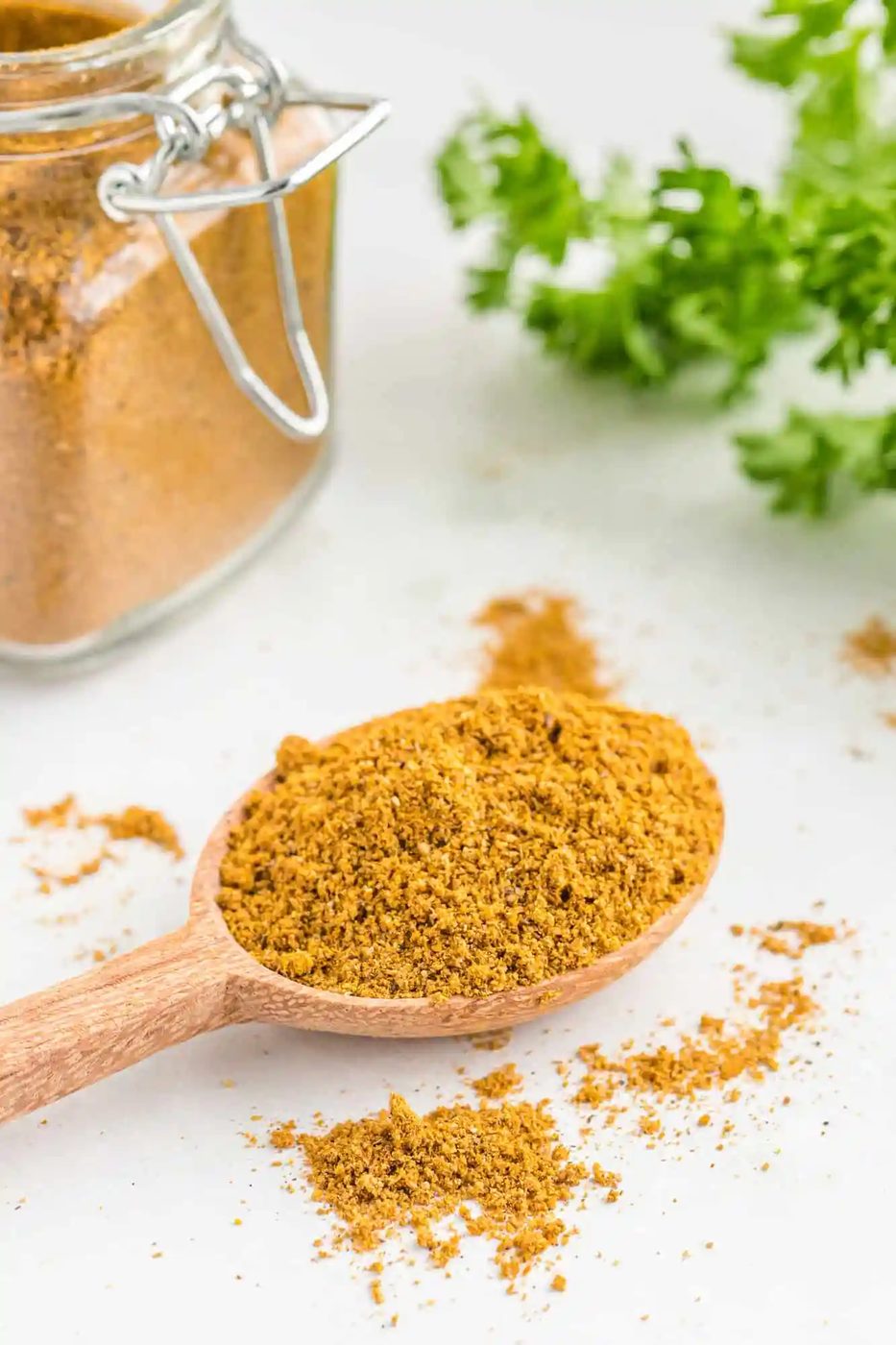
Fragrant and mildly spicy, from-scratch curry powder transforms any dish. Make your own special blend of ten spices for rich curries, soups, salads, and more.
At a glance
What stands out: Fragrant and mildly spicy, from-scratch curry powder transforms any dish. Make your own special blend of ten spices for rich curries, soups, salads, and more.
How long it takes: 5 minutes
Equipment you’ll need: measuring spoons, small jar
Servings: makes ⅔ cup
We have to confess, the first time we made this curry powder, it was out of necessity. We were developing a at-home Panera squash soup recipe (a favorite of ours!), and discovered that our pantry was devoid of curry powder.
We quickly did a little research and decided that we could make our own curry powder blend using the ground spices that we did have in our cabinet. We were able to make our squash soup with our own from-scratch spice blend.
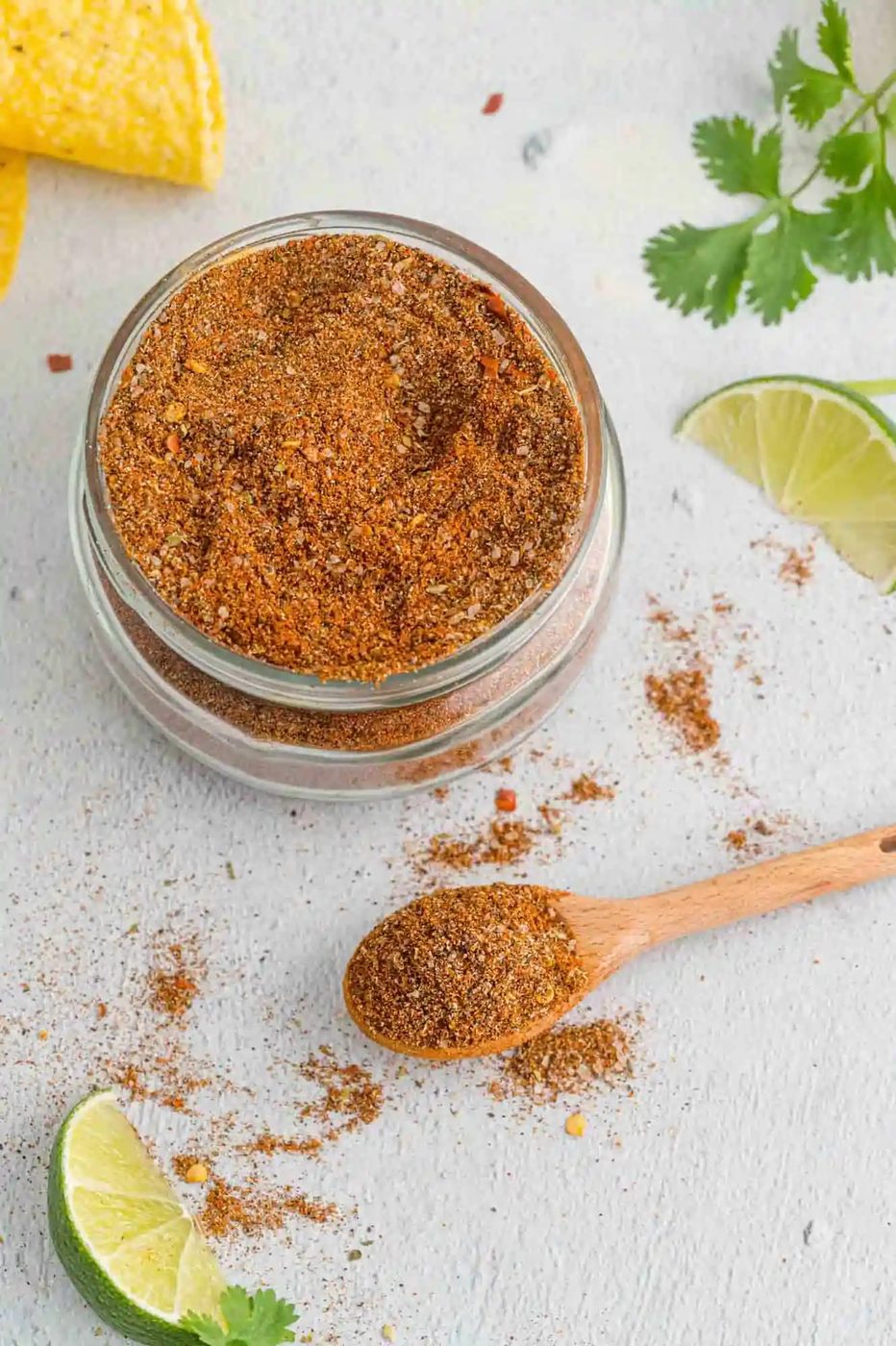
DIY Curry Powder
Our own special blend. We don’t pretend to be an expert on curries or curry powder. What we do know is that we like curry powder, particularly this blend. We've worked hard on getting the right balance of spices and it tastes great!
No “unknown” ingredients. We love to make our own seasoning because we don’t have to worry about additives or unknown “natural flavors”. This is especially important in our family because our children have pretty severe food allergies. One of our favorites is from-scratch taco seasoning. We use it on practically everything. Since then, we've come up with several more seasoning/spice mixes. You’ll find links for them later on in this post.
So many uses. We've found that curry powder is a wonderful blend to have on hand. The spices enliven soups, salads, roasted vegetables, vinaigrettes, marinades, and more. It’s great for making curries, too, of course.
What goes in
These are the spices that we use for our curry powder with a description of each so you’ll know exactly what each spice is and what it tastes like.
- Coriander: This spice is the foundation of this curry powder blend. Coriander is described as having a lemony floral flavor. It’s the seed of the coriander plant, the leaves of which are cilantro but they do not taste like each other at all.
- Cumin: Often paired with coriander, ground cumin seeds are used in many cuisines. It’s earthy, warm flavored, and a little peppery.
- Turmeric: This bright yellow spice is common in curries and has many health benefits. It will color whatever you add it to.
- Ground Ginger: Warm and spicy, this spice is used both for sweet and savory dishes. Ground ginger is milder than ginger root.
- Dry Mustard: Round yellow mustard seeds are ground to a pale yellow powder. It doesn’t have any flavor until it’s added to liquid.
- Fenugreek Powder (Ground Fenugreek Seeds): The seeds can be bitter but when combined with other spices and cooked, fenugreek has a bittersweet burnt sugar flavor.
- Ground Black Pepper: Everyone is familiar with this spice made from black peppercorns. It’s warm and spicy.
- Ground Cinnamon: Again, this is a familiar spice used in both sweet and savory dishes. Cinnamon is made from the inner bark of trees and is produced mainly in Indonesia and China.
- Ground Cloves: Dark brown in color, ground cloves are potent and distinctive in flavor. Cloves are used in both sweet and savory recipes.
- Ground Cardamom: You can buy this spice in seed or pod form as well as ground and you’ll find it in Indian, Arabic, and Middle Eastern cuisines.
How it comes together
It’s pretty straightforward to mix a spice blend. Line up all the spices you’ll be using. Find your measuring spoons and get ready to measure.
Tip!
It’s straightforward to become distracted and forget where you are on the list.You don’t want to get mixed up when you’re going down this long list of ten spices. This tip will help. Arrange all the spices on your left. After you measure each one into your bowl, replace the cover and put it on your right.You can mix the spices in a small bowl or a glass jar. Recycled jars with a tight-fitting lid are reliable. Just make sure they are clean and completely dry.
How To Use Curry Powder
- Make a curry. Try red lentil curry, vegetarian curry with cauliflower and chickpeas, or butternut squash curry.
- Add it to soups. It’s particularly good in squash or carrot soup, such as pumpkin curry soup, At-home Panera squash soup, mulligatawny soup, or creamy carrot soup.
- Go Moroccan. Often Moroccan dishes are seasoned with spices that are similar to curry. Add this curry spice blend to recipes such as slow cooker Moroccan chicken thighs (omit the spices listed on the recipe card and substitute curry) or Moroccan stew with butternut squash and chickpeas.
- Make chicken salad. Every loves this curry chicken salad. The addition of curry powder takes chicken salad up a notch.
- Add it to vinaigrettes and marinades. Add curry powder to from-scratch white wine vinaigrette. It will make your salads sing! Curry powder can add a lot of flavor to marinades, too. Add it to honey mustard marinade or Asian chicken marinade.
- Take roasted vegetables up a notch. Add a dash of curry powder to roasted vegetables. It goes particularly well with sweet potatoes, carrots, or cauliflower.
Ways to change it
Consider this blend of ten spices as a starting point. Once you’ve tried it, you may want to make some changes (or maybe not!).
- Make it spicier. This is a mild curry powder. If you enjoy hot curry powder, Madras curry powder, or garam masala, add ground red pepper (cayenne), to taste.
- Add garlic. Add a teaspoon (or more) of garlic powder to the blend, if you like. We prefer to leave garlic out of the curry, and add garlic to the dish we're preparing.
- Missing one of the spices? We wouldn’t recommend leaving out the coriander, cumin, turmeric, or fenugreek because they are the base of the curry blend. You could fudge it a little with the other spices, particularly the cloves and cardamom. Red pepper could be substituted for the black pepper but it will make your curry hotter.
- Add your own touch. If we've omitted a spice that you can’t live without in your curry, feel free to add it or substitute it for another spice on the list. Fennel seeds and caraway seeds are commonly added to curry powder, especially the recipes which begin with whole spices.
Keeping leftovers
Store your curry powder in tightly closed jar. It will keep for a few years. It’s best if it’s stored in a cupboard or pantry, not on the countertop or by your stove.
- Yield: 32 (makes ⅔ cup)
- Prep: 5 minutes
- Total: 5 minutes
Ingredients
- 5 tablespoons ground coriander
- 2 tablespoons ground cumin
- 1 tablespoon ground turmeric
- 2 teaspoons ground fenugreek seeds (fenugreek powder)
- 1 ½ teaspoons ground ginger
- 1 teaspoon dry mustard
- 1 teaspoon ground black pepper
- 1 teaspoon ground cinnamon
- ½ teaspoon ground cloves
- ½ teaspoon ground cardamom
Method
- Mix all ingredients together and store in an airtight container until ready to use.
Notes
Storage: Store in a tightly sealed container in a cool dark location for up to 3 years. We like to use a clean recycled jar with a tight-fitting lid. A pantry or cupboard is fine; avoid storing on the counter.
Make it spicier (hotter). This is a mild curry powder. If you like hotter curry, substitute ground red pepper (chili or cayenne) for the black pepper, to taste.