Dips
Chimichurri Recipe – How to Make Chimichurri
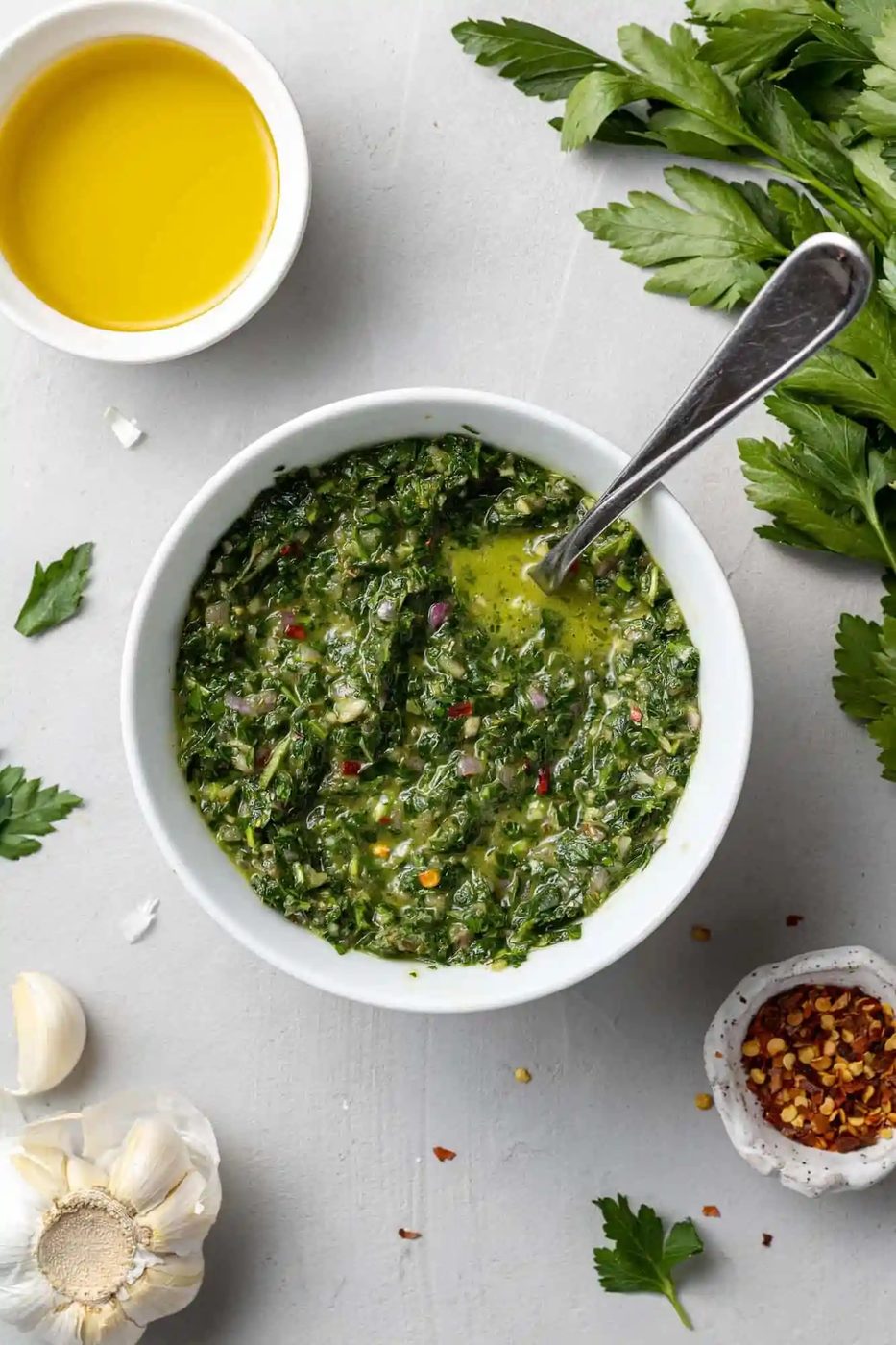
Add herbal pizzazz to your grilled meats and vegetables with this straightforward chimichurri recipe. This fresh parsley sauce takes ordinary meals from ho-hum to wow!
At a glance
What stands out: Add herbal pizzazz to your grilled meats and vegetables with this straightforward chimichurri recipe. This fresh parsley sauce takes ordinary meals from ho-hum to wow! It’s straightforward to prep, too.
How long it takes: 10 minutes
Equipment you’ll need: sharp knife, mini food processor
Servings: 8
Welcome to Chimichurri!
What is chimicurri? Most of us are familiar with basil-laden pesto, the herby green sauce of Italian origin, or salsa verde from Mexican cuisine. Chimichurri is another fresh herb sauce that may be somewhat less familiar but no less tasty. Made with lots of fresh parsley, olive oil, and garlic, it’s brilliantly green, flavorful, and totally rich! Your tastebuds will sing with delight when they’re treated to this mellifluent herb sauce.
How do you eat chimichurri? By the spoonful! Just kidding, but it’s so good you may want to do just that. Often chimichurri is served as a condiment with grilled meats such as steak or chicken, potatoes, or grilled vegetables. Cauliflower steaks are especially good slathered with chimichurri. Keep reading for lots more ways to enjoy chimichurri.
Do you need a food processor to make chimichurri? We like to use our smaller-sized food processor because it’s fast and straightforward. Some cooks prefer to chop the ingredients by hand, making a chunkier sauce. It’s totally up to you.
Where Does Chimichurri Come From?
You’ll find chimichurri in Argentinian and Uruguayan cuisines, often served as a condiment with grilled steaks. Brazilian cooks add fresh cilantro to the herb mix.What goes in
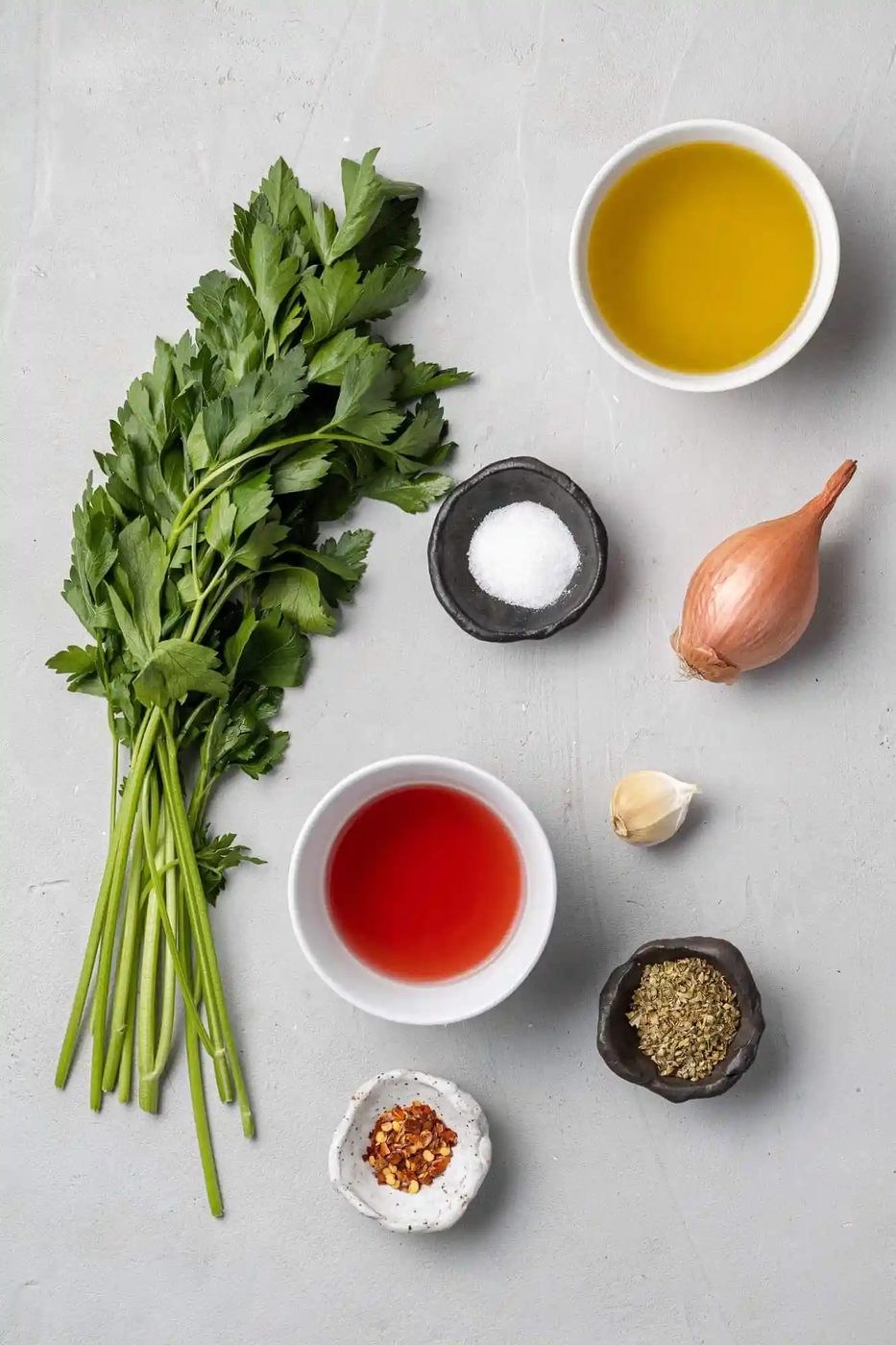
- Fresh Parsley: Look for a nice fresh bunch of parsley. You’ll want to use flat leaf parsley rather than curly leaf. They are different in taste as well as appearance.
- Shallot: Substitute onion if you prefer but shallots are a little milder and sweeter. Shallot isn’t necessarily a traditional chimichurri ingredient, so you could leave it out if you prefer.
- Garlic: Many chimichurri sauces are quite garlicky which we find can be a bit overpowering. That’s the beauty of making your own chimichurri – add as much or as little garlic as you like. The recipe calls for one clove but you can add up to six cloves. The size of garlic cloves varies widely as well.
- Extra Virgin Olive Oil: Milder tasting oils can be substituted if you prefer.
- Red Wine Vinegar: You don’t want to substitute another type of vinegar here. Red wine vinegar provides a reliable touch of acidity, flavor, and sweetness. We use it to make rich red wine vinaigrette, an all-purpose salad dressing.
- Oregano: The recipe calls for dried oregano but if you have fresh oregano in your garden, that’s reliable! Use a bit more.
- Red Pepper Flakes: Increase the amount if you like a little extra zingy heat.
- Kosher Salt: For seasoning.
Reliable Tool for This Recipe!
We love using our Ninja mini food processor for this recipe! It’s faster than a knife and clean up is a breeze! It’s more effective than a larger food processor if you’re making a single batch.
Buy it on AmazonHow it comes together
Prep the parsley. Chop off the large stem ends of the bunch with a kitchen scissors or sharp knife. We like to do this step while the parsley is in a nice bunch yet before we wash it.
Can You Eat Parsley Stems?
Thick parsley stems tend to taste bitter, unlike cilantro stems which are completely rich. That being said, in recipes like this chimichurri which are processed in a food processor, small tender stems are just fine. Avoid the thicker stems which will be bitter. Not sure? Taste a stem or two to check if it’s bitter or not. If your chimichurri has a bitter taste, it’s likely that you may have used too many large stems.
Wash the parsley thoroughly. It can be pretty sandy and you don’t want grit in your chimichurri. Swish it in a large bowl of water (or clean sink), letting the dirt settle to the bottom. Lift the parsley out of the bowl, rinse and refill the bowl. Swish the parsley through the clean water, repeating until no dirt remains.
Dry the parsley as much as possible. Quite a lot of water can cling to the leaves and that will make the chimichurri sort of watery. Not good! Roll the parsley up in a clean towel and squeeze it or give the parsley a good spin in a salad spinner.
Measure the parsley. Pinch the leaves from the stems. Small tender stems are fine. You’ll need a cup and a half of firmly packed parsley leaves.
Add the shallot and garlic. Peel and roughly chop the shallot and garlic. Don’t get too fussy with it because it’s all going in the food processor. In fact, throw it in there now, and pulse it a few times until it’s finely diced.
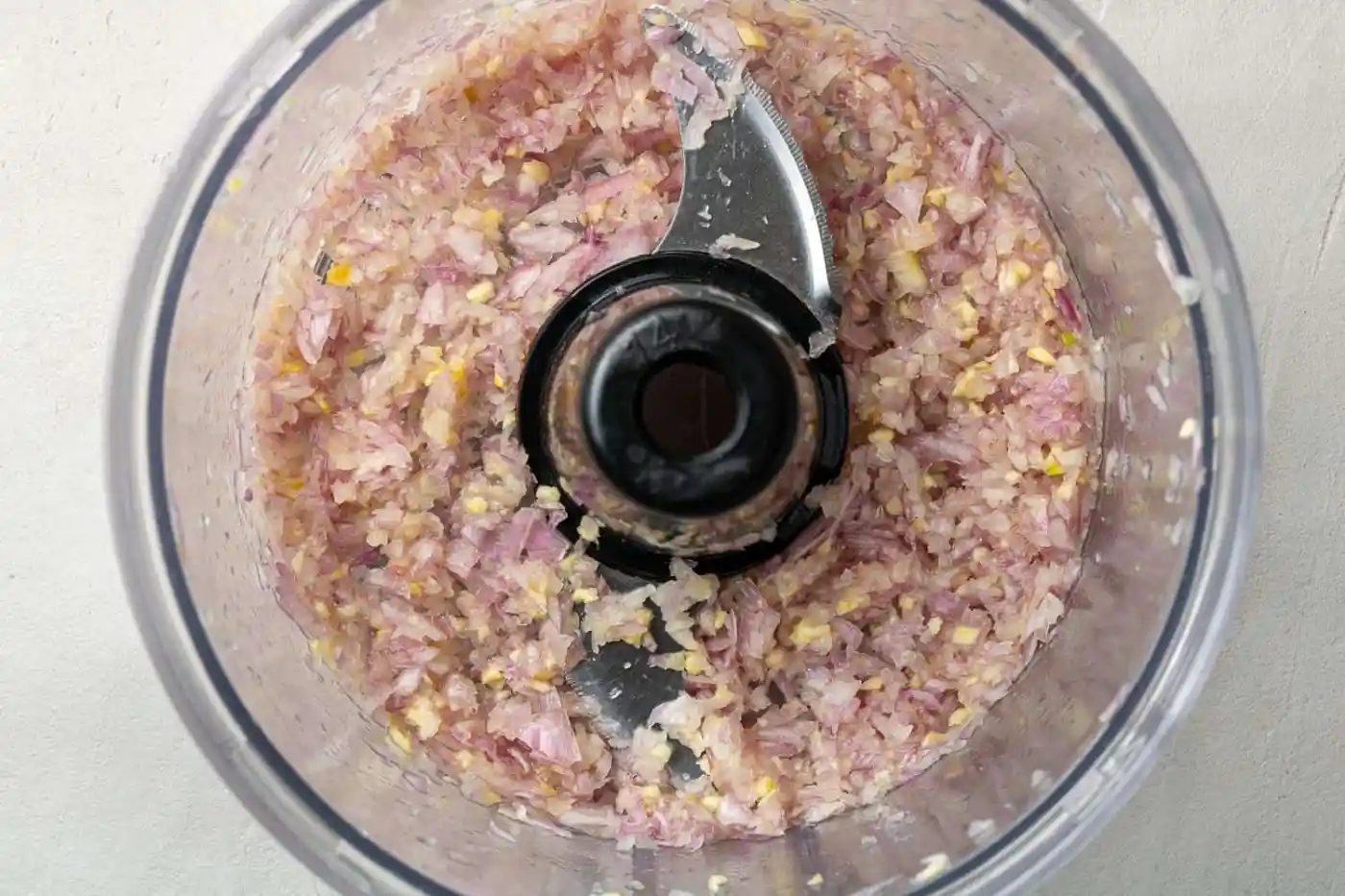
Add the olive oil, red wine vinegar, salt and red pepper flakes. Pulse a couple more times to blend the ingredients.
Next the parsley and oregano go in.
Note
A double batch is pictured here, if you use a full size food processor, you’ll need to make a double batch for the processor to work effectively. Thankfully it freezes well!
Just kind of stuff it in there, cover and pulse a few more times. The sauce should be chunky so don’t get carried away. Chimichurri is not a paste and generally has a coarser texture than pesto.
That’s it! Use a small silicone scraper to transfer the chimichurri to a small bowl.
Get your steaks, chicken, cauliflower, or what have you on the grill and get ready for a standby you ever had! Keep reading for more ways to enjoy this popular condiment.
Before you start
Ways to change it
- Add cilantro. Replace half of the parsley with fresh cilantro for a more Brazilian take.
- Make it with citrus. Substitute lemon juice or lime juice for the red wine vinegar. The chimichurri will taste a bit different but in a good way.
- Try different peppers. Substitute a fresh red chili pepper or jalapeño pepper for the red pepper flakes.
Is Chimichurri Good For You?
Most definitely yes! With parsley being the main ingredient, it’s packed full of vitamins, especially vitamins A and K, and antioxidants. Olive oil provides good-for-you fats.Make-Ahead Ideas
This chimichurri recipe can be made ahead and stored in the fridge. If you’d like to get a head start on the prep, wash and dry the parsley, and chop it roughly. Cut the shallot and garlic and store everything in the fridge in tightly covered containers. With these preparations done ahead of time, it won’t take more than five minutes to process your chimichurri.
Keeping leftovers
Refrigerate: Store chimichurri in a covered container in the fridge for up to a week. Let the sauce come to room temperature before using if olive oil has solidified.
Freeze: Chimichurri can be frozen, too. Freeze in small containers for up to a month. If you’d like smaller portions, freeze it in an ice cube tray. Once the chimichurri has frozen, take the cubes out of the tray and transfer to a freezer bag. Thaw before using.
How To Use Chimichurri
Beyond using chimichurri as a condiment for steak, chicken, or fish, there are many ways to enjoy it. Here are a few ideas but don’t be limited to this list.
- Potatoes: Slather it over grilled potatoes, baked potatoes, or roasted potatoes.
- Vegetables: Try it on grilled zucchini, air fryer Brussels sprouts, or oven roasted sweet potatoes. Any vegetable that’s been grilled, roasted, or air-fried will benefit from a spoonful of chimichurri.
- Marinade or salad dressing: You can use it as is, or if it seems too thick, stir in a tablespoon each of olive oil and red wine vinegar.
- Grains: Mix it with cooked rice, cauliflower rice, or quinoa for a flavorful side dish.
- Sandwiches: It’s great on a burger, black bean burger, or any kind of sandwich. Blend it into a little mayo if you like.
- Soup: Stir chimichurri into soup for an extra pop of flavor, like this Instant Pot minestrone soup, Instant Pot cauliflower potato soup, lentil soup with pasta, or from-scratch vegetable soup.
- Eggs: Drizzle a bit on scrambled eggs or fried eggs. Yum! Add diced avocado, too!
- Tacos/Burritos: Is your taco or burrito a little boring? Try adding chimichurri to liven things up a bit. It’s a great alternative to salsa.
- If you’re loving this chimichurri recipe, you’ll want to try shrimp with chimichurri rice.
- Yield: 8 servings
- Prep: 10 minutes
- Total: 10 minutes
Ingredients
- 1 medium shallot
- 1 clove garlic, more to taste (see note)
- ½ cup extra virgin olive oil
- 3 tablespoons red wine vinegar
- ¾ teaspoon kosher salt
- ¼ teaspoon red pepper flakes, more to taste
- 1 ½ cups firmly packed flat leaf parsley, thick stems removed
- 2 teaspoons dried oregano (or 1 tablespoon fresh)
Method
- In a mini food processor (see note), add shallot and garlic and pulse until no large chunks remain.
- Add olive oil, red wine vinegar, salt, and red pepper flakes. Pulse 1 or 2 times to combine.
- Add parsley (tearing into pieces if needed) and oregano.
- Pulse until no large pieces remain, but still chunky. Try not to over-process the chimichurri.
- Serve over roasted vegetables, fish, chicken, pork, steak, or potatoes.
Notes
Without a food processor: If you prefer, chimichurri can be prepared without a food processor. Very finely chop the shallot, garlic, and parsley. Whisk the olive oil, vinegar, salt, and red pepper flakes until well-blended. Stir in chopped shallot, garlic, parsley, and oregano. Your chimichurri will be a bit more chunky in appearance.
Storage/freezing: Store in a covered container in the fridge for up to a week. Let come to room temperature before using if olive oil has solidified. Chimichurri can be frozen, too. Freeze in small containers for up to a month. If you’d like smaller portions, freeze in an ice cube tray. Once the chimichurri has frozen, take the cubes out of the tray and transfer to a freezer bag. Thaw before using.
Add more garlic: Many chimichurri recipes call for much more garlic, up to 6 cloves. If you love garlic, feel free to add more! We prefer it more on the mild side.