
Recipe At A Glance
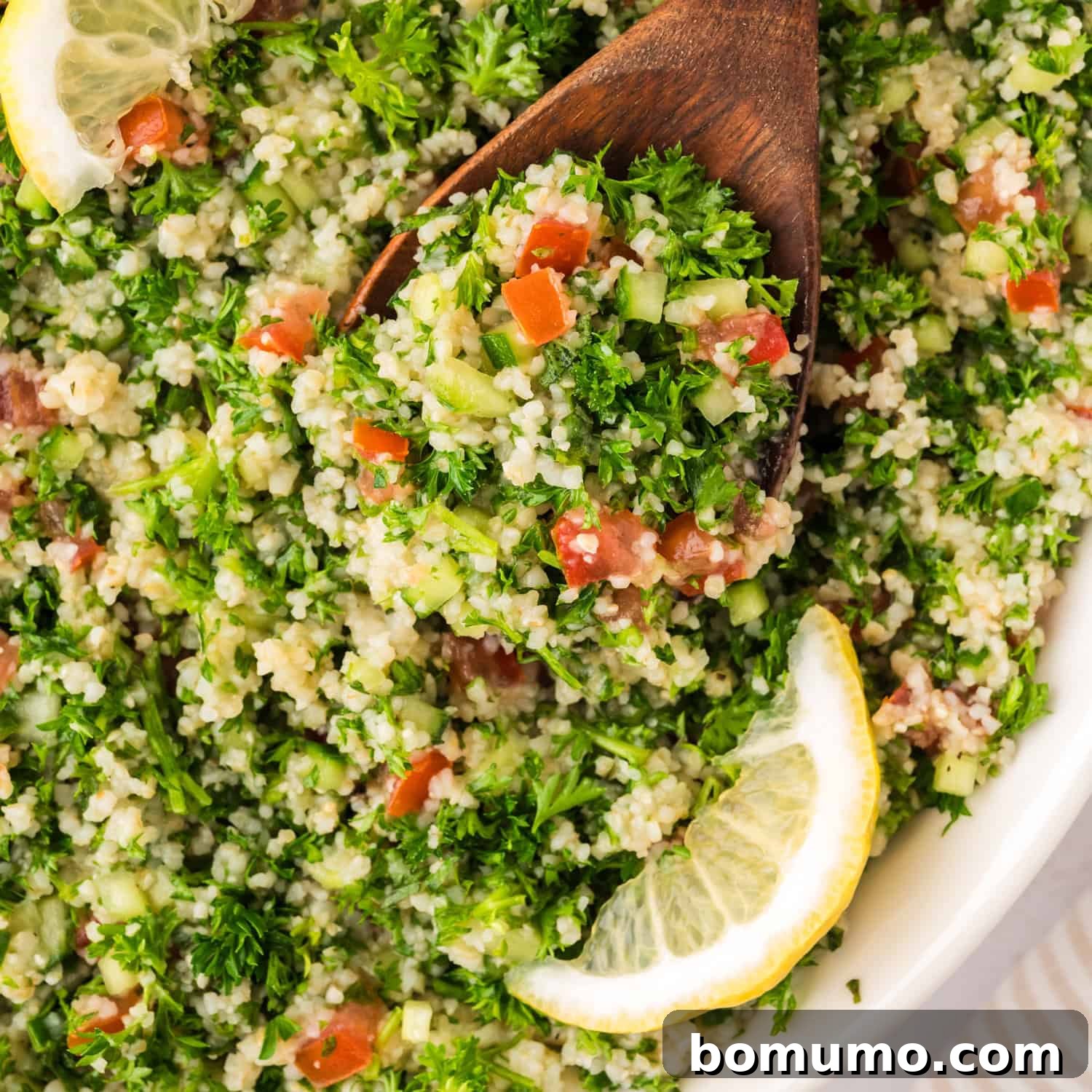
Why you’ll adore it: Tabbouleh salad is a quintessential Middle Eastern dish, celebrated for its vibrant flavors and incredible versatility! This refreshing and wholesome recipe combines fluffy bulgur, an abundance of fresh parsley and mint, crisp cucumbers, and juicy tomatoes.
Preparation time: 30 minutes
Essential tools: Sharp chef’s knife, whisk, various mixing bowls
Yields: Approximately 8 cups, serving about 8 people
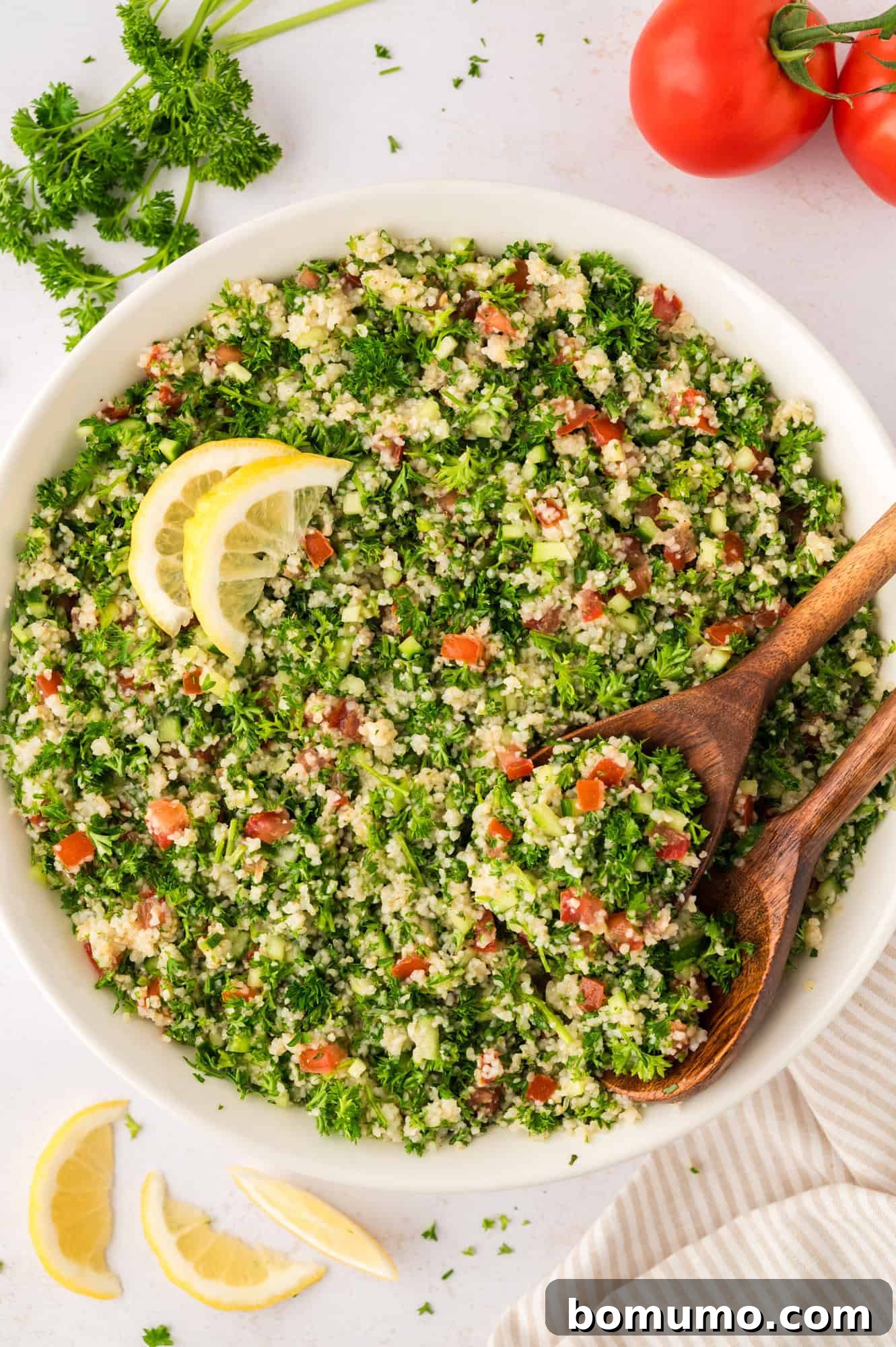
There’s a special joy in Middle Eastern cuisine, a symphony of flavors that consistently tempts us when ordering takeout. While I often enjoy recreating favorites like chicken kofta and shish tawook in my own kitchen, there’s an undeniable charm to a night off from cooking, savoring a perfectly prepared meal from a local restaurant. However, my deep affection for tabbouleh always had me craving a homemade version, particularly for those delightful leftovers that elevate a simple lunch.
Tabbouleh has become a cherished staple in my home. One of my absolute favorite light lunches involves pairing warm, soft pita bread with creamy hummus and a generous scoop of this refreshing tabbouleh salad. A close second would be a comforting bowl of red lentil soup alongside a crisp fattoush salad. The magic of tabbouleh truly unfolds as it rests in the refrigerator. The bright, zesty notes from the finely minced parsley, fresh mint, and tangy lemon juice meld beautifully, creating an even more harmonious and profound flavor profile on the second day. It’s a salad that genuinely improves with time, making it an ideal candidate for meal prepping!
What Is Tabbouleh? A Culinary Classic Explained
Tabbouleh, often spelled tabouli or tabooli, is a beloved and iconic Middle Eastern salad, traditionally served as a refreshing appetizer or a vibrant component of a mezze platter. Its fame stems from a simple yet powerful combination of finely chopped fresh parsley and mint, complemented by earthy bulgur wheat, ripe tomatoes, crisp cucumber, and savory green onions. These fresh ingredients are brought together by a light, invigorating dressing made from freshly squeezed lemon juice and high-quality extra-virgin olive oil. This simple assembly creates a salad that is not only bursting with flavor but also packed with nutrients.
While the core ingredients remain consistent, tabbouleh boasts many delightful variations across different regions and individual culinary traditions. Some versions might emphasize more bulgur, while others focus heavily on the fresh herbs, a style often referred to as “parsley salad.” Regardless of its specific incarnation, tabbouleh stands as a testament to the power of fresh, simple ingredients to create something truly extraordinary and universally appealing (Wikipedia).
Why This Tabbouleh Recipe Will Become Your Favorite
Discover the compelling reasons why this homemade tabbouleh recipe is destined to become a beloved staple in your culinary repertoire:
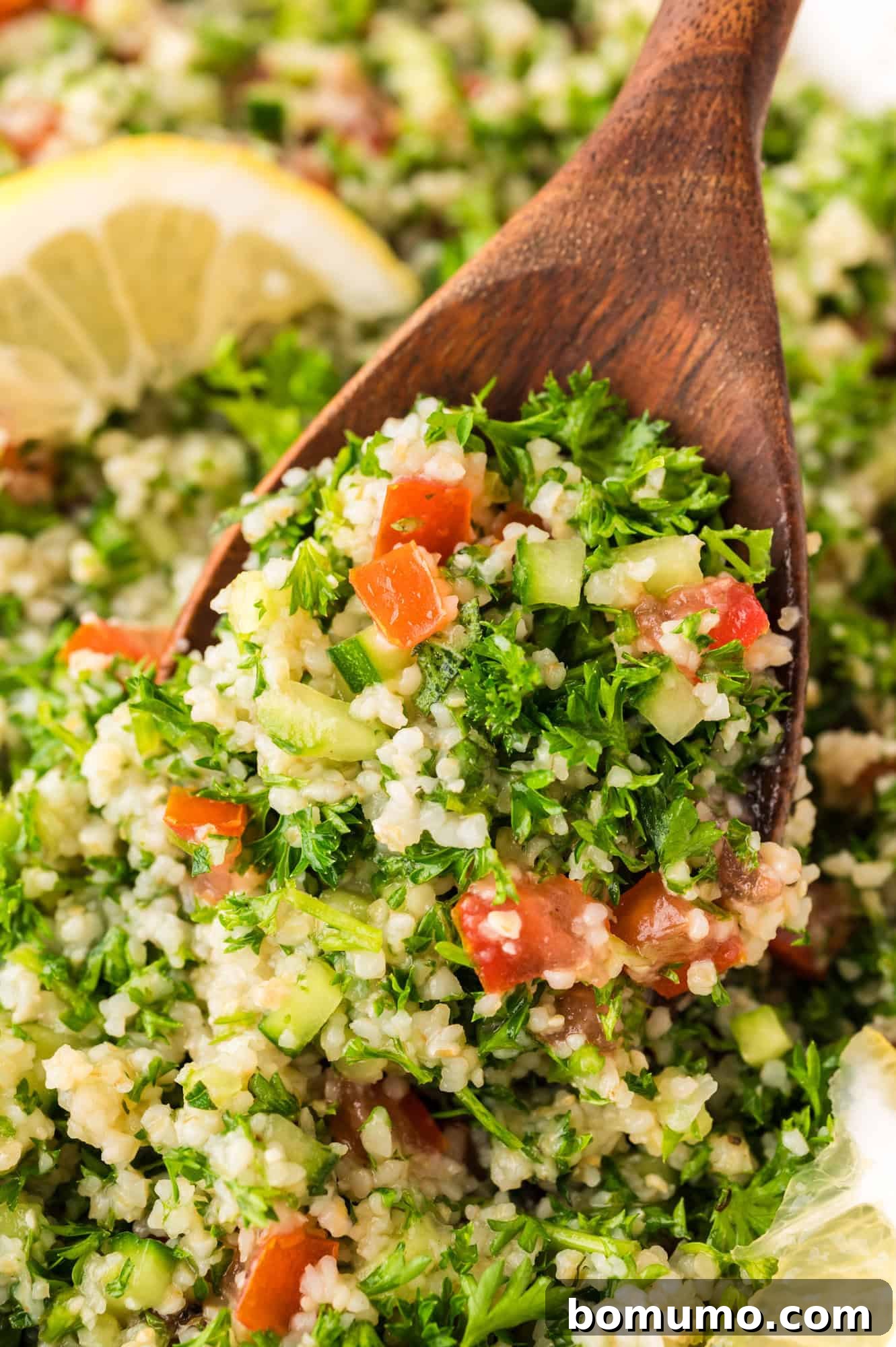
- Unforgettable Fresh, Herbaceous Flavor: Unlike typical green salads, tabbouleh foregrounds an abundance of vibrant fresh parsley and aromatic mint. These herbs are meticulously minced to unleash their full, delicious essence, delivering an explosion of garden-fresh taste. Each spoonful offers a refreshing burst that awakens the palate, proving that simple ingredients can indeed yield profound flavors. It’s a healthy, low-calorie option that doesn’t skimp on taste.
- Remarkably Easy to Prepare: This recipe requires no complex culinary techniques or hard-to-find exotic ingredients. Tabbouleh salad is beautifully straightforward, involving little more than precise chopping of quality, fresh produce and a gentle stirring together. It’s the perfect recipe for both novice cooks and seasoned chefs looking for a quick and satisfying meal. The most time-consuming part is often the chopping, which can be a meditative process or made quicker with a good knife.
- Incredibly Versatile for Any Occasion: This isn’t just a side dish; it’s a culinary chameleon! Serve it traditionally alongside other Middle Eastern delights, or transform it into a more substantial main course by incorporating hearty additions like chickpeas for a vegan protein boost or tender shredded chicken. I frequently enjoy it as the vibrant base for Middle Eastern-inspired meal bowls, generously drizzled with creamy tahini sauce for an extra layer of richness. Its adaptability makes it ideal for picnics, potlucks, or a healthy weeknight dinner.
- Perfect for Meal Prep: As mentioned earlier, tabbouleh’s flavors deepen and improve after a day or two in the fridge. This makes it an excellent choice for batch cooking, ensuring you have healthy, delicious lunches or sides ready to go for several days.
- Health Benefits Galore: Packed with fresh vegetables and herbs, tabbouleh is rich in vitamins, minerals, and antioxidants. Bulgur wheat provides a good source of fiber, aiding digestion and promoting satiety, while olive oil offers heart-healthy monounsaturated fats. It’s a naturally vegan and incredibly nutritious dish.
Ingredient Spotlight: Understanding Bulgur Wheat
Bulgur wheat is a cornerstone of authentic tabbouleh, contributing its characteristic texture and a subtle, nutty flavor. Traditionally, tabbouleh uses extra-fine bulgur, which requires only soaking rather than cooking. However, extra-fine bulgur can sometimes be challenging to locate in conventional grocery stores.
For this recipe, I extensively tested both fine bulgur (#1 grade) and medium bulgur (also commonly labeled #2 or cracked wheat). My family, and I concur, found that tabbouleh prepared with fine bulgur offered the most desirable texture and mouthfeel – lighter and more delicate, allowing the fresh herbs to truly shine. That said, medium bulgur is a perfectly acceptable alternative if it’s what you have on hand or what is readily available in your local market. It will still yield a delicious salad, albeit with a slightly chewier texture. You might also encounter bulgur spelled as burghul or bulgure, but all refer to the same versatile grain. Ensure you follow the package instructions for preparation, as methods can vary by grind size.
Essential Ingredients for Perfect Tabbouleh
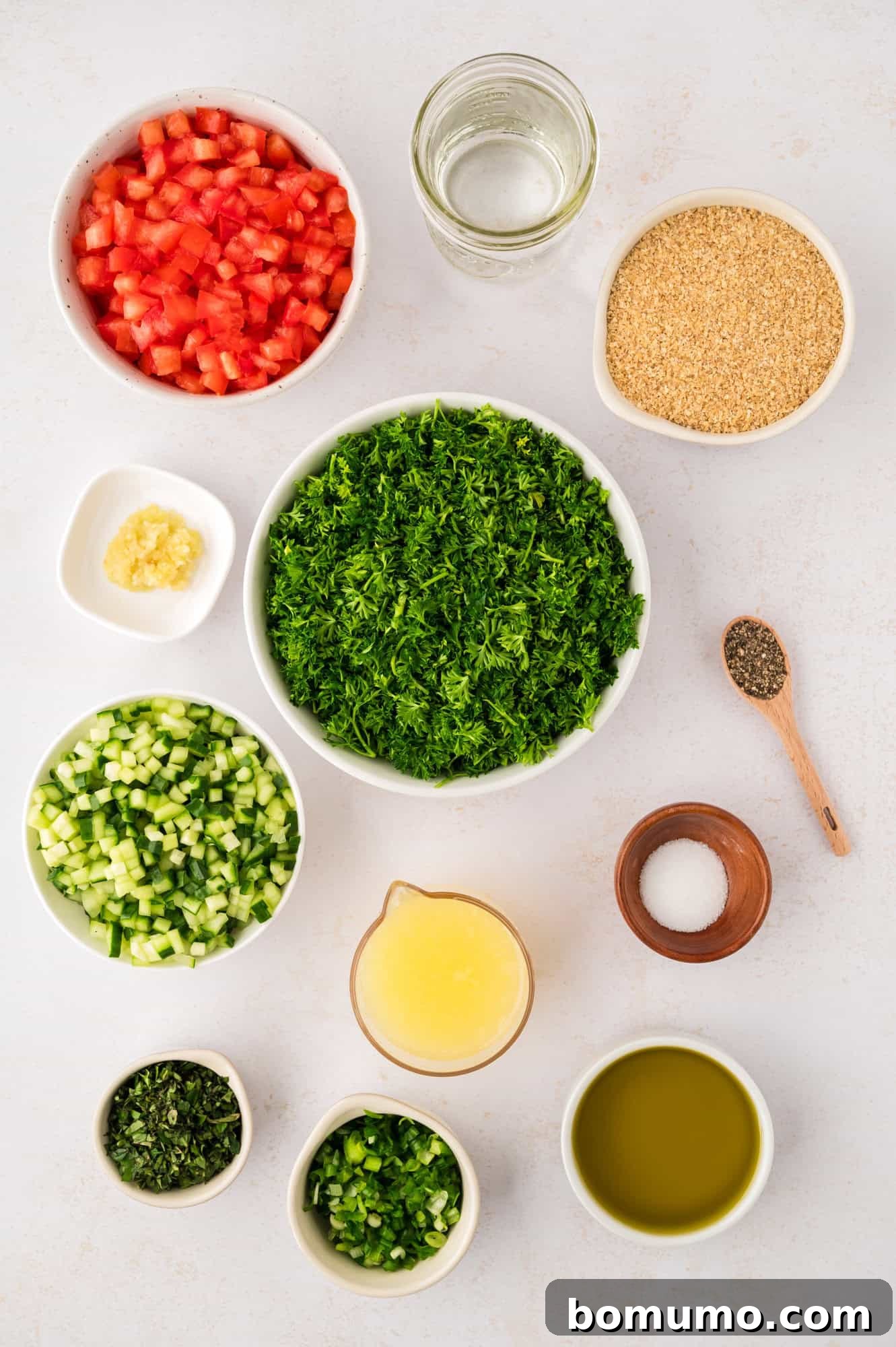
Each ingredient in tabbouleh plays a crucial role in its overall flavor and texture. Here’s a detailed guide to selecting and preparing them for the best results:
- Fine Bulgur Wheat: As discussed above, the type of bulgur significantly impacts the salad’s final texture. For very fine bulgur, a simple soak in hot water is usually sufficient. For fine or medium bulgur, follow the specific cooking instructions on your package to ensure it’s perfectly tender yet retains a slight chew. Always cool it completely before mixing to prevent wilting the fresh herbs.
- Fresh Parsley: This isn’t just a garnish; parsley is the undisputed star of tabbouleh! It provides the bulk, the color, and much of the signature herbaceous flavor. I recommend purchasing at least two large bunches to guarantee you have the generous three cups needed. While both curly and flat-leaf (Italian) parsley work, I lean towards curly parsley for tabbouleh as its texture holds up well and provides a beautiful volume.
- Fresh Mint: Mint adds an indispensable layer of bright, cooling freshness that truly elevates tabbouleh. Spearmint is the traditional choice due to its sweeter, milder flavor compared to peppermint. If buying from a grocery store, you’ll likely find a general “mint” variety, which is usually spearmint. If harvesting from your garden or a farmer’s market, opt for spearmint for that authentic taste.
- Ripe Tomato: Select firm, ripe tomatoes for the best flavor and texture. Crucially, remove the seeds and core to prevent the salad from becoming watery and soggy, which can dilute the vibrant dressing. Dice them into small, uniform pieces to integrate seamlessly with the other ingredients.
- English Cucumber: English cucumbers are ideal due to their tender skin and minimal seeds, eliminating the need for peeling or deseeding. If using a standard garden cucumber, make sure to peel it and scoop out the larger seeds to avoid a bitter taste and excessive moisture.
- Green Onions (Scallions): These provide a mild, fresh onion flavor without the sharpness of red or yellow onions. Use both the white and green parts, finely chopped, to add a delicate bite and visual appeal. They blend perfectly without overpowering the other delicate flavors.
- Fresh Lemon Juice: This is non-negotiable! The brightness and acidity of freshly squeezed lemon juice are paramount to the classic tabbouleh taste. Bottled lemon juice simply cannot replicate the vibrant, natural zest and aroma that fresh lemons impart. It’s the backbone of the dressing.
- Extra-Virgin Olive Oil: Choose a high-quality, fruity extra-virgin olive oil. Its rich, nuanced flavor will beautifully complement the fresh herbs and vegetables, adding depth and a silken texture to the dressing. A good olive oil makes a noticeable difference in the final product.
- Garlic: Just two cloves, finely minced or pressed, provide a subtle aromatic base. The lemon juice in the dressing helps to mellow the garlic’s potency, ensuring it enhances the salad with a gentle “oomph” rather than overwhelming it.
- Kosher Salt and Freshly Ground Black Pepper: These essential seasonings are crucial for balancing and amplifying all the other flavors. Always adjust to taste at the end, as the flavors develop during chilling.
Crafting Your Tabbouleh: A Step-by-Step Guide
Creating homemade tabbouleh is a delightful and rewarding process. Follow these simple steps for a perfect, flavorful salad:
1. Prepare the Bulgur Wheat. Begin by cooking your fine bulgur wheat according to the specific instructions provided on its package. This usually involves soaking it in boiling water until tender, then draining any excess liquid. Once cooked, gently fluff the bulgur with a fork to separate the grains and transfer it to a large bowl to cool completely. Allowing it to cool fully is essential to prevent it from “cooking” or wilting the fresh herbs and vegetables when mixed. For convenience, this step can be done a day in advance, storing the cooled bulgur in the refrigerator.
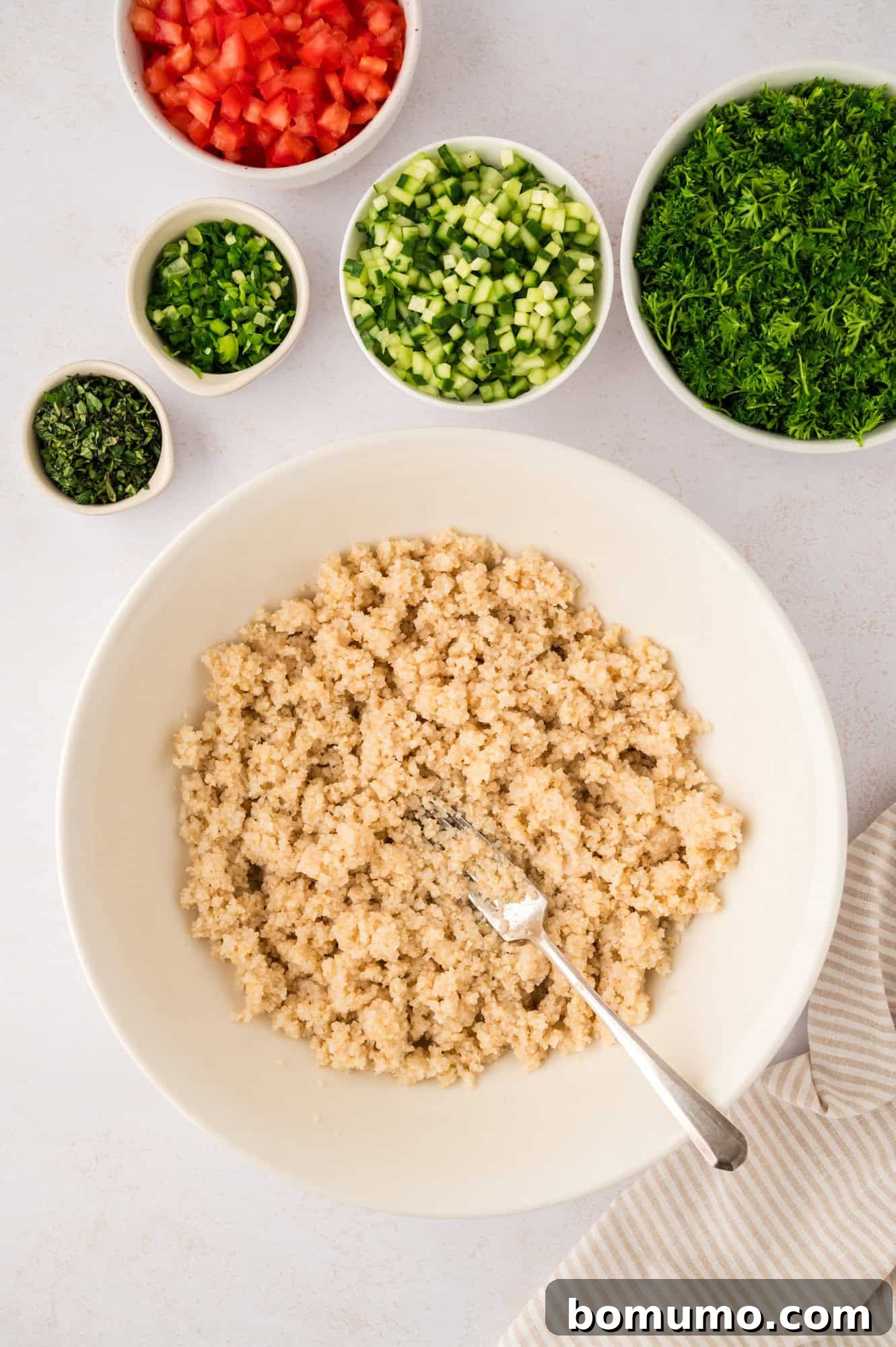
2. Prepare the Parsley. Rinse the parsley thoroughly under cold water to remove any dirt or impurities. It’s crucial to dry it as much as possible; a salad spinner works wonderfully for this, or you can shake off excess water and gently pat it dry with paper towels. Trim away any large, tough stems, but small, tender stems can be left intact. Finely chop the parsley until you have approximately three cups of loosely packed, very finely minced herbs. While a food processor can speed up this process, traditionalists (and many chefs) prefer hand-chopping for a more delicate texture and to avoid bruising the herbs, which can diminish their vibrant color and flavor. The choice is yours!
3. Prepare the Mint and Vegetables. Rinse the fresh mint leaves thoroughly and dry them similarly to the parsley. Carefully remove the leaves from their stems and finely chop them; you’ll need about a quarter cup of minced mint. Next, wash and meticulously dice the tomatoes, English cucumber, and green onions into small, uniform pieces. Aim for consistency in size to ensure even distribution of flavor and texture throughout the salad.
4. Combine Ingredients with Bulgur. Once the bulgur has completely cooled, add all the finely chopped parsley, mint, diced tomatoes, cucumber, and green onion to the large bowl containing the bulgur. Gently combine them, ensuring an even distribution of all the fresh components.
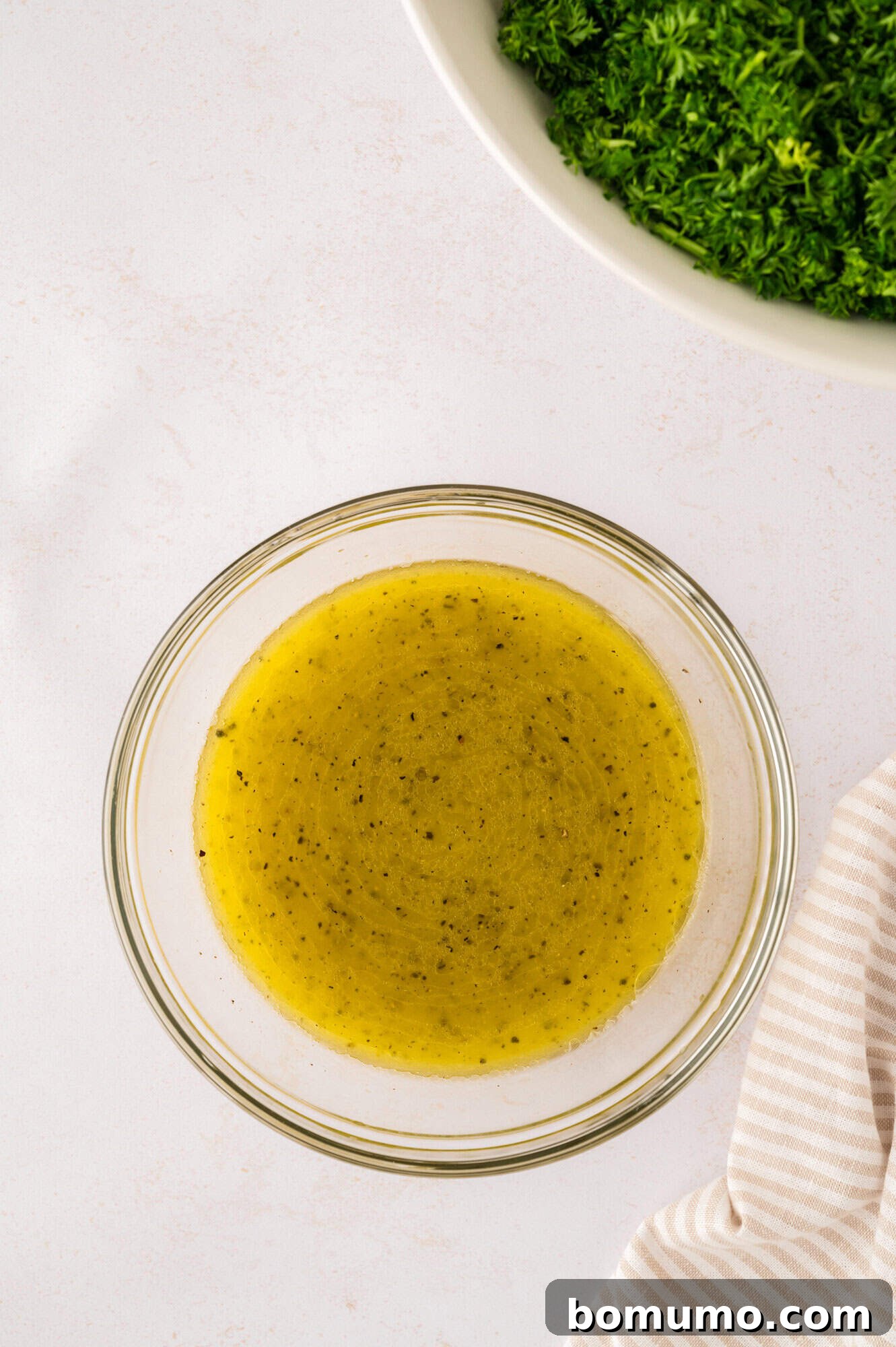
5. Whisk Together the Dressing. In a separate small bowl, prepare the invigorating dressing. Whisk together the freshly squeezed lemon juice, extra-virgin olive oil, minced or pressed garlic, kosher salt, and freshly ground black pepper until all ingredients are thoroughly combined and emulsified. Taste and adjust seasoning as needed.
6. Dress the Salad. Pour the prepared vinaigrette evenly over the salad mixture in the large bowl. Using serving spoons or clean hands, gently toss the ingredients until everything is lightly coated with the dressing. Avoid over-tossing, which can bruise the herbs.
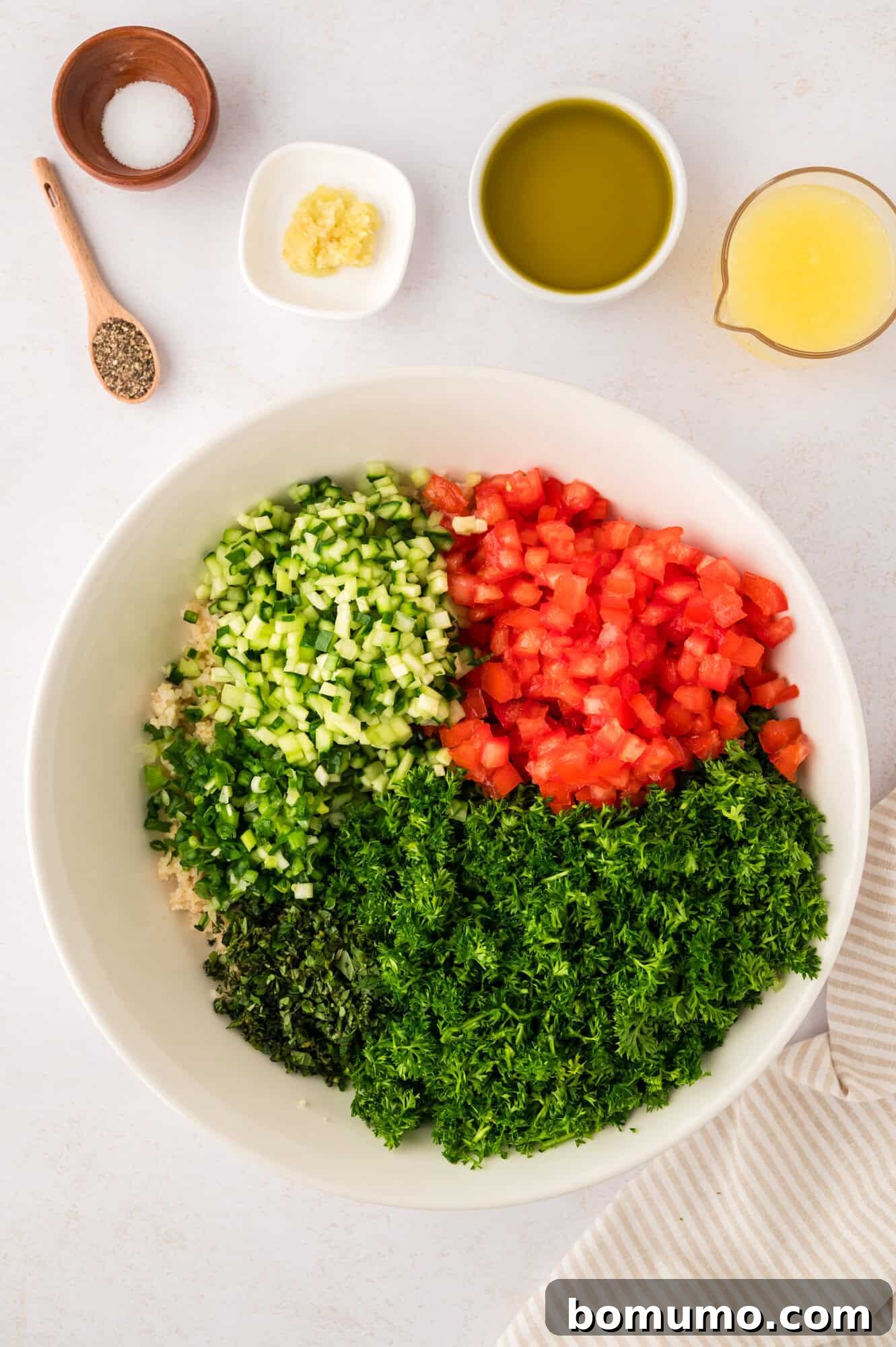
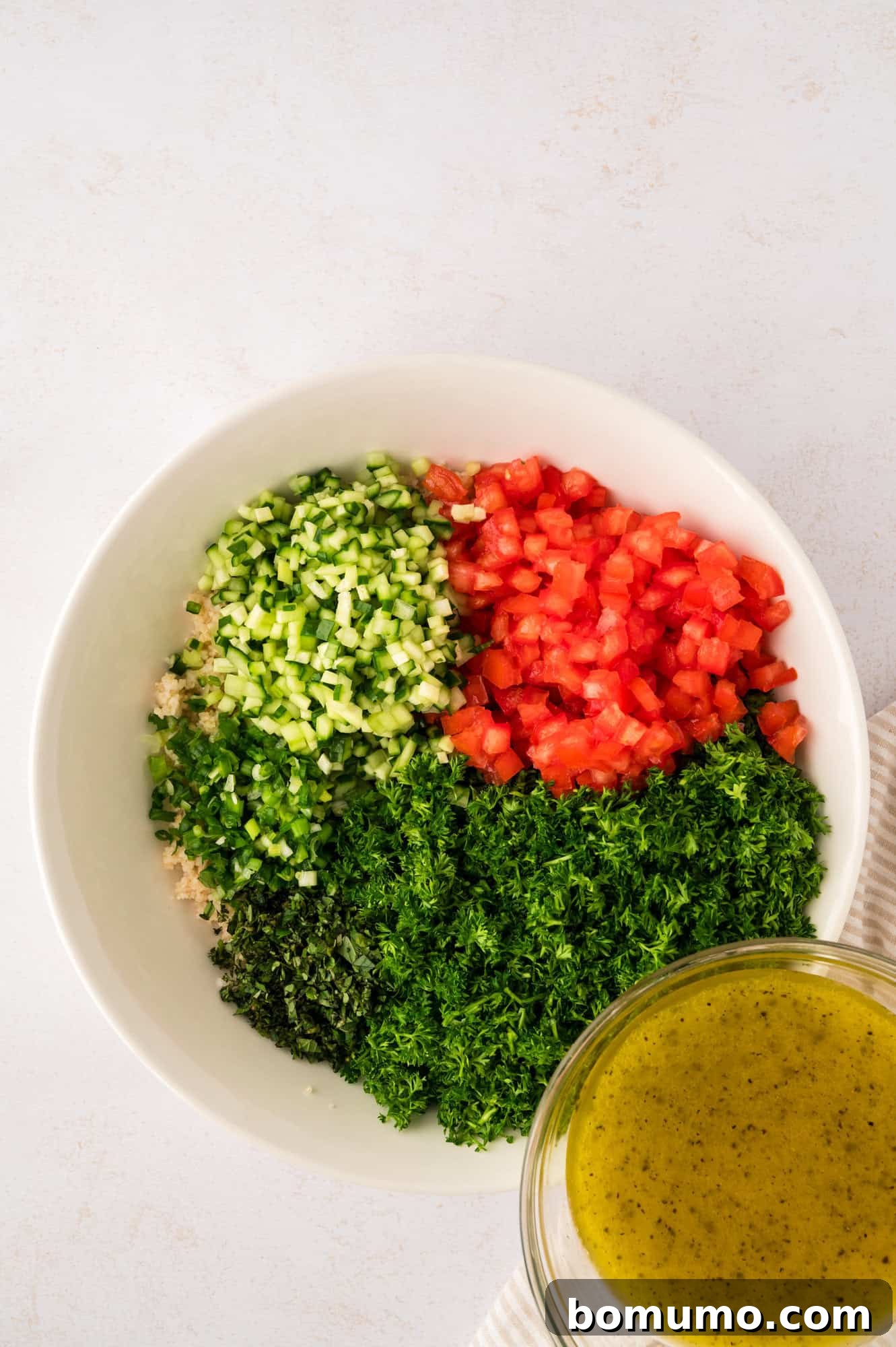
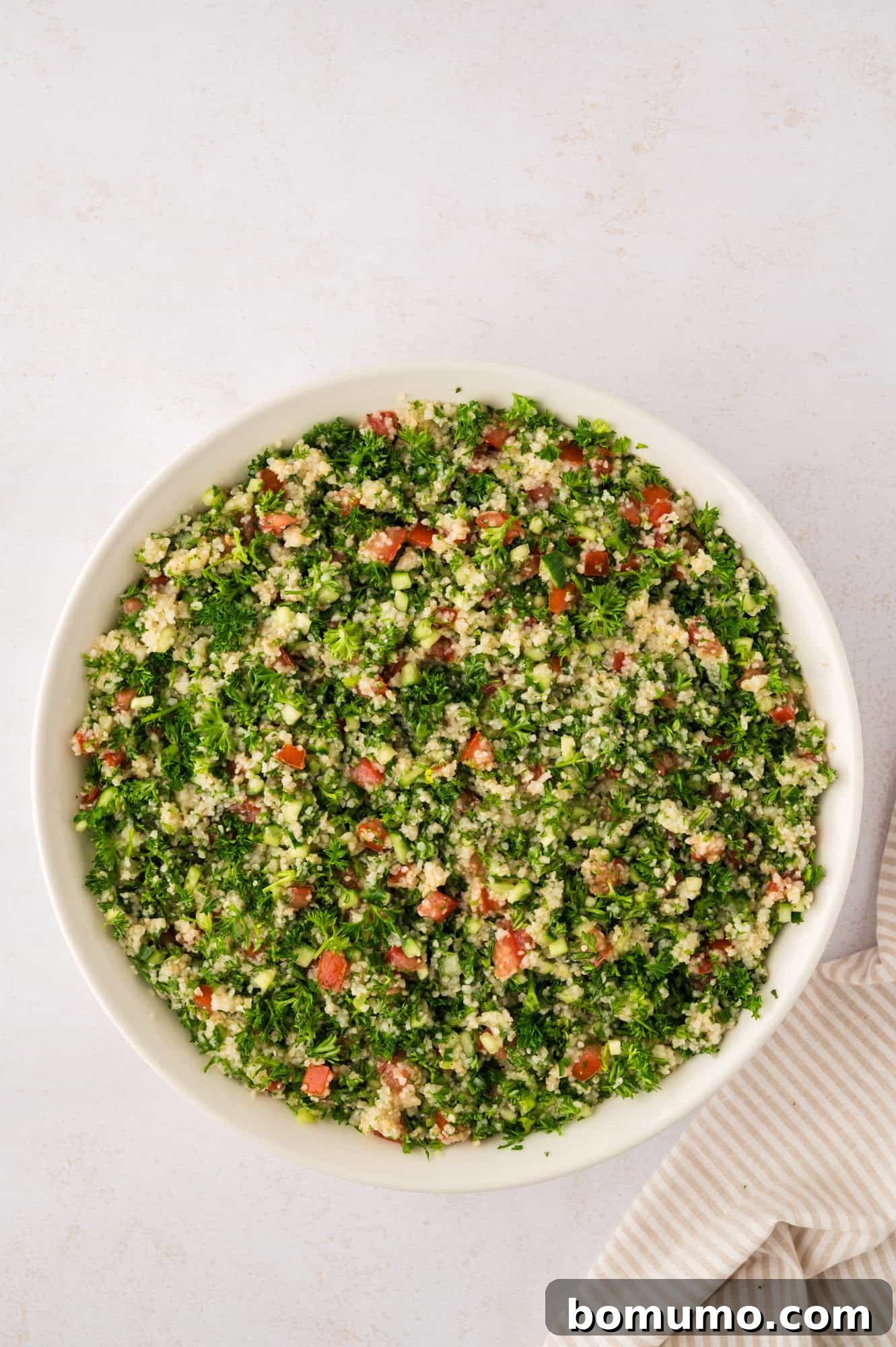
7. Adjust Seasoning to Taste. Take a small spoonful of the tabbouleh and taste it. This is your opportunity to fine-tune the flavors. Add more salt, black pepper, or a splash more lemon juice as needed until it reaches your desired balance of freshness and tang. The goal is a bright, harmonious profile.
8. Chill for Enhanced Flavor. Transfer the prepared tabbouleh salad to an airtight container and refrigerate for at least one hour. This crucial chilling period allows the flavors to truly meld and deepen, resulting in a more cohesive and delicious salad. The longer it chills, the better it tastes!
9. Serve Chilled and Enjoy! Before serving, give the tabbouleh a final good stir to redistribute any settled dressing and ingredients. Taste again and make any last-minute seasoning adjustments. Serve this vibrant and refreshing salad chilled, as a perfect side dish or a light, wholesome meal.
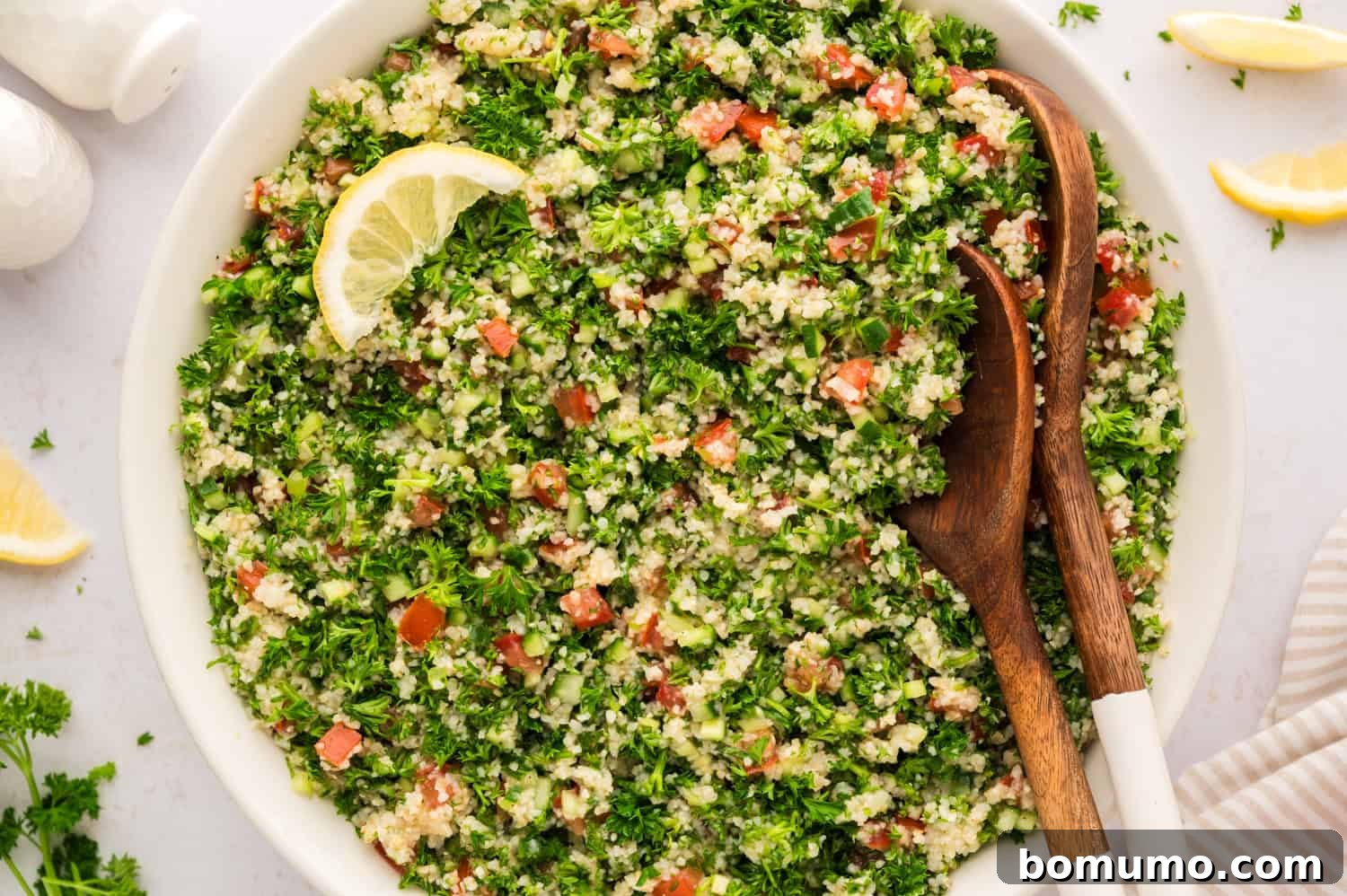
Enhance Your Tabbouleh: Exciting Recipe Variations
While the classic tabbouleh recipe is perfect as is, it also serves as an excellent canvas for creative culinary experimentation. Don’t hesitate to personalize your salad with these delicious variations:
- A Touch of Feta: For a creamy, salty counterpoint to the fresh herbs, crumble some high-quality feta cheese into your tabbouleh. This adds a delightful Mediterranean twist, making it even more satisfying as a light meal, especially when stretching out leftovers.
- Experiment with Freekeh: In an earlier version of this recipe, I used freekeh, another type of cracked wheat. Freekeh is roasted green wheat, which imparts a unique smoky and nutty depth of flavor compared to bulgur. If you’re looking for an adventurous twist, freekeh tabbouleh offers a more robust taste. It’s also delicious in dishes like this Moroccan freekeh pilaf.
- High-Protein Quinoa Tabbouleh: For a gluten-free option or to boost the protein content, consider swapping bulgur for quinoa. Quinoa tabbouleh offers a slightly different texture and a complete protein profile, making the salad even more filling and nutritious, ideal for a standalone lunch.
- Add Roasted Vegetables: Incorporate diced roasted bell peppers, zucchini, or eggplant for added sweetness and complexity. Allow them to cool completely before mixing into the salad.
- Spicy Kick: A pinch of red pepper flakes or a finely minced jalapeño can introduce a subtle heat that complements the fresh flavors.
Serving Tabbouleh: Perfect Pairings & Meal Ideas
Tabbouleh’s vibrant and refreshing profile makes it an incredibly versatile dish, perfect for a multitude of dining occasions. Here are some expert suggestions for serving your homemade tabbouleh:
- Classic Middle Eastern Mezze: Create an authentic spread by presenting tabbouleh alongside an array of Middle Eastern favorites. Think briny olives, tender stuffed grape leaves, crispy air fryer falafel, warm pita bread or homemade flatbread, creamy hummus, and tangy pickled turnips. For an extra refreshing touch, I often include a bowl of homemade tzatziki, a cool cucumber and yogurt dip, to complete this light and delicious feast.
- Pair with Grilled Meats: Tabbouleh is an exceptional accompaniment to grilled chicken, lamb, or beef. Its refreshing nature cuts through the richness of grilled meats, creating a balanced meal. Consider serving it with succulent lemon pepper chicken or flavorful grilled chicken shawarma drumsticks. The bright acidity of the salad complements the smoky, savory notes of the meat beautifully.
- Alongside Roasted or Air-Fried Vegetables: For a wholesome and satisfying vegetarian meal, pair tabbouleh with your favorite roasted or air-fried vegetables. Simple yet delicious options include crisp air fryer green beans or tender roasted cauliflower. These combinations create a nutritious and flavorful plate.
- As a Base for Grain Bowls: Use tabbouleh as the foundation for vibrant grain bowls. Top it with grilled halloumi, chickpeas, hard-boiled eggs, or even canned tuna for a quick and healthy lunch. Add a dollop of yogurt or a drizzle of tahini sauce.
- Light Lunch or Dinner: Enjoy it simply on its own as a light and satisfying meal, especially on warm days. The combination of grains, fresh vegetables, and herbs is incredibly fulfilling.
Make-Ahead & Storage Tips
Make-Ahead & Storage Tips
Tabbouleh is a dream come true for meal preppers! Its flavors wonderfully deepen and meld after a day or two, making it taste even better. Prepare a large batch of tabbouleh salad on Sunday, and you’ll have delicious, healthy lunches ready for the next three days. I love packing it in compartmentalized lunch boxes, pairing it with delicious additions like juicy grilled chicken, savory falafel, or some fresh seasonal fruit in a separate compartment for a balanced and satisfying meal. This not only saves time during busy weekdays but also ensures you’re eating something nutritious and flavorful.
Storage Suggestions
Storage Suggestions
To keep your tabbouleh salad fresh and flavorful, store any leftovers in an airtight container in the refrigerator. It will maintain its quality and vibrant taste for up to three days. Beyond this, the herbs may start to lose some of their crispness, and the bulgur might absorb too much liquid. Always give it a good stir before serving after refrigeration.
Beyond the Recipe: The Health Benefits of Tabbouleh
Tabbouleh isn’t just a delicious dish; it’s a powerhouse of nutrition, perfectly aligning with healthy eating principles like the Mediterranean diet. The abundance of fresh parsley and mint provides a significant boost of vitamins K, C, and A, as well as potent antioxidants that protect the body against free radicals. Parsley, in particular, is known for its anti-inflammatory properties and its role in supporting bone health.
Bulgur wheat, the hearty grain component, is an excellent source of dietary fiber, which is crucial for digestive health, blood sugar regulation, and prolonged satiety. This helps in weight management and reduces the risk of chronic diseases. Combined with hydrating cucumbers, lycopene-rich tomatoes (a powerful antioxidant), and heart-healthy extra-virgin olive oil, tabbouleh offers a comprehensive array of nutrients. It’s a naturally vegan, low-calorie, and nutrient-dense salad that contributes to overall well-being and a vibrant, healthy lifestyle.
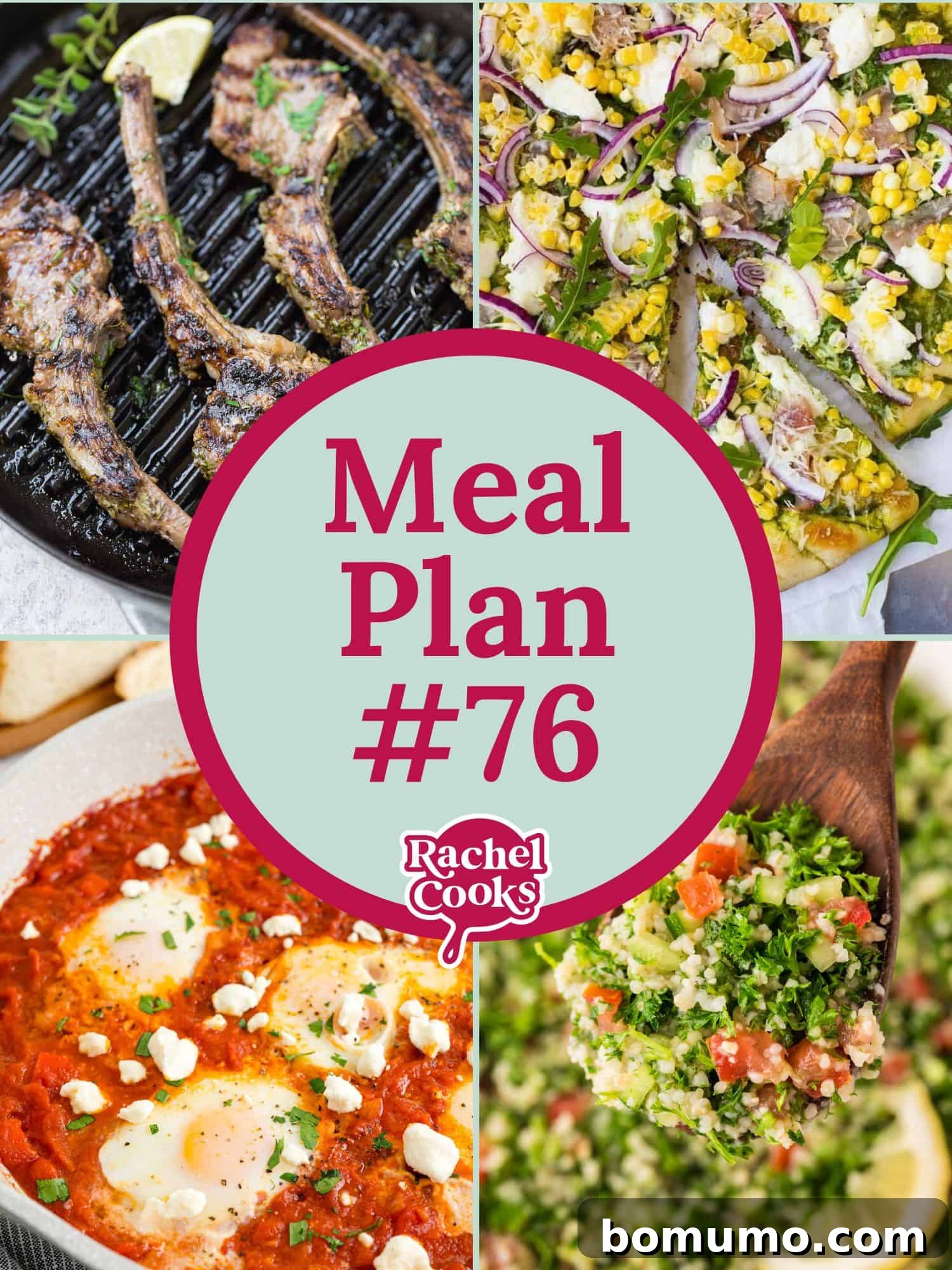
Unlock Your Free Meal Plan
Eager to integrate this delightful recipe into a structured eating plan? Explore our weekly meal plans!
Our Meal Plan #76 features this exact recipe, along with a wholesome array of dishes for each weekday and a neatly categorized grocery list to simplify your shopping. We continuously add fresh, new meal plans every week, designed to inspire and facilitate healthy, delicious home cooking.
Discover More Wholesome Grain Salads
Quinoa Salad with Orange & Grapes
Barley Salad with Tomatoes, Cucumber and Parsley
Quinoa Chickpea Salad with Blackberries & Candied Pepitas
Southwestern Farro Salad Recipe with Poblanos
Tabbouleh Salad
Rachel Gurk
30
1
1 30
8 servings
Ingredients
- 1 cup fine bulgur wheat (see note)
- boiling water (as per bulgur package directions)
- 3 cups loosely packed, finely chopped fresh curly leaf parsley (about 2 large bunches, see note)
- ¼ cup finely chopped fresh mint leaves
- 1 cup diced tomato (from 3 medium tomatoes, seeds and core removed)
- 1 English cucumber, finely diced (about 1 heaping cup)
- 3 green onions, finely chopped (use both green and white parts, more to taste)
- ½ cup freshly squeezed lemon juice (from 1 large lemon)
- ½ cup extra-virgin olive oil
- 2 cloves garlic (grated, pressed, or finely minced)
- 1 teaspoon kosher salt (or to taste)
- ½ teaspoon coarse ground black pepper (or to taste)
Instructions
-
Cook bulgur as directed on package, soaking it in boiling water until tender. Drain any excess liquid if needed. Fluff the cooked bulgur with a fork and let it cool completely in a large bowl. This step can be done ahead of time.1 cup fine bulgur wheat, boiling water
-
Meanwhile, rinse the parsley thoroughly and dry it as much as possible using a salad spinner or by patting it dry. Trim off the large stems, leaving small stems if desired. Chop the parsley finely. You can use a food processor for speed, but hand-chopping is traditional for a finer texture.3 cups loosely packed, finely chopped fresh curly leaf parsley, about 2 large bunches
-
Remove the mint leaves from their stems, rinse, dry, and chop finely, similar to the parsley. Finely dice the tomatoes (with seeds and core removed), cucumber, and green onions, aiming for uniform pieces.¼ cup finely chopped fresh mint leaves, 1 cup diced tomato, 1 English cucumber, finely diced, 3 green onions, finely chopped, more to taste
-
Once the bulgur has completely cooled, add the chopped parsley, mint, tomatoes, cucumber, and green onion to the bowl with the bulgur.
-
In a small bowl, whisk together the freshly squeezed lemon juice, extra-virgin olive oil, minced garlic, kosher salt, and coarse ground black pepper until thoroughly combined.½ cup freshly squeezed lemon juice, ½ cup extra-virgin olive oil, 2 cloves garlic, 1 teaspoon kosher salt, or to taste, ½ teaspoon coarse ground black pepper, or to taste
-
Pour the dressing over the salad and toss everything together lightly until all ingredients are well combined and coated.
-
Taste the tabbouleh and adjust the seasoning as needed, adding more salt, pepper, or lemon juice to achieve your preferred flavor balance.
-
Refrigerate the tabbouleh for at least 1 hour before serving. This allows the flavors to fully meld and develop. Tabbouleh can be refrigerated for up to 3 days.
-
Before serving, give the salad a good stir and make any final seasoning adjustments if necessary. Serve chilled for the best refreshing experience.
Notes
- We tested this recipe with both fine bulgur (labeled #1) and medium bulgur (labeled #2 or cracked wheat). Since various types exist, always follow the specific cooking directions on the package you purchase. While both fine and medium bulgur work well, we found fine bulgur produces a slightly superior texture for tabbouleh.
- Both curly leaf parsley and flat leaf (Italian) parsley are suitable for this recipe. However, we surprisingly prefer curly parsley in tabbouleh salad, which is a rare preference for us!
- This recipe underwent retesting and revisions in May 2024. The original version featured freekeh instead of bulgur and included feta cheese, offering a slightly different flavor profile.
Nutrition
Calories: 223kcal,
Carbohydrates: 23g,
Protein: 4g,
Fat: 14g,
Saturated Fat: 2g,
Polyunsaturated Fat: 2g,
Monounsaturated Fat: 10g,
Sodium: 313mg,
Potassium: 370mg,
Fiber: 6g,
Sugar: 2g,
Vitamin A: 2078IU,
Vitamin C: 41mg,
Calcium: 64mg,
Iron: 3mg
Nutrition information is automatically calculated and should be used as an approximation only.
Did You Make This?
Share a comment and rating below! I love hearing what you think!