
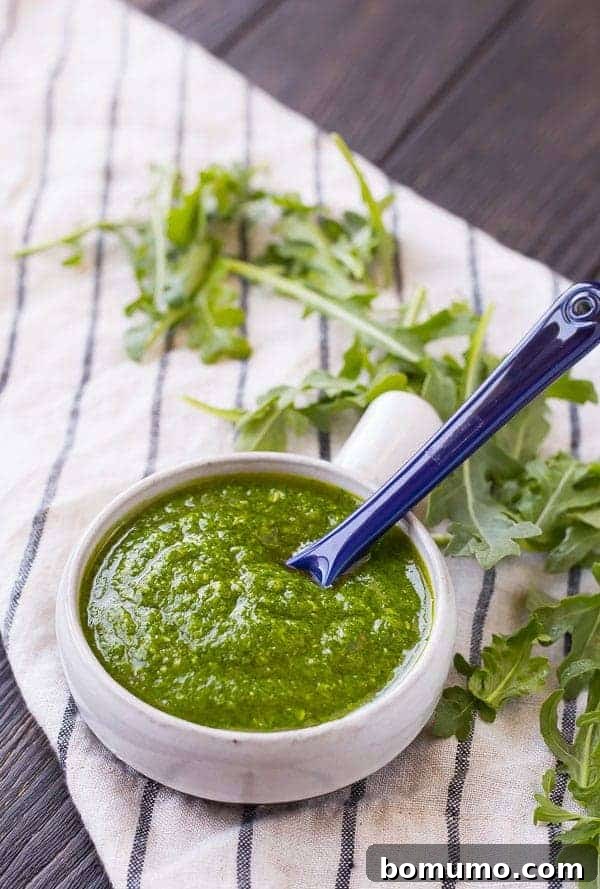
Elevate Your Culinary Creations with Zesty Nut-Free Arugula Pesto
Discover the vibrant, peppery kick of homemade arugula pesto – a versatile condiment perfect for pasta, pizza, and so much more! This guide shares an easy, nut-free recipe and endless ways to enjoy it.
From Skeptic to Enthusiast: My Journey with Arugula’s Bold Flavor
I distinctly remember my first encounter with arugula. It was a rather strong, almost spicy green, and honestly, I wasn’t an immediate fan. “Why is this leafy green so peppery?” I thought, a bit bewildered. Yet, as often happens with adventurous palates (and persistent exposure), my initial reservation transformed into a deep appreciation. Arugula, with its distinctive peppery bite and slight bitterness, has since become one of my favorite greens, proving itself an indispensable asset in countless culinary applications.
This bold, bright flavor is what makes arugula so much more than just a salad green. Imagine tossing a generous pile onto a freshly baked pizza, stirring its vibrant leaves into a simmering soup, or incorporating it into a rich pasta sauce for an unexpected depth. But perhaps one of the most transformative uses for this leafy powerhouse is in a pesto. Forget traditional basil for a moment; arugula brings a unique, sophisticated edge that’s truly captivating.
The Irresistible Charm of Homemade Arugula Pesto
My obsession with arugula pesto is no secret. It’s not just a passing phase; it’s a staple. The subtle spice from the arugula is not an overpowering heat but rather a gentle awakening for your taste buds, a refreshing contrast to the richness often found in pesto. What truly elevates this particular pesto is the addition of fresh lemon juice. Its zesty brightness cuts through the peppery notes of the arugula and the richness of the olive oil, creating a perfectly balanced flavor profile that sings on the palate.
When preparing this pesto, don’t compromise on the quality of your olive oil. A good extra virgin olive oil is not just a carrier for flavors; it’s an ingredient in its own right, contributing a fruity, complex depth that defines a truly great pesto. Skimping here would be a disservice to the delicate balance of flavors we’re aiming to achieve. Choose a high-quality oil, and your pesto will thank you with an unparalleled richness and smoothness.
Crafting a Delicious Nut-Free Pesto for Everyone
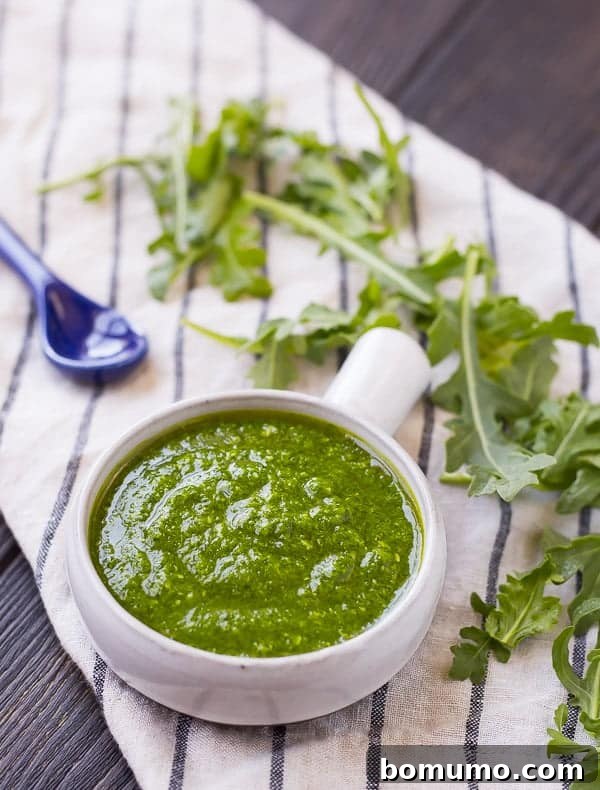
This arugula pesto recipe was developed with a specific dietary need in mind: it’s entirely nut-free. In our household, navigating nut allergies is a reality, and I believe everyone should be able to enjoy the rich, satisfying flavors of pesto without worry. Traditional pesto often calls for pine nuts or walnuts, which contribute to its texture and flavor complexity. However, this recipe proves that a phenomenal pesto can be created without them, maintaining all the essential deliciousness.
If, however, you are fortunate enough not to have nut allergies, feel free to experiment! A handful of toasted walnuts, pine nuts, or almonds tossed into the food processor alongside the other ingredients would add a lovely nutty depth and textural contrast. For those seeking a nut-free crunch without altering the core recipe, consider adding a tablespoon or two of toasted sunflower seeds or pumpkin seeds. They offer a similar textural element and a subtle, earthy flavor that complements the arugula beautifully, ensuring this pesto remains inclusive and delightful for all.
Endless Culinary Adventures: Beyond the Pasta Bowl
This versatile arugula pesto originally came to life as the star ingredient in my Grilled Pizza With Arugula Pesto, Corn, and Ham. The bright, summery flavors of that pizza are simply unforgettable, and this pesto forms the perfect base. But its utility stretches far beyond that. Don’t be afraid to get creative with toppings and pairings! If ham isn’t your preference, grilled chicken or succulent shrimp would be equally fantastic, creating a light yet satisfying meal.
Picture this pesto generously stirred into a bowl of al dente pasta, perhaps with some savory Italian sausage and an abundance of fresh, seasonal vegetables like cherry tomatoes, zucchini, or bell peppers. The peppery notes of the arugula, combined with the robust sausage and sweet vegetables, create a symphony of flavors that’s both comforting and invigorating. It’s an ideal way to elevate a simple weeknight dinner into something truly special.
More Creative Ways to Enjoy Your Arugula Pesto:
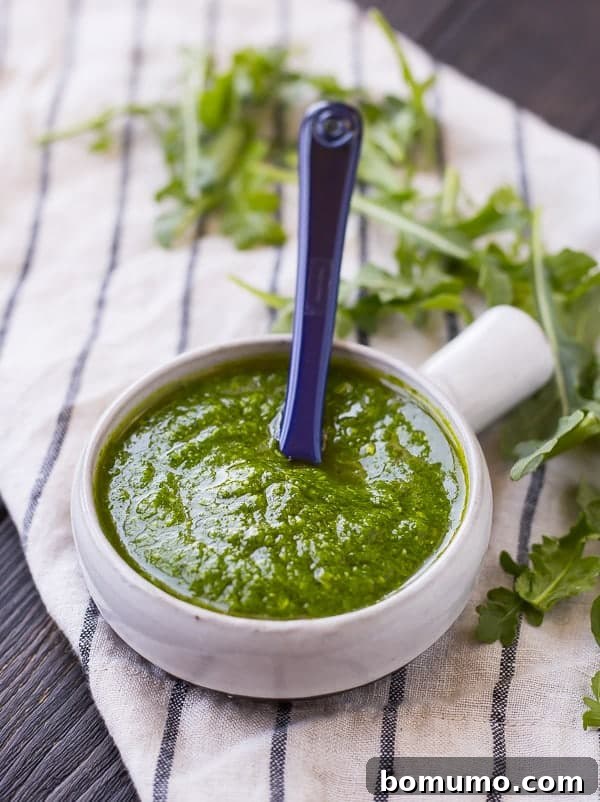
- As a Dip: Forget plain olive oil! Imagine dipping crusty French bread into this vibrant arugula pesto. The damage I could do with a fresh loaf and a bowl of this green goodness is considerable. Just pass me all the carbs, and no one gets hurt!
- Sandwich and Wrap Spread: Replace mayonnaise or mustard with a generous smear of arugula pesto for an instant flavor upgrade. It pairs wonderfully with turkey, chicken, or grilled vegetables.
- Egg Enhancer: Stir a spoonful into scrambled eggs or use it as a dollop over a frittata or omelet for a burst of fresh flavor.
- Marinade Magic: Whisk it with a little extra olive oil and lemon juice to create a fantastic marinade for chicken, fish, or firm tofu.
- Roasted Vegetable Companion: Toss roasted potatoes, broccoli, or asparagus with a tablespoon of pesto after cooking for an extra layer of taste.
- Salad Dressing Base: Thin out the pesto with a little more olive oil, lemon juice, or even a touch of white wine vinegar to create a unique and flavorful salad dressing.
- Soup Swirl: A dollop of pesto swirled into a bowl of minestrone, tomato, or vegetable soup adds freshness and depth.
Explore More Homemade Pasta Sauces
If you love experimenting with fresh, homemade sauces, here are a few other exceptional recipes to add to your repertoire:
- Carrot Pesto (An incredibly unique and surprisingly delicious take on pesto!)
- Fresh Tomato Cream Sauce (A beloved recipe, affectionately known as “pink pasta” in our home.)
- Skinny Alfredo Sauce (A lighter, yet equally creamy and satisfying version of the classic.)
- Roasted Red Pepper Sauce (Sweet, smoky, and vibrant – perfect with delicate angel hair pasta.)
Tips for Storing Your Fresh Arugula Pesto
Once you’ve made a batch of this glorious arugula pesto, proper storage is key to maintaining its vibrant color and fresh flavor. Here are a few tips:
- Refrigeration: Store the pesto in an airtight container in the refrigerator for up to 5-7 days. To prevent browning and keep it looking fresh, pour a thin layer of olive oil over the top of the pesto before sealing the container. This creates a barrier that protects it from oxidation.
- Freezing: Pesto freezes beautifully! For longer storage, spoon the pesto into ice cube trays and freeze until solid. Once frozen, transfer the pesto cubes to a freezer-safe bag or container. This method is incredibly convenient as you can simply pop out a cube or two whenever you need a quick burst of flavor. Frozen pesto will keep well for up to 3-4 months.
- Preventing Discoloration: Aside from the olive oil layer, some people add a tiny pinch of ascorbic acid (Vitamin C powder) or a bit more lemon juice when processing to help maintain the bright green color, although the olive oil layer is usually sufficient.
Customizing Your Arugula Pesto: Endless Possibilities
While this recipe is perfect as is, it’s also a fantastic canvas for customization. Don’t hesitate to make it your own!
- Herb Blends: For a slightly different flavor profile, consider blending arugula with other fresh herbs. A mix of arugula and fresh basil offers a milder peppery note, while adding a touch of parsley or even mint can introduce new dimensions.
- Cheese Variations: While Parmesan cheese provides a classic salty, umami depth, you could experiment with Pecorino Romano for a sharper, saltier kick, or even a blend of cheeses. For a dairy-free or vegan option, nutritional yeast can mimic the cheesy flavor remarkably well.
- Spice Level: If you love heat, feel free to increase the amount of red pepper flakes. Conversely, omit them entirely for a milder pesto.
- Citrus Zest: For an even brighter, more aromatic pesto, add a teaspoon of fresh lemon zest along with the lemon juice. The oils in the zest provide a burst of fragrance that enhances the overall flavor.
- Garlic Intensity: One clove of garlic provides a subtle warmth. If you’re a garlic lover, you can certainly add another small clove, but be mindful not to let it overpower the delicate arugula.
Nut-Free Arugula Pesto Recipe
★
★
★
☆
Rachel Gurk
5
mins
5
mins
4
servings
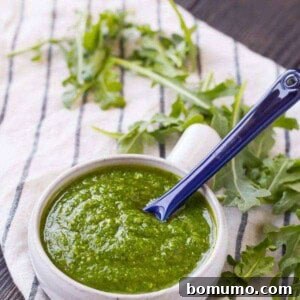
Ingredients
- 2 cups tightly packed fresh arugula
- 1 clove garlic, minced
- 1 tablespoon freshly squeezed lemon juice (from about ½ lemon)
- Pinch of red pepper flakes (optional, for a subtle kick)
- ⅓ cup shredded Parmesan cheese (omit for dairy-free, or use nutritional yeast)
- ½ cup good quality extra virgin olive oil
- Salt and freshly ground black pepper, to taste
Instructions
-
In a food processor or blender, combine the fresh arugula, minced garlic, lemon juice, optional red pepper flakes, and Parmesan cheese.
-
Pulse the mixture until finely chopped and well combined. Then, with the food processor or blender running on low, slowly drizzle in the extra virgin olive oil until a smooth, vibrant pesto forms. Stop occasionally to scrape down the sides of the bowl as needed to ensure all ingredients are incorporated.
-
Taste the pesto and season with salt and freshly ground black pepper as needed. Adjust seasonings to your preference, adding more lemon juice for brightness or a pinch more salt.
Notes
- This recipe yields approximately ½ cup of pesto.
- For a vegan option, simply omit the Parmesan cheese or substitute it with 2 tablespoons of nutritional yeast for a cheesy flavor.
- Store any leftover pesto in an airtight container in the refrigerator for up to 5-7 days, with a thin layer of olive oil on top to prevent browning.
- Pesto can also be frozen in ice cube trays for convenient portions, lasting up to 3-4 months.
Nutrition
Serving:
2
tablespoons
,
Calories:
180
kcal
,
Carbohydrates:
1
g
,
Protein:
2
g
,
Fat:
19
g
,
Saturated Fat:
3
g
,
Polyunsaturated Fat:
15
g
,
Cholesterol:
3
mg
,
Sodium:
127
mg
Nutrition information is automatically calculated and should be used as an approximation.
Did You Make This?
Share your thoughts! Leave a comment and rating below – I love hearing what you think!