
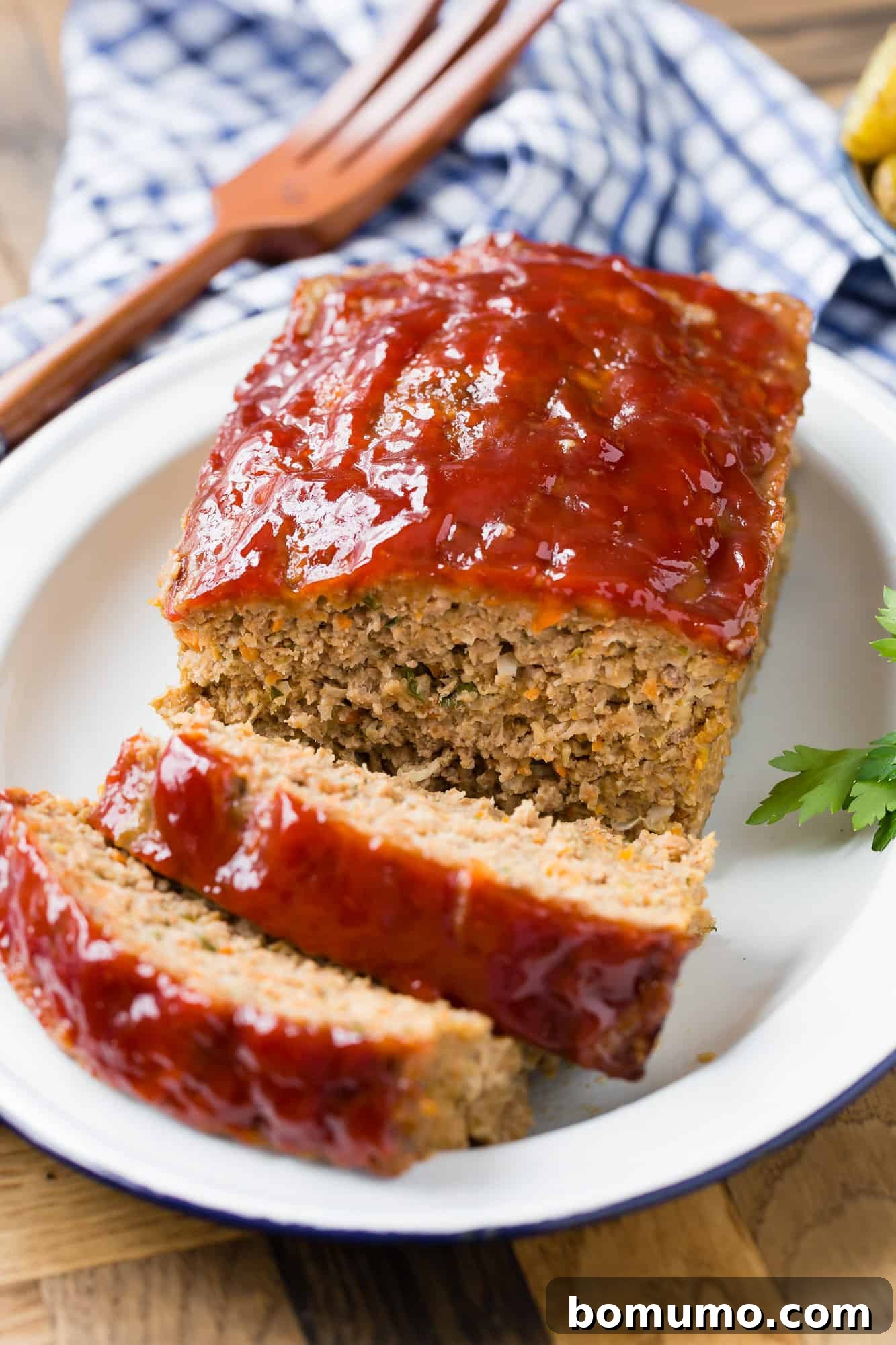
Classic Meatloaf: Recipe Overview
Why you’ll adore it: This is the quintessential comfort food meatloaf recipe, guaranteed to bring a smile to your face. Its rich, savory flavors are perfectly complemented by a vibrant, tangy tomato glaze, making it an instant family favorite.
Preparation and Cook Time: Approximately 2 hours from start to finish. However, a significant portion of this time is hands-off baking, allowing you to focus on other tasks while your delicious meatloaf bakes to perfection.
Essential Equipment: You’ll need a standard loaf pan, a couple of mixing bowls, and a food processor for effortless vegetable preparation. For optimal safety and precision, an instant-read thermometer is highly recommended to ensure your meatloaf is cooked through.
Yield: Serves 6 hungry individuals, providing ample portions for a satisfying meal and potentially delicious leftovers.
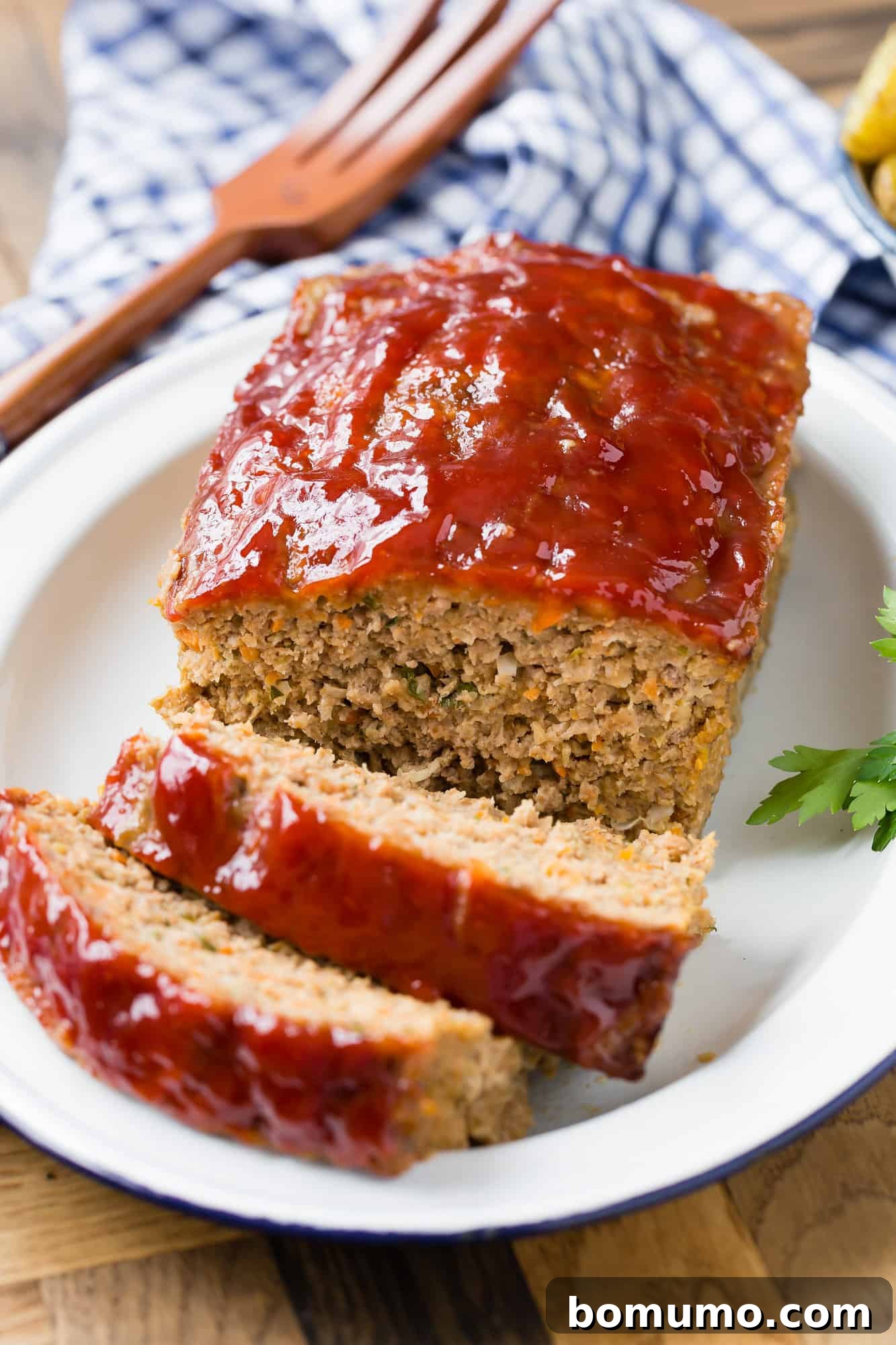
The Enduring Appeal of Classic Meatloaf: A Timeless Comfort Food
In an era brimming with culinary innovation and global flavors, where ingredients like jackfruit, açai berries, chia seeds, and jicama have found their way into our everyday meals, it’s easy to get swept up in the excitement of new dishes. Indeed, the availability of diverse and exotic foods has never been greater, and I often find joy in exploring these modern gastronomic trends. From exotic BBQ sandwiches to refreshing superfood juices and inventive puddings, the culinary world offers an endless array of novel experiences.
However, amidst this vibrant landscape of new tastes, there remains a deep, satisfying craving for the familiar. Sometimes, nothing quite hits the spot like a good old-fashioned, home-cooked meal that harks back to simpler times. This is precisely where a traditional meatloaf, like the one we’re about to explore, shines brightest. While I might not always identify as a “meat and potatoes” enthusiast, this particular classic meatloaf recipe, enveloped in its irresistible tangy tomato glaze and served alongside creamy mashed potatoes and tender roasted green beans, effortlessly fulfills that primal need for warmth, nourishment, and pure comfort. It’s a meal that resonates with the soul, proving that some classics are truly timeless for a reason.
A Delightful Meatloaf Fact
Did you know that meatloaf boasts a rich history spanning centuries? According to Wikipedia, this beloved dish is not only a staple in American households since colonial times but also originates from traditional German, Scandinavian, and Belgian cuisines. In its early American iterations, it was often referred to as “scrapple” and commonly featured ground pork combined with cornmeal, highlighting its humble yet enduring roots as a versatile and economical meal.
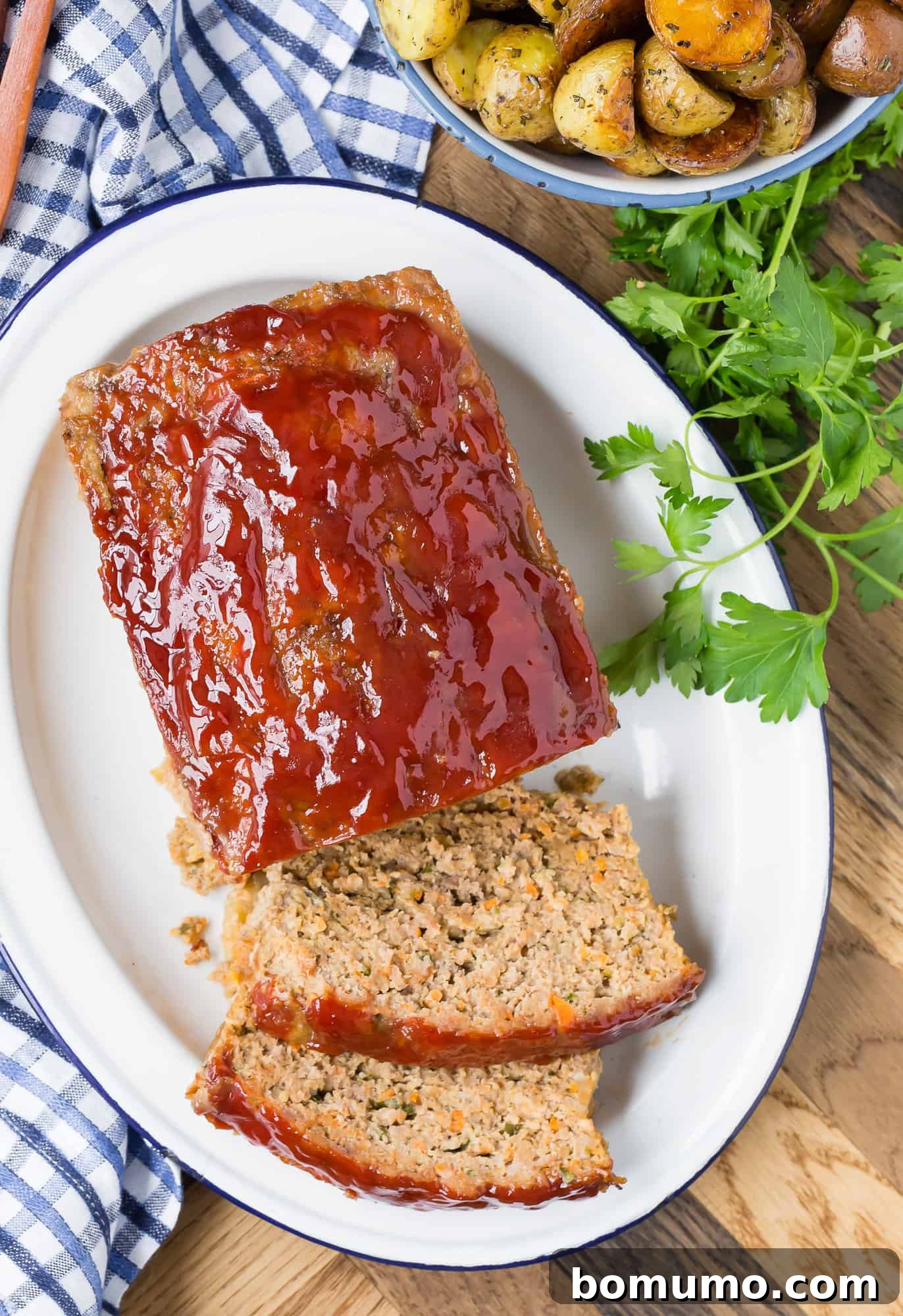
Crafting the Perfect Meatloaf: Insights into This Recipe
This meatloaf recipe isn’t just about combining ingredients; it’s about understanding how each component contributes to a truly exceptional dish. Our goal is a meatloaf that is consistently moist, packed with flavor, and holds its shape beautifully. Here’s a deeper look into what makes this recipe stand out:
The Ideal Combination of Meats: A Symphony of Flavors and Textures
While many meatloaf recipes opt for a single type of ground meat, often beef, this particular recipe leverages a thoughtful blend for superior results. By combining ground beef, pork, and turkey, we achieve a complex flavor profile that is richer and more nuanced than any single meat could offer on its own. Each meat brings its unique characteristics to the mix:
- Ground Beef: Provides a robust, classic savory flavor and a good fat content, which is crucial for moisture.
- Ground Pork: Contributes tenderness and additional richness, enhancing the overall mouthfeel.
- Ground Turkey: Offers a lighter texture and helps balance the richness of the beef and pork, while still adding depth.
This trifecta ensures a well-rounded flavor that is deeply satisfying. You’re also welcome to experiment with other ground meats, such as ground veal for added tenderness and mild flavor, or ground chicken for a leaner option. A useful tip for ensuring a flavorful and moist meatloaf is to include at least one meat with a slightly higher fat content (like 80/20 ground beef or a fattier ground pork). The fat renders during baking, infusing the meatloaf with incredible flavor and preventing it from drying out. This strategic blending of meats is a key secret to a truly outstanding meatloaf.
Achieving Unbeatable Moisture: Say Goodbye to Dry Meatloaf
The cardinal sin of meatloaf is dryness. No one enjoys a crumbly, parched slice of what should be a comforting meal. This recipe is meticulously designed to deliver a meatloaf that is incredibly moist and tender from the first bite to the last. This exceptional moisture is achieved through a multi-pronged approach:
- Abundant Vegetables: Finely chopped onions, carrots, celery, and garlic don’t just add flavor; they release moisture as they cook, keeping the meatloaf hydrated from within.
- Eggs: Act as a powerful binder, holding the mixture together while also contributing moisture and richness.
- Milk: Soaked into the breadcrumbs, milk ensures the filler remains moist and adds a creamy element to the meatloaf’s texture.
- Meat Combination: As discussed, the blend of different meats, particularly those with a balanced fat content, is fundamental in retaining moisture and flavor during the baking process.
Together, these ingredients work in harmony to create a meatloaf that is consistently juicy, tender, and far from dry, making every slice a pure delight.
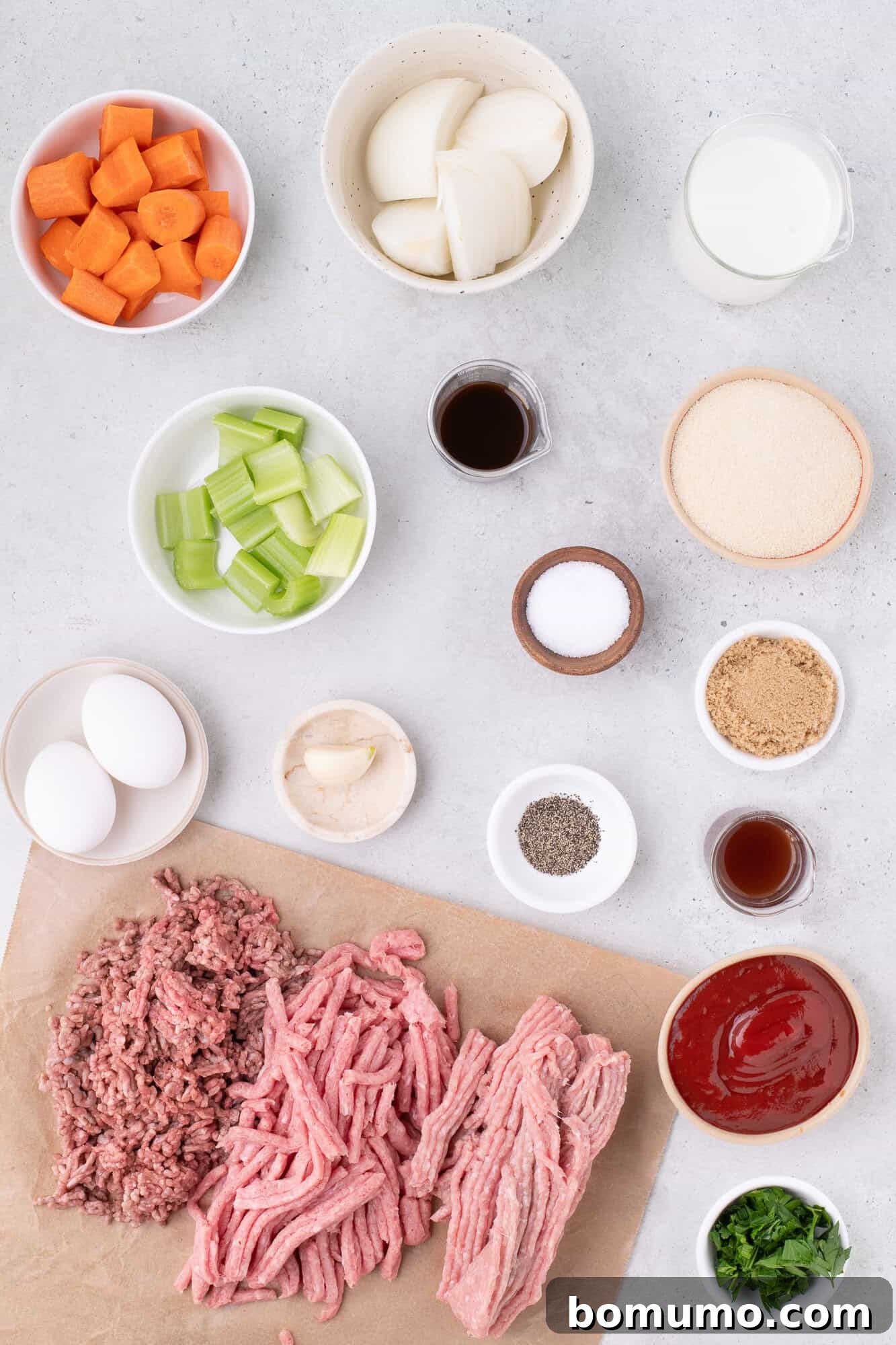
Detailed Ingredient Breakdown for Our Meatloaf
Understanding the role of each ingredient is key to appreciating the balance and flavor of this classic meatloaf. Here’s what you need to know:
The Power of Vegetables: Flavor, Moisture, and Seamless Integration
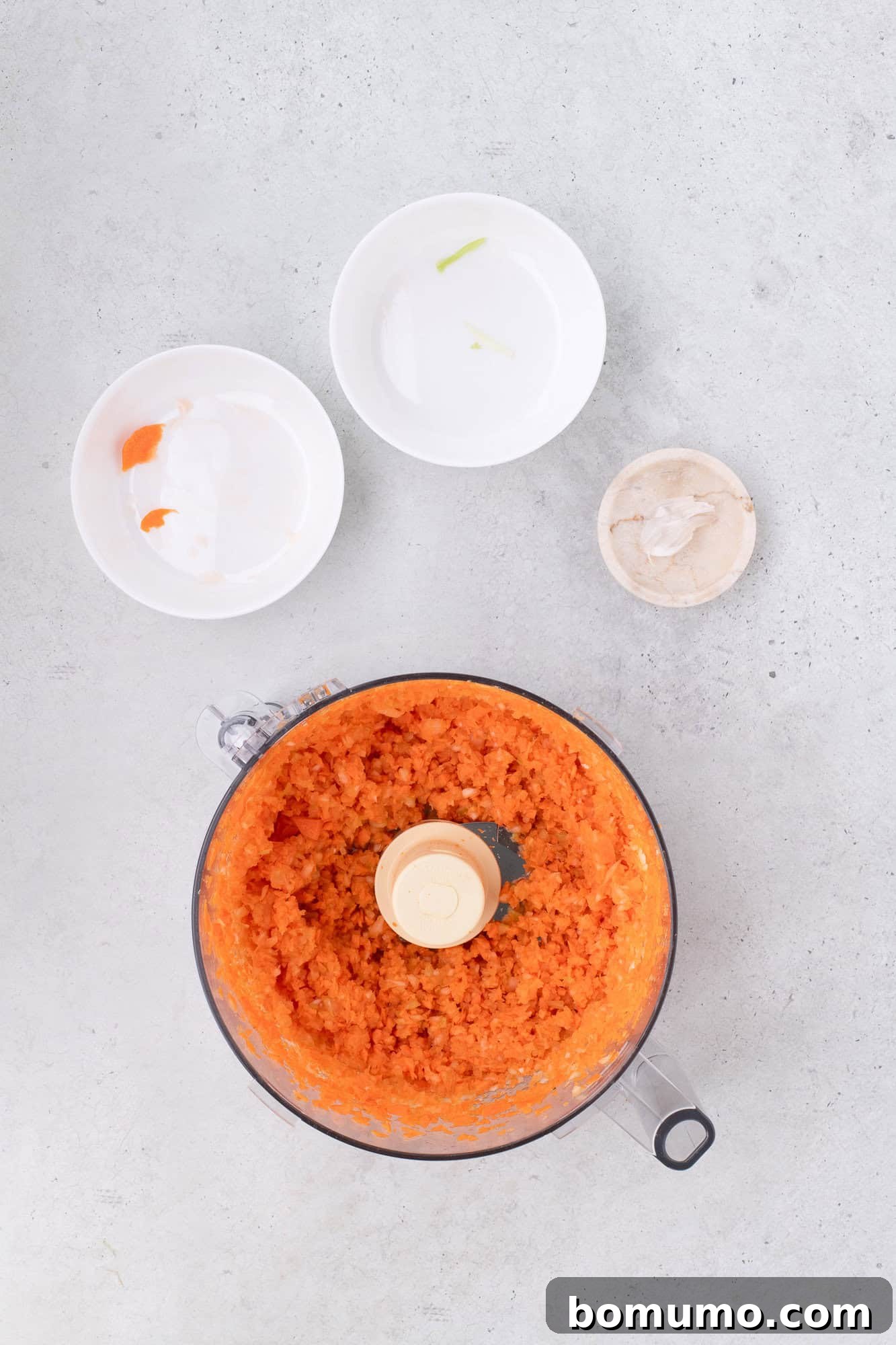
Our meatloaf is generously enriched with a medley of fresh vegetables: aromatic onions, sweet carrots, crisp celery, and pungent garlic. These aren’t just for flavor; they play a crucial role in maintaining the meatloaf’s moisture. The secret to integrating them seamlessly is using a food processor. Simply place the roughly chopped vegetables into your food processor and pulse until they are very finely chopped. There are two primary reasons for this technique:
- Texture Perfection: We aim for a smooth, cohesive meatloaf, free from large, distracting chunks of vegetables. Finely chopped veggies melt into the meat mixture, contributing flavor and moisture without altering the overall texture.
- No Pre-Sautéing Required: Because the vegetables are so minutely diced, they cook perfectly within the meatloaf during baking, eliminating the need for an extra step of sautéing them beforehand. This saves time and simplifies the preparation process, ensuring maximum flavor with minimal effort.
The Essential Role of Filler: Structure, Moisture Absorption, and Versatility
A fundamental component of any good meatloaf is the “filler,” which acts as a binder, helps absorb moisture, and contributes to the overall texture. For this particular recipe, we use dried unseasoned bread crumbs. While breadcrumbs are a popular choice, there’s room for flexibility:
- Bread Crumbs: Provide a classic texture and absorb excess moisture, keeping the meatloaf from becoming too dense or greasy.
- Oatmeal: My mom often uses oats, and they are an excellent gluten-free alternative that also adds a subtle earthy flavor and tender texture.
- Panko: For a slightly lighter, more airy texture, panko breadcrumbs can be a fantastic substitute.
Feel free to use what you have on hand or what you prefer. The key is that the filler helps create a more tender, less compact meatloaf.
The Unsung Heroes: Milk and Egg as Binders
Next, we introduce the crucial “glue” that holds everything together: milk and eggs. These two ingredients are more than just binders; they significantly impact the meatloaf’s final texture and flavor:
- Eggs: Act as an emulsifier and binder, ensuring the meatloaf holds its shape firmly without crumbling. They also add richness and a subtle custardy element to the texture.
- Milk: Hydrates the breadcrumbs and adds an additional layer of moisture, resulting in a more tender and juicy meatloaf. It also contributes to the meatloaf’s overall savory profile.
Together, milk and egg create a cohesive mixture that bakes into a perfectly structured and delicious loaf.
Flavor Boosters: Enhancing the Savory Profile
To round out the flavor profile and add layers of complexity, several key seasonings and sauces are incorporated:
- Chopped Fresh Parsley: Provides a burst of fresh, herbaceous flavor and a touch of vibrant color.
- Worcestershire Sauce: A powerhouse of umami, this sauce adds depth, complexity, and a savory tang that perfectly complements the meat.
- Ketchup: Beyond its role in the glaze, a small amount of ketchup within the meatloaf mixture contributes a subtle sweetness and tang, helping to balance the rich flavors.
- Salt and Pepper: Essential for seasoning the meatloaf, bringing all the flavors into harmony and enhancing their natural deliciousness. Kosher salt and freshly ground black pepper are recommended for their superior flavor.
Elevate Your Meatloaf with Homemade Breadcrumbs
Did you know that making your own breadcrumbs is incredibly simple and can significantly enhance the flavor and texture of your meatloaf? It’s a fantastic way to utilize day-old bread, reducing food waste and giving you complete control over the ingredients. You can even use gluten-free bread to make gluten-free breadcrumbs or experiment with different types of bread for unique flavor profiles. Creating homemade breadcrumbs or even panko from scratch is a rewarding kitchen task that will undoubtedly elevate your culinary creations!
Step-by-Step Guide: How to Prepare Our Delicious Meatloaf
Creating this classic meatloaf is a straightforward process, but paying attention to a few key steps will ensure a perfect result every time. Follow these instructions for a moist, flavorful, and perfectly glazed meatloaf:
1. Finely Chop the Vegetables
The first crucial step is to prepare your vegetables. For the finest texture and best flavor distribution, I highly recommend using a food processor to chop the onions, carrots, celery, and garlic. This method is not only the easiest and fastest but also ensures uniform, tiny pieces. These finely chopped vegetables are essential because they add significant moisture and flavor to the meatloaf without creating large, noticeable, or hard chunks that can detract from the overall smooth texture. Pulse them until they resemble a fine mince, almost like a paste.

2. Combine the Remaining Ingredients in a Large Bowl
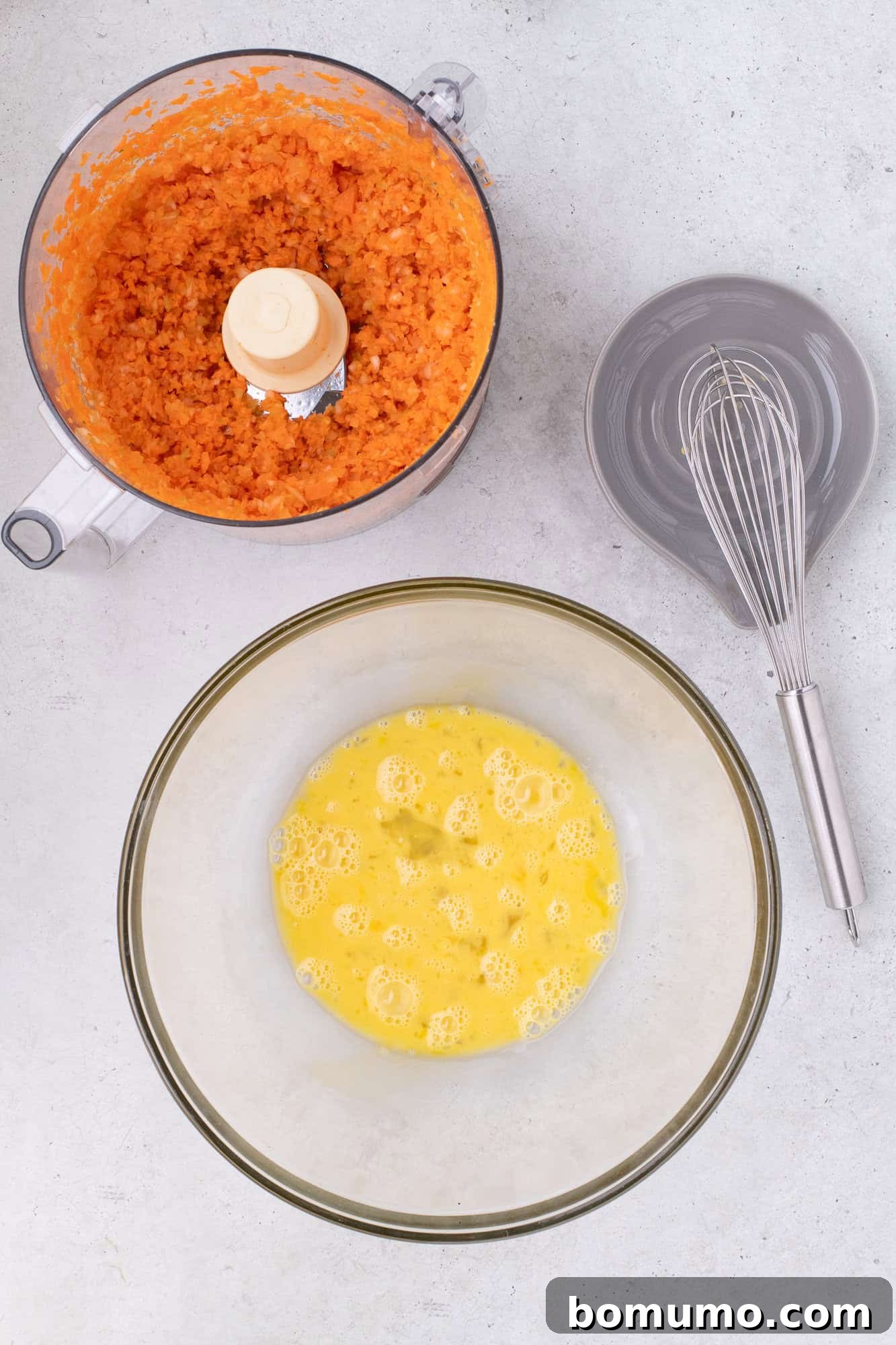
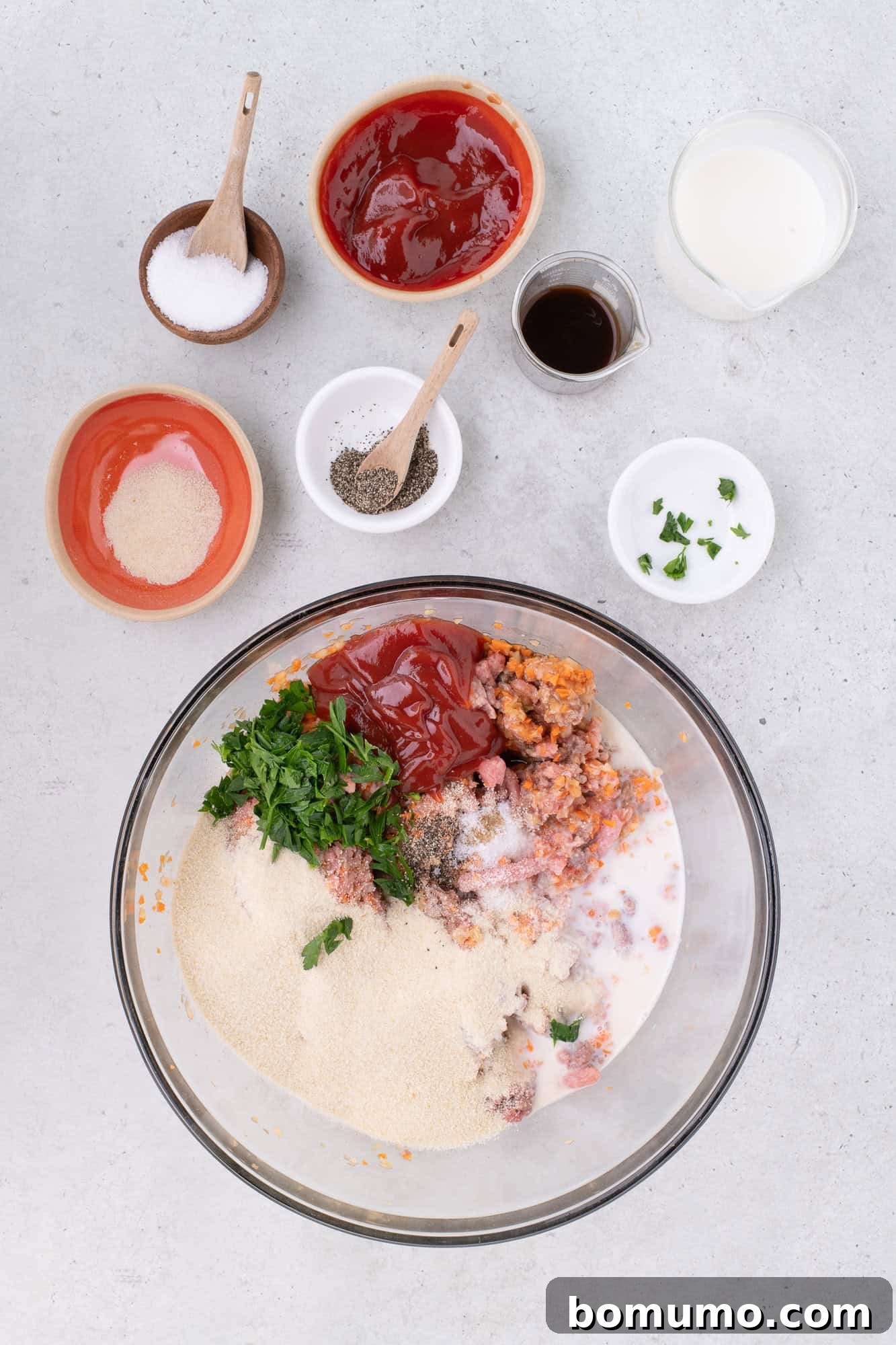
Once your vegetables are finely prepped, transfer them to a generously sized mixing bowl. In this same bowl, lightly beat the two large eggs. Then, add all the other meatloaf ingredients: the ground meat blend, dried bread crumbs, chopped fresh parsley, milk, a quarter cup of ketchup, Worcestershire sauce, kosher salt, and coarsely ground black pepper. Ensure all ingredients are ready for the next step.

3. Expertly Combine the Mixture
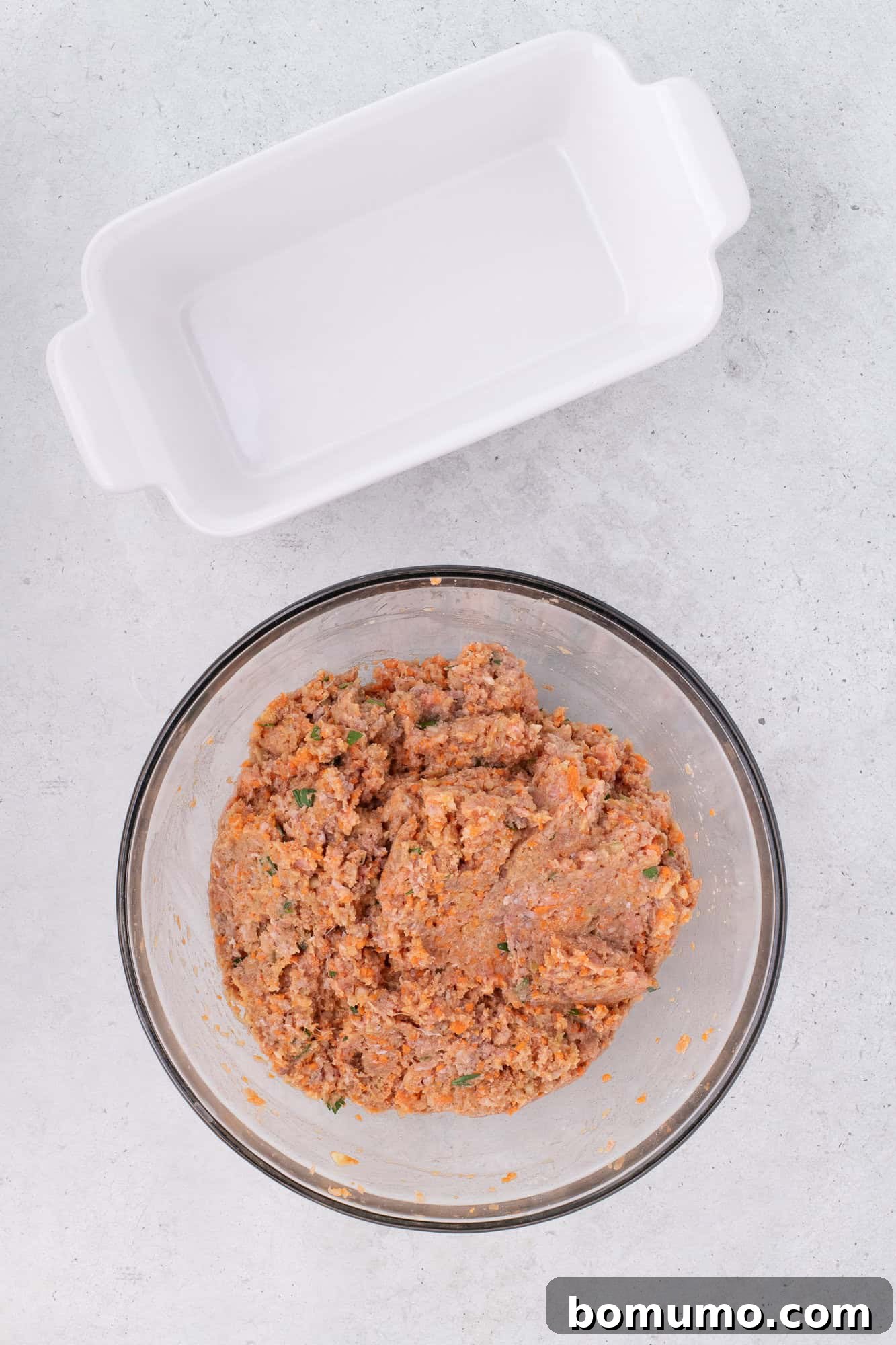
Now comes the fun part: combining all these wonderful ingredients. While a spoon or spatula might seem tempting, the absolute best way to thoroughly and evenly blend the ground meat, eggs, breadcrumbs, vegetables, and seasonings is with your hands. Yes, it might sound a little messy – so be sure to remove any rings first! Dive in and gently squeeze, smoosh, and blend the mixture. The goal is to incorporate everything thoroughly without overmixing or compacting the meat too much. You’ll know it’s “bonded” and perfectly mixed when all ingredients are evenly distributed and the mixture feels cohesive but still relatively light. Overmixing can lead to a tough meatloaf, so aim for just combined.
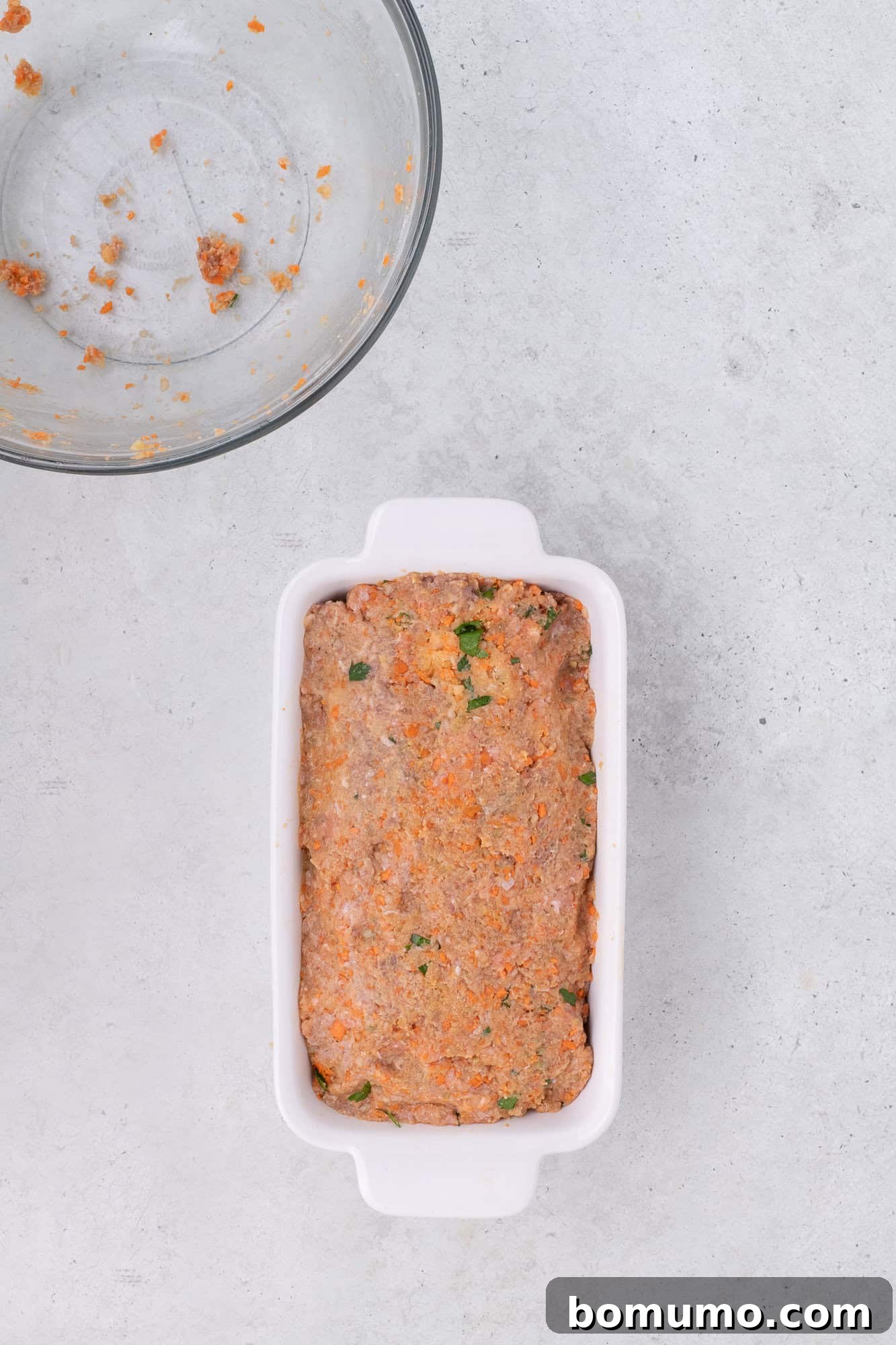
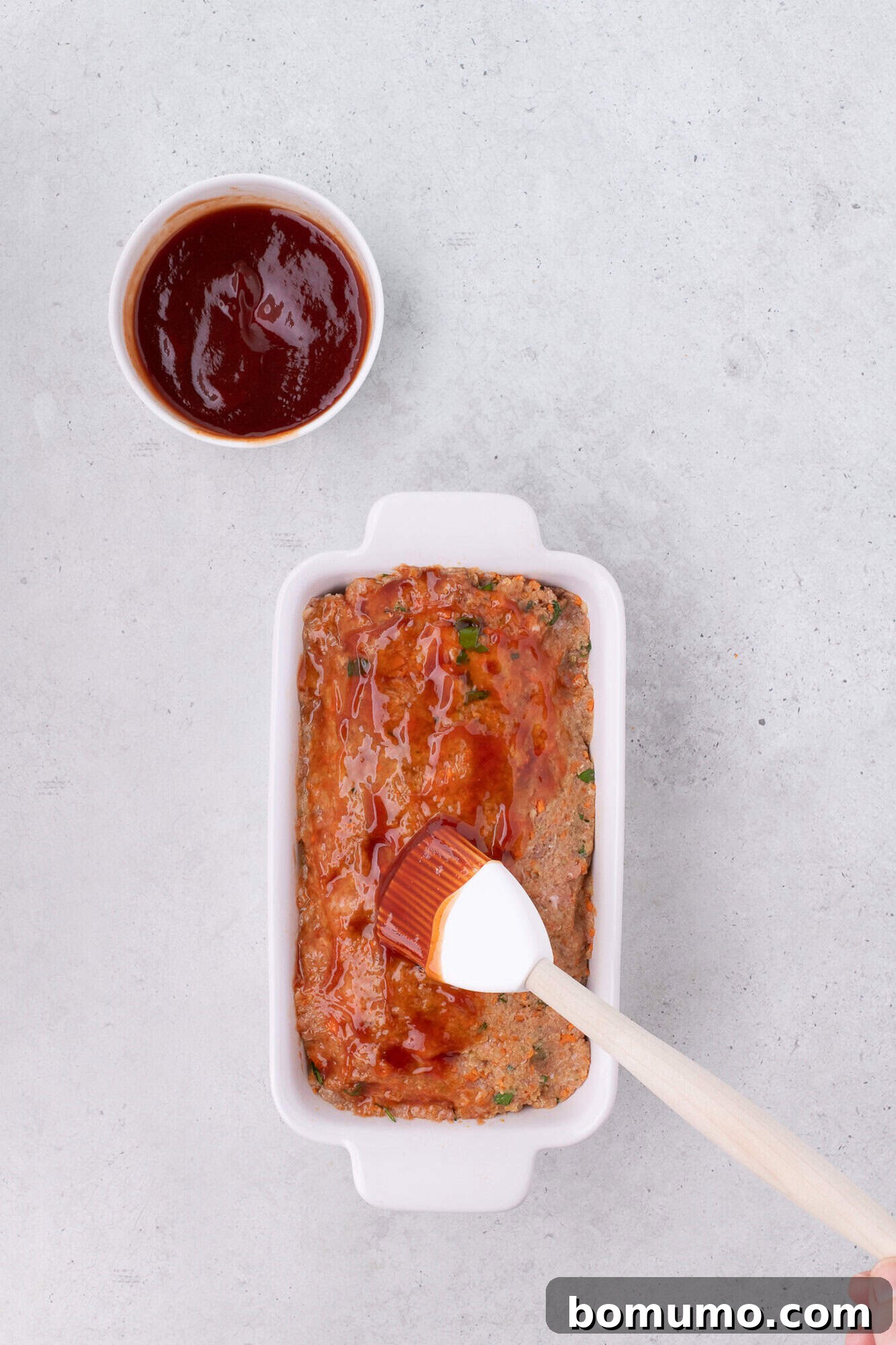
4. Shape and Glaze for Perfection
Once combined, gently shape the meat mixture into a neat loaf and transfer it to your prepared loaf pan. Next, prepare the signature tangy glaze by mixing ketchup, brown sugar, and red wine vinegar in a small bowl. This glaze offers the perfect balance of sweetness, acidity, and umami that caramelizes beautifully during baking. For the best result, I recommend a two-stage application: brush half of this delicious glaze over the meatloaf before its initial bake. This allows the first layer to set and slightly caramelize, building a robust flavor base.
5. Bake to Golden-Brown Perfection
Preheat your oven to 350ºF (175ºC). Place the glazed meatloaf in the preheated oven and bake for 35 minutes. After this initial baking period, carefully remove the pan from the oven and apply the remaining half of the tangy glaze. Return the meatloaf to the oven and continue baking for an additional 55 minutes, or until it reaches an internal temperature of 165ºF (74ºC) when checked with an instant-read thermometer. The glaze will develop a beautiful, slightly sticky, and caramelized crust, adding another layer of flavor and texture.
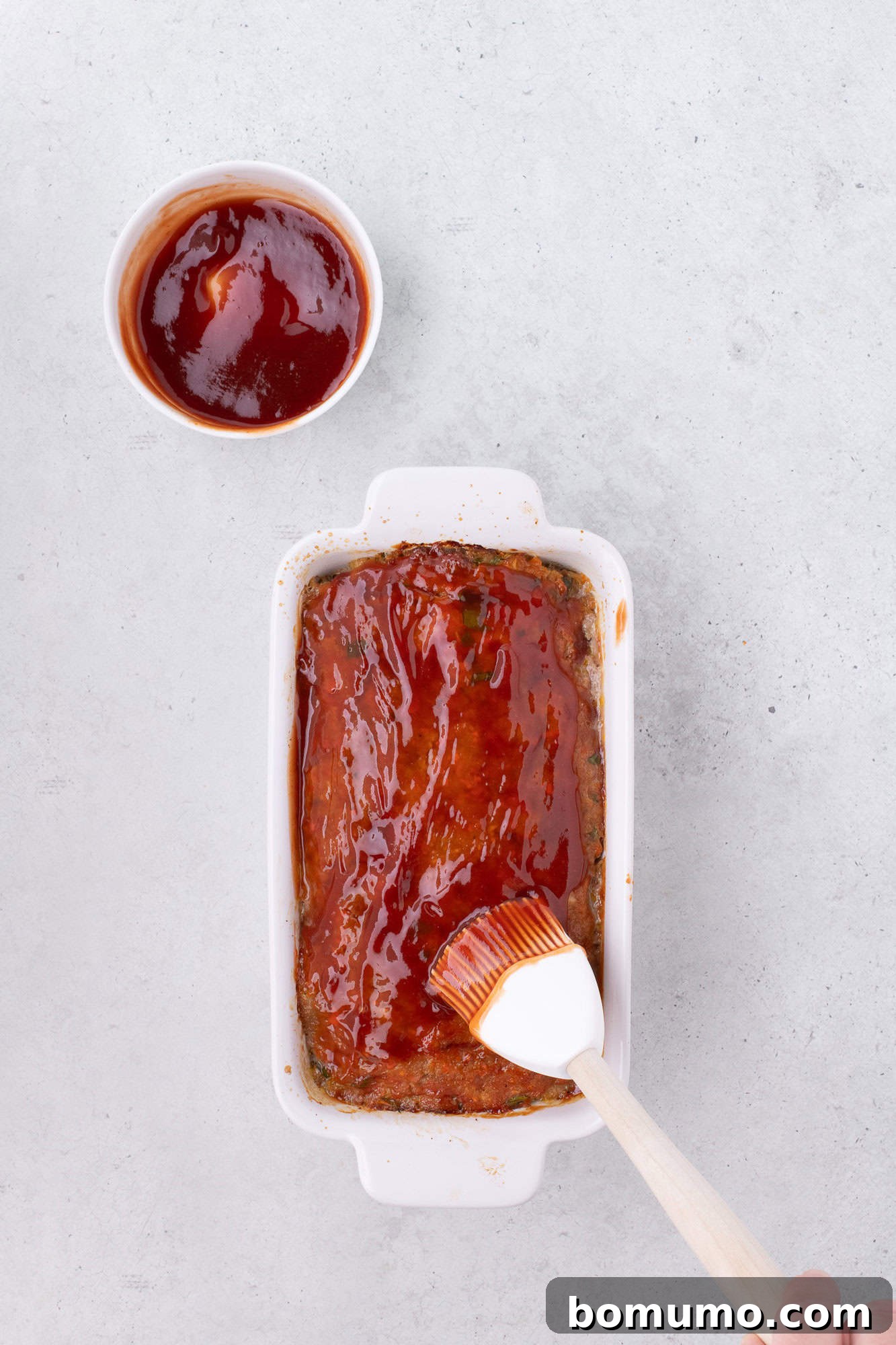
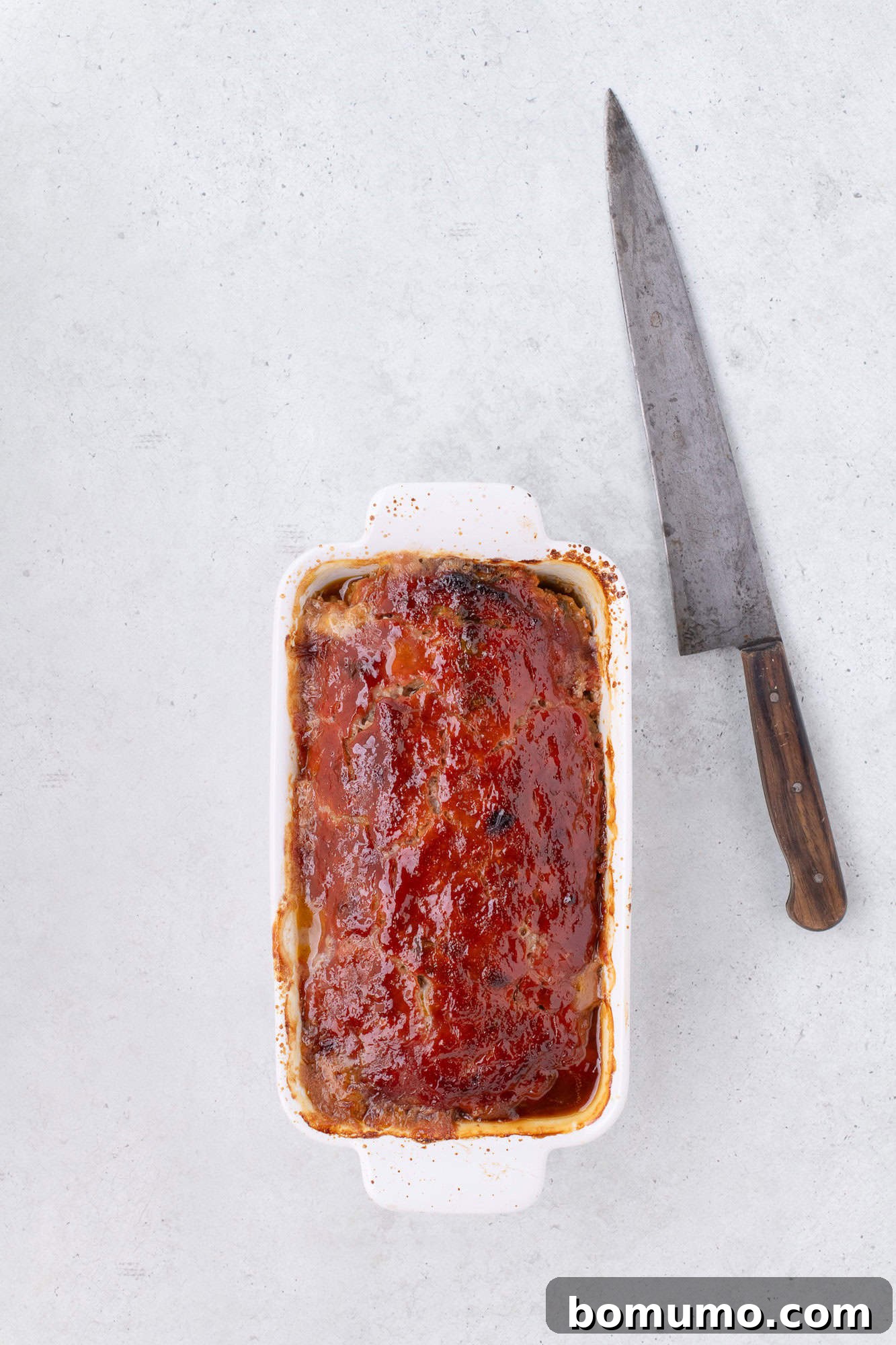
6. The All-Important Rest and Serve
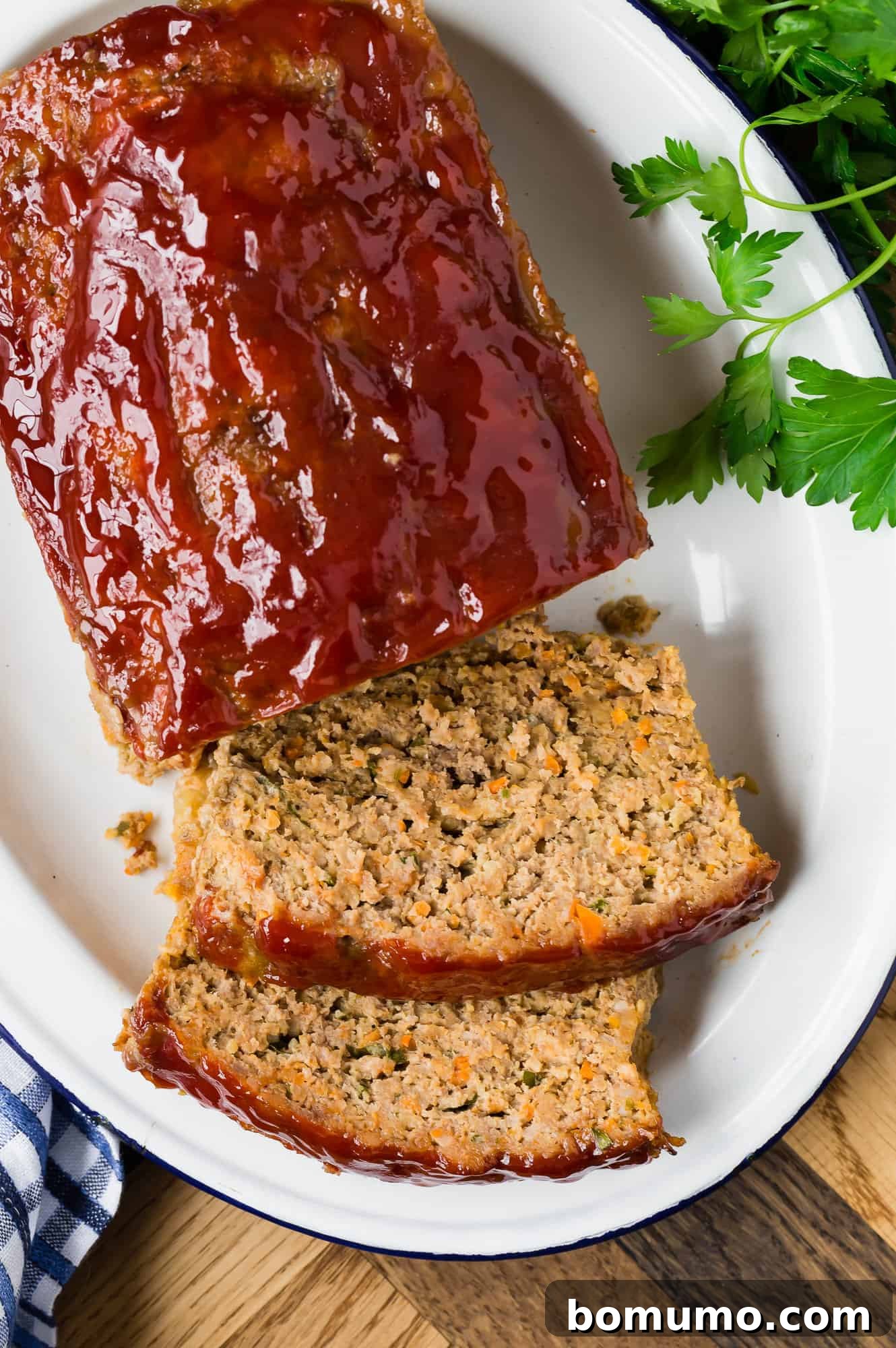
Once baked, the meatloaf will be incredibly hot and juicy. Resist the urge to slice into it immediately! Instead, let it rest in the pan for at least 15 minutes. This resting period is critical for two reasons: it allows the juices to redistribute evenly throughout the meat, ensuring every slice is incredibly moist and flavorful, and it allows the meatloaf to firm up slightly, making it much easier to slice neatly without crumbling. Once rested, carefully remove it from the pan and slice with a long, sharp knife. Garnish with a sprinkle of fresh parsley if desired, and serve warm.
Perfect Pairings: What to Serve with Classic Meatloaf
Meatloaf is a wonderfully versatile dish that pairs beautifully with a wide array of sides. Here are some fantastic suggestions to complete your comfort food meal, offering a balance of textures and flavors:
Hearty Potato Companions:
Potatoes are the quintessential meatloaf accompaniment. Their creamy or fluffy texture perfectly complements the savory meatloaf.
- Instant Pot Mashed Potatoes: Quick, creamy, and effortlessly delicious.
- Mashed Red Potatoes: A slightly more rustic option, retaining some skin for added texture and nutrients.
- Instant Pot Baked Potatoes: Fluffy on the inside, a perfect canvas for butter, sour cream, and chives.
- Crockpot Cheesy Potatoes: A decadent and comforting casserole, ideal for a crowd.
Vibrant Vegetable Sides:
Add freshness, color, and essential nutrients with these delicious vegetable options.
- Air Fryer Brussels Sprouts: Crispy, tender, and slightly sweet – a modern classic.
- Air Fryer Broccoli: Perfectly roasted with minimal oil, bringing out its natural sweetness.
- Crockpot Carrots with Cinnamon Glaze: Tender and sweet, with a hint of warm spice.
- Butternut Squash with Smoked Paprika: Creamy, earthy, and with a lovely smoky undertone.
- Green Beans with Bacon, Garlic, and Onion: A flavorful and satisfying side with smoky, savory notes.
Sweet Endings: Dessert Delights:
Round out your meal with a comforting and nostalgic dessert.
- Snickerdoodles: Soft, chewy cookies coated in cinnamon sugar.
- Homemade Chocolate Pudding: Rich, creamy, and deeply satisfying.
- Rice Krispies Treats: A simple, nostalgic, and crowd-pleasing classic.
- Kool-Aid Pie: A fun, fruity, and surprisingly delicious no-bake pie.
Expert Tips for the Best Classic Meatloaf
Achieving a consistently perfect meatloaf is easy with a few insider tips. These insights will help you avoid common pitfalls and ensure your meatloaf is always delicious, moist, and beautifully cooked.
Baking Your Meatloaf Uncovered: The Secret to a Golden Crust
It’s important to bake your meatloaf uncovered for the duration of its cooking time. This approach allows the exterior of the meatloaf, especially the tangy tomato glaze, to caramelize and develop a rich, deeply browned crust. This process, known as the Maillard reaction, contributes significantly to the flavor and texture of the meatloaf, creating a delightful contrast between the savory exterior and the moist interior. If you notice that your meatloaf is browning too quickly during the final stages of baking, you can lightly tent it with aluminum foil for the last 15 minutes or so to prevent over-darkening while still allowing it to cook through.
Knowing When Your Meatloaf is Perfectly Cooked: Doneness Indicators
The most accurate and safest way to determine if your meatloaf is fully cooked is by checking its internal temperature. Meatloaf is done when an instant-read thermometer inserted into the thickest part of the loaf (avoiding the pan) registers 165°F (74°C). This temperature ensures that all ground meats are safely cooked. If you don’t have a thermometer, look for these visual and tactile cues:
- Shrinkage: The meatloaf will slightly pull away from the edges of the loaf pan as it bakes.
- Color: The top should be nicely browned and the glaze should appear caramelized.
- Firmness: Gently poke the center of the meatloaf; it should feel firm to the touch, not mushy.
- Clear Juices: If you poke a small hole or lightly press, any juices that emerge should be clear, not pink or cloudy.
These indicators collectively suggest that your meatloaf is ready to be removed from the oven.
The Importance of Resting Before Slicing
Just like a perfectly roasted turkey or steak, meatloaf benefits immensely from a resting period after baking. Allow your meatloaf to rest for at least 15 minutes before attempting to slice it. This crucial step permits the internal juices to redistribute throughout the loaf, ensuring every slice is incredibly moist and flavorful. Additionally, resting allows the meatloaf to firm up slightly, which prevents it from crumbling or falling apart when you cut it. Use a long, sharp knife for clean, even slices. If you find your meatloaf consistently crumbles, try compacting the raw mixture a little more firmly into the loaf pan before baking, but still avoid over-packing, which can lead to a tough texture.
Exciting Meatloaf Recipe Variations to Customize Your Dish
One of the best things about classic meatloaf is its adaptability. It serves as a fantastic base for countless customizations, allowing you to tailor it to your personal taste, dietary needs, or what you have available in your pantry. Don’t be afraid to get creative and make this recipe truly your own!
- Experiment with Different Ground Meats: As highlighted earlier, the blend of ground beef, pork, and turkey creates a wonderful flavor. However, feel free to use just one type of ground meat (like all beef for a richer flavor, or all turkey for a leaner option) or explore other combinations. Consider adding ground veal for extra tenderness or even ground chicken for a lighter texture.
- Try Diverse Fillers: Beyond traditional breadcrumbs, the world of fillers offers many exciting possibilities. Oats (especially quick-cooking oats) are a popular gluten-free alternative that adds a distinct, wholesome texture. Cracker crumbs provide a fine texture and can add a savory note. For a unique twist, crushed tortilla chips or even potato chips can introduce a delightful crunch and seasoned flavor, as my mom famously does with her southwestern turkey meatloaf. Use whatever you have to hand!
- Vary the Seasonings for New Flavors: Elevate your meatloaf with different herbs and spices. A pinch of red pepper flakes or a dash of sriracha sauce can introduce a pleasant heat. Smoked paprika adds a smoky depth, while Italian seasoning or dried oregano can lend a Mediterranean flair. For an indulgent twist, fold in up to 1 cup of shredded cheese (cheddar, mozzarella, or a sharp provolone work wonderfully) to create a luscious cheesy meatloaf that’s incredibly comforting.
- Explore Alternative Toppings: While the tangy tomato glaze is a classic for a reason, you don’t have to stick to it! If ketchup isn’t your favorite, omit it from the glaze and consider other delicious options. A rich mushroom gravy, a savory onion gravy, or a tangy barbecue sauce can all make fantastic toppings. For a sweeter profile, a honey mustard glaze or even a touch of apricot jam can be surprisingly delicious.
- Make Meatloaf in Your Air Fryer: For a significantly faster cooking time and an incredibly crispy exterior, try making air fryer meatloaf. This method is perfect for smaller portions or when you’re short on time but still crave that homemade comfort.
- Skip the Pan for a Crispier Exterior (or make Mini Meatloaves): Baking meatloaf directly on a baking sheet, rather than in a loaf pan, allows some of the excess fat to drain away, resulting in a slightly crispier exterior. Simply shape the meat mixture into a well-formed loaf and place it on a foil-covered, rimmed baking sheet. For charming individual portions and even faster cooking, divide the mixture into multiple mini meatloaves. This method also ensures everyone gets their own perfectly browned little loaf. Check out this mini meatloaf sheet pan dinner for a complete, easy-to-clean-up meal!
Storage & Reheating Guidelines
Storage & Reheating Guidelines
Leftover meatloaf is a culinary treasure, offering delicious versatility for future meals. Proper storage and reheating ensure it remains as enjoyable as the day it was baked.
Refrigerate/Freeze: For refrigeration, leftover meatloaf should be securely wrapped in plastic wrap or stored in an airtight container. It will keep well in the fridge for 3 to 4 days. I often find it helpful to slice the entire loaf before refrigerating; this allows it to cool more quickly and makes it incredibly convenient for quick reheating later. To freeze leftover meatloaf, wrap individual slices or portions securely in plastic wrap, then place them in a freezer-safe bag or airtight container. It can be stored in the freezer for up to 3 months. For the best quality and texture, thaw frozen meatloaf overnight in the refrigerator before reheating.
To Reheat: Leftover meatloaf is incredibly versatile. It’s fantastic eaten cold on sandwiches, but it’s equally delicious gently reheated. For a quick reheat, simply place a slice or two in the microwave for a brief period until warmed through. You can also reheat it in a skillet over medium-low heat with a splash of broth or water, covered, until hot. For larger portions or a crispier exterior, reheat slices in a preheated oven at 300°F (150°C) for about 15-20 minutes, or until warmed through. The possibilities extend beyond just eating slices; crumble leftover meatloaf into pasta sauce, or use it as a topping for baked potatoes for a delightful new meal!
Unlock Your Free Weekly Meal Plan
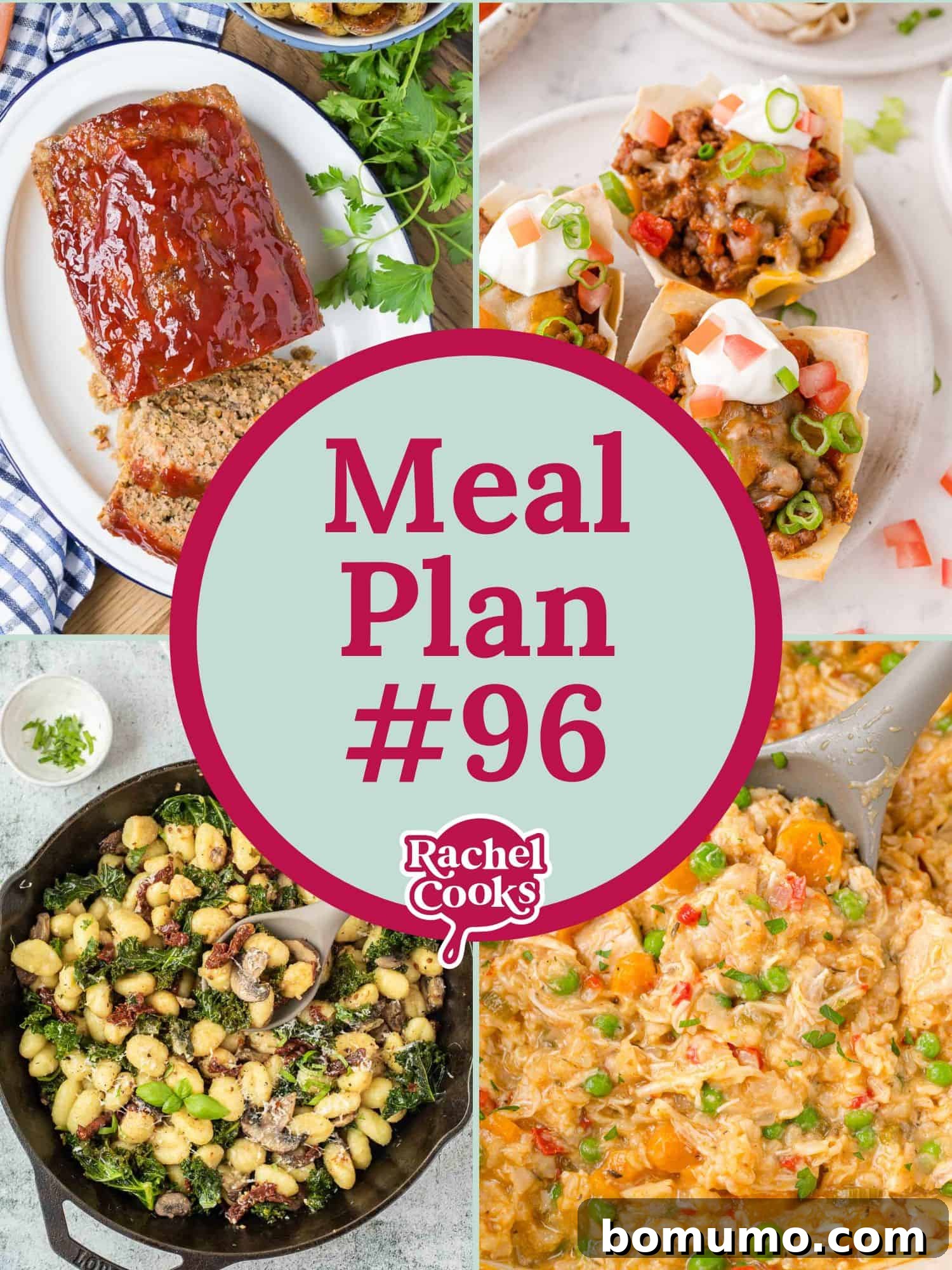
Curious about how to effortlessly incorporate delicious, wholesome recipes like this classic meatloaf into your weekly routine? We’ve got you covered! Explore our curated weekly meal plans designed to simplify your cooking and meal prep. Take a look at Meal Plan #96, where you’ll discover a wholesome, family-friendly recipe for each weekday, perfectly paired with a categorized grocery list for stress-free shopping. We consistently publish a new, exciting meal plan every week, offering fresh inspiration and helping you manage your kitchen with ease. Don’t miss out on making mealtime simple and delicious!
Explore More Timeless Classic Recipes
Classic Tuna Noodle Casserole Recipe
Homemade Sloppy Joe Recipe (Turkey or Beef)
Irresistible Texas Sheet Cake
Hearty Stuffed Pepper Casserole (with Variations)
Classic Meatloaf Recipe – The Ultimate Comfort Food!
Rachel Gurk
15 minutes
1 hour
30 minutes
15 minutes
2 hours
6
servings
Ingredients
Meatloaf
-
2
large eggs -
1
medium yellow onion, cut into quarters -
1
medium carrot, peeled and ends cut off, cut into large chunks -
1
stalk
celery, cut into large chunks -
1
clove
garlic, peeled -
1 ½
pounds
ground meat
(preferably a combination of beef, pork, veal, or turkey 93/7) -
¾
cup
dried bread crumbs -
¼
cup
chopped fresh parsley,
additional for garnish if desired -
¼
cup
milk -
¼
cup
ketchup -
1
tablespoon
Worcestershire sauce -
1
teaspoon
kosher salt -
½
teaspoon
coarsely ground black pepper
Glaze
-
¼
cup
ketchup -
2
tablespoons
packed brown sugar -
1
tablespoon
red wine vinegar
Instructions
-
Preheat your oven to 350ºF (175ºC). Lightly spray a 9-inch by 5-inch loaf pan with nonstick cooking spray, ensuring full coverage to prevent sticking.
-
In a spacious large bowl, lightly beat the two large eggs until just combined and slightly frothy.2 large eggs
-
Place the quartered onion, chunky carrot, chunky celery, and peeled garlic clove into a food processor. Pulse the vegetables until they are very finely chopped, resembling a mince. This should yield approximately 1 cup of the finely chopped mixture. Add this processed vegetable mixture to the bowl with the beaten eggs.1 medium yellow onion, cut into quarters,
1 medium carrot, peeled and ends cut off, cut into large chunks,
1 stalk celery, cut into large chunks,
1 clove garlic, peeled -
To the bowl containing the eggs and vegetables, add the ground meat blend, dried bread crumbs, chopped fresh parsley, milk, ¼ cup of ketchup, Worcestershire sauce, kosher salt, and coarsely ground black pepper. Mix all ingredients gently to combine. The best way to achieve an even blend is to use your hands – just be sure not to overmix or compact the mixture too much, as this can result in a tough meatloaf. Mix just until the ingredients are well incorporated. Lightly press the mixture into the prepared loaf pan, shaping it into an even loaf.1 ½ pounds ground meat,
¾ cup dried bread crumbs,
¼ cup chopped fresh parsley,,
¼ cup milk,
¼ cup ketchup,
1 tablespoon Worcestershire sauce,
1 teaspoon kosher salt,
½ teaspoon coarsely ground black pepper -
In a separate small bowl, whisk together the remaining ¼ cup ketchup, packed brown sugar, and red wine vinegar until well combined to create the glaze. Brush half of this tangy glaze evenly over the top of the meatloaf. Place the pan in the preheated oven and bake for 35 minutes.¼ cup ketchup,
2 tablespoons packed brown sugar,
1 tablespoon red wine vinegar -
After 35 minutes, remove the meatloaf from the oven. Carefully brush the remaining half of the ketchup mixture over the partially baked meatloaf. Return the pan to the oven and continue baking for an additional 55 minutes, or until an instant-read thermometer inserted into the thickest part of the loaf registers at least 165ºF (74ºC). Remember, the internal temperature will continue to rise slightly as the meatloaf rests outside the oven.
-
Once baked, remove the meatloaf from the oven and allow it to rest in the pan for 15 minutes before carefully removing it or slicing. This resting period is crucial for the juices to redistribute, ensuring a moist and firm meatloaf that slices beautifully.
Notes
- This meatloaf recipe is versatile and can be prepared with any combination of ground meat, or even just a single type of ground meat. The nutrition information provided is calculated using a standard blend of ground beef.
- For portion control, one serving of this recipe is considered to be 2 slices of the meatloaf.
- For a faster cooking alternative: If you’re short on time, you can form the meatloaf mixture into 6 individual mini loaves instead of one large loaf. Place these mini loaves on a rimmed baking pan, ensuring they are not touching each other. Bake them in a preheated oven at 400°F (200°C) for approximately 25 minutes, or until their internal temperature reaches 165°F (74°C). This method significantly reduces the overall cooking time.
Video Tutorial

Nutrition Information
Serving:
2
slices
,
Calories:
423
kcal
,
Carbohydrates:
23
g
,
Protein:
24
g
,
Fat:
25
g
,
Saturated Fat:
10
g
,
Polyunsaturated Fat:
1
g
,
Monounsaturated Fat:
11
g
,
Trans Fat:
1
g
,
Cholesterol:
136
mg
,
Sodium:
813
mg
,
Potassium:
553
mg
,
Fiber:
2
g
,
Sugar:
11
g
,
Vitamin A:
2141
IU
,
Vitamin C:
7
mg
,
Calcium:
90
mg
,
Iron:
4
mg
Nutrition information is automatically calculated, so should only be used as an approximation.
Did You Make This?
Share a comment and rating below! I love hearing what you think!