
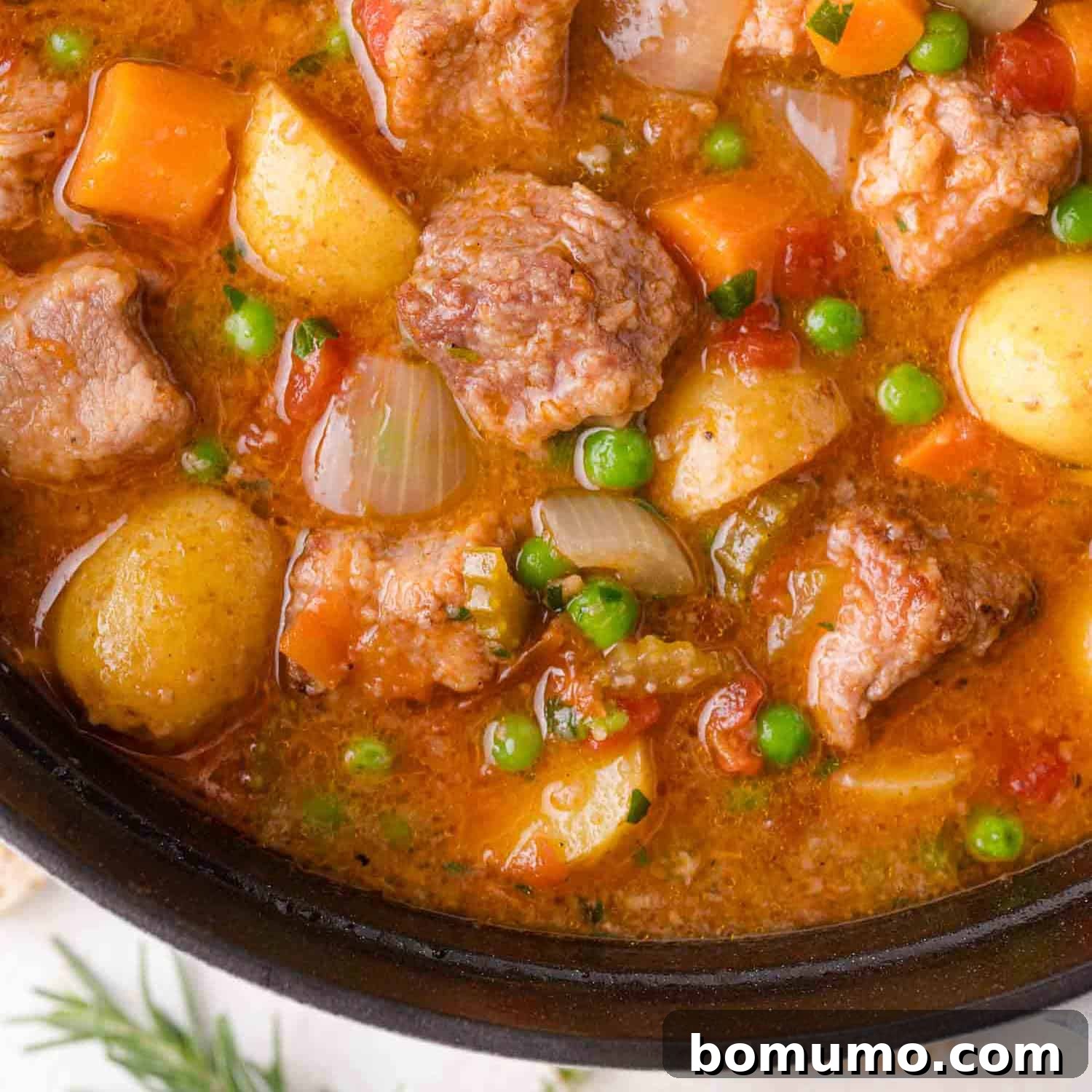
Recipe Overview: Hearty & Flavorful Pork Stew
Why you’ll love it:
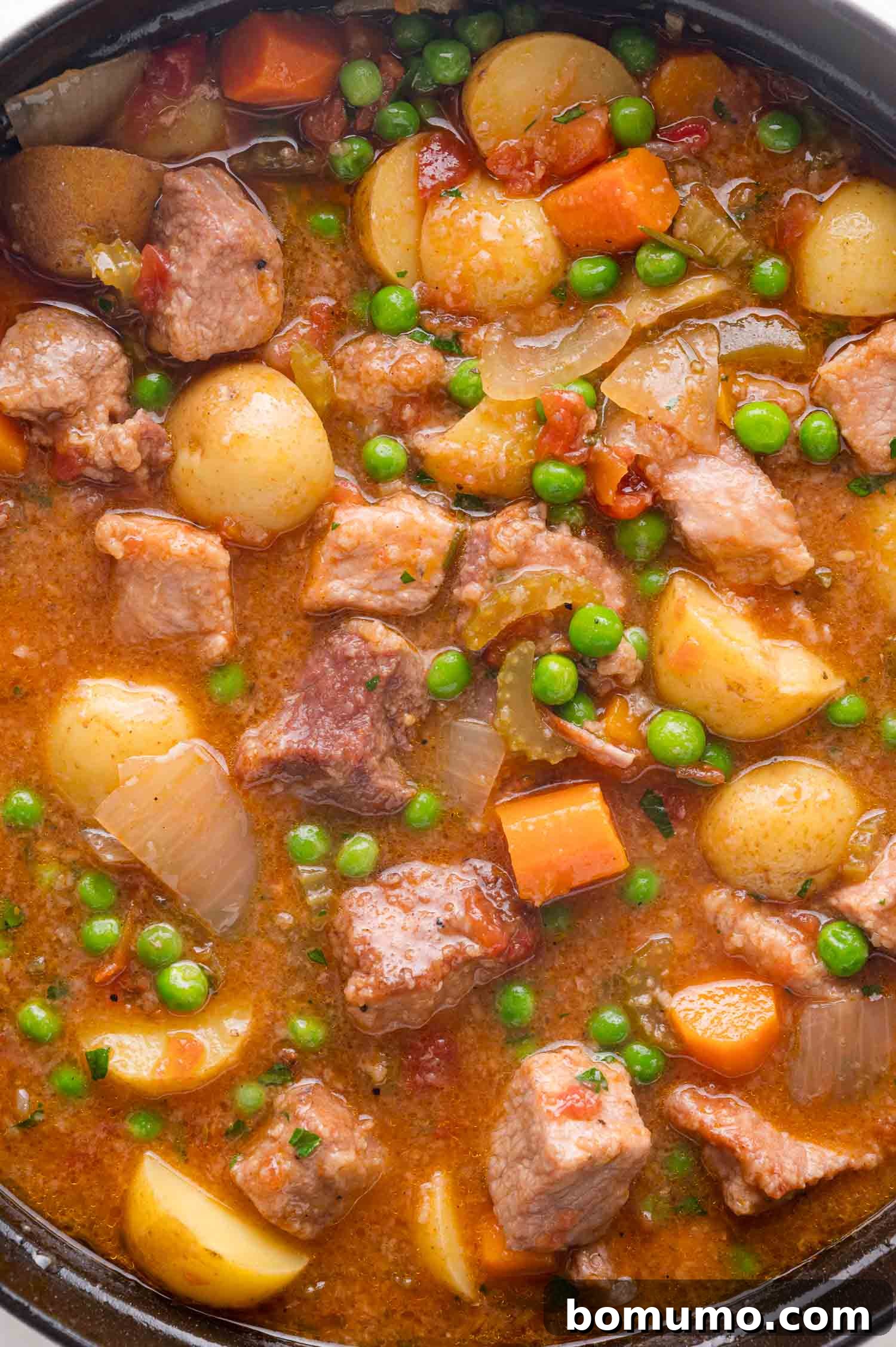
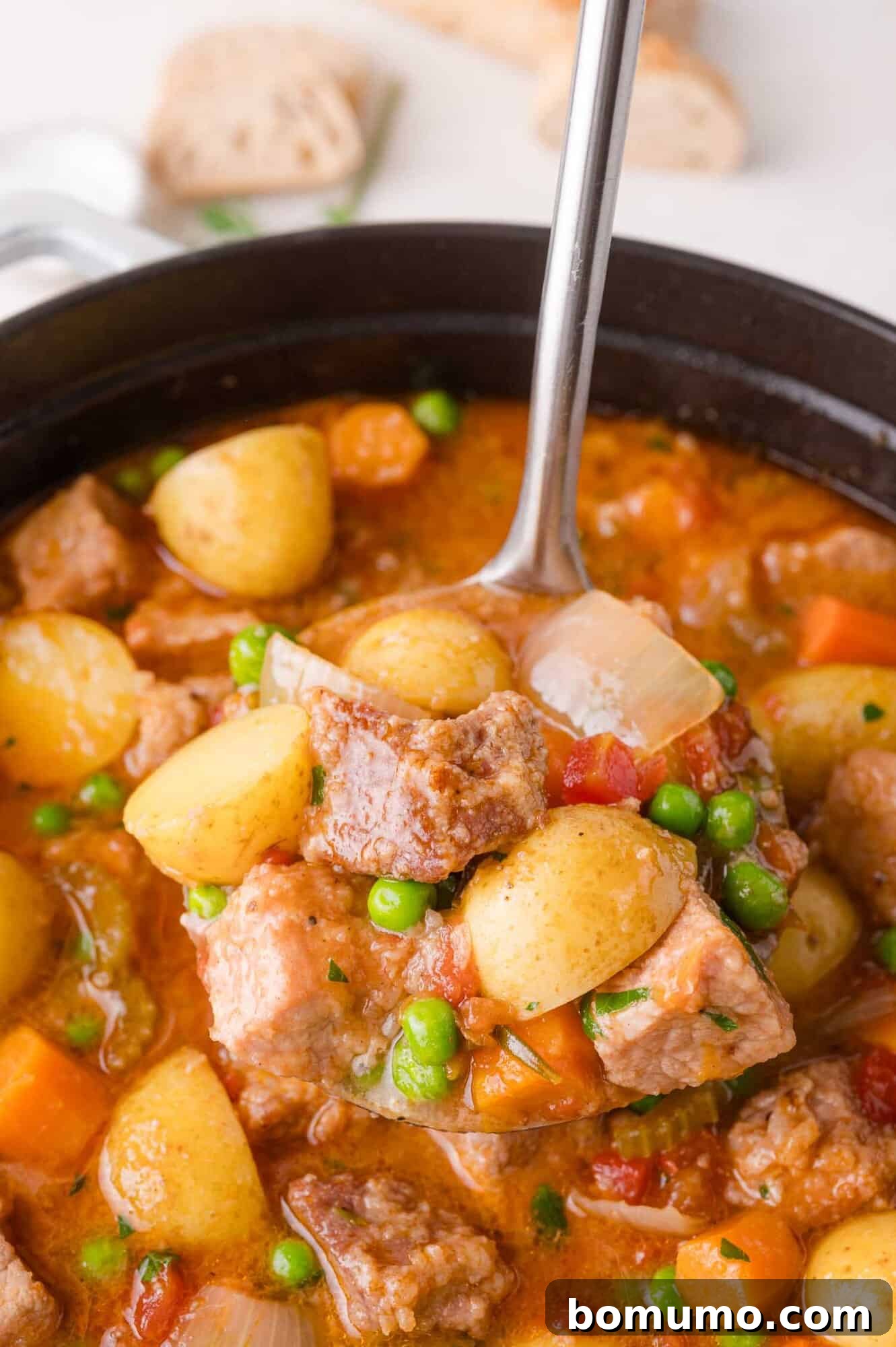
This slow-simmered pork stew is the epitome of comfort food, blending tender pork chunks with wholesome potatoes and garden vegetables in a rich, herbed broth. It’s a satisfying meal that’s perfect for chilly evenings and yields a generous batch, ensuring delicious leftovers for days to come.
How long it takes: Approximately 2 hours of total cooking time.
Equipment you’ll need: A large, heavy-bottomed pot or a sturdy Dutch oven.
Servings: This recipe generously serves 8 people (each portion approximately 2 cups).
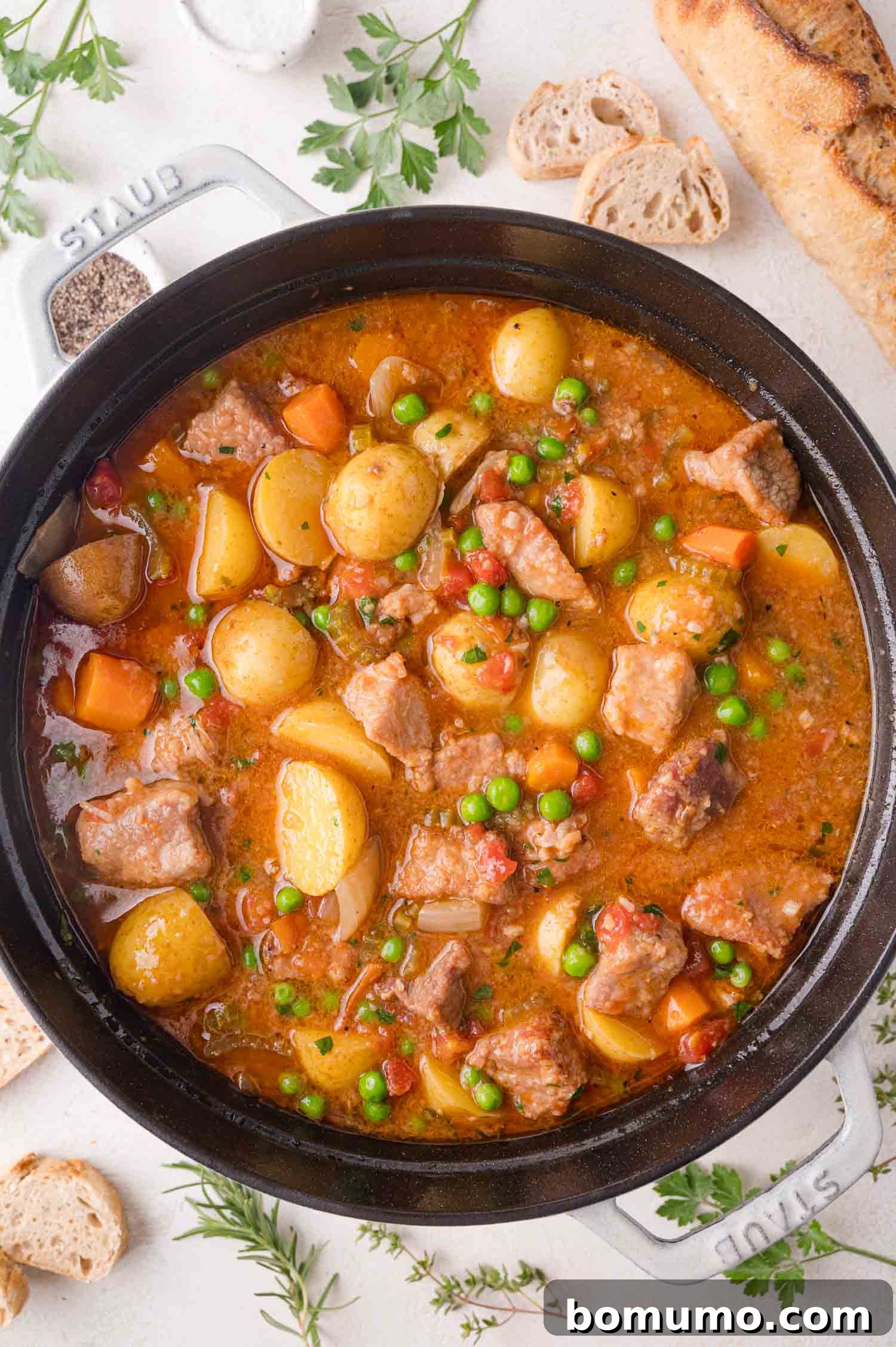
Discover the Delight of Slow-Cooked Pork Stew
While classic beef stew holds a special place in many hearts, it’s time to make room for this incredibly flavorful pork stew. There’s something truly magical about how slow-cooked pork, combined with an array of tender vegetables and aromatic herbs, transforms into a deeply comforting and satisfying meal. Best of all, it achieves this rich flavor without demanding hours of hands-on effort, making it an ideal choice for busy weeknights or special weekend gatherings.
This heartwarming stew feels like a special occasion meal, even on the most blustery of evenings, yet its preparation is remarkably straightforward. Serve it alongside a loaf of crusty bread, perfect for soaking up every last drop of the rich broth, and your dinner is complete. Plus, its generous yield means you’ll likely enjoy delightful leftovers, which often taste even better the next day!
What truly sets this pork stew apart and makes it a must-try:
- A Familiar Yet Exciting Twist: While there’s always a place in my kitchen for a comforting crockpot beef stew or a quick Instant Pot beef stew, this pork-based rendition offers a wonderful and exciting change of pace. It’s an excellent way to diversify your meal rotation and is particularly perfect if pork happens to be on sale!
- Your Ultimate Meal-Prep Companion: Not only is this pork stew relatively simple to prepare, but the recipe also yields a hearty eight servings. This substantial quantity, combined with the fact that its flavors deepen and meld beautifully after a night in the fridge, makes it an outstanding option for meal prepping throughout the week. Enjoy quick, delicious meals without the daily hassle.
- Layers of Rich, Slow-Simmered Flavor: The secret to this stew’s incredible depth lies in the low and slow simmering process on the stovetop. This gentle cooking method meticulously coaxes out every nuanced flavor from the pork, aromatic vegetables, and herbs, creating a complex and incredibly satisfying broth. As an added bonus, your entire home will be filled with the most tantalizing aromas as this delicious pork stew cooks, promising a truly unforgettable dining experience.
- Infinitely Customizable Ingredients: This recipe is wonderfully adaptable. Feel free to swap out vegetables based on what you have on hand, what’s currently in season, or simply what your family enjoys most. You can easily adjust the herbs to suit your palate, making this a versatile dish that can be tailored to your preferences every time.
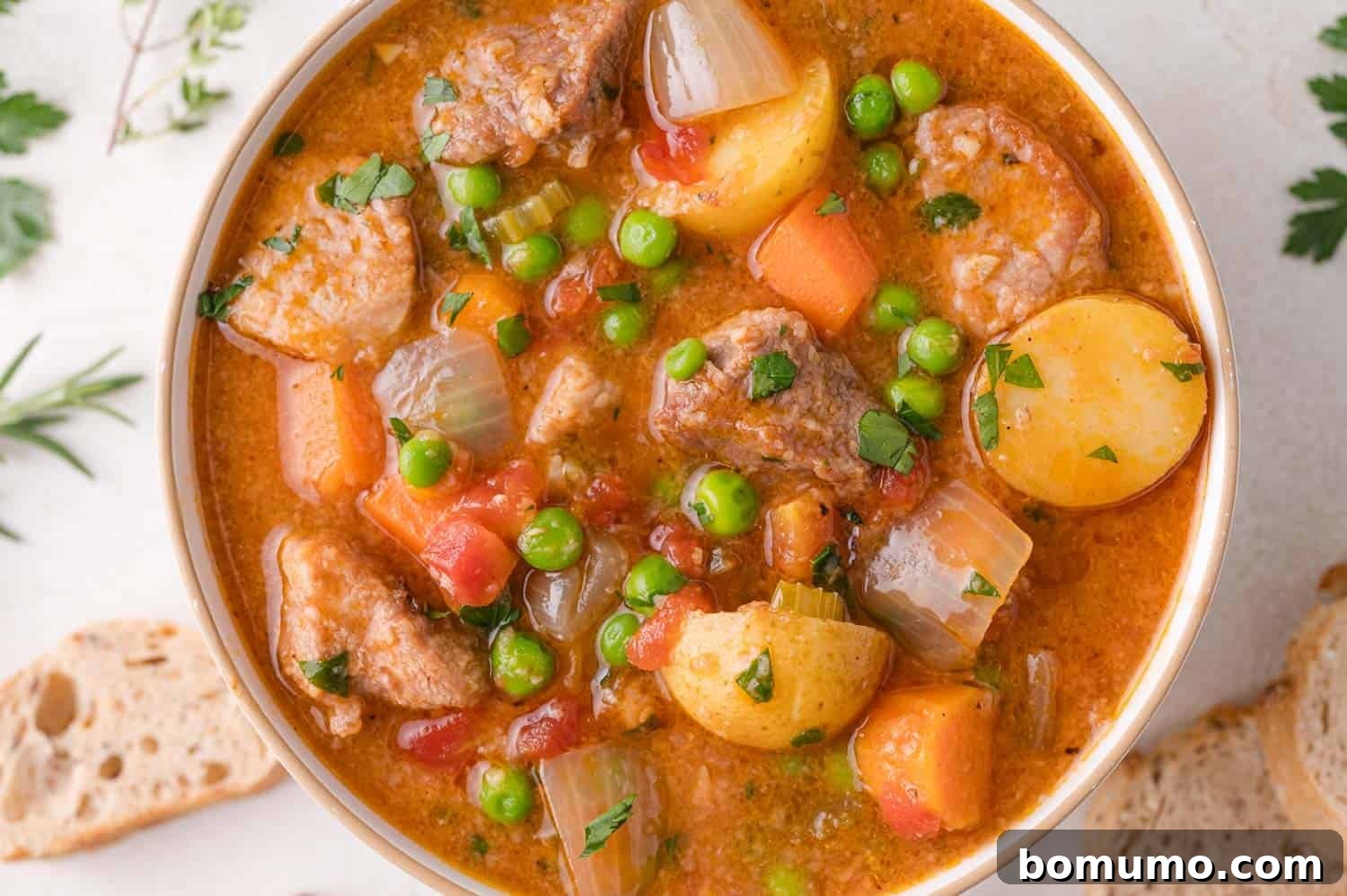
Mastering the Art of Pork Stew: A Step-by-Step Guide
Creating a truly magnificent pork stew is simpler than you might think, and the payoff in flavor and comfort is immense. Follow these detailed steps to achieve a perfectly tender, richly flavored stew that will become a family favorite.
Step 1: Prepare and Season the Pork to Perfection. Begin by trimming any significant excess fat from your boneless pork shoulder, then cut the meat into uniform, large cubes, aiming for pieces roughly 1 inch square. Uniformity helps ensure even cooking. In a spacious bowl, whisk together the all-purpose flour with 1 teaspoon of salt, ½ teaspoon of black pepper, vibrant paprika, and savory garlic powder. This seasoned flour will create a beautiful crust and help thicken the stew later. Add the cubed pork to this mixture and toss thoroughly, ensuring each piece is evenly coated. Set aside any remaining seasoned flour at the bottom of the bowl, as you’ll use it in a later step to build depth of flavor.
Pro Recipe Tip for Easier Slicing
For remarkably easier and cleaner cuts, place the raw pork shoulder in the freezer for about an hour before you begin trimming and cubing. The slightly firmed-up, semi-frozen meat will be much easier to handle and slice into perfect, uniform pieces.
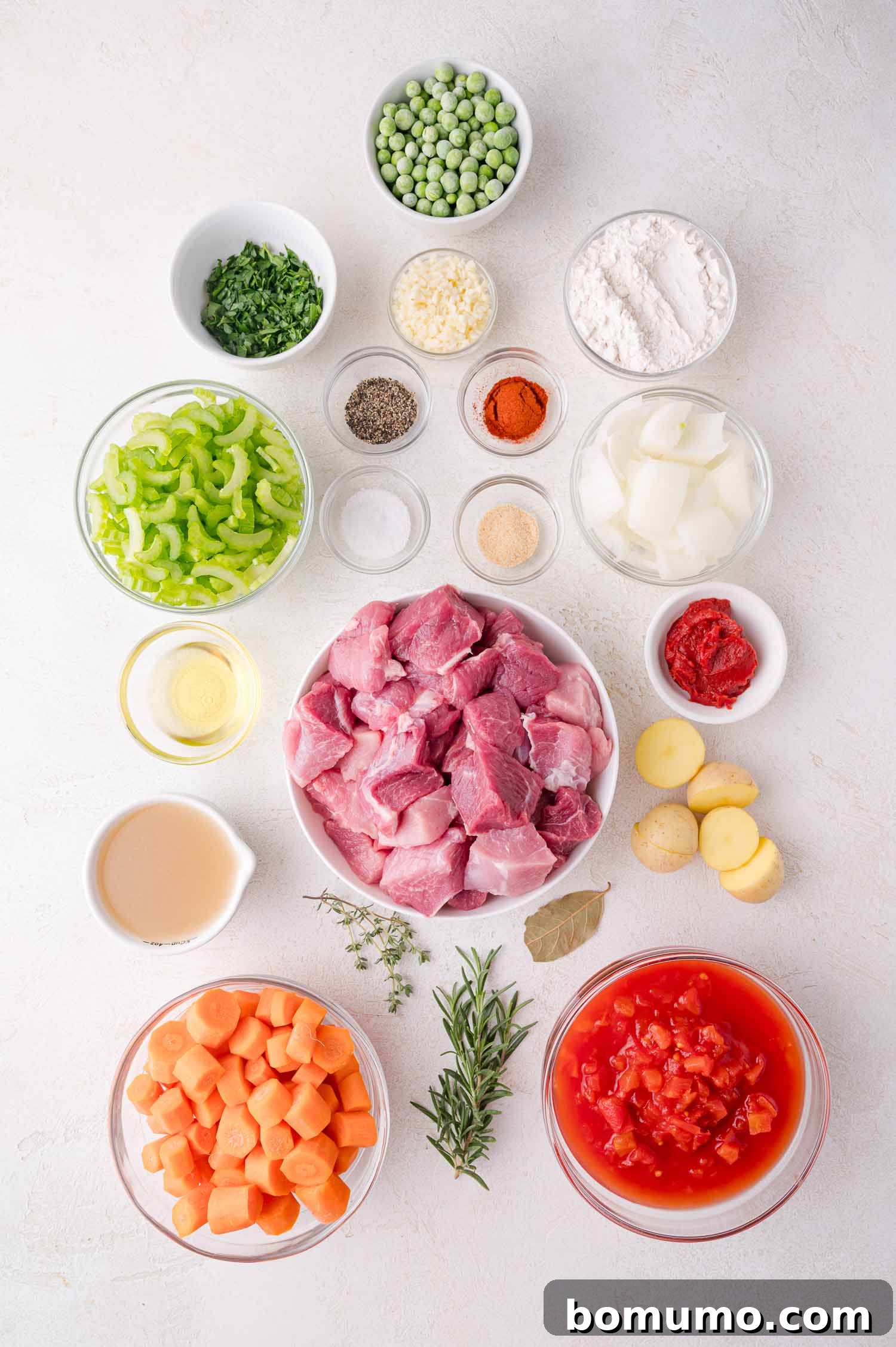
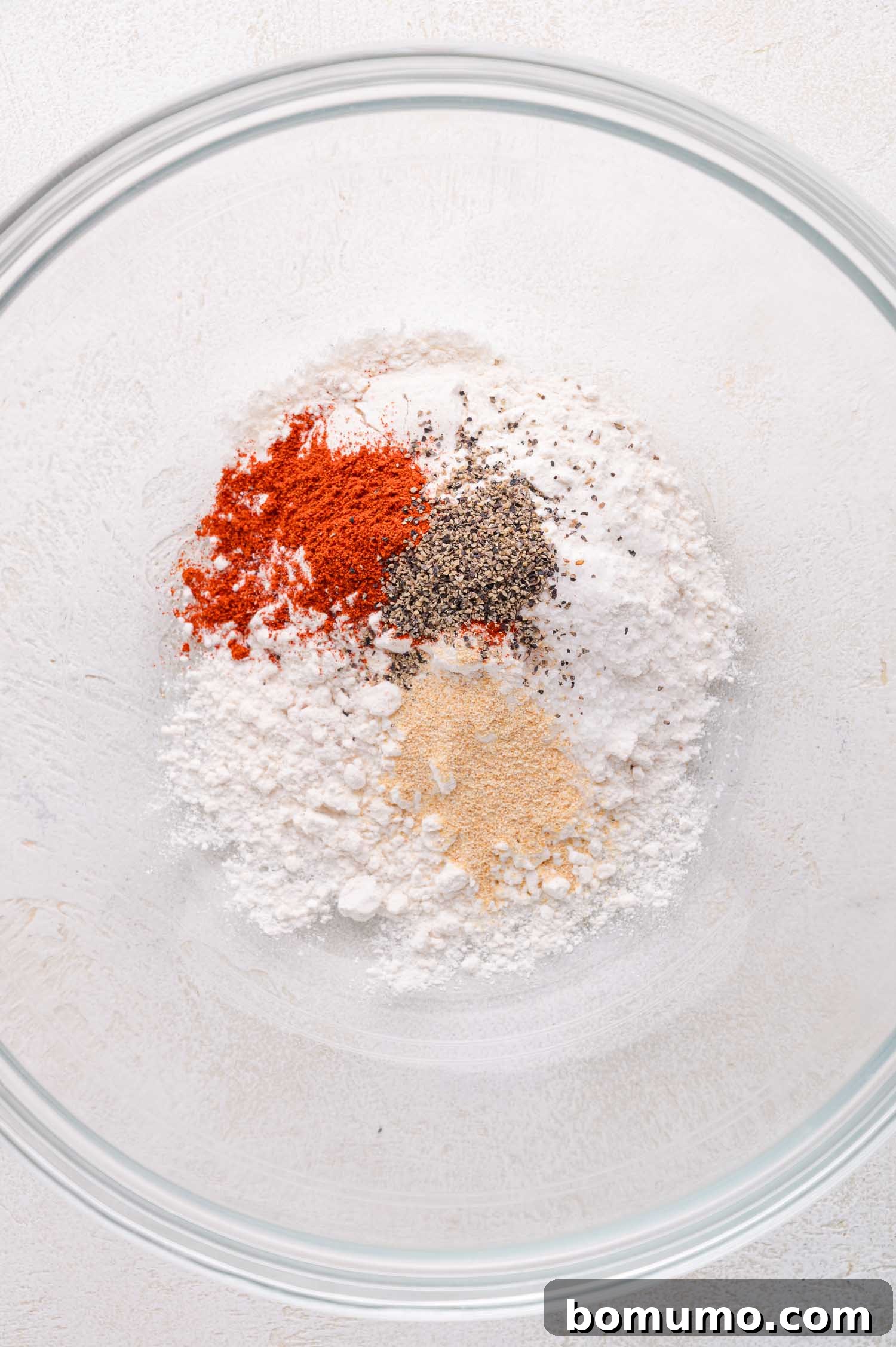
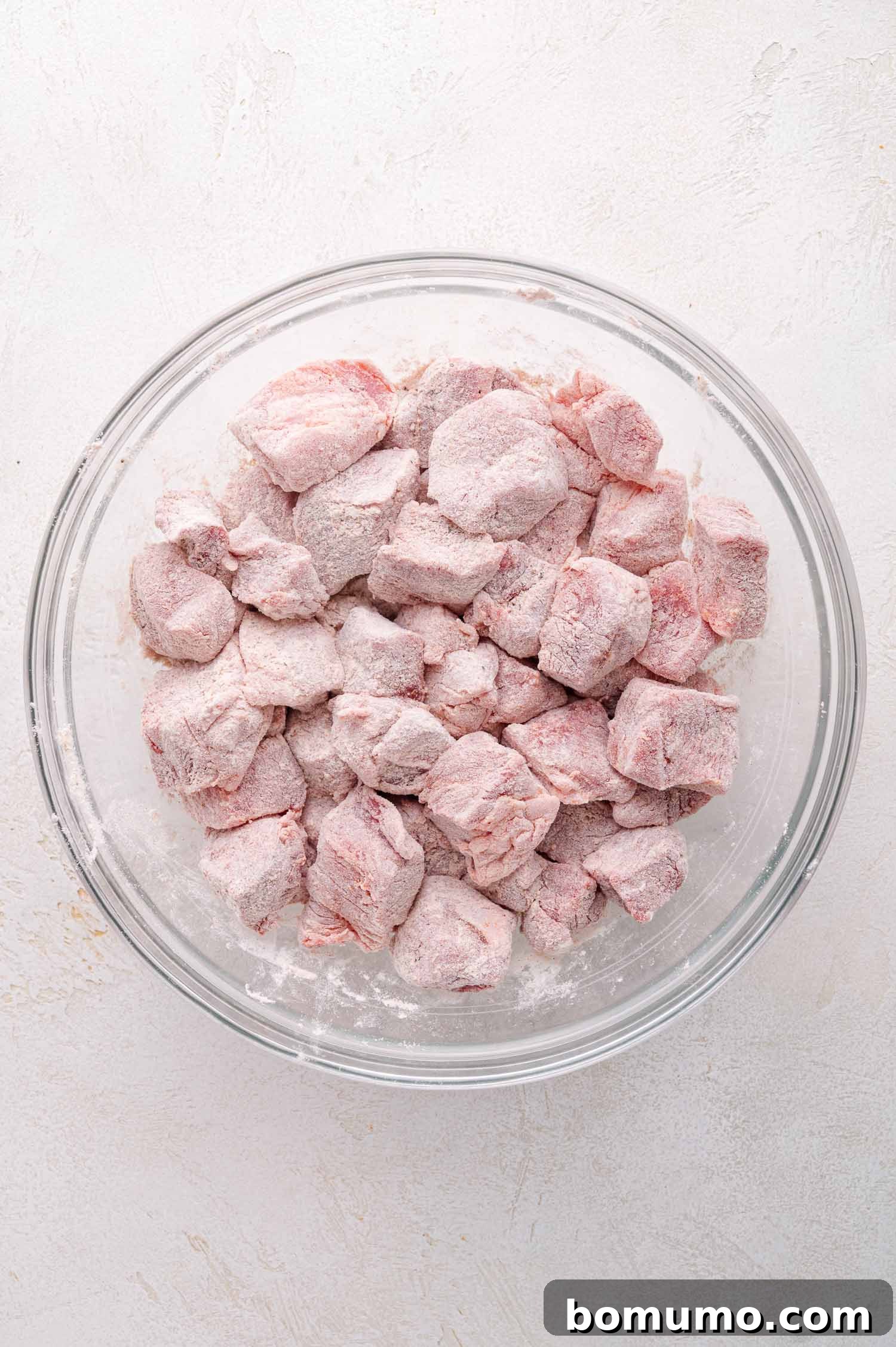
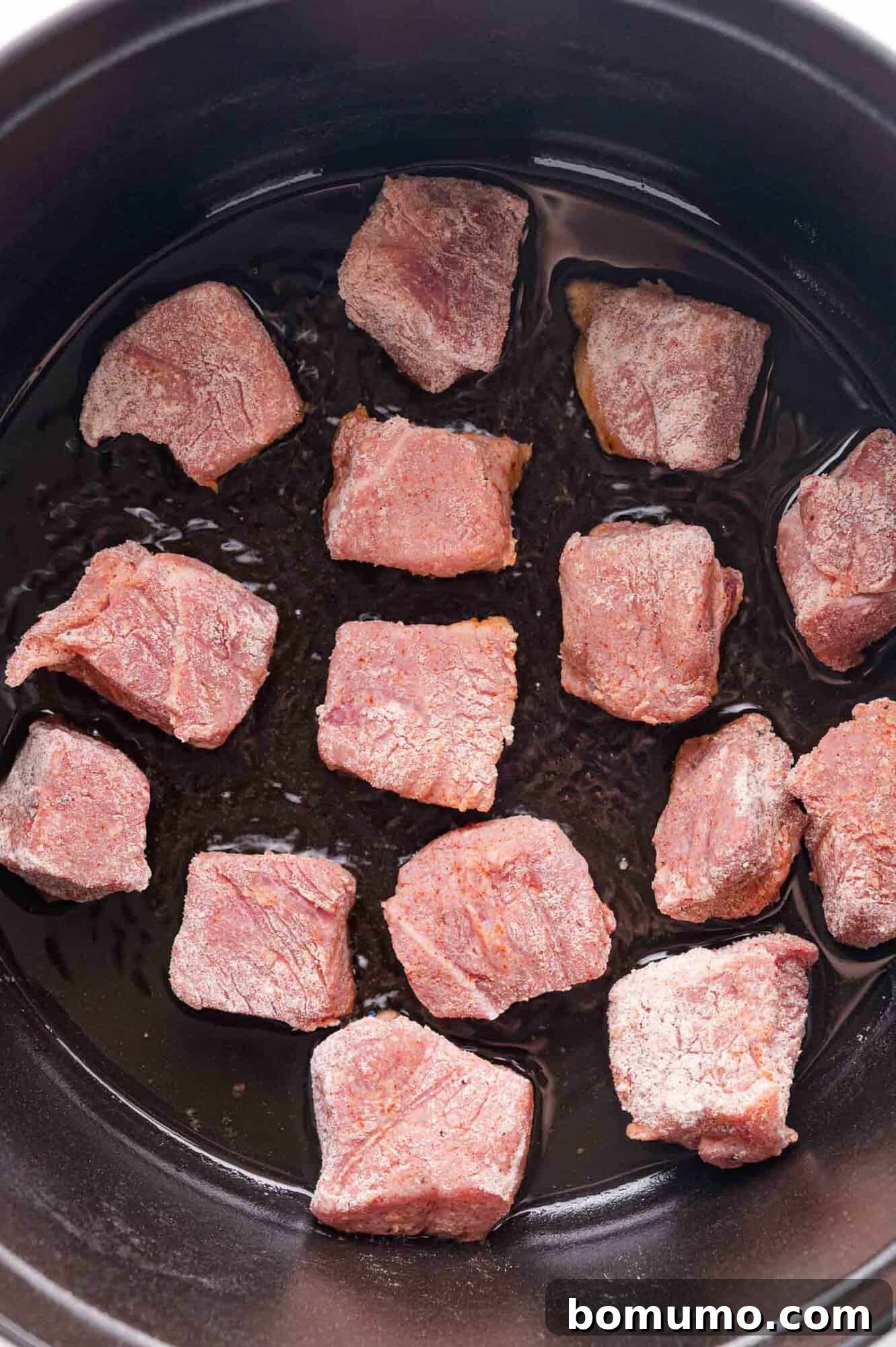
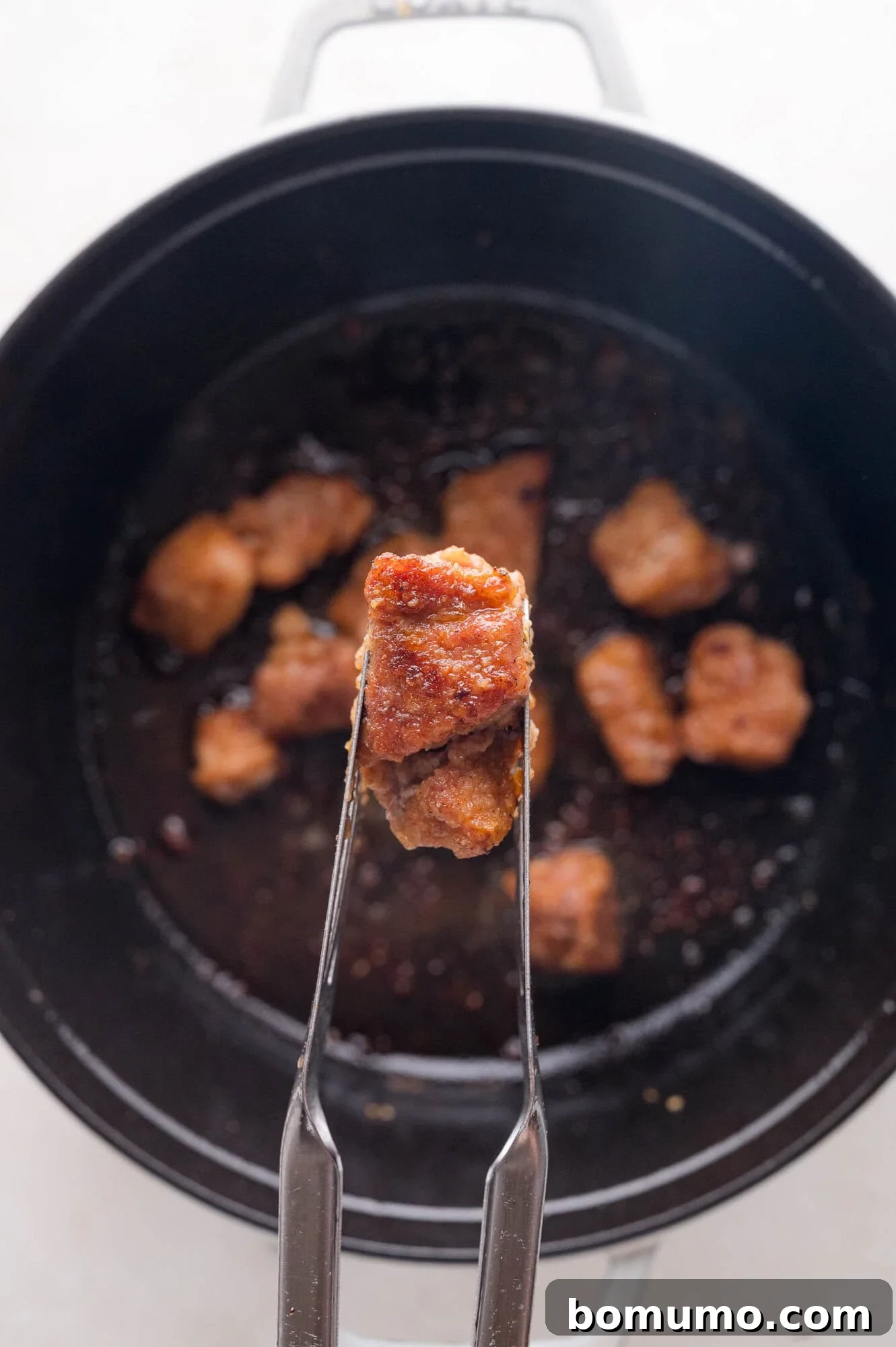
Step 2: Expertly Sear the Pork for Deep Flavor. Heat 2 tablespoons of oil or ghee in your chosen large pot or Dutch oven over medium-high heat until shimmering. When the pan is hot, carefully add the flour-coated pork cubes in a single layer. It’s crucial to avoid overcrowding the pan, as this prevents proper browning and can steam the meat instead. You will need to work in batches to achieve this. Allow the pork to brown deeply on all sides, a process that typically takes about 5 minutes per batch. This searing step is vital for developing rich, caramelized flavors (fond) at the bottom of the pan, which will later enhance the stew’s depth. As each batch browns, transfer the pork to a clean plate and set aside, adding a little more oil or ghee to the pot as needed for subsequent batches. Remember, the goal here is to achieve a beautiful, even brown crust on the exterior, not to cook the pork all the way through.
Step 3: Build the Flavor Base with Aromatics. With the pork seared and set aside, add the chopped carrots, sliced celery, and diced onion to the same pot, along with the remaining ½ teaspoon of salt and ¼ teaspoon of pepper. Cook these vegetables over medium heat, stirring occasionally, for 7 to 8 minutes. The aim is to soften them slightly and allow their natural sweetness to develop, making the onions translucent. They will continue to tenderize beautifully as they simmer in the stew. Next, stir in the minced garlic and cook for just about one minute until its fragrant aroma fills your kitchen. Be careful not to burn the garlic. Finally, incorporate any leftover seasoned flour mixture from the pork bowl; stir it in and cook for another 1 to 2 minutes. This creates a roux that will further thicken the stew and enrich its texture.
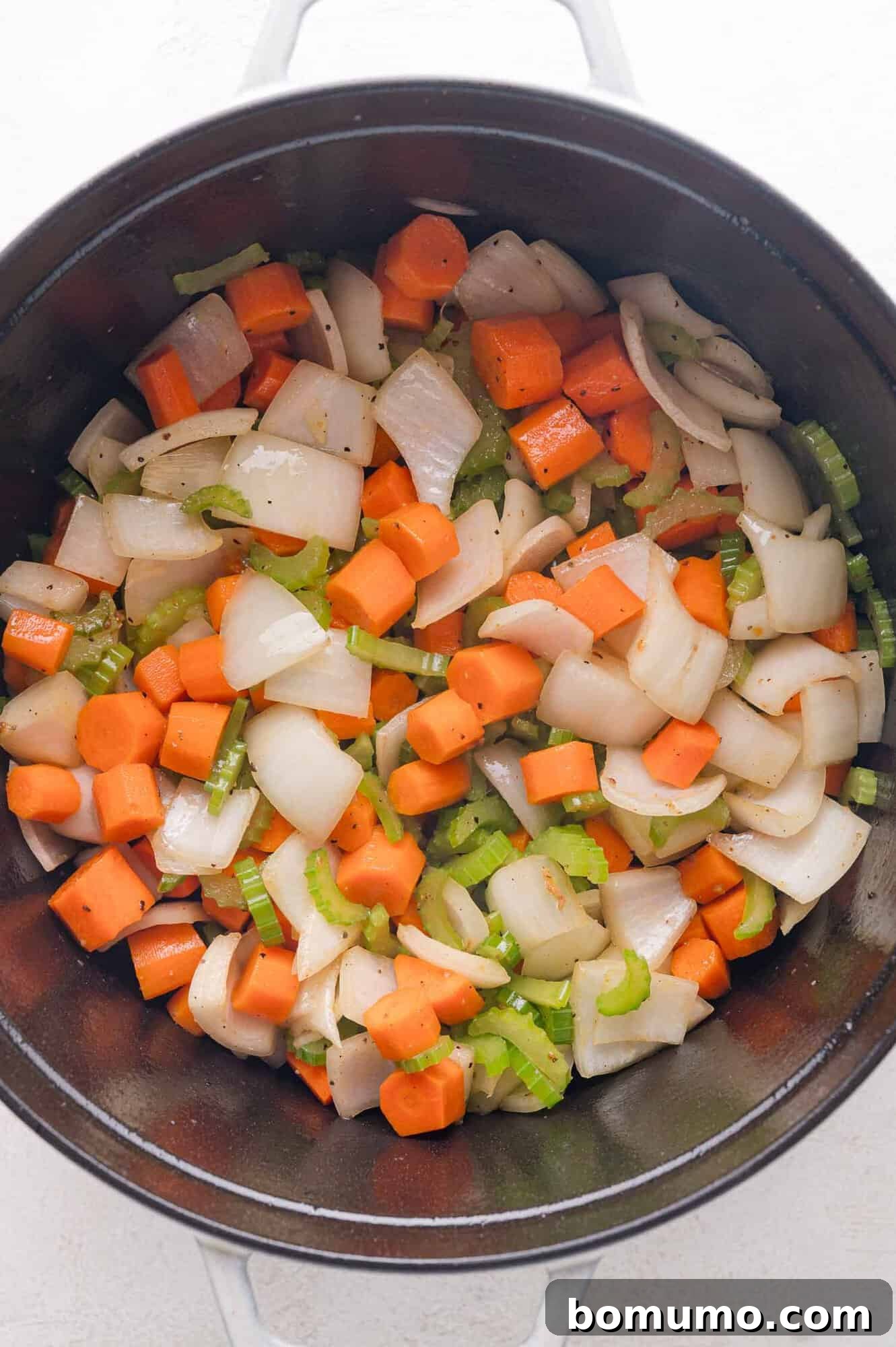
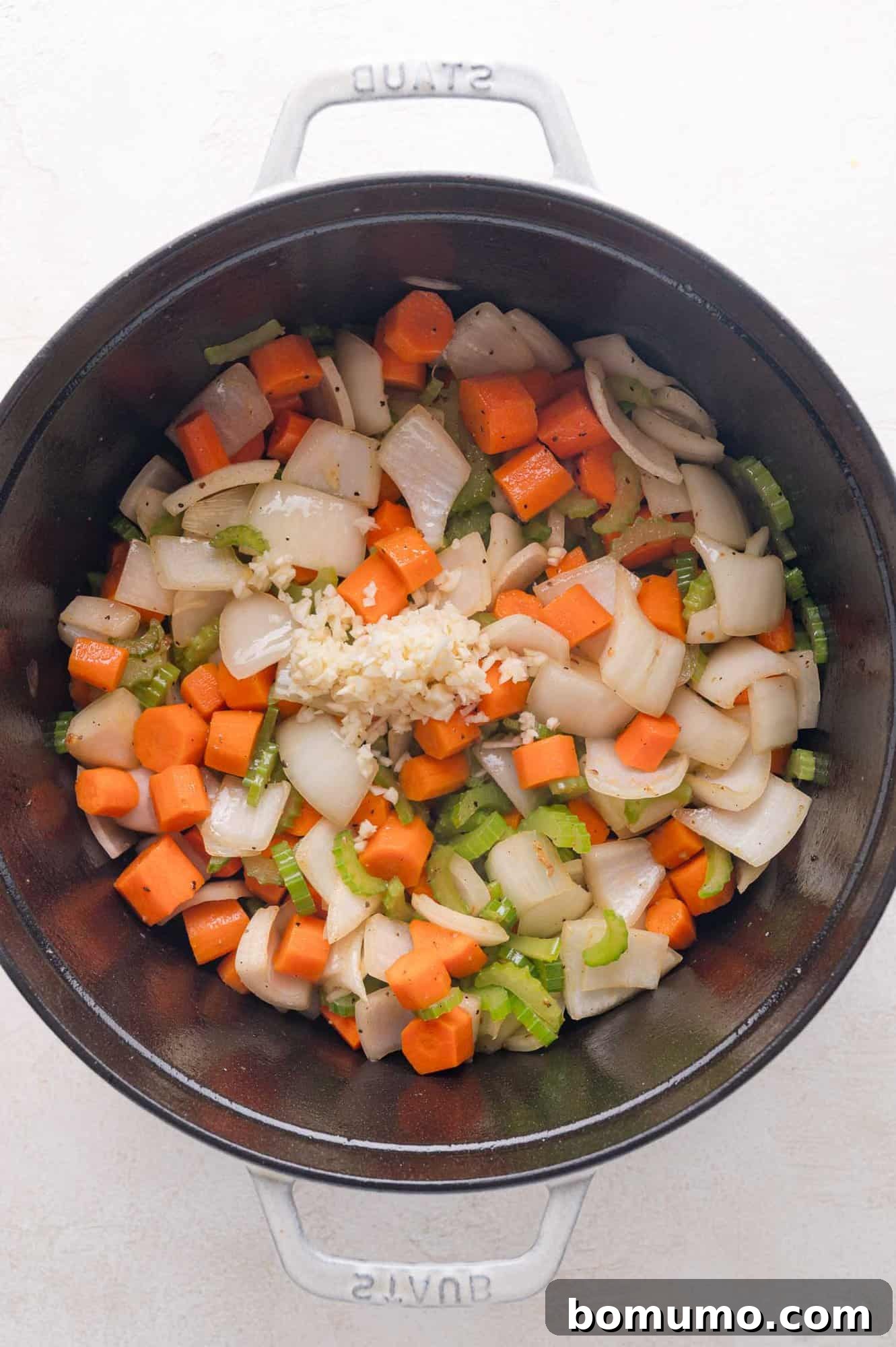
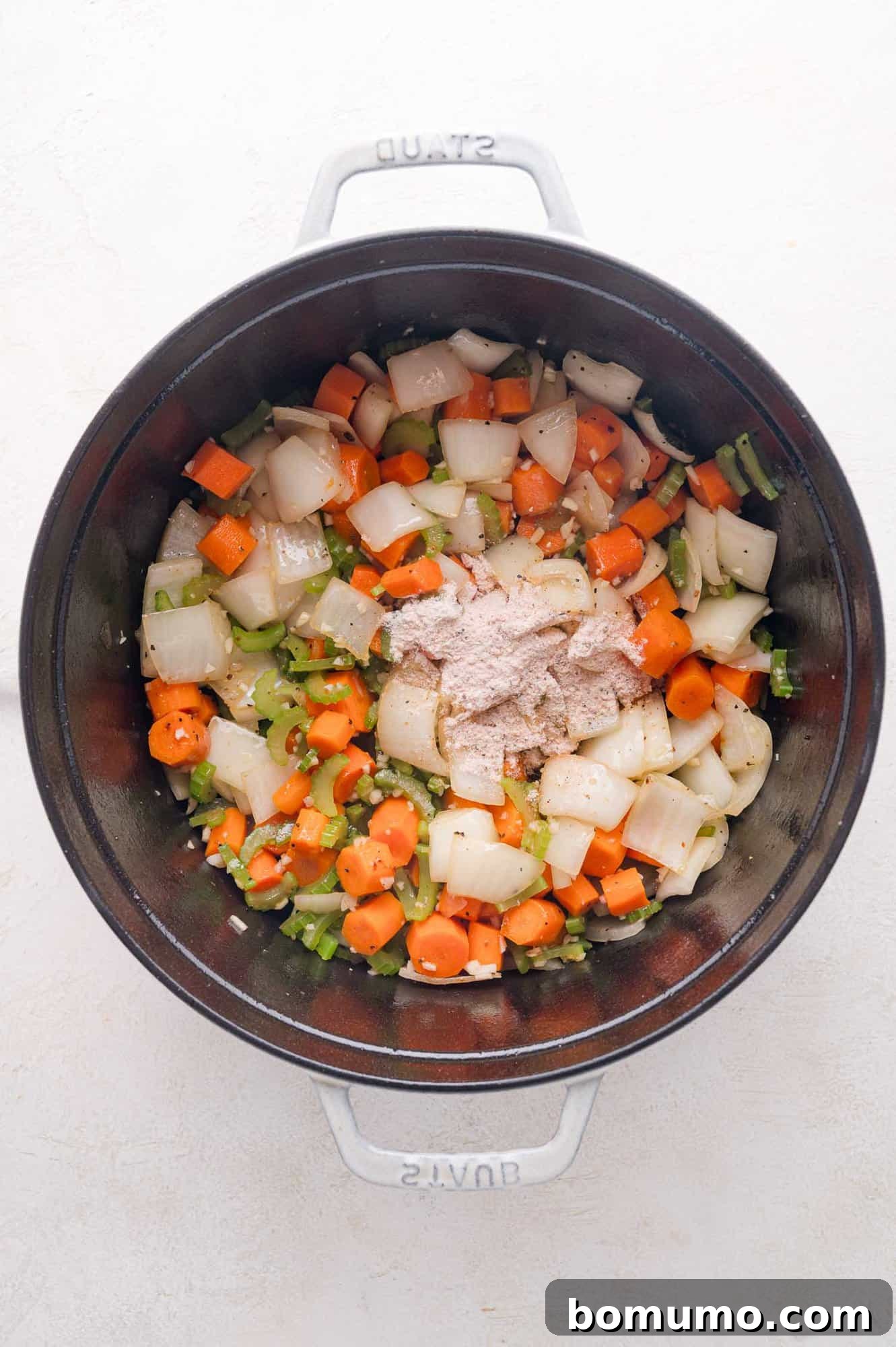
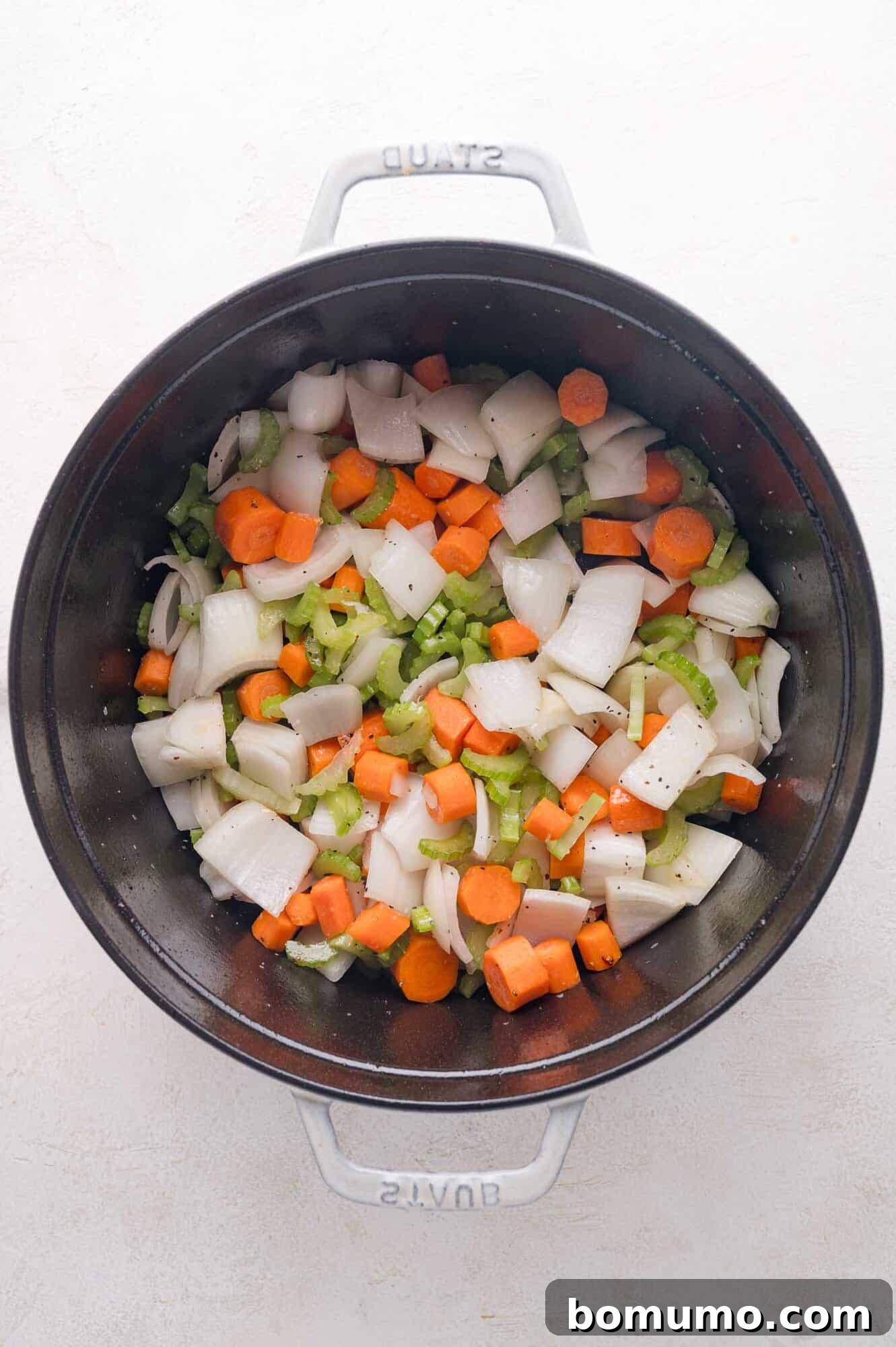
Step 4: Deglaze the Pan and Introduce Tomato Depth. After the flour has had a chance to cook for a couple of minutes and turn a light golden color, stir in the concentrated tomato paste. Allow it to cook for a few minutes, stirring constantly, until it deepens in color and fragrance. This crucial step, known as “cooking out” the tomato paste, enhances its natural sweetness and removes any raw flavor. Next, pour in 3 to 4 cups of chicken broth. Using a sturdy wooden spoon, vigorously scrape up all the delicious browned bits (fond) from the bottom of the pan. These caramelized fragments are packed with flavor and will dissolve into the broth, adding incredible richness and complexity to your stew.
Step 5: Simmer to Tender Perfection. Return the browned pork to the pot. Add the halved baby potatoes (or 1-inch pieces of Yukon gold potatoes), the undrained can of diced tomatoes, and your fresh herbs: a sprig of rosemary, a sprig of thyme, and a large bay leaf. Stir all the ingredients gently to combine. Ensure the ingredients are mostly covered by the broth, though they don’t need to be completely submerged. If necessary, add a little extra broth to achieve the desired liquid level. Bring the pork stew to a rolling boil over high heat, then immediately reduce the heat to low or medium-low to maintain a gentle simmer. Cover the pot and allow the stew to cook undisturbed for an hour and 15 minutes, stirring occasionally to prevent sticking and ensure even cooking. The key is a gentle simmer, not a rapid boil, which allows the pork to become incredibly tender and the flavors to meld beautifully.
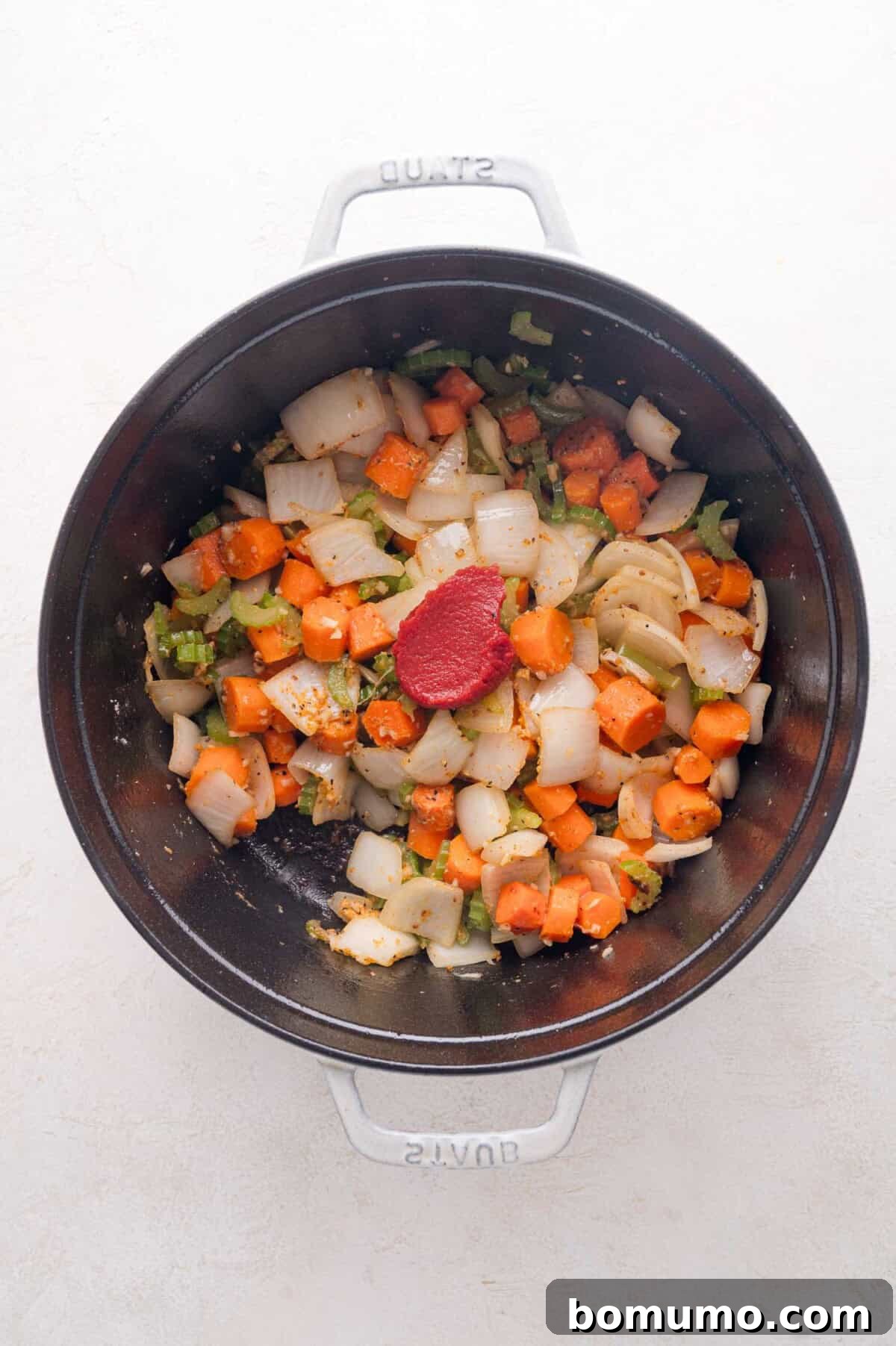
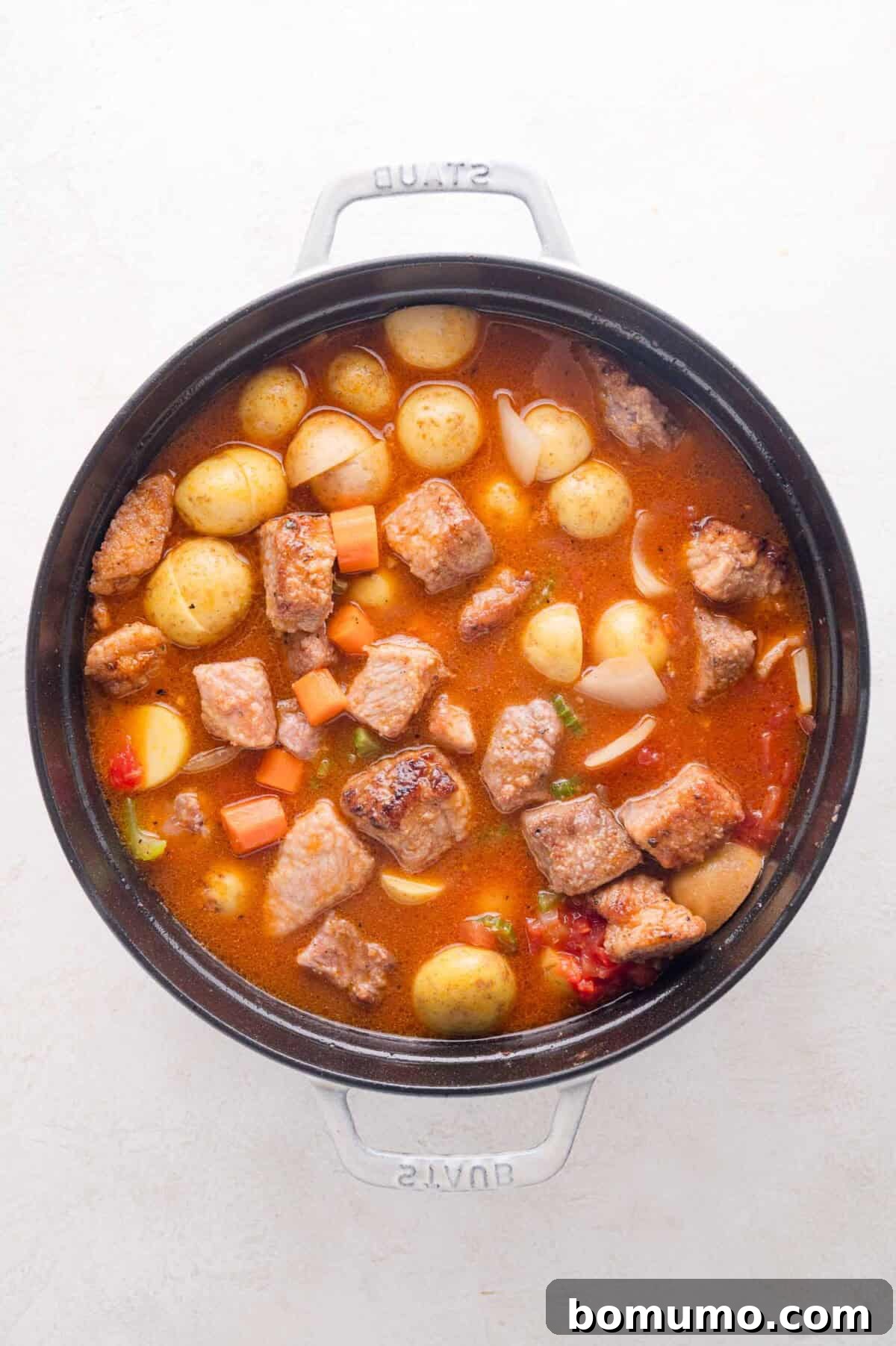
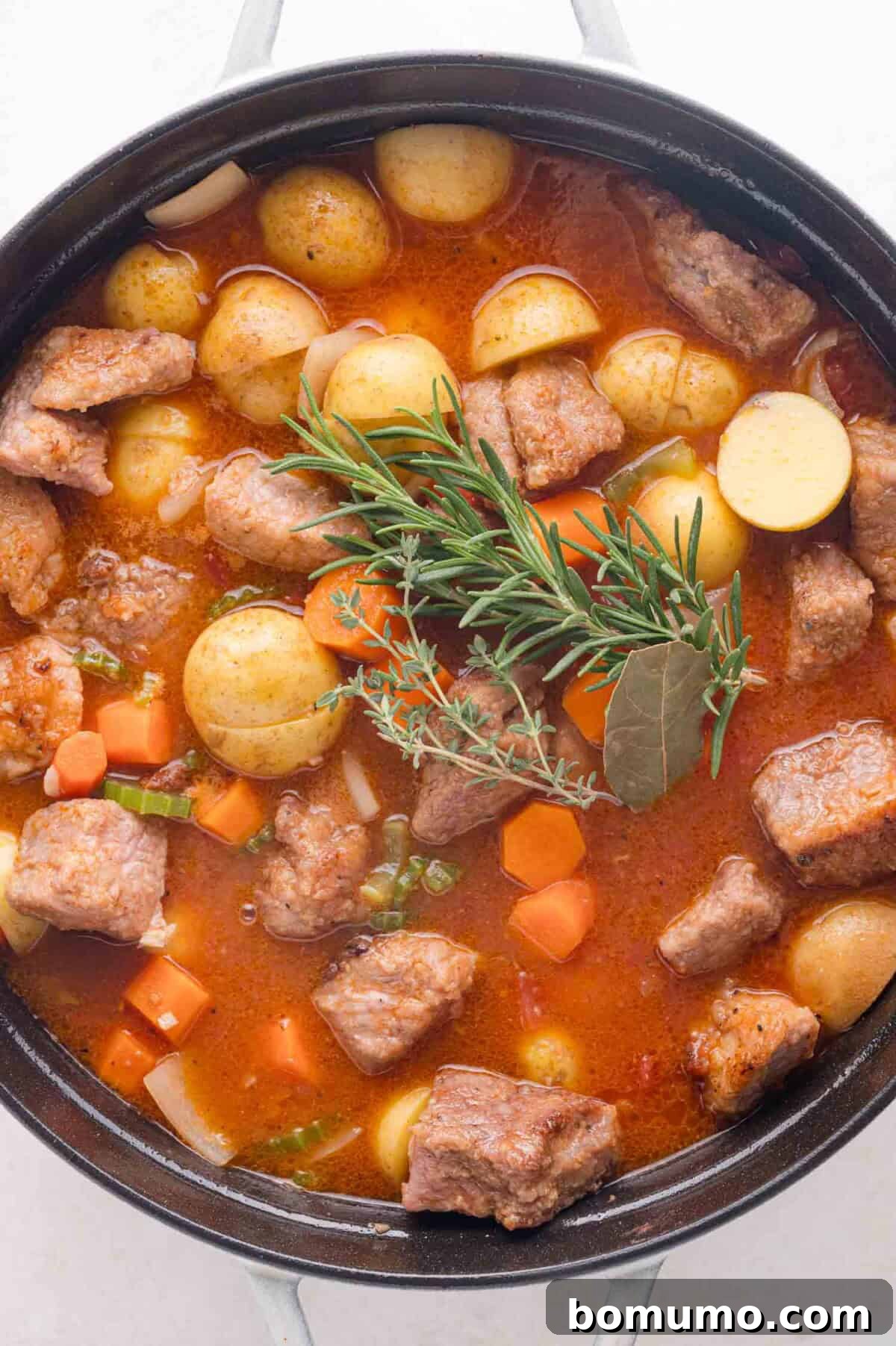
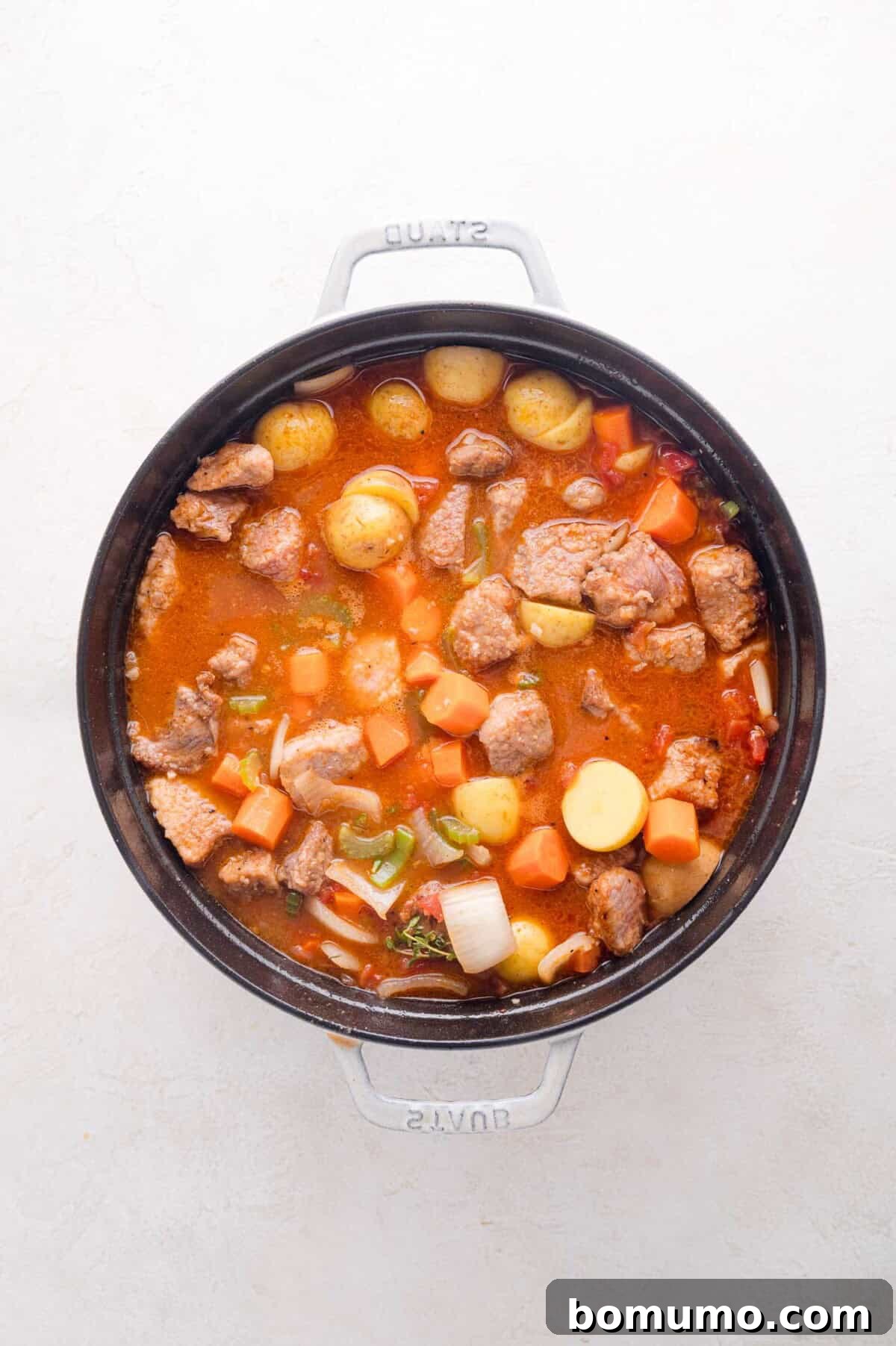
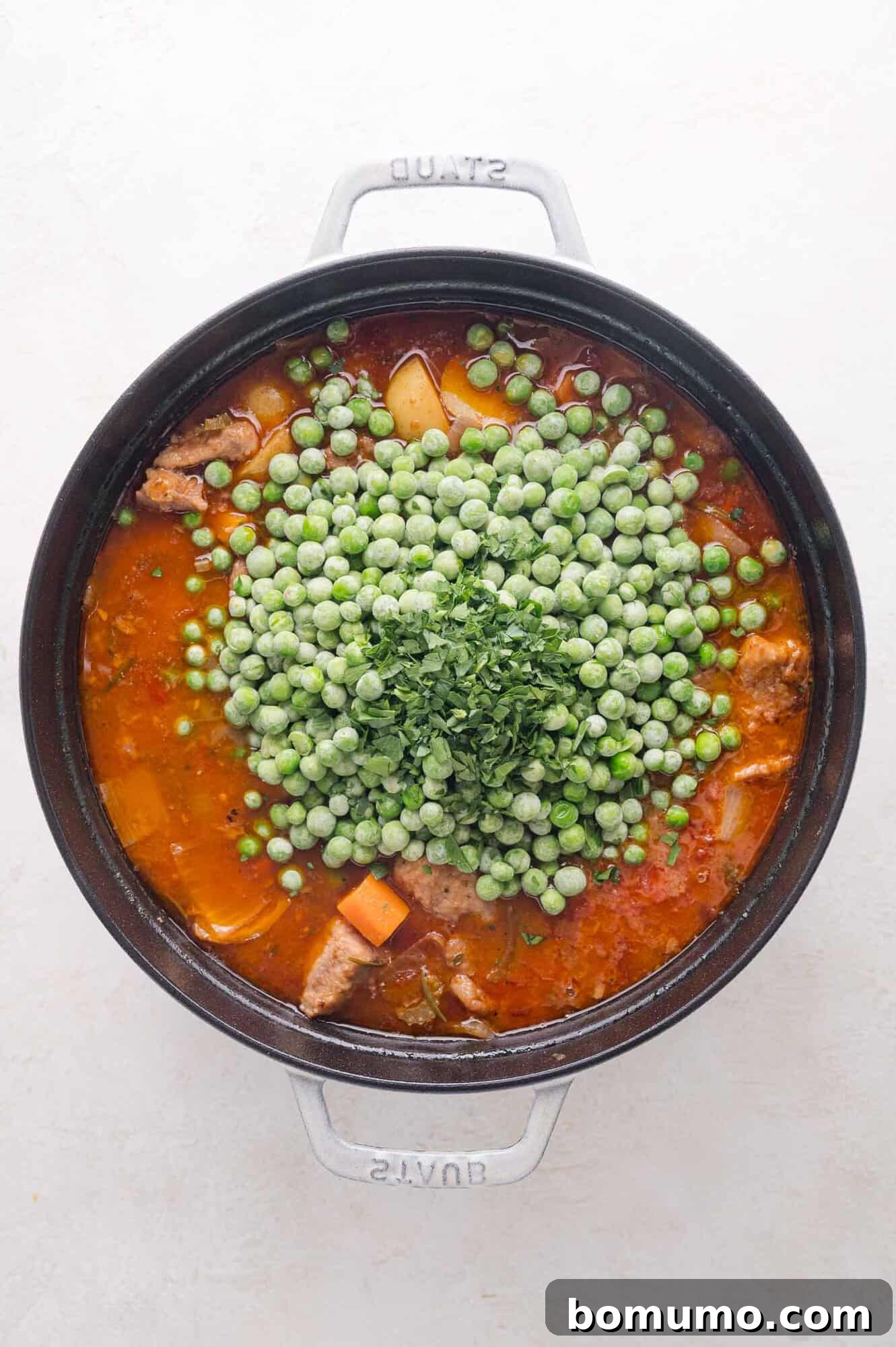
Step 6: The Finishing Touches for a Perfect Stew. During the last 10 minutes of simmering time, stir in the frozen peas (no need to thaw them first, they’ll cook quickly in the hot stew) and the freshly chopped parsley. This ensures the peas retain their bright color and slight bite, and the parsley adds a burst of fresh flavor at the end. If you find the stew to be too thick, feel free to add a little more broth until it reaches your preferred consistency. Once the stew is ready, carefully discard the bay leaf and the bare stems of any fresh herbs (the leaves will have naturally fallen off and infused their flavor). Taste the stew and adjust the seasoning as needed with additional salt and pepper, to your personal preference. Ladle the hot, fragrant stew into shallow bowls and prepare to enjoy a truly satisfying and flavorful meal.
Elevate Your Meal: Delicious Serving Suggestions for Pork Stew
A comforting and robust pork stew deserves to be paired with accompaniments that enhance its rustic charm and rich flavors. Here are some fantastic ideas to complete your hearty meal:
- Crusty Bread: No stew is complete without a side of warm, crusty bread to soak up every last drop of that savory broth. Our no-knead whole wheat bread and Dutch oven bread are absolute favorites and perfectly suited for this task. Alternatively, pick up a fresh, artisanal loaf from your favorite local bakery for a delightful addition.
- Fresh Salads: To add a refreshing contrast to the richness of the stew, consider serving a vibrant salad. A hearty and flavorful salad with beets and feta would introduce delightful earthy notes and a tangy dressing. For something lighter yet equally satisfying, try our crisp and refreshing broccoli and cauliflower salad.
- Homestyle Desserts: Cap off your comforting meal with a classic, down-home dessert. A warm apple crisp with ginger, a luscious peach crumble, or delightful blueberry crumb bars would all be excellent choices. And don’t forget a scoop of creamy no-churn vanilla bean ice cream to serve alongside!
Storage & Reheating Guide
Storage & Reheating Guide
This hearty pork stew is fantastic for meal planning and batch cooking. Properly storing and reheating ensures you can enjoy its delicious flavors for days.
Refrigerate: For optimal freshness and flavor, store any leftover pork stew in an airtight container in the refrigerator for up to 3 to 4 days. If you anticipate having the leftovers for easy lunches throughout the week, a convenient tip is to ladle individual servings into smaller, microwave-safe containers. This makes grabbing a quick, satisfying meal incredibly simple and keeps your fridge organized.
Freeze: If you find yourself with more delicious stew than you can reasonably consume within a few days, freezing is an excellent option for long-term storage. Do note that the texture of the potatoes can become slightly softer or mealy after freezing and reheating. To freeze, transfer the cooled stew into freezer-safe containers or heavy-duty zip-top bags, ensuring you leave a little headspace for expansion. It can be safely stored in the freezer for up to 3 months. For best results, always thaw the frozen stew overnight in the refrigerator before reheating.
Reheat: There are two convenient methods for reheating your pork stew. For the stovetop method, place the desired amount of stew in a pot over medium heat, stirring occasionally. Allow it to gently simmer until it is heated through completely. Alternatively, for individual portions, simply transfer the stew into microwave-safe bowls and heat in the microwave, stirring halfway through, until thoroughly warmed.
More Comforting Soups and Stews
Easy Split Pea Soup
Easy Hamburger Soup Recipe
Homemade Cream of Mushroom Soup
Lemon Chicken Orzo Soup – Instant Pot or Stovetop
Pin this recipe now to easily find it later!
Pin It
Hearty Homestyle Pork Stew
Rachel Gurk
30 minutes
1 hour
30 minutes
2 hours
8

Ingredients
-
3
pounds
boneless pork shoulder
(see note below for pork options) -
½
cup
all-purpose flour
-
1 ½
teaspoons
kosher salt, divided -
1
teaspoon
coarse ground black pepper, divided -
1
teaspoon
paprika
-
½
teaspoon
garlic powder
-
2
tablespoons
oil or ghee -
4
medium carrots, cut into ½-inch slices
(about 2 cups) -
4
stalks
celery, cut into ¼-inch slices
(about 2 cups) -
1
large onion, chopped
(about 2 cups) -
4
cloves
garlic, minced -
2
tablespoons
tomato paste
-
3 to 4
cups
chicken broth, divided
(low sodium preferred) -
1
pound
baby potatoes, halved
(or Yukon gold potatoes, cut into 1-inch pieces) -
1
can
(14.5 ounces) diced tomatoes, undrained
(no salt added preferred) -
1
sprig
fresh rosemary
(see note for dried herb substitution) -
1
sprig
fresh thyme -
1
large bay leaf -
2
cups
frozen peas
(no need to thaw) -
½
cup
chopped fresh parsley
Instructions
-
Trim any excess fat from the pork shoulder and cut it into uniform 1-inch pieces. (Pro tip: For easier slicing, chill the raw pork in the freezer for about an hour before cutting it into chunks. The slightly firmed meat will be much easier to manage.)3 pounds boneless pork shoulder
-
In a large bowl, combine ½ cup all-purpose flour, 1 teaspoon kosher salt, ½ teaspoon coarse ground black pepper, 1 teaspoon paprika, and ½ teaspoon garlic powder. Add the cubed pork and toss thoroughly until all sides are evenly coated with the flour mixture. Set aside any leftover seasoned flour mixture at the bottom of the bowl; you’ll use it later to enrich the stew.½ cup all-purpose flour,
1 teaspoon paprika,
½ teaspoon garlic powder -
In a large pot or Dutch oven, heat 2 tablespoons of oil or ghee over medium-high heat. Add the floured pork cubes to the pan in a single layer, making sure not to overcrowd the pot. You will need to do this in batches. Brown the pork on all sides, about 5 minutes per batch, until a deep golden-brown crust forms. Add more oil if necessary between batches. Remove the browned pork from the pan and transfer it to a plate, repeating until all the meat is seared. The pork will not be fully cooked at this stage, just beautifully browned on the exterior.2 tablespoons oil or ghee
-
Add the 4 medium carrots, 4 stalks celery, and 1 large onion to the pot, along with the remaining ½ teaspoon salt and ¼ teaspoon pepper. Cook, stirring frequently, for 7 to 8 minutes, or until the onions become translucent and the vegetables start to soften.4 medium carrots, cut into ½-inch slices,
4 stalks celery, cut into ¼-inch slices,
1 large onion, chopped -
Add 4 cloves minced garlic and cook for one minute until fragrant. Then, stir in any saved leftover flour mixture and cook for another 1 to 2 minutes, stirring constantly. Add 2 tablespoons tomato paste, stirring well to combine it with the vegetables. Cook the tomato paste for a few minutes to deepen its flavor.4 cloves garlic, minced,
2 tablespoons tomato paste -
Pour in 3 to 4 cups of chicken broth, using a wooden spoon to scrape up all the flavorful browned bits (fond) from the bottom of the pan. These bits will dissolve into the liquid, adding immense depth to your stew.3 to 4 cups chicken broth, divided
-
Return the browned pork to the pan. Add 1 pound baby potatoes (halved), 1 can (14.5 ounces) undrained diced tomatoes, 1 sprig fresh rosemary, 1 sprig fresh thyme, and 1 large bay leaf. Stir to thoroughly combine all the ingredients. The ingredients should be mostly covered by the broth, but they do not need to be completely submerged. If needed, add a little extra broth.1 pound baby potatoes, halved,
1 can (14.5 ounces) diced tomatoes, undrained,
1 sprig fresh rosemary,
1 sprig fresh thyme,
1 large bay leaf -
Increase the heat to high to bring the stew to a boil. Once boiling, reduce the heat to low or medium-low to maintain a gentle, consistent simmer. Cover the pot with a lid and cook for 1 hour and 15 minutes, stirring occasionally to ensure even cooking and prevent sticking. It’s crucial that the stew is gently simmering, not rapidly boiling, to allow the pork to become perfectly tender and the flavors to fully develop. Adjust the heat as necessary.
-
Approximately 10 minutes before you plan to serve, stir in the 2 cups of frozen peas (there’s no need to thaw them beforehand!) and ½ cup of chopped fresh parsley. If the stew appears too thick for your liking, add a bit more broth until it reaches your desired consistency.2 cups frozen peas,
½ cup chopped fresh parsley -
Before serving, remember to carefully remove and discard the stems of the fresh herbs (the leaves will have infused into the stew and likely fallen off) and the bay leaf. Taste the stew and season it with additional salt and pepper as needed to suit your preference. Serve hot in shallow bowls and enjoy!
Recipe Notes & Variations
- Choosing Your Pork: For this hearty stew, I typically use boneless pork shoulder due to its excellent marbling and rich flavor that develops beautifully during slow cooking. Boneless pork butt (also known as Boston butt) is another fantastic option, offering similar tenderness and flavor. You could also use boneless country ribs, which are essentially another cut from the pork shoulder and work wonderfully in stews.
- Fresh vs. Dried Herbs: While fresh herbs like rosemary and thyme impart a vibrant, aromatic quality to the stew, you can certainly substitute dried herbs if fresh ones aren’t available. For every sprig of fresh rosemary, use ¼ teaspoon of crushed dried rosemary. For each sprig of fresh thyme, use ½ teaspoon of dried thyme. Remember that dried herbs are more concentrated, so use them sparingly.
- Slow Cooker Method: If you prefer the convenience of a slow cooker, this pork stew can be adapted! You can refer to my crockpot beef stew recipe for a similar cooking method, simply substituting the beef with pork. While the ingredient list might vary slightly between recipes, the general slow cooker instructions will remain largely the same, making it an easy swap.
- Maximizing Flavor (Browning): Don’t skip the step of browning the pork! This initial searing creates a rich crust and develops deep, complex flavors that are essential to a truly satisfying stew. The fond (browned bits) left in the bottom of the pot after searing are packed with flavor and should be scraped up when you add the broth – this is a key step for an incredibly flavorful broth.
- Storage and Leftovers: Leftover pork stew is a treasure! It can be safely refrigerated in an airtight container for 3 to 4 days. If you’re looking to store it longer, it freezes well for up to 3 months. Be aware that freezing and reheating can slightly alter the texture of the potatoes, making them a little softer. Always thaw frozen stew in the refrigerator before reheating. Reheat gently on the stovetop or in the microwave until thoroughly warmed through.
- Vegetable Customization: Feel free to customize the vegetables in your stew based on your preferences or what’s in season. Sweet potatoes can be a delicious alternative to regular potatoes, or you can add parsnips, turnips, or even green beans towards the end of the cooking process for extra variety.
Watch the Recipe Video
Nutrition Information
Serving:
2
cups
,
Calories:
403
kcal
,
Carbohydrates:
31
g
,
Protein:
46
g
,
Fat:
10
g
,
Saturated Fat:
2
g
,
Polyunsaturated Fat:
2
g
,
Monounsaturated Fat:
5
g
,
Trans Fat:
0.04
g
,
Cholesterol:
102
mg
,
Sodium:
705
mg
,
Potassium:
1408
mg
,
Fiber:
6
g
,
Sugar:
7
g
,
Vitamin A:
6033
IU
,
Vitamin C:
41
mg
,
Calcium:
83
mg
,
Iron:
4
mg
Nutrition information is automatically calculated and is intended to be used as an approximation only.
Did You Make This?
We’d love to hear from you! Share a comment and rating below!