
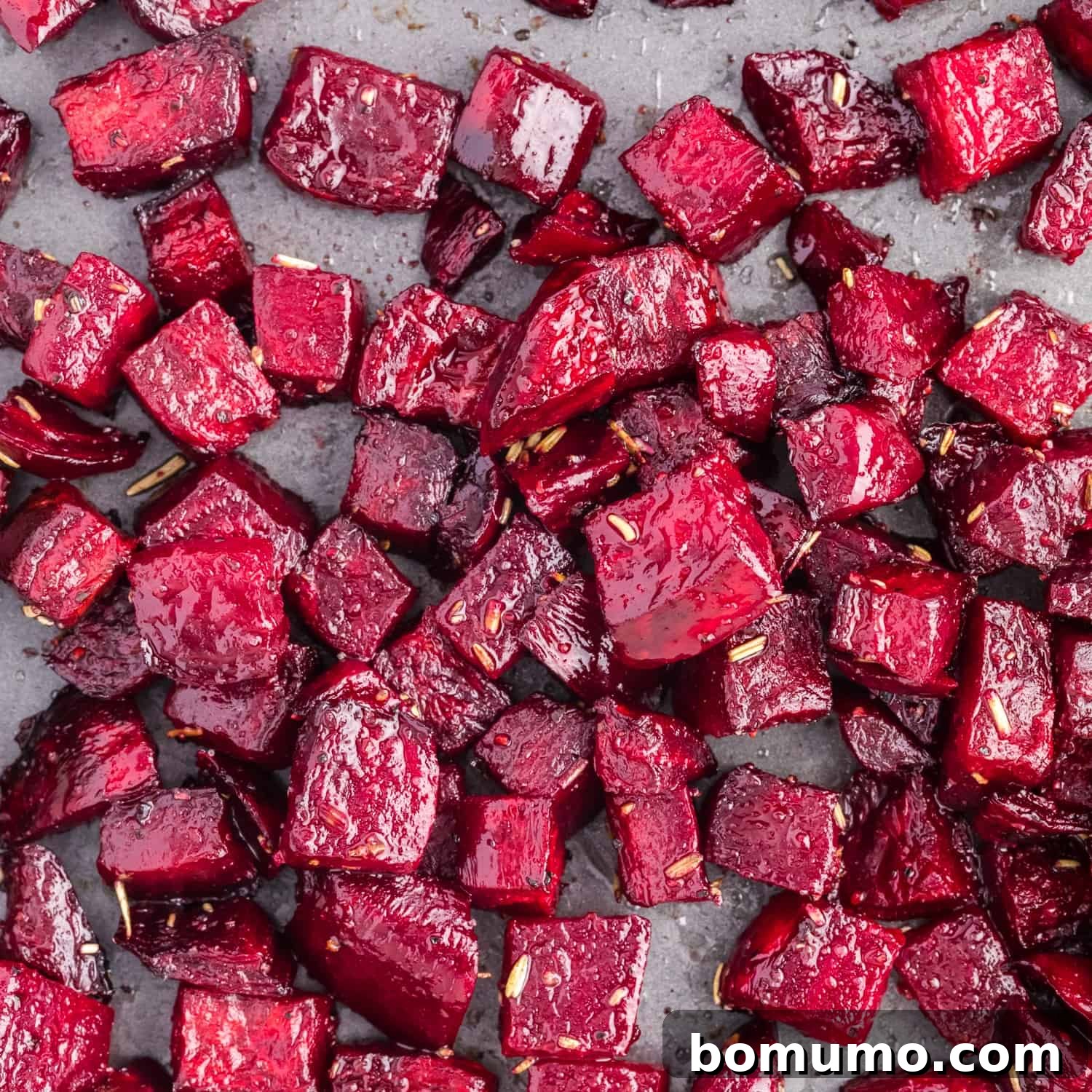
Recipe Overview: Perfectly Roasted Beets
Why you’ll love this recipe: Discover the magic of roasted beets – the ultimate method to unlock their natural earthy sweetness and vibrant flavors. These tender, oven-roasted beets transform into an effortless side dish or a stunning, colorful addition to your favorite salads and grain bowls. With minimal seasoning, this recipe highlights the beet’s inherent deliciousness, making it an irresistible choice for any meal.
How long it takes: You’ll spend just 15 minutes on preparation, followed by 30 minutes of roasting time, for a total of 45 minutes from start to delicious finish.
Equipment you’ll need: All you require is a mixing bowl and a reliable rimmed baking sheet.
Servings: This recipe is designed to yield 3 generous servings, perfect for a small family or for meal prepping throughout the week.
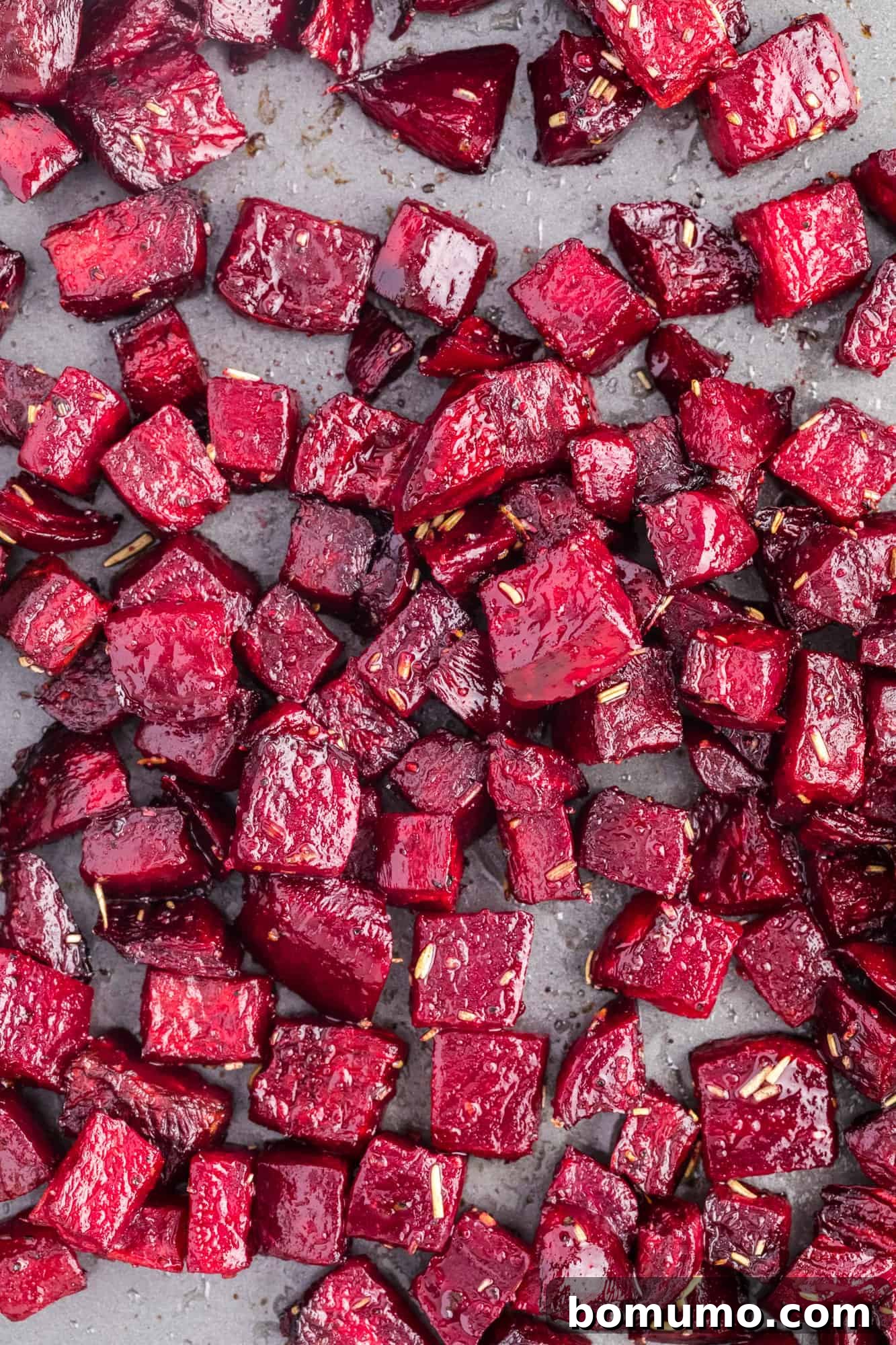
Mastering Perfect Oven-Roasted Beets: A Comprehensive Guide
There’s an undeniable allure to perfectly roasted beets. Their ruby-red interiors become incredibly tender and sweet, while the outsides develop a delightful caramelization and a subtle crispness. This transformative cooking method brings out the very best in these humble garden gems, making them a versatile and flavorful companion to countless meal ideas. Roasting is not only incredibly easy, but it also amplifies the beet’s earthy undertones, natural sweetness, and a hint of smokiness, resulting in an extraordinary vegetable dish with just a few simple seasonings.
Whether you’re a long-time enthusiast of this nutrient-rich root vegetable or simply curious to explore its culinary potential, this comprehensive guide is designed to help you achieve perfectly roasted beets every single time. We’ll share all our expert tips and tricks, ensuring your roasted beets are truly un-beet-able!
Why You’ll Love This Versatile Roasted Beet Recipe
Our method for oven-roasted beets stands out for several compelling reasons:
- Quick and Easy Preparation: Unlike boiling or baking whole beets, which can be time-consuming, this recipe involves cutting beets into smaller, uniform pieces. This significantly reduces cooking time, allowing them to become tender much faster. Even if you’re new to cooking beets, you’ll find this quick and straightforward method incredibly satisfying and efficient.
- Preserves Vibrant Color and Flavor: Oven roasting is by far the superior cooking technique for beets as it effectively locks in their stunning purple (or golden) color, preventing the “bleeding” often associated with other methods. More importantly, roasting intensifies their natural sweet juices and rich flavors, creating a beautifully browned and concentrated exterior that’s simply bursting with taste.
- Incredibly Versatile for Any Meal: Once roasted, these beets can be enjoyed in a myriad of ways. Serve them warm as a hearty, satisfying side dish alongside your main course, or incorporate them into more elaborate recipes. They make a fantastic addition to fresh green salads, provide depth to warming soups, and add a pop of color and nutrition to wholesome grain bowls. This recipe is also an excellent candidate for meal prep, allowing you to have a healthy and delicious component ready to go throughout your busy week.
Understanding Beets: Nature’s Colorful Root
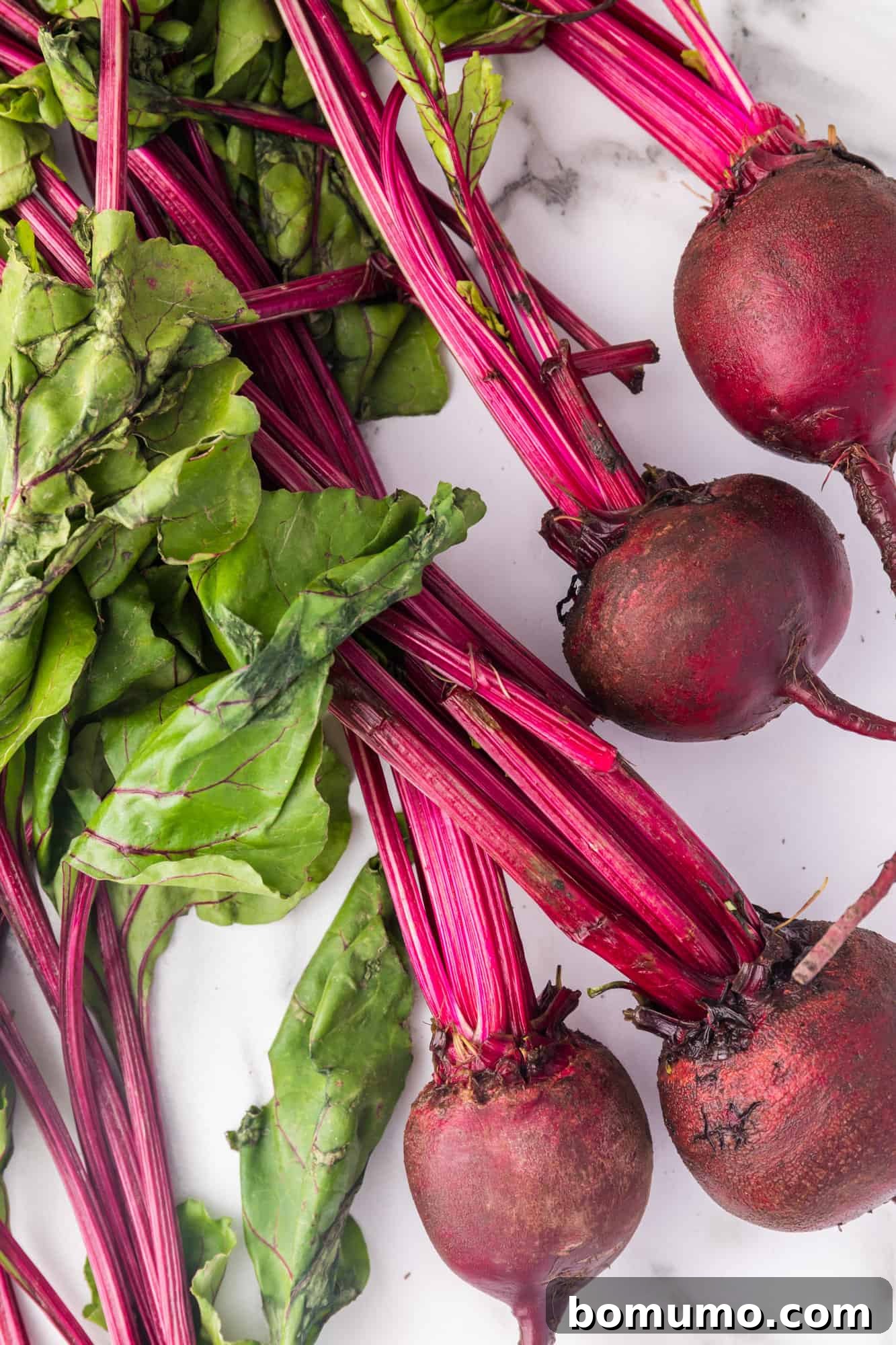
Beets, scientifically known as *Beta vulgaris* and often referred to as beetroot, are fascinating root vegetables characterized by their large, round, often deep-colored bulbs and edible leafy green stems. While they share a similar growth habit to radishes or turnips, beets belong to a different botanical family. Beets boast a delightful spectrum of colors, including the common vibrant red, sunny yellow, and even striking striped varieties like Chioggia beets, which reveal concentric rings of red and white when sliced. The most widely available and recognized type, and the one prominently featured in this recipe, is the garden beet or red beet, celebrated for its intense, dark red hue and robust flavor profile.
Beyond their captivating appearance, beets are a nutritional powerhouse. They are low in calories and fat, yet rich in essential vitamins and minerals, including folate, manganese, potassium, iron, and vitamin C. Beets also contain powerful antioxidants and compounds like nitrates, which have been linked to various health benefits, such as improved blood flow and reduced blood pressure. Incorporating them into your diet is a delicious way to boost your overall well-being.
Simple Ingredients for Remarkable Flavor
This recipe celebrates the pure, natural flavors of red beets by using a minimal yet effective list of ingredients. Here’s what you’ll need to create this delightful dish:
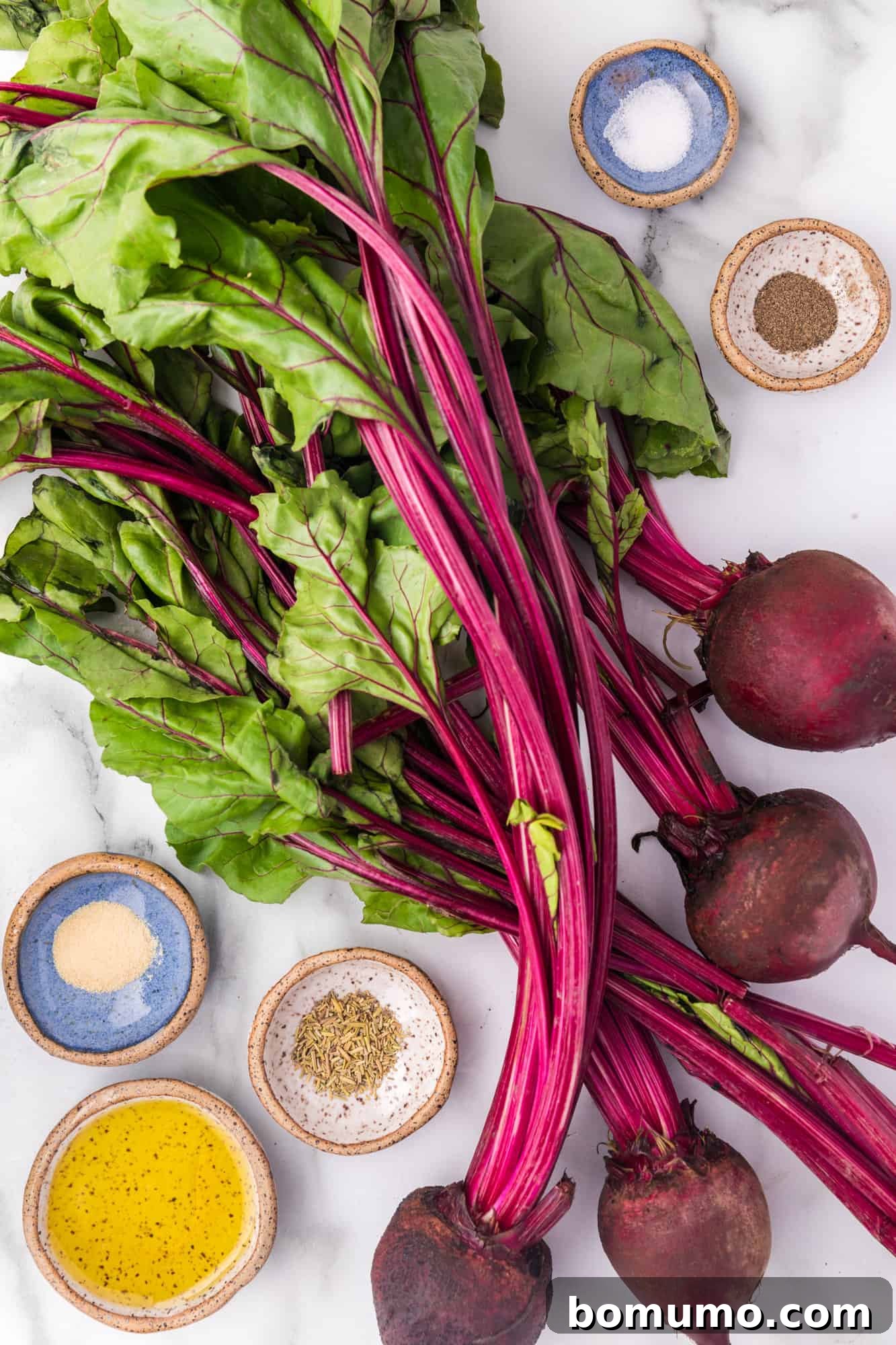
- Fresh Beets: Start with 3 medium-sized beets. When selecting beets, look for firm, smooth bulbs that are heavy for their size. If the greens are still attached, they should appear fresh and vibrant. You can easily adjust the quantity based on how many servings you desire.
- Olive Oil: A good quality extra virgin olive oil or avocado oil is perfect for roasting. These oils have a high smoke point and impart a lovely flavor that complements the beets beautifully, helping them to caramelize and achieve that coveted tender texture.
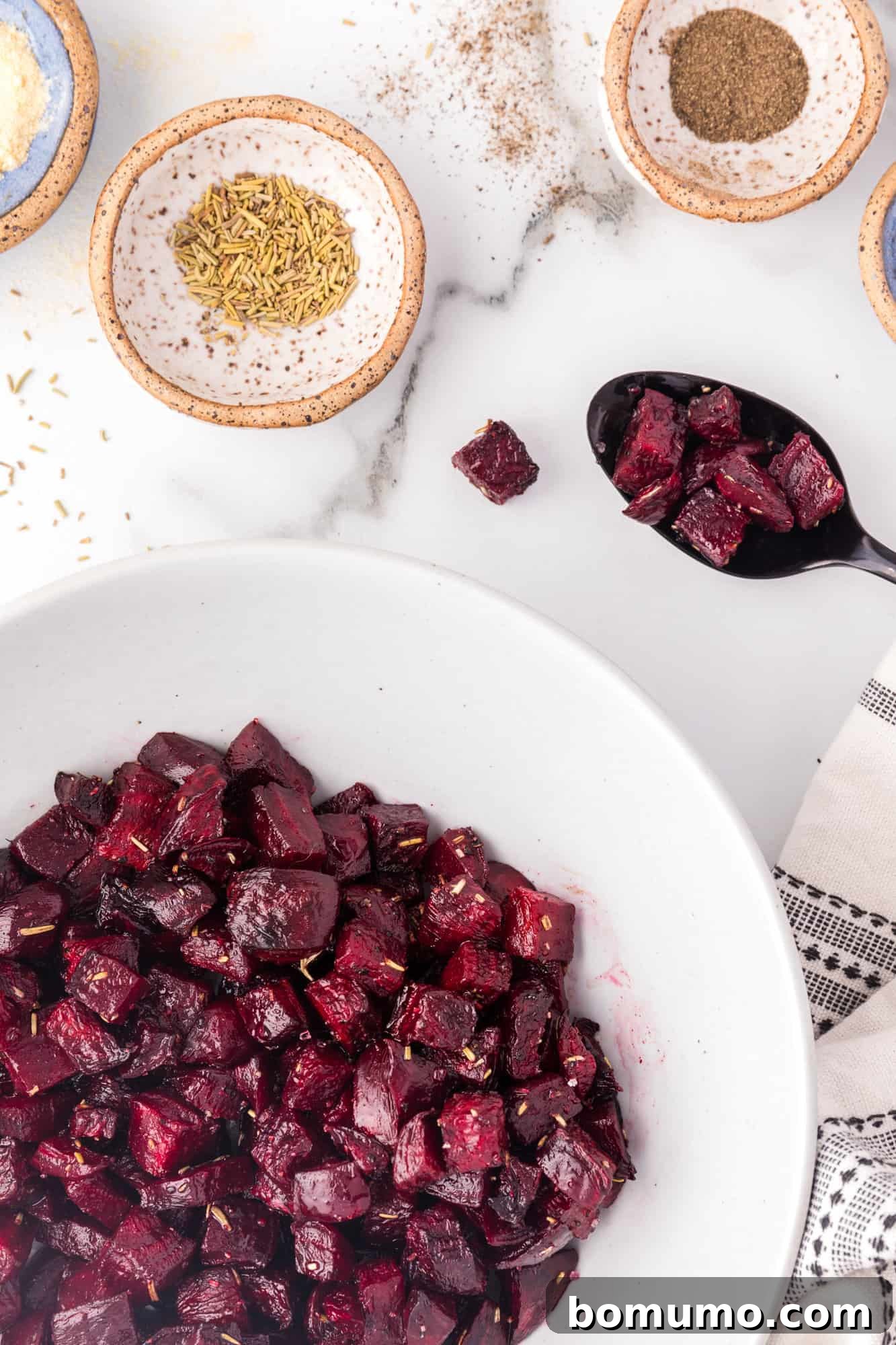
- Key Seasonings: To truly enhance the earthy sweetness of roasted beets, a simple blend is all that’s required. We recommend kosher salt, freshly ground black pepper, dried rosemary, and garlic powder. The rosemary adds an aromatic, herbaceous note, while garlic powder provides a subtle depth of savory flavor without overpowering the beets. Feel free to adjust the amounts to suit your personal taste preferences.
Essential Steps for Preparing Beets for Roasting
Proper preparation is key to achieving the best texture and flavor in your roasted beets. Before they hit the oven, your beets need a good wash and their greens removed. Follow these easy steps to get your beets oven-ready:
- Thoroughly Wash the Beets: Begin by placing your beets under cool running water. Use a vegetable brush to gently scrub away any dirt, soil, or debris clinging to the surface. Ensuring they are clean is important, especially if you plan to skip peeling.
- Trim the Ends: With a sharp chef’s knife, carefully trim off the top (where the greens meet the bulb) and the bottom (the root end) of each beet. You want to remove just enough to create a clean, flat surface.
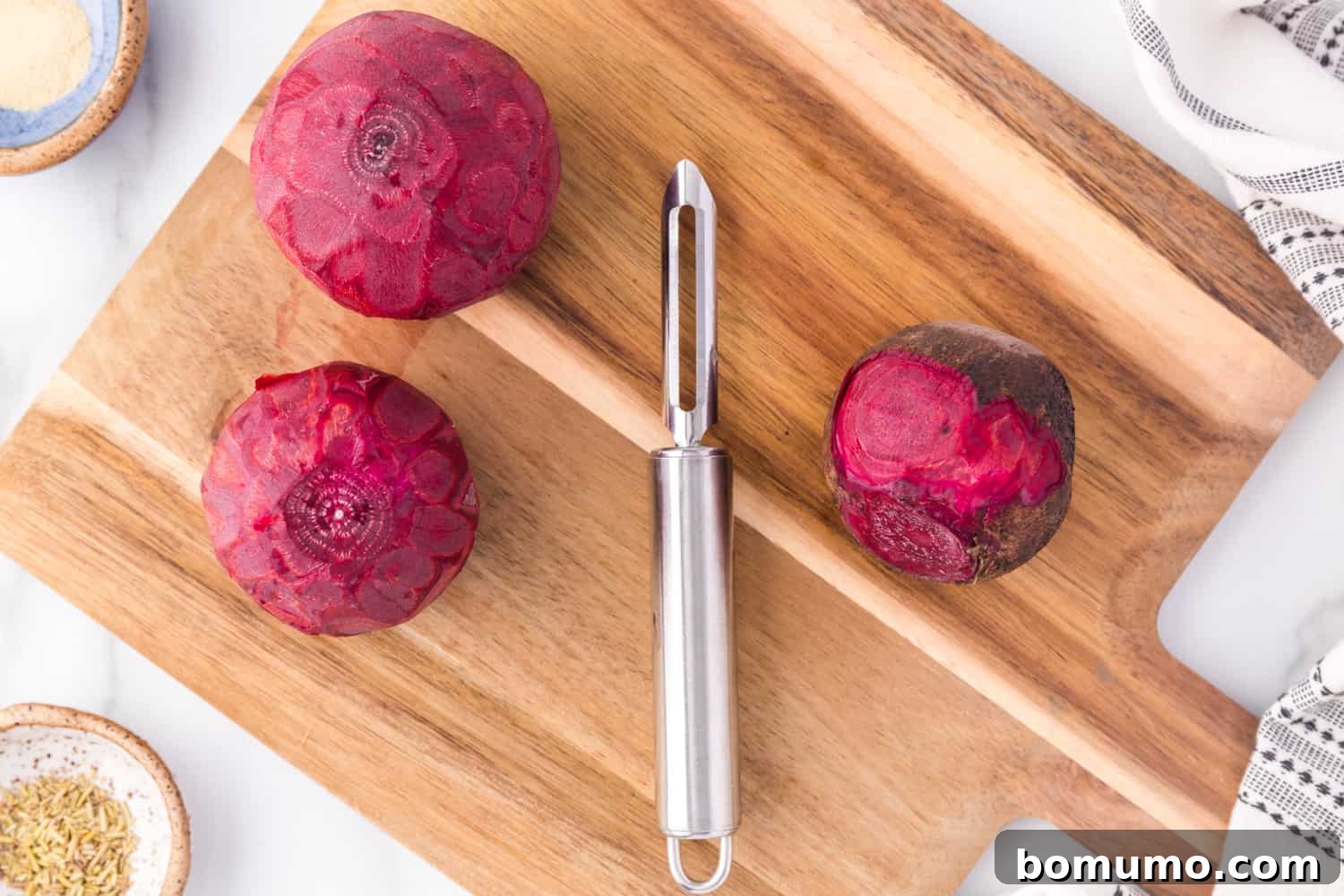
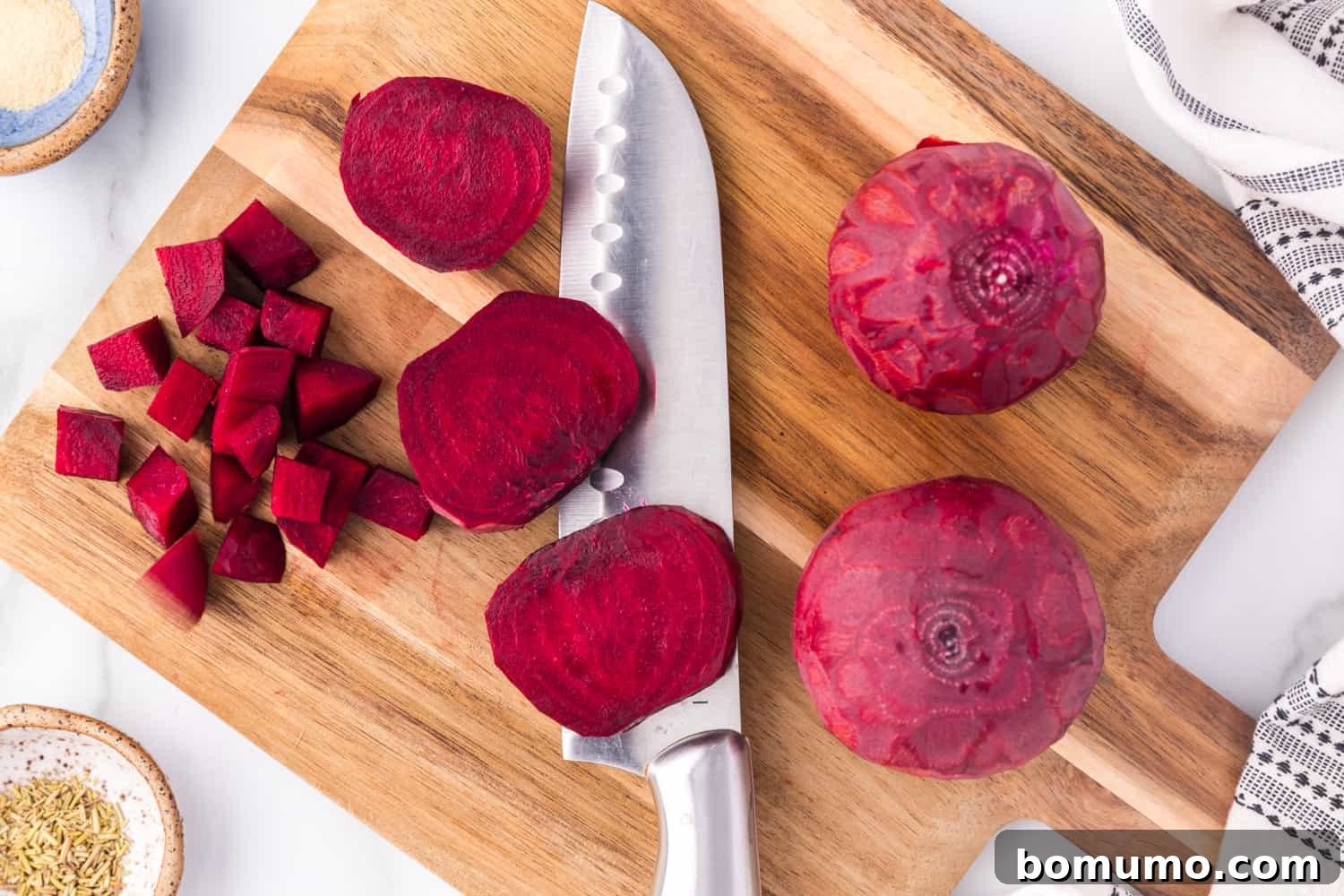
- Peel and Chop (Optional but Recommended): While beet peels are edible, peeling is recommended for this recipe as it allows the seasonings to better penetrate the beet flesh and contributes to a more uniform, tender texture. Use a standard potato peeler or a small paring knife to remove the skin. Once peeled, cut the beets into uniform 1-inch (2.5 cm) cubes. Consistency in size is crucial for even cooking, ensuring all pieces become tender at the same rate.
Pro Tip: Avoid Beet Juice Stains
Beet juice is notorious for its intensely vibrant purple color, which, while beautiful, can easily stain skin, nails, and even porous cutting boards. To protect your hands and clothing from these stubborn stains, it’s highly recommended to wear kitchen gloves and an apron when handling and preparing fresh beets. A quick cleanup of your cutting board after use can also prevent long-term discoloration.
The Simple Method: How to Perfectly Roast Beets
Once your beets are washed, trimmed, and cubed, you’re just minutes away from having them ready for the oven. This straightforward method guarantees perfectly tender and flavorful roasted beets:
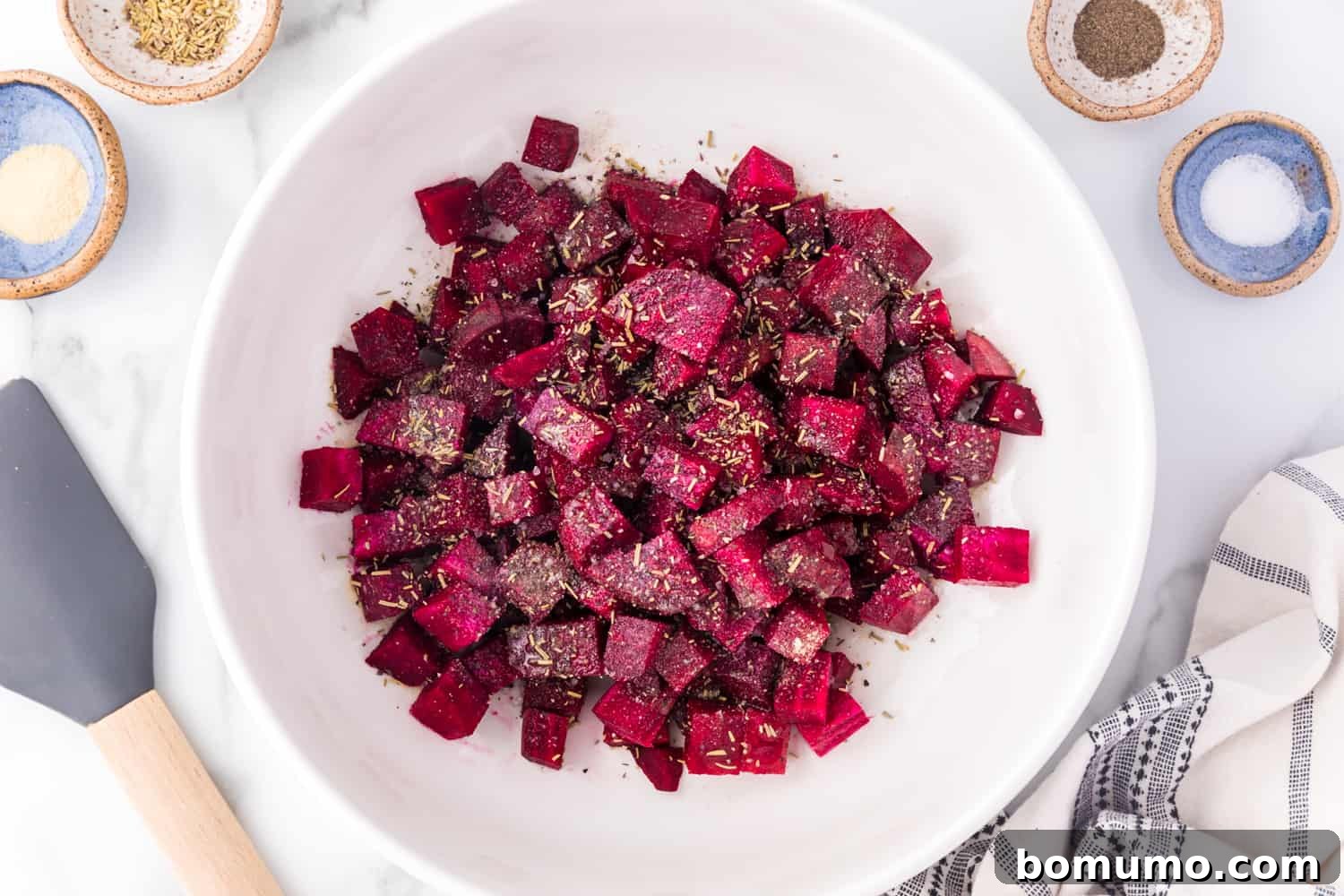
Step 1: Season the Beets. Transfer your prepared beet cubes into a medium-sized mixing bowl. Drizzle them generously with olive oil, then sprinkle with kosher salt, black pepper, dried rosemary, and garlic powder. Toss everything together thoroughly, ensuring each beet cube is evenly coated with the oil and seasonings. This step is crucial for developing a rich flavor profile and achieving that desirable caramelized exterior.
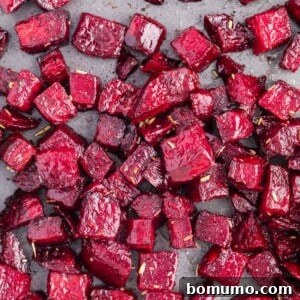
Step 2: Arrange and Roast. Spread the seasoned beet cubes in a single, even layer onto a large rimmed baking sheet. Avoid overcrowding the pan; if necessary, use two baking sheets to ensure adequate space between the beet pieces. This allows for proper air circulation, which is essential for browning and caramelization, preventing the beets from steaming instead of roasting. Place the baking sheet into a preheated oven at 425°F (220°C) and roast for 30 minutes. Halfway through the cooking time (around the 15-minute mark), remove the pan from the oven and give the beets a good stir or toss to promote even browning on all sides. Return to the oven to finish roasting.
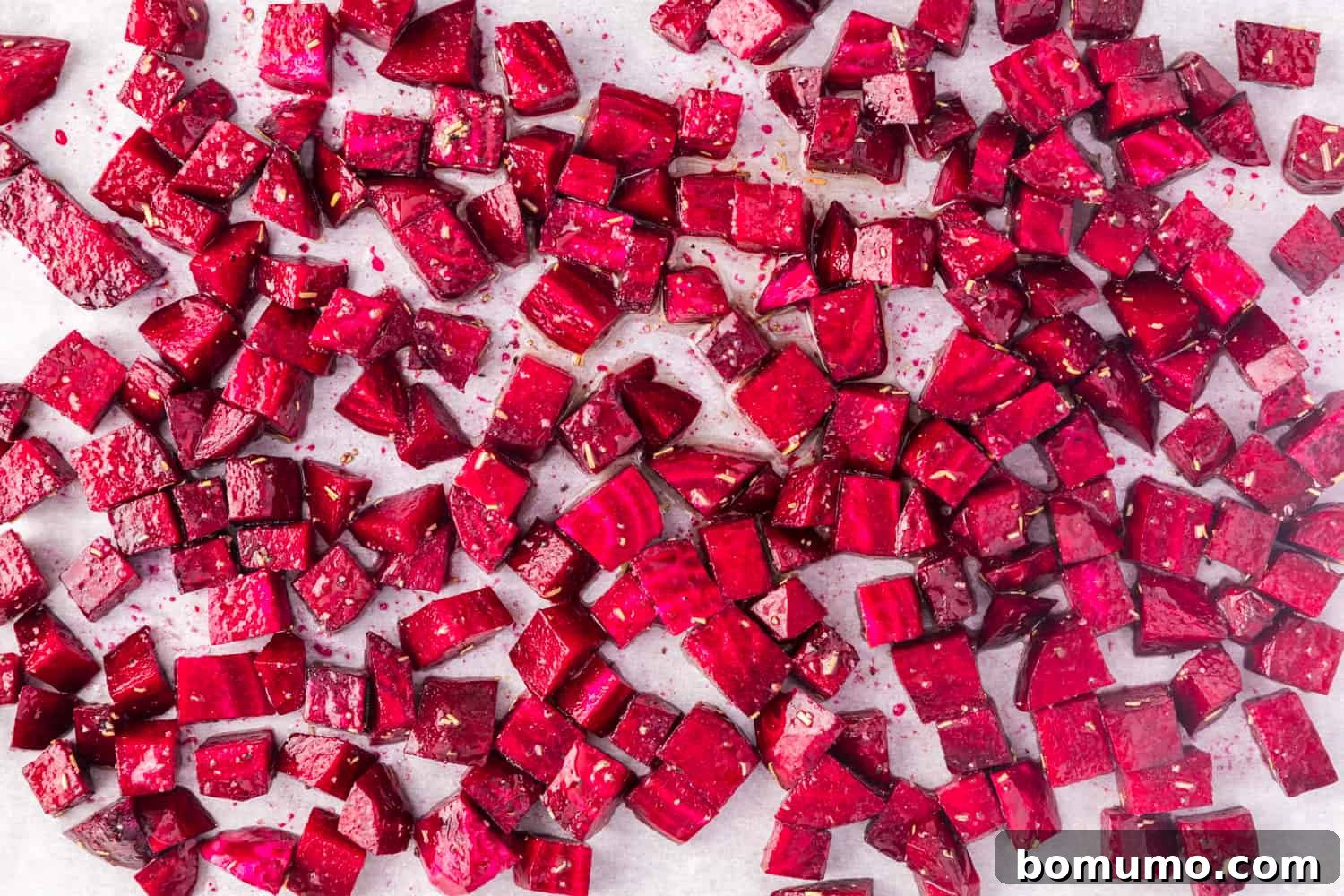
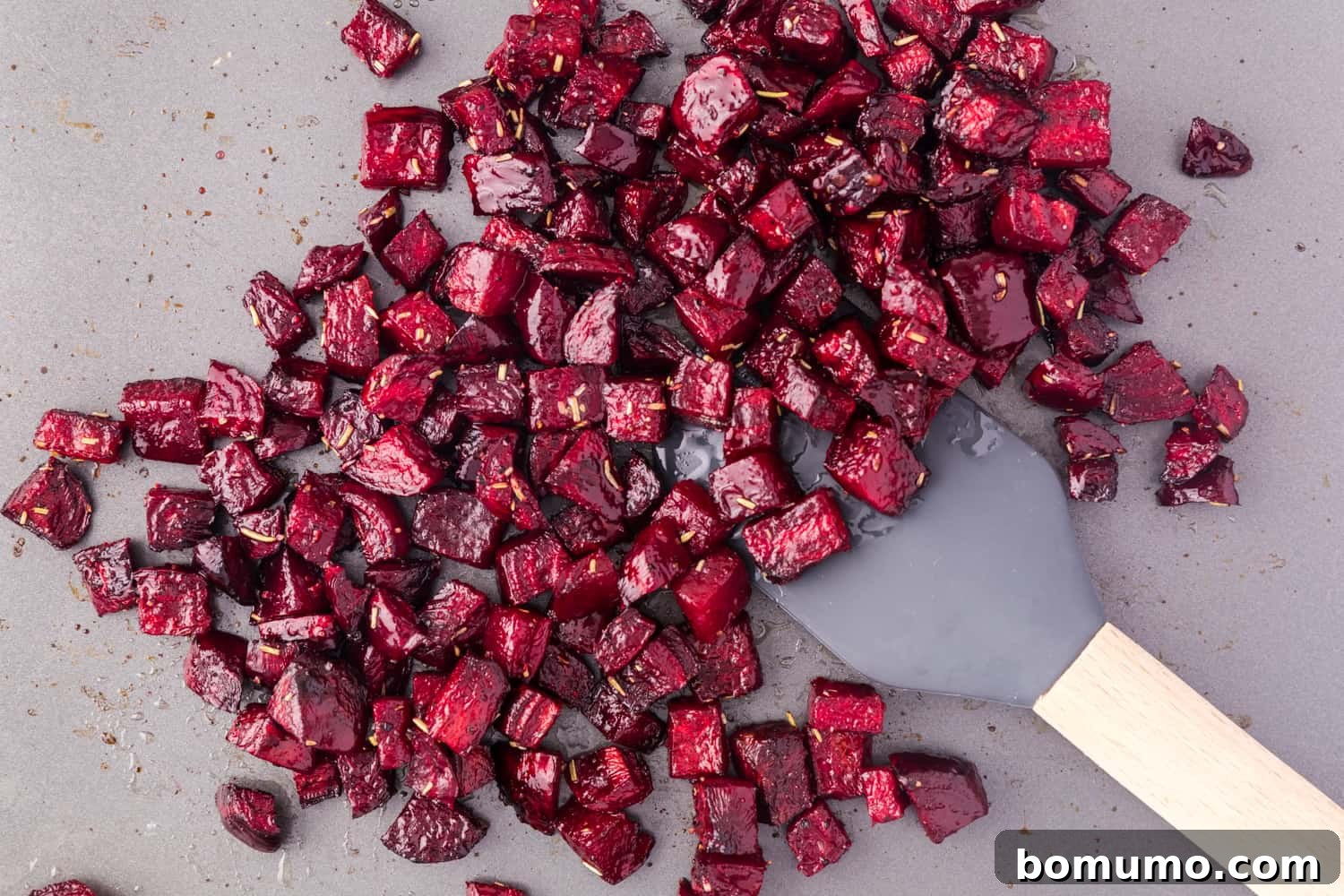
Step 3: Serve and Enjoy! Your roasted beets are ready when they are beautifully browned, slightly caramelized, and fork-tender. A fork or knife should easily slide into the center of a beet cube with little resistance. Remove them from the oven immediately. Serve them warm as a delightful side dish or incorporate them into any of the serving suggestions listed below. The vibrant color and sweet, earthy flavor of these perfectly roasted beets are sure to impress!
Alternative Method: Roasting Whole Beets for a Different Texture
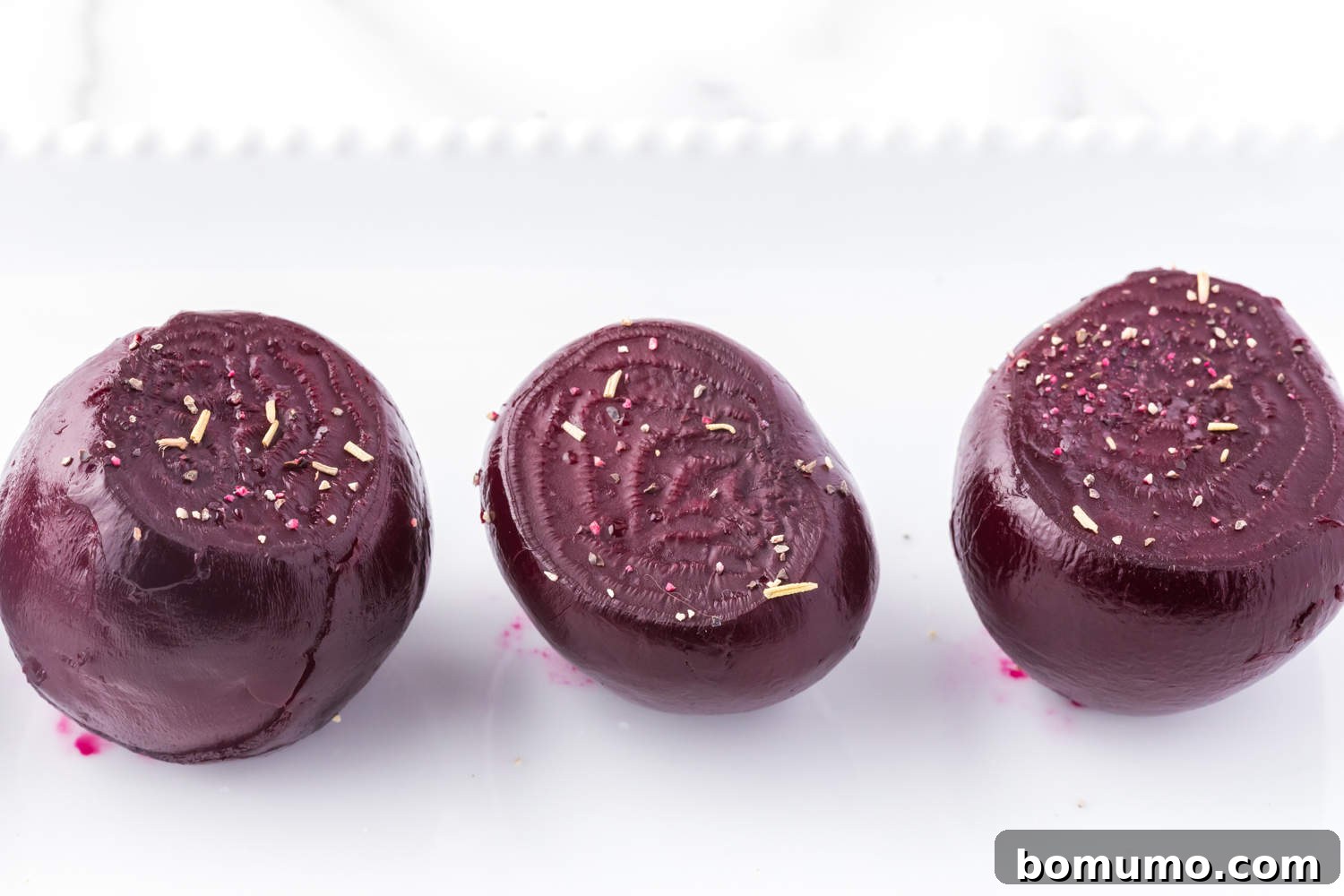
While cubing beets for roasting offers a quicker cooking time and more surface area for caramelization, you can certainly opt to roast them whole, which yields an incredibly tender, almost silky interior texture. This method is particularly well-suited for smaller beets, typically around 2 inches in diameter. You’ll need about two pounds of these smaller beets. Begin by thoroughly trimming the tops and bottoms and scrubbing them clean, leaving the skin intact for roasting. Our favorite fuss-free way to achieve perfectly cooked whole beets is by roasting them in foil:
Step 1: Prepare and Wrap. Place your whole, cleaned beets onto a large sheet of heavy-duty aluminum foil. Sprinkle about two tablespoons of water over the beets. Then, carefully wrap the foil around the beets to create a secure, airtight packet. It’s a good practice to place this foil packet onto a baking sheet before putting it in the oven. This acts as a safeguard in case any juices leak from the foil, keeping your oven clean.
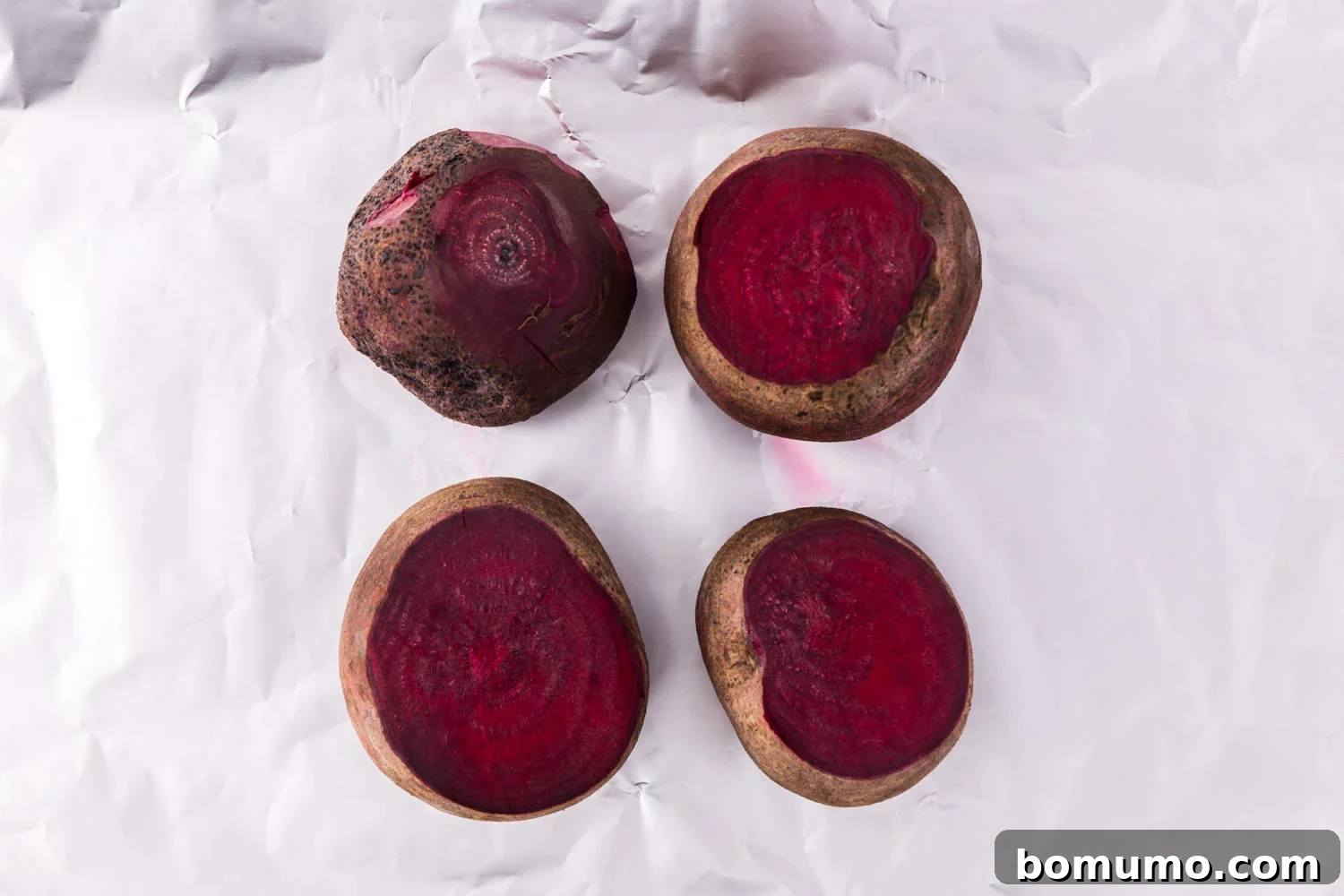
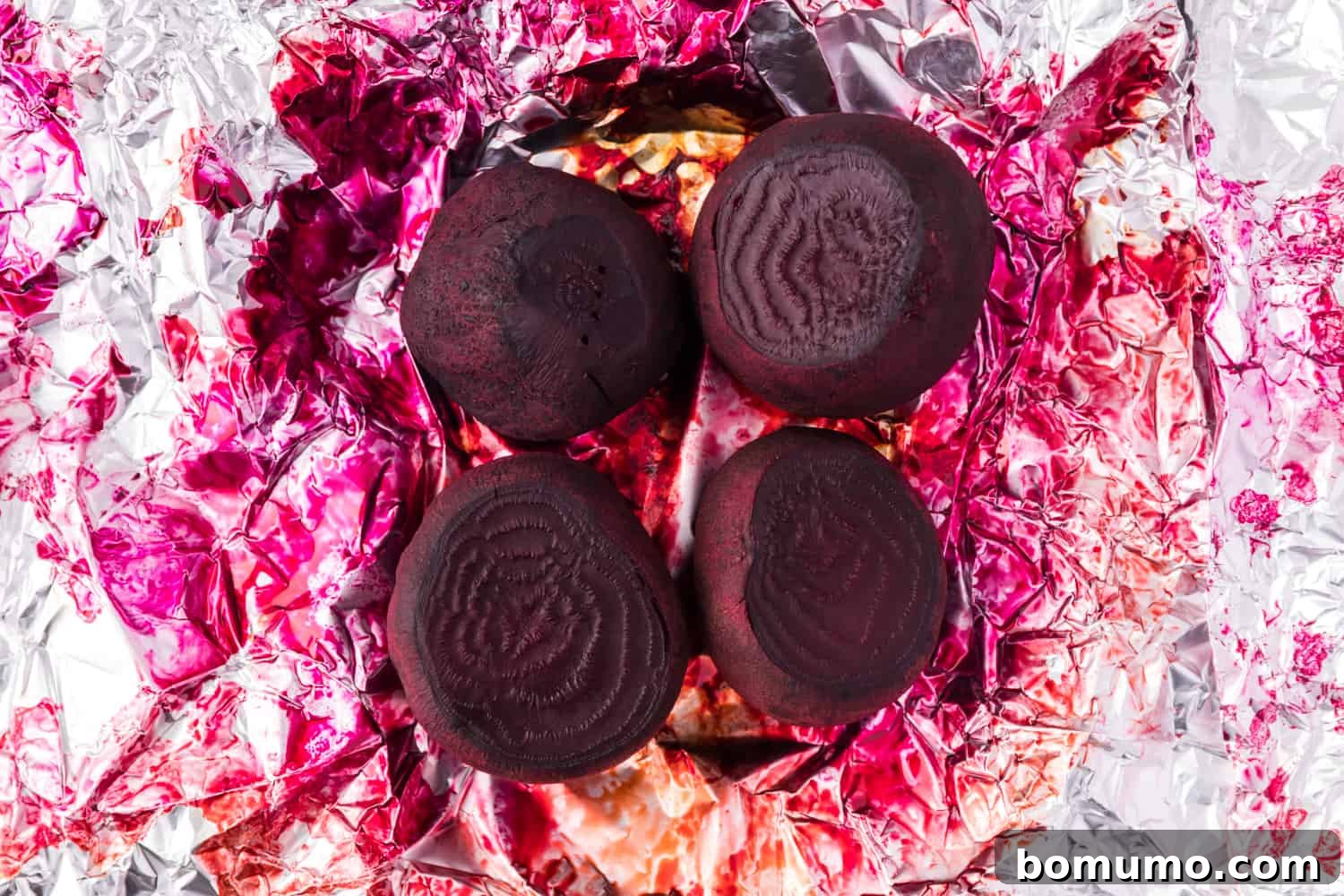
Step 2: Roast Until Tender. Transfer the baking sheet with the foil-wrapped beets to a preheated oven at 400°F (200°C). Roast for approximately 60 minutes. The cooking time can vary significantly based on the size of your beets, so begin checking for doneness around the 45-minute mark. The beets are ready when they are easily pierced through to the center with a fork. Once cooked, remove them from the oven and allow them to cool slightly within the foil packet.
Step 3: Effortless Peeling. Once the beets have cooled enough to handle comfortably, unwrap the foil. The skins should now be incredibly easy to remove. Simply use a paper towel to rub the peels right off. For extra protection against staining, consider wearing kitchen gloves during this step. Your perfectly cooked, whole roasted beets are now ready to be sliced, diced, or enjoyed as is, offering a rich, concentrated flavor and buttery texture.
Expert Tips for Flavorful Roasted Beets
Transforming these humble root vegetables into absolute flavor bombs is easy with a few key techniques. Keep these tips in mind for consistently delicious results:
- To Peel or Not to Peel?: If you’re short on time or prefer a more rustic approach, don’t feel obligated to peel the beets. The peels are entirely edible and, when thoroughly scrubbed with a vegetable brush before cooking, will soften beautifully during roasting. Your roasted beets will still taste amazing, and the skins contribute a little extra fiber.
- Checking for Doneness is Key: The ultimate test for perfectly roasted beets is tenderness. They are finished cooking when a fork or a skewer can easily pierce them, much like testing a baked potato. Begin checking for doneness at the 30-minute mark for diced beets and around 45-50 minutes for whole beets.
- Cooking Time Varies: Remember that roasting time is not an exact science; it largely depends on the size and thickness of your beet pieces, as well as the calibration of your individual oven. Diced beets typically require about 30 minutes, while whole roasted beets, especially when wrapped in foil, will take closer to 60 minutes or more. Always rely on the fork-tenderness test over strict timing.
- Avoid Overcooking for Best Flavor: Roasting caramelizes the natural sugars present in beets, which is what gives them their incredible sweetness and depth of flavor. However, overdoing it can cause these sugars to burn, leading to a bitter taste and a dry, tough texture. Keep a close eye on them towards the end of the cooking time and remove them from the oven as soon as they reach that perfect fork-tender stage.
- Don’t Overcrowd the Pan: For optimal browning and caramelization, ensure your beet pieces are spread in a single layer with a bit of space between them. An overcrowded pan will steam the vegetables instead of roasting them, resulting in softer, less flavorful beets. Use two baking sheets if necessary.
- Consider Parchment Paper: Lining your baking sheet with parchment paper can make cleanup a breeze, especially with the slightly sticky caramelized sugars from the beets. It also helps prevent sticking.
Exciting Variations to Enhance Your Roasted Beets
While this basic roasted beet recipe is fantastic on its own, it also serves as a wonderful canvas for culinary creativity. Here are a few easy ways to customize your beets:
- Add a Crunchy Texture: Introduce a delightful textural contrast by sprinkling your finished roasted beets with a handful of crushed walnuts, pistachios, or pecans just before serving. The nutty crunch complements the soft beets beautifully.
- Incorporate Creamy Cheese: Elevate the flavor profile with a sprinkle of creamy, tangy cheese. Crumbled goat cheese or feta cheese melts slightly when warm and provides a wonderful counterpoint to the sweetness of the beets.
- Drizzle with a Tangy Dressing: A bright, tangy vinaigrette can truly make roasted beets sing. Try a simple white wine vinaigrette for a classic pairing, or experiment with a honey mustard vinaigrette for a touch of sweetness and zest.
- Garnish for Freshness: A final garnish can add a burst of freshness and visual appeal. Freshly chopped parsley or thyme leaves are excellent choices. For a surprising citrusy twist, a little orange zest grated over the warm beets is absolutely divine.
- Experiment with Different Seasonings: Don’t limit yourself to rosemary and garlic. Explore other flavor profiles by tossing the beets in an all-purpose seasoning blend, an aromatic Italian seasoning mix, or even a pinch of smoked paprika for a deeper, richer note.
Other Fantastic Beet Cooking Methods
If you enjoy the convenience of your air fryer, air fryer beets offer a similar delicious outcome to oven roasting, often in a shorter time frame. For those who prefer whole beets that are easily sliced for salads or as a simple side, learning how to boil beets or making Instant Pot beets are excellent alternatives. For a comprehensive overview of all these methods and more beet-centric recipes, refer to our detailed guide: How To Cook Beets.
Creative Ways to Serve Roasted Beets
Roasted beets are incredibly versatile and can be integrated into a wide range of dishes, adding both flavor and nutritional value. Their natural sweetness pairs beautifully with citrus notes, making them a superb savory component in a vibrant citrus salad with mint, honey, and lime. In the warmer months, these roasted beauties make an excellent accompaniment to summery dishes like grilled pork kebabs. They also provide a grounding, earthy contrast when served alongside hearty pasta recipes such as a rich pasta amatriciana or comforting vegetable-packed stuffed shells.
Transform these roasted beets into a show-stopping main course or appetizer by creating a customized beet salad, perhaps topped with crumbled feta or goat cheese, toasted almonds, and a Dijon vinaigrette. They are also a fantastic addition to other seasonal salad recipes, complementing the crunch of a kale and pear salad or adding color to a robust roasted cauliflower salad with sweet potato and arugula. For a complete and wholesome meal, fold them into hearty grain bowls, or try our warming kale salad featuring quinoa and other roasted root vegetables. The possibilities are truly endless!
Storing and Reheating Leftover Beets
Storing and Reheating Leftover Beets
Proper storage ensures you can enjoy your delicious roasted beets for days to come, minimizing waste and making meal prep a breeze.
Refrigerator Storage: Any leftover roasted beets should be transferred to an airtight container or covered tightly with plastic wrap and stored in the refrigerator. They will remain fresh and flavorful for up to 1 week. Roasted beets are delicious served cold, directly from the fridge, making them a great addition to salads. Alternatively, you can easily warm them up in the microwave for a few minutes until heated through, or gently reheat them in the oven for a crisper texture.
Freezer Storage: For longer preservation, roasted beets can be frozen. Allow them to cool completely, then place them in a freezer-safe container or a heavy-duty freezer bag. They can be stored in the freezer for up to 3 to 4 months without significant loss of quality. When you’re ready to enjoy them, simply defrost the beets in the refrigerator overnight before serving or reheating.
Discover More Roasted Vegetable Recipes
Roasted Green Beans (Crispy & Flavorful!)
The Best Crispy Roasted Potatoes
Roasted Broccoli Recipe – Perfect Every Time!
Oven Roasted Sweet Potatoes
Roasted Beets
Rachel Gurk
15
30
45
3
Pin
Roasted beets are tender and caramelized on the inside and perfectly browned on the outside. It’s the best way to unlock the earthy sweetness of this humble root vegetable!
Ingredients
- 3 medium-sized beets (about 1.5 lbs.)
- 1 tablespoon olive oil
- ½ teaspoon kosher salt
- ¼ teaspoon coarsely ground black pepper
- ¼ teaspoon dried rosemary (or thyme)
- ¼ teaspoon garlic powder
Instructions
- Preheat oven to 425°F (220°C).
- Peel beets (optional, see note below) and cut into ½ inch (1.25 cm) cubes. Try to cut them as evenly as possible to ensure uniform roasting.
- In a medium-sized bowl, toss the cubed beets with the olive oil, salt, pepper, rosemary, and garlic powder until they are well-coated.
- Arrange the seasoned beets in a single layer on a rimmed baking sheet (approximately 14 x 10 inches or similar size). Bake for 15 minutes, then remove from the oven, stir the beets, and bake for an additional 15 minutes or until they are tender and beautifully golden brown.
Notes
- Shortcut: Peeling Beets The peels are perfectly edible, so if you’re in a hurry or prefer a rustic texture, simply scrub the beets very well before cutting them. Once roasted, you won’t significantly notice the difference in texture from the unpeeled ones.
- Adjusting Seasoning: Feel free to adjust the amounts of salt, pepper, rosemary, and garlic powder to suit your personal preference. You can also experiment with other herbs like thyme, oregano, or a touch of smoked paprika.
- Storage: Store any leftover roasted beets in an airtight container in the fridge for up to 1 week. Alternatively, they can be frozen in a freezer-safe container or bag for up to 4 months. Defrost in the fridge before reheating or serving.
Method for Whole Roasted Beets:
You’ll need 2 lbs. of smaller beets, about 2 inches (5 cm) in diameter, trimmed and scrubbed.
- Preheat oven to 400°F (200°C).
- Arrange the cleaned whole beets on a large sheet of aluminum foil. Sprinkle a couple tablespoons of water over them. Wrap the foil securely to form a packet and place it onto a baking sheet (to catch any potential leaks). Cook for 60 minutes, or until the beets are easily pierced with a fork. Cooking time will vary based on beet size.
- Allow the beets to cool slightly until you can comfortably handle them. Then, use a paper towel to rub off the loosened peels. Wearing clean kitchen gloves is recommended to prevent staining your hands.
Nutrition Facts (Approximate per serving)
Carbohydrates: 8g,
Protein: 1g,
Fat: 5g,
Saturated Fat: 1g,
Polyunsaturated Fat: 1g,
Monounsaturated Fat: 3g,
Sodium: 452mg,
Potassium: 272mg,
Fiber: 2g,
Sugar: 6g,
Vitamin A: 28IU,
Vitamin C: 4mg,
Calcium: 14mg,
Iron: 1mg
Nutrition information is automatically calculated and should be used as an approximation.