
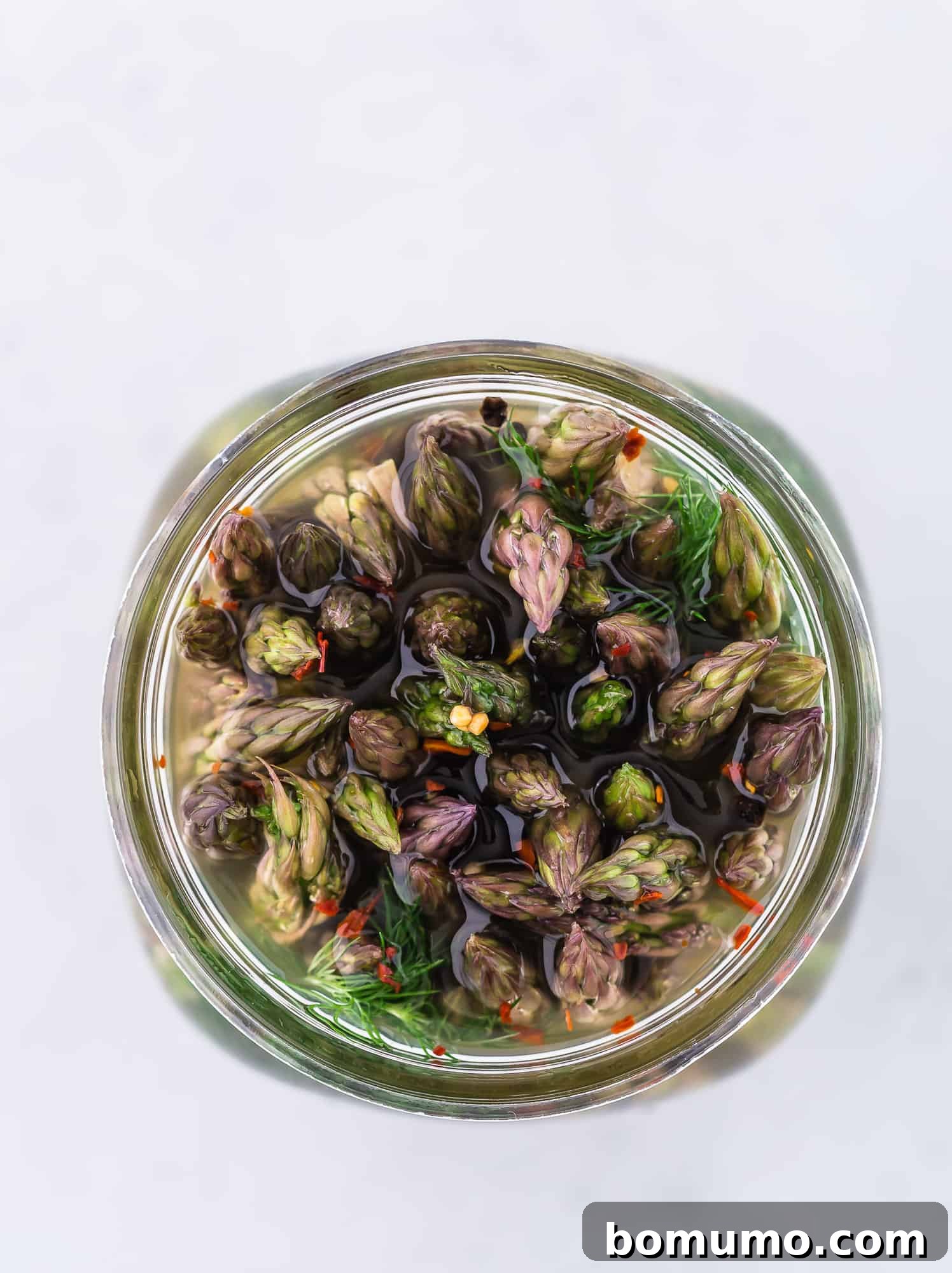
Welcome to the delightful world of quick pickling, where vibrant flavors and crunchy textures come to life with minimal effort. If you’re a fan of the tangy goodness of pickles, prepare to be amazed by homemade pickled asparagus. In approximately 10 minutes of hands-on preparation, you can create a jar of these exquisite spears, transforming a beloved spring vegetable into an irresistible snack or side dish. The best part? No complicated canning process is required, making this recipe perfect for novice and seasoned picklers alike.
Recipe Overview: Quick & Easy Pickled Asparagus
Why you’ll love it: This recipe offers a unique, vibrant, and incredibly flavorful way to enjoy fresh asparagus, especially during its peak season. It’s a fantastic alternative to traditional cooked asparagus.
How long it takes: With just 10 minutes of active prep time, this recipe is incredibly fast. However, allow at least 24 hours (and ideally a full week) for refrigeration to achieve the best flavor and texture.
Equipment you’ll need: A simple saucepan for the brine and a clean, large jar with a tight-fitting lid are all you need.
Servings: This recipe yields approximately 6 servings, perfect for sharing or enjoying over several days.
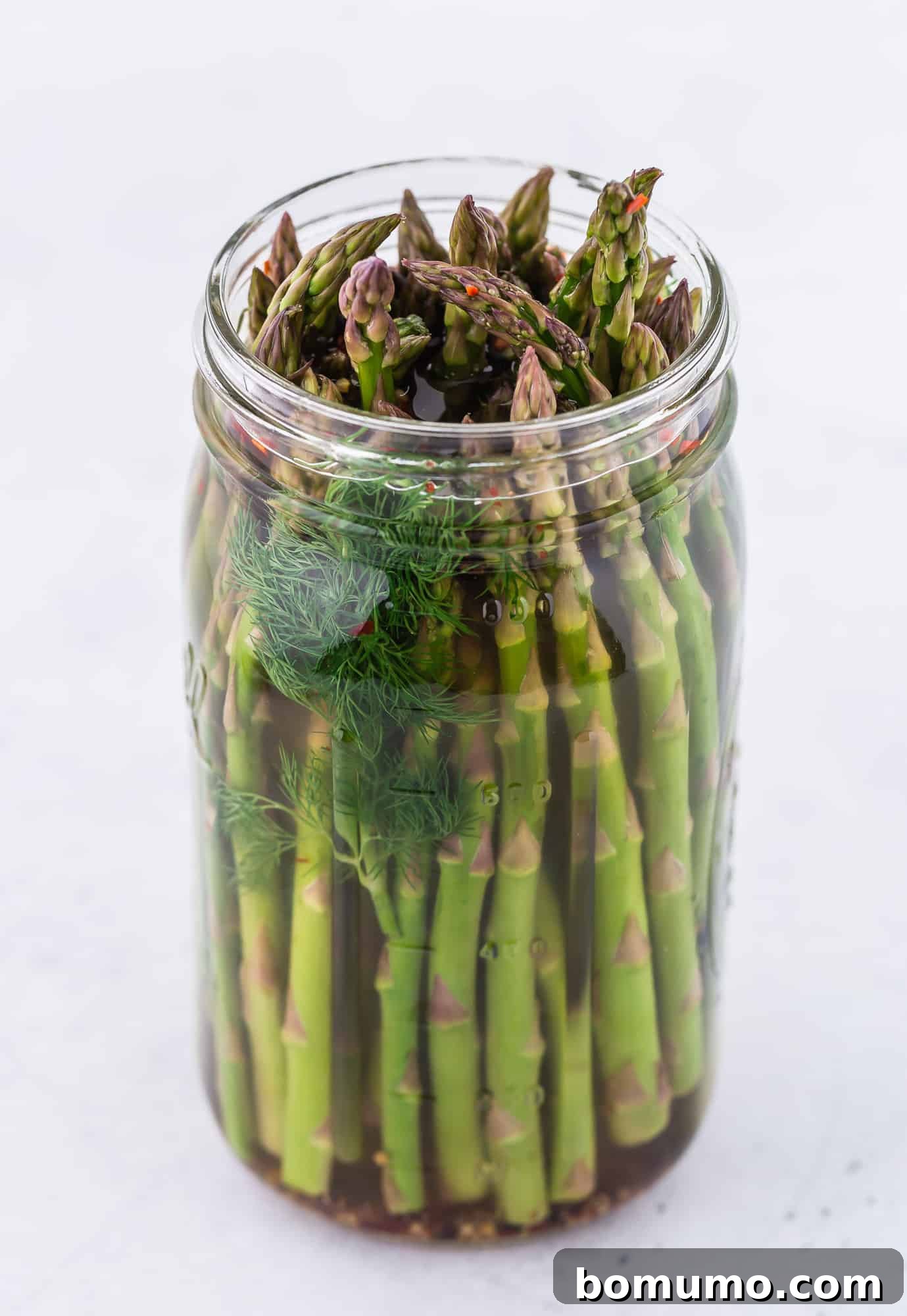
Asparagus, with its characteristic bright green spears, is a springtime delight, typically enjoyed steamed, roasted, or grilled. But have you ever considered pickling it? This method unlocks a completely new dimension of flavor, transforming the tender spears into a tangy, slightly spicy, and wonderfully crisp treat. Pickled asparagus is a gourmet twist on a classic vegetable that will undeniably elevate your appreciation for this seasonal favorite.
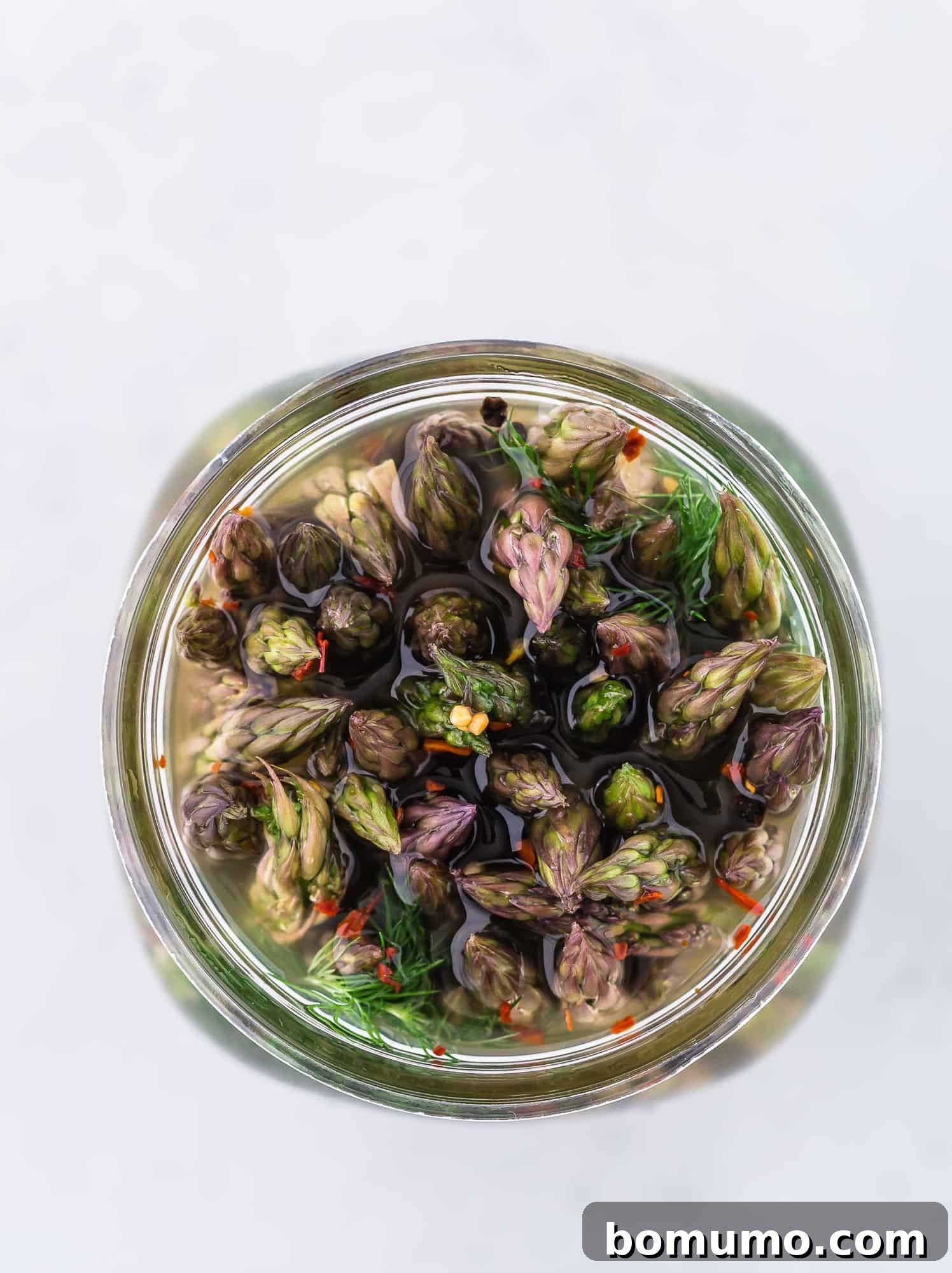
Beyond its incredible taste, pickled asparagus is visually stunning. The spears, arranged neatly in a clear jar, create an appealing display that’s almost too pretty to eat. But looks aren’t everything. Imagine a bite that delivers a burst of vinegary brightness, perfectly balanced by subtle sweetness, and a complex layering of garlic, fresh dill, savory mustard, and a hint of warm red pepper flakes. Each spear retains a delightful crunch, providing a satisfying texture with every bite. This isn’t just a healthy snack; it’s a flavorful experience that promises to tantalize your taste buds and leave you craving more. You truly have to try it to believe how good it is!
The concept of quick pickling, or making “refrigerator pickles,” has revolutionized home kitchens for its sheer simplicity and fantastic results. Unlike traditional canning, which requires specific equipment and a lengthy sterilization process, quick pickling allows you to preserve the fresh, vibrant flavors of vegetables with minimal fuss. It’s become a beloved staple in many households, including mine. From quick pickled red onions that add a zesty kick to tacos and salads, to the crisp bite of pickled radishes, the tender crunch of pickled cauliflower, and the savory notes of pickled green beans, the possibilities are endless. And let’s not forget classic refrigerator dill pickles, which are incredibly easy to make and stay fresh for weeks. For an international twist, spicy Korean pickles offer an exciting taste sensation, while a medley of pickled vegetables can transform into a quick, refreshing salad. These vibrant additions offer a fantastic way to introduce new flavors and textures to your meals.
Pickled vegetables are incredibly versatile. They make an exceptional addition to a charcuterie board, where their bright, tangy crispness provides a refreshing contrast to rich cured meats and creamy cheeses. Beyond charcuterie, they’re excellent alongside grilled dishes, in sandwiches, or chopped into salads. As a low-calorie and flavorful option, pickled asparagus serves as a guilt-free snack any time of day, perfect for satisfying cravings without compromising your healthy eating goals. Its refreshing zing can awaken the palate and add a gourmet touch to everyday meals.
About This Effortless Pickled Asparagus Recipe
This recipe champions the no-canning method for quick pickling, making it incredibly accessible for home cooks. You’ll appreciate the speed and simplicity; from start to finish, the hands-on time won’t exceed ten minutes. Many pickling recipes might instruct you to blanch or briefly cook the asparagus before immersing it in brine. However, for this refrigerator pickle method, blanching is completely unnecessary. The natural crispness of fresh asparagus is preserved, offering a superior texture that is both satisfying and refreshing.
To begin, ensure you have a clean, glass quart-sized jar ready. You can easily repurpose an old pickle jar or use a dedicated canning jar, as long as it features a reliable, tight-fitting lid. Cleanliness is paramount in quick pickling to ensure food safety and optimal preservation of flavor.
Essential Ingredients for Perfect Pickled Asparagus
Creating truly delicious pickled asparagus starts with selecting the right ingredients. Here’s a closer look at what you’ll need and why each component is crucial:
- Asparagus: Aim for the freshest asparagus available, typically about two pounds. Look for spears that are firm, crisp, and have compact, tightly closed tips. Small to medium-thick spears work best for pickling; very thick spears can become woody or fail to absorb the brine adequately. Quality asparagus ensures a superior crunch and flavor in your final product.
- Apple Cider Vinegar: Vinegar is the heart of any pickle, providing the essential acidity for preservation and flavor. While various types of vinegar can be used, apple cider vinegar is particularly favored in this recipe. Its slightly sweet, fruity notes beautifully complement the asparagus and the other spices, adding depth without overpowering the delicate vegetable.
- Kosher Salt: The recipe calls for 1 ½ tablespoons of kosher salt. Don’t be alarmed by what might seem like a generous amount; remember that the salt is primarily absorbed into the brine, and only a fraction of it will be consumed with the asparagus. Kosher salt is preferred for pickling due to its lack of iodine and anti-caking agents, which can sometimes cloud the brine or alter the flavor. It plays a vital role in drawing out moisture and enhancing the texture of the pickles.
- Granulated Sugar: A touch of sugar is added to balance the sharp acidity of the vinegar. It doesn’t make the pickles overtly sweet but instead rounds out the flavor profile, creating a more harmonious and enjoyable taste experience. This subtle sweetness is key to a well-balanced brine.
- Garlic: Begin with a single clove of fresh garlic, peeled. Garlic infuses the pickles with a pungent, aromatic warmth that is characteristic of classic pickled vegetables. If you’re a true garlic enthusiast, feel free to add an extra clove or two. Conversely, if garlic isn’t to your liking, it can be omitted without significantly compromising the recipe’s integrity, though it will alter the flavor profile.
- Whole Mustard Seeds, Peppercorns, and Red Pepper Flakes: These whole spices are fundamental to the pickling process. Using whole spices, rather than ground, ensures maximum flavor infusion while keeping the brine clear and visually appealing. Ground spices can make the brine cloudy or sludgy, detracting from the pristine look of the pickled asparagus. Mustard seeds add a mild, earthy tang; peppercorns contribute a subtle peppery bite; and red pepper flakes provide a gentle heat that awakens the palate. Adjust the amount of red pepper flakes to your preferred level of spiciness.
- Fresh Dill: There’s truly no substitute for the bright, herbaceous aroma and flavor of fresh dill in pickles. It imparts a distinctive, slightly grassy, and fresh taste that is synonymous with traditional pickling. Beyond flavor, sprigs of fresh dill also add a beautiful aesthetic touch to the jar, making your homemade pickled asparagus even more inviting.
How To Craft Delicious Pickled Asparagus
Making quick pickled asparagus is a straightforward process, demanding minimal effort for maximum flavor. Follow these simple steps to create your own jar of tangy goodness:
- Prepare the Brine: Begin by creating the foundational element of your pickles – the brine. In a medium-sized saucepan, combine the water, apple cider vinegar, kosher salt, and granulated sugar. Place the saucepan over medium-high heat and bring the mixture to a boil, stirring occasionally until both the sugar and salt have completely dissolved. Once dissolved, remove the brine from the heat and set it aside to cool slightly. It doesn’t need to be completely cold, but it shouldn’t be boiling hot when poured over the asparagus.
- Prepare the Asparagus: While the brine cools, prepare your asparagus. The most critical step is trimming the tough, woody ends. You can either snap them off by bending each spear until it naturally breaks where the tender part begins, or use a sharp knife to trim them to a uniform length. Uniformity not only makes the jar more aesthetically pleasing but also ensures a better fit. Rinse the asparagus spears thoroughly under cold water, paying extra attention to the tips, where sand or dirt can sometimes accumulate.
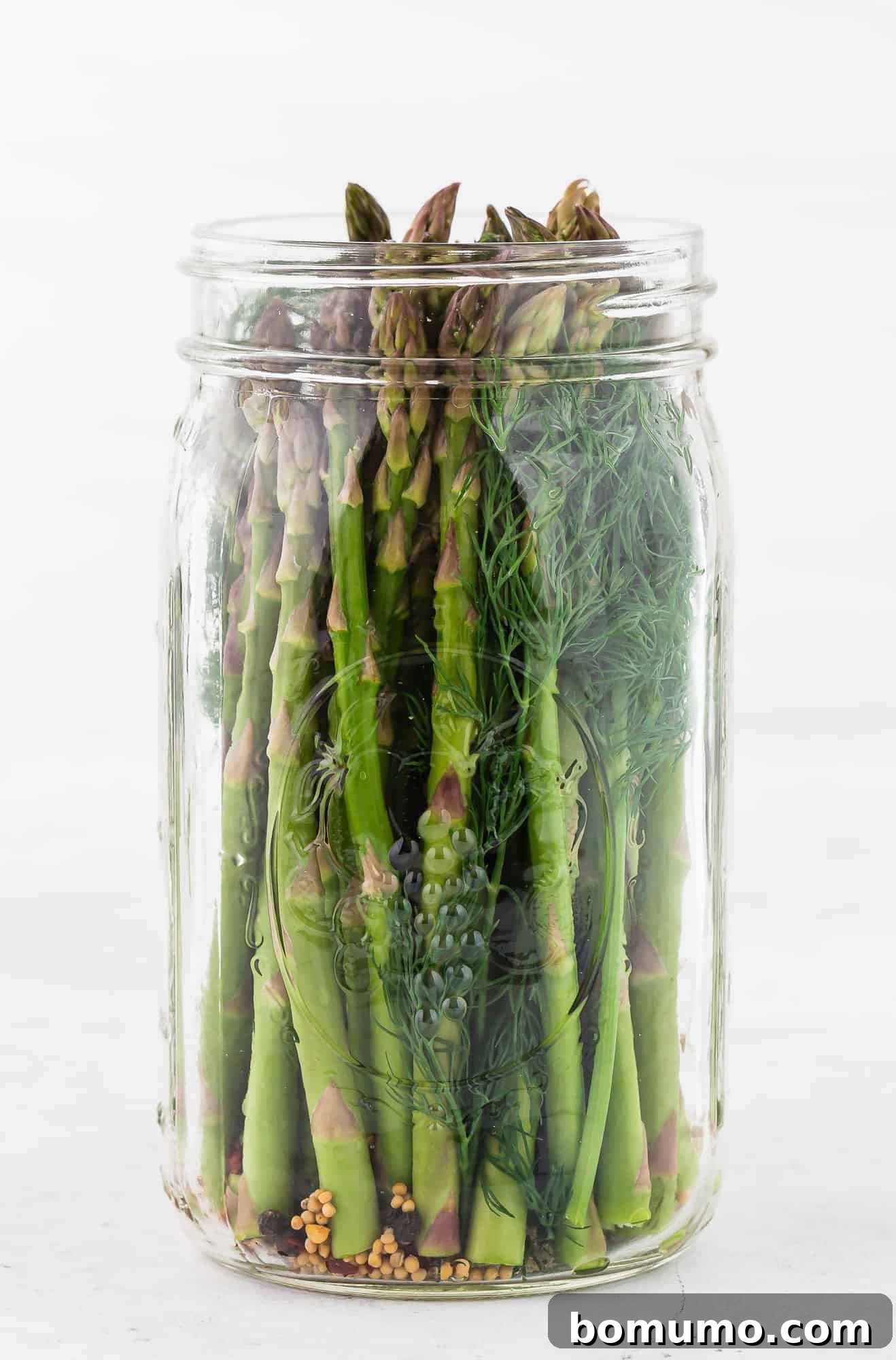
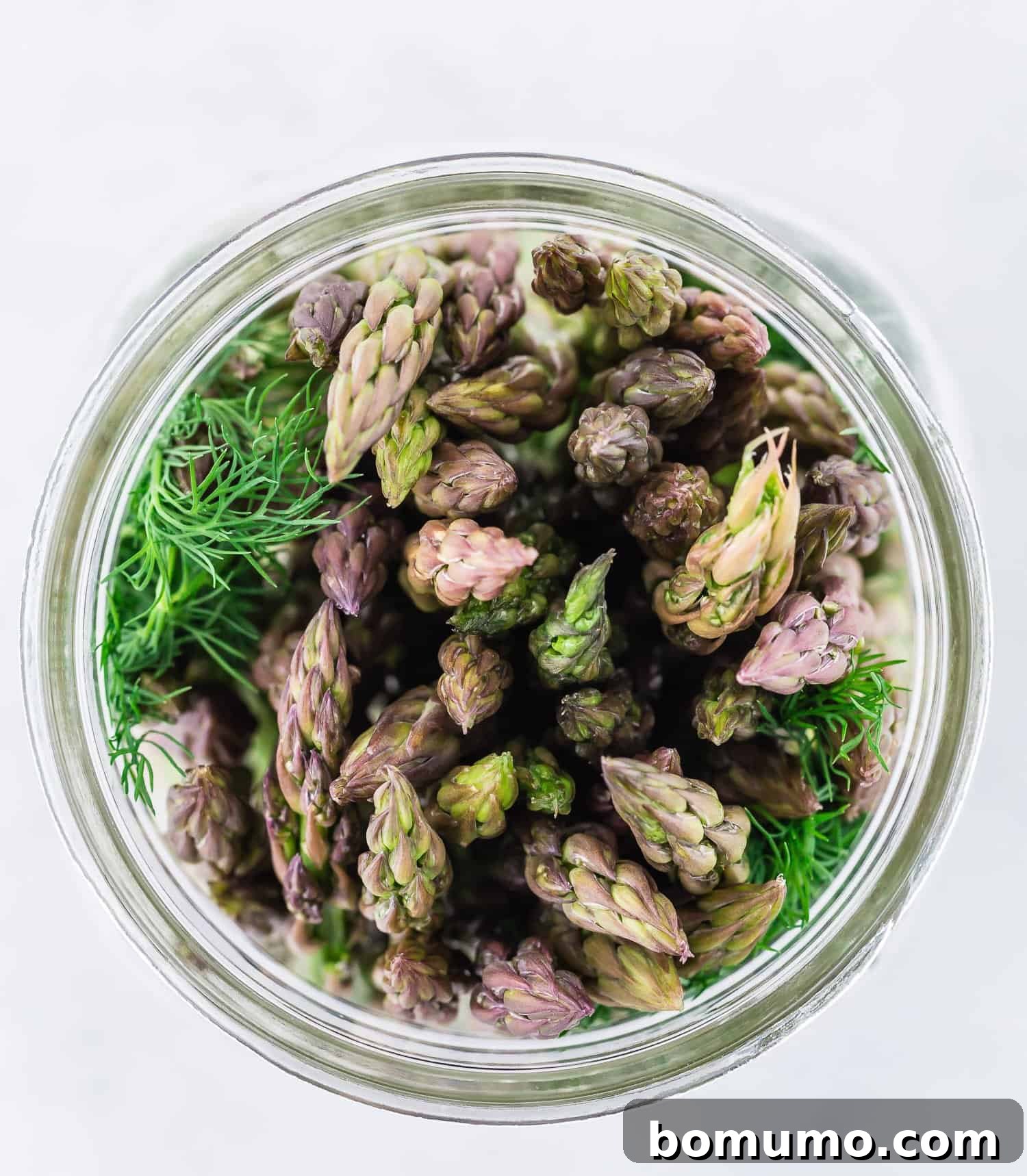
- Assemble the Jar: Into the bottom of your clean, large (quart-sized) jar, place the peeled garlic clove, whole mustard seeds, whole peppercorns, and red pepper flakes. These spices will infuse the brine and asparagus with their aromatic flavors. Next, carefully arrange the prepared asparagus spears vertically in the jar. Try to pack them in as tightly as possible; this helps prevent the spears from floating to the top and ensures they remain submerged in the brine, pickling evenly. You can arrange them with the tips facing up or down, based on your preference.
- Add Dill and Brine: Once the asparagus is arranged, tuck a few sprigs of fresh dill amongst the spears. The dill adds a quintessential pickle flavor and a lovely visual element. Then, carefully pour the slightly cooled brine over the asparagus, ensuring that all the spears are completely submerged. It’s crucial for the brine to cover all the vegetables for proper pickling and preservation.
- Seal and Refrigerate: Tightly secure the lid onto the jar. Once sealed, immediately transfer the jar of pickled asparagus to the refrigerator.
- The Art of Waiting: Now comes the most challenging, yet crucial, part: patience. While it’s tempting to dive in, for the absolute best pickled flavor and texture, you truly should wait a full week. Yes, you heard that right! I understand the anticipation is almost unbearable, and you might be eager to bite into a crisp, tangy spear after just twenty-four hours. However, my experience has consistently shown that the longer you allow the asparagus to marinate in the brine, the more the flavors deepen and meld, and the texture perfectly transforms. Consider tasting one spear each day after the initial 24 hours to observe how the flavor develops and improves over time. This waiting period is what truly distinguishes good pickled asparagus from outstanding pickled asparagus.
Quick Tip for Pickled Asparagus Color
Don’t be surprised or concerned if the bright green color of the asparagus spears transforms into an olive green hue after pickling. This change is entirely natural due to the acidity of the brine reacting with the chlorophyll in the asparagus, and it does not, in any way, affect the delicious taste or quality of your pickled spears.
Frequently Asked Questions About Pickled Asparagus
Yes, whether you need to refrigerate pickled asparagus depends on the pickling method. There are two primary types: canned (or shelf-stable) and quick (or refrigerator) pickles. Canned asparagus spears are processed with high heat and sealed, making them shelf-stable until opened. This means they do not require refrigeration until their seal is broken. In contrast, quick pickled asparagus, like the recipe provided here, are not heat-processed or sealed. They rely solely on the acidity of the brine and cold temperatures for preservation. Therefore, quick pickled asparagus absolutely must be stored in the refrigerator to remain safe and fresh. Refrigerator pickles typically offer a crisper texture and a fresher, more vibrant flavor compared to their canned counterparts, but they have a shorter shelf life.
This recipe provides a mildly spicy kick, but it’s incredibly easy to adjust the heat level to your preference. To significantly increase the spiciness of your pickled asparagus, you can simply add a greater quantity of red pepper flakes to the jar. For an even more intense heat and a fresh, pungent flavor, consider adding thinly sliced jalapeño or serrano peppers directly into the jar along with the other spices. If you prefer a more subtle, underlying warmth, increasing the amount of fresh garlic can also contribute to a heightened sense of spiciness without overwhelming the palate with capsaicin. Experiment to find your perfect balance of heat!
Customize Your Pickled Asparagus: Creative Variations
One of the joys of home pickling is the freedom to experiment and tailor the flavors to your personal preferences. The basic brine provides a fantastic canvas for countless variations:
- Spice & Herb Adjustments: Feel free to customize the core aromatics. You can easily omit ingredients like garlic, dill, or red pepper flakes if they’re not to your taste, or conversely, increase the amounts to intensify their presence. Love a strong dill flavor? Add extra sprigs! Crave more garlic? Toss in a couple more cloves.
- Alternative Spice Blends: Instead of individual whole spices, try using a pre-made pickling spice blend, readily available in most grocery stores. These blends often contain a harmonious mix of mustard seeds, coriander, peppercorns, bay leaves, and sometimes dill seeds or allspice. Alternatively, create your own unique combination by incorporating other whole spices like coriander seeds, fennel seeds, star anise, or a small piece of cinnamon stick for an unexpected twist.
- Add Other Vegetables: Expand your pickled creations by including other compatible vegetables in the jar. Sliced red onion or shallots add a delightful sharpness and beautiful color. Thinly sliced jalapeño or serrano peppers are excellent for a spicy boost, while small florets of cauliflower or carrot sticks can also be pickled alongside the asparagus, creating a vibrant mixed pickle jar.
- Citrus Brightness: Introduce a layer of bright, zesty flavor by adding a thin slice of fresh lemon or a strip of lemon zest to the jar. The citrus notes will complement the asparagus and vinegar beautifully, adding an extra dimension of freshness.
- For More Tender Asparagus: If you prefer a slightly softer texture in your pickled asparagus, you can briefly blanch the spears before pickling. Submerge them in boiling water for about 30 seconds, then immediately transfer them to an ice water bath for 2 minutes to halt the cooking process and retain their vibrant color. After this, simply proceed with the recipe as directed. This step will result in a less crisp, more yielding pickled spear.
Storage Guidelines for Your Pickled Asparagus
To enjoy your homemade pickled asparagus at its best, proper storage is essential. Once prepared and the jar is sealed, these quick pickled asparagus spears will happily keep in your refrigerator for up to three months. The acidic brine acts as a natural preservative, extending their freshness and flavor. Always ensure the spears are fully submerged in the brine, as any exposed parts can spoil more quickly. While they can last for quite a while, it’s a safe bet that their deliciousness means they won’t last that long in your fridge!
Explore More Delicious Asparagus Recipes
As a devoted fan of this versatile deep green spring vegetable, I’m always looking for new ways to enjoy it. Beyond being delicious, asparagus is packed with nutrients, making it a fantastic addition to any diet. If you’ve fallen in love with asparagus like I have, or if you’re just looking for more ways to incorporate it into your meals, here are some other fantastic recipes to try:
- Asparagus Panzanella Salad: A fresh, hearty salad featuring crisp asparagus and toasted bread.
- Turkey Sausage and Asparagus Quiche: A savory and satisfying dish perfect for brunch or a light dinner.
- Asparagus Spring Salad with Grapefruit and Rosé Vinaigrette: A light and refreshing salad bursting with seasonal flavors.
- Lemon Pasta with Asparagus, Sausage, and Dill (Made in One Pan): An incredibly easy and flavorful one-pan meal.
- Orzo Salad with Asparagus, Arugula, and Pine Nuts: A delightful pasta salad with vibrant greens and nutty accents.
- Salmon and Asparagus Sheet Pan Dinner: A convenient and healthy meal cooked all on one sheet pan.
- Asparagus Gruyère Tart with Balsamic Glaze: An elegant and impressive dish, perfect for entertaining.
- Asparagus Ribbon Salad with Beets and Burrata: A beautiful and flavorful salad that combines tender asparagus with earthy beets and creamy burrata.
Homemade Quick Pickled Asparagus Recipe
Ingredients
- 2 pounds asparagus spears, tough ends trimmed or snapped
- 2 cups water
- ¼ cup apple cider vinegar
- 1 ½ tablespoons kosher salt
- 1 tablespoon granulated sugar
- 1 clove garlic, peeled
- 1 teaspoon whole mustard seeds
- 1 teaspoon whole peppercorns
- ¼ teaspoon red pepper flakes (more to taste)
- 3 sprigs fresh dill
Instructions
- In a medium-sized saucepan, combine water, vinegar, salt, and sugar. Over medium-high heat, bring the mixture to a boil or until the sugar and salt are dissolved, stirring occasionally. Set aside to cool slightly.
- Place the garlic clove, mustard seeds, peppercorns, and red pepper flakes at the bottom of a large (quart-sized) jar. Arrange asparagus spears vertically in the jar and tuck dill sprigs into the jar alongside them.
- Pour the cooled brine into the jar, ensuring it completely covers the asparagus.
- Cover the jar tightly and place it in the refrigerator. Allow to pickle for at least overnight, but preferably a full week, before eating for the best flavor.
- Store the jar of pickled asparagus in the refrigerator for up to 3 months.
Notes
- Nutrition information includes brine which isn’t consumed so don’t be alarmed by the sodium content.
- Customize spices: Feel free to leave out garlic, dill, or red pepper flakes, or increase the amounts to your liking.
- Pickling spice blend: Use a pre-made pickling spice instead of individual spices, or create your own unique combination.
- Add other vegetables: Enhance your pickles by adding other vegetables like sliced onion, sliced jalapeño pepper, or small carrot sticks to the jar.
- Citrus zest: For a bright, zesty flavor, try adding a slice of lemon to the jar.
Nutrition
Nutrition information is automatically calculated, so should only be used as an approximation.