
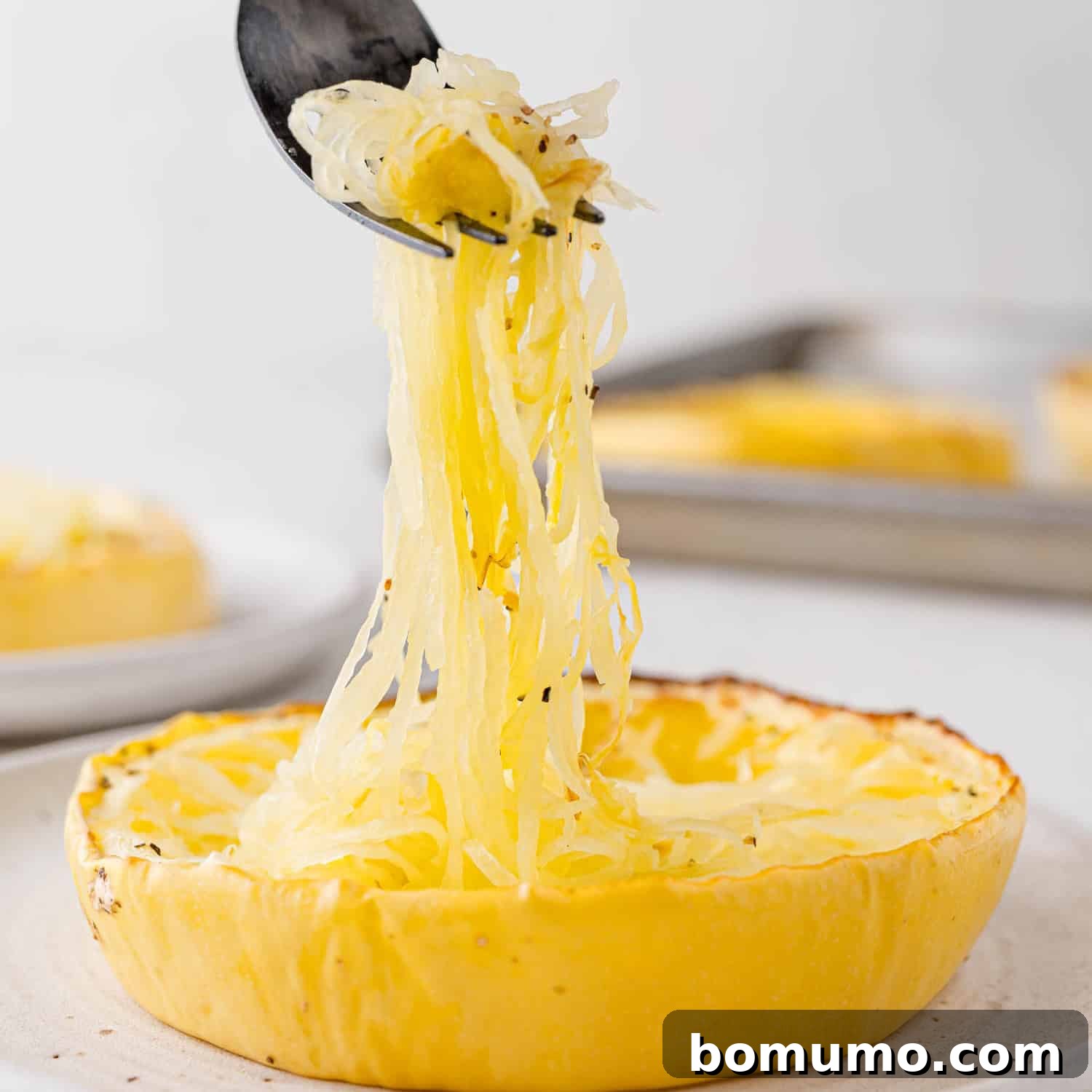
Mastering Oven-Baked Spaghetti Squash: Your Ultimate Guide
Why You’ll Love This Method: Discover the secret to perfectly cooked, firm, and flavorful spaghetti squash strands that are never soggy. This oven-baked approach creates an ideal low-carb pasta alternative, absorbing sauces beautifully for a truly satisfying meal.
Preparation & Cook Time: Approximately 40 minutes to 1 hour, largely depending on the cutting method chosen and the size of your squash.
Essential Equipment: A reliable sharp chef’s knife, parchment paper, and a sturdy baking sheet are all you need.
Yield: Serves 4, using one medium to large spaghetti squash.
Save this recipe for later on Pinterest!
Pin It Now
Spaghetti squash has rapidly gained popularity as a versatile, low-carb alternative to traditional pasta and grains. Its mild flavor and unique strand-like texture make it an excellent canvas for a myriad of dishes, from rich bolognese to light herb-infused sides. While there are various methods to cook this remarkable winter squash, including the convenience of slow cooker spaghetti squash for a truly hands-off approach or the speed of Instant Pot spaghetti squash when time is of the essence, the oven-baked method, especially when cut into rings, consistently delivers the best results. This guide will walk you through achieving those long, perfectly tender, and delightfully non-soggy strands of spaghetti squash.
Why choose the oven? The key lies in the dry heat of your oven. Unlike steaming methods, baking minimizes excess moisture, preventing the squash from becoming watery or mushy. This process not only preserves the squash’s natural sweetness but also encourages a slight caramelization on the cut surfaces, enhancing its inherent flavors. The result is a more substantial, flavorful spaghetti squash that stands up beautifully to your favorite sauces and toppings, making it the superior choice for a truly authentic “pasta” experience.
Achieving Perfection: The Benefits of Baked Spaghetti Squash
Cooking spaghetti squash in the oven is more than just another method; it’s an art that yields superior texture and flavor. Here’s why this technique should be your go-to for preparing this fantastic vegetable:
Effortlessly Delicious Results: Despite popular belief that oven baking takes more effort, preparing spaghetti squash in the oven is remarkably straightforward. While it does require a bit more hands-on time than simply setting a slow cooker, the process is simple and the rewards are well worth it. You’ll be amazed at how easily you can achieve restaurant-quality results in your own kitchen.
The Ultimate Sauce Companion: One of the biggest challenges with other cooking methods, particularly those involving steaming, is the tendency for spaghetti squash to become overly watery. This excess moisture can dilute your delicious sauces. Oven-baked spaghetti squash, however, retains its structure and a drier texture, allowing it to hold sauces much more effectively. Whether you’re topping it with a robust meat sauce or a delicate pesto, the squash strands will soak up every bit of flavor without becoming diluted, offering a truly satisfying culinary experience.
A Versatile Low-Carb Powerhouse: Spaghetti squash is widely celebrated as an excellent low-carb, gluten-free alternative to traditional pasta. But its versatility extends far beyond just pasta dishes. It can seamlessly replace rice, quinoa, or other grains as a flavorful and nutritious base for a variety of meals. Use it to lighten up your favorite casseroles, as a bed for stir-fries, or as a hearty side dish. For instance, spaghetti squash with Parmesan and herbs makes for a delightful and simple accompaniment to almost any main course.
Helpful Kitchen Tip: Softening Your Squash for Easier Cutting
Spaghetti squash, with its notoriously tough exterior, can be quite challenging to cut. To ensure a safer and easier slicing experience, try this simple trick: carefully pierce the squash in several spots with a sharp knife (this allows steam to escape during microwaving). Then, microwave the whole squash for 3 to 5 minutes. Allow it to cool slightly, and you’ll find the rind has softened considerably, making it much easier and safer to cut through. Always use caution when handling sharp knives.
Essential Ingredients for Perfect Spaghetti Squash
- Spaghetti Squash: Select a firm, heavy squash free of soft spots. You do not need to peel the squash before cooking, as the skin will be discarded after it’s baked. However, it’s crucial to thoroughly scrub the exterior clean with a brush under running water. This prevents any surface bacteria from being transferred to the edible flesh by your knife during the cutting process.
- Olive Oil: A light coating of olive oil is essential for promoting beautiful browning and achieving that desirable caramelized flavor on the squash’s cut surfaces. It also helps in preventing the squash from sticking to the baking sheet.
- Salt and Freshly Ground Black Pepper: These simple seasonings are vital for enhancing the natural, delicate flavor of the spaghetti squash. Seasoning adequately ensures a delicious result that complements any dish you serve it with.
Unlocking Longer Strands: The Secret to Cutting Spaghetti Squash
Many people unknowingly cut spaghetti squash lengthwise, from stem to end. While this method is common, it actually severs the natural strands of the squash, resulting in shorter “noodles.” If you were to observe the internal structure, you’d notice that the spaghetti-like strands run horizontally in rings around the squash’s core.
For the longest, most authentic spaghetti-like strands, the key is to cut the squash crosswise into rings or halves horizontally across its middle. This technique ensures that the strands remain intact, providing a texture remarkably similar to traditional spaghetti. This simple adjustment in your cutting method can significantly improve your spaghetti squash experience!
Detailed Methods: How to Bake Spaghetti Squash in the Oven
No matter which cutting method you choose, a few initial steps are consistent for all:
General Preparation for All Methods
Begin by preheating your oven to a consistent 400ºF (200ºC). While the oven heats, thoroughly scrub the exterior of your spaghetti squash under cool running water to remove any dirt or impurities. Prepare a large baking sheet by lining it with parchment paper; this prevents sticking and makes cleanup a breeze.
Method 1: The Preferred Way – Baking in Rings for Long, Perfect Strands
This method is highly recommended for achieving the longest, most distinct, and non-soggy spaghetti squash strands, offering a truly superior texture that mimics traditional pasta.
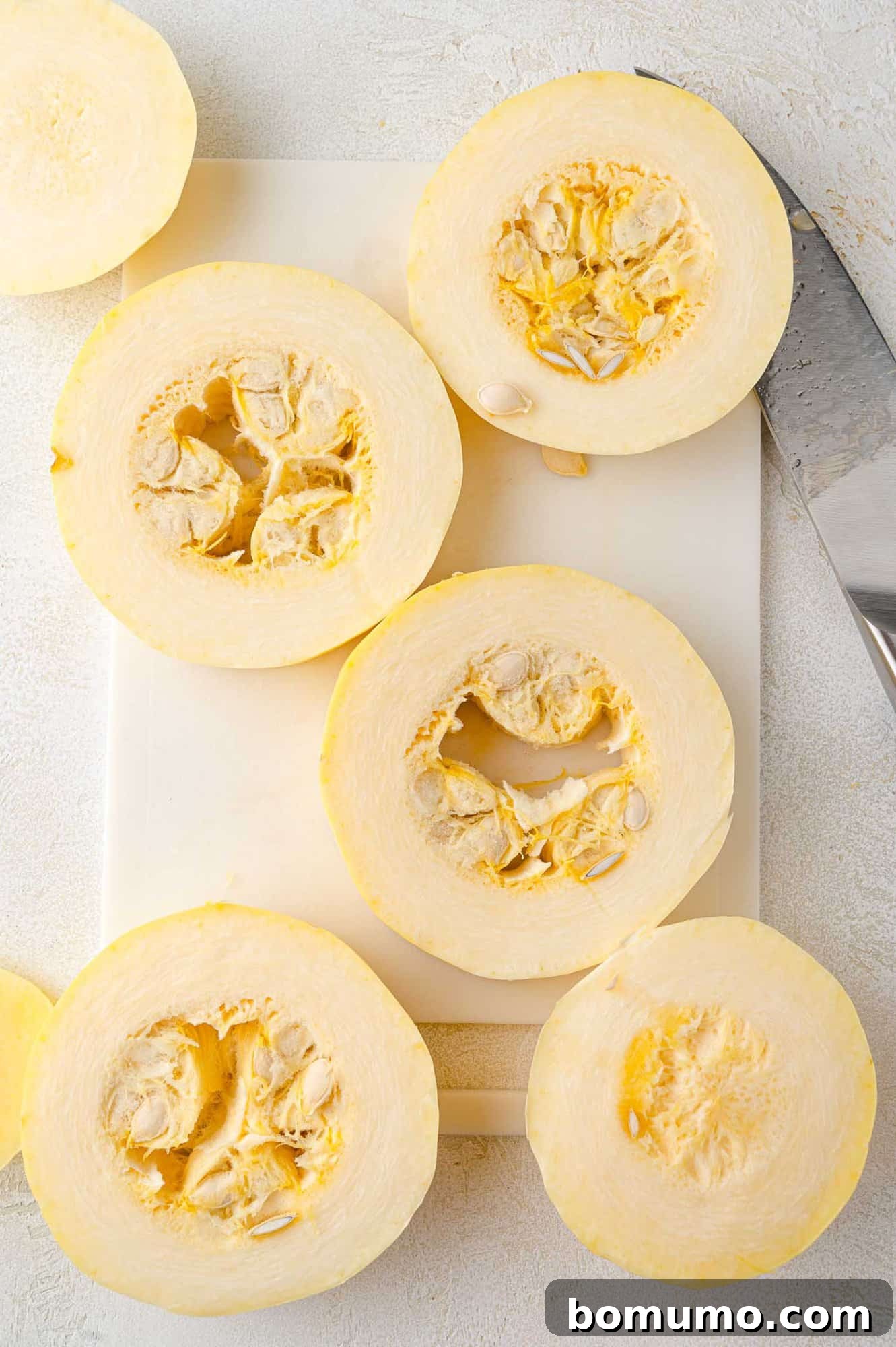
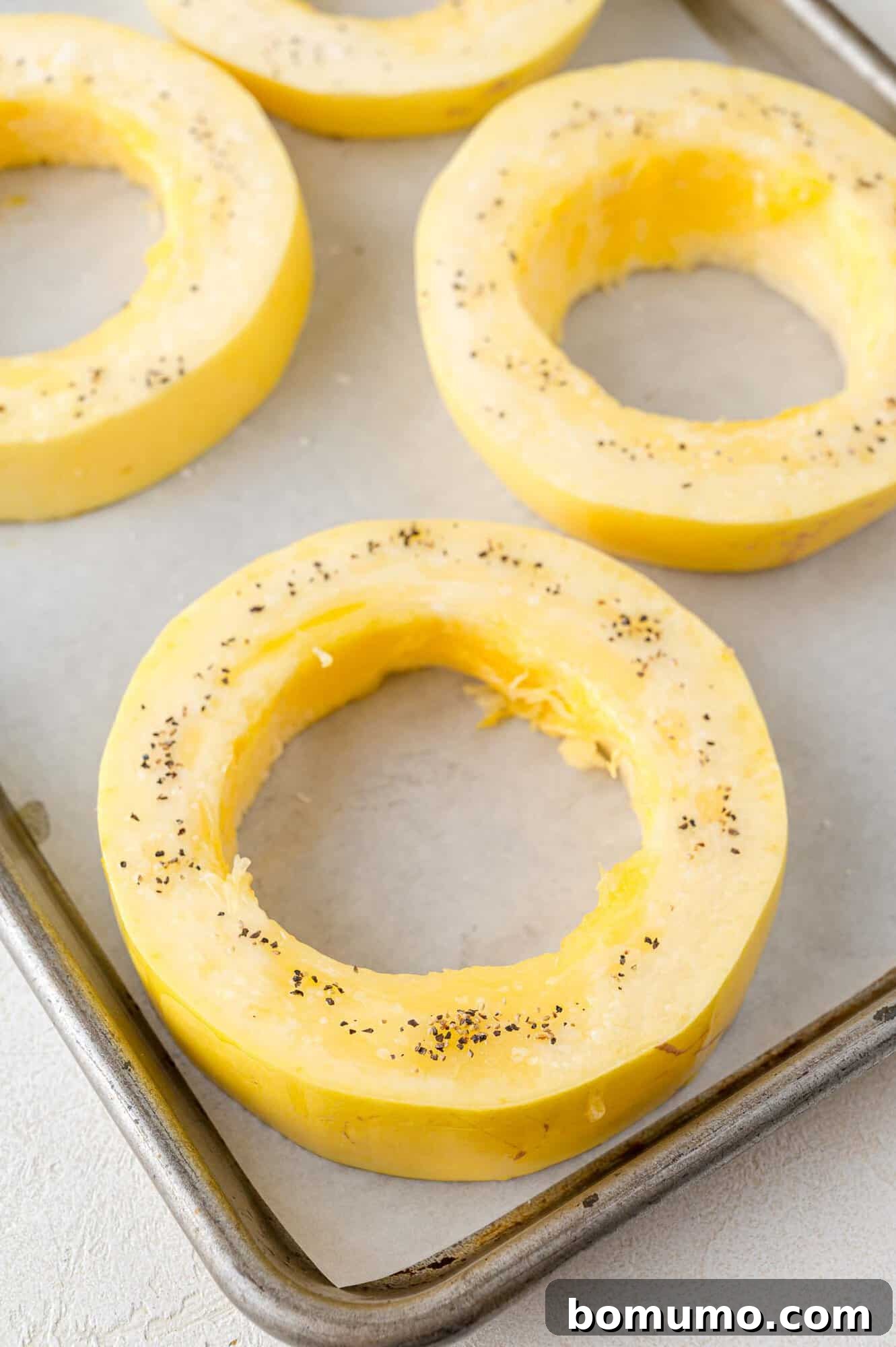
- Using a very sharp chef’s knife, carefully slice the squash into 1-inch thick rings. For stability and even cuts, it can be helpful to rotate the squash a quarter-turn after each slice, compensating for any natural angling of your knife.
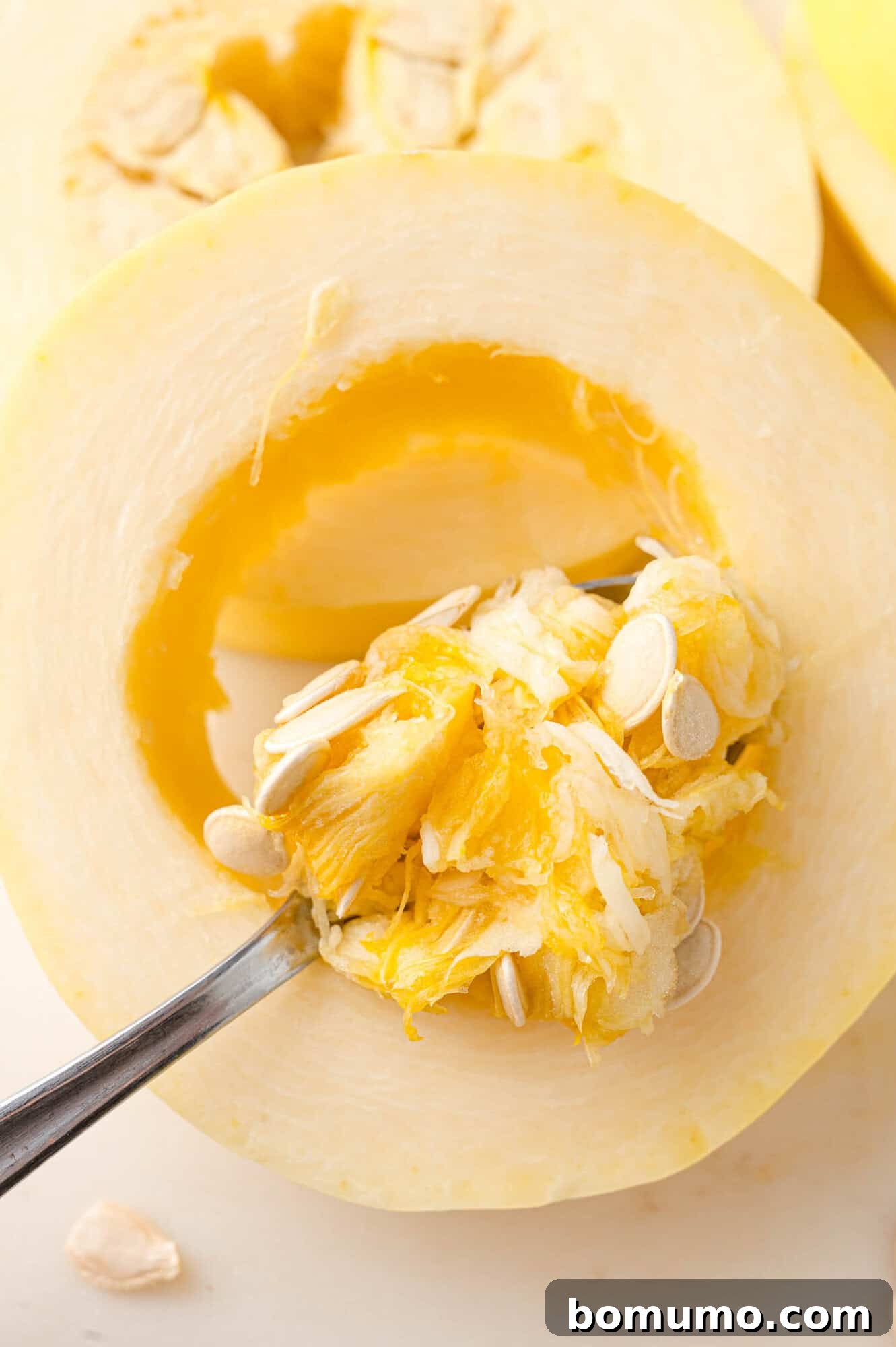
- Once sliced, use a spoon to scoop out and discard the seeds and fibrous membranes from the center of each ring.
- Arrange the cleaned squash rings in a single layer on your prepared baking sheet. Lightly spray or rub both cut sides of the rings with olive oil, ensuring an even coating. Season generously with salt and freshly ground black pepper to taste.
- Bake in the preheated oven for approximately 40 minutes, or until the squash is perfectly tender when pierced with a fork.
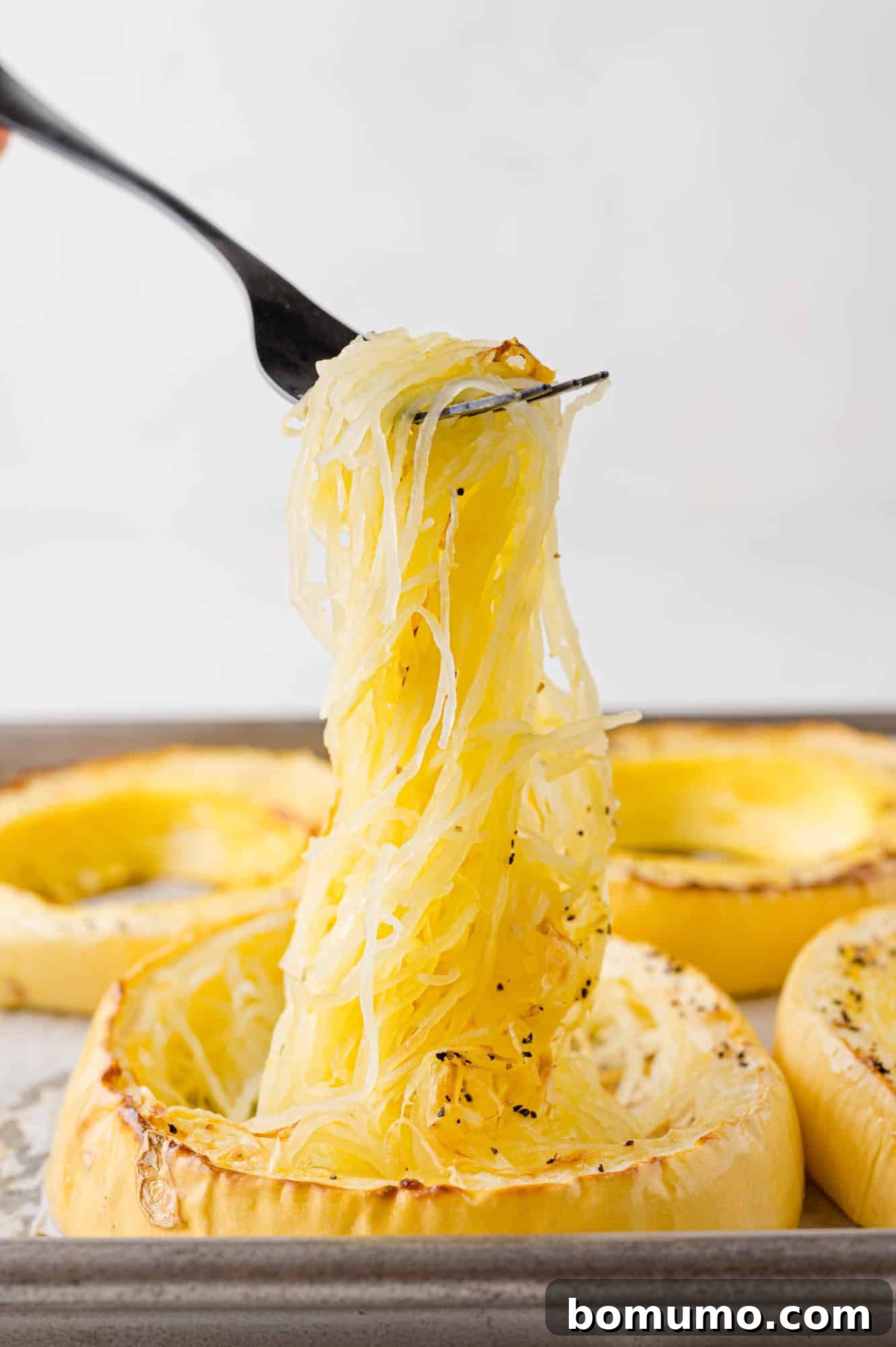
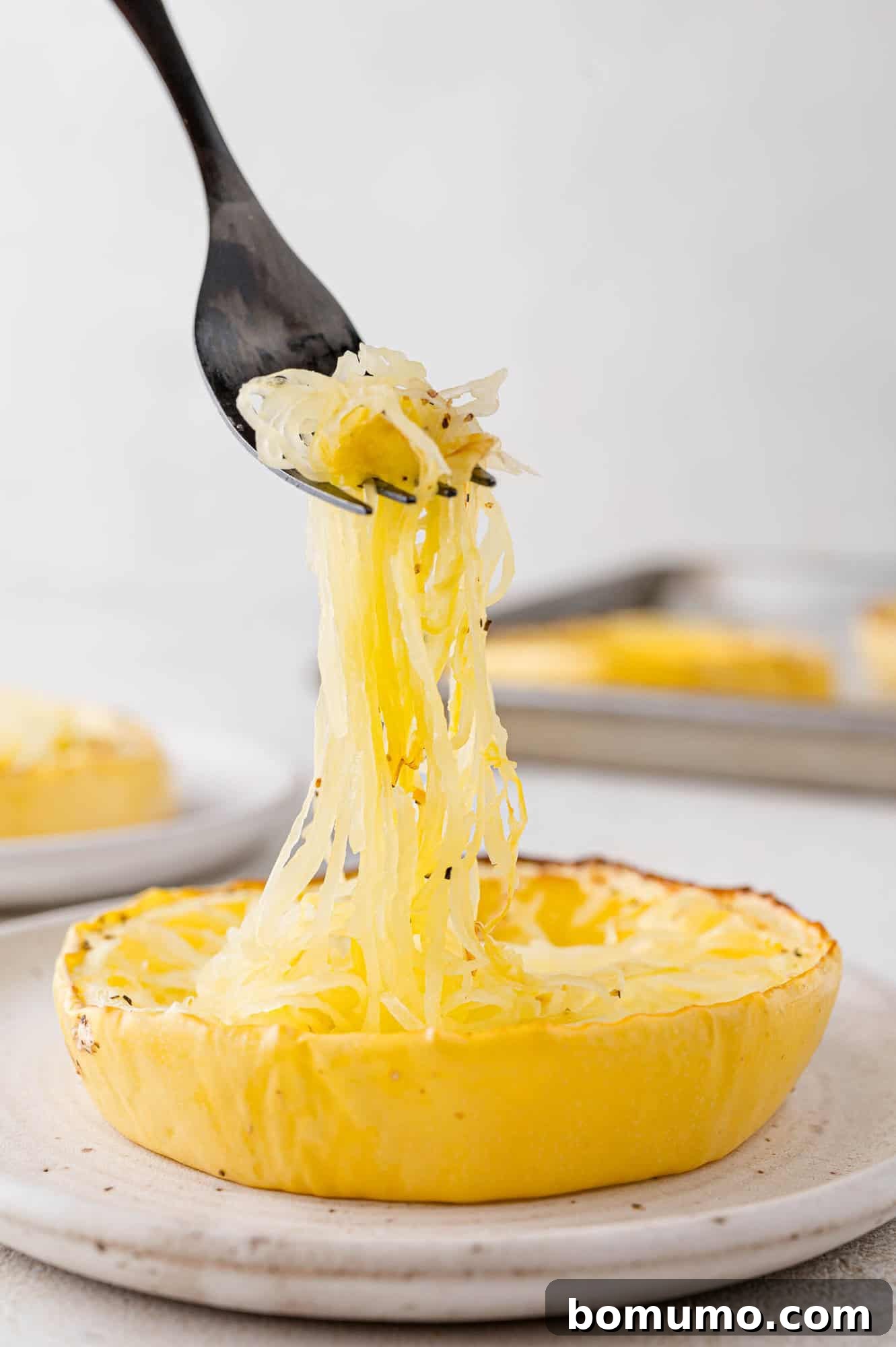
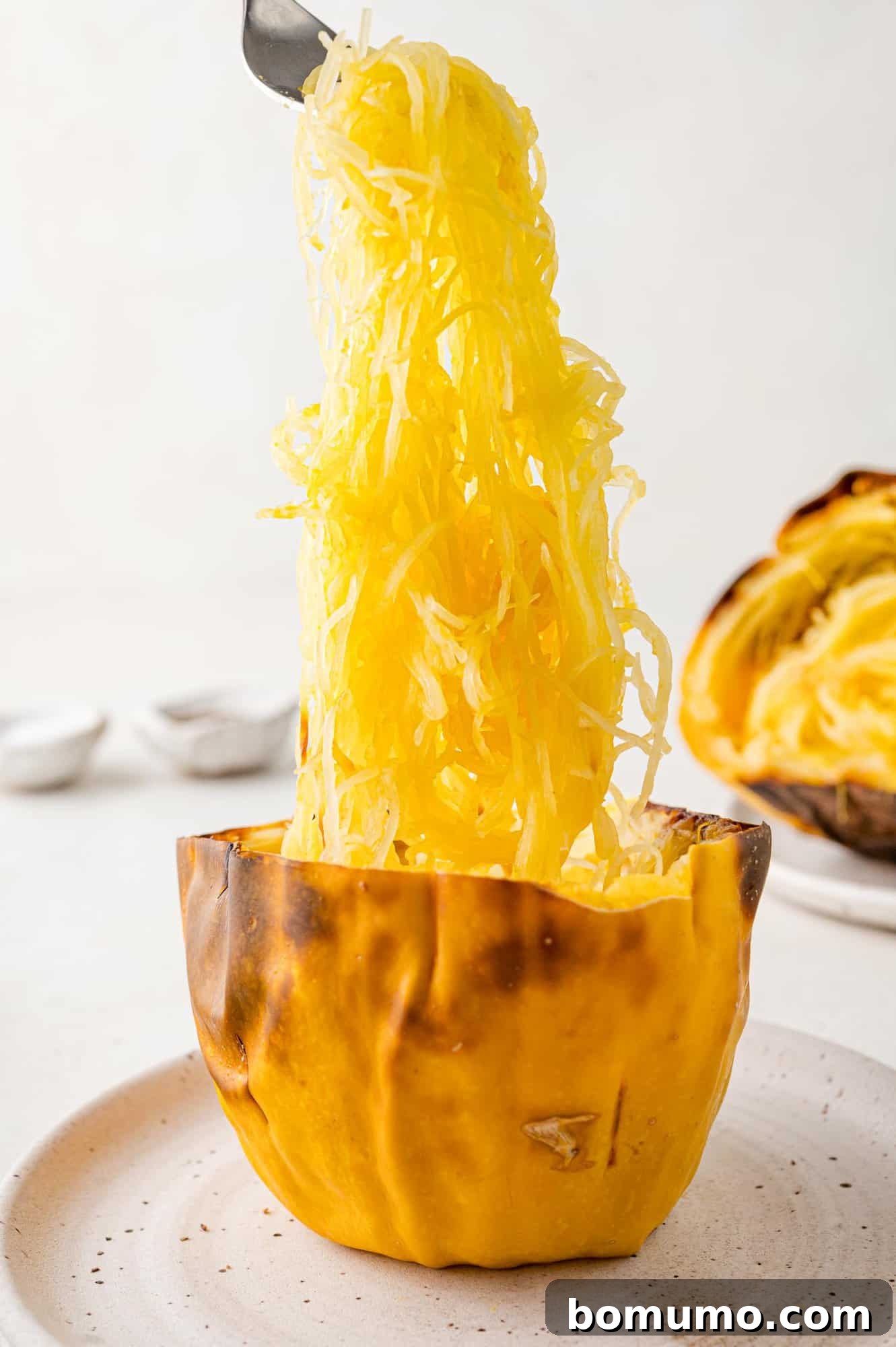
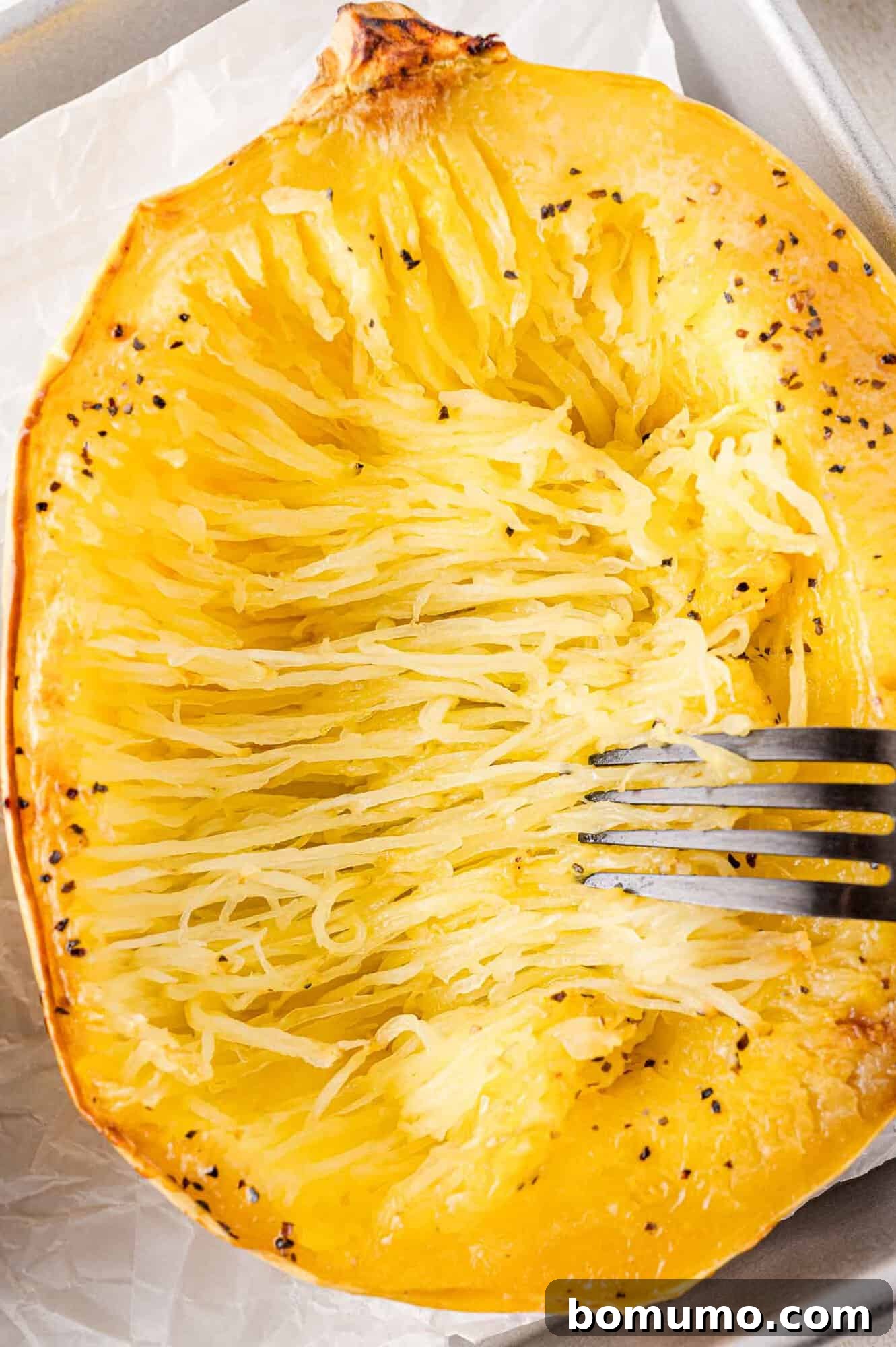
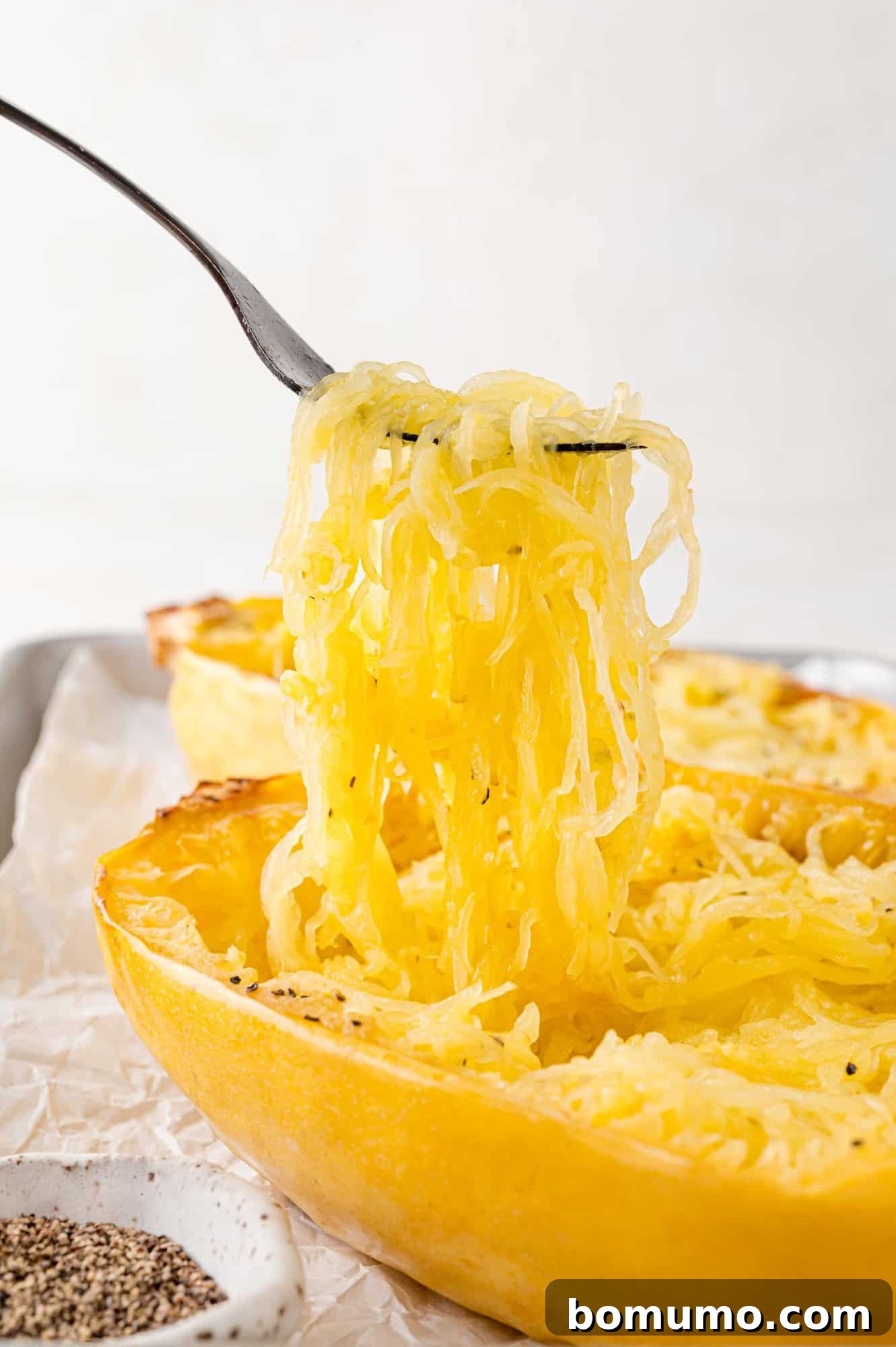
- Allow the baked rings to cool for a few minutes until they are comfortable to handle. Then, using a fork or even your hands, gently scrape the cooked flesh from the rind into beautiful, long strands.
This method is my absolute favorite, provided I have the time and energy to manage the initial cutting. It consistently yields perfectly textured, elongated spaghetti squash strands every single time, guaranteeing a delightful, non-soggy “noodle” experience.
Andrea Said:
“I’ve been searching for the best way to make spaghetti squash for some time now and came across Rachel’s suggestion to cook in rings, and oh my! the results were perfect!!! My problem was that my squash always came out too watery or mushy. This method cooks the squash to perfection in shorter time and gives the perfect texture. Thanks, Rachel!”
Method 2: Baking Whole for Minimal Prep
This is arguably the simplest method, requiring the least amount of initial cutting. However, be aware that baking the squash whole often results in a slightly softer, more watery texture due to internal steaming.
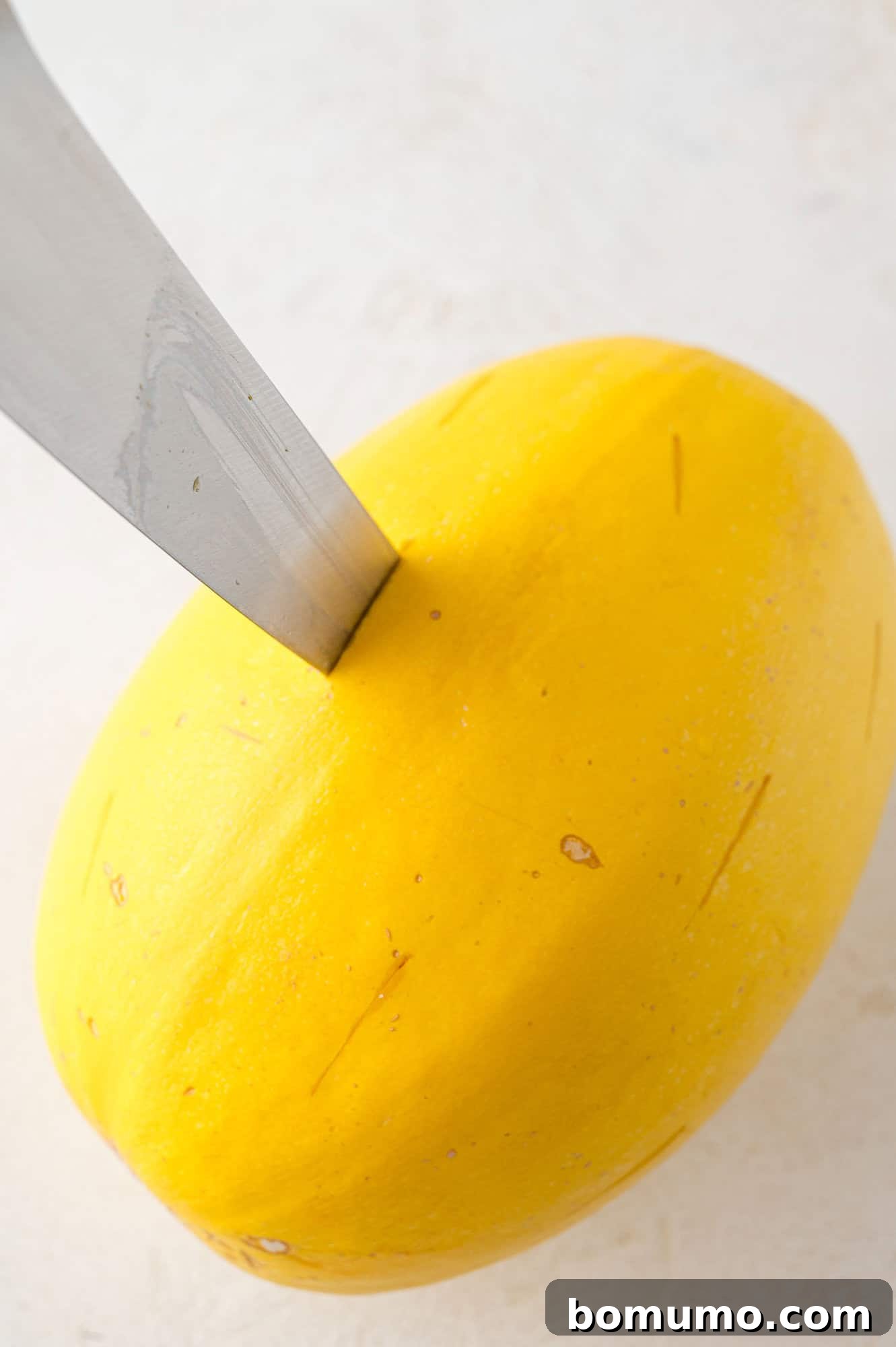
- Before baking, use the tip of a sharp knife to pierce several holes all over the squash’s skin. This crucial step allows steam to escape during cooking, preventing the squash from bursting.
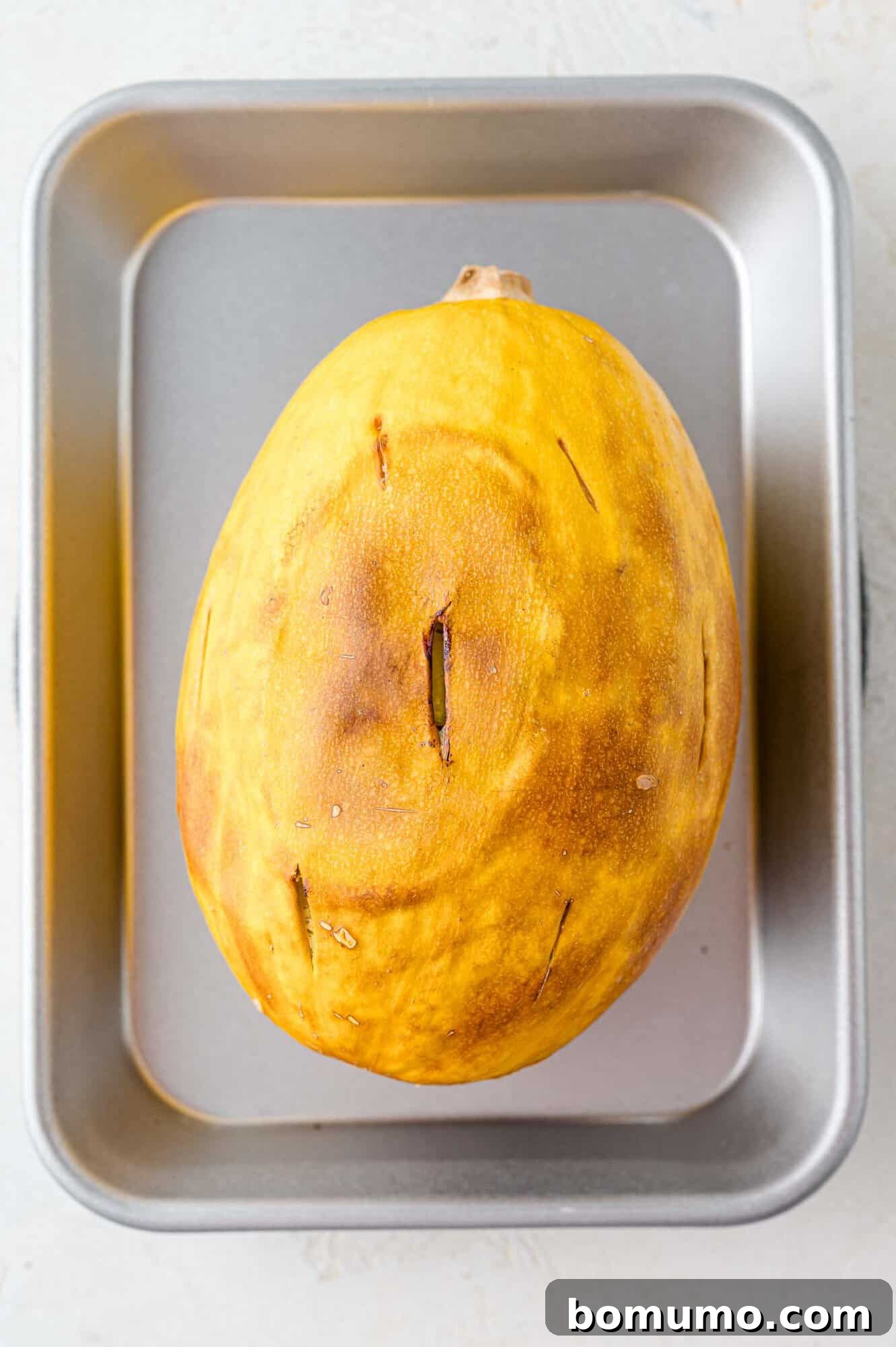
- Place the whole, pierced squash directly onto your prepared baking sheet. Roast in the preheated oven for approximately 1 hour, or until a knife can easily slide into the flesh with minimal resistance. For even cooking, remember to flip the squash over about halfway through the baking time.
- Once cooked, remove the squash from the oven and let it cool on the baking sheet until it’s safe and comfortable to handle.
- Using a large, sharp knife, carefully slice the squash in half. You can cut it lengthwise (stem to end) for shorter strands or crosswise for longer strands, depending on your preference.
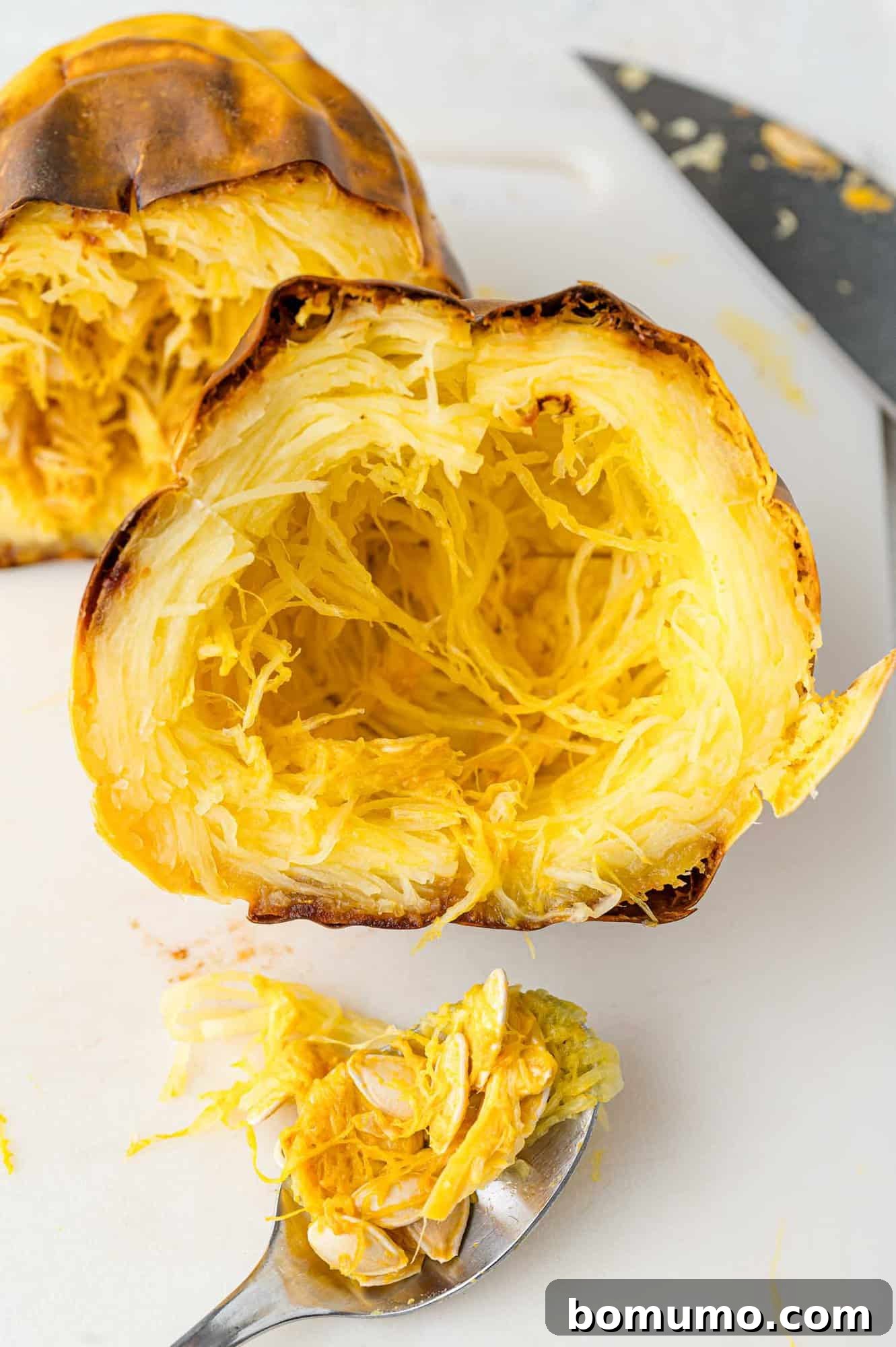
- Scoop out and discard the seeds and stringy bits from the center. Finally, use a fork to gently scrape the cooked flesh into characteristic spaghetti-like strands.
While this method is incredibly straightforward and a common choice, the internal steaming process during whole baking can yield softer, more watery spaghetti squash compared to other techniques. It’s ideal when convenience is your top priority.
Method 3: Baking Cut in Half for Easy Stuffing
This method offers a good balance between ease of preparation and desirable texture. It’s particularly ideal if you plan to stuff the squash halves after baking.
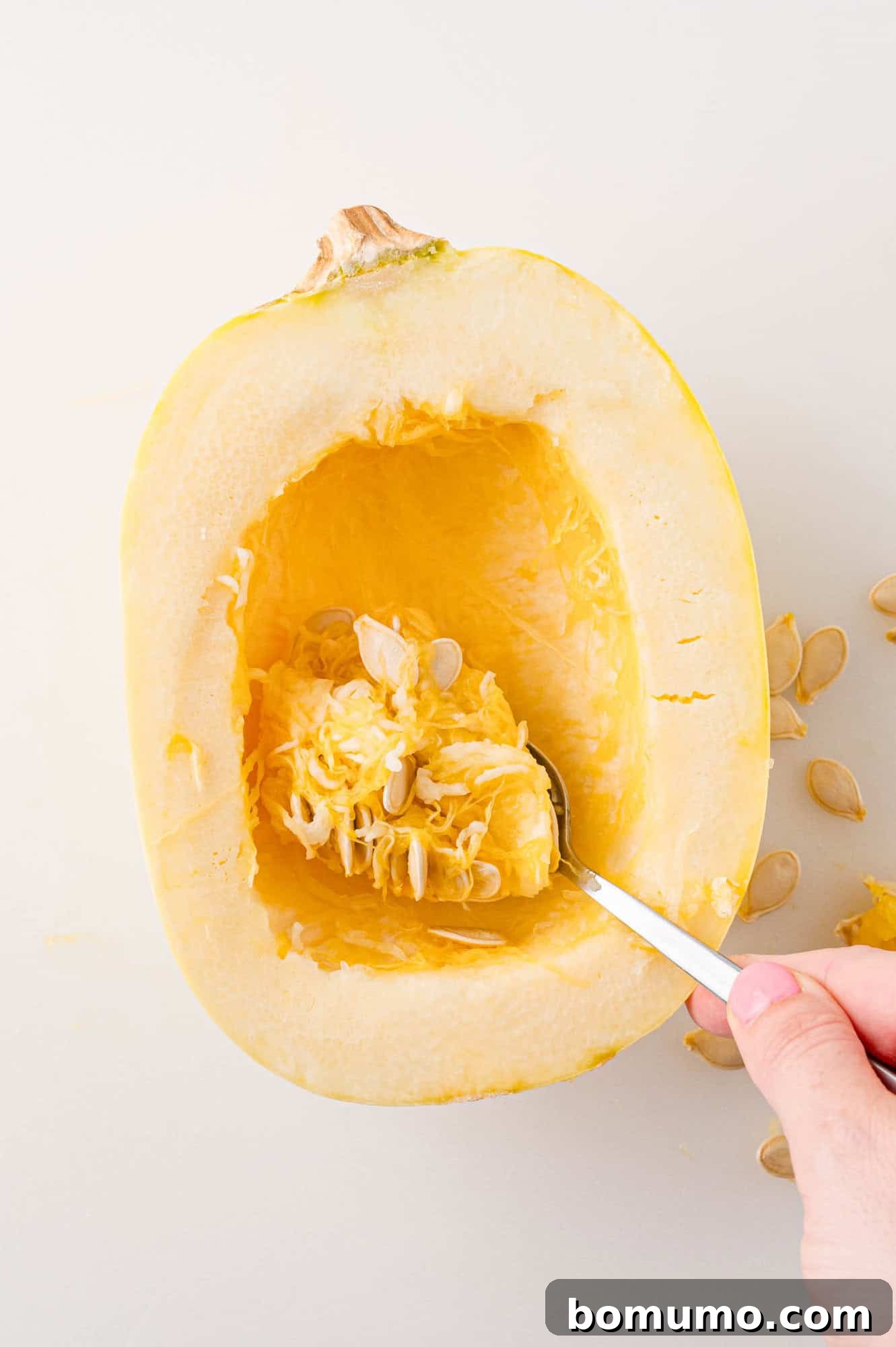
- Carefully cut the scrubbed squash in half. Remember, cutting it lengthwise (stem to end) will yield shorter strands, while cutting it crosswise will give you longer, more pasta-like strands. After cutting, scoop out and discard all the seeds and fibrous material.
- Lightly drizzle the inside cut surfaces of each squash half with olive oil. Use a pastry brush or your fingers to evenly coat the entire cut area. Season generously with salt and freshly ground black pepper.
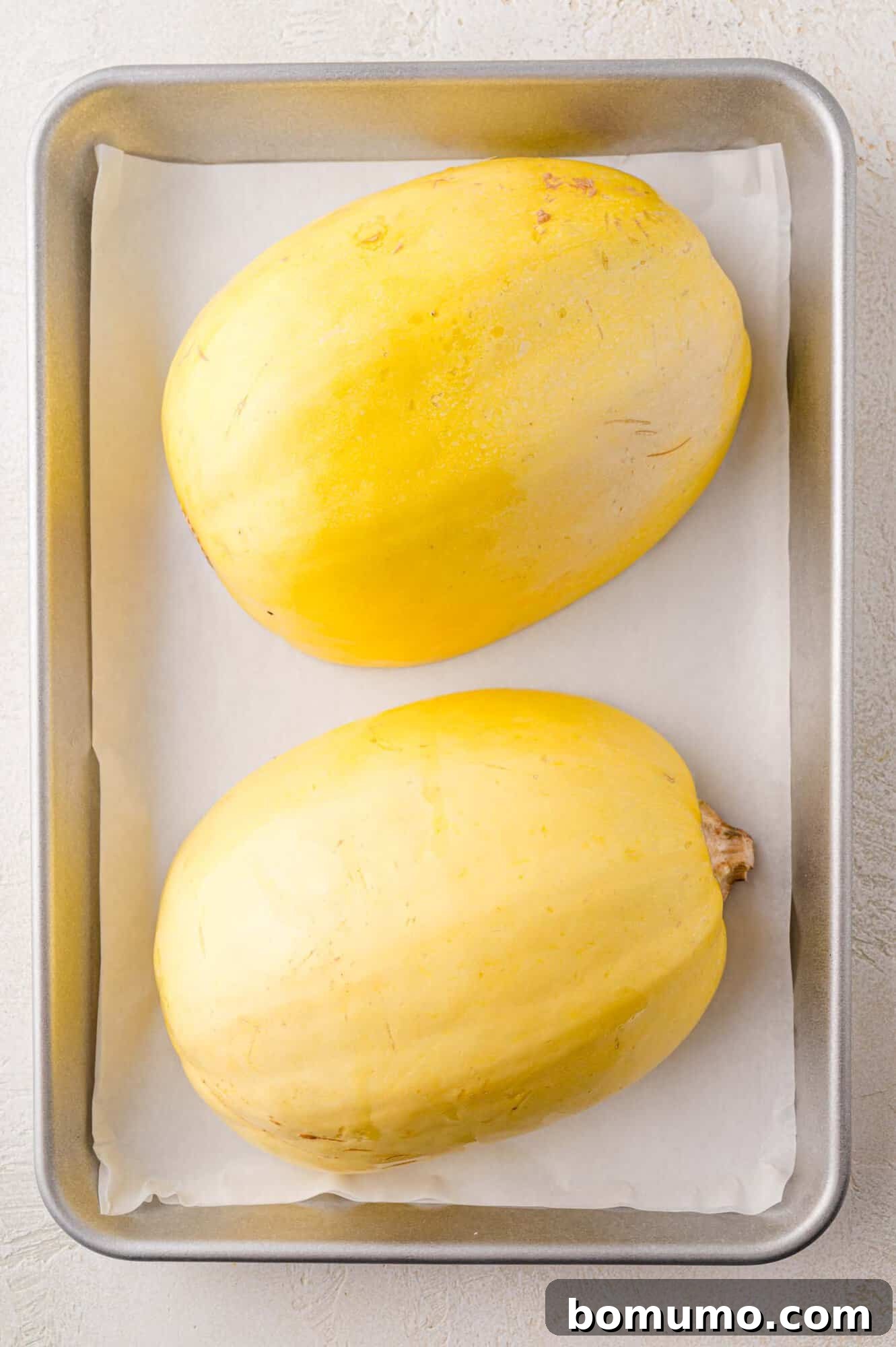
- Place the squash halves cut-side-down onto your prepared baking sheet. This orientation helps to trap steam slightly while still allowing the dry oven heat to work its magic.
- Roast in the preheated oven for approximately 45 minutes to an hour, or until the flesh is easily pierced with a knife. Cooking time will vary based on the size of your squash.
- Once tender, remove from the oven and let cool until safe to handle. Then, use a fork to scrape the cooked flesh into delicate strands.
When the ring method isn’t an option, baking the squash cut in half is my preferred alternative. While it might yield slightly soggier results than the ring method, it’s perfect for a wide variety of squash types and especially convenient if you intend to fill the squash halves with delicious toppings after baking.
Creative Serving Ideas for Baked Spaghetti Squash
Baked spaghetti squash, with its neutral flavor and delightful texture, is truly a blank slate, much like its pasta counterpart. It eagerly absorbs the flavors of whatever it’s paired with, making it an incredibly versatile ingredient for countless meals. Beyond simply replacing traditional spaghetti, consider these mouth-watering serving suggestions to elevate your next meal:
- Classic Italian Pairings: Start with a hearty easy turkey bolognese or a rich, slow-simmered homemade spaghetti sauce brimming with ripe tomatoes and fresh basil. For vegetarian options, a savory vegan bolognese is equally delicious.
- Pesto Perfection: Toss the warm squash strands with your favorite pesto for a vibrant and fresh dish. Options include a peppery arugula pesto (naturally nut-free), a classic basil pesto, or an aromatic cilantro pesto for a unique twist.
- Creamy Indulgences: For a more decadent touch, pair with a luscious tomato cream sauce. If you’re looking for a healthier creamy option, a light yet flavorful cauliflower alfredo sauce provides all the richness without the guilt.
- Stuffed Squash Creations: Utilize the baked halves as edible bowls for exciting fillings. Try Chicken Fajita Stuffed Spaghetti Squash, where tender squash is loaded with seasoned chicken, peppers, and onions, then briefly broiled for a sizzling finish. Or, transform it into a family-friendly meal with Pizza Stuffed Spaghetti Squash, complete with your favorite pizza toppings and melted cheese.
- Simple Sides: A drizzle of olive oil, a sprinkle of Parmesan cheese, and fresh herbs (like parsley or chives) can turn plain spaghetti squash into an elegant side dish.
Storage & Reheating Options
Storage & Reheating Options
Proper storage and reheating ensure your delicious baked spaghetti squash can be enjoyed for days or even months to come, making it an excellent meal prep component.
Refrigerate: Once cooked and cooled, transfer spaghetti squash strands to an airtight container. It will keep beautifully in the refrigerator for up to 5-7 days, ready for quick meals or side dishes.
Freeze for Longer Storage: Spaghetti squash is highly freezer-friendly and can be stored for six months or even longer. For best results and to prevent a watery texture upon thawing, follow these steps: After baking, remove the strands from the peel and place them in a colander set over a bowl. Cover and refrigerate, allowing the squash to drain excess moisture for at least 12 hours (preferably overnight). This crucial step significantly improves the thawed texture. Once drained, scoop the squash into freezer bags, pressing out as much air as possible before sealing. Flatten the bags for efficient storage and faster thawing, then label with the date and freeze. To use, simply thaw overnight in the refrigerator. Depending on how thinly you flattened it, thawing might be quicker.
Reheat: Enjoying your spaghetti squash is flexible. It’s delicious served cold or at room temperature in salads. For a warm meal, reheat portions in the microwave until heated through, or sauté gently in a skillet over medium heat with a splash of water or broth to prevent drying out.
More Delightful Basic Vegetable Recipes
Crispy & Flavorful Roasted Green Beans
Delicious Sautéed Brussels Sprouts
Flavorful Marinated Mushrooms
Roasted Carrots with Thyme and Nutmeg
How to Cook Spaghetti Squash: Oven Method for Perfect Strands
Rachel Gurk
10 minutes
45 minutes
55 minutes
4
Want to save this recipe for later? You can print it using the button above or pin it to your Pinterest board!
Ingredients
- 1 medium to large spaghetti squash, thoroughly scrubbed clean
- 1 tablespoon olive oil
- salt and black pepper, to taste
Instructions
Method 1: To Bake in Rings (Recommended for Long Strands):
-
Preheat your oven to 400°F (200°C) and line a baking sheet with parchment paper.
-
Using a large, sharp chef’s knife, carefully cut the scrubbed spaghetti squash horizontally into 1-inch thick rings. Scoop out and discard the seeds and fibrous material from the center of each ring.
-
Arrange the squash rings in a single layer on the prepared baking sheet. Drizzle or rub both cut sides of the rings generously with olive oil. Season with salt and pepper to your preference.
-
Bake for 40 minutes, or until the squash is tender when pierced with a fork. Let cool slightly on the baking sheet, then use a fork (or your hands) to scrape the cooked flesh into long, perfect spaghetti-like strands.
Method 2: To Bake Whole (Easiest Prep):
-
Preheat oven to 400°F (200°C).
-
Use the tip of a sharp knife to prick several holes all over the scrubbed squash. Place the whole squash on a baking sheet and roast until tender, which usually takes about 60 minutes, depending on its size. Flip the squash over halfway through cooking to ensure even baking. The squash is done when a knife can easily slide into it.
-
Remove the squash from the oven and allow it to cool enough to comfortably handle. Using a large, sharp knife, carefully cut the squash in half. You can cut it lengthwise (stem to end) for shorter spaghetti strands or crosswise for longer strands.
-
Scoop out and discard the seeds. Use a fork to gently separate the cooked squash flesh into strands.
Method 3: To Bake Cut in Half (Great for Stuffing):
-
Preheat oven to 400°F (200°C) and line a baking sheet with parchment paper.
-
Using a large, sharp knife, carefully cut the scrubbed spaghetti squash in half. Decide whether to cut it lengthwise (stem to end) for shorter strands or crosswise for longer strands. Scoop out and discard all the seeds.
-
Lightly drizzle the inside cut surface of each half with olive oil. Use a brush or your fingers to ensure an even coating. Season with salt and pepper to taste.
-
Place the squash halves cut-side-down on the prepared baking sheet. Roast until the squash is tender when pierced with a knife, typically 45 minutes to an hour, depending on size.
-
Once tender, let cool enough to handle safely. Use a fork to separate the cooked flesh into desirable strands.
Chef’s Notes & Tips
- Variable Cook Time: Keep in mind that cooking times are approximate and can vary significantly based on the size of your spaghetti squash and the specific cooking method chosen. Smaller squashes will cook faster than larger ones.
- Storage: Leftover cooked spaghetti squash should be stored in an airtight container in the refrigerator and consumed within 5-7 days for optimal freshness.
- Freezing Instructions: For longer storage, cooked spaghetti squash can be frozen for up to 6 months. To minimize a watery texture upon thawing, remove strands from the peel after baking and place them in a colander over a bowl. Cover and refrigerate overnight (at least 12 hours) to allow excess moisture to drain. Then, pack the drained squash into freezer-safe bags, flatten to remove air, label, and freeze. Thaw overnight in the refrigerator before use.
- Explore Other Methods: While oven baking is recommended for the best texture, don’t hesitate to try slow cooker spaghetti squash for hands-off cooking or Instant Pot spaghetti squash for a super-fast preparation.
Instructional Video
Video Placeholder: Learn how to bake spaghetti squash for long, perfect strands.
You can watch the instructional video here.

Nutritional Information (Approximate per 1 Cup Serving)
Calories: 106kcal,
Carbohydrates: 17g,
Protein: 2g,
Fat: 5g,
Saturated Fat: 1g,
Polyunsaturated Fat: 1g,
Monounsaturated Fat: 3g,
Sodium: 41mg,
Potassium: 261mg,
Fiber: 4g,
Sugar: 7g,
Vitamin A: 290IU,
Vitamin C: 5mg,
Calcium: 56mg,
Iron: 1mg
Nutrition information is automatically calculated and provided for informational purposes only. It should be used as an approximation, as actual values may vary based on ingredients and preparation.
Tried this Recipe?
We’d love to hear your thoughts! Share a comment and rating below. Your feedback helps our community!