Sides
Sautéed Cabbage
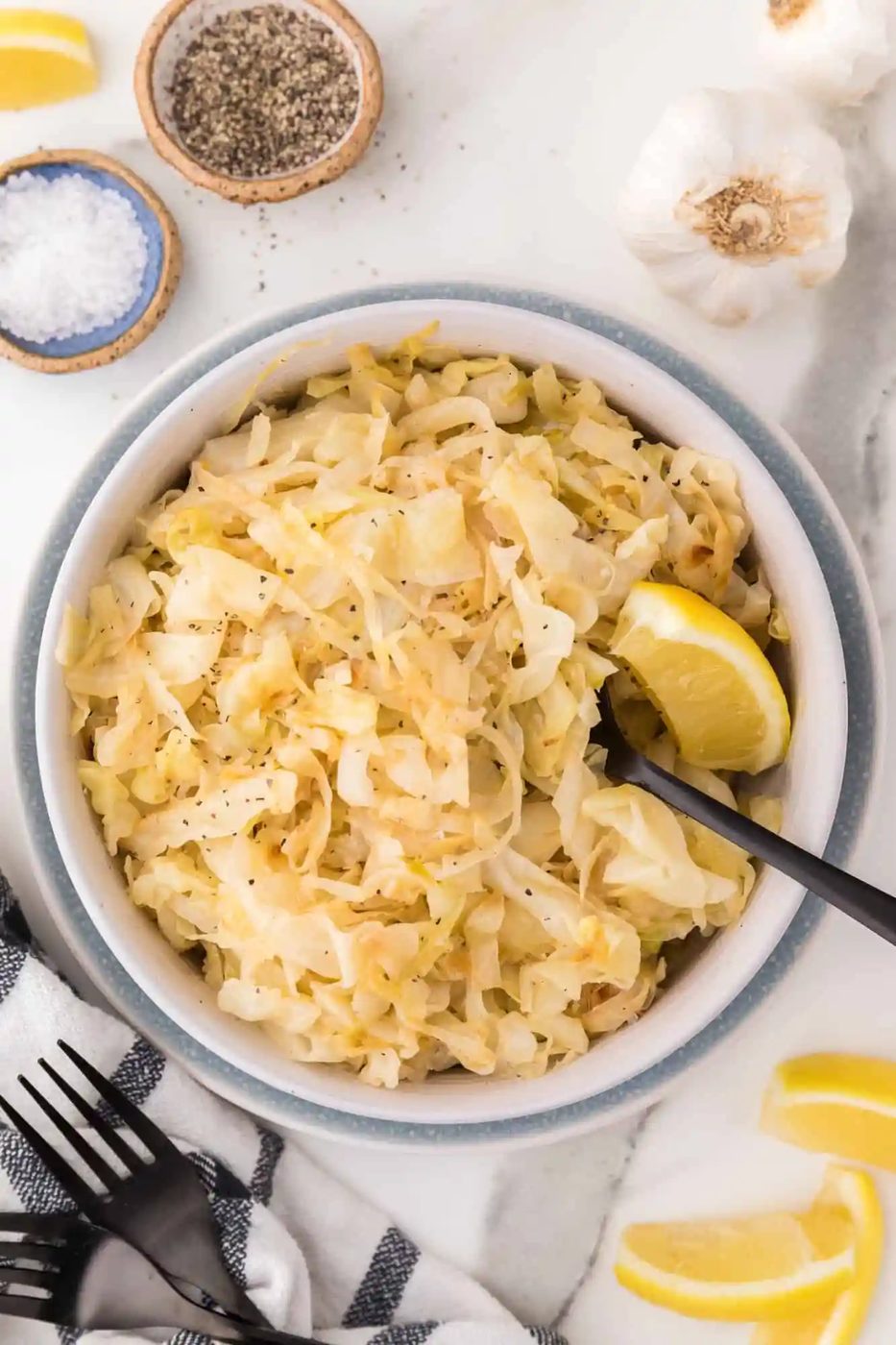
Tender and buttery, sautéed cabbage is a rich side dish that goes well with almost anything. Cabbage is nutritious and economical, too.
At a glance
What stands out: Tender and buttery, sautéed cabbage is a straightforward and rich side dish that goes well with almost anything. Cabbage is nutritious and economical, too.
How long it takes: less than a half hour
Equipment you’ll need: large pan, sharp knife
Servings: 8
Nutritious Green Cabbage
Sometimes green cabbage gets a bum rap. You may have had unpleasant run-ins with overcooked boiled cabbage: mushy, gray, and stinky. Don’t let that turn you off cabbage forever. Cabbage is sorta like those bad boy Brussels sprouts which also got an undeserved bad rap but now are popular. (Try roasted Brussels sprouts, air fryer Brussels sprouts, sautéed Brussels sprouts, cheesy Brussels sprouts.)
Let’s start a love affair with cooked cabbage. Remember that cabbage is in the same family as Brussels sprouts (but Brussels sprouts are not baby cabbages!). Cabbage is also the main ingredient in coleslaw and everyone pretty much loves that, from creamy coleslaw to vinegar coleslaw to Asian coleslaw salad.
Straightforward Sautéed Cabbage
Surprisingly good. Properly cooked cabbage is mild-tasting, almost buttery in flavor, and just tender, with a little bit of crispness remaining. Why should Brussels sprouts get all the glory?
Economical. Cooked cabbage is traditionally served on St. Patrick’s Day (be sure to check out our list of St. Patrick’s Day recipes), so you’ll see good deals on cabbage in the spring, but since it’s a cold weather crop, cabbage is readily available in fall, winter, and spring, and it’s usually pretty inexpensive. A head of cabbage keeps well in the refrigerator for at least 2 weeks.
Straightforward to mix. Sautéed cabbage is straightforward to prepare and can be on the table in less than a half hour. Just slice it up and cook it until it’s lightly browned, tender, and oh, so good. This simple side dish goes well with most meals.
Make it your own. There are many ways you can enhance cooked cabbage. This recipe includes a clove of minced garlic, a squeeze of lemon, and optional red pepper flakes. Feel free to change things up however you prefer. Keep reading for more ideas.
MaryAnn Said:
“straightforward recipe that is rich! Used fresh lemon juice and more pepper. Bought an additional head of cabbage to make again! This can even be eaten cold the following day you prepare it and it’s just as rich!”
See More Reader Reviews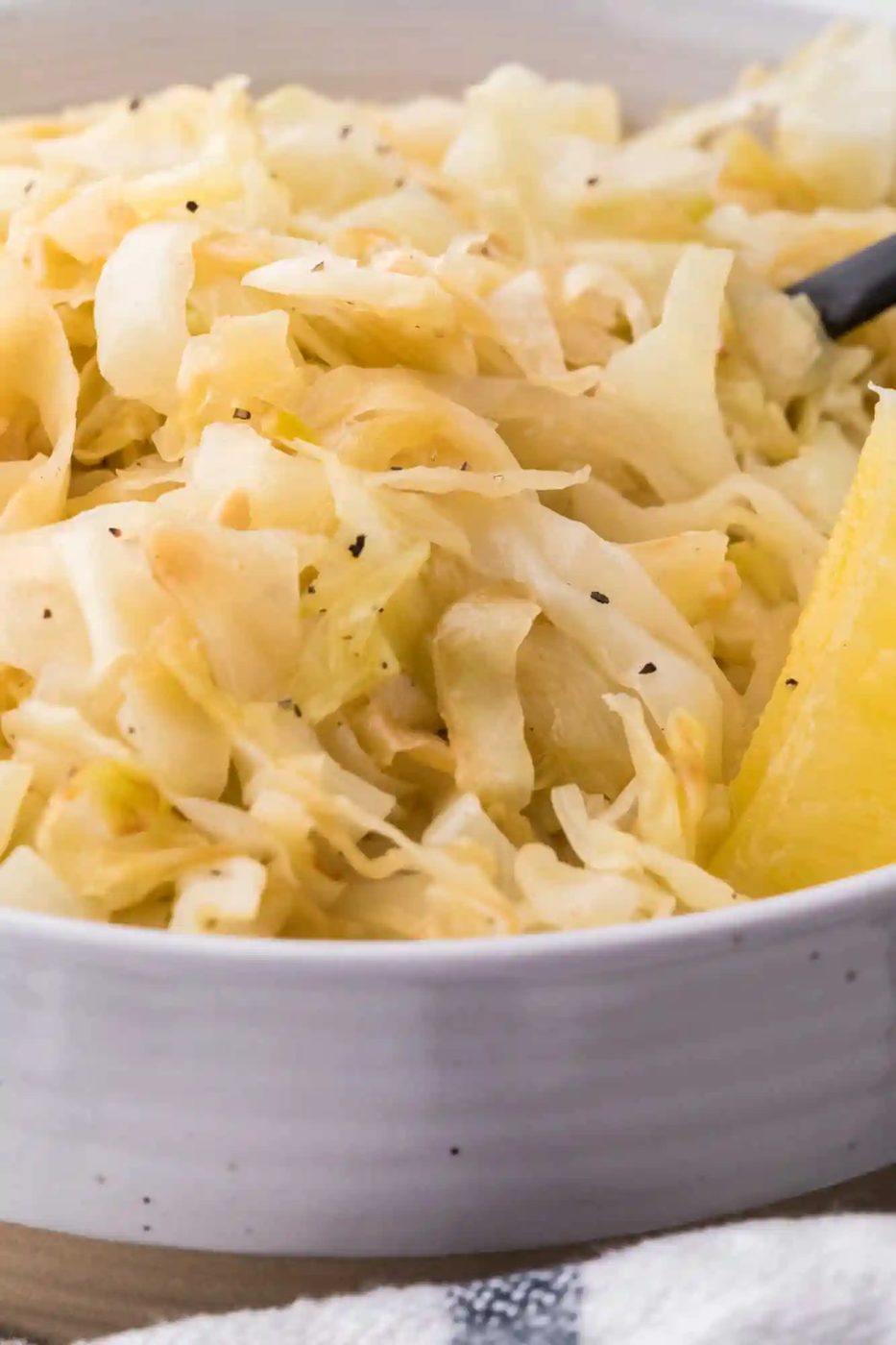
Cabbage 101
How to choose a cabbage:
- Look for a firm cabbage with good color.
- It should smell fresh and the inner leaves should be glossy.
- Avoid cabbages that have soft or discolored outer leaves.
How to store cabbage:
- To store uncooked cabbage, put the whole head in a plastic bag and refrigerate it.
- Cut/sliced cabbage loses Vitamin C more quickly than a whole head and the cut edges tend to discolor.
- A head of cabbage will keep for about 2 weeks in the crisper drawer of your fridge.
What goes in
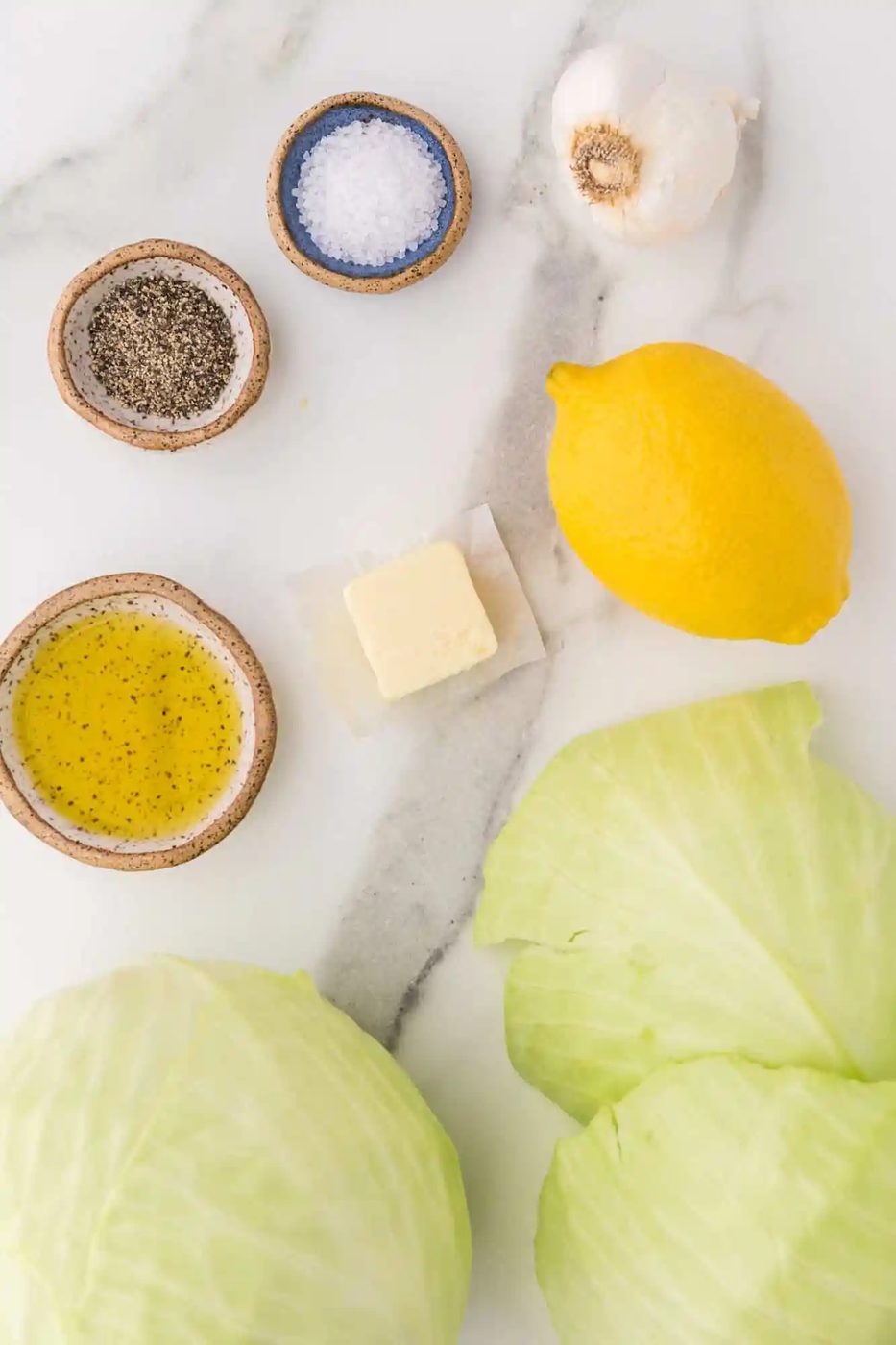
- Cabbage: This recipe is written for green cabbage. Buy a small head of cabbage, about one and a half pounds. If you can only find large cabbages, use half for this recipe and the other half to make coleslaw later on this week.
- Butter & Olive Oil: Use a combination of butter and oil to sauté the cabbage. Butter gives the cabbage good flavor; oil has a higher smoke point. Omit the butter and use all oil to make this dish vegan and non-dairy.
- Flavor Enhancements: Just a hint of garlic enhances the flavor. Be sure to salt and pepper the cabbage. We encourage you to try a squeeze of lemon juice on the cabbage. It perks up sautéed cabbage with bright acidic flavor.
How it comes together
Prep the cabbage. Remove the loose outer leaves and rinse the cabbage thoroughly under cool running water. Place the cabbage on a cutting board and, using a large sharp knife, cut it in half, then into quarters.
Next, remove the solid core from each quarter. Slice into the cabbage, using a triangular cut, and lift the core out.
Slice each quarter into thin slices, from top to bottom. It will look like a big pile of cabbage; in fact, you should end up with eight to ten cups of sliced cabbage. The cabbage cooks down quite a bit, to about 4 cups.
Cook the cabbage. You’ll need a large deep skillet or Dutch oven to sauté the cabbage. Put the butter and oil into the pan, and heat it until the butter melts. Add the garlic and cook it briefly, just until it starts to smell great.
Throw in all the cabbage, sprinkle it with salt and pepper, and stir well. It takes a bit of stirring to distribute the oil, garlic, and seasonings. Continue to cook the cabbage, giving it a stir now and then, for about fifteen minutes.
Cook it to your liking. The cooking time is a suggestion. Some folks like their cabbage to retain a bit of crispness and color; other prefer the cabbage to be soft and well-cooked. Use your own discretion. If you prefer the cabbage well done, cover the pan while the cabbage cooks. The cover will hold in the steam which helps the cabbage soften.
Add seasoning. Right before serving, spritz the cabbage with a squeeze of lemon juice. Stir it in and taste the cabbage. You may want to add a bit more salt and pepper. We write our recipes using a minimal amount of salt so that you can season it the way you prefer.
Ways to serve it
Sautéed cabbage is a great side dish. It’s a straightforward vegetable to prepare and the mild buttery flavor goes with pretty much anything. For a simple dinner, we serve it with baked chicken breast (ready in 30 minutes!) or garlic butter chicken bites. Try it with breaded pork chops (we love air fryer breaded pork chops, too!), orange glazed salmon, or Swedish meatballs. It goes well with grilled or barbecued meat, too.
Soaking Cabbage
Ordinarily, you don’t need to soak cabbage before cooking it; however, there are two reasons you may need to soak cabbage. If you cut into the cabbage and notice worms or insects, soak the cut cabbage in salt water for 10 to 20 minutes. This will drown unwanted critters. Home-grown cabbages often carry more pests because gardeners use fewer pesticides than commercial growers.
Some cooks soak sliced cabbage to crisp it up before adding it to a coleslaw or salad but soaking isn’t necessary when you are cooking cabbage.
Ways to change it
- Make fried cabbage. Omit oil and butter. Brown 3 to 4 strips of bacon cut into one inch pieces. Remove bacon from pan when crisp. Sauté cabbage in bacon grease. If desired, add 1 teaspoon cider vinegar or sugar to taste. Garnish with crisp bacon bits.
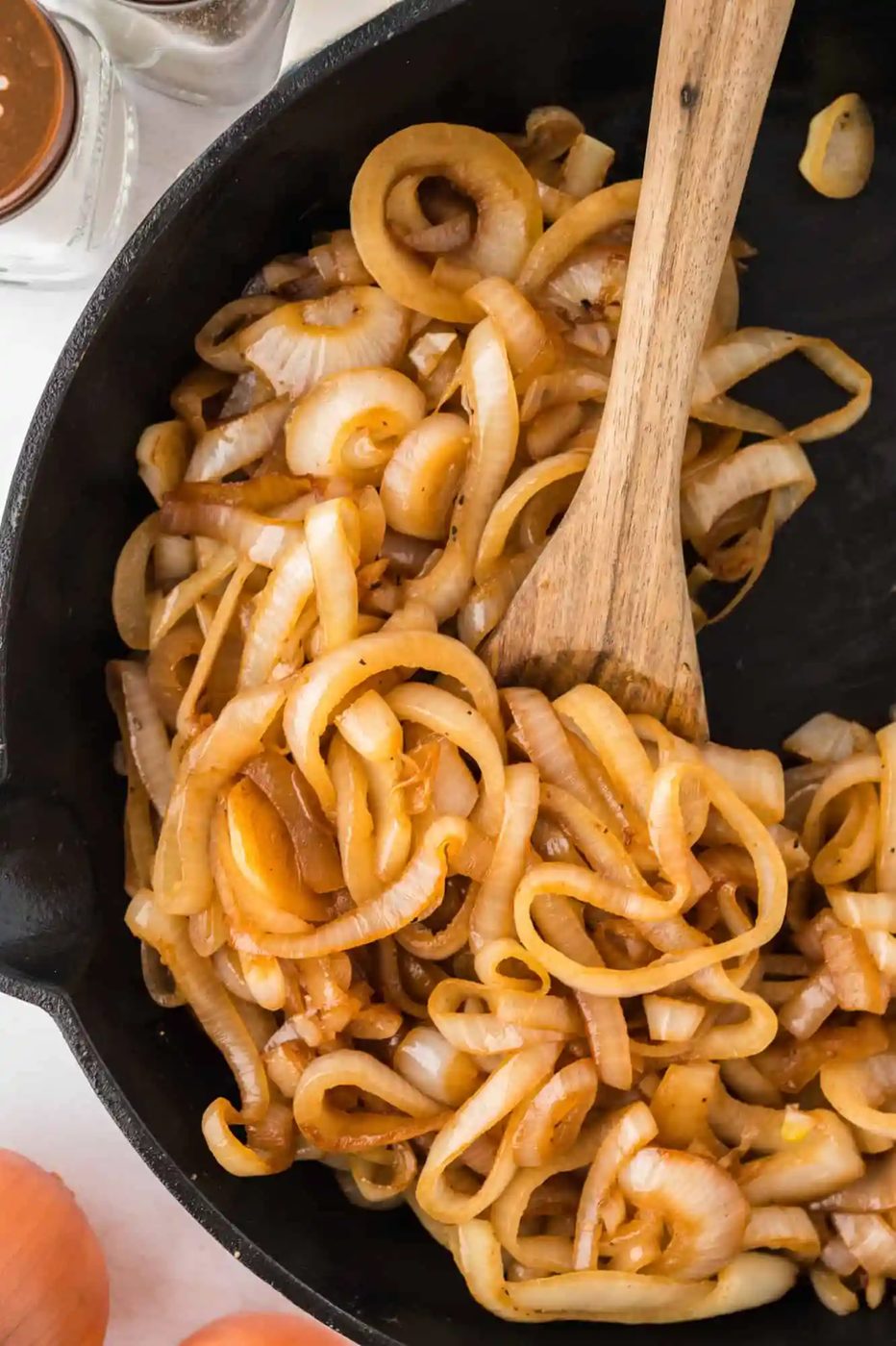
- Add onion. Cabbage and onions is a good combination. Cook one thinly sliced onion in the oil before you add the garlic, until it softens somewhat. Add the garlic, then continue with the recipe as directed.
- Skip the lemon juice. If you like, add a bit of cider vinegar or a teaspoon of sugar instead.
- Make soup! If you have lots of cabbage, try cabbage roll soup. It’s straightforward to mix and everyone loves it.
- Like red cabbage? Be sure to try our sweet and sour red cabbage.
Keeping leftovers
Refrigerate/Freeze: Leftover sautéed cabbage can be stored in a covered container and refrigerated for three to five days. If you have a lot of cabbage leftover, it can be frozen. Let it cool down, put it into resealable bags and flatten. Freeze for up to six months. There’s no need to thaw it before reheating.
Reheat: Reheat individual portions of cabbage in the microwave; larger portions can be warmed up in a skillet.
Leftover Love
Add flavor and nutrition to soups with leftover cabbage. Even canned soups benefit from the addition of cabbage.
- Yield: 8
- Prep: 10 minutes
- Cook: 17 minutes
- Total: 27 minutes
Ingredients
- 1 head green cabbage (about 1 ½ pounds)
- 1 tablespoon butter
- 1 tablespoon olive oil
- 1 clove garlic, minced (can be omitted)
- ½ teaspoon kosher salt
- ¼ teaspoon coarsely ground black pepper (or red pepper flakes)
- 2 teaspoons lemon juice (more if desired)
- lemon wedges for serving (optional)
Method
- Quarter the cabbage and cut out the core. Thinly slice the cabbage into ¼ to ½ inch slices. You should have about 8 to 10 cups (discard the core).
- In a large deep skillet, over medium heat, heat butter and olive oil, until butter is melted. Add garlic and cook, stirring constantly, for 1 minute until fragrant.
- Add cabbage, sprinkle with salt and pepper, stir well. Cook, stirring occasionally, for 15 minutes or until softened and lightly browned.
- Turn off heat, and stir in lemon juice. Taste and season with more salt, pepper, and lemon juice if desired. Serve garnished with lemon wedges, if desired.
Notes
Fried cabbage: Omit oil and butter. Brown 3 to 4 strips of bacon cut into one inch pieces. Remove bacon from pan when crisp, reserving grease. Sauté cabbage in bacon grease. If desired, add 1 teaspoon cider vinegar or sugar to taste. Garnish with crisp bacon bits.
Add onions: If you like, add one thinly sliced onion. Cook the onion in the oil until it begins to soften, add the garlic, stirring for one minute, then add the cabbage and continue with recipe as directed.
Storage: Leftover cabbage can be refrigerated for 3 to 5 days, or frozen for up to 6 months.