

Sautéed Cabbage Recipe
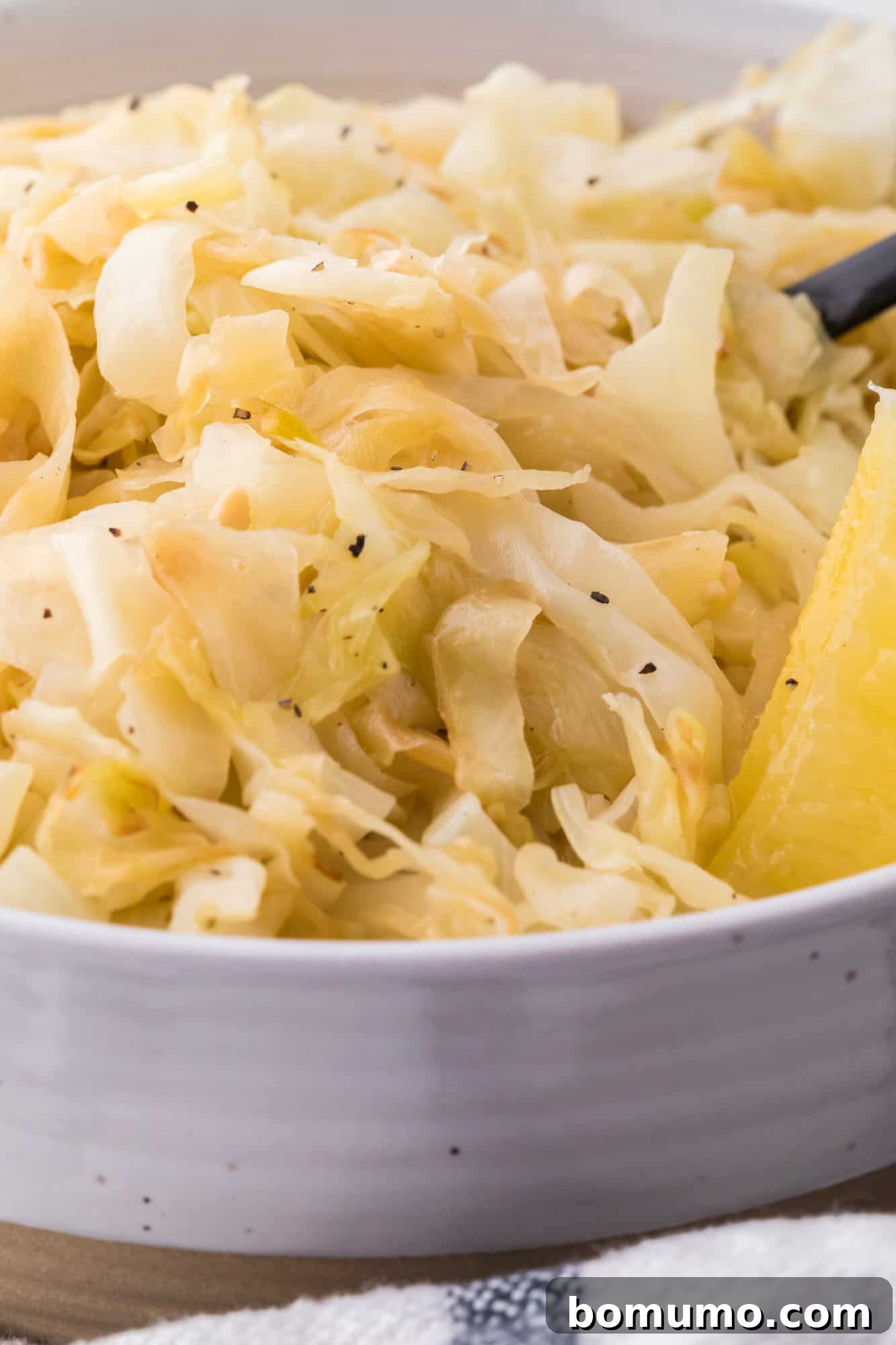
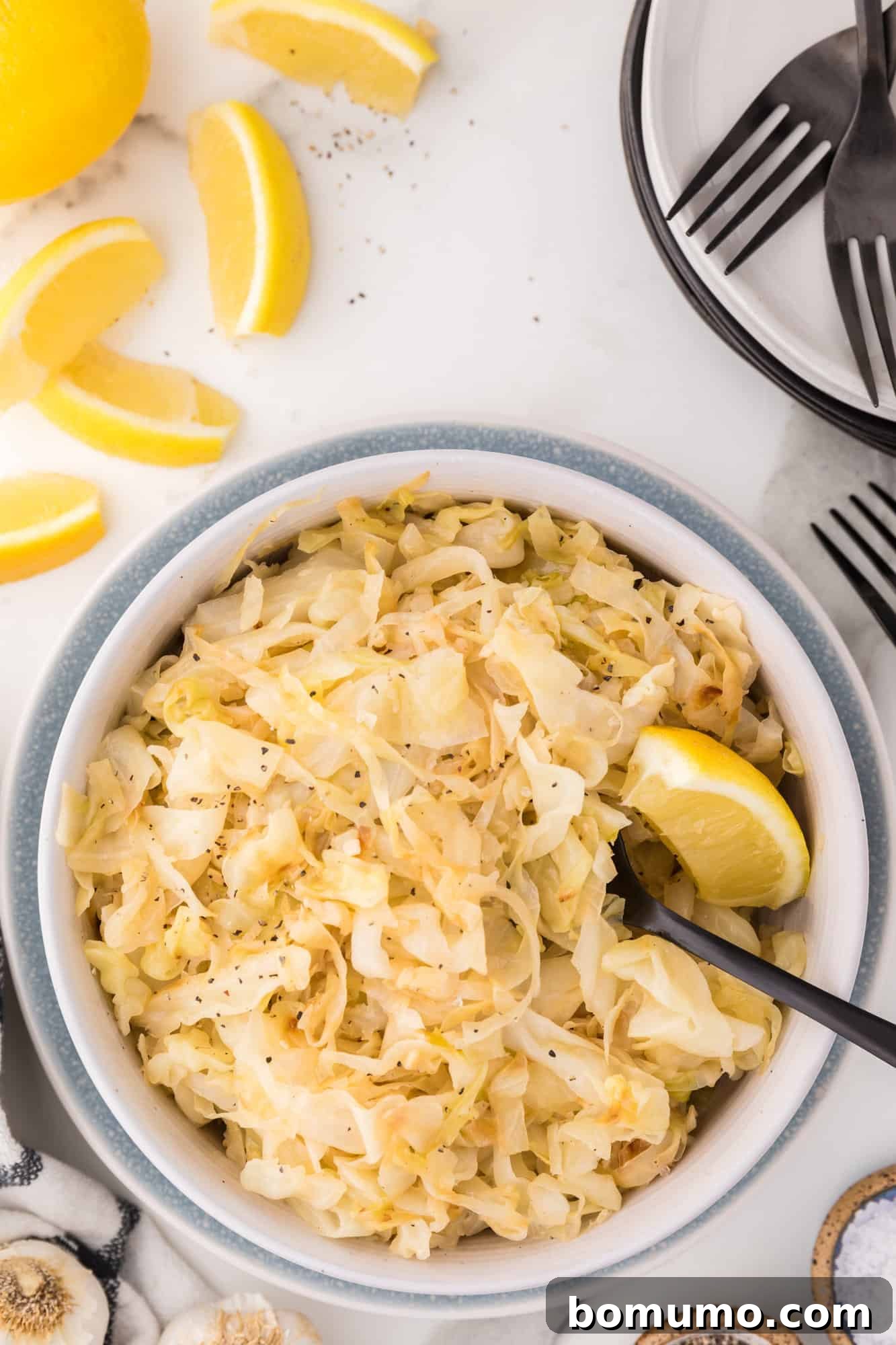
Why you’ll love it: This sautéed cabbage recipe is a quick and easy side dish. The tender, buttery cabbage pairs perfectly with almost any meal and is both nutritious and economical.
Prep Time: 10 minutes
Cook Time: 17 minutes
Servings: 8

The Benefits of Green Cabbage
Green cabbage often gets a bad reputation, largely due to memories of overcooked, mushy, and unpleasant boiled versions. However, properly cooked cabbage is a revelation. Think of it like the misunderstood Brussels sprouts, which have experienced a recent surge in popularity. (For inspiration, explore recipes like
roasted Brussels sprouts,
air fryer Brussels sprouts,
sautéed Brussels sprouts, or
cheesy Brussels sprouts.)
This recipe invites you to rediscover the deliciousness of cooked cabbage. Sautéing brings out a mild, almost buttery flavor. Cabbage is also a key ingredient in coleslaw, a crowd-pleaser enjoyed in many variations, from
creamy coleslaw to
vinegar coleslaw and even
Asian coleslaw salad.
While cabbage is often associated with St. Patrick’s Day (check out these
St. Patrick’s Day recipes), and you might find good deals on it in the spring, it’s a cold-weather crop, readily available in the fall, winter, and spring.
Easy Sautéed Cabbage: A Simple Side Dish
Surprisingly Delicious: When cooked correctly, cabbage is a revelation. It becomes tender, with a mild, almost buttery flavor. A touch of crispness remains, offering a delightful texture. Why should kale and spinach have all the fun?
Budget-Friendly: Cabbage is readily available in most grocery stores and is also inexpensive. It stores well in the refrigerator for up to 2 months, making it a convenient ingredient to keep on hand. Plus, it’s packed with nutrients!
Simple to Make: Sautéed cabbage is incredibly easy to prepare and can be ready in under 30 minutes. Just slice, cook until lightly browned, and enjoy this simple, flavorful side dish that complements most meals.
Customize It: This recipe includes a clove of minced garlic, a squeeze of lemon, and optional red pepper flakes. Feel free to adjust the seasonings to suit your preferences. More suggestions below!
Cabbage 101: Tips and Tricks
How to Choose Cabbage:
- Look for a firm head with good color.
- The inner leaves should appear glossy and fresh.
- Avoid cabbage heads with soft or discolored outer leaves.
How to Store Cabbage:
- Store an uncut head of cabbage in a plastic bag in the refrigerator.
- Cut or sliced cabbage loses Vitamin C faster than a whole head.
- A whole head of cabbage will stay fresh for about 2 weeks in your refrigerator’s crisper drawer.
Ingredient Breakdown
-
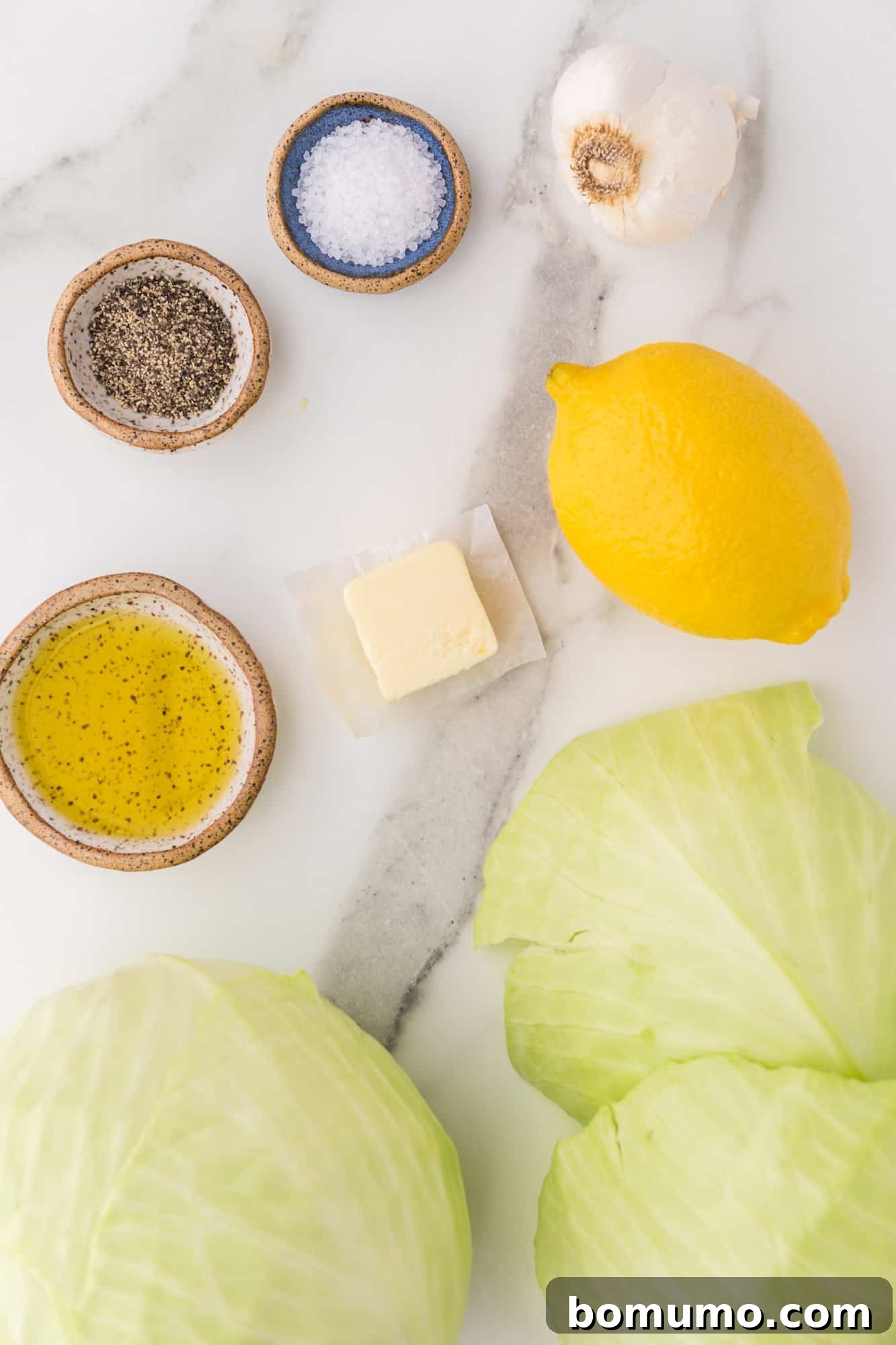
Cabbage: This recipe is designed for green cabbage. Purchase a small head, around 1.5 pounds. If you can only find larger heads, use half for this recipe and save the other half for a delicious
coleslaw later in the week. - Butter & Olive Oil: This recipe uses a combination of butter and oil for sautéing. Butter adds flavor, while oil has a higher smoke point. For a vegan and dairy-free option, omit the butter and use only oil.
- Garlic: A small amount of garlic enhances the flavor beautifully. Feel free to adjust the amount based on your preference. Garlic can be omitted if you don’t enjoy it.
- Salt & Pepper: Season to taste. Red pepper flakes can be substituted for black pepper to add a little heat.
- Lemon: Lemon juice is optional but highly recommended. It brightens the flavors with a fresh, acidic touch.
How to Make Sautéed Cabbage: Step-by-Step
This recipe guides you through making the perfect side dish. Here’s a simple breakdown of the process to have delicious sautéed cabbage ready in minutes.
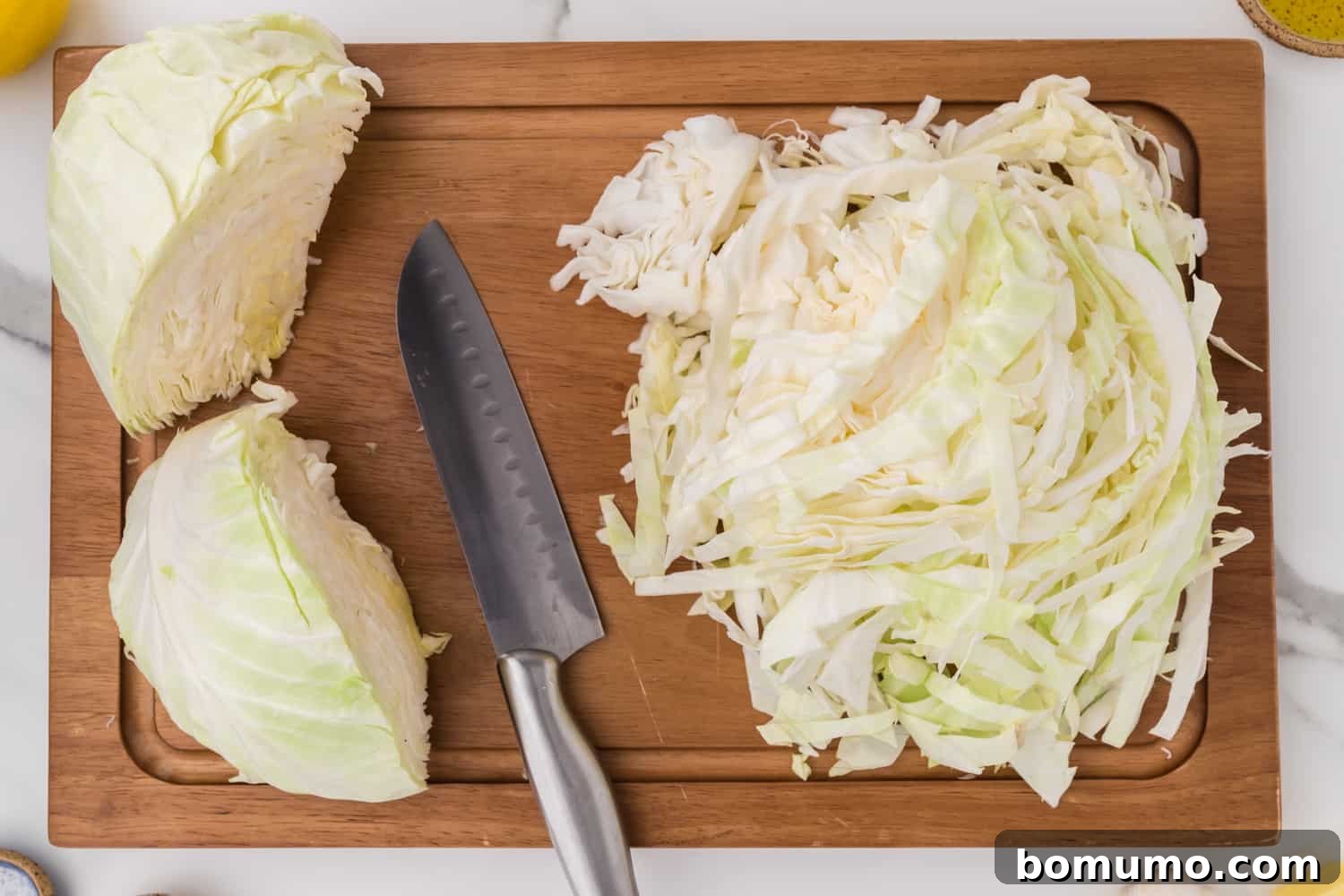
Prepare the Cabbage: Start by removing any loose outer leaves and thoroughly rinsing the cabbage under cold water. Place the cabbage on a cutting board, cut it in half, and then into quarters using a sharp knife.
Next, remove the tough core from each quarter. Make a triangular cut into the cabbage to remove the core. Then slice each quarter into thin slices, from top to bottom. You should end up with approximately 8-10 cups of sliced cabbage. Note that the cabbage will cook down quite a bit, yielding about 4 cups.
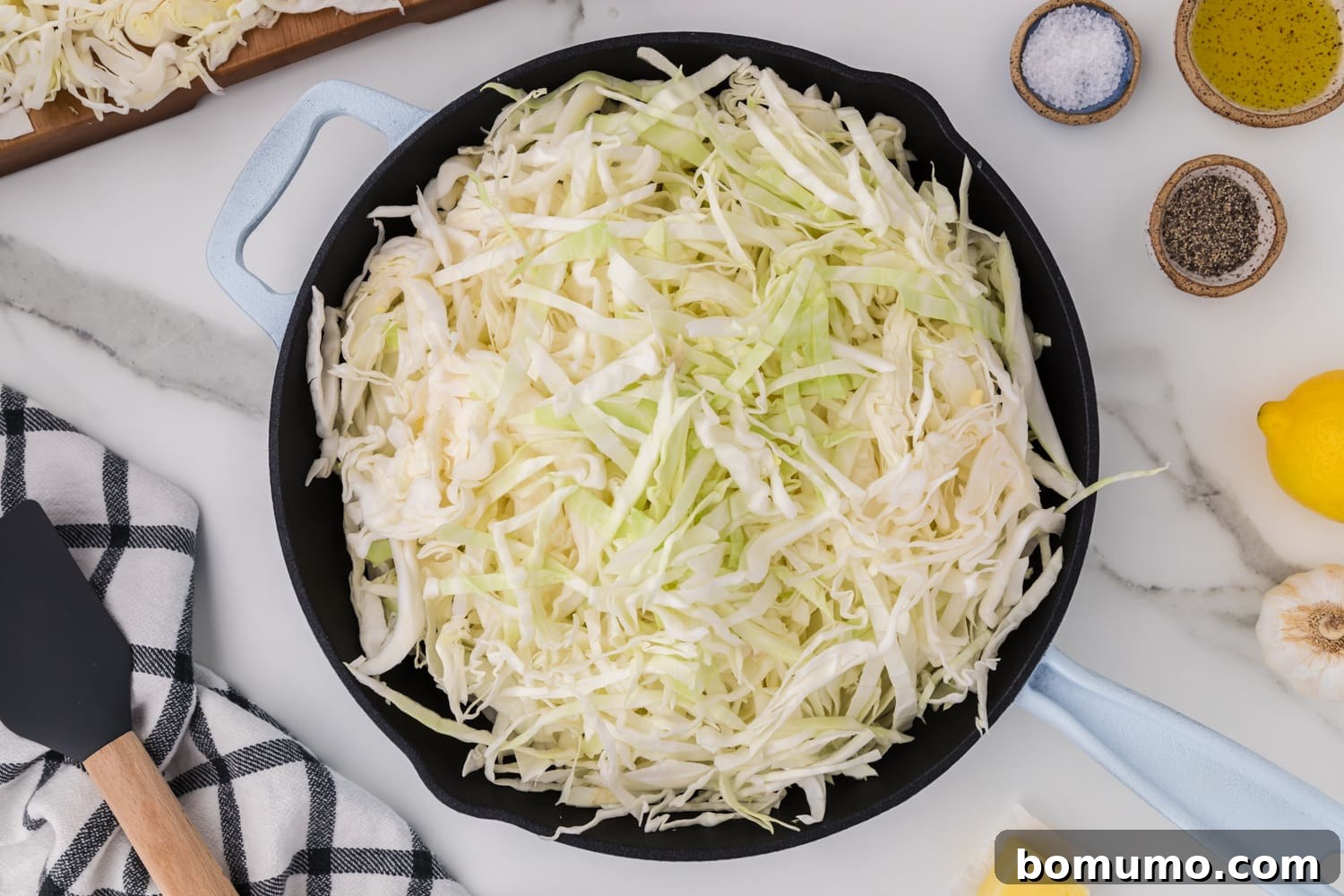
Cook the Cabbage: You’ll need a large, deep skillet or Dutch oven for sautéing. Heat the butter and oil in the pan over medium heat until the butter is melted. Add the minced garlic and cook briefly, just until it releases its lovely aroma (about 1 minute).
Add the sliced cabbage to the pan. Sprinkle with salt and pepper, and stir well to distribute the oil, garlic, and seasonings evenly. Continue cooking the cabbage, stirring occasionally, for about fifteen minutes.
Cooking Tips: The cooking time is a suggestion; adjust based on your preferences. Some people like their cabbage to retain a bit of crispness and color, while others prefer it to be very soft and well-cooked. Use your best judgment. If you prefer the cabbage very tender, cover the pan while it cooks to trap steam and help it soften.
Season and Serve: Just before serving, spritz the cabbage with a squeeze of fresh lemon juice. Stir it in and taste the cabbage. You may want to add a bit more salt and pepper to your liking.

Serving Suggestions
Sautéed cabbage makes an excellent side dish for a variety of meals. Its mild, buttery flavor is versatile and pairs well with many dishes. Try it with:
-
Breaded pork chops (or these delicious
air fryer breaded pork chops) - Orange glazed salmon
- Swedish meatballs
It is also a great accompaniment to grilled or barbecued meats.
Soaking Cabbage: When Is It Necessary?
In most cases, soaking cabbage before cooking isn’t needed. However, there are two situations where it might be beneficial: If you notice any small worms or insects after cutting the cabbage, soaking the cut cabbage in salt water
for 10-20 minutes can help remove them. Homegrown cabbage often has more pests than commercially grown. Soaking sliced cabbage to crisp it up before adding to coleslaw or salad is done by some, but is not needed if you plan to
cook the cabbage.
Recipe Variations
-
Fried Cabbage: For a classic flavor, omit the butter and oil. Brown 3-4 strips of bacon (cut into 1-inch pieces) until crisp. Remove the bacon and sauté the cabbage in the bacon grease. Add 1 teaspoon of cider vinegar
or a pinch of sugar to taste, if desired. Garnish with the crisp bacon bits. - Add Onion: Sautéed cabbage and onions are a perfect match. Cook one thinly sliced onion in the oil before adding the garlic, until softened. Add the garlic, cook briefly, then continue with the recipe.
- Skip the Lemon: If you’re not a fan of lemon, substitute with a teaspoon of cider vinegar or sugar instead.
-
Make Soup! With a surplus of cabbage, try
cabbage roll soup – it is easy and delicious. -
Red Cabbage: If you enjoy red cabbage, try my
sweet and sour red cabbage.
Storage & Reheating
Storage & Reheating
Refrigerate/Freeze: Leftover sautéed cabbage can be stored in a covered container in the refrigerator for 3-5 days. If you have a larger quantity, consider freezing it. Allow the cabbage to cool completely, then place it in resealable freezer bags, flatten them, and freeze for up to six months. No need to thaw before reheating.
Reheat: Reheat individual portions in the microwave. Larger portions can be reheated in a skillet over medium heat.
Leftover Inspiration
Leftover Inspiration
Add flavor and nutrition to soups with leftover cabbage. Even canned soups can be improved with the addition of cabbage.