Pork
Pork Tenderloin plus Port Wine Sauce & Roasted Grapes
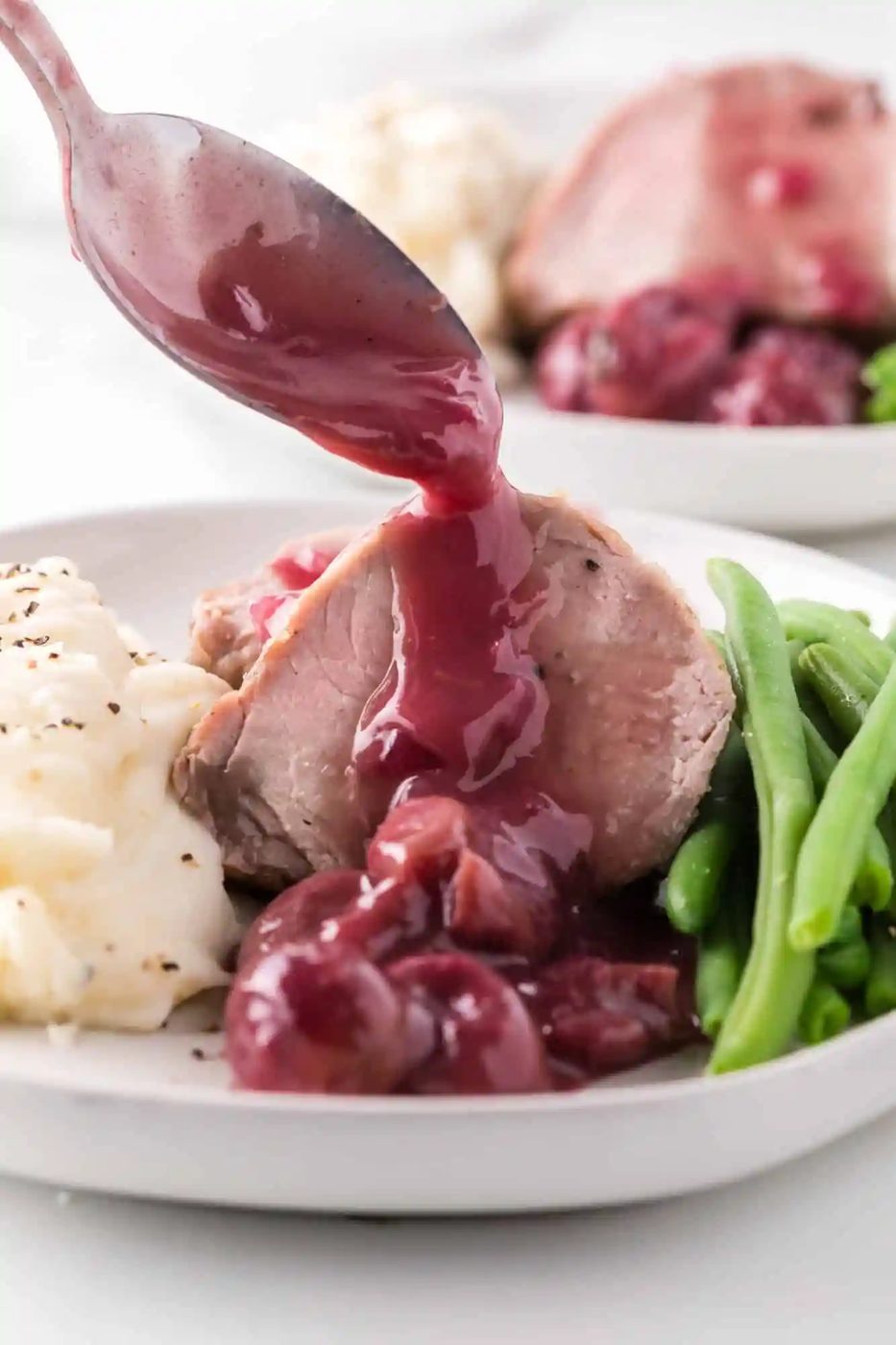
Juicy roasted grapes surround slices of succulent pork tenderloin with port wine sauce, subtly flavored with shallots, Dijon, and fresh thyme. This dish is memorable!
At a glance
What stands out: Juicy roasted grapes surround slices of succulent pork tenderloin with port wine sauce, subtly flavored with shallots, Dijon, and fresh thyme. This recipe is straightforward enough to cook but has an elegant presentation.
How long it takes: 50 minutes
Equipment you’ll need: oven-safe skillet, small sheet pan
Servings: 4
Juicy roasted grapes. Have you tried roasting grapes yet? We've roasted pretty much every vegetable under the sun (and we love ’em all) but roasting fruit is a fairly new venture for us and we have to say that we're enjoying every minute of it. Roasted red grapes are unexpectedly sweet and rich.
Roasting at high heat caramelizes the natural sugars in fruits and vegetables, making the flavor sweeter and more intense. Maybe you’ve already tried our ice cream terrine with roasted strawberries or grilled pineapple topped with from-scratch vanilla bean ice cream. So rich! Next on our list is roasted rhubarb and later on in the summer, roasted peaches.
Succulent pork tenderloin. We also love pork tenderloin. It’s a fast-cooking cut of pork and adapts well to sauces. Pork tenderloin is always tender, lean, and juicy.
Decadent wine sauce. The sweet port wine pan sauce loaded with roasted grapes is pretty memorable with the pork. This dressed up roasted pork tenderloin can easily be served to guests but it’s straightforward enough to make on weekdays too.
If you’re looking for a roasted pork tenderloin recipe without a sauce, try our herb crusted pork tenderloin. It’s one of our stand-by recipes and it always turns out evenly.
What goes in
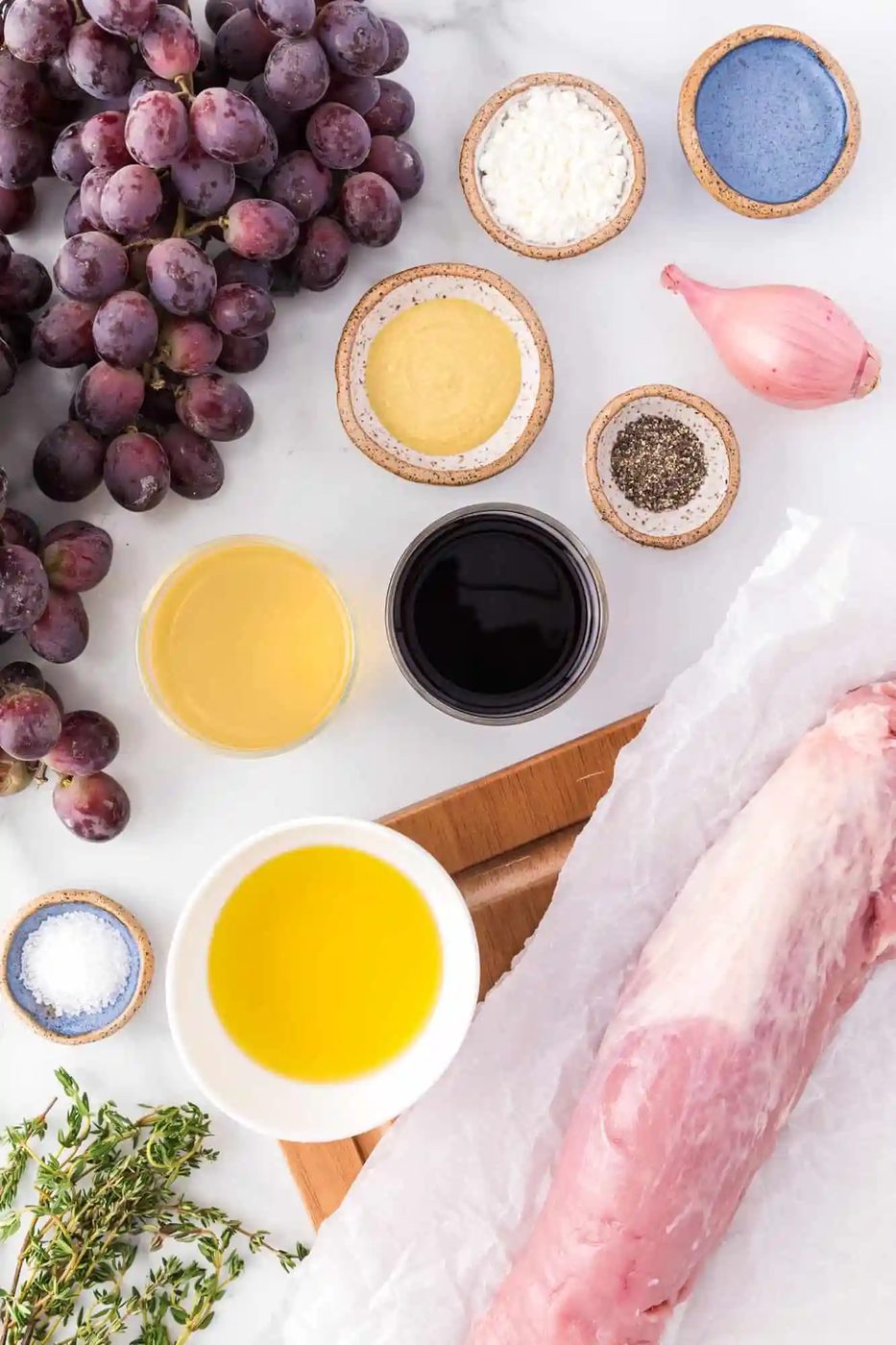
- Seedless Red Grapes: Not only are grapes sweet, juicy, and rich, they are high in nutritional value too. They are a good source of vitamin K, B vitamins, and copper, along with many other valuable nutrients. Seedless red grapes are a common table grape variety with crisp tender skin.
- Pork Tenderloin: This tender cut of meat is a lean source of protein. It’s long and narrow, ranging in weight from 12 oz. to 24 oz. Two tenderloins are often packaged together. Recommended serving size varies from 3 oz. to 8 oz.; we usually figure about 6 oz. per person.
- Shallots: Shallots are fine textured and a bit sweeter in flavor than most onions. The outer layer is reddish in color. You’ll need one large shallot. If you prefer, onion can be substituted for the shallot.
- Port Wine: Commonly regarded as a dessert wine, port wine is sweet red wine that’s fortified with brandy. There are different varieties but ruby port is often chosen for cooking. Keep it in the refrigerator after opening it.
- Chicken Broth: Choose low-sodium or no salt added broth if you can find it.
- Dijon Mustard: Creamy Dijon mustard adds flavor and helps thicken the sauce. In a pinch, you can use a grainy mustard but it will be more noticeable in the sauce. Common yellow mustard will not work in this recipe.
- Thyme: We like to use fresh thyme but if it’s not available, dried thyme is fine, too, although you should use half as much. Thyme is a woody herb that’s straightforward to grow.
- Cornstarch: A cornstarch slurry is made by mixing cornstarch and water. The slurry is cooked into the sauce to thicken it.
Pork Loin or Pork Tenderloin?
Pork loin and pork tenderloin are two different cuts of pork but are often confused. Both are boneless and lean but there are important differences.
Pork loins are larger in size than tenderloins, ranging from 7 to 10 pounds, with a thick fat cap on one side. Other names for pork loins: pork loin roast, New York pork roast, top loin pork roast, or center cut pork roast. Pork loins are usually roasted whole at a lower heat and take much longer to cook.
Pork tenderloins are long and narrow, weighing about 1 to 1½ pounds. They are often sold with 2 tenderloins per package. Pork tenderloins have a silverskin on one side that is removed before cooking. Tenderloins can be cooked in a variety of ways: roasted whole, sliced and sautéed, or grilled.
How it comes together
As we mentioned before, this isn’t a difficult recipe to make. It takes just under an hour to prepare. Allow time to cook any sides you’re preparing, too. Check out the side suggestions below.
Roast the grapes. Simply rinse the grapes to wash them and dry the excess moisture with paper towels or a clean towel. Toss the grapes with splash of olive oil and arrange them on a small rimmed sheet pan. We usually line the pan with parchment paper to make clean up easier.
Put the grapes in the oven to roast until they are softened, slightly wrinkled and juicy, about a half hour. Give them a shake every now and then so they roast evenly.
Cook the pork. While the grapes are roasting, get the pork started. Heat a large oven-proof skillet over medium-high heat. Season the pork with salt and pepper and when the pan is hot, sear the pork on one side for a couple minutes. Flip it over, and put the pan in the oven to finish cooking.
Roast the pork for 20 to 22 minutes, or until the internal temperature reaches 145°F. The pork should be just barely pink in the center. Try not to overcook the pork.
Carefully remove the skillet from the oven (remember the handle is hot!). Transfer the pork to a serving platter; tent with foil to keep warm.
Make the port wine sauce reduction. Now, moving on to final part of the recipe, you’re going to make a simple pan sauce thickened with a cornstarch slurry. Put the same skillet over medium heat and sauté the shallots until they are softened, just a couple of minutes, scraping the pan to remove the browned pork bits.
Add the port wine and cook for a few minutes, until it has reduced by half.
Stir in the broth, thyme, mustard, and grapes along with any juices that accumulated.
Bring the sauce to a simmer, add the cornstarch/water mixture, and cook, stirring constantly until the sauce thickens. Turn the heat off.
Slice the pork and serve. With a sharp knife, slice the pork horizontally into thick slices.
Garnish with the sauce and serve immediately.
Ways to serve it
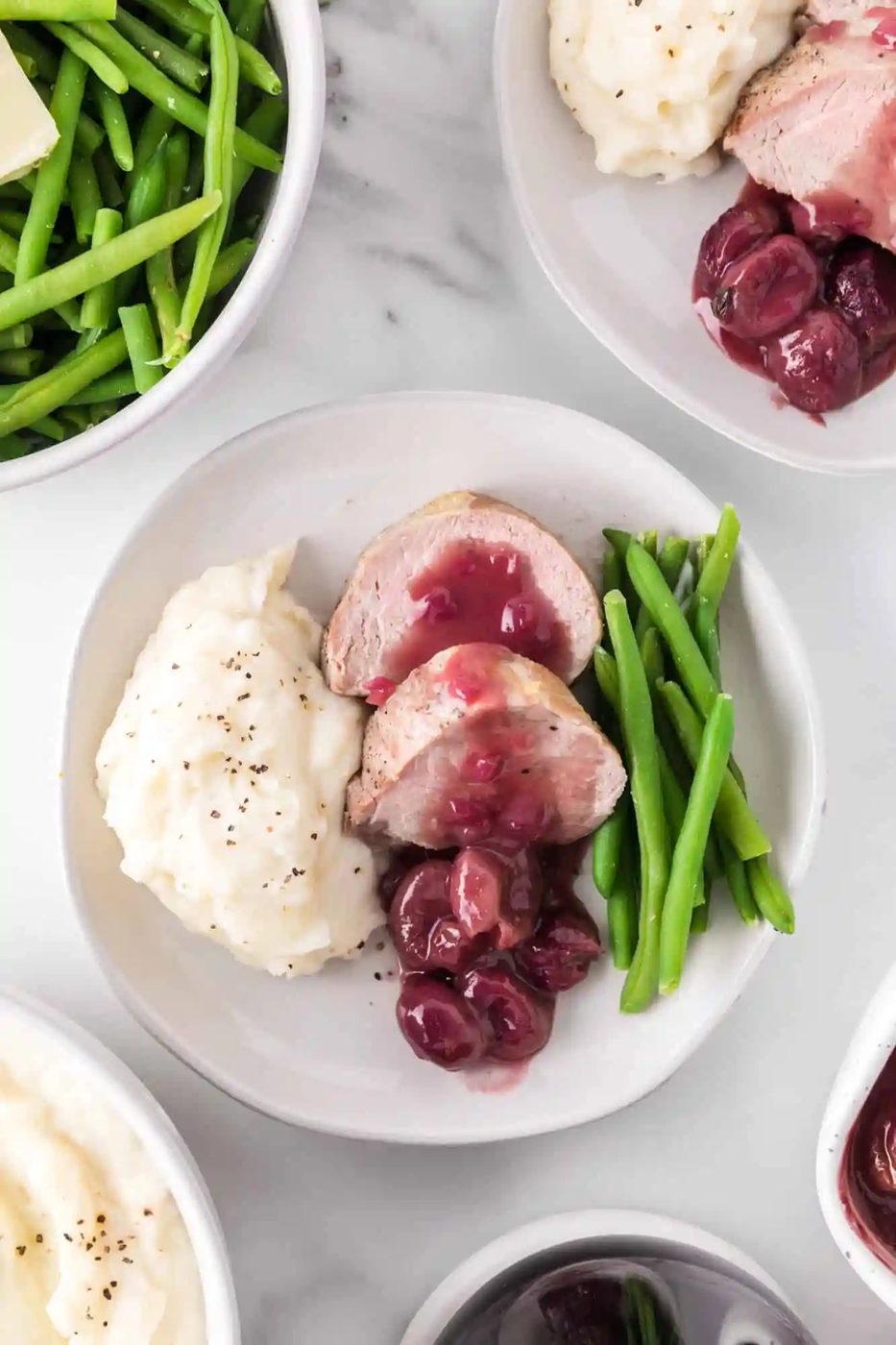
We like to serve the pork and sauce with mashed potatoes (as pictured) or mashed red potatoes. It’s also good with creamy polenta (try Instant Pot polenta!).
If you’re looking for a low carb idea, try roasted cauliflower or cauliflower rice. Diced roasted turnips are another great alternative and can be roasted in the oven along with the pork.
Serve a green vegetable, such as steamed green beans, roasted broccoli, or roasted asparagus. Smashed Brussels sprouts are an exciting side dish and can be roasted in the oven with the pork which is convenient.
For dessert, apple blueberry crisp topped with ice cream is always a good choice. Cream cheese filled brownies are memorable; snickerdoodle bars are filled with lots of warm cinnamon goodness.
Keeping leftovers
Refrigerate: If you have leftover pork tenderloin, cover and refrigerate it for up to three days. We usually slice the whole tenderloin and store it combined with the sauce.
Reheat: Single portions can be reheated in the microwave. Use 50% power to warm it up gently. Reheat larger amounts in a skillet over medium low heat until warmed through. Avoid overheating the pork. It tends to get somewhat tough when overcooked.
Free Meal Plan
Interested in a weekly meal plan that includes this recipe? Take a look at our Meal Plan #42 or Meal Plan #94. You’ll find a wholesome recipe for each weekday plus a categorized grocery list. Let us do the planning for you this week! We add a new meal plan weekly.
Browse Meal Plans- Yield: 4
- Prep: 10 minutes
- Cook: 40 minutes
- Total: 50 minutes
Ingredients
- 3 cups seedless red grapes
- 2 tablespoons extra-virgin olive oil, divided
- 1 pork tenderloin, trimmed ( 1 to 1½ pounds)
- ½ teaspoon kosher salt
- ½ teaspoon freshly ground pepper
- ¼ cup finely chopped shallots ( 1 large shallot)
- ½ cup port wine
- ½ cup reduced-sodium chicken broth
- 1 tablespoon Dijon mustard
- 1 teaspoon chopped fresh thyme
- 2 teaspoons water
- 2 teaspoons cornstarch
Method
- Position racks in the middle and lower third of the oven. Preheat oven to 425ºF.
- Toss grapes with 1 tablespoon olive oil. Spread grapes on rimmed baking sheet lined with parchment paper. Roast on the lower rack, shaking the pan occasionally (about every five minutes) to turn the grapes, until they are soft and juicy, 25 to 30 minutes.
- Meanwhile, trim pork to remove silver skin; season with salt and pepper. Heat remaining 1 tablespoon oil in a large ovenproof skillet over medium-high heat. Add the pork and brown on one side, about 2 minutes. Flip the pork over and put the pan into the oven on the upper rack. Roast the pork until just barely pink in the center and an instant-read thermometer registers 145°F, 22 to 24 minutes.
- When it is done cooking, place the pork on cutting board to rest for 5 minutes before slicing, tenting with foil to keep warm.
- Heat the same skillet over medium heat and add shallots. Cook until softened, scraping brown bits off bottom of pan, about 2 minutes. Add port wine and cook until reduced by half, 2 to 4 minutes. Add broth, mustard, thyme, roasted grapes and any accumulated juices; bring to a simmer.
- Whisk together water and cornstarch in a small bowl and stir into the pan sauce. Cook until thickened, 30 seconds to 1 minute.
- Slice the pork and serve with the grape sauce.
Notes
Nutrition information is calculated for a 6 oz. serving of pork, with roasted grapes and sauce.