
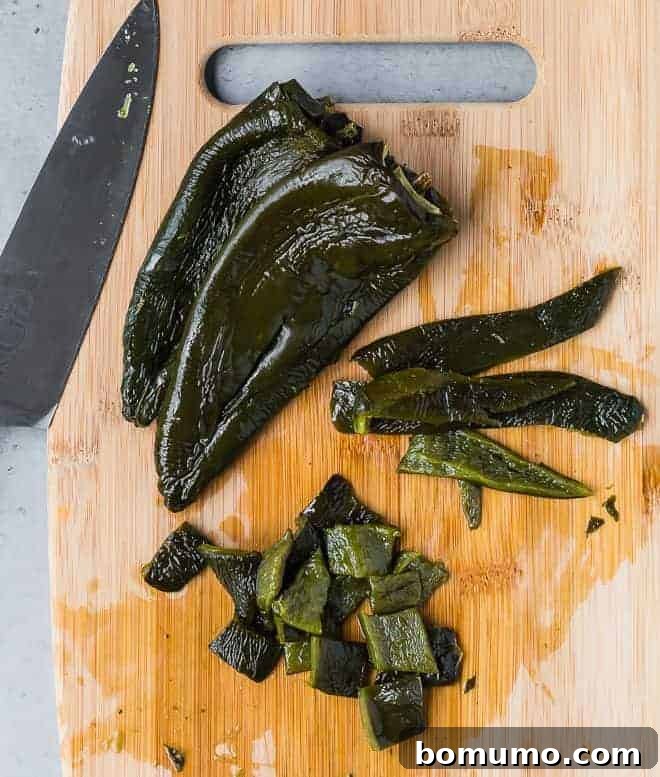
Recipe Overview: Master the Art of Roasting Poblano Peppers
Why you’ll love it: Unlock the full flavor potential of poblano peppers with these easy-to-follow roasting methods. This comprehensive guide will show you how to transform humble peppers into tender, smoky, and subtly spicy delights perfect for countless dishes. Discover four simple techniques – oven, broiler, grill, and stovetop – suitable for all varieties of peppers.
How long it takes: The preparation time is minimal, typically around 5 minutes, but the roasting duration will vary depending on your chosen method, ranging from 10 minutes for quick broiling to 40 minutes for a larger oven batch. Cooling and peeling add an additional 10-15 minutes.
Equipment you’ll need: A basic kitchen setup is all that’s required. Essential items include a sturdy baking sheet, reliable tongs for handling hot peppers, and plastic wrap or a resealable plastic bag to facilitate the crucial steaming process.
Servings: This guide provides flexible methods, allowing you to roast as many or as few peppers as your culinary needs dictate, ensuring fresh, flavorful results every time.
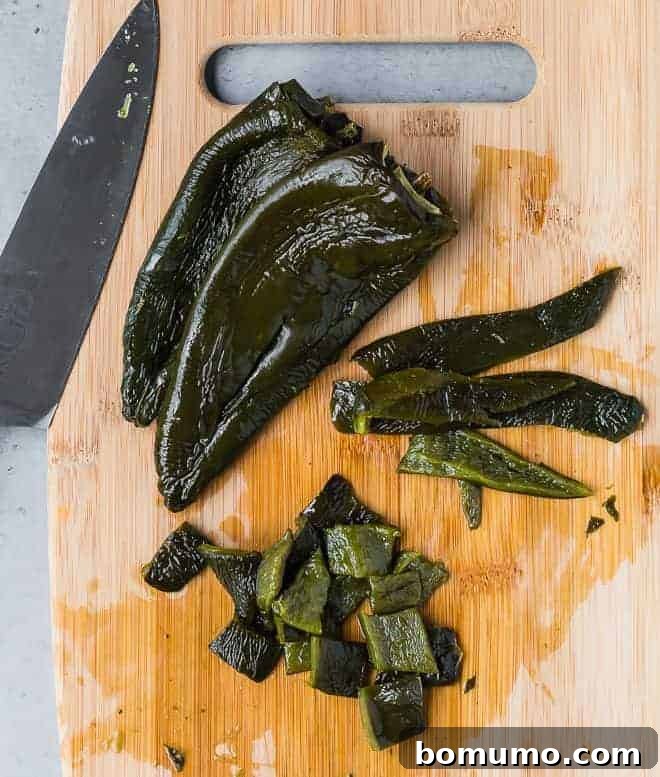
Discover the Deliciousness of Roasted Poblano Peppers
Poblano peppers, with their distinctive shiny dark green skin and firm texture, are a beloved ingredient in many kitchens, slightly smaller than bell peppers yet packed with unique flavor. They are conveniently available in most grocery stores, making them an accessible choice for home cooks looking to add a touch of authentic Mexican flair to their dishes.
Why Roasted Poblano Peppers Are a Culinary Essential
A symphony of flavors: Once roasted, poblano peppers transform into a culinary delight. Their natural sweetness intensifies, complemented by a rich, smoky depth and a gentle, lingering heat that excites the palate without overwhelming it. This tender transformation makes them incredibly versatile, perfect for elevating a wide array of recipes. Whether tossed into fresh salads, blended into hearty soups, or expertly stuffed for dishes like classic chile rellenos, roasted poblanos are simply delicious. They add immense flavor and a wholesome touch to many culinary creations. The pairing of roasted poblanos with cheese, for instance, is truly a match made in heaven, creating a creamy, piquant combination that’s hard to resist.
Did You Know? The Secret Life of Poblano Peppers
Poblano peppers become ancho chiles: It’s a fascinating transformation! As poblano peppers mature and fully ripen, their vibrant green hue deepens into a rich, dark red. When these ripe peppers are carefully dried, they are reborn as ancho chiles. Ancho chiles are a cornerstone of many beloved Mexican dishes, renowned for their mild, fruity, and smoky flavor. You might even have ground ancho chile powder in your spice rack right now, a testament to its widespread use and culinary significance.
Roasting elevates their inherent goodness: If you’re a fan of the profound flavors unlocked by cooking vegetables at high temperatures, you’ll adore roasted poblanos. Roasting is a transformative process that caramelizes the natural sugars within the peppers, intensifying their sweetness and developing complex flavors. This caramelization, combined with the browning, charring, and smoky notes imparted by the heat source, creates an unparalleled depth of flavor that raw peppers simply can’t offer.
Effortless peeling for smooth textures: Beyond flavor enhancement, roasting peppers offers a significant practical benefit: it makes them incredibly easy to peel! The high heat and subsequent steaming process (which we’ll cover in detail) loosen the tough outer skin, allowing it to slip off effortlessly. This results in a silky-smooth texture, ideal for sauces, purees, or simply enjoying the tender flesh of the pepper unadorned. It’s truly a piece of cake!
Pleasantly spicy, never overpowering: For those who appreciate a hint of heat but shy away from extreme spice, poblano peppers are an excellent choice. Their heat level is pleasantly mild, adding a warm complexity to dishes rather than an intense burn. You won’t find yourself scrambling for a glass of milk or water after enjoying these peppers; instead, you’ll experience a gentle warmth that enhances their rich, smoky profile.
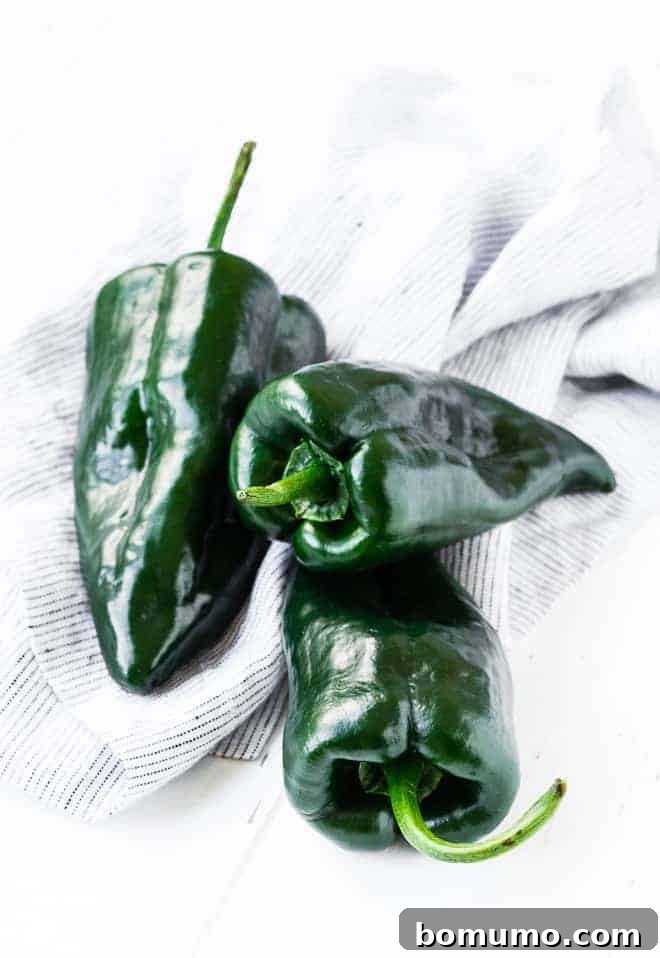
Understanding the heat: The Scoville Scale decoded: To put their mildness into perspective, poblanos typically register between 1,000 and 2,000 Scoville Heat Units (SHU) on the Scoville scale. This places them significantly milder than jalapeño peppers, which range from 2,500 to 8,000 SHU. While 2,000 SHU might sound like a substantial number, it firmly positions poblanos in the mild category for peppers. For context, the Scoville scale begins at zero for non-spicy bell peppers and ascends dramatically to 16,000,000 SHU for pure capsaicin, the compound responsible for a pepper’s heat. So, rest assured, poblanos offer a delightful flavor experience without the extreme fire!
Nutritional powerhouses: Beyond their incredible flavor, poblano peppers are a healthy addition to any diet. Each pepper contains less than 50 calories and is brimming with essential vitamins and minerals, including a significant amount of Vitamin C and Vitamin A. They are also a good source of dietary fiber and potassium. Incorporating them into your meals is a guilt-free way to boost your nutrient intake and enjoy delicious, wholesome food. For another quick and easy pepper recipe that’s perfect as an appetizer, consider trying my blistered shishito peppers!
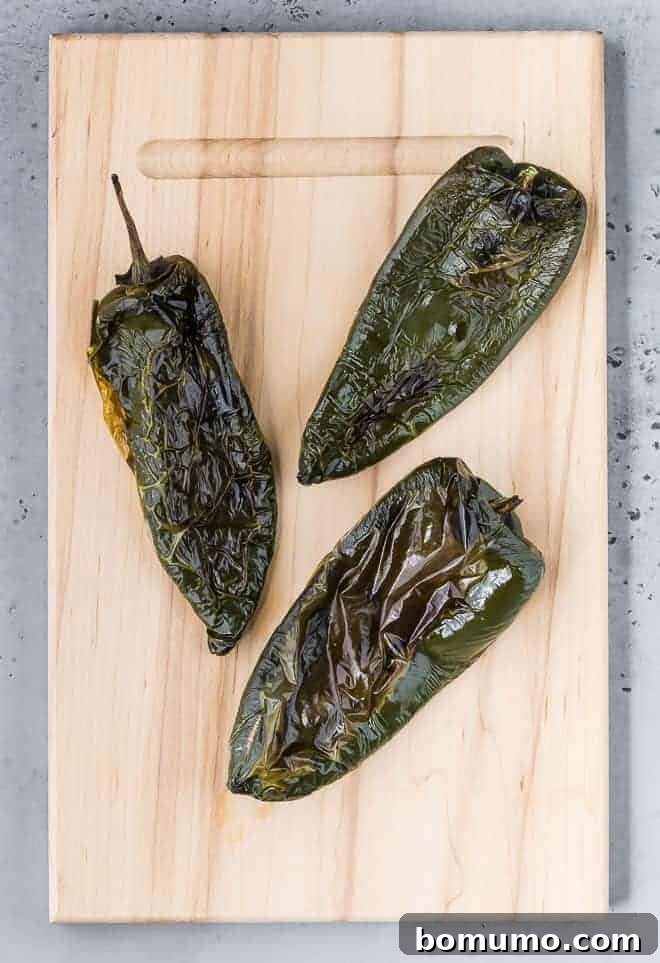
How to Roast Poblano Peppers: A Guide to Four Versatile Methods
Roasting poblano peppers is a simple process, and I’m excited to share four effective methods with you. Each technique offers unique advantages, allowing you to choose the best option based on your equipment, time, and desired batch size. Remember, these methods are not exclusive to poblanos; they can be successfully applied to roast other pepper varieties, including bell peppers, jalapeños, and anaheim peppers, yielding similarly delicious results.
Essential initial preparation: Regardless of the roasting method you select, proper preparation is key. Always begin by thoroughly washing your peppers under cool running water to remove any dirt or residues. Pat them completely dry with a clean towel or paper towels. For optimal roasting, leave the peppers whole with their stems intact – this makes them easier to handle with tongs during the cooking process and often helps with the peeling later.
Consider halving for convenience: If your recipe doesn’t require whole roasted peppers, or if you’re looking to significantly reduce the roasting time, you have the option to cut the peppers in half lengthwise before cooking. If you choose this approach, simply remove the seeds and membranes, then lay the pepper halves cut-side down on your baking pan. This eliminates the need to flip them halfway through cooking and ensures even charring on the skin side.
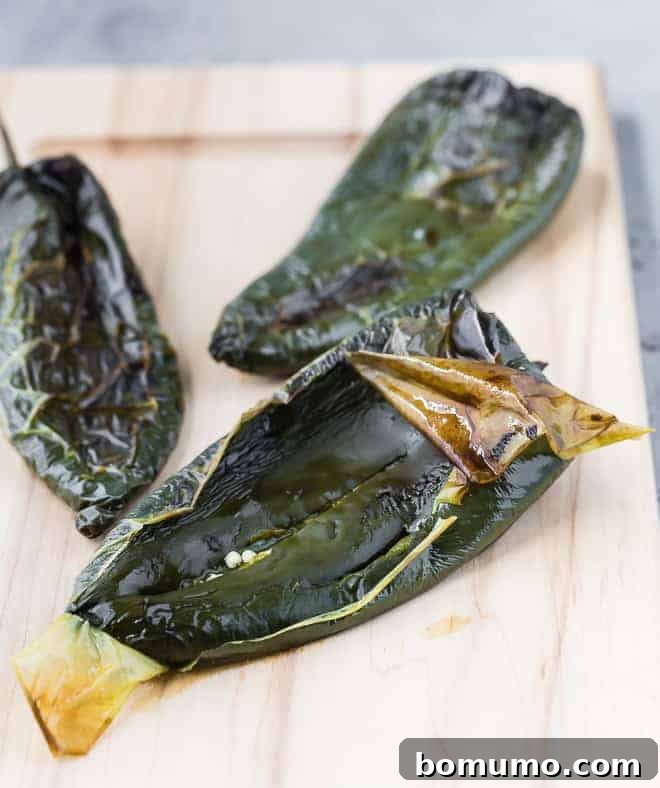
Method 1: Roasting Poblano Peppers in the Oven
Advantage: Oven roasting is arguably the most user-friendly method and is particularly ideal for preparing larger quantities of peppers simultaneously. If you only have a few peppers, a toaster oven can also be used effectively, offering convenience and efficiency.
Preparation for success: Begin by preheating your oven to a consistent 400°F (200°C). It is crucial for the oven to reach the target temperature before the peppers are introduced; placing them in a cold oven can lead to uneven cooking and potentially cause the bottoms to burn before the skins properly char. Line a baking pan with either aluminum foil or parchment paper – this simple step will make clean-up significantly easier. Arrange the washed and dried whole peppers on the prepared pan, ensuring they are not overcrowded, which allows for even heat distribution. Place the pan in the preheated oven.
Baking to perfection: Roast the peppers for approximately 35 to 40 minutes. Halfway through the cooking time, use tongs to carefully turn each pepper, ensuring all sides are exposed to the heat. Continue roasting until the outer skins are visibly blackened, blistered, and slightly charred, and the peppers feel tender and softened when gently squeezed with tongs.
Knowing when they’re done: You’ll observe clear indicators when your peppers are perfectly roasted. The outer layer should show distinct blistering and cracking, with areas of deep browning and black charring. Importantly, the skin will start to pull away from the pepper’s flesh, signaling that it’s ready for the next step.
The essential cooling and steaming phase: Immediately after removing the peppers from the oven, transfer them with tongs into a heat-safe bowl. Cover the bowl tightly with plastic wrap or a large plate, or simply place the hot peppers directly into a sturdy plastic bag and seal it. This traps the steam, which is vital for softening the skins further and making them incredibly easy to peel. Allow the peppers to cool in this steamy environment for 10 to 15 minutes, or until they are cool enough to handle comfortably.
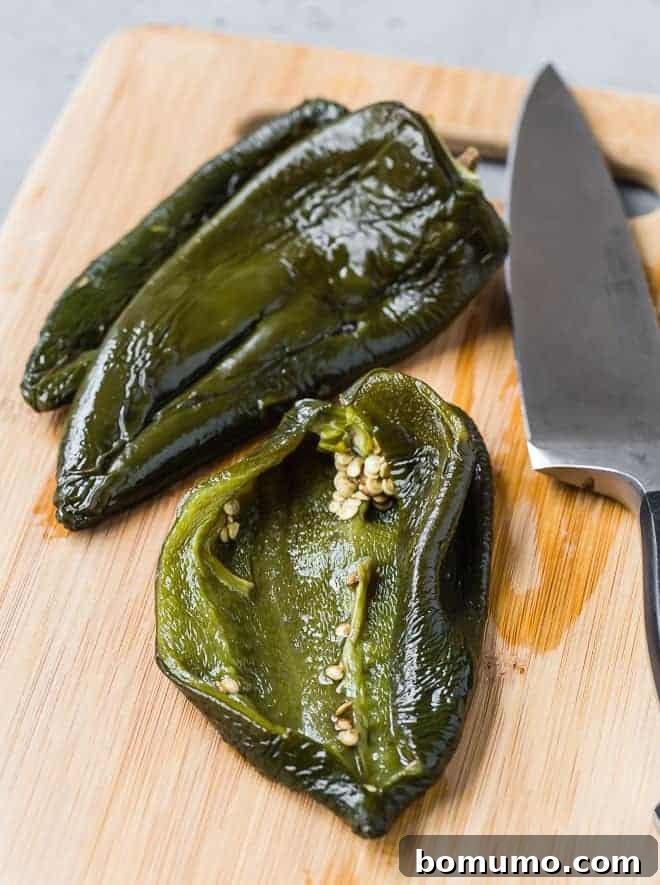
Effortless peeling: Once cooled, the tough outer skin should be loose and pliable. Gently pull the stem, and the core with seeds might come out easily. Alternatively, carefully cut the pepper in half lengthwise and remove the seeds and membranes. Using your fingers or a paper towel for grip, simply rub off the softened outer skin. Discard the skin, and your beautifully roasted poblano peppers are ready to use!
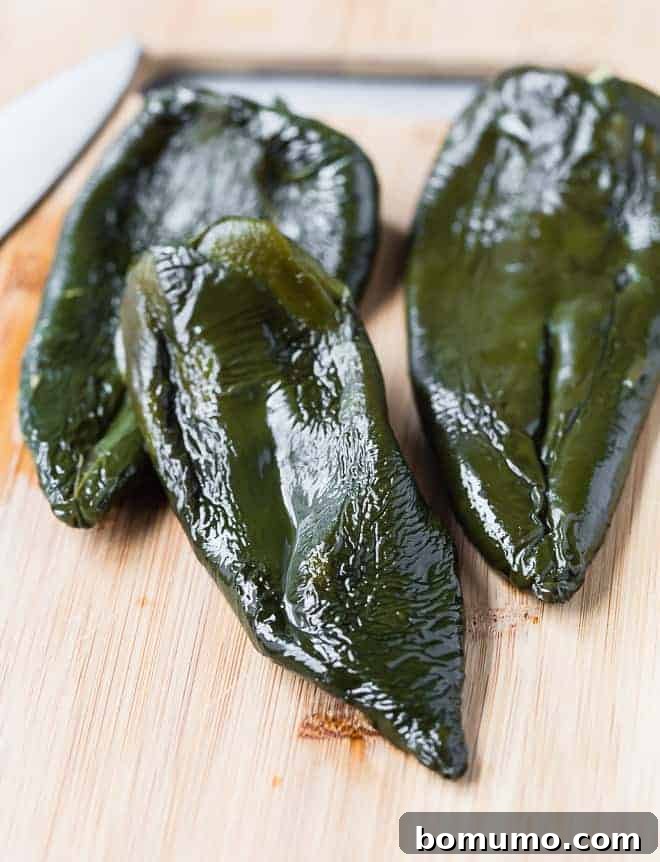
Method 2: Roasting Poblano Peppers Using the Broiler
Advantage: Broiling offers a significantly faster roasting time compared to conventional oven baking, making it an excellent choice when you’re short on time. However, this method demands constant vigilance, as peppers can char very quickly under direct high heat.
Preparation and setup: Adjust your oven rack so it’s positioned approximately 6 inches from the broiler flame (or heating element). Preheat your oven broiler (or toaster oven broiler) to its highest setting, typically 500°F (260°C). Place the whole, washed, and dried poblano peppers on a baking sheet. As with oven roasting, lining the sheet with aluminum foil will simplify the post-cooking cleanup.
Broiling for rapid charring: Carefully slide the baking pan under the preheated broiler. Broil for about 10 minutes in total, but be prepared to flip the peppers with tongs every 2-3 minutes to ensure all sides achieve a good, even char. The goal is blackened, blistered skin on all surfaces. Do not leave the peppers unattended, as they can burn very quickly under the intense heat.
Cooling and steaming: Once the peppers are sufficiently charred, remove them from the broiler. Transfer them immediately into a bowl and cover tightly with plastic wrap, or place them into a resealable plastic bag. This crucial steaming step allows the skins to loosen effectively. Let the peppers cool for 10 to 15 minutes, or until they are comfortable to handle.
Peeling for a smooth finish: When the peppers are cool enough, the skin should peel away with ease. Gently remove the stem and seeds. Using your fingers or a paper towel for better grip, rub off the charred outer skin. Discard the skin, and your broiler-roasted poblanos are ready to enhance your favorite recipes.
Method 3: Roasting Poblano Peppers on the Grill
Advantage: Grilling peppers is an excellent option, especially during warmer months, as it keeps the heat out of your kitchen. It also infuses the peppers with a distinct smoky flavor that’s hard to replicate with indoor methods. Plus, you can easily grill peppers alongside other items like meats or vegetables, making meal prep efficient.
Grill preparation: Preheat your grill (gas or charcoal) to a high temperature. Ensure the grill grates are clean to prevent sticking. Once hot, place the whole, washed, and dried poblano peppers directly onto the grill grates.
Grilling process: Use tongs to turn the peppers occasionally, allowing them to char evenly on all sides. The skin should blacken and bubble, indicating that the pepper is softening and cooking through. This usually takes about 2 to 3 minutes per side, totaling 8-12 minutes depending on grill heat and pepper size. It’s important to watch them carefully to avoid them turning completely white, which means they’ve been overcooked and lost their moisture, or worse, catching fire.
Cooling and steaming: As soon as the peppers are thoroughly charred and tender, remove them from the grill with tongs. Transfer them to a bowl and cover tightly with plastic wrap, or place them in a plastic bag. Allow them to steam and cool for 10 to 15 minutes. This step is non-negotiable for easy peeling.
Peeling and preparation: Once the peppers have cooled sufficiently, gently remove the stem and, if desired, the seeds. The blistered outer skin should rub off easily with your fingers or a paper towel. Discard the skin, and your deliciously smoky, grilled poblano peppers are ready for your culinary adventures.
Method 4: Roasting Poblano Peppers on a Gas Stove
Advantage: This method is incredibly quick and efficient, particularly if you only need to roast one or two peppers. It saves you the energy and time of heating a large oven or grill, making it perfect for small batches or impromptu cooking.
Safety first and preparation: Prioritize safety when working with an open flame. Protect your stovetop from any potential drips or charring by surrounding the burner with aluminum foil. This method requires a gas stove burner; unfortunately, it is not suitable for electric stovetops. Place a clean, dry poblano pepper directly over a medium-sized open flame.
Cooking over open flame: Using tongs, rotate the pepper continuously over the flame. The skin will quickly begin to blacken, blister, and bubble. Continue flipping until the entire surface of the pepper is evenly charred and softened. This usually takes just a few minutes. As with grilling, be careful not to let the pepper turn completely white or catch fire excessively, which would indicate overcooking or burning the flesh inside.
Cooling for easy peeling: Once roasted, carefully remove the pepper with tongs and place it in a bowl, covering it tightly with plastic wrap, or into a plastic bag. Let it cool and steam for 10 to 15 minutes, which will help loosen the charred skin effectively.
Final peeling: After cooling, the skin should be very easy to remove. Gently pull off the stem and, if desired, extract the seeds. Use your fingers or a paper towel to rub away the tenderized outer skin. Discard the skin, and your stovetop-roasted poblano is ready to be enjoyed.
Creative Ways to Use Your Roasted Poblano Peppers
Once you’ve mastered the art of roasting poblano peppers, a world of culinary possibilities opens up. Their smoky, sweet, and mildly spicy flavor profile makes them incredibly versatile. Here are some fantastic ways to incorporate these tender delights into your meals:
- Dips and Spreads: The rich flavor of roasted poblanos is perfect for creamy dips. Try this poblano queso dip – it’s incredibly creamy, flavorful, and always a hit at parties and gatherings. You’ll find it disappears quickly! You can also blend them into hummus or a creamy vegetable spread.
- Soups and Stews: Add a layer of depth and smokiness to your liquid dishes. We love to make chile relleno soup, which captures all the deliciousness of cheesy stuffed poblano peppers in a comforting bowl. They also work wonderfully in tortilla soup or any hearty bean stew.
- Salads and Bowls: Elevate your greens and grain bowls. Another one of my favorites is this vibrant southwestern farro salad, featuring roasted poblanos alongside sweet potatoes, black beans, and corn – so good and incredibly satisfying!
- Tacos, Burritos, and Fajitas: Dice or slice roasted poblanos and add them to your favorite Mexican-inspired dishes for an extra burst of flavor and a tender texture.
- Eggs and Breakfast Dishes: Incorporate chopped roasted poblanos into omelets, scrambled eggs, breakfast burritos, or frittatas for a delicious morning kick.
- Sandwiches and Wraps: Layer strips of roasted poblano into your sandwiches or wraps for a gourmet touch.
- Pizza Topping: A surprisingly delicious pizza topping, especially when paired with corn, onions, and cheese.
- Compound Butter: Blend finely chopped roasted poblanos into softened butter for a flavorful spread on bread, grilled meats, or corn on the cob.
- Sauces and Marinades: Puree roasted poblanos with other ingredients to create flavorful sauces for chicken, fish, or pasta, or use them as a base for marinades.
Storage Tips
Storage Tips
Proper storage is essential to enjoy your delicious roasted peppers for an extended period. With these simple tips, you can preserve their flavor and texture for future meals:
Refrigerate: Once your roasted peppers have cooled completely and been peeled, they can be stored in an airtight container or a resealable plastic bag. When properly sealed, they will maintain their freshness and flavor in the refrigerator for up to 5 days. This makes them perfect for meal prepping and having readily available ingredients for quick additions to your dishes.
Freeze: For longer-term storage, freezing is an excellent option. Place the cooled, peeled, and, if desired, cored roasted peppers into freezer-safe containers or heavy-duty freezer bags. You can freeze them whole, sliced, or even pureed, depending on how you plan to use them later. They will keep beautifully in your freezer for 10 to 12 months, allowing you to enjoy the taste of summer peppers all year round. For the best results, always thaw frozen peppers overnight in the refrigerator before use. While canning is another effective method for preserving peppers, it’s a more involved process best saved for a dedicated discussion!
More Kitchen How-Tos and Cooking Tips
How to Cook Acorn Squash (Savory or Sweet!)
How to Make Perfect Homemade Croutons
Baked Bacon Recipe – How to Bake Bacon Two Ways
How to Cook Snap Peas – So Easy and Delicious!
How to Roast Poblano Peppers: A Versatile Guide
Rachel Gurk
5 minutes
35 minutes
10 minutes
50 minutes
1
Saved
Pin
To save this recipe and receive weekly updates, please provide your email address.
(Note: This is a static representation; actual form functionality would require JavaScript.)
Ingredients
-
1
poblano pepper
(or as many as desired)
Instructions
Method 1: Roasting in the Oven (Recommended for Larger Batches)
-
Preheat oven to 400ºF (200°C). Place whole, washed, and dried poblano peppers on a baking sheet lined with foil for easy cleanup. Roast for 35 to 40 minutes, flipping once halfway through, until skins are blackened and blistered.
-
Immediately transfer peppers to a plastic bag or a bowl covered tightly with plastic wrap. Allow them to cool and steam for 10 to 15 minutes.
-
Once cool enough to handle, gently peel off the loosened skins using your hands or a paper towel. Discard the skins. If desired for your recipe, remove the stems and seeds.
Method 2: Broiling for Quick Roasting
-
Position an oven rack 6 inches from the broiler flame (or heating element). Preheat the oven broiler to high (about 500°F / 260°C).
-
Place whole poblano peppers on a foil-lined baking sheet. Broil for approximately 10 minutes total, flipping once or twice to ensure all sides are blackened and blistered. Watch carefully to prevent burning.
-
Transfer hot peppers to a plastic bag or a covered bowl to cool and steam for 10 to 15 minutes.
-
When cool enough, peel off the skins with your hands or a paper towel. Remove stems and seeds if your recipe requires.
Method 3: Roasting on the Grill for Smoky Flavor
-
Preheat your grill to a high temperature. Place whole, washed, and dried poblano peppers directly on the clean grill grates.
-
Using tongs, flip the peppers occasionally (every 3-4 minutes) until the skin blackens and bubbles on all sides. Avoid overcooking to prevent the flesh from turning white or catching fire.
-
Place grilled peppers in a plastic bag or a bowl covered with plastic wrap. Allow to cool and steam for 10 to 15 minutes.
-
Once cool enough to handle, peel off the charred skins. Discard skins and remove stems and seeds as needed.
Method 4: Roasting on a Gas Stovetop (Ideal for Small Batches)
-
Place a poblano pepper directly over an open gas stove flame on medium heat. Protect your stovetop from drips with foil if desired. (This method is not suitable for electric stoves).
-
Using tongs, continuously flip the pepper until its skin blackens and bubbles evenly on all sides. Be careful not to let it turn white from overcooking or catch fire.
-
Immediately transfer the hot pepper into a plastic bag or a bowl covered with plastic wrap. Let it cool and steam for 10 to 15 minutes.
-
When cool enough to handle, peel off the skin with your fingers or a paper towel. Discard the skin and remove stems and seeds if required for your recipe.
Notes
- Halve peppers for convenience: If your recipe does not require whole roasted poblano peppers, you can cut them in half lengthwise before roasting or broiling in the oven. This reduces roasting time significantly and eliminates the need to flip them. Simply place them cut-side down on a foil-lined baking sheet for optimal charring and easy cleanup.
- For a milder flavor profile: While poblanos are generally mild, removing the seeds and membranes after roasting will further reduce any residual heat, resulting in a sweeter, less spicy finished product.
Video Tutorial
Nutrition Information (Per Serving)
Serving:
1
pepper
,
Calories:
22
kcal
,
Carbohydrates:
5
g
,
Protein:
1
g
,
Fat:
0.2
g
,
Saturated Fat:
0.1
g
,
Polyunsaturated Fat:
0.1
g
,
Monounsaturated Fat:
0.01
g
,
Sodium:
3
mg
,
Potassium:
196
mg
,
Fiber:
2
g
,
Sugar:
3
g
,
Vitamin A:
413
IU
,
Vitamin C:
90
mg
,
Calcium:
11
mg
,
Iron:
0.4
mg
Nutrition information is automatically calculated and should be used only as an approximation.
Did You Make This Recipe?
Share your thoughts and a rating below! I love hearing what you think of this recipe!