Chicken
Poached Chicken – How To Poach Chicken
Learn how to make straightforward poached chicken: tender, juicy, and so versatile. Use it to make salads, sandwiches, casseroles, and more!
At a glance
What stands out: Learn how to make straightforward poached chicken. It’s tender, juicy, and so versatile. You can use poached chicken to make salads, sandwiches, casseroles, burritos, and more. It freezes well, too!
How long it takes: 35 minutes
Equipment you’ll need: shallow pan with cover, stove, instant read thermometer (optional)
Servings: 4 (easily doubled or tripled!)
Tender, juicy, evenly cooked chicken breasts all ready to use for weeknight meals –does this sound too good to be true? Once you know how to poach chicken, you’ll wonder how you ever lived without it!
Straightforward Poached Chicken
More economical.There’s no need to splurge on pricey, over-seasoned rotisserie chicken. Poached chicken is straightforward, convenient, and economical, especially if you buy a family pack of boneless skinless chicken breasts when they’re on sale.
Straightforward! You can make a big batch of poached chicken breasts in about thirty-five minutes and you’ll only have to use one pan that is straightforward to wash. Basically, all you need is chicken and broth, or even plain water. This is a simple how-to recipe that turns out evenly every time; once you’ve made it a few times, you probably won’t even need to refer to the recipe.
High in protein. Poached chicken is a good source of protein, with 24 grams of protein per 4 ounce serving. It’s low in calories, and doesn’t contain as much sodium as rotisserie chicken or other pre-cooked commercial chicken.
Freezes well. The recipe is written for four servings. It’s straightforward to double or even triple, if you have a large enough pan, so you can make lots of cooked chicken that will last all week. Poached chicken freezes well, too, and it’s so handy to add to recipes.
So versatile! When dinner time rolls around, cooked chicken is a time-saving building block. Take a look at the ideas and recipes listed below
Kirsten Said:
“Great instructions on how to poach chicken. The chicken was absolutely tender and shredded well when we used our hand mixer. Was so impressed because most often our poaching is dry. This was tender!”
See More Reader ReviewsWhat goes in
- Chicken: The recipe is written for two chicken breasts but it’s straightforward to add more if you like, as long as you have a large enough pan for the chicken to cook in a single layer. You’ll also find instructions on the recipe card for bone-in breasts, boneless skinless thighs, and bone-in thighs.
- Water or Broth: You’ll need enough water or broth (or a combination) to completely submerge the chicken.
- Optional Flavorings/Aromatics: If you’d like to flavor the chicken, add one or more of the following: lemon slices, bay leaf, garlic cloves, fresh herbs, shallots, or white wine. We often add salt and pepper, too.
Straight-Sided Skillet
This type of pan works evenly for poaching chicken. We use ours all the time! It works great for one pot pasta recipes, too.
Buy on AmazonHow it comes together
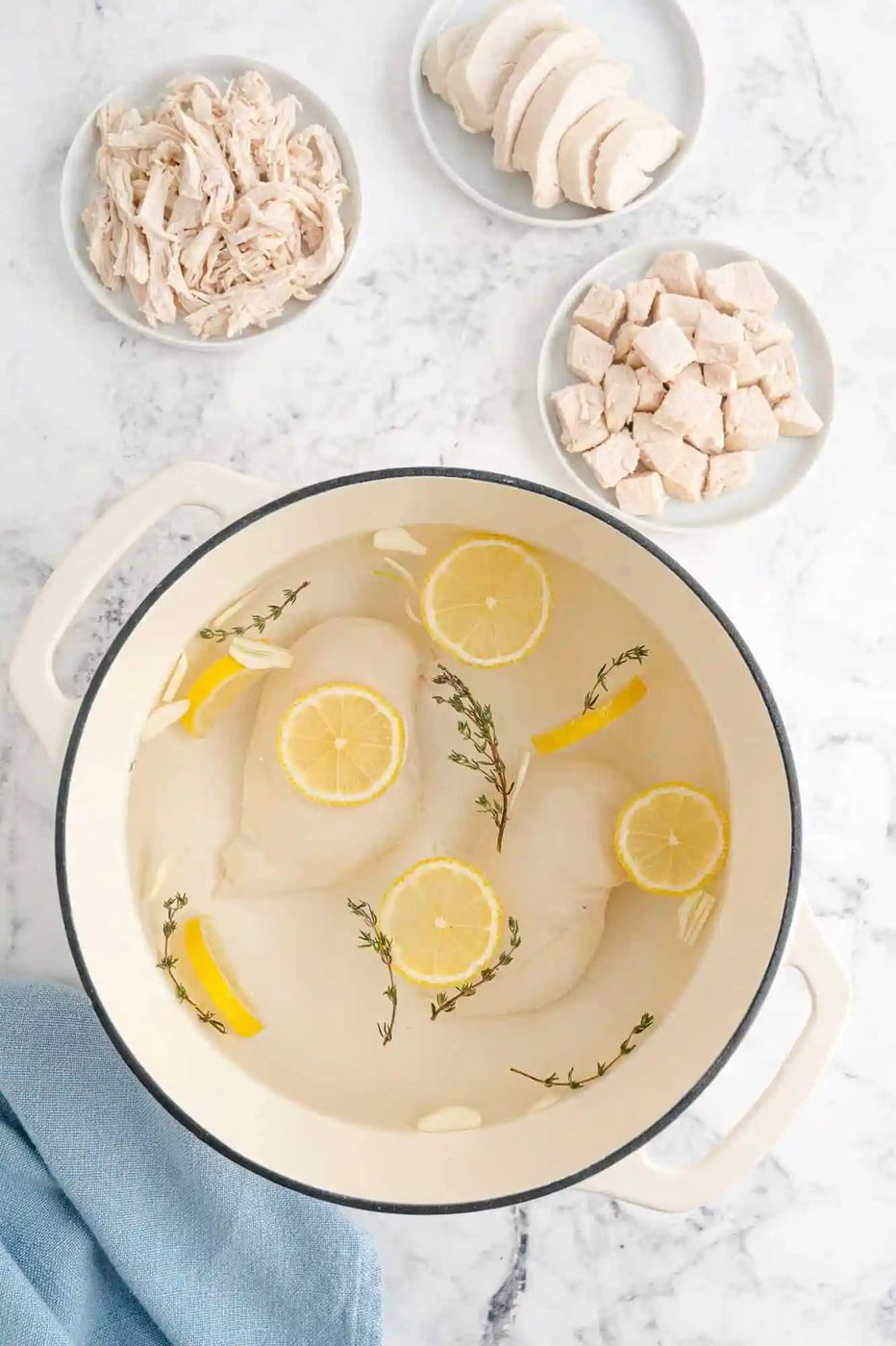
Put chicken into pan. Choose a wide, shallow pan that has a lid. There should be enough room for the chicken to mostly fit in a single layer. If some of the thinner edges overlap a little, that’s fine. Place the chicken into the pan.
Cooking Tip
The most important thing to remember when making poached chicken is “low and slow.” Keep the heat low and cook the chicken at a slow simmer. Poaching chicken is not the same as boiling chicken which can produce dry tough chicken.
Cover with liquid. Pour enough water or broth over the chicken so that it’s completely covered. We've given you a ballpark figure of about how much liquid you’ll need but it depends a lot on the size of your pan and the size of the chicken breasts.
Tip: Don’t be tempted to hurry things along by using hot water. It’s best to start with cool water right out of the tap or room temperature broth.
Add flavoring (optional). Add salt and any aromatics you’d like to flavor your chicken. For the photos, we used lemon, garlic, and fresh thyme.
Cook over medium heat. Turn the heat to medium. Again, don’t try to hurry things along by turning the heat way up. Remember, low and slow! Bring the contents of the pan to a gentle simmer. This should take about fifteen minutes but will depend on your pan and how much chicken is in it.
Boil, Simmer, Poach
What’s the difference? It’s all a matter of temperature. Boiling is the hottest, at 212°F. You’ll see large steaming bubbles coming to the surface. Simmering is next hottest, with a temperature of 185°F to 205°F. There will be tiny continuous bubbles rising. Poaching requires the coolest temperature, just 160°F to 180°F. There may be some movement or shimmer in the liquid but not bubbles.Reduce heat to simmer. Once the chicken comes to a simmer, reduce the heat to low and cover the pan.
Check to see if it’s done. After about 10 minutes, check the internal temperature of the thickest portion. A standby way to determine if the chicken is fully cooked is to use an instant read thermometer. Insert it into the thickest part of the chicken. The internal temperature should be 165ºF. If not, continue cooking a couple of minutes (keeping in mind that the temperature will rise a bit more while the chicken rests for 5 minutes) The chicken should be firm, opaque, and with no pink in the center.
Remove from pan and cool. Once the chicken is cooked, remove it from the pan using tongs and set it on a cutting board or platter. Allow it cool for 5 minutes or so before slicing, cubing, or shredding.
Using Chicken Poaching Liquid
The liquid that you poached the chicken in is like a light chicken broth and is great for soups or cooking grains, especially if you added aromatics (herbs, shallot, etc.). Strain out any solids using a fine mesh strainer, and refrigerate or freeze the broth until you need it. It will keep for a week in the refrigerator or up to 6 months in the freezer.
How to Use Poached Chicken
Salads. Make a simple salad, add sliced chicken and your favorite from-scratch salad dressing (or bottled dressing!) and dinner is ready.
Nachos, tacos, enchiladas. You can make a pan of nachos, add the chicken, and bake until warm and crispy, or make chicken tacos with salsa, guacamole, and cheese. We love this chicken enchilada skillet, too.
Sandwiches. Add the chicken to a bun with barbecue sauce, coleslaw, and a few slices of avocado. Try one of the chicken salad recipes below!
Pizza. Make a BBQ chicken pizza!
Soup. Add the chicken to canned vegetable soup for a straightforward meal (or better yet, from-scratch vegetable soup).
Pasta. Stir cooked chicken into a jar of pasta sauce, or from-scratch spaghetti sauce, and serve over spaghetti. Try chicken tetrazzini!
- Southwestern BBQ Chicken Salad (best chopped salad!)
- Curried Chicken Salad
- Dill Chicken Salad
- Southwest Chicken Salad Recipe
- Lighter Chicken Salad with Walnuts and Grapes – with video!
- Chicken Fajita Stuffed Spaghetti Squash
- A standby Cauliflower Nachos
- BBQ Chicken Burrito Bowls
- Creamy Chicken Rice Soup
Make Ahead
Meal prep: Poaching chicken is a wonderful food prepping tool. It’s straightforward to do and keeps well. Store it in the fridge or freezer for many nutritious meals in the future. We almost always have poached chicken on hand so we can easily make one of the recipes above.
Lunchbox idea: Deli meat is expensive, plus it has added preservatives and sodium. Why not replace it with poached chicken breast slices? It’s so much more economical and much better for you! Sliced poached chicken makes a hearty sandwich. Simply add mayonnaise, mustard, or your sandwich favorite toppings. Try DIY Chick-fil-A sauce!
Keeping leftovers
Refrigerate/Freeze: Cool poached chicken for a half hour or so before refrigerating or freezing in a tightly covered container or resealable bag. It will keep up to four days in the refrigerator or 4 months in the freezer.
- Yield: 4
- Prep: 5 minutes
- Cook: 25 minutes
- Total: 35 minutes
Ingredients
- 2 boneless skinless chicken breasts, about 8 ounces each (see notes)
- 6 cups water or chicken broth, more or less as needed
- 2 teaspoons kosher salt (reduce to 1 teaspoon if using low-sodium broth, ½ teaspoon if using full-sodium broth)
Optional flavorings:
- 1 lemon, cut into slices
- 1 bay leaf
- 2 cloves garlic, sliced
- fresh herbs (sprig of rosemary, fresh thyme, or fresh parsley)
- 2 shallots, peeled and cut in quarters
- 1 cup dry white wine
Method
- Pick a wide pan (with a lid) that is large enough for the chicken to fit in a single layer and be fully submerged in water or broth.
- Place chicken breasts in pan and cover with cold water or broth. The amount of liquid you need will depend somewhat on your pan and how much chicken you're cooking. Add salt and desired optional flavorings.
- Place over medium heat and bring to a simmer. This should take about fifteen minutes but will vary depending on your stove and pan. Don’t rush this step!
- When poaching liquid comes to a simmer, flip each piece of chicken over, reduce the heat to low and cover the pan.
- After about 10 minutes, check the temperature of the chicken using an instant read thermometer placed in the thickest part of the meat. When the chicken reaches an internal temperature of 165ºF, remove from heat and transfer chicken to a cutting board.
- Let chicken rest for 5 minutes before cutting or shredding.
Notes
Sodium: Although the amount of sodium looks rather high in the nutrition information, keep in mind that most of it is in the cooking liquid. Very little sodium is actually absorbed by the chicken.
To store: Cool poached chicken for a half hour or so before refrigerating or freezing in a tightly covered container or resealable bag. It will keep up to four days in the fridge or 4 months in the freezer.
Increasing the recipe: You can easily double the amount of chicken you poach as long as you have a pan large enough for the chicken to cook in a single layer, with room for liquid to cover them. It will take longer for the water/broth to come to a simmer but once it does, the cooking time will stay the same (about 10 minutes).
Bone-in skin-on breasts (about 16 ounces each): After water comes to a simmer, poach for 20 minutes.
Boneless skinless thighs (about 4 ounces each): After water comes to a simmer, poach for 8 to 10 minutes.
Bone-in skin-on thighs (about 7 ounces each): After water comes to a simmer, poach for 13 minutes.