
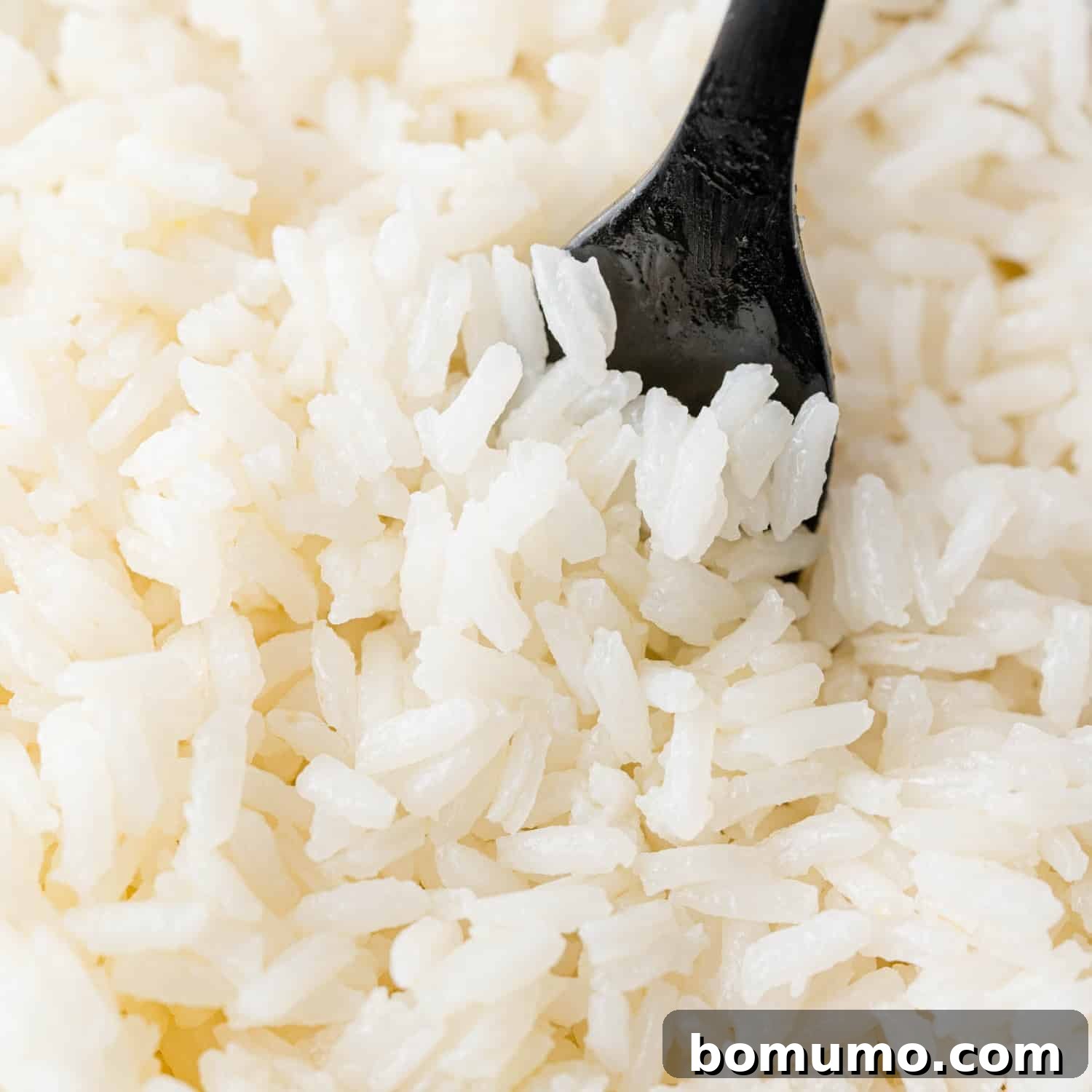
Unlock the Secret to Perfect Jasmine Rice: A Comprehensive Guide
Why You’ll Adore This Method: Are you tired of sticky, mushy, or dried-out rice? Say goodbye to guesswork and hello to consistently flawless jasmine rice. This simple, foolproof technique ensures every grain is light, fluffy, and aromatic – never soggy or stuck to the pan. Elevate your home cooking and impress your family and friends with rice that truly enhances any meal.
Time Commitment: Just 25 minutes from start to finish!
Essential Gear: A trusty saucepan with a tight-fitting lid is all you need.
Yield: This recipe produces approximately 3 cups of perfectly cooked jasmine rice, ideal for 3-4 servings.
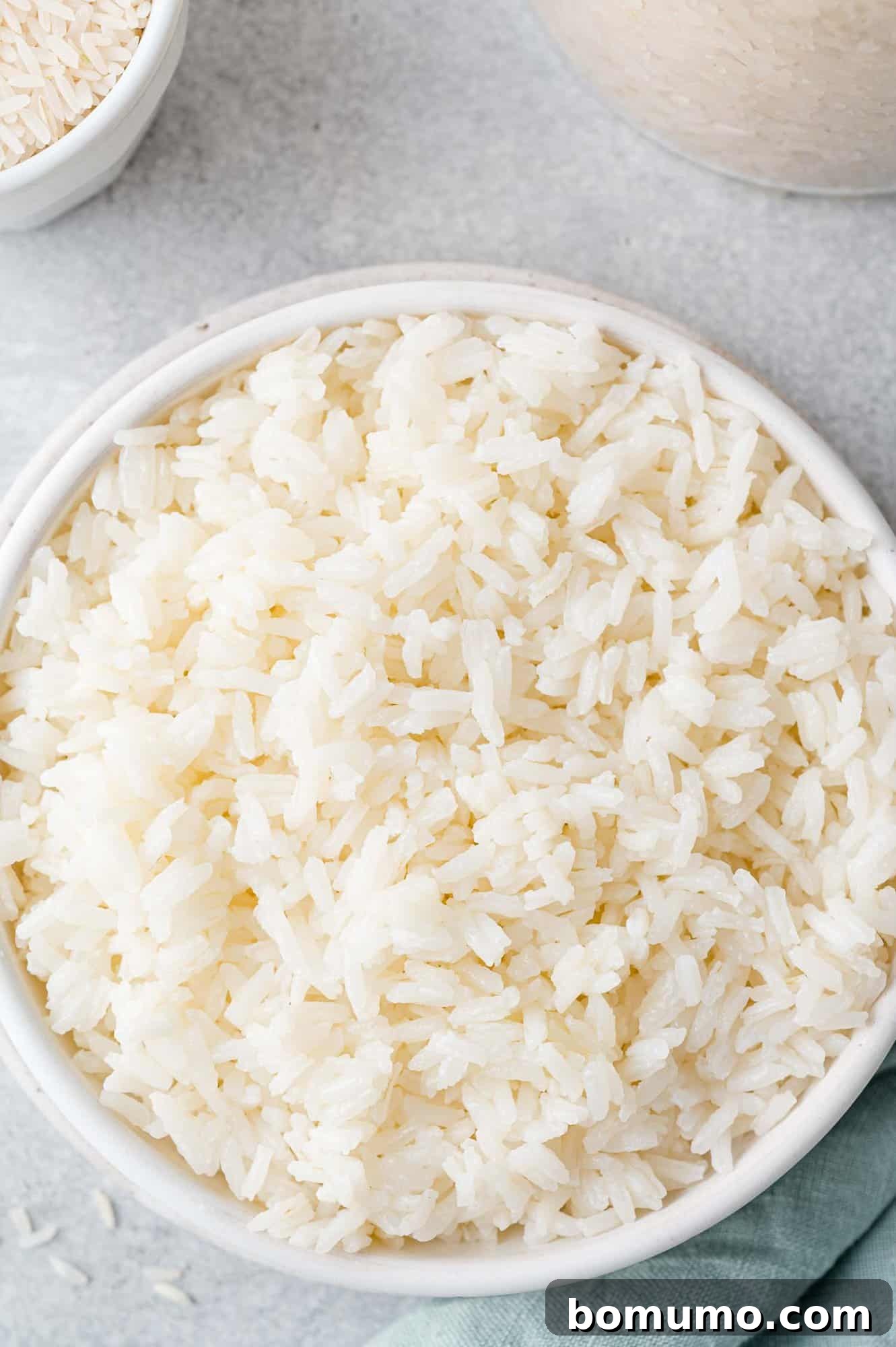
Jasmine rice, a culinary gem originating from the lush fields of Southeast Asia, is a long-grain white rice renowned for its delicate fragrance and subtly sticky texture when cooked. It’s an indispensable staple in Thai cuisine and beloved across many Asian cultures, acting as the perfect canvas to absorb the rich flavors of stir-fries, curries, and savory sauces. Its distinctive aroma, often compared to the nutty notes of basmati rice, sets it apart from other white rice varieties, contributing its own gentle character to any dish it accompanies.
While jasmine rice is celebrated for its qualities, its true potential can be easily undermined by improper cooking. The common pitfalls include rice that turns out disappointingly soggy and clumpy, or conversely, dry and stubbornly glued to the bottom of the pan. No one enjoys the frustrating task of scrubbing burnt-on rice from a saucepan! Fortunately, mastering the art of cooking jasmine rice to a consistently fluffy perfection is remarkably straightforward once you understand a few key principles. This comprehensive guide will walk you through a simple, effective method that guarantees success, transforming your humble rice into a sublime side dish every single time.
Why This Jasmine Rice Method Is Your New Go-To
There are countless ways to cook rice, but this particular method stands out for its reliability and simplicity. Here’s why it’s destined to become your favorite:
- Unwaveringly Foolproof Results: This isn’t just another recipe; it’s a meticulously tested technique designed for consistent success. By adhering to these clear, concise steps, you are guaranteed light, distinct grains that are perfectly moist without being wet, and never dry or crumbly. Say goodbye to rice roulette – this method delivers fluffy perfection every time.
- No Specialized Gadgets Required: Forget about needing an expensive rice cooker or fancy kitchen appliances. If you possess a standard saucepan and a lid that fits snugly, you have all the necessary tools to achieve restaurant-quality jasmine rice. While specialized equipment like a pressure cooker can produce excellent results (try my Instant Pot jasmine rice recipe for a convenient alternative), this stovetop method proves that exquisite rice is accessible to everyone with basic kitchen essentials.
- Emphasizes Natural Flavor: This approach prioritizes the inherent aroma and taste of the jasmine rice itself, allowing its unique profile to shine without being overshadowed by overly complex preparations. It’s about celebrating the simplicity and elegance of a perfectly cooked grain.
- Ideal for Busy Schedules: With minimal active cooking time and a predictable process, this method fits seamlessly into even the most hectic weeknight routines. You can confidently prepare your main course knowing your rice will be ready at the same time, perfectly cooked.
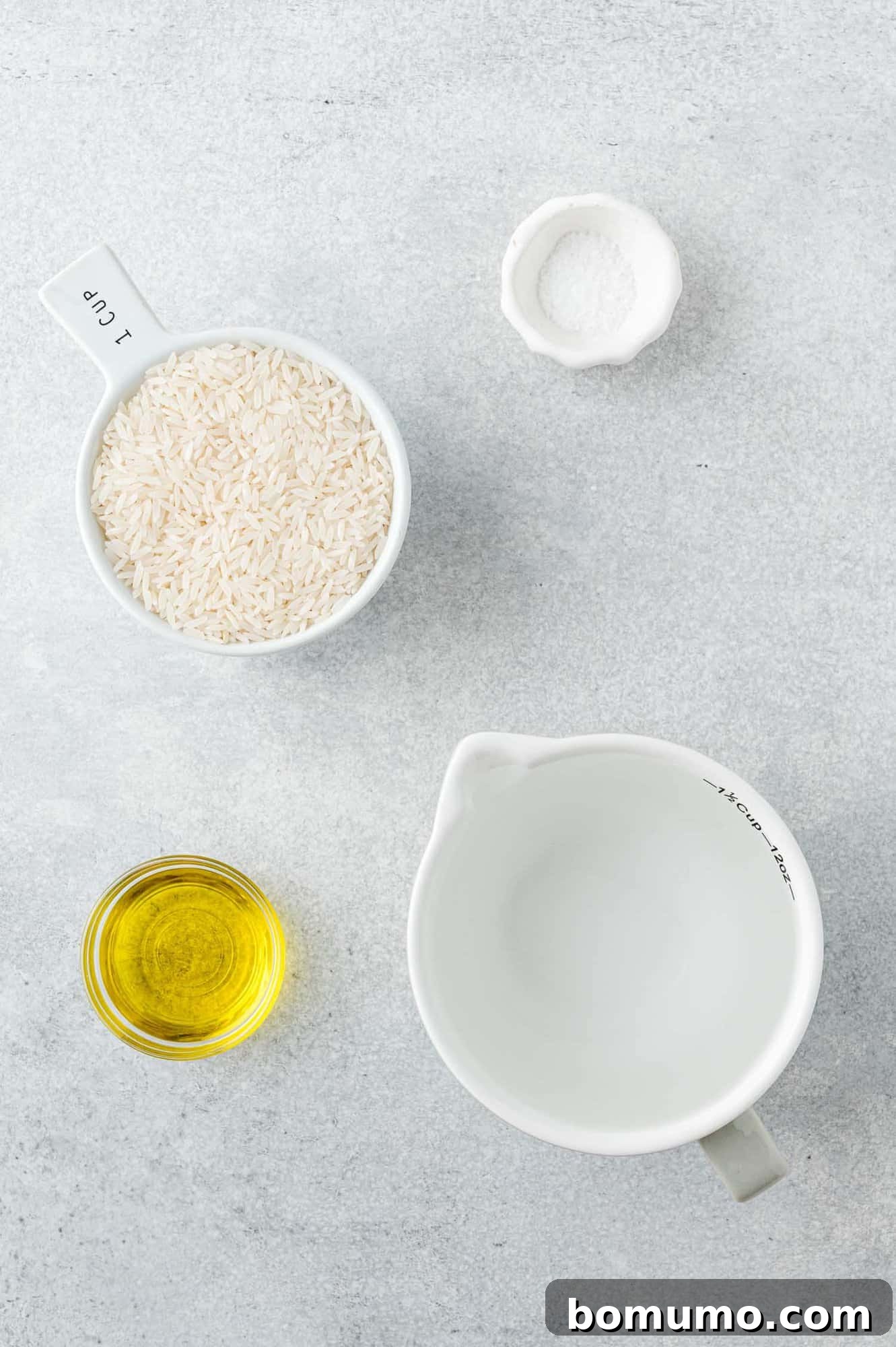
Essential Ingredients and Equipment for Perfect Jasmine Rice
Achieving consistently delicious jasmine rice requires only a few fundamental ingredients and a couple of key pieces of equipment. Here’s a detailed look at what you’ll need:
- Water: For jasmine rice, simplicity is key. While stocks or broths can be used for other rice varieties, plain water is recommended here. This allows the delicate, floral aroma and subtle sweetness of the jasmine rice to truly come through, creating a clean and authentic flavor profile that complements a wide array of dishes.
- Kosher Salt: A small amount of salt added at the beginning of the cooking process is transformative. It deeply seasons the rice from the inside out, making it far more flavorful than if you were to sprinkle salt on top after cooking. Avoid over-salting; a little goes a long way to enhance the rice’s natural taste.
- Olive Oil or Butter (Optional): A tablespoon of olive oil or butter can add a lovely richness and help prevent the rice grains from sticking together, contributing to a lighter, fluffier texture. It also lends a subtle depth of flavor. Feel free to omit it if you prefer a leaner preparation.
- Jasmine Rice: The star of our show! High-quality jasmine rice is readily available at most grocery stores. For better value and often a wider selection, consider visiting an Asian market, where you can purchase larger quantities at a more economical price. When stored properly in an airtight container in a cool, dry place, uncooked rice boasts an incredibly long shelf-life, sometimes ten years or even longer. Look for reputable brands to ensure freshness and authentic aroma.
- Saucepan with a Tight-Fitting Lid: The right pot is crucial. A medium-sized, heavy-bottomed saucepan is ideal as it distributes heat evenly, preventing scorching. The tight-fitting lid is non-negotiable; it traps steam effectively, which is essential for uniform cooking and achieving that coveted fluffy texture. Any gaps will allow steam to escape, leading to unevenly cooked or dry rice.
Pro Chef Tip: Flavor Enhancements
Elevate your jasmine rice with aromatic additions. Infuse the cooking water with sliced lemongrass, fresh ginger, a couple of star anise pods, or even a pandan leaf for an extra layer of exotic fragrance and flavor. These simple additions can transform your rice into an even more extraordinary accompaniment.
Step-by-Step Guide: How To Cook Fluffy Jasmine Rice
Follow these precise steps to achieve perfectly cooked jasmine rice every time. The key is patience and resisting the urge to peek!
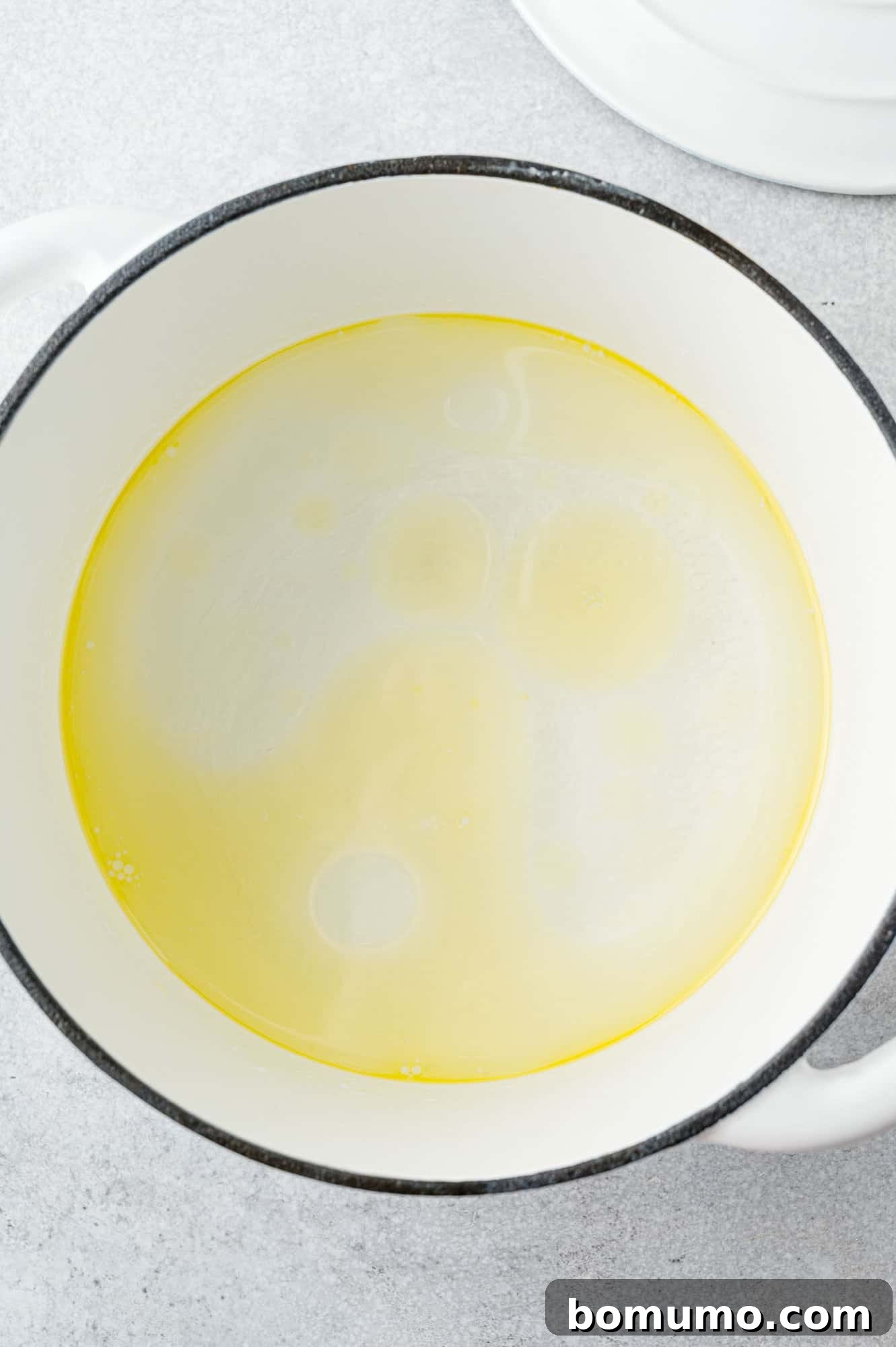
- Prepare the Cooking Liquid: In your heavy-bottomed saucepan with a tight-fitting lid, combine the measured water, kosher salt, and the optional olive oil or butter. Cover the pan securely.
- Bring to a Rapid Boil: Place the covered saucepan over high heat and bring the liquid to a rolling boil. You’ll see vigorous bubbling. This initial high heat is important to quickly get the cooking process started.
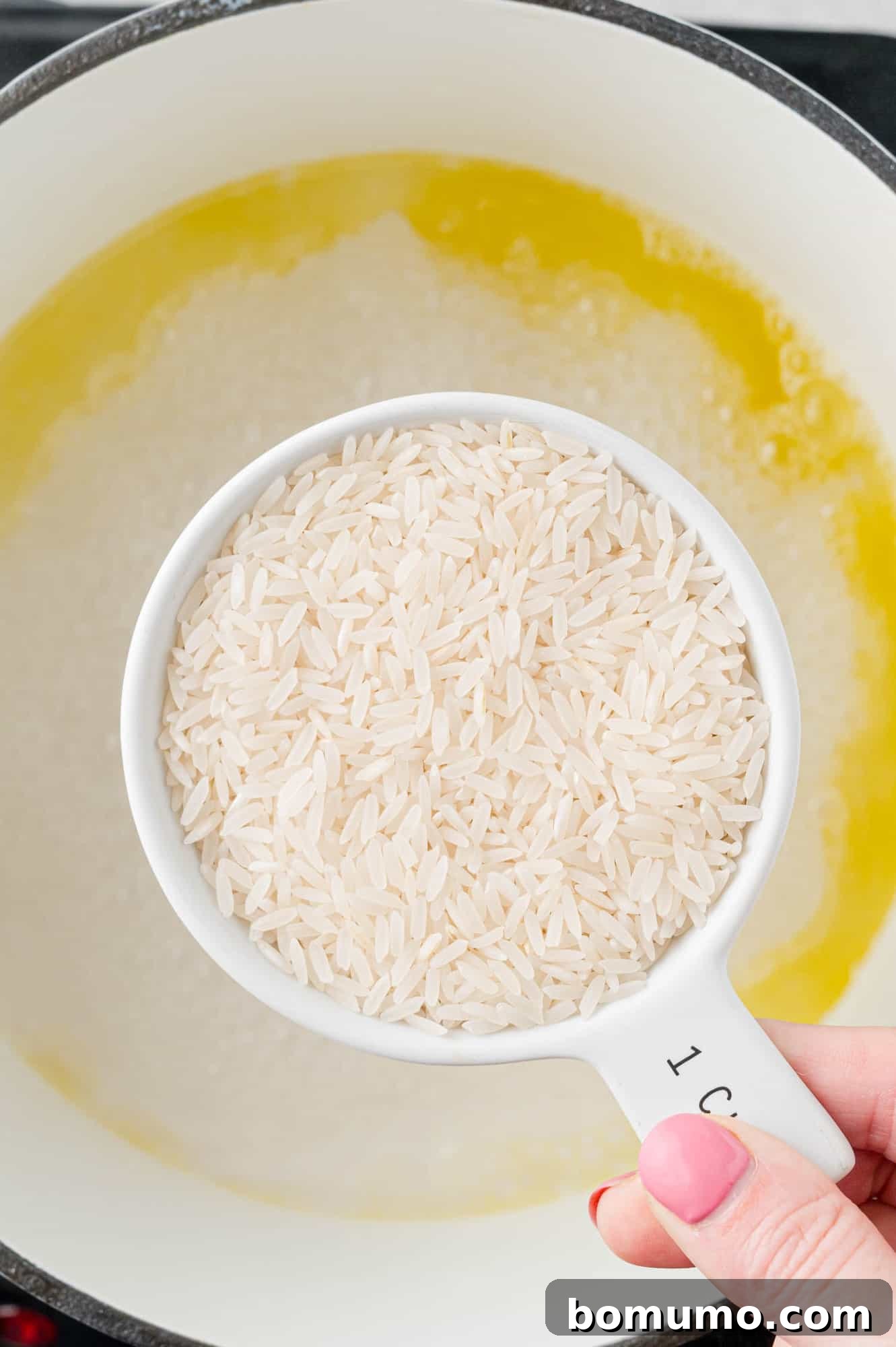
- Introduce the Rice: Once the water is boiling fiercely, remove the lid carefully. Add the jasmine rice to the boiling water and give it a single, gentle stir with a spoon. This ensures all the rice grains are submerged and evenly distributed. Avoid over-stirring, as this can release excess starch, leading to stickier rice.
- Crucial Simmer (15 Minutes): Immediately after adding the rice, reduce the heat to the lowest possible setting. Re-cover the pot tightly with its lid. Allow the rice to simmer undisturbed for precisely 15 minutes. This phase is critical: under no circumstances should you lift the lid or stir the rice during this time. The steam generated and trapped within the pot is absolutely essential for cooking the rice uniformly and achieving that signature fluffy texture. Breaking the seal allows steam to escape, which can lead to hard spots or unevenly cooked grains.
- Rest and Steam (5 Minutes): Once the 15-minute simmering time is complete, remove the saucepan completely from the heat source. However, resist the temptation to lift the lid! Let the rice continue to rest in the covered pan for an additional 5 minutes. During this resting period, the rice grains will absorb any remaining liquid and continue to steam gently, becoming plump and perfectly tender. This step is vital for maximum fluffiness and ensures the rice doesn’t dry out.
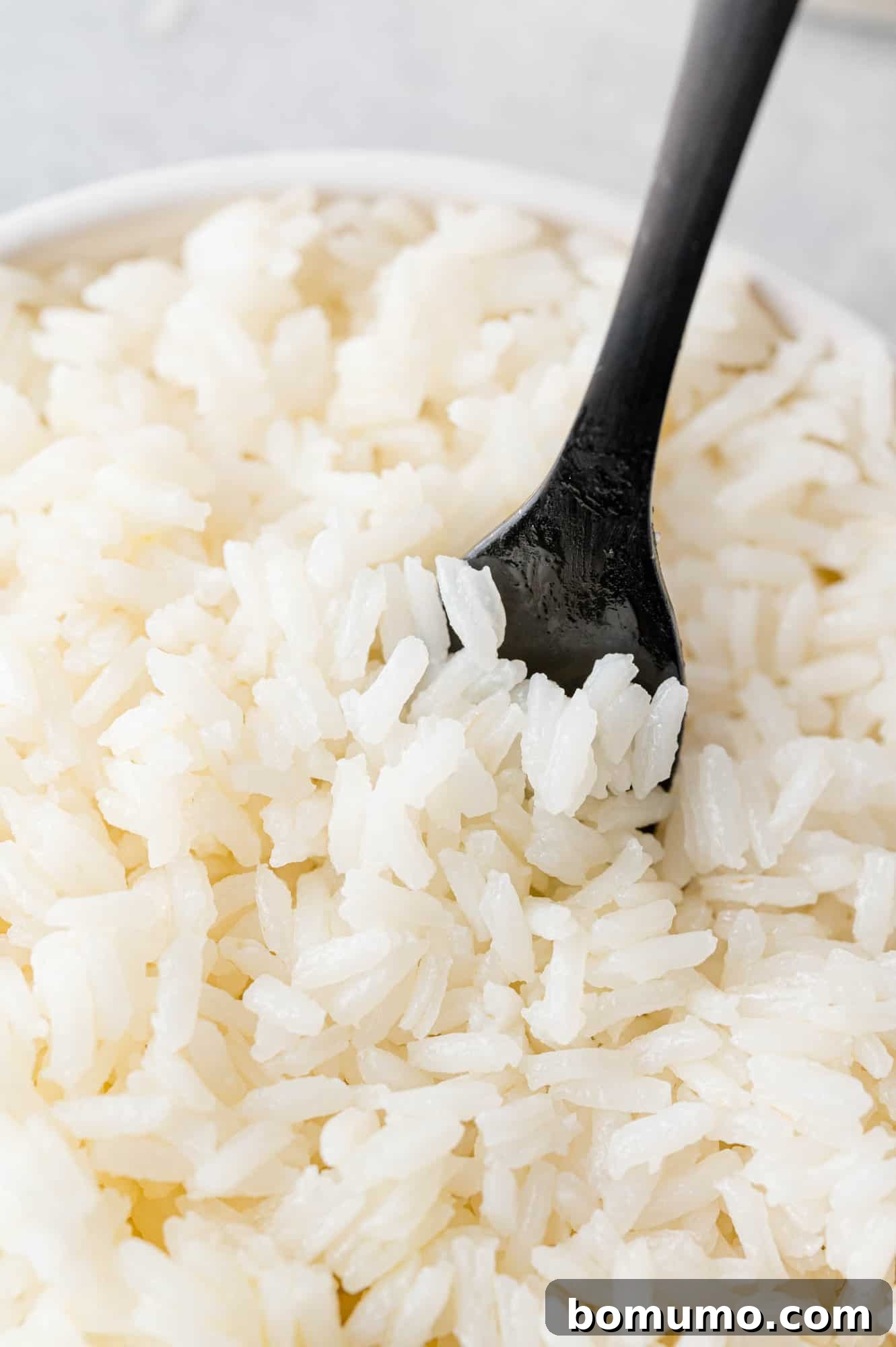
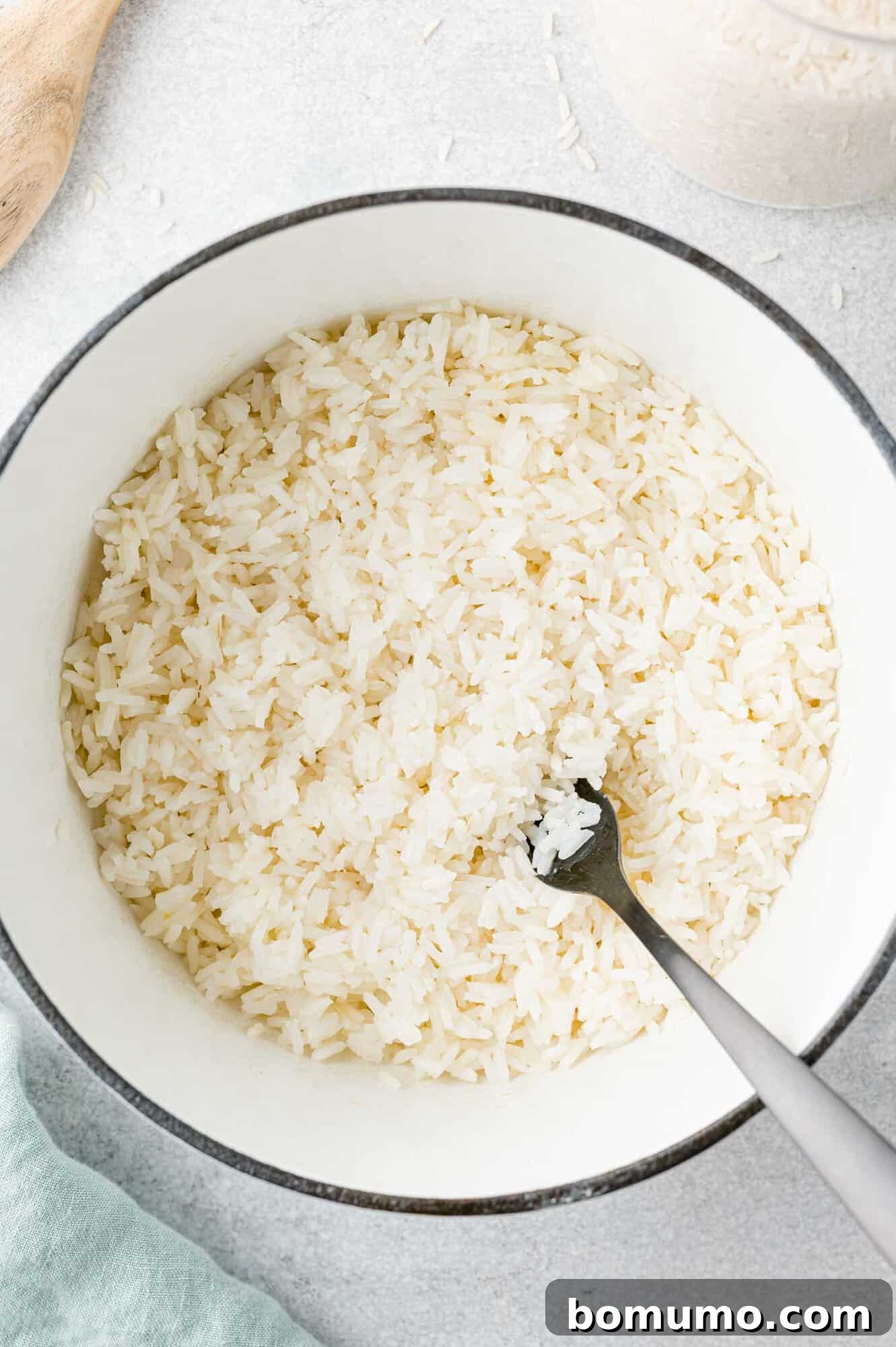
- Fluff and Serve: Finally, after the resting period, remove the lid. Using a fork, gently fluff the rice. This action helps to separate the individual grains, releasing any residual steam and preventing clumping. Your perfectly cooked, aromatic jasmine rice is now ready to be served alongside your favorite dishes or enjoyed simply on its own.
To Rinse or Not To Rinse: The Jasmine Rice Dilemma
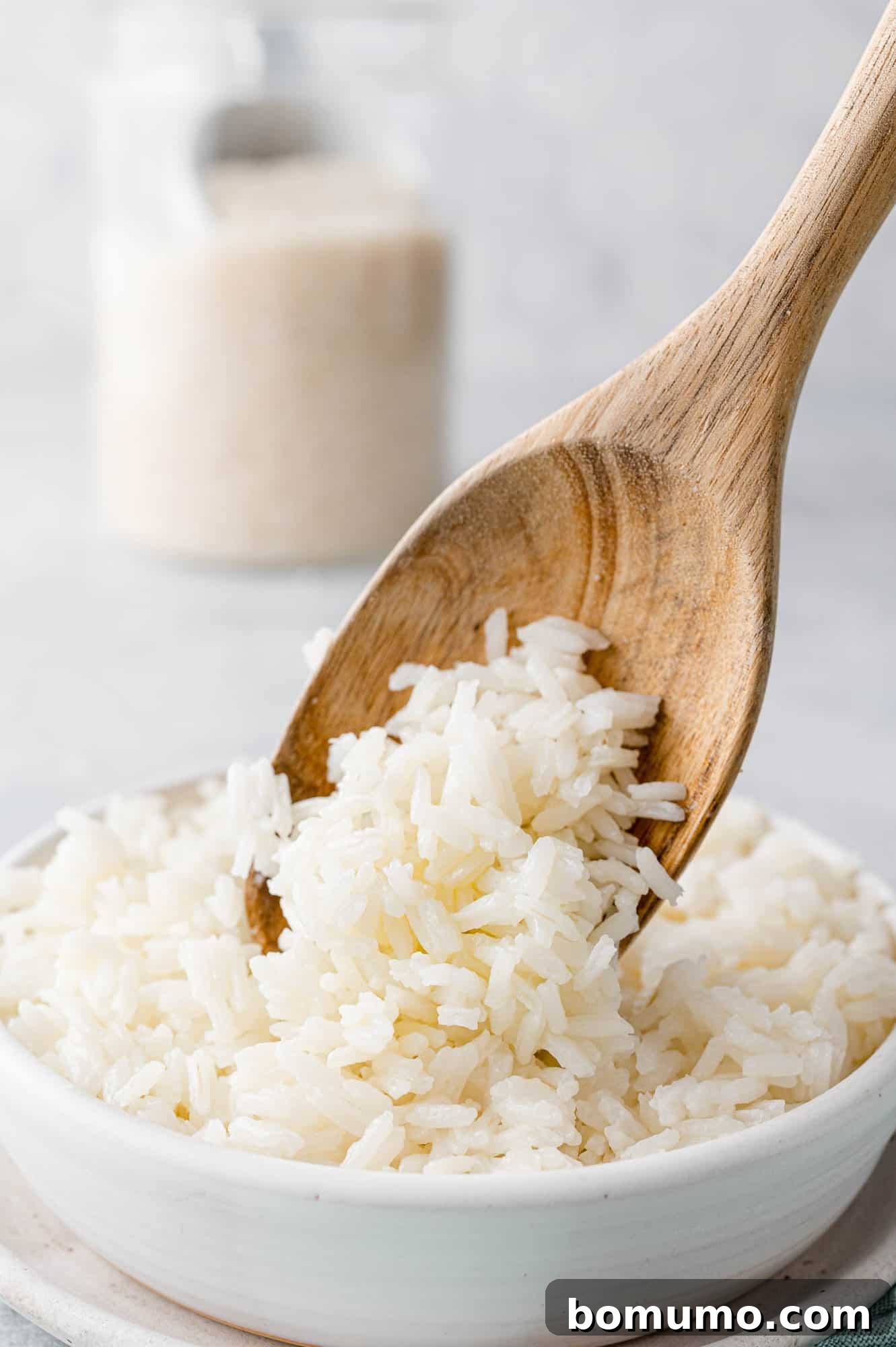
The question of whether to rinse rice before cooking is a long-standing debate among home cooks and professional chefs alike. Many traditional recipes and common kitchen wisdom often suggest rinsing jasmine rice thoroughly under cold water until the water runs clear. The theory behind rinsing is to wash away excess surface starch, which proponents claim prevents the rice from becoming overly sticky and clumpy, resulting in separate, fluffier grains.
However, through extensive testing in our own kitchen, we’ve come to a surprising conclusion regarding jasmine rice. We meticulously prepared this recipe multiple times, experimenting with both rinsed and un-rinsed rice. Our findings consistently showed that rinsing did not provide any discernible benefit, and in some cases, it actually yielded less desirable results. At best, the act of rinsing made no significant difference to the final texture or appearance of the cooked rice. At worst, the rinsed rice tended to be excessively sticky, defeating the very purpose of the rinsing process.
This outcome suggests that for this specific method of cooking jasmine rice, the steam-based technique effectively manages starch content without the need for pre-rinsing. The controlled simmer and crucial resting period allow the grains to hydrate and expand perfectly, resulting in a naturally fluffy texture with just the right amount of pleasant stickiness characteristic of good jasmine rice. Therefore, to save time and ensure optimal results with this recipe, we recommend skipping the rinsing step. Embrace the simplicity and trust the process – your perfectly cooked jasmine rice will thank you!
Perfect Pairings: What Goes Well With Jasmine Rice
Jasmine rice’s mild flavor and tender texture make it an incredibly versatile accompaniment, capable of elevating a vast array of global cuisines. Its subtly sweet and fragrant notes provide a beautiful balance to rich and spicy dishes alike. Here are some of the best culinary partners for your perfectly cooked jasmine rice:
- Vibrant Stir-fries: The slightly sticky nature of jasmine rice is ideal for soaking up the savory sauces of stir-fried dishes. It’s a classic pairing that never disappoints.
- Beef Stir Fry with Vegetables: The hearty beef and crisp veggies find their perfect match in a bed of fluffy jasmine rice.
- Shrimp and Broccoli Stir Fry: A lighter, yet equally flavorful option that pairs wonderfully.
- Sweet and Sour Chicken Stir Fry: The tangy and sweet sauce is utterly irresistible when absorbed by the rice.
- Rich and Aromatic Curries: Jasmine rice is the quintessential companion for a wide variety of curries. Its delicate texture allows it to beautifully absorb the complex, aromatic gravies without competing for flavor.
- Butternut Squash Curry: The creamy, spiced squash finds comfort and balance with the rice.
- Vegetarian Curry with Cauliflower & Chickpeas: A wholesome and satisfying meal made complete with this fragrant rice.
- Diverse Asian-Inspired Dishes: Beyond stir-fries and curries, jasmine rice is the foundation for countless other delectable Asian recipes.
- Creamy Coconut Shrimp: The tropical flavors and rich sauce are perfectly complemented by the rice.
- Teriyaki Salmon: The sweet and savory glaze is beautifully absorbed by the fluffy grains.
- Grilled Shrimp Kabobs with Pineapple: A delightful pairing for a summer barbecue.
- Crockpot Teriyaki Chicken and Instant Pot Honey Sriracha Chicken: Both saucy chicken dishes find an ideal partner in jasmine rice.
- Explore Other Rice Varieties: If you’re a true rice aficionado and enjoy experimenting with different flavors and textures, be sure to also try other popular recipes like Coconut Rice for a tropical twist or Cilantro Lime Rice for a zesty, refreshing option.
Smart Make-Ahead Strategies
Cooking jasmine rice ahead of time is a brilliant strategy for efficient meal planning and a true time-saver on hectic weeknights. Prepare a generous batch on the weekend or whenever you have spare time, allowing you to quickly assemble meals throughout the week. Having pre-cooked rice on hand streamlines the process of making quick stir-fries, flavorful curries, or versatile meal bowls. It’s also perfect for packing healthy lunches, ensuring you have a nutritious base ready for various protein and vegetable combinations.
Storage & Reheating Excellence
Proper storage and reheating are crucial for maintaining the quality and safety of cooked rice. Follow these guidelines to enjoy your jasmine rice for days to come:
Refrigerate: Allow any leftover jasmine rice to cool quickly to room temperature (within one hour) after cooking. Transfer it to an airtight container and store it in the refrigerator for up to three days. This prevents the growth of bacteria and preserves its freshness.
Freeze: For longer storage, cooked jasmine rice freezes beautifully. Once cooled, portion the rice into freezer-safe bags or containers, pressing out any excess air. It can be stored in the freezer for up to three months. Freezing in individual portions makes it convenient to thaw only what you need.
Reheat: When reheating, it’s best to add a tablespoon or two of liquid (water or broth) per cup of rice to restore moisture and prevent it from drying out.
- Stovetop Method: Place the rice in a saucepan with the added liquid. Cover the pan and reheat over low heat, stirring occasionally, until thoroughly warmed through. The steam will help to rehydrate the grains.
- Microwave Method: Place the rice in a microwave-safe bowl, add the liquid, and cover with a microwave-safe lid or damp paper towel. Heat in 30-60 second intervals, fluffing with a fork between each, until hot.
If reheating from frozen, there’s no need to thaw the rice first. Simply add the liquid and reheat directly using either the stovetop or microwave method, adding a few extra minutes to the reheating time.
Creative Uses for Leftover Rice
Cooked jasmine rice is incredibly versatile, and leftovers are a treasure trove for quick, delicious meals. While freshly made rice is wonderful on its own, leftover rice with its slightly drier texture is actually superior for many applications. This is especially true for fried rice, where individual grains are less likely to clump and fry up perfectly crisp. Utilize your leftover jasmine rice to create exciting new dishes:
- Easy Fried Rice: Transform day-old jasmine rice into a flavorful and satisfying meal. My easy fried rice recipe is a fantastic way to use up leftovers, combining rice with vegetables, protein, and savory sauces for a quick and customizable dish.
- Stuffed Bell Peppers: Mix leftover rice with ground meat or vegetables, herbs, and spices, then stuff into bell peppers and bake until tender.
- Rice Bowls: Create quick and healthy meal bowls by combining cold or reheated rice with leftover proteins (like chicken, tofu, or shrimp), roasted vegetables, and a delicious sauce.
- Soups and Stews: Add a scoop of cooked rice to thicken and enrich various soups and stews. It’s particularly good in Asian-inspired broths or hearty vegetable soups.
- Breakfast Bowls: For a unique breakfast, gently heat rice with milk, a touch of honey or sugar, and top with fresh fruit and nuts for a comforting and nutritious start to your day.
Explore More Delicious Rice Recipes
Creamy Chicken Rice Soup
Roasted Mushroom Risotto Recipe
Easy Mexican Rice Recipe
Instant Pot Rice Pudding
Fluffy & Aromatic Jasmine Rice
Ingredients
- 1 ½ cups water
- ½ teaspoon kosher salt
- 1 tablespoon olive oil or butter, if desired
- 1 cup jasmine rice
Instructions
-
In a heavy-bottomed saucepan with a tight-fitting lid, combine the water, salt, and olive oil or butter (if using). Cover the pan securely with the lid.1 ½ cups water, ½ teaspoon kosher salt, 1 tablespoon olive oil or butter, if desired
-
Place the covered pan over high heat and bring the water to a rapid, rolling boil. Once boiling, carefully remove the lid and add the jasmine rice, stirring just once to evenly distribute.1 cup jasmine rice
-
Immediately reduce the heat to the lowest possible setting and cover the pot tightly with its lid. Simmer the rice undisturbed for 15 minutes. It is crucial NOT to lift the lid or stir the rice during this time, as the trapped steam is essential for even cooking. After 15 minutes, remove the pot from the heat but keep it covered. Let the rice rest and steam for an additional 5 minutes.
-
Once the resting time is complete, remove the lid from the pot. Using a fork, gently fluff the rice to separate the grains and release any remaining steam. Serve immediately with your favorite dishes.
Notes
- Yield: One cup of uncooked jasmine rice will yield approximately 3 cups of cooked rice. This recipe can be easily doubled; simply use 3 cups of water for every 2 cups of rice to get about 6 cups of cooked rice.
- Helpful Tips for Success:
- Always use a heavy-bottomed pot with a snug-fitting lid. This ensures even heat distribution and prevents steam from escaping, which is vital for perfectly cooked rice.
- Resist the urge to stir the rice during cooking. Stirring releases starch and can make the grains stick together, resulting in a less fluffy texture. Equally important is to keep the lid on to maintain the steam inside.
- Flavor Enhancements: Personalize your jasmine rice by adding aromatics to the cooking water, such as a slice of fresh ginger, a piece of lemongrass, or a pandan leaf, for an extra layer of fragrance.
- Storage Guidelines: Cooled leftover jasmine rice should be stored promptly in an airtight container in the refrigerator for up to three days, or frozen for up to 3 months.
- Reheating Instructions: To reheat, stir in a tablespoon or two of water or broth to rehydrate the rice. Warm on the stovetop over low heat, covered, or in the microwave until thoroughly hot. No need to thaw if reheating from frozen.
Video Tutorial
Nutrition Information (Approximate Per Serving)
Calories: 225kcal,
Carbohydrates: 49g,
Protein: 4g,
Fat: 0.4g,
Saturated Fat: 0.1g,
Polyunsaturated Fat: 0.1g,
Monounsaturated Fat: 0.1g,
Sodium: 397mg,
Potassium: 71mg,
Fiber: 1g,
Sugar: 0.1g,
Calcium: 21mg,
Iron: 0.5mg
Nutrition information is automatically calculated and is intended to be used as an approximation only.