
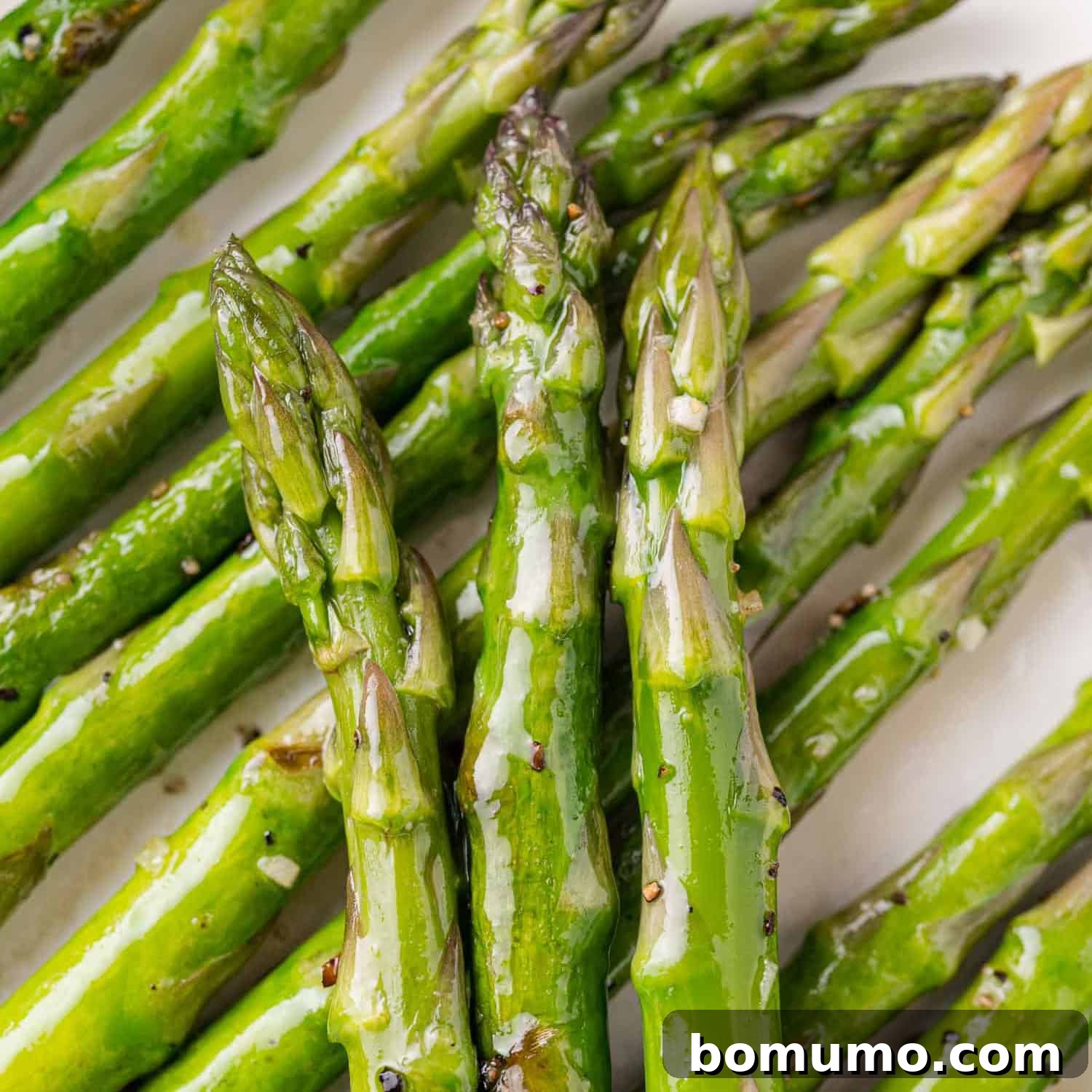
Recipe Overview
Why you’ll love it: Sautéed asparagus is arguably the fastest and simplest method to bring out the very best in this seasonal vegetable, allowing its natural freshness and vibrant flavor to truly shine. Whether you enhance it with a zesty squeeze of lemon juice, aromatic minced garlic, and savory grated Parmesan, or simply savor its natural taste with a sprinkle of sea salt and freshly ground black pepper, a brief sauté is all it takes to create a delightful side dish.
How long it takes: 11 minutes
Equipment you’ll need: Skillet
Servings: 4
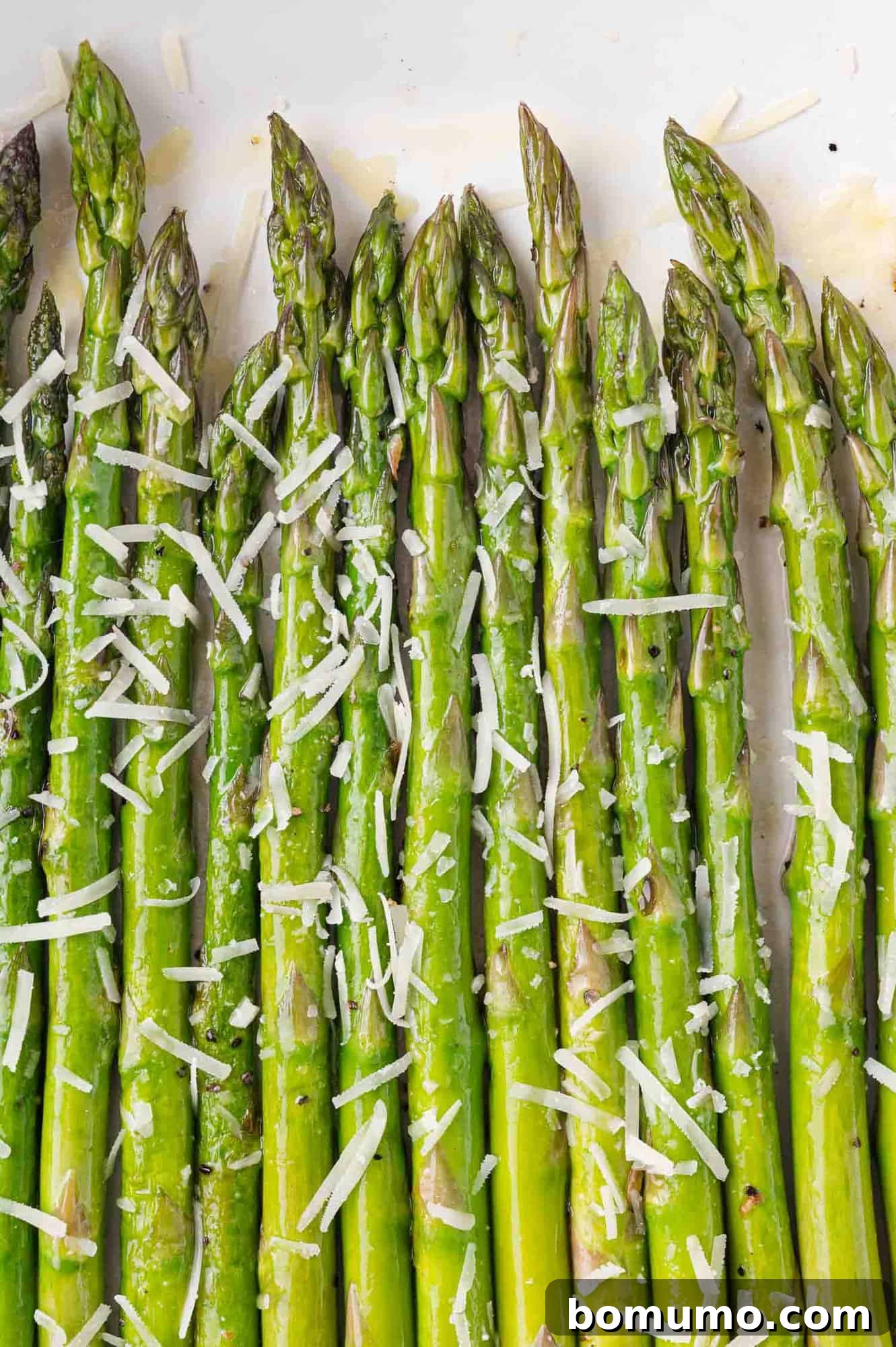
Among the vast array of vegetables, few are as eagerly anticipated as asparagus. While you can indeed find asparagus spears year-round, those imported varieties often pale in comparison to the fresh, locally-sourced spears of peak season. Celebrating asparagus season offers a myriad of culinary possibilities, from hearty asparagus casserole to refreshing asparagus panzanella salad. However, for sheer simplicity and speed, I firmly believe that sautéed asparagus stands out as the absolute easiest preparation.
Of course, air fryer asparagus also offers a convenient cooking method, but if you don’t own an air fryer – or even if you do – the humble skillet remains an unbeatable choice. While roasted asparagus and grilled asparagus boast delightful notes of caramelization and browned tips, sautéing truly allows the delicate, fresh flavor and satisfying crisp texture of the asparagus to take center stage. This method ensures each spear is perfectly cooked, vibrant green, and bursting with natural goodness.
Why You’ll Fall in Love with Sautéed Asparagus
- Effortlessly Easy: If your culinary journey often involves searching for simple, yet elegant, side dishes to complement your favorite main courses, then sautéed asparagus is an absolute must-add to your recipe collection. It truly doesn’t get much simpler than this, making it perfect for busy weeknights or relaxed weekend meals.
- Infinitely Customizable: While I particularly enjoy finishing this versatile recipe with fragrant minced garlic, a vibrant squeeze of lemon juice, and finely shredded Parmesan cheese, the beauty of sautéed asparagus lies in its adaptability. There’s ample room to infuse this dish with your unique culinary touch. Explore different herbs, spices, or flavor profiles to make it truly your own.
- Incredibly Quick: From start to finish, including all necessary preparation, a plate of delicious sautéed asparagus can be ready in a mere 11 minutes! This makes it an ideal last-minute addition to any meal, ensuring fresh vegetables are always within reach, even on the busiest of days.
- Highlights Fresh Flavor: Unlike roasting or grilling, which can impart deeper, smoky notes, sautéing preserves the natural, bright, and slightly sweet flavor of asparagus. This method allows the vegetable’s inherent qualities to shine, delivering a taste that truly celebrates the freshness of the season.
- Nutritious and Healthy: Asparagus is a powerhouse of vitamins and minerals, including Vitamins K, A, C, E, and folate, making it an excellent addition to a balanced diet. Sautéing with a minimal amount of olive oil keeps it light and healthy, perfectly complementing any meal without adding excessive calories.
Cooking Tip: Explore Asparagus Varieties
Did you know that green asparagus isn’t the only kind available? Indeed, the world of asparagus offers delightful variety!
Purple asparagus, for example, is just as delicious as its green counterpart and can be prepared in precisely the same manner, including sautéing. Its vibrant purple stalks offer a slightly sweeter flavor profile, which, unfortunately, tends to fade to green when cooked. Nevertheless, its taste remains exceptional.
Then there’s white asparagus, cultivated by covering the spears with soil to block out sunlight. This absence of light prevents the development of chlorophyll, resulting in its pale color. White asparagus possesses a sweeter, more delicate, and often less bitter flavor than green asparagus. Its subtle taste makes it perfectly suited for simple preparations, such as this sautéed asparagus recipe, where its delicate nuances can be fully appreciated without being overwhelmed by strong seasonings.
Selecting the Best Asparagus and Essential Ingredients
For precise measurements, detailed instructions, and comprehensive nutrition information, please refer to the complete recipe card provided below.
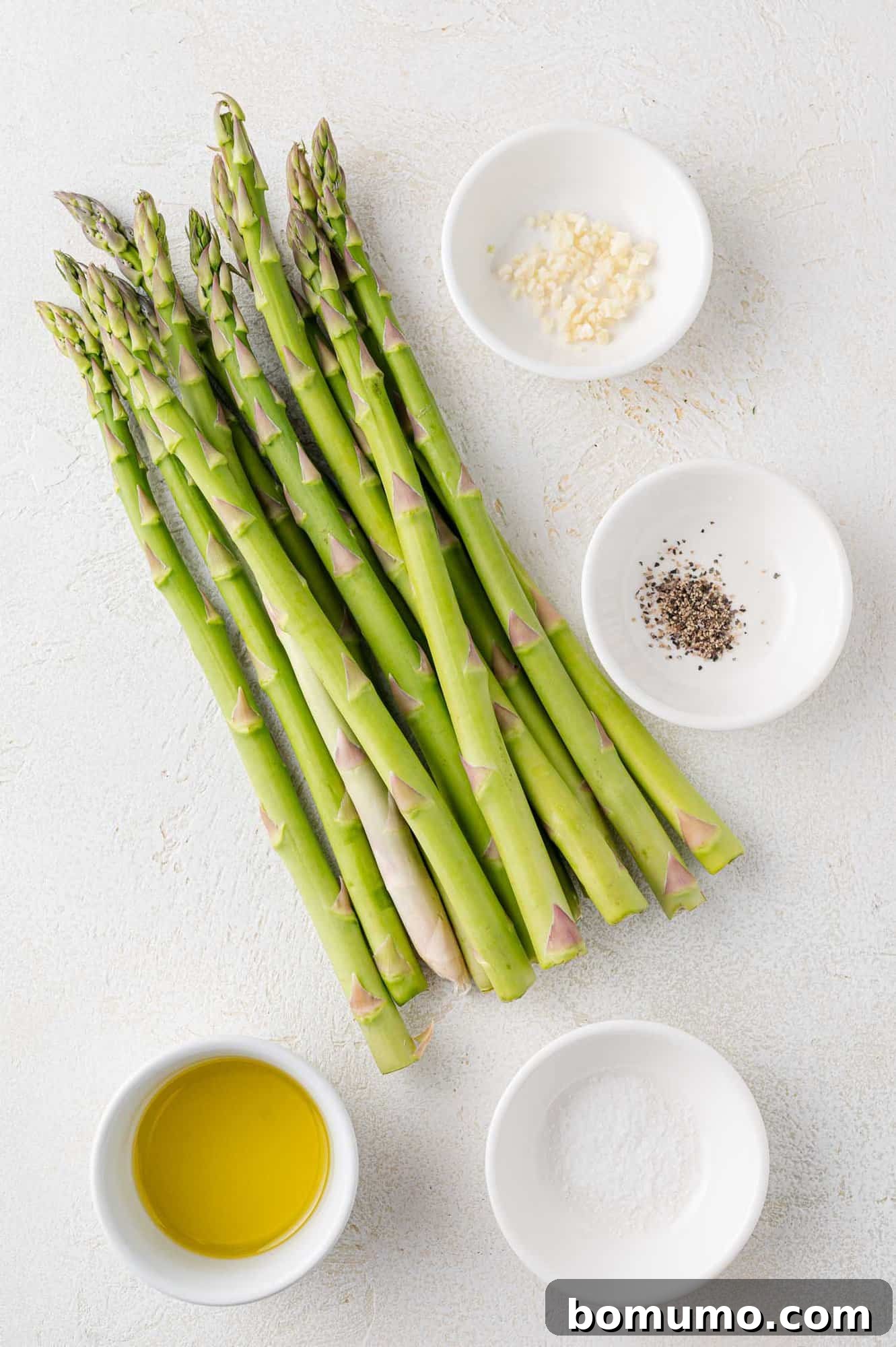
- Asparagus: The foundation of this dish is fresh asparagus. When selecting a bunch, aim for spears that are roughly uniform in thickness. This ensures they cook evenly. Whether they are thick or pencil-thin, consistency is key. Look for tightly closed tips, a clear sign of freshness, rather than feathery or frayed ones. The stalks should feel crisp and firm to the touch, snapping easily when bent, and exhibit a vibrant green (or purple/white) color without any signs of wilting or yellowing.
- Olive Oil: I prefer using good quality extra virgin olive oil not only for its wonderful flavor but also for its well-documented health benefits. However, feel free to use any cooking oil you typically enjoy and have on hand, such as avocado oil or grapeseed oil, as long as it has a medium to high smoke point suitable for sautéing.
- Kosher Salt and Freshly Ground Black Pepper: These fundamental seasonings are often all that’s truly needed to bring out the natural deliciousness of asparagus. A good quality coarse sea salt or kosher salt, along with freshly ground black pepper, enhances its inherent sweetness and provides a subtle, balanced flavor.
- Garlic: To elevate the recipe beyond basic seasoning, fresh garlic is an outstanding addition. Minced garlic, when added at the right time, infuses the asparagus with a wonderful aroma and savory depth, transforming a simple side into something truly special.
- Lemon Juice: While optional, a touch of freshly squeezed lemon juice introduces a bright, zesty acidity that beautifully cuts through the richness of the olive oil and complements the earthy notes of the asparagus. Always opt for fresh lemon juice for the most vibrant flavor.
- Grated Parmesan Cheese: The nutty, salty, and umami-rich flavor of grated Parmesan cheese creates a truly fabulous pairing with sautéed asparagus. It adds a layer of savory indulgence that makes the dish irresistible, though it can be omitted for a dairy-free or lighter option.
How To Make Sautéed Asparagus: A Simple Guide
Crafting perfect sautéed asparagus is an incredibly straightforward process, yielding delicious results every time. Follow these simple steps for a vibrant and flavorful side dish.
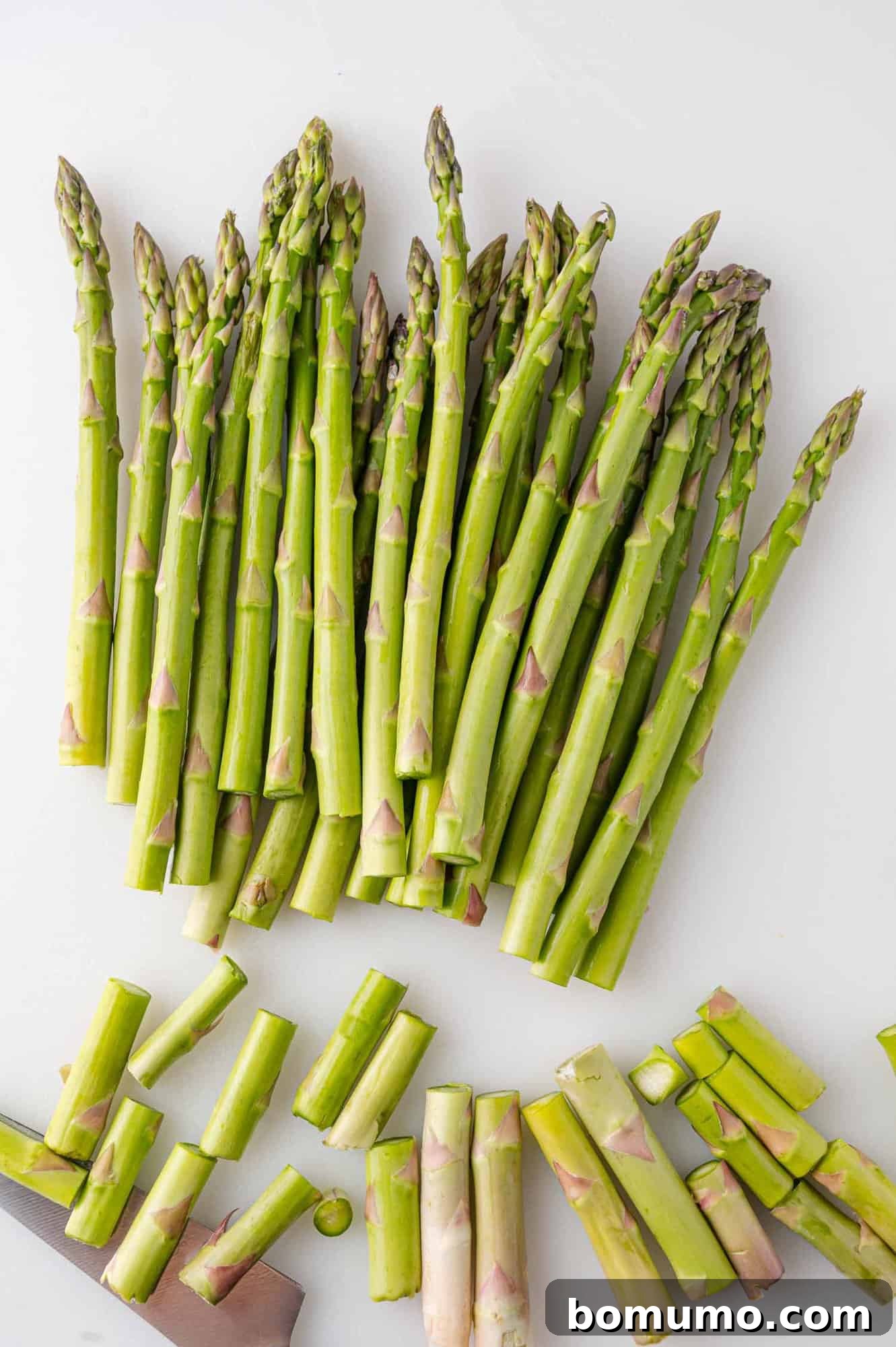
Step 1: Prep the Asparagus. Begin by thoroughly washing your fresh asparagus spears under cool running water. Next, it’s crucial to trim off the tough, woody ends. The most effective way to do this is by gently bending each spear near its bottom; it will naturally snap at the point where the tender part meets the fibrous end. Alternatively, for a quicker approach, use a sharp knife to simply lop off approximately 1 ½ to 2 inches from the bottom of all the spears.
Step 2: Heat the Skillet and Add Asparagus. Place a large skillet over medium-high heat on your stovetop. Once heated, add the olive oil, allowing it to shimmer slightly. Carefully add the trimmed asparagus spears to the skillet, ensuring they are arranged in a single layer. This is crucial for even cooking and achieving that desirable tender-crisp texture. Avoid overcrowding the pan, as this can steam the asparagus instead of sautéing it, leading to a less vibrant result.
Step 3: Season for Flavor. Sprinkle the kosher salt and freshly ground black pepper generously over the asparagus spears in the skillet. Using tongs or a spatula, gently toss the asparagus to ensure each spear is evenly coated in the olive oil and seasonings. Once coated, spread them back out into a single layer within the skillet.
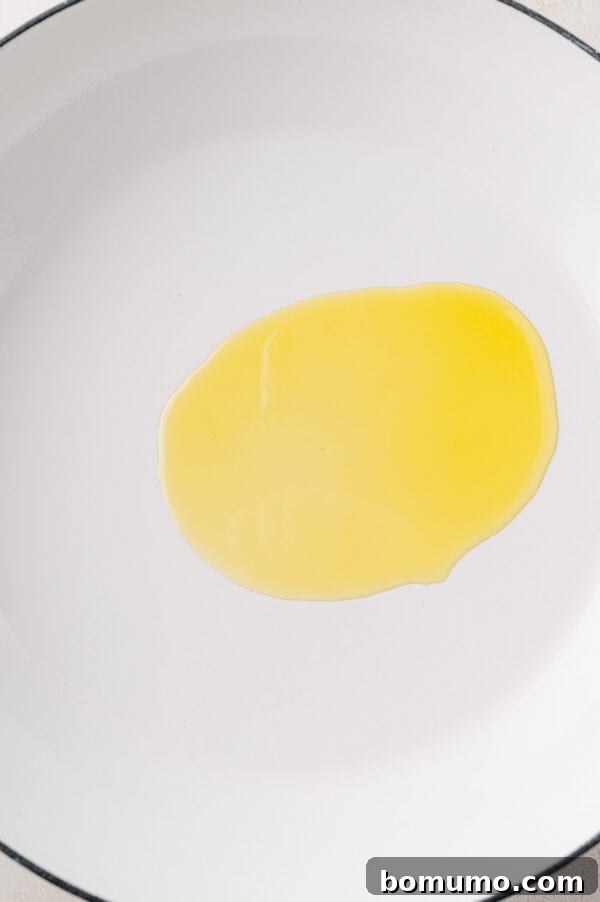
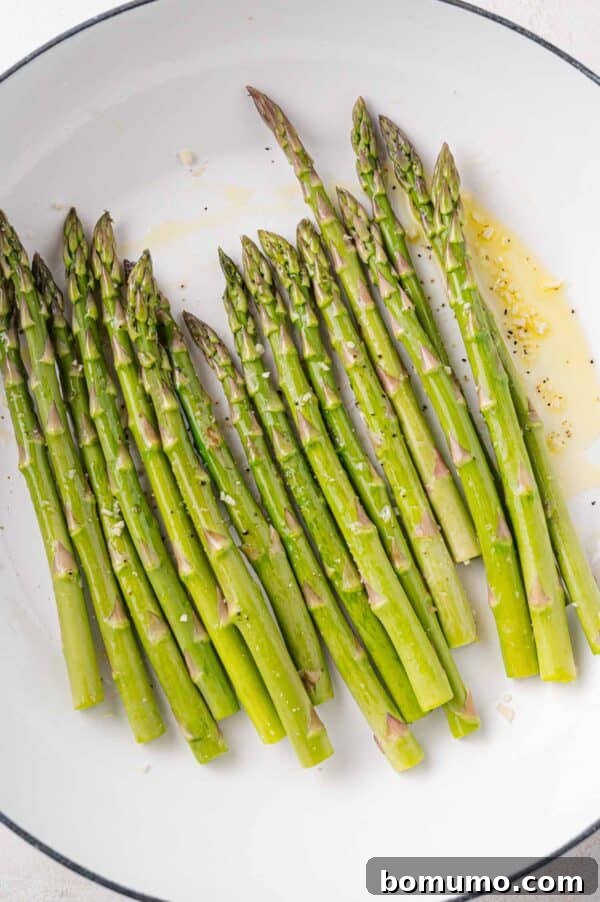
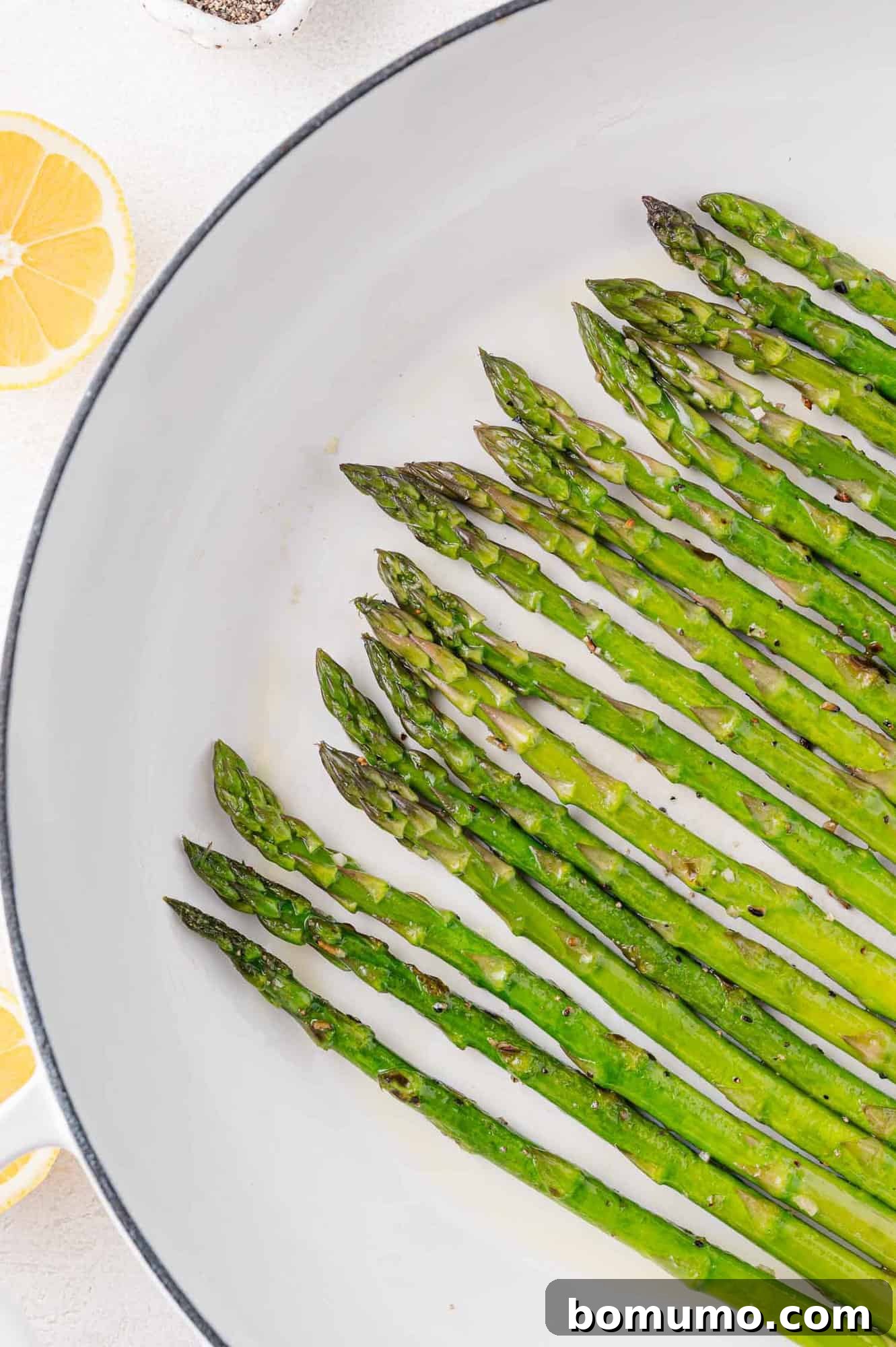
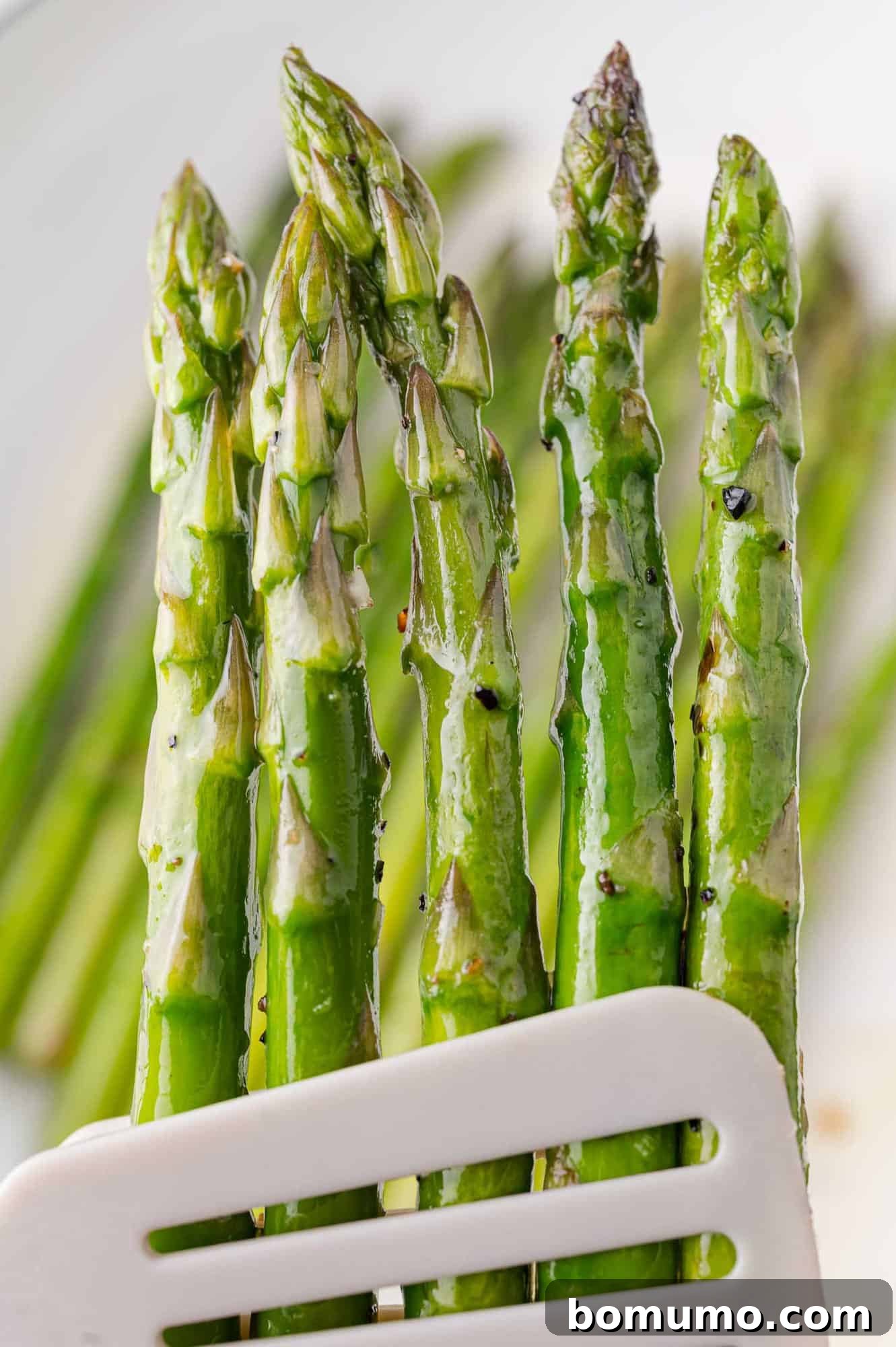
Step 4: Cook Until Tender-Crisp. Continue to cook the asparagus for 4 to 6 minutes, stirring and turning occasionally to ensure even cooking and a beautiful vibrant green color. The goal is a “tender-crisp” texture – meaning the spears should be tender enough to bite through easily but still retain a slight crispness. If you’re incorporating garlic into your recipe, add the minced garlic during the final 1 to 2 minutes of cooking time. This prevents it from burning and developing a bitter taste, ensuring it imparts its full aromatic flavor.
Step 5: Final Touches and Serve. Once the asparagus has reached your desired tenderness, remove the skillet from the heat. If you wish to enhance the flavors, generously squeeze fresh lemon juice over the sautéed asparagus and toss gently to coat. This brightens the entire dish. Finally, for an extra layer of savory indulgence, garnish with a sprinkle of grated Parmesan cheese just before serving. Enjoy your perfectly sautéed asparagus immediately as a vibrant and delicious side!
Expert Tips for Perfectly Sautéed Asparagus
- Mastering Garlic Timing: This is a crucial tip for maximum flavor without bitterness. I’ve tested this recipe extensively, adding garlic at both the beginning and the end of the cooking process. Adding garlic too early, especially at high heat, almost always results in burnt garlic, which imparts a sharp, unpleasant flavor to the entire dish. The sweet spot is to stir in your minced garlic during the last 1 to 2 minutes of cooking time. This allows it to soften, release its aromatic oils, and infuse the asparagus with delightful flavor without the risk of over-cooking or burning.
- Adjust Cooking Time to Thickness and Preference: The ideal cooking time for sautéed asparagus is highly dependent on two main factors: the thickness of your asparagus spears and your personal preference for tenderness. Pencil-thin asparagus will cook much faster, often in just 3-4 minutes. Conversely, thicker spears might require an extra few minutes in the skillet, potentially 6-8 minutes, to reach a tender-crisp consistency. Always taste a spear to check for doneness; it should be tender yet still offer a slight resistance when bitten.
- Don’t Overcrowd the Pan: This is a common mistake that can turn sautéed asparagus into steamed asparagus. When too many spears are packed into the skillet, the temperature drops, and the asparagus releases moisture, causing it to steam rather than sauté. For best results, cook the asparagus in a single layer. If you’re preparing a larger batch, consider cooking it in two separate batches to ensure each spear gets proper contact with the hot surface, leading to that coveted tender-crisp texture and vibrant color.
- Customize Your Seasonings: Sautéed asparagus is a fantastic canvas for flavor experimentation.
- For an Asian-inspired twist, add a dash of toasted sesame oil, a pinch of freshly grated ginger, and a splash of low-sodium soy sauce during the last minute of cooking.
- A tablespoon of butter, added at the very end, can introduce a rich, decadent flavor, especially when paired with freshly minced herbs like chives, parsley, or dill.
- Consider a sprinkle of red pepper flakes for a subtle kick, or a dusting of smoked paprika for earthy depth.
- For added texture, toasted slivered almonds or homemade bread crumbs can be tossed in just before serving.
- Avoid Overcooking: Overcooked asparagus loses its vibrant green color, becomes mushy, and develops a less appealing, slightly sulfurous flavor. Aim for that perfect tender-crisp stage where it’s still bright green and has a pleasant bite. Removing it from the heat just before it reaches your desired tenderness is often a good strategy, as it will continue to cook slightly from residual heat.
Delightful Pairings: What To Serve With Sautéed Asparagus
Sautéed asparagus is an incredibly versatile side dish that complements a wide range of main courses, enhancing any meal with its fresh flavor and vibrant color. Here are some of our favorite pairings:
- Chicken: For a rich and comforting meal, cream of mushroom chicken makes a perfect partner for the simple elegance of sautéed asparagus. If you’re aiming for a lighter dinner option, juicy air fryer chicken breasts or pan-seared chicken cutlets are an excellent, healthy choice.
- Fish: The delicate flavor of asparagus pairs exceptionally well with most fish. Try it alongside sweet and savory honey garlic salmon or bright and tangy orange glazed salmon. It also makes a fantastic accompaniment to baked cod or pan-fried tilapia.
- Pork: Elevate your pork dishes with this easy side. Serve sautéed asparagus with a tender slow cooker pork loin with balsamic glaze for a more elaborate meal, or opt for quick and flavorful air fryer pork chops when time is of the essence.
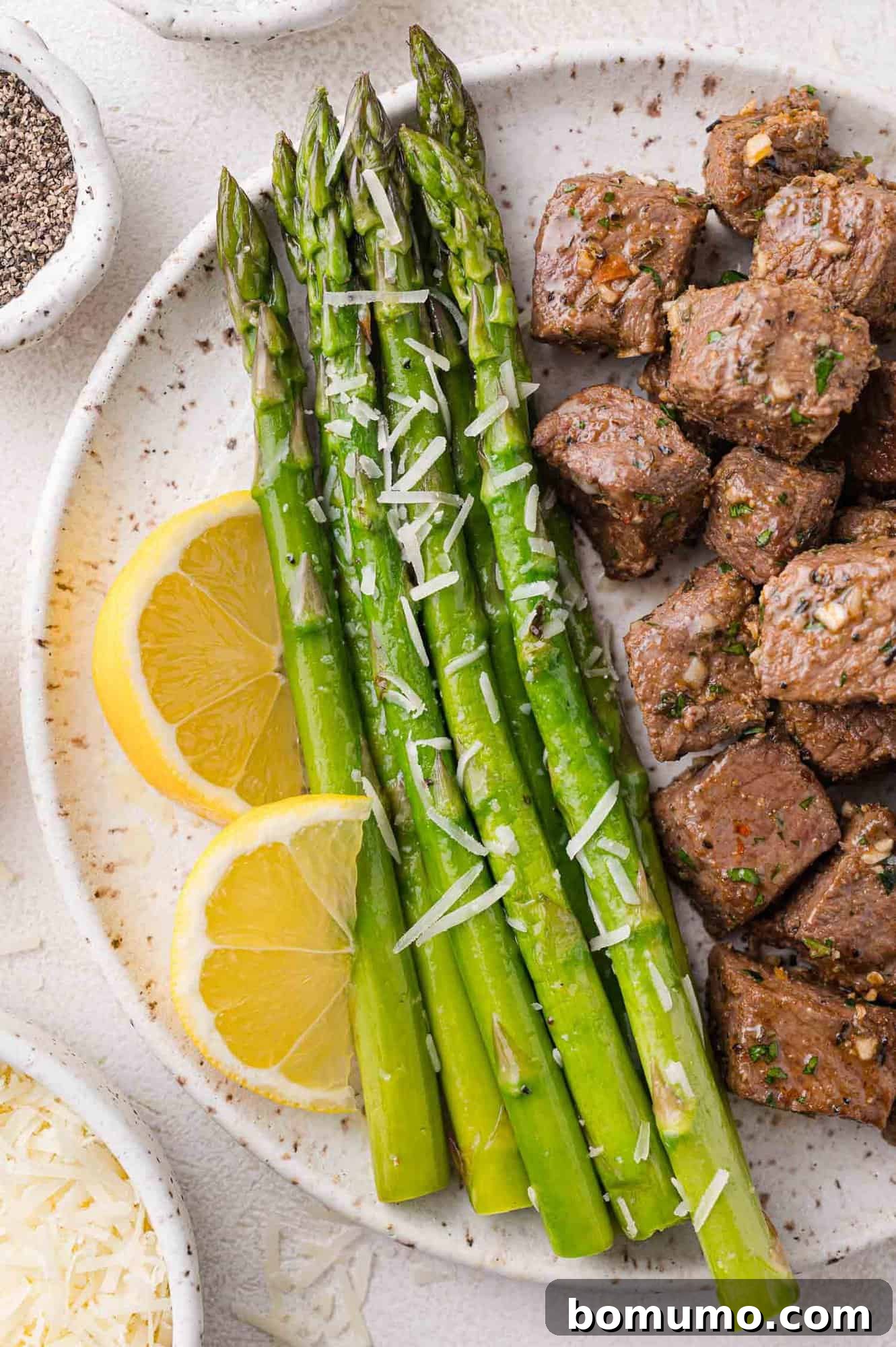
- Beef: One of our absolute favorite meal combinations, featured in many photos, is delightfully simple yet incredibly satisfying: tender garlic butter steak bites, fluffy steamed basmati rice, and a generous helping of vibrant sautéed asparagus. It’s a complete and balanced meal ready in no time.
- Pasta: Asparagus is a wonderful addition to pasta dishes. You can cut the sautéed asparagus into bite-sized pieces and gently fold it into creamy shrimp alfredo or a bright and zesty Instant Pot lemon pasta with chicken. Alternatively, simply serve whole asparagus spears alongside any of your favorite pasta creations for a fresh, green touch.
Leftover Love: Making the Most of Extra Asparagus
Leftover Love: Making the Most of Extra Asparagus
Don’t let any delicious sautéed asparagus go to waste! It’s fantastic whether enjoyed warm or cold, so feel free to make a larger batch if you have an abundance of fresh asparagus. Leftovers are incredibly versatile and can elevate various dishes.
One excellent idea is to transform them into a quick and easy pasta salad. Simply toss the cold leftover asparagus with your favorite pasta, a drizzle of high-quality olive oil, a sprinkle of fresh lemon zest, some crunchy toasted walnuts, and a generous amount of grated Parmesan cheese. This dish can be enjoyed as a refreshing cold salad or gently warmed for a comforting meal.
Another creative way to use leftover cooked asparagus is as a delectable pizza topping! Chop the spears into bite-sized pieces and scatter them over a homemade pizza base. They pair exceptionally well with a vibrant pesto base, such as this grilled pizza with arugula pesto. The tender asparagus adds a fresh burst of flavor and a lovely texture to every slice.
You can also chop leftover asparagus and add it to omelets, frittatas, or quiches for a boost of flavor and nutrition, making for a delightful breakfast or brunch. Alternatively, blend it into a creamy vegetable soup or a vibrant green smoothie for a healthy kick.
Storing & Reheating Leftovers
Storing & Reheating Leftovers
To keep your sautéed asparagus fresh and delicious for future meals, ensure it cools completely before storing. Place leftover sautéed asparagus in an airtight container and refrigerate promptly. It will maintain its quality for 3 to 4 days, preserving its flavor and texture.
When it comes to reheating, you have several convenient options:
- Microwave: For a quick reheat, place the asparagus in a microwave-safe dish and warm it in short bursts (30-60 seconds) until heated through. Be careful not to overcook, as this can make it mushy.
- Skillet: To best retain its tender-crisp texture, reheat asparagus in a skillet over medium heat with a tiny bit of olive oil or butter for a few minutes, stirring occasionally, until warmed through. This method helps to re-crisp the exterior slightly.
- Oven/Toaster Oven: Spread the asparagus in a single layer on a baking sheet and reheat in a preheated oven (around 300°F or 150°C) for 5-7 minutes, or until just warmed. This prevents it from getting soggy.
Enjoy your stored asparagus cold as part of a salad, or warmed up as a delightful side to a fresh meal.
More Sautéed Vegetable Recipes You’ll Love
Sautéed Brussels Sprouts
Sautéed Mushrooms (special trick!)
Sautéed Spinach
Sautéed Cabbage
Sautéed Asparagus: Quick & Flavorful
By: Rachel Gurk
Prep Time: 5 mins
Cook Time: 6 mins
Total Time: 11 mins
Servings: 4 servings
Print Recipe
Sautéed asparagus offers the simplest and most delicious way to prepare asparagus, bringing out its freshest and most flavorful qualities. A touch of lemon, garlic, and Parmesan can elevate it, or simply enjoy it with sea salt and black pepper for a quick, elegant side.
Ingredients
- 16 oz. fresh asparagus spears (or 1 large bunch)
- 1 tablespoon olive oil
- ¼ teaspoon kosher salt, or to taste
- ⅛ teaspoon coarse ground black pepper, or to taste
- 1 clove garlic, minced (optional, highly recommended)
- 1 teaspoon freshly squeezed lemon juice (optional)
- 2 tablespoons grated Parmesan cheese (for garnish, optional)
Instructions
- Wash the asparagus spears thoroughly. Trim off the tough, woody ends by bending each spear until it naturally snaps, or by cutting off 1 ½ to 2 inches from the bottom with a knife.
- Heat 1 tablespoon of olive oil in a large skillet over medium-high heat until shimmering.
- Add the trimmed asparagus spears to the skillet in a single layer, ensuring not to overcrowd the pan for even cooking.
- Sprinkle with ¼ teaspoon kosher salt and ⅛ teaspoon coarse ground black pepper. Toss the asparagus gently to coat evenly with the oil and seasonings.
- Cook the asparagus for 4 to 6 minutes, stirring occasionally. Cook until the spears are tender-crisp – vibrant green and still slightly firm when bitten. If adding garlic, stir in the minced garlic during the last 1 to 2 minutes of cooking to prevent burning.
- To serve, remove from heat. If desired, squeeze 1 teaspoon of fresh lemon juice over the asparagus and toss to combine. Garnish with 2 tablespoons of grated Parmesan cheese for an added savory touch, if using. Serve immediately.
Notes
- Cooking time will vary based on the thickness of your asparagus spears and your desired level of tenderness. Thinner spears cook faster.
- Always add minced garlic towards the end of cooking (last 1-2 minutes) to prevent it from burning and developing a bitter taste.
- Nutrition information provided is an approximation and includes optional toppings like lemon juice, garlic, and Parmesan cheese.
- More topping ideas: For an Asian flair, add toasted sesame oil, fresh ginger, and a splash of soy sauce. A knob of butter adds richness, while fresh herbs like chives or parsley are delightful. Consider a sprinkle of toasted slivered almonds or buttery homemade bread crumbs for extra texture.
Recipe Video
Watch this short video to see how easily you can make perfect sautéed asparagus!
Nutrition Information
Serving: 4oz., Calories: 66kcal, Carbohydrates: 5g, Protein: 3g, Fat: 4g, Saturated Fat: 1g, Polyunsaturated Fat: 0.5g, Monounsaturated Fat: 3g, Cholesterol: 2mg, Sodium: 192mg, Potassium: 239mg, Fiber: 2g, Sugar: 2g, Vitamin A: 879IU, Vitamin C: 7mg, Calcium: 51mg, Iron: 2mg
Nutrition information is automatically calculated and should be used as an approximation only.