
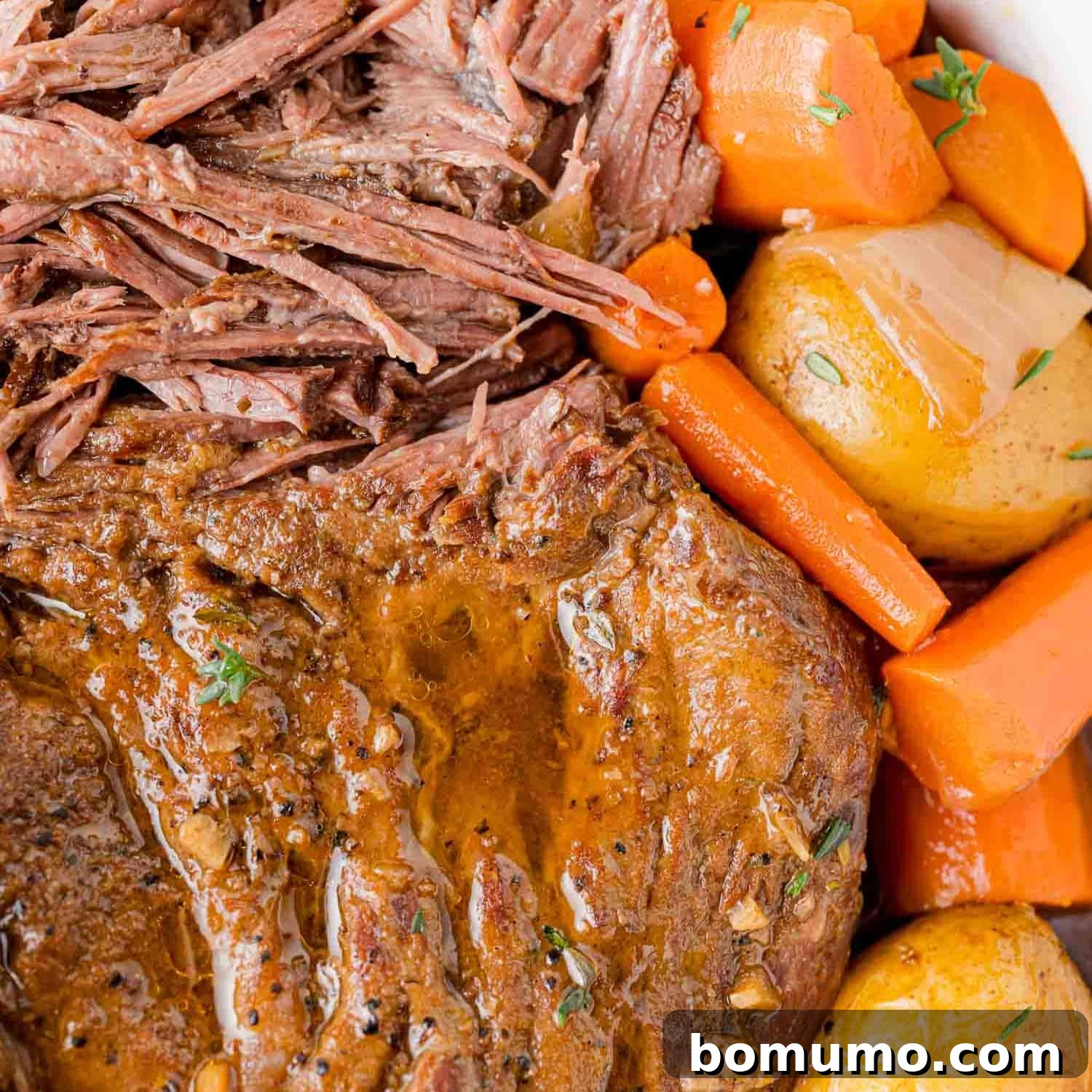
Welcome to the ultimate guide for crafting a truly exceptional pot roast. This isn’t just a recipe; it’s an invitation to create a heartwarming family tradition, a dish so deeply satisfying it will be remembered for generations. Many believe preparing a classic pot roast is a complicated culinary endeavor, but we’re here to show you that mastering this comforting meal is far easier and more rewarding than you might imagine. Prepare to unlock the secrets to a perfectly tender, richly flavored pot roast that will become the star of your Sunday dinner table.
Recipe Overview: Your Guide to a Perfect Pot Roast
Why you’ll love it: This old-fashioned Sunday dinner favorite brings nostalgic comfort and incredible flavor, consistently delivering a meal that truly never goes out of style. It’s the ultimate definition of comfort food, perfect for gathering loved ones.
How long it takes: Approximately 3½ hours (with most of that time being hands-off, allowing you to relax while your kitchen fills with irresistible aromas).
Equipment you’ll need: A sturdy Dutch oven is essential for even cooking and the best results.
Servings: This recipe generously serves 6 people, making it ideal for family dinners or a small gathering.
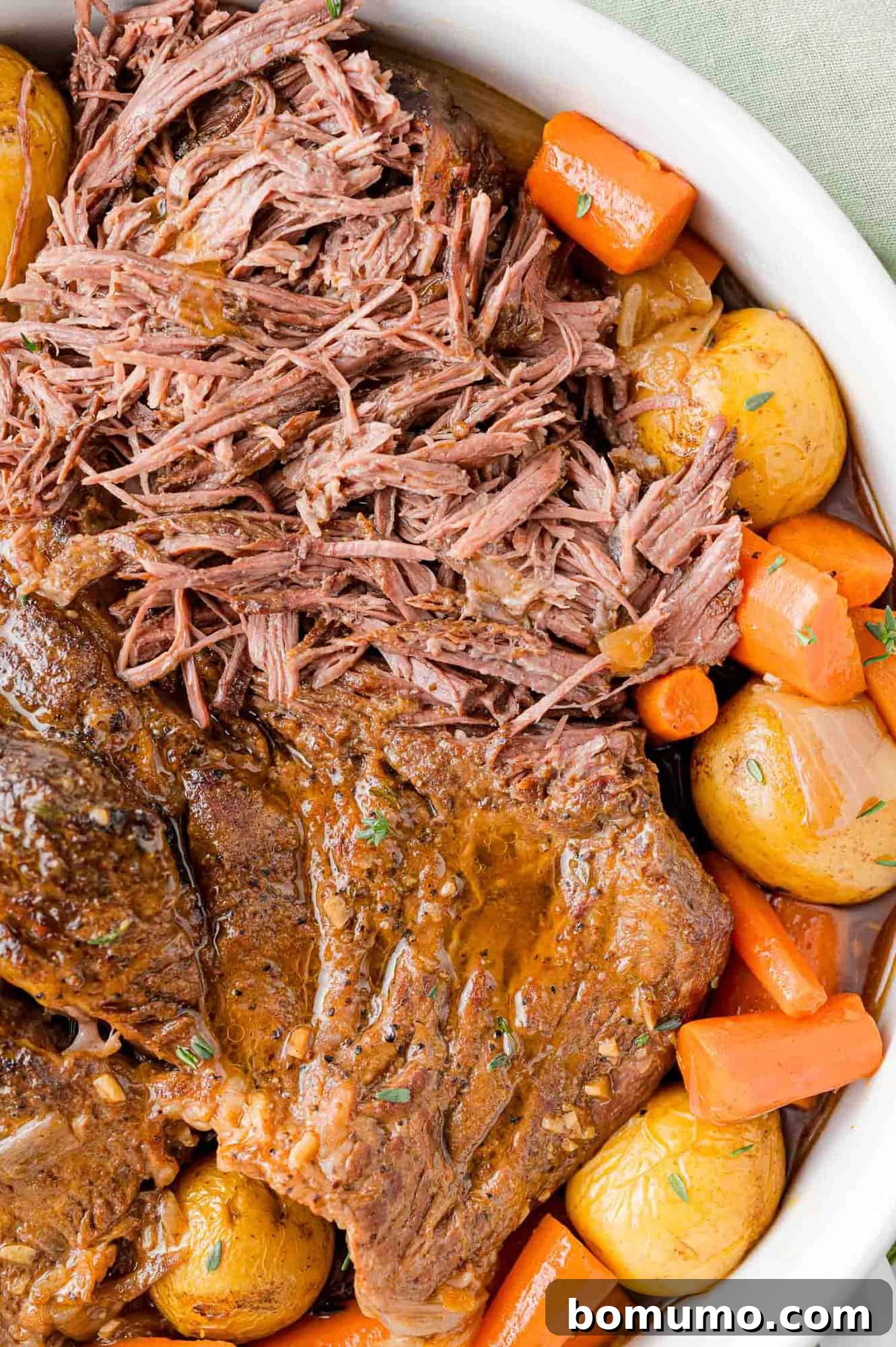
For many, the mention of pot roast immediately conjures images of a warm, inviting Sunday dinner. It’s more than just a meal; it’s a cherished ritual, a time for families to reconnect, share stories, and create lasting memories before the bustling week begins. Growing up, our Sundays often culminated at my grandparents’ house after church, and without fail, a magnificent “beef roast” (as my Grandma affectionately called it, never “pot roast”) would be the centerpiece of the table. The intoxicating aromas that greeted us at the door, signaling hours of slow, loving preparation, are memories I hold dear to this day.
While the idea of a traditional Sunday dinner might seem like a grand undertaking in today’s fast-paced world, this easy pot roast recipe makes it entirely achievable. Imagine succulent, tender meat, perfectly cooked potatoes, and sweet, earthy vegetables, all braised together in a single pot. This one-pan wonder simplifies the process, allowing you to savor the moments with your family without being tethered to the kitchen.
Unbeatable Reasons to Embrace This Classic Pot Roast Recipe
- A Tried and True Classic: In a world brimming with countless recipes, this particular pot roast stands out as a timeless favorite. It’s elegantly simple, allowing the rich, natural flavors of the beef and vegetables to shine through, further enhanced by the subtle freshness of herbs. This recipe isn’t just good; it’s consistently excellent, a culinary touchstone you’ll return to again and again.
- Budget-Friendly Comfort: Enjoying a lavish meal doesn’t have to break the bank. Chuck roast, the star of this recipe, is a remarkably economical cut of beef. When slow-braised, it transforms into incredibly tender, flavorful meat. Paired with readily available and affordable vegetables, this recipe offers a delicious and satisfying meal that’s kind to your wallet.
- Leftovers That Delight: One of the many joys of making pot roast is the incredible leftovers it yields. If you’re cooking for a family of four, you’ll likely have enough for delightful work lunches or to create hearty, savory sandwiches the next day. Unlike some dishes that lose their appeal, pot roast often tastes even better the second day, making meal prep a true pleasure.
- A Meal for Everyone: This pot roast recipe truly caters to all palates. Adults will appreciate the deep, complex flavors and the comforting nostalgia of this old-fashioned dish, evoking memories of home-cooked meals. Children, on the other hand, will adore its straightforward, uncomplicated taste, especially when served alongside a creamy side like Instant Pot mac and cheese, creating a balanced and beloved family meal.
- Easier Than You Imagine: While pot roast does require a generous amount of cooking time, the beauty lies in its hands-off nature. The actual effort involved is minimal, allowing you to go about your day while the oven works its magic. There’s nothing fussy or difficult about preparing this dish, making it accessible even for novice cooks who desire impressive results.
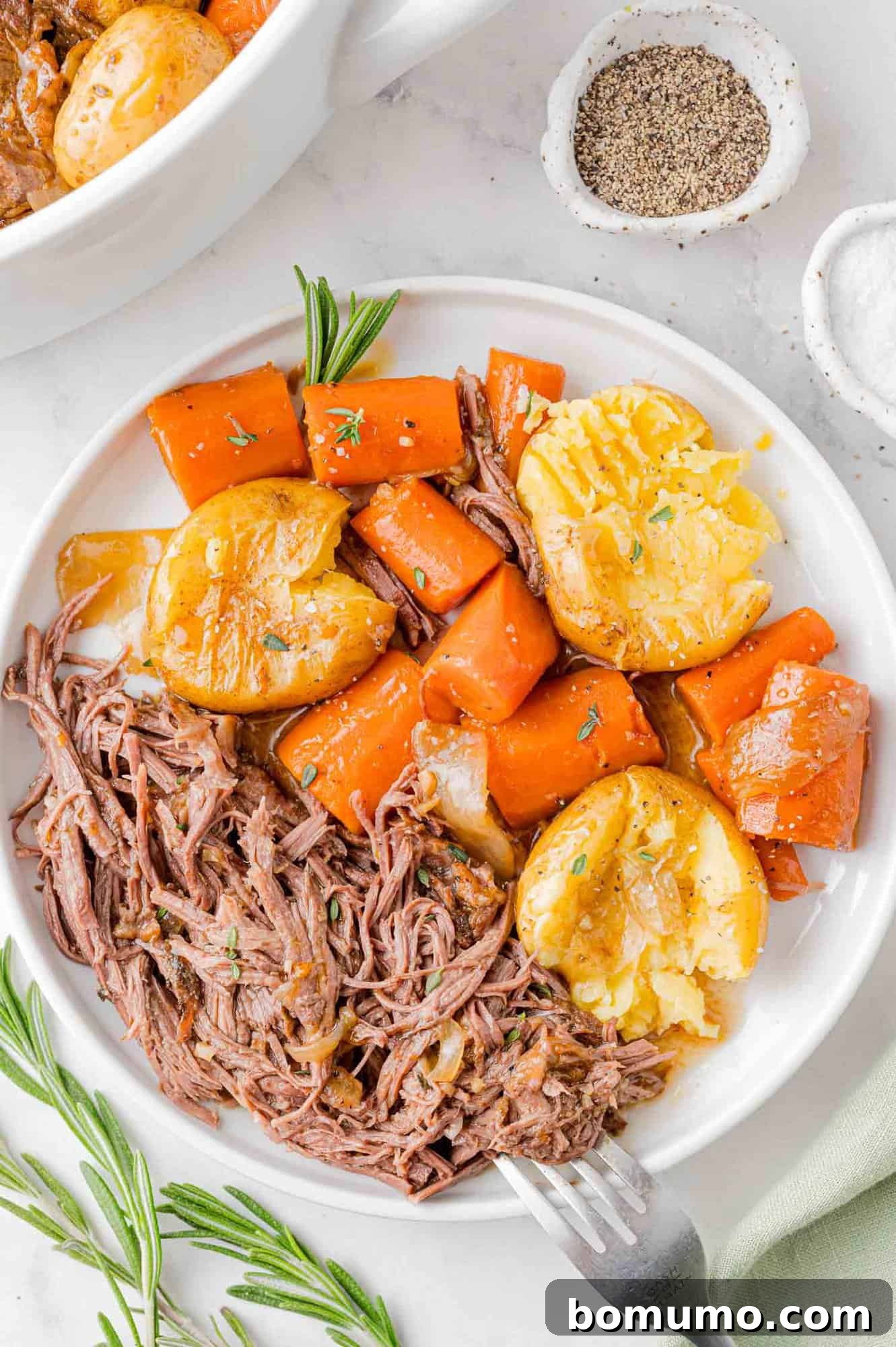
Essential Ingredients for Your Perfect Pot Roast
- Chuck Roast: This is the ideal cut for pot roast. While some butchers might label it simply “pot roast,” look for “chuck roast” as it contains a good balance of meat and connective tissue that breaks down beautifully during slow cooking, resulting in unparalleled tenderness and flavor.
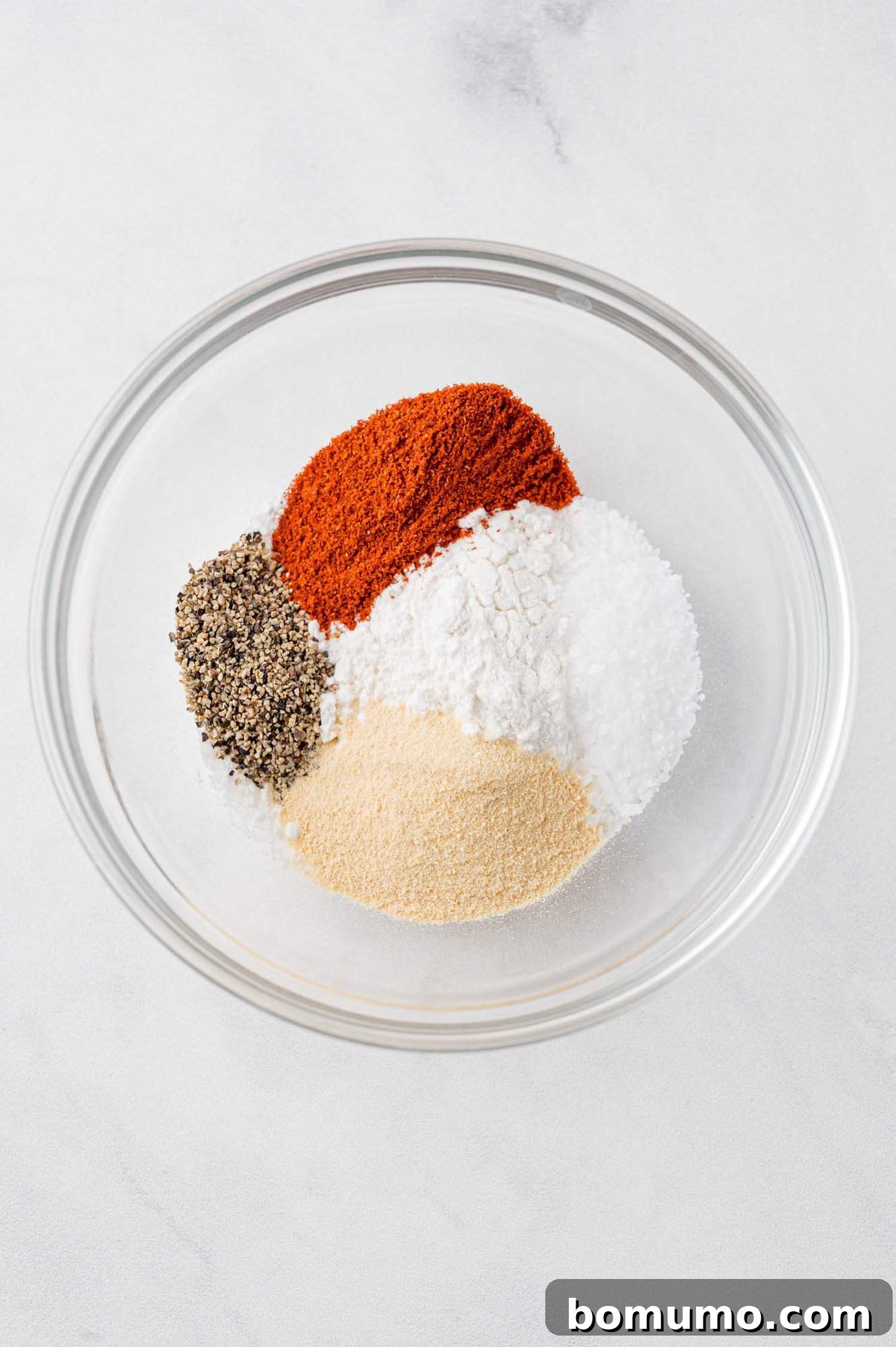
- Seasoning Mixture: A blend of Kosher salt, coarse ground black pepper, garlic powder, and paprika provides a robust flavor foundation. The addition of flour helps create a delicious crust on the roast when seared, sealing in juices and adding another layer of taste.
- Extra Virgin Olive Oil: Used for browning the roast to develop a rich, savory crust and for sautéing the vegetables, ensuring they cook perfectly without sticking. Any other mild-tasting oil, such as canola or vegetable oil, can be used as a substitute if preferred.
- Yellow Onion: A staple in many comfort food recipes, yellow onions add a foundational sweetness and aromatic depth to the braising liquid. For a slightly milder, more refined flavor, shallots can be used instead.
- Carrots: These root vegetables contribute natural sweetness and vibrant color. If thoroughly scrubbed, there’s no need to peel them, saving you time and retaining valuable nutrients. This tip applies to most recipes calling for carrots!
- Garlic: Fresh garlic is key to a flavorful pot roast. Minced finely with a knife or pressed through a garlic press, it infuses the dish with its unmistakable aromatic qualities.
- Red Wine (Optional but Recommended): A dry red wine like Cabernet Sauvignon, Merlot, or Pinot Noir significantly deepens the flavor profile of the pot roast, adding complexity and richness. If you choose to omit it, a simple substitution with extra beef broth will work.
- Unsalted Beef Stock or Broth: Opting for unsalted stock gives you precise control over the seasoning of your dish. Most quality beef stocks are unsalted by default, but always double-check the label when purchasing from the store.
- Baby Potatoes: These small, tender potatoes are wonderfully convenient as they can be added whole, eliminating the need for chopping. If unavailable, larger potato varieties like Yukon Golds or red potatoes can be cut into 2-inch chunks.
- Fresh Herbs: Rosemary and thyme are classic companions to beef, infusing the pot roast with their fragrant, earthy notes. Fresh sprigs offer the best flavor, but dried herbs (approximately 1 teaspoon per sprig) can be used in a pinch. A dried bay leaf is also essential for a truly authentic flavor.
Cooking Tip: Red Wine Substitution
If you prefer to omit the red wine from this recipe, simply replace it with an equal amount of unsalted beef broth or stock. This ensures you maintain the necessary liquid volume for braising while still achieving a rich flavor.
Step-by-Step: Crafting Your Classic Pot Roast
Creating a truly delicious pot roast involves a few simple yet crucial steps that build layers of flavor. Follow these instructions carefully, and you’ll be rewarded with a tender, succulent masterpiece that will impress everyone at your table.
Begin by preheating your oven to 300ºF (150ºC). While the oven heats, take your chuck roast and thoroughly pat it dry with paper towels. Removing excess moisture is vital for achieving a beautiful, flavorful sear.
In a small bowl, combine the all-purpose flour, 1 teaspoon of kosher salt, ½ teaspoon of coarse ground black pepper, garlic powder, and paprika. This seasoning mixture will form the aromatic crust on your roast. Use your hands to generously pat this blend onto all sides of the beef. Don’t worry if there’s a little extra seasoning; set it aside as you might need it later to enhance the sauce.
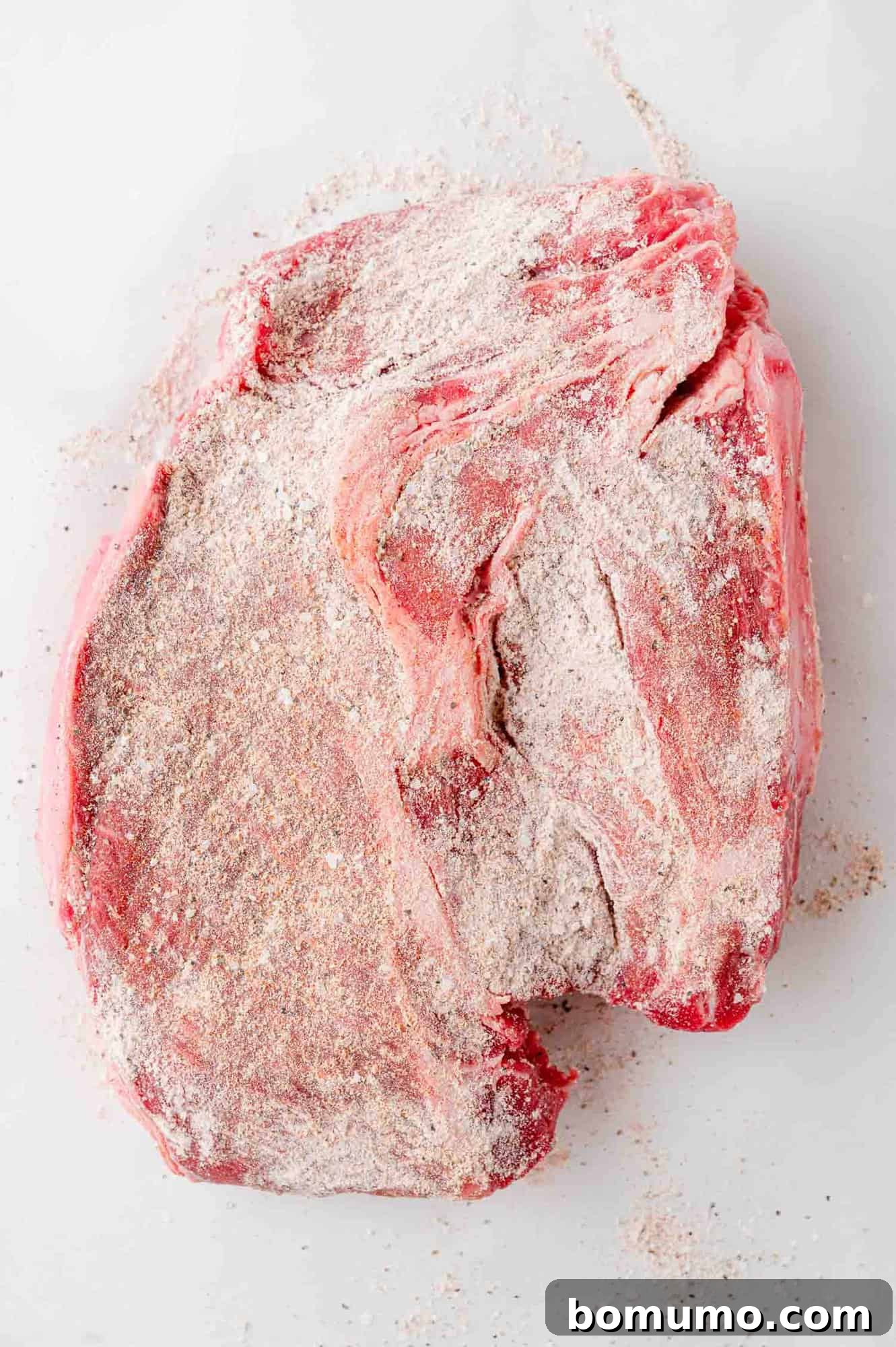
Place a large, oven-safe Dutch oven over medium-high heat on your stovetop. Add 2 tablespoons of extra virgin olive oil. Once the oil is shimmering, carefully add the seasoned chuck roast to the hot pot. Sear each side for 2 to 3 minutes, allowing a deep, golden-brown crust to form. This browning step is crucial for developing rich, complex flavors. Once browned, remove the roast from the Dutch oven and set it aside on a plate to rest.
If needed, add another tablespoon of olive oil to the Dutch oven. Add the chopped yellow onion and carrots to the pan. Sprinkle with the remaining ½ teaspoon of salt and ½ teaspoon of black pepper. Cook, stirring frequently, for about 5-7 minutes until the onions become soft and mostly translucent. Next, stir in the minced garlic and any reserved flour seasoning mixture, cooking for just one more minute until fragrant, being careful not to burn the garlic.
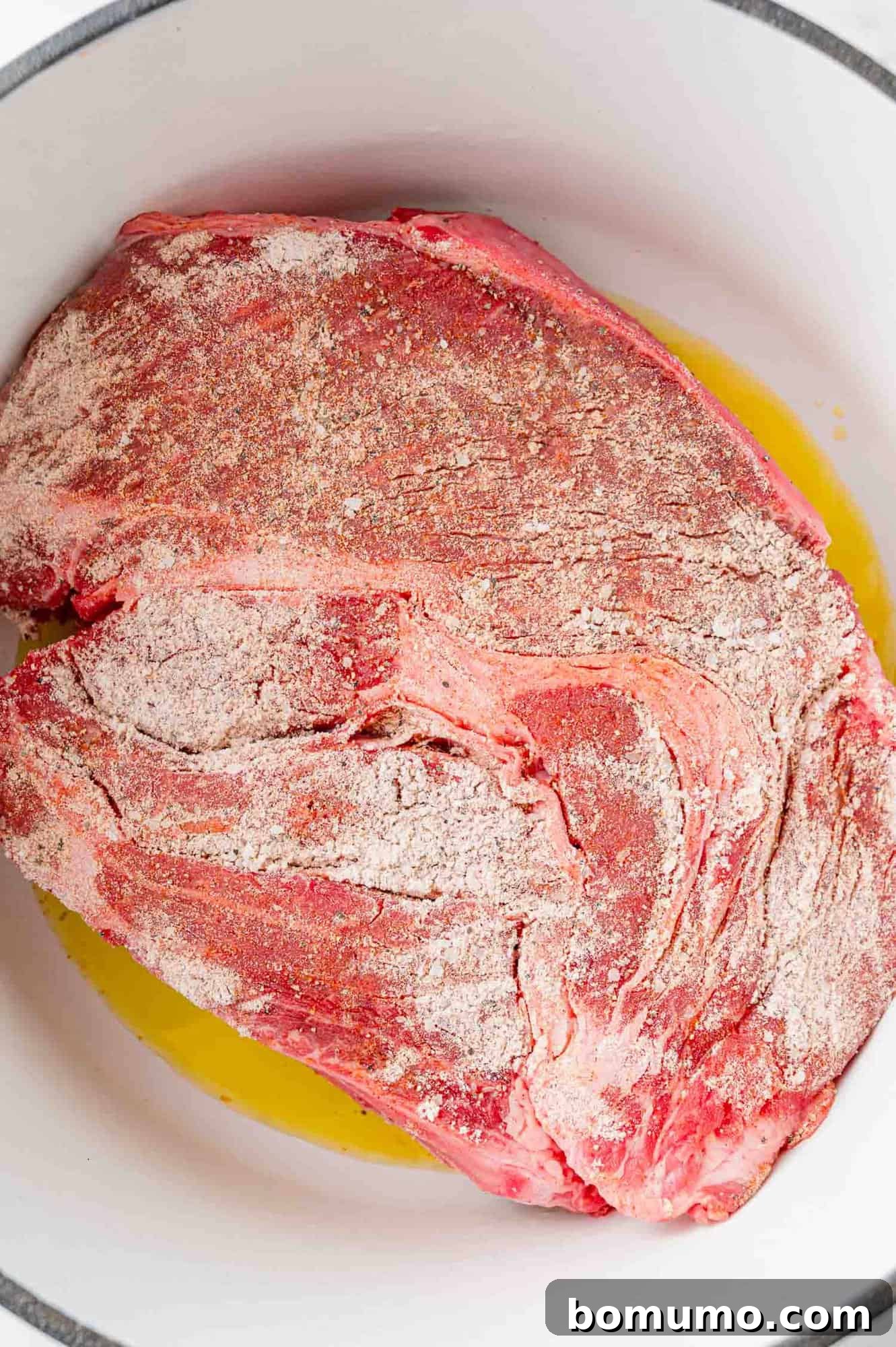
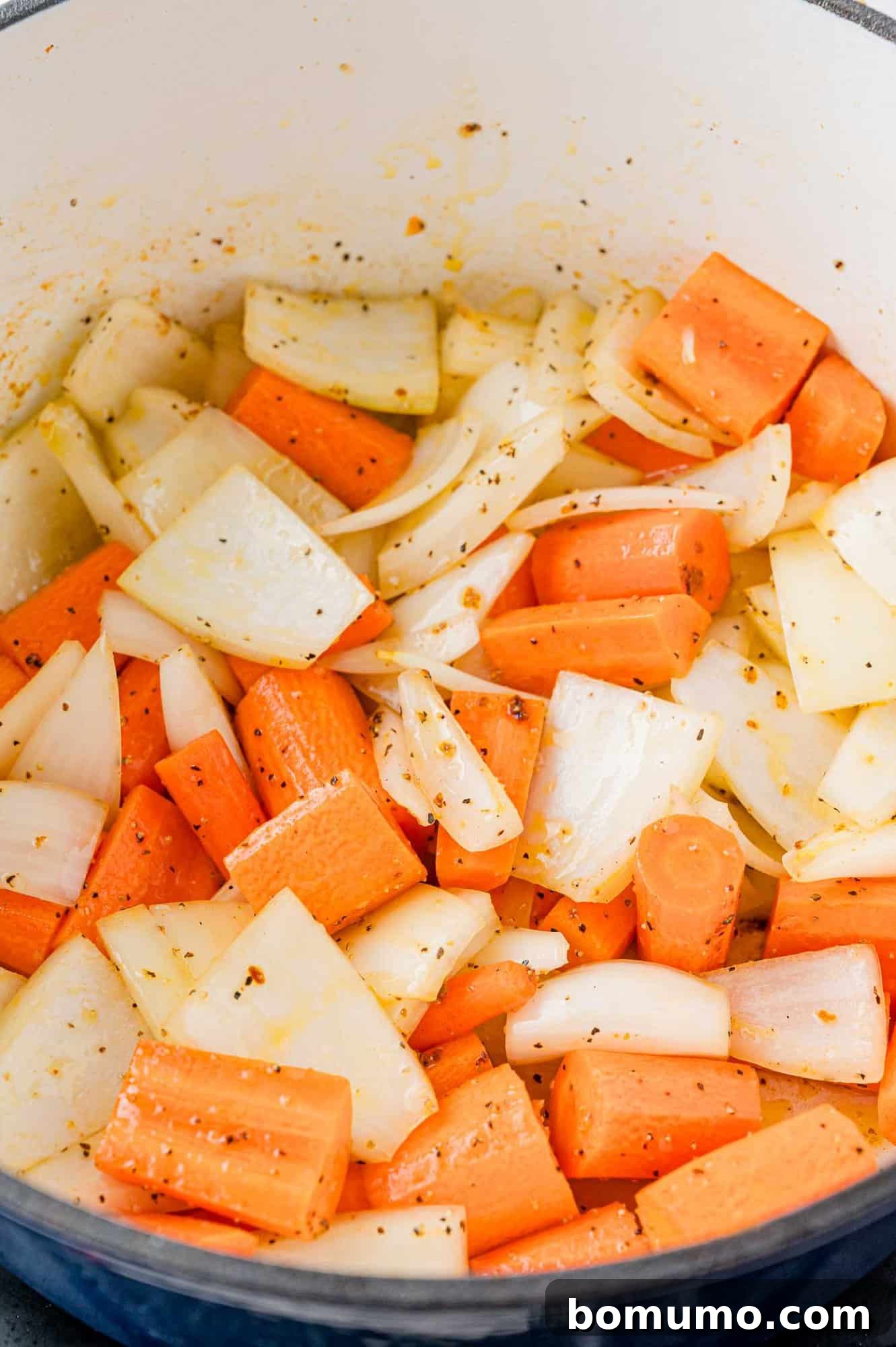
Pour in the red wine (or additional beef stock, if substituting). Use a wooden spoon to scrape up any delicious brown bits that have formed on the bottom of the pan – this process, known as deglazing, adds immense flavor to your sauce. Gently push the carrots and onions to the sides of the Dutch oven, creating space for the browned roast. Carefully place the beef back into the center of the pot.
Add 2 cups of unsalted beef stock, along with the baby potatoes, fresh thyme sprigs, fresh rosemary sprigs, and the bay leaf. Nestle all the vegetables and herbs into the stock so they are at least partially submerged in the liquid, allowing them to absorb the rich flavors as they cook. This ensures everything cooks evenly and infuses beautifully.
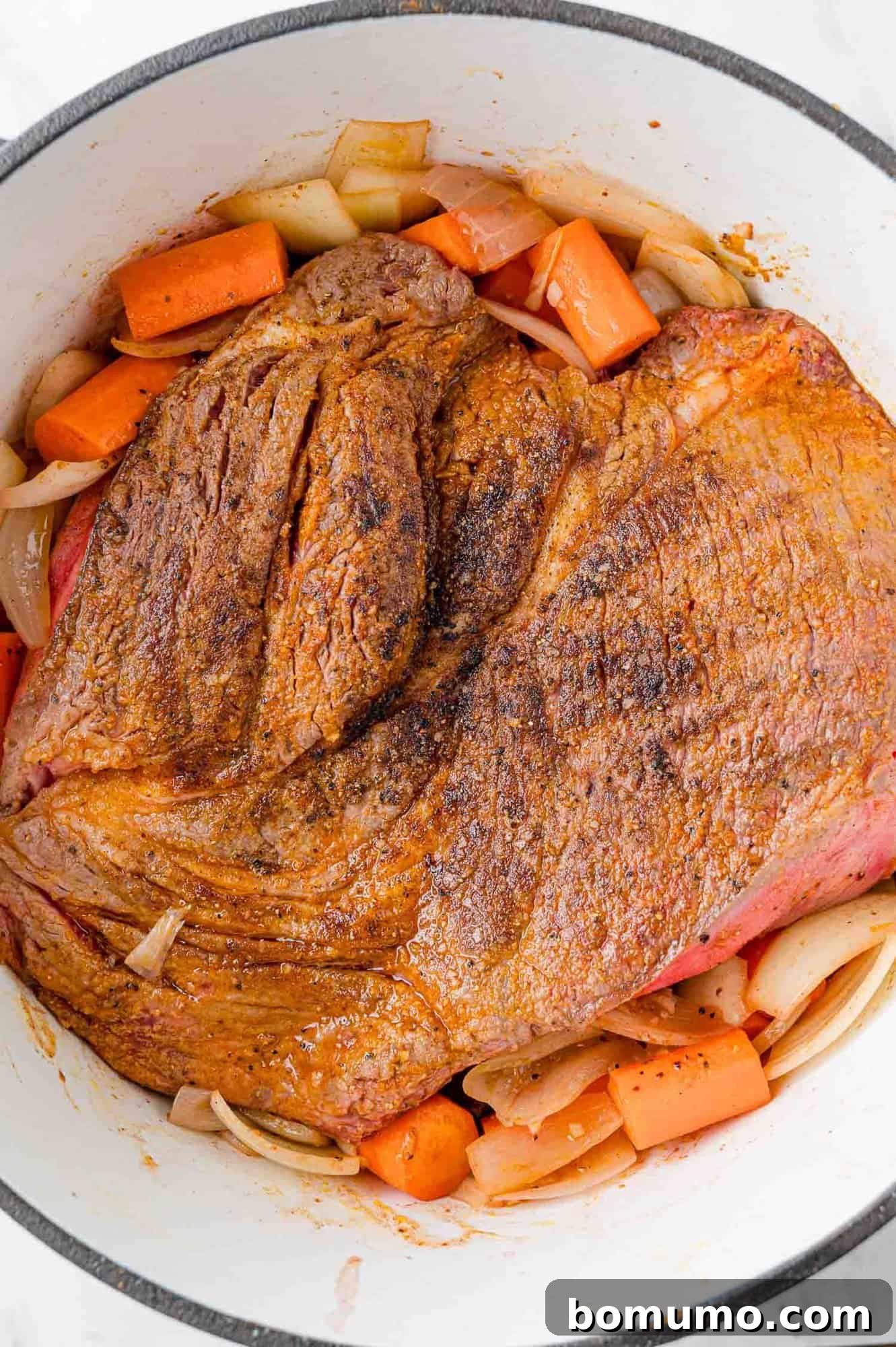
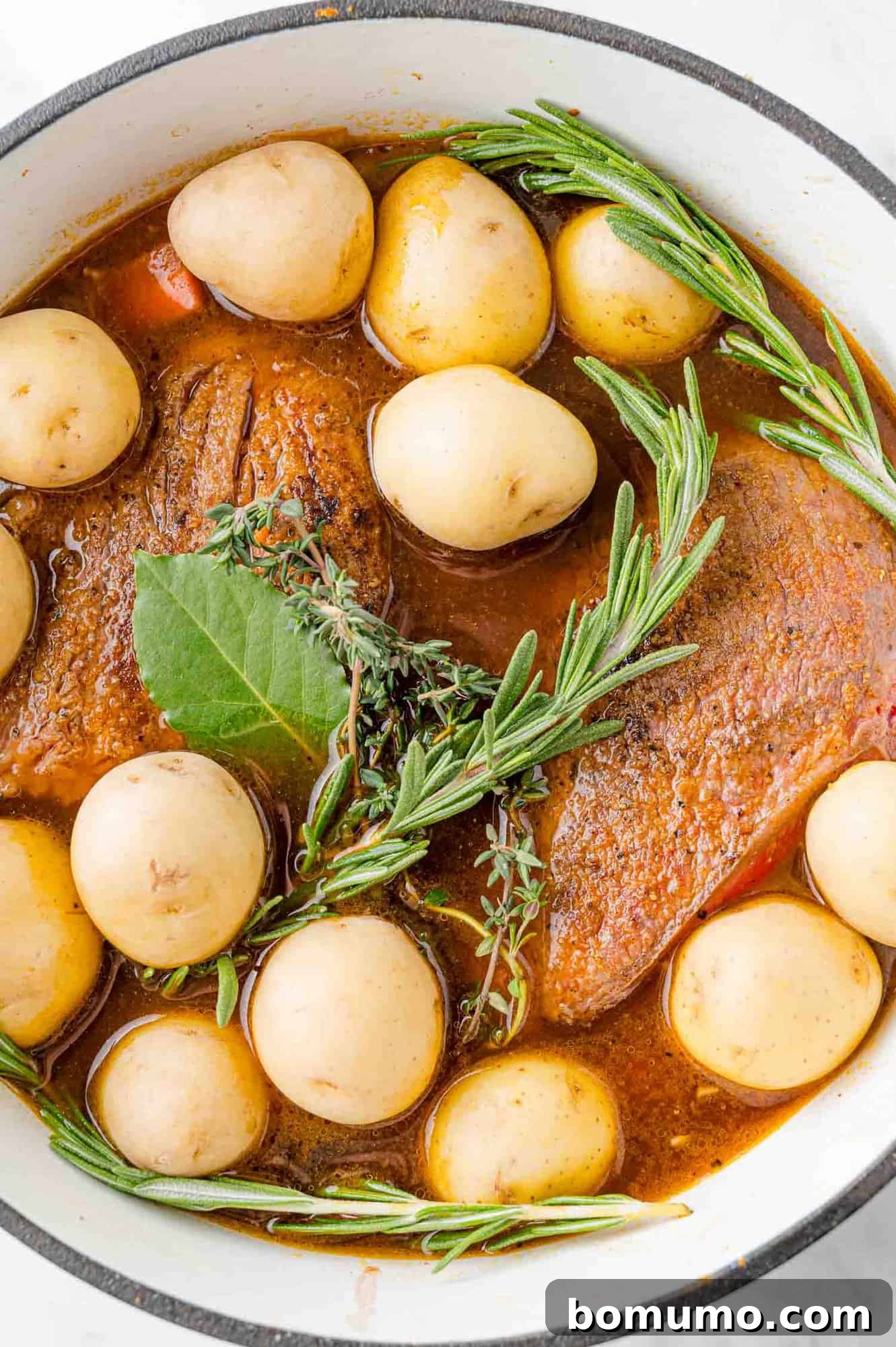
Cover the Dutch oven tightly with its lid and carefully transfer it to your preheated oven. Bake the pot roast for a minimum of 3 hours, or until the meat is incredibly tender and easily shreds with a fork. Patience is key here; slow cooking is what transforms the chuck roast into a melt-in-your-mouth experience.
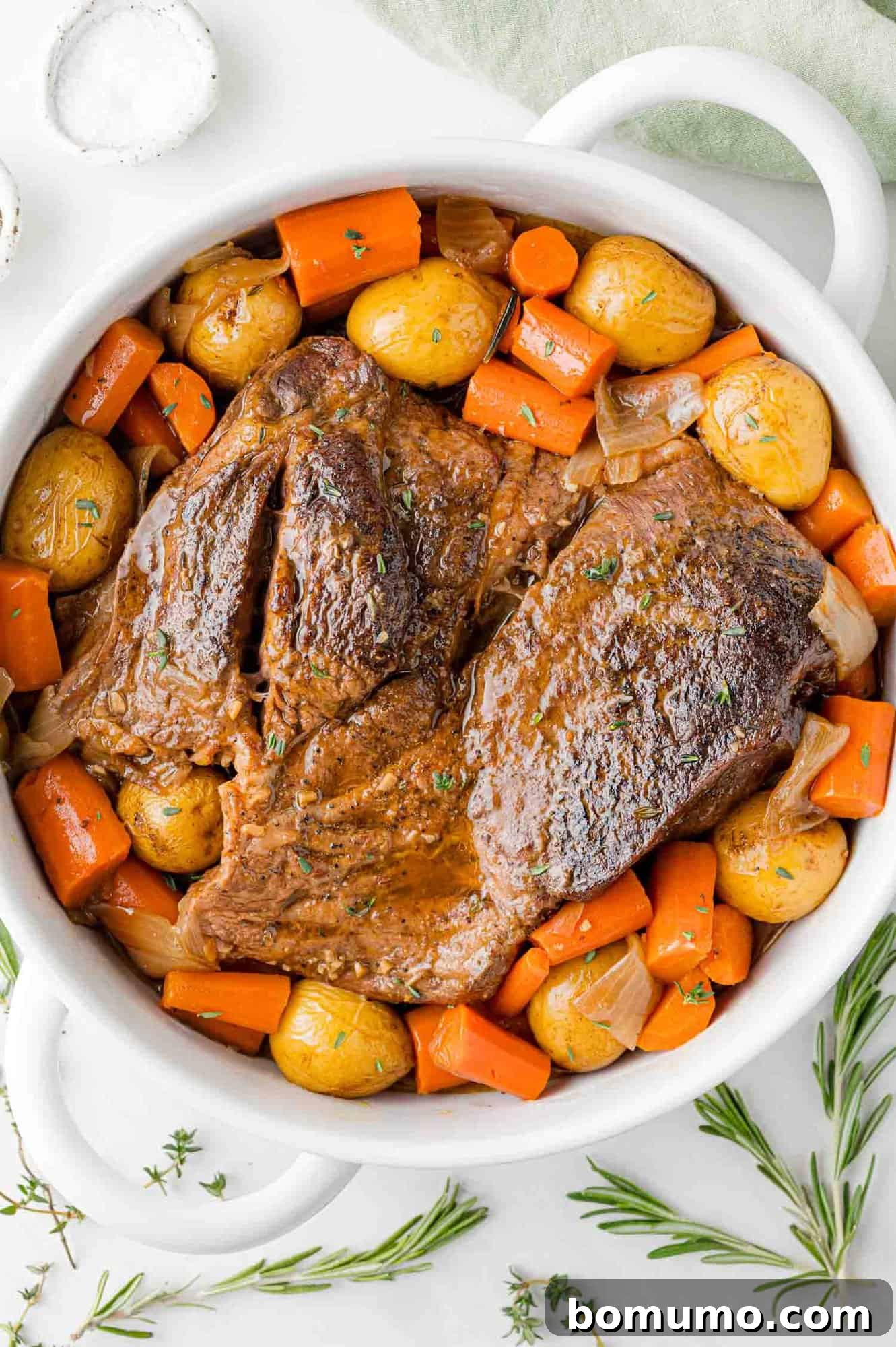
Before serving, remember to remove the herb stems (rosemary and thyme) and the bay leaf. These have imparted their wonderful flavors and are not meant to be eaten. Your classic pot roast is now ready to be served, promising a meal of unparalleled comfort and flavor!
FAQs: Common Questions About Pot Roast
FAQs: Common Questions About Pot Roast
The primary distinction lies in the cooking method. A pot roast is typically seared first to develop a flavorful crust, then cooked slowly in a liquid (like broth, water, or wine). This technique is called “braising,” and it’s perfect for tougher, more collagen-rich cuts of meat such as chuck roast, rump roast, or short ribs, transforming them into incredibly tender dishes. An “oven roast,” often referred to as “roast beef,” is cooked dry in the oven without added liquid. This method is best suited for naturally tender cuts like prime rib, sirloin tip, tenderloin, or rib-eye, which benefit from direct heat and achieve a crispy exterior.
A tough pot roast can be due to a few common reasons. Firstly, it might be undercooked; braising requires a long, slow cooking period to break down tough connective tissues. Secondly, it could be overcooked, which, paradoxically, can also make meat tough and dry. The most frequent culprit, however, is often the cut of beef itself or insufficient liquid. You need a cut with a good amount of fat and connective tissue, like chuck roast, as these elements melt during the long cooking process, basting the meat and making it succulent. Always remember to brown the roast initially to create a flavorful crust, and ensure there’s ample liquid in the pot to braise the meat gently and consistently.
The placement of your vegetables can subtly affect their texture and flavor. If you layer them beneath the roast, they will soak up all the flavorful juices and drippings, becoming incredibly tender and infused with the meat’s essence, though they will be quite soft. Alternatively, placing them alongside the roast allows them to brown slightly and retain a bit more firmness, offering a pleasant textural contrast. For this classic recipe, we recommend nestling them around the roast, partially submerged, to achieve a balance of tenderness and robust flavor absorption.
Expert Tips and Tricks for an Unforgettable Pot Roast
- Always Remove the ‘Silver Skin’: Before you begin seasoning, inspect your chuck roast for any tough “silver skin” or a thick layer of fat film. This silvery membrane will not break down during cooking and can make the roast chewy. Start at one end, gently lift the edge of the silver skin or excess fat, and use a sharp knife to carefully nudge it away from the meat towards the opposite end. This simple step ensures maximum tenderness.
- The Art of Browning Your Roast: Never skip the browning step! Searing the roast in a hot Dutch oven before adding liquids and other ingredients is fundamental to building deep, complex flavors. This process, known as the Maillard reaction, creates a rich, caramelized crust that locks in juices and adds an incomparable savory depth to the finished dish. It’s a flavor booster you won’t want to miss.
- Preserve Those Precious Juices: When flipping your meat during the browning stage, always use tongs or a spatula. Puncturing the roast with a fork can cause valuable meat juices to escape, leading to a drier final product. You want all that delicious moisture to remain within the meat to keep it succulent and tender throughout the long braising process.
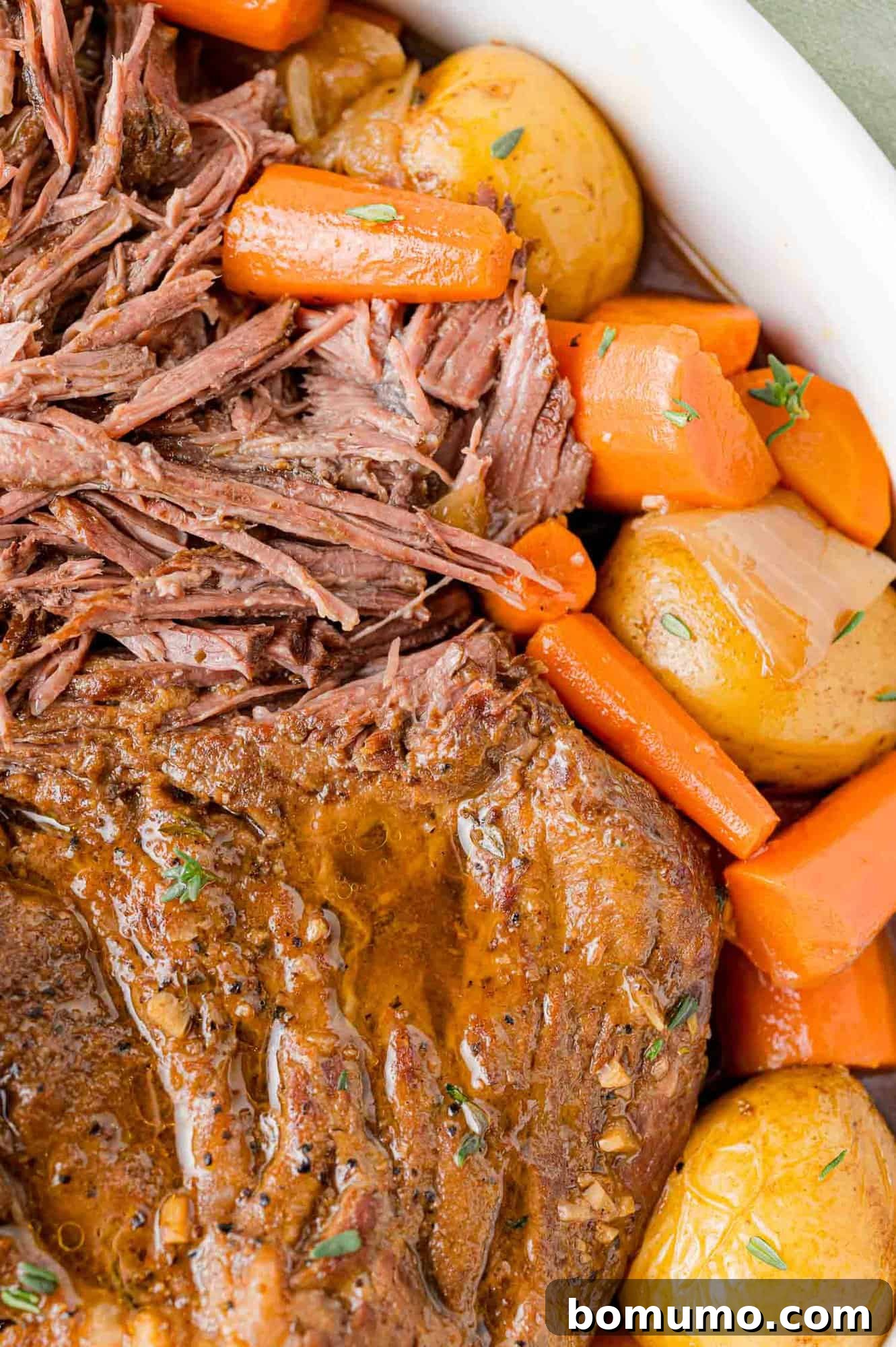
- Patience is Your Secret Ingredient: The hallmark of a truly perfect pot roast is its fall-apart tenderness, and this can only be achieved through patient, slow cooking. This classic recipe calls for approximately three hours in the oven, allowing the meat to gently braise to perfection. If you’re pressed for time, an Instant Pot pot roast offers a quicker solution. For those leisurely days when you want to savor the aroma all day long, consider this fantastic slow cooker Italian Pot Roast, which cooks for 8 to 10 hours.
Make Ahead Ideas to Simplify Your Cooking
Make Ahead Ideas to Simplify Your Cooking
To streamline your cooking process and make this pot roast recipe even more convenient, consider preparing some of the ingredients in advance. You can chop the carrots and onion, and mince the garlic a day or two before you plan to cook. Store these prepped vegetables in airtight containers in the refrigerator. This small step significantly reduces your active cooking time on the day you make the pot roast, allowing you to enjoy a more relaxed culinary experience.
Storage & Reheating Tips for Delicious Leftovers
Storage & Reheating Tips for Delicious Leftovers
You’re in luck if you have any of this delectable pot roast leftover! Properly stored, it can be just as enjoyable the next day, or even days later. For refrigeration, place the cooled pot roast and vegetables in an airtight container and store in the fridge for up to five days. While the roast itself freezes beautifully, we advise against freezing the potatoes. They tend to become mushy and lose their desirable texture upon thawing and reheating. If you plan to freeze, separate the meat and gravy from the potatoes.
While pot roast can be surprisingly good served cold (perfect for a quick sandwich!), reheating it is also simple. For individual servings, gently microwave until heated through, stirring occasionally. Alternatively, you can reheat the pot roast in the oven at 325°F (160°C) for about 10 minutes, or until it reaches your desired temperature. If the meat appears a little dry after reheating, simply sprinkle a small amount of extra beef broth over it to restore its moisture.
Creative Ways to Enjoy Your Leftover Pot Roast
Creative Ways to Enjoy Your Leftover Pot Roast
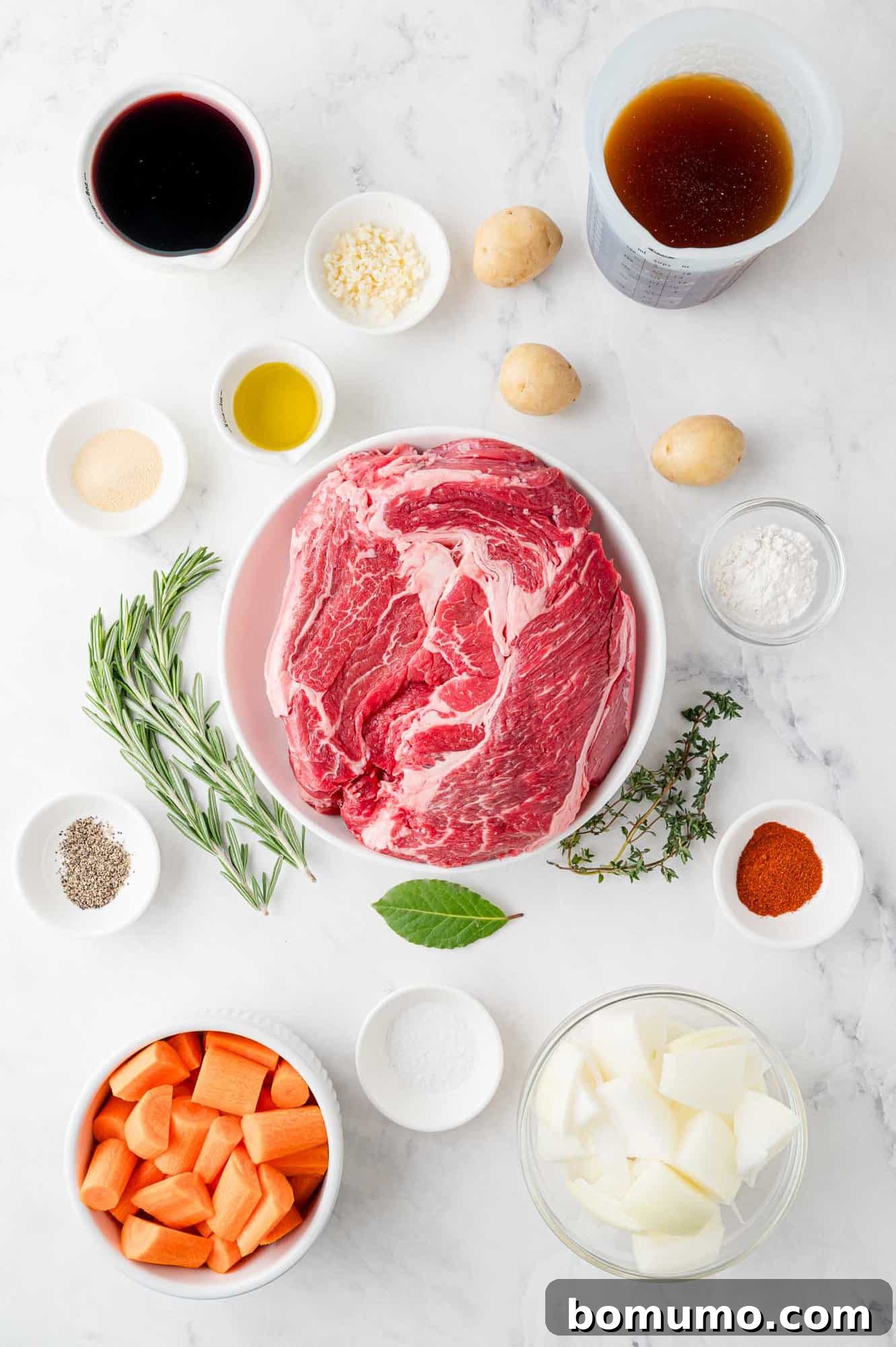
Beyond the classic roast beef sandwich with grainy mustard (which is, admittedly, hard to beat!), there are many creative ways to reinvent your leftover pot roast. If you’ve devoured all the accompanying vegetables, consider preparing a fresh batch of sides to complement the tender meat. Some excellent choices include crispy smashed potatoes with garlic butter and Parmesan or creamy Instant Pot polenta. You can also shred the leftover beef and use it for hearty tacos, sliders, or even a robust beef stew. The possibilities are endless when it comes to enjoying the rich flavors of this beloved dish.
Unlock Your Free Weekly Meal Plan
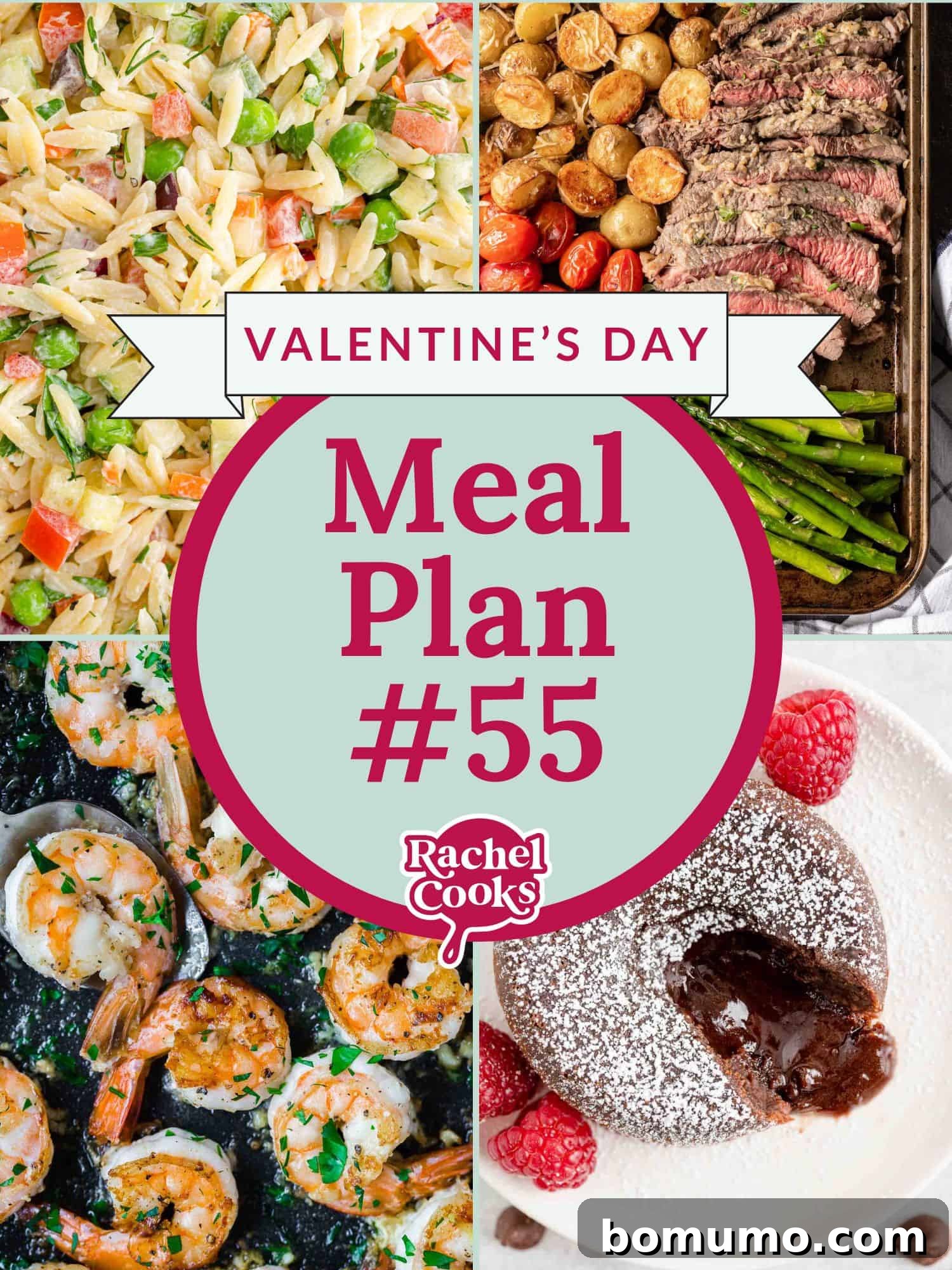
Curious about incorporating this delightful pot roast into a structured weekly menu? Explore Meal Plan #55, where you’ll discover a wholesome, carefully curated recipe for each weekday, complete with a convenient, categorized grocery list. We consistently update our collection with new meal plans every week, offering fresh inspiration for your kitchen.
More Inspiring Sunday Dinner Ideas
Easy Chicken Cacciatore Recipe
Tender Braised Lamb Shanks
Effortless One-Pan Steak Sheet Pan Dinner
Instant Pot Short Ribs & Mashed Potatoes (Cooked Together!)
Classic Pot Roast Recipe
Rachel Gurk
20 mins
3 hrs 15 mins
3 hrs 25 mins
6 servings
Ingredients
- 1 chuck roast (about 3 pounds)
- 2 tablespoons all-purpose flour
- 1 ½ teaspoons kosher salt, divided
- 1 teaspoon coarse ground black pepper, divided
- 1 teaspoon garlic powder
- 1 teaspoon paprika
- 2 tablespoons extra virgin olive oil, more if needed (or another mild tasting oil)
- 1 large yellow onion, cut into 1-inch pieces
- 6 carrots, scrubbed well or peeled, cut into 1-inch pieces
- 4 cloves garlic, minced
- 1 cup red wine (optional, see note)
- 2 cups unsalted beef stock or broth
- 1 pound baby potatoes, scrubbed (see note)
- 3 sprigs fresh thyme (or 1 teaspoon dried thyme)
- 3 sprigs fresh rosemary (or 1 teaspoon dried rosemary leaves)
- 1 bay leaf
Instructions
-
Preheat oven to 300º F. Thoroughly pat the chuck roast dry with paper towels to ensure a good sear.
-
In a small bowl, combine 2 tablespoons flour, 1 teaspoon salt, ½ teaspoon pepper, garlic powder, and paprika. Using your hands, generously pat this seasoning mixture onto all sides of the roast. Set aside any excess flour mixture for later.
-
Heat a large, oven-safe Dutch oven over medium-high heat. Add 2 tablespoons of olive oil. Once shimmering, add the seasoned roast and brown each side for 2 to 3 minutes until a rich crust forms. Remove the browned roast and let it rest on a plate.
-
If necessary, add another tablespoon of oil to the Dutch oven. Add the chopped onion and carrots to the pan. Sprinkle with the remaining ½ teaspoon salt and ½ teaspoon black pepper. Cook, stirring frequently, until the onions are mostly translucent, about 5-7 minutes. Stir in the minced garlic and any leftover flour mixture, and cook for another minute until fragrant.
-
Pour in the red wine (or additional beef stock). Scrape up any brown bits from the bottom of the pan with a wooden spoon. Push the carrots and onions to the sides and place the browned roast back into the Dutch oven.
-
Pour 2 cups of beef stock into the pan. Add the baby potatoes, fresh thyme sprigs, fresh rosemary sprigs, and the bay leaf, nestling them into the stock. Cover the Dutch oven tightly with its lid.
-
Bake the pot roast in the preheated oven for 3 hours, or until the meat is incredibly tender and easily pulls apart with a fork. Before serving, remove the herb stems and bay leaf.
Notes
- If you’d like to omit the red wine, use 1 cup additional unsalted beef stock instead to maintain the liquid content.
- If using store-bought beef broth that is not unsalted, you may need to reduce the amount of added salt in the recipe to taste.
- For larger potatoes, cut them into approximately 2-inch pieces before adding them to the pot as a substitute for baby potatoes.
Nutrition Information (Approximate per serving)
Calories: 607 kcal
Carbohydrates: 28g
Protein: 48g
Fat: 31g
Saturated Fat: 12g
Polyunsaturated Fat: 3g
Monounsaturated Fat: 17g
Trans Fat: 2g
Cholesterol: 156mg
Sodium: 981mg
Potassium: 1563mg
Fiber: 4g
Sugar: 6g
Vitamin A: 12115 IU
Vitamin C: 23mg
Calcium: 95mg
Iron: 6mg
Nutrition information is automatically calculated and should be used as an approximation. Actual values may vary based on ingredients and preparation methods.
Did You Make This?
We’d love to hear from you! Share a comment and rating below. Your feedback helps us grow!