Seafood
Kung Pao Shrimp
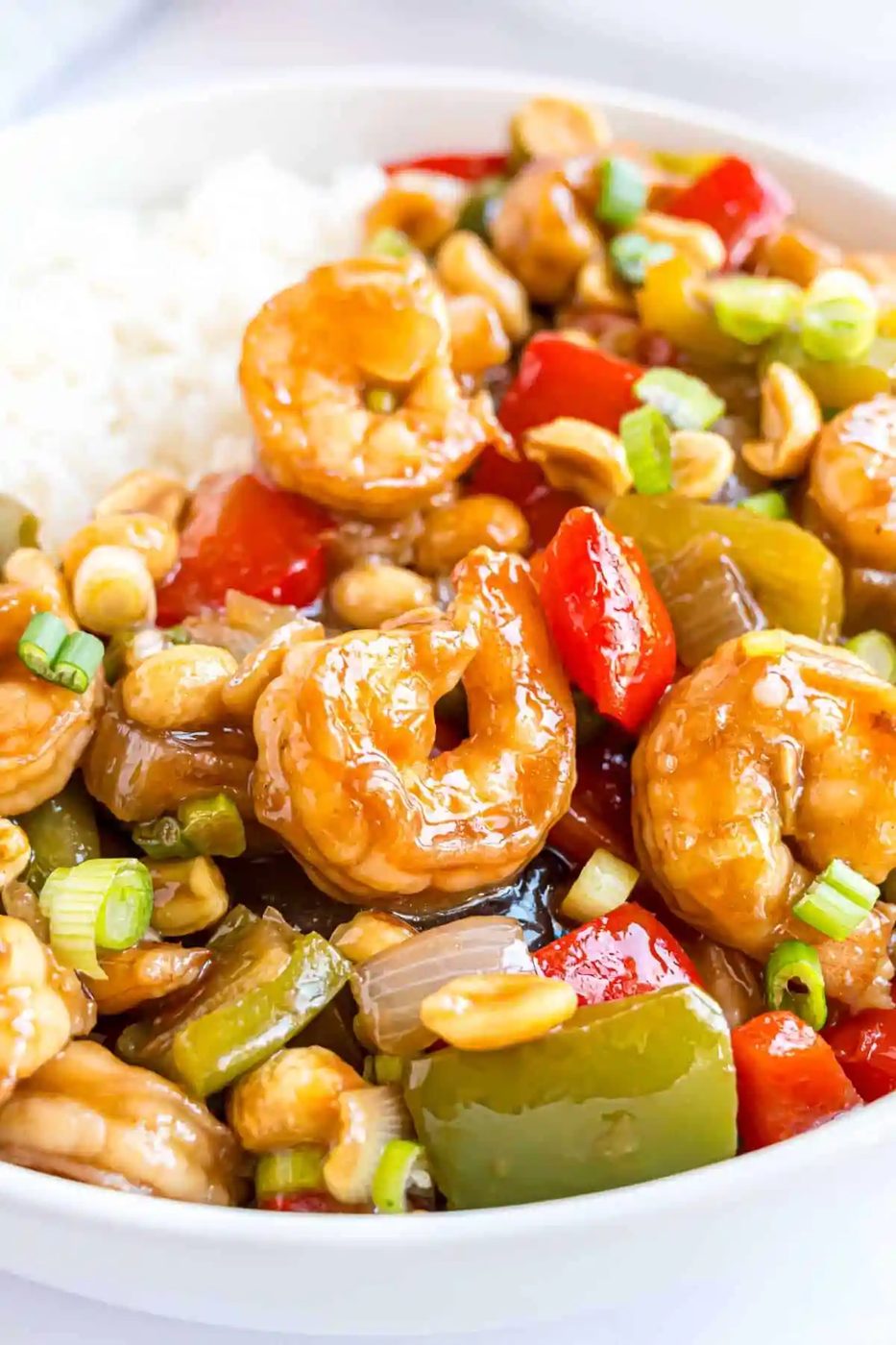
This Americanized version of kung pao shrimp offers a delightful balance of savory and sweet flavors with a subtle spicy kick. The peanuts add a nutty flavor.
At a glance
What stands out: This Americanized version of kung pao shrimp offers a delightful balance of savory and sweet flavors with a subtle spicy kick. This recipe is accessible with straightforward-to-find ingredients and will give you those take-out flavors you love, without leaving the house.
How long it takes: 30 minutes
Equipment you’ll need: large skillet or wok, mixing bowl
Servings: 4
Kung Pao shrimp is a Chinese dish that is a blend of succulent shrimp and a medley of stir-fried vegetables, complemented by a sweet and spicy sauce featuring soy sauce, hoisin, and sesame oil. Red pepper flakes add just the right amount of spicy heat (and you can adjust the heat level to your preference!).
About This Kung Pao Shrimp Recipe
- Straightforward to find ingredients. Because this is an “Americanized” recipe, you’ll be able to find everything you need at most grocery stores, even if you don’t live close to a major city. You may already have most of the ingredients already in your pantry.
- Ready in 30 minutes. Stir fries are usually a pretty speedy meal to make. They are comprised of a lean protein, lots of vegetables, and a savory sauce. Kung pao shrimp is no exception. You can have this meal on the table in less than a half hour! If you like the idea of stir fry meals, try shrimp and broccoli stir fry, honey walnut shrimp, beef stir fry with vegetables, or sweet and sour chicken stir fry.
- Lots of spicy sweet and sour flavor. Kung pao shrimp is an exciting flavorful dish with a tangy spicy sauce and plenty of umami from toasted sesame oil, soy sauce, and hoisin sauce. Fresh bell peppers, garlic, ginger root, and onion are featured. Crispy roasted peanuts provide flavor and textural contrast.
What goes in
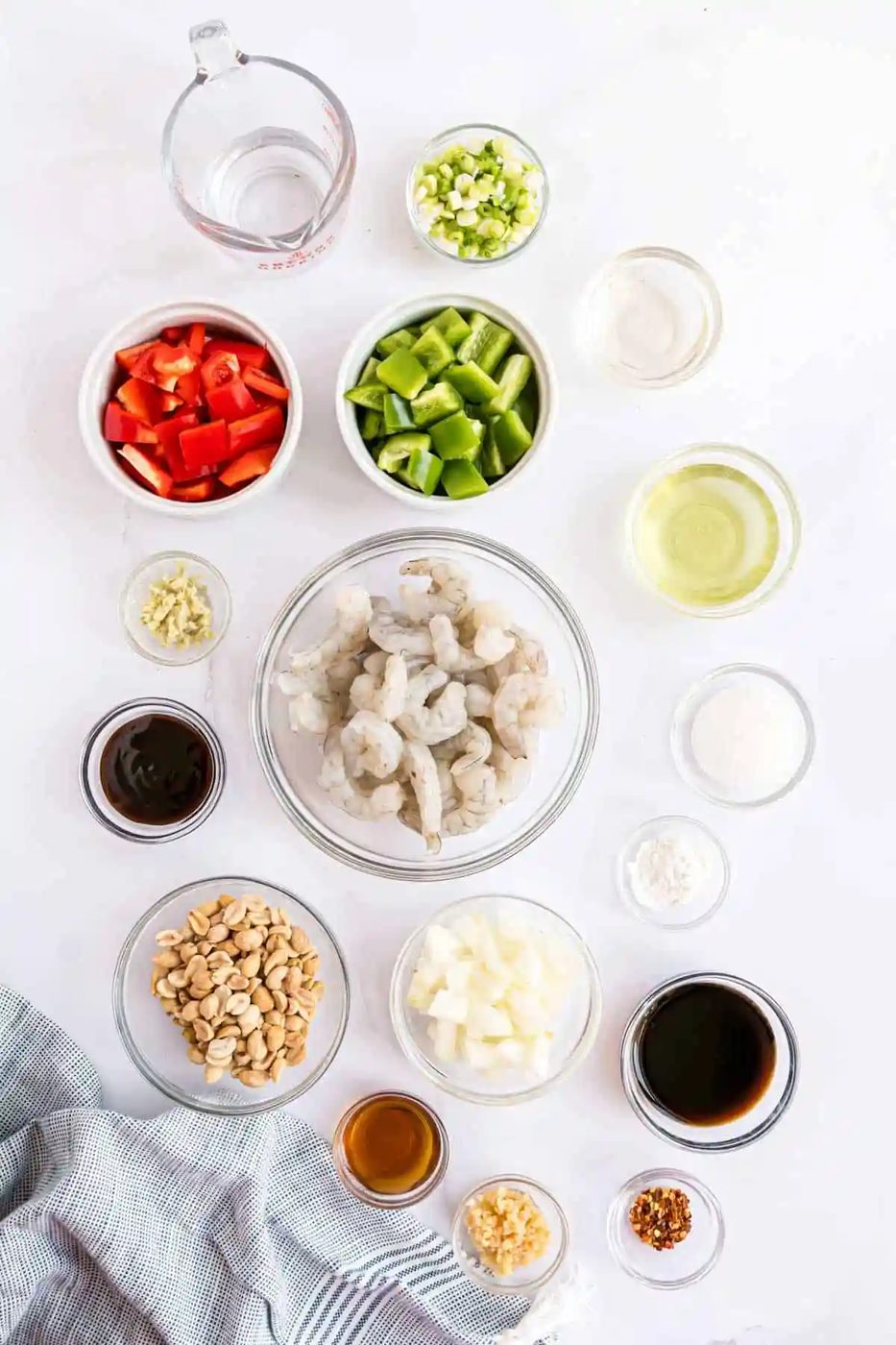
Be sure to refer to the recipe card below for measurements.
- Shrimp: You’ll need a pound of large-size shrimp. We like the 20/30 size for this dish. Be sure to choose raw shrimp that are peeled and deveined, tails on or tails off, your choice. Frozen shrimp are fine. Thaw them according to package instructions.
- Soy Sauce: Traditional recipes call for shaoxing wine in the marinade. We substituted soy sauce because it’s easier to find and you probably already have it in your pantry or fridge. Soy sauce is also used to make the kung pao sauce.
- Cornstarch: A teaspoon of cornstarch is added to the marinade; another teaspoon is used to thicken the sauce.
- Rice Vinegar: Commonly used in stir fry sauces, rice vinegar is clear and light flavored. It may be called rice wine vinegar. Avoid seasoned rice vinegar which has added salt and sugar. Traditional recipes use Chinese black vinegar. Balsamic vinegar is sometimes substituted.
- Hoisin Sauce: Look for this sauce in the Asian section of your grocery store. It’s a savory, slightly sweet sauce that is commonly used in Chinese cuisine.
- Sugar: Kung pao shrimp has a sweet and sour profile. Sugar helps balance the acidic (sour) vinegar.
- Toasted Sesame Oil: This dark brown oil has a strong distinctive flavor that you’ll recognize right away if you enjoy Chinese cuisine. Don’t get it confused with regular sesame oil which is nearly colorless and mild in flavor. Look for toasted sesame oil in the Asian section of your market.
- Crushed Red Pepper Flakes: In this recipe, red pepper flakes add the spicy heat usually found in kung pao shrimp. Adjust the heat level to your preference.
- Oil: For a stir fry, we recommend an oil that can withstand high heat such as grapeseed, avocado, vegetable, or peanut oil.
- Garlic: You’ll need 3 to 4 cloves of fresh garlic.
- Ginger: Look for fresh ginger root in the produce section. Peel off the dry outer portion of the root using a vegetable peeler, paring knife, or the edge of a spoon. You’ll need about a one inch piece of ginger root.
- Red and Green Bell Peppers: Colorful chopped bell peppers are an important part of this dish, providing textural, flavor, and color contrasts.
- Onion: Choose a sweet onion, such as red, Spanish, or Vidalia.
- Green Onions: Sliced green onions provide a fresh bright flavor. You may know them as spring onions or scallions.
- Roasted Peanuts: Kung poa dishes are traditionally served with raw peanuts that are lightly toasted in a wok. To make things easier, we like to use unsalted roasted peanuts or cashews.
Why Cornstarch?
In Chinese cooking, adding cornstarch to a marinade, or coating the meat with cornstarch, is called “velveting.” Cornstarch helps keep the meat or seafood moist and delicate during cooking. Cornstarch is also included it in the sauce as a thickener. It creates a syrupy sauce that coats the meat and vegetables.How it comes together
Cook the rice. If you want to serve rice with the kung pao shrimp, get that started first. Jasmine rice, basmati rice, or any long grain white rice is a good choice; brown rice is a bit more nutritious. We like to use our Instant Pot to cook rice.
Marinate the shrimp. Combine the soy sauce and cornstarch in a large bowl. Add the shrimp (thawed if frozen) and stir well. Let the shrimp marinate about 15 minutes.
Make the sauce. In a small bowl or glass measuring cup, blend together the sauce ingredients.
Prep the vegetables. While the shrimp is marinating, you can chop the peppers and onions. Slice the green onions and mince the garlic cloves and fresh ginger. Set them aside for now.
Cook the shrimp. In a large skillet or wok, heat a tablespoon of oil over medium high heat. When it’s shimmering, add the shrimp and arrange it in a single layer. Cook the shrimp for a couple of minutes, then flip them over and cook for another two minutes or until they’re done (smaller-sized shrimp will get done more quickly).
Transfer the shrimp from the skillet to a plate. Use a few paper towels to wipe out the pan.
Stir fry the vegetables. Heat a couple more tablespoons of oil in the skillet over medium high heat. Stir fry the garlic and ginger briefly, until fragrant. Add the chopped onions and peppers to the pan. Stir fry for about 5 minutes or until they are the desired tenderness.
Add the sauce. Turn the heat down to medium and add the shrimp to the pan. Give the sauce ingredients one more speedy whisk and then add the sauce to the pan. Cook for a minute or two, until the sauce thickens slightly and coats the vegetables and shrimp.
Stir in the peanuts and sliced green onions. Your kung pao shrimp is ready to serve! If you like, garnish it with additional sliced green onions, red pepper flakes, or sriracha.
Before you start
Tips For Success
- Have everything prepped before you start. Stir fries move along quickly. It’s important to have all the ingredients ready to go before you heat the pan. Cut up the vegetables and make the sauce before you cook the shrimp. If you’re serving rice, get that cooking first.
- Don’t overcook the shrimp. Overcooked shrimp can be tough and rubbery, and they cook quickly. When cooking the vegetables, make sure the vegetable are the desired tenderness before adding the shrimp back to the skillet. Since the shrimp are already cooked at this point, you don’t want them to spend a lot more time in the pan when combining the vegetables, shrimp, and sauce in the final step.
Ways to change it
- Try a different protein. Substitute boneless skinless chicken breasts, cut into bite-sized pieces, to make kung pao chicken. Try crispy baked tofu or air fryer tofu for a vegetarian entrée.
- Substitute different vegetables. Any vegetable that you like to use for a stir fry would work well in this recipe. Try broccoli, carrots, celery, sugar peas, etc.
- Make more sauce. This recipe doesn’t have oodles of sauce. The sauce generously coats the shrimp and vegetables but they aren’t swimming in sauce. If you prefer a saucier dish, double the ingredients for the sauce.
- Looking for a more authentic dish? Traditional kung pao recipes use Sichuan pepper or whole red chili peppers instead of red pepper flakes. Instead of soy sauce in the marinade, try shaoxing wine. Chinese black vinegar is often used in the marinade instead of rice vinegar. If you happen to have these ingredients or prefer them, feel free to make substitutions.
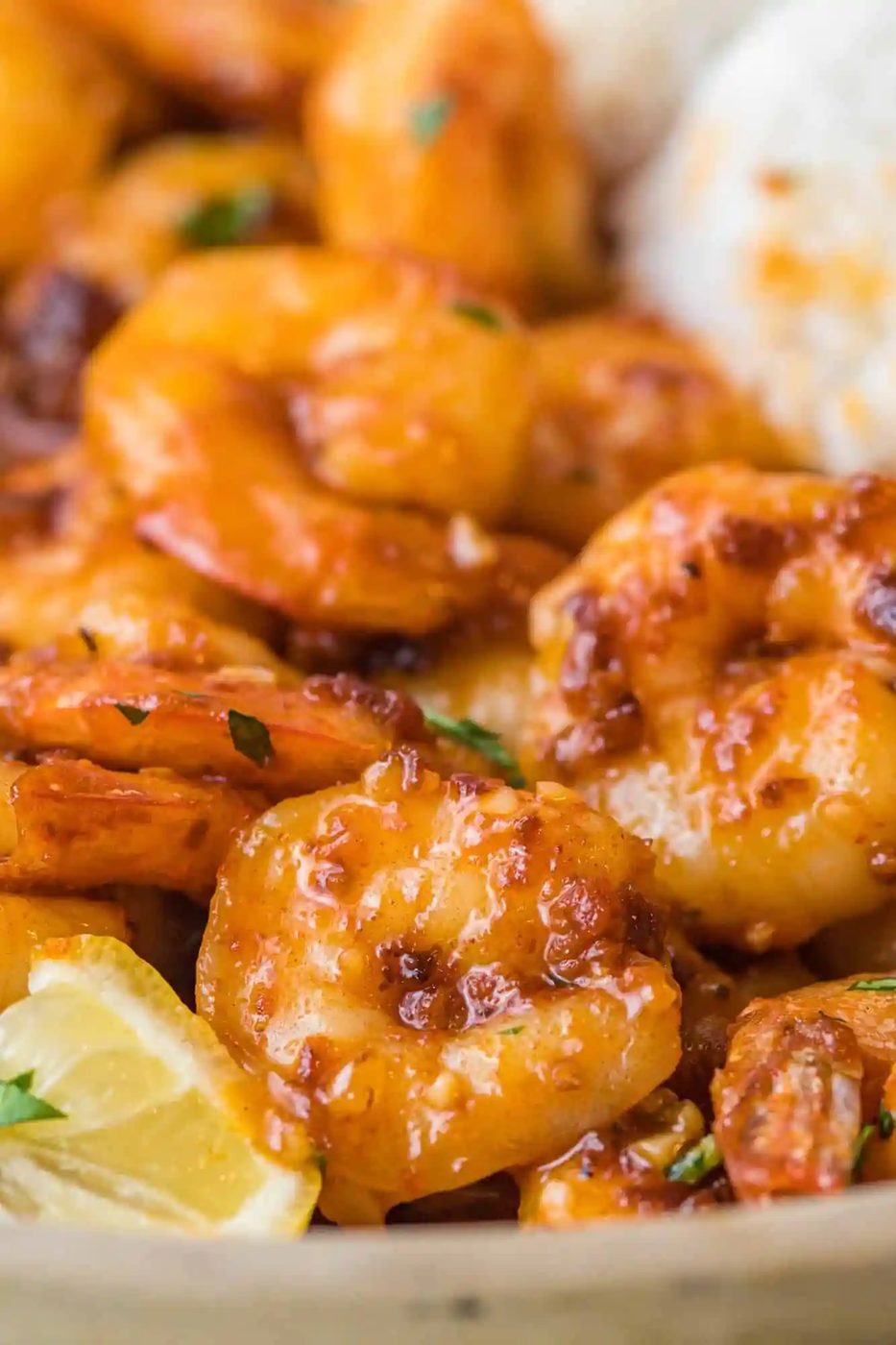
- More shrimp recipes: Try firecracker shrimp, coconut shrimp, honey walnut shrimp, or spicy garlic shrimp.
Make Ahead Ideas
Get a head start: Thaw frozen shrimp in the refrigerator overnight. Stir up the sauce, cover and refrigerate. Cut up the onions, peppers, green onions; refrigerate. If you like, mince the garlic and ginger ahead of time, too, and refrigerate. Prepping ahead of time will save you at least 10 to 15 minutes when you’re ready to cook this meal.
Storing & Reheating Leftovers
Refrigerate: We like to combine leftover shrimp and rice because the sauce keeps the rice from becoming too dry. Put leftovers into an airtight container and refrigerate for up to 2 days. Freezing is not recommended.
Reheat: Individual portions can be microwaved until heated through. Do not overheat the shrimp because it may get tough or chewy. Larger quantities can be reheated in a skillet over medium heat until warm.
Free Meal Plan
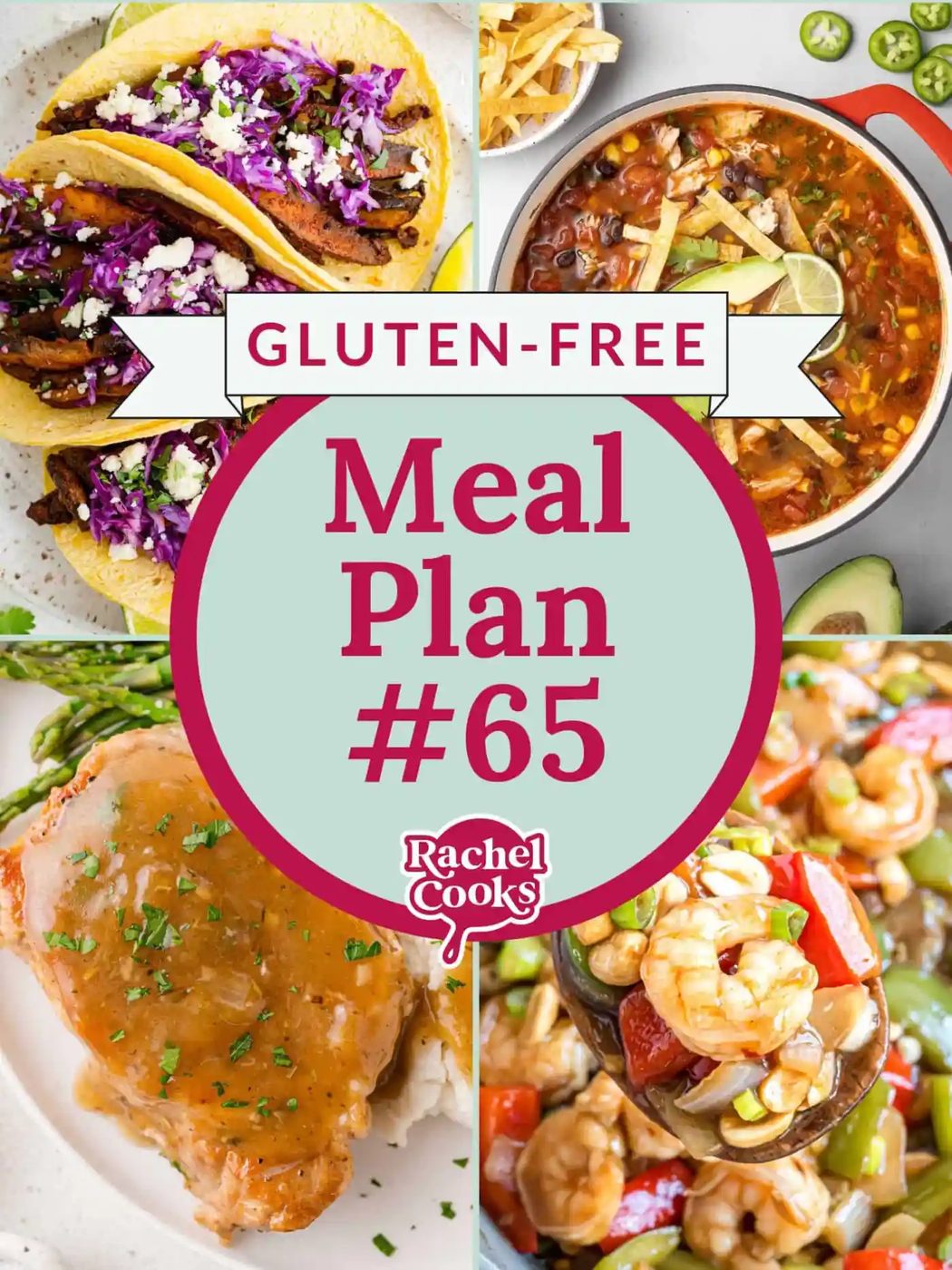
Interested in a weekly meal plan that includes this recipe? Take a look at Meal Plan #65. You’ll find a wholesome recipe for each weekday plus a categorized grocery list. We add a new meal plan weekly.
Browse Meal PlansBrowse All →Browse All →- Yield: 4 servings
- Prep: 15 minutes
- Cook: 15 minutes
- Total: 30 minutes
Ingredients
For the Marinade
- 1 pound large raw shrimp, peeled and deveined (see notes)
- 1 tablespoon soy sauce (Shaoxing wine or dry sherry can be substituted)
- 1 teaspoon cornstarch
For the Sauce
- ¼ cup water
- 1 teaspoon cornstarch
- 3 tablespoons soy sauce
- 2 tablespoons rice vinegar (Chinese black vinegar or balsamic vinegar can be substituted)
- 2 tablespoons hoisin sauce
- 1 to 2 tablespoons granulated sugar (more to taste)
- 2 teaspoons toasted sesame oil
- 1 teaspoon crushed red pepper flakes (see notes)
For Cooking
- 3 tablespoons oil, divided (we recommend grapeseed, avocado, vegetable, or peanut oil)
- 1 tablespoon minced garlic, about 3 to 4 cloves
- 1 tablespoon minced fresh ginger, about 1 -inch piece
- 1 cup chopped red bell pepper, cut into ½ inch pieces ( 1 red pepper)
- 1 cup chopped green pepper, cut into ½ inch pieces ( 1 green pepper)
- ¾ cup diced onion ( 1 medium onion)
- ½ cup roasted unsalted peanuts (or roasted cashews)
- ¼ cup sliced green onions, plus more for garnish ( 2 to 3 green onions)
- salt and pepper, to taste
Method
- If using frozen shrimp, thaw under cold running water, according to package instructions.
- In a medium-sized bowl, whisk together 1 tablespoon soy sauce and 1 teaspoon cornstarch. Add shrimp and toss to coat. Marinate for 15 minutes.
- Make sauce. In a small bowl or glass measuring cup, whisk water and 1 teaspoon cornstarch together. Add 3 tablespoons soy sauce, rice vinegar, hoisin sauce, sugar, sesame oil, and red pepper. Whisk to combine and set aside.
- Add 1 tablespoon of oil to a large skillet and heat over medium-high heat until shimmering. Add shrimp in a single layer and cook until pink, for about 2 minutes. Flip and cook the other side for an additional 1 to 2 minutes, depending on size of shrimp. Transfer to a plate or bowl. Wipe out the skillet.
- Add the remaining 2 tablespoons of oil and heat over medium-high heat. Add ginger and garlic and cook until fragrant. Add peppers and onions and stir fry until softened, about 5 minutes.
- Put shrimp back into the skillet. Whisk the sauce once more, add it to the pan, and simmer over medium heat until it thickens, about 1 to 2 minutes.
- Add peanuts and sliced green onions and cook just heated until through. Avoid overcooking.
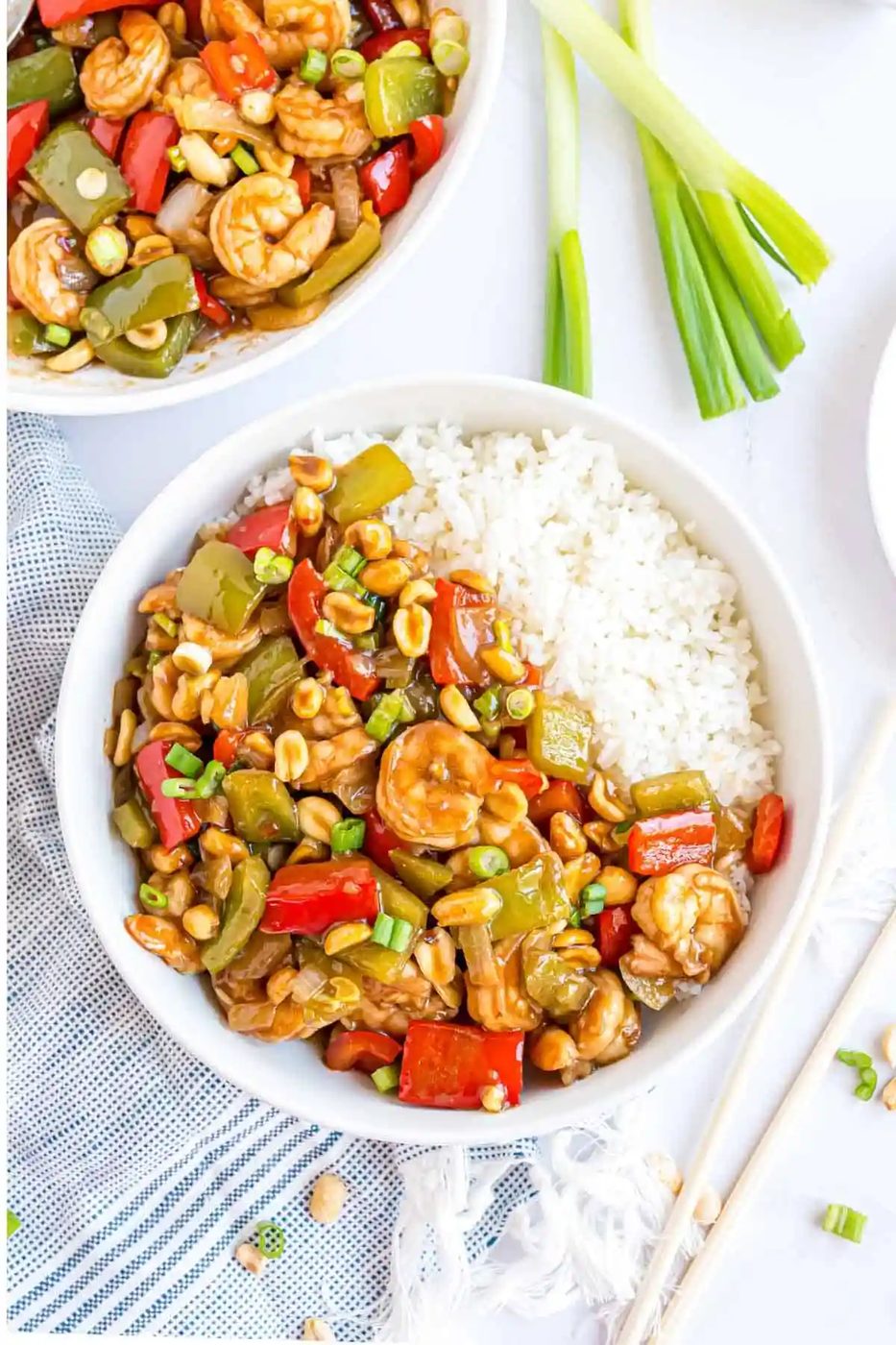
- Serve hot over rice or noodles. Garnish with sliced green onions.
Notes
We use large shrimp (20/30) for this recipe. The size of the shrimp you choose is a personal preference; however, we don’t recommend small sizes because the shrimp could get easily overcooked. Tail on or tail off is also your preference.
We chose red pepper flakes for this recipe because most readers have those in their pantry. Often kung pao recipes use Sichuan pepper, peppercorn powder or dried chilies. If you are sensitive to spice, start with ½ teaspoon red pepper flakes, and adjust to taste. You can also garnish with additional red pepper flakes or sriracha to add more heat.
Storage: Leftover kung pao shrimp can be refrigerated in an airtight container for up to 2 days. Freezing is not recommended.