
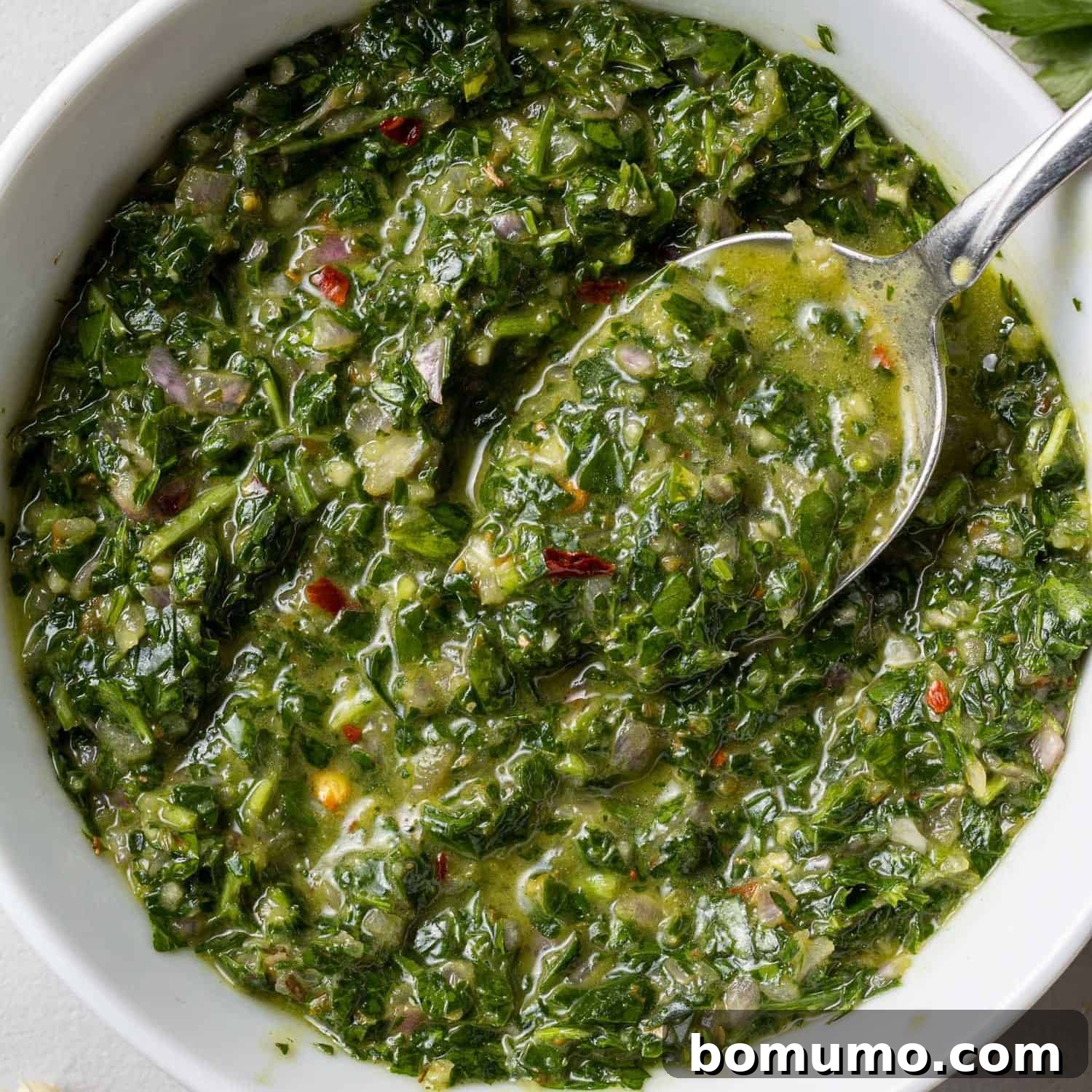
Discover the Magic of Homemade Chimichurri
Why You’ll Love This Recipe: Transform your everyday meals into a culinary masterpiece with this incredibly easy and vibrant chimichurri recipe. This fresh, herb-packed parsley sauce adds an explosion of flavor to grilled meats, vegetables, and much more, elevating simple dishes from ordinary to extraordinary. It’s not just delicious; it’s also remarkably simple to prepare, making it a perfect addition to your weekly menu.
Preparation Time: Approximately 10 minutes
Essential Equipment: A sharp chef’s knife or a compact food processor
Yields: 8 generous servings
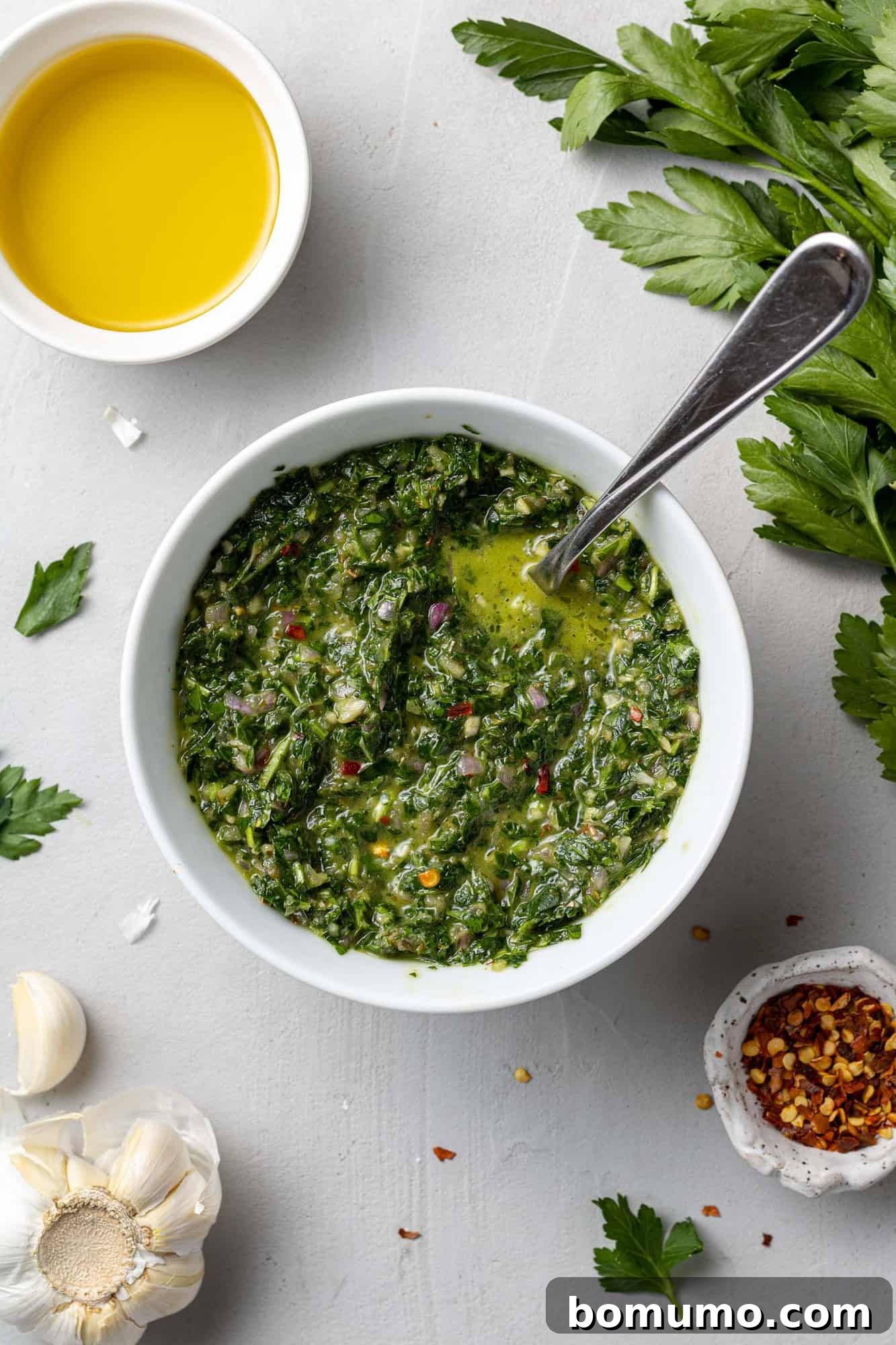
Welcome to the World of Chimichurri: A Zesty Herb Sauce
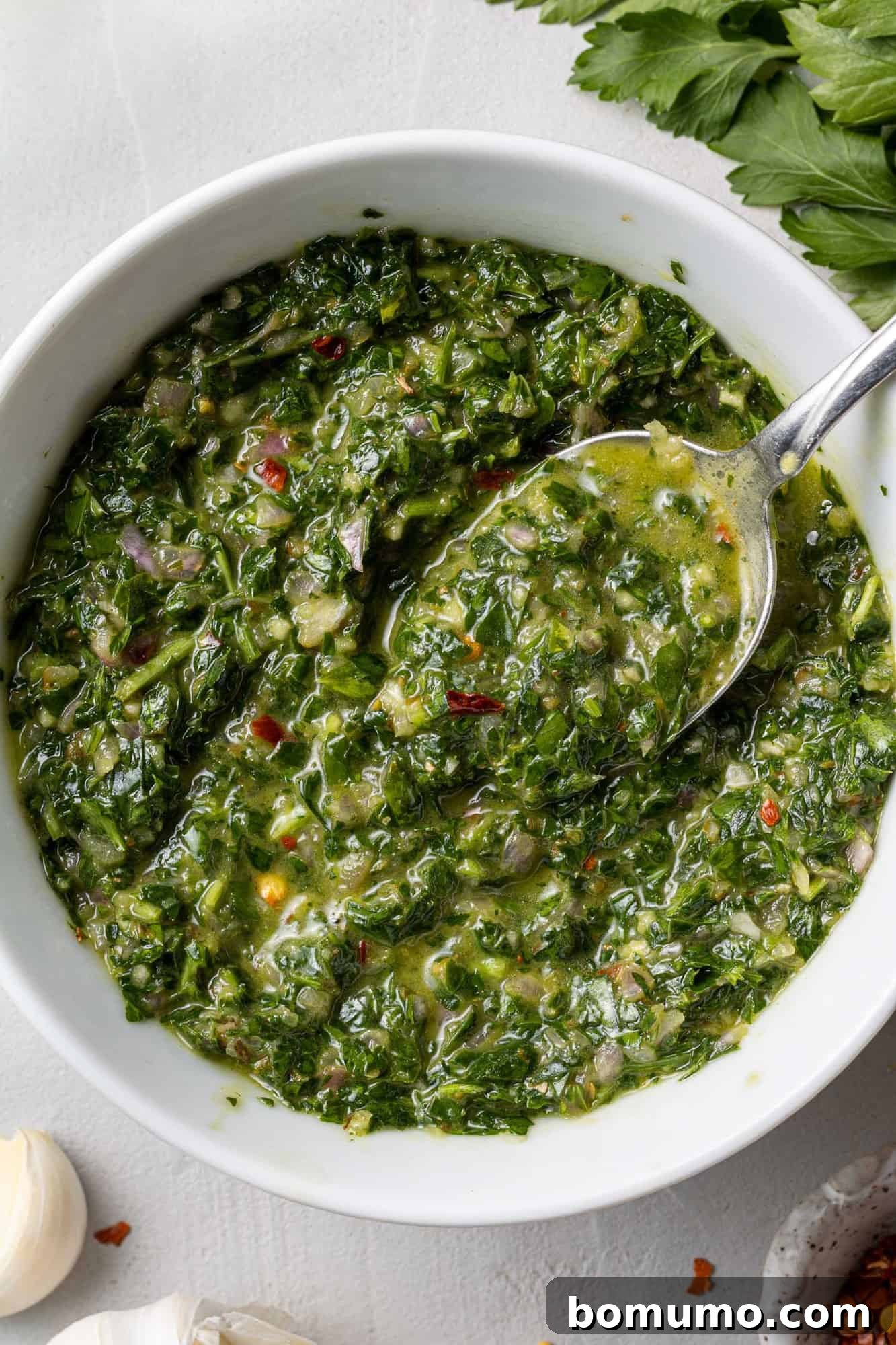
What Exactly is Chimichurri? While many home cooks are familiar with the rich, basil-infused flavors of Italian pesto or the tangy kick of Mexican salsa verde, chimichurri offers a distinctive and equally delightful fresh herb experience. Hailing from the culinary traditions of Argentina and Uruguay, this brilliant green sauce is a celebration of fresh parsley, robust olive oil, aromatic garlic, and a hint of zesty red wine vinegar. Its vivid color and complex yet harmonious flavors are sure to awaken your palate and bring a touch of South American flair to your table. Prepare for your tastebuds to sing with delight!
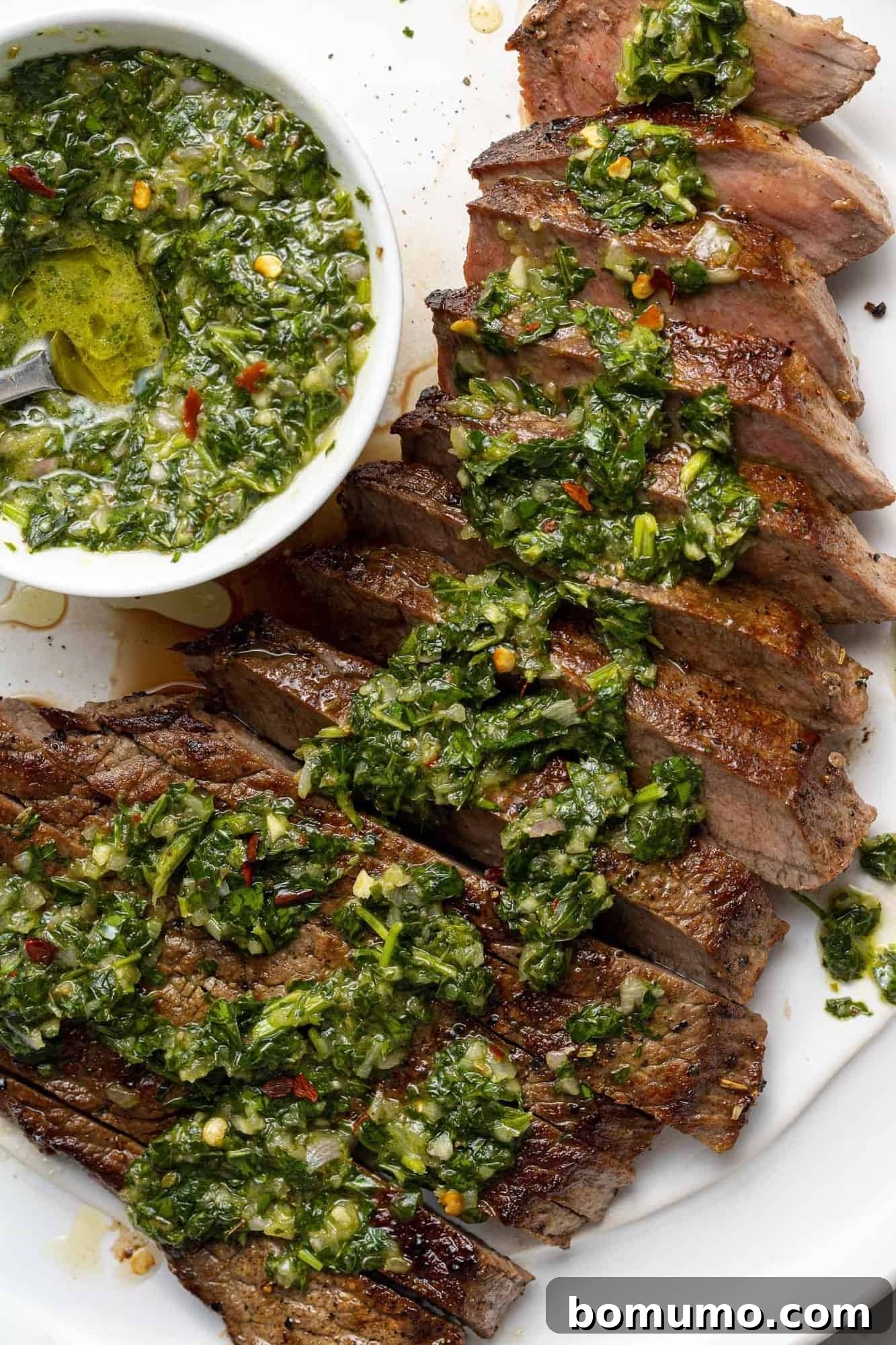
How Do You Enjoy Chimichurri? You might be tempted to eat it by the spoonful – and we wouldn’t blame you! Traditionally, chimichurri shines as a vibrant condiment for grilled meats such as succulent steak, tender chicken, or juicy pork. It also pairs exquisitely with roasted potatoes or a variety of grilled vegetables, including hearty cauliflower steaks. Its versatility extends far beyond these classics, offering endless possibilities to enhance nearly any dish. Keep reading for an abundance of creative ways to incorporate this amazing sauce into your cooking repertoire.
Is a Food Processor Essential for Making Chimichurri? While many modern recipes, including this one, advocate for the speed and convenience of a small food processor, it’s absolutely not a requirement. A food processor makes quick work of chopping and blending, ensuring a consistent texture. However, traditionalists often prefer to finely chop all the ingredients by hand, resulting in a slightly chunkier, more rustic sauce with a wonderfully homemade feel. The choice is entirely yours, depending on your preference for texture and the tools available in your kitchen.
The Rich Origins of Chimichurri
Chimichurri is a quintessential condiment in Argentinian and Uruguayan cuisines, often served alongside their famous grilled meats, known as asado. Its exact origin story is a subject of folklore and friendly debate, but its presence is deeply ingrained in the culinary fabric of these nations. Interestingly, some regional variations exist; for instance, Brazilian cooks frequently incorporate fresh cilantro into their chimichurri mixture, adding another layer of herbal complexity. This global appreciation speaks volumes about the sauce’s irresistible appeal.
Key Ingredient Insights for Perfect Chimichurri
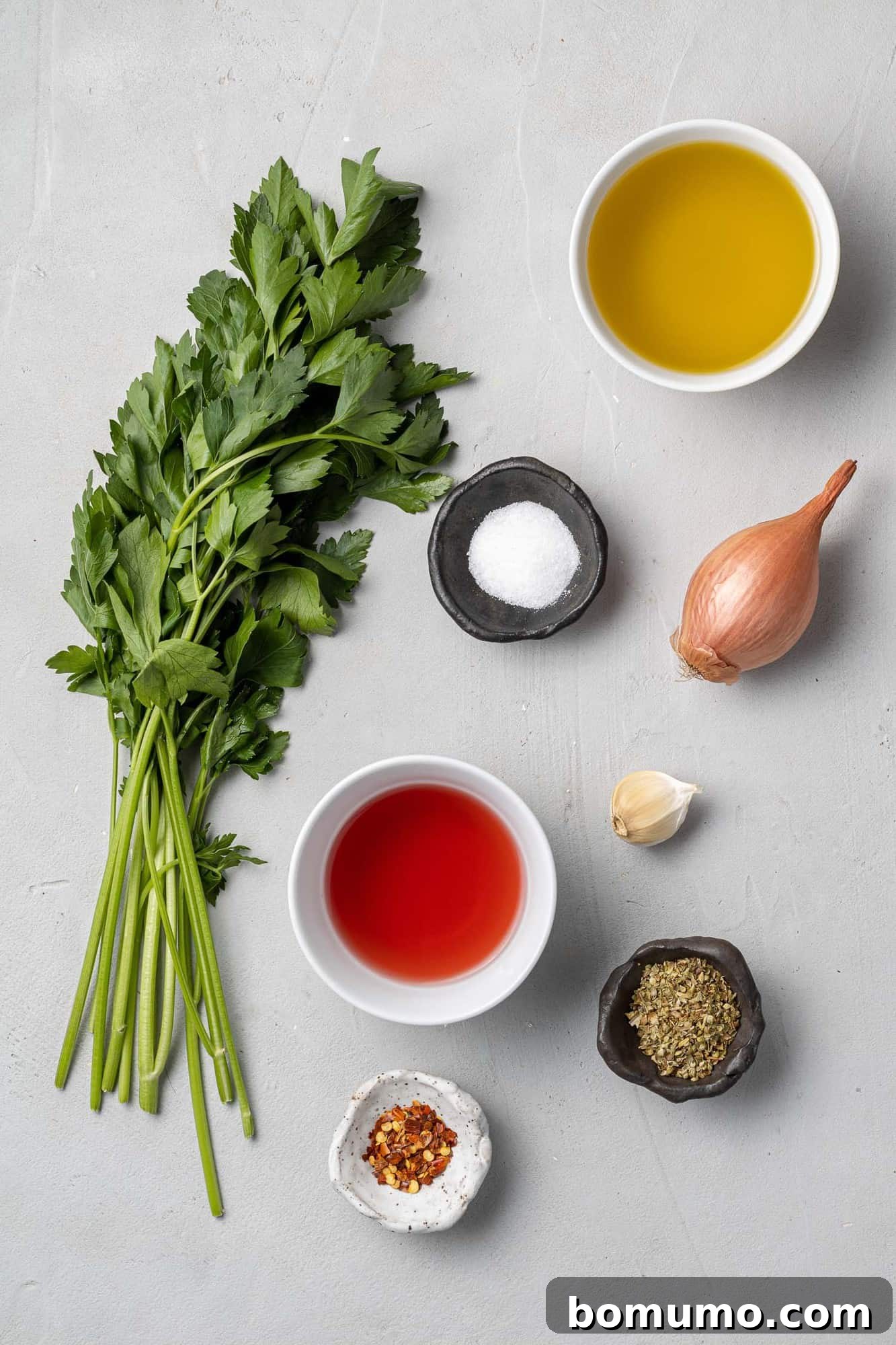
Crafting the perfect chimichurri begins with understanding the role of each ingredient. Here’s a detailed look at what you’ll need and why:
- Fresh Parsley: This is the undisputed star of chimichurri. Always opt for fresh, vibrant flat-leaf parsley (also known as Italian parsley) over its curly counterpart. Flat-leaf parsley boasts a more robust, less bitter flavor and a tenderer texture, which is crucial for the sauce’s characteristic taste and consistency. Ensure your parsley is thoroughly washed and dried for the best results.
- Shallot: While not strictly traditional in all chimichurri recipes, a shallot adds a delicate, sweet, and milder onion flavor compared to a regular onion. This subtle addition provides a layer of depth without overpowering the fresh herbs. If shallots are unavailable, a very small amount of finely minced red onion can be substituted, or you can simply omit it if you prefer a more classic profile.
- Garlic: Garlic is a cornerstone of chimichurri, providing its signature pungent aroma and taste. This recipe calls for one clove to keep the garlic flavor pleasantly mild, but the beauty of homemade chimichurri is customization. Feel free to adjust the amount to your liking, adding up to six cloves for a truly bold, garlicky punch. Remember that garlic clove sizes vary significantly, so trust your preference.
- Extra Virgin Olive Oil: As a primary component, a high-quality extra virgin olive oil is paramount. It forms the base of the sauce, carrying and binding all the flavors. Its fruity, peppery notes complement the herbs beautifully. While milder-tasting oils can be used, extra virgin olive oil provides an authentic depth.
- Red Wine Vinegar: This ingredient is non-negotiable for chimichurri. Red wine vinegar provides the essential tang and acidity that brightens the sauce, balancing the richness of the olive oil and the intensity of the herbs and garlic. Its unique flavor profile cannot be adequately replicated by other vinegars, making it key to the authentic taste. I also highly recommend it for making a delicious red wine vinaigrette.
- Oregano: The recipe specifies dried oregano, which is perfectly acceptable and widely used. However, if you’re lucky enough to have fresh oregano, it will add an even more aromatic and vibrant herbal note. If using fresh, increase the quantity slightly to achieve a similar intensity.
- Red Pepper Flakes: For a touch of heat and a subtle kick, red pepper flakes are included. This is another customizable element; increase the amount if you desire a spicier chimichurri that truly awakens the senses.
- Kosher Salt: Essential for seasoning, kosher salt enhances all the other flavors, bringing them into perfect harmony. Adjust to taste, but start with the recommended amount.
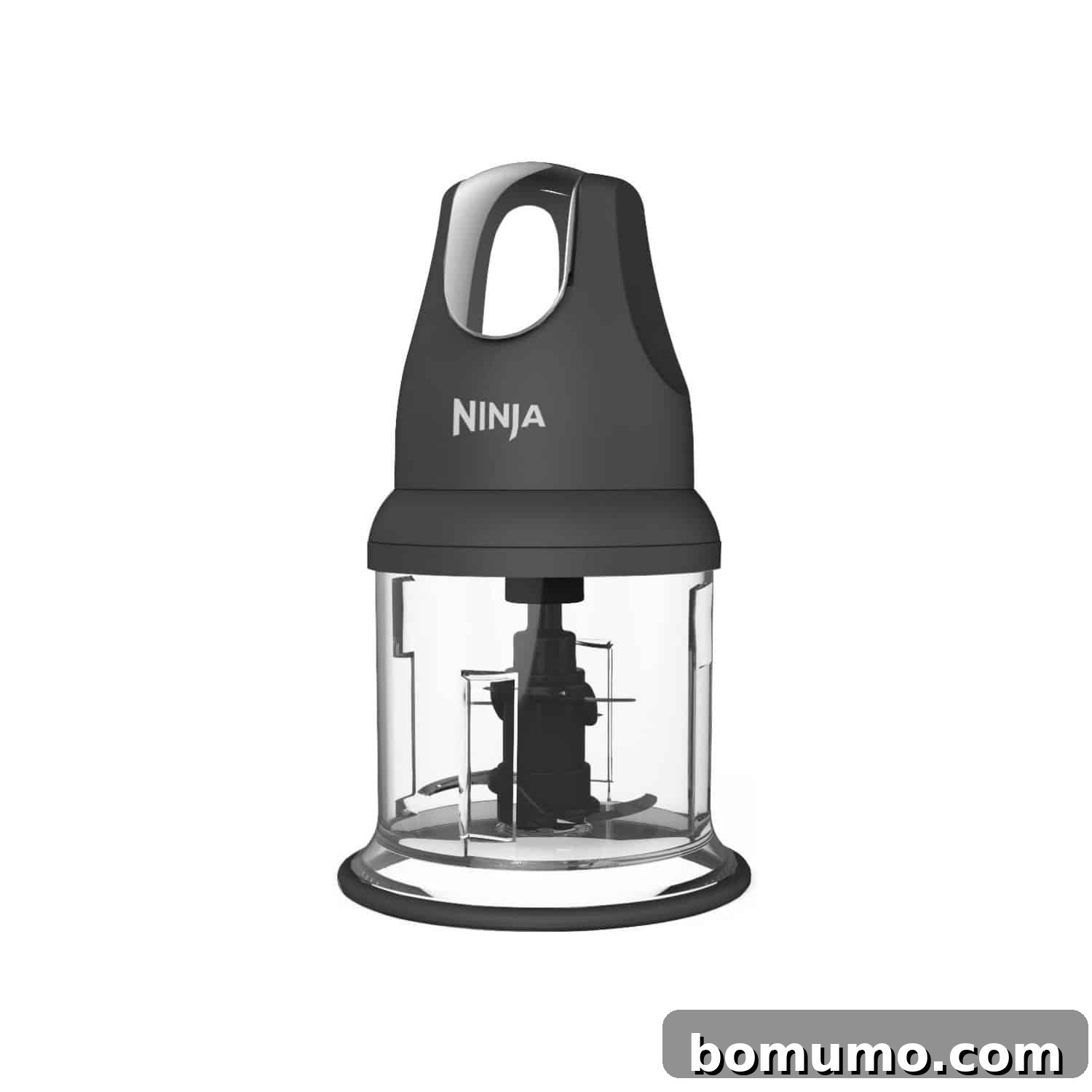
Your Ideal Kitchen Companion: The Mini Food Processor!
For this recipe, our trusty Ninja mini food processor is an absolute game-changer! It’s significantly faster than hand-chopping, saving you precious time and effort in the kitchen. Plus, cleanup is an absolute breeze. Unlike larger food processors that can sometimes struggle with smaller quantities, a mini food processor is perfectly sized for a single batch of chimichurri, ensuring all ingredients are finely and evenly processed without overworking them. It’s an invaluable tool for achieving that perfect consistency!
Crafting Your Homemade Chimichurri: A Step-by-Step Guide
Making chimichurri is surprisingly simple and immensely rewarding. Follow these steps to create your own flavorful sauce:
1. Prepare the Parsley: The Foundation of Flavor. Begin by tackling the parsley. Using kitchen scissors or a sharp knife, trim off the thick, large stem ends from the bunch. This is often easiest to do while the parsley is still bundled together, before washing. Removing the thick stems prevents bitterness and ensures a smoother sauce.
A Note on Parsley Stems
Unlike cilantro stems, which are famously tender and flavorful, thick parsley stems can carry a noticeably bitter taste. While smaller, more tender stems are perfectly acceptable and even desirable in a food processor-blended sauce like chimichurri, it’s best to avoid the very thick ones. If you’re unsure, simply taste a small piece of a stem; if it’s bitter, discard it. A common reason for a bitter chimichurri is the accidental inclusion of too many large, tough stems, so taking this extra step ensures a perfectly balanced flavor.
2. Thoroughly Wash the Parsley. Parsley can sometimes harbor a surprising amount of grit and sand, and you certainly don’t want that in your pristine chimichurri! To clean it effectively, swish the parsley vigorously in a large bowl of cold water (or a clean sink). Allow the dirt to settle to the bottom, then carefully lift the parsley out, leaving the sediment behind. Rinse the bowl, refill with clean water, and repeat the swishing process until no trace of dirt remains. This meticulous washing ensures a clean, fresh-tasting sauce.
3. Dry the Parsley Completely. This is a critical step often overlooked! Excess water clinging to the parsley leaves can dilute your chimichurri, resulting in a watery, less flavorful sauce. To dry it thoroughly, roll the washed parsley in a clean kitchen towel and gently squeeze out the moisture, or for maximum efficiency, give it a good spin in a salad spinner until the leaves are as dry as possible. The drier the parsley, the more vibrant and concentrated your chimichurri will be.
4. Measure the Parsley. Once cleaned and dried, pinch the leaves from any remaining stems. Remember, small, tender stems are fine to include. You’ll need about one and a half cups of firmly packed parsley leaves for this recipe.
5. Combine Shallot and Garlic. Peel and roughly chop your shallot and garlic cloves. There’s no need for meticulous mincing at this stage, as your food processor will do the heavy lifting. Add these roughly chopped aromatics to your food processor and pulse a few times until they are finely diced. This pre-processing ensures even distribution and prevents large, raw chunks of garlic or shallot in your finished sauce.
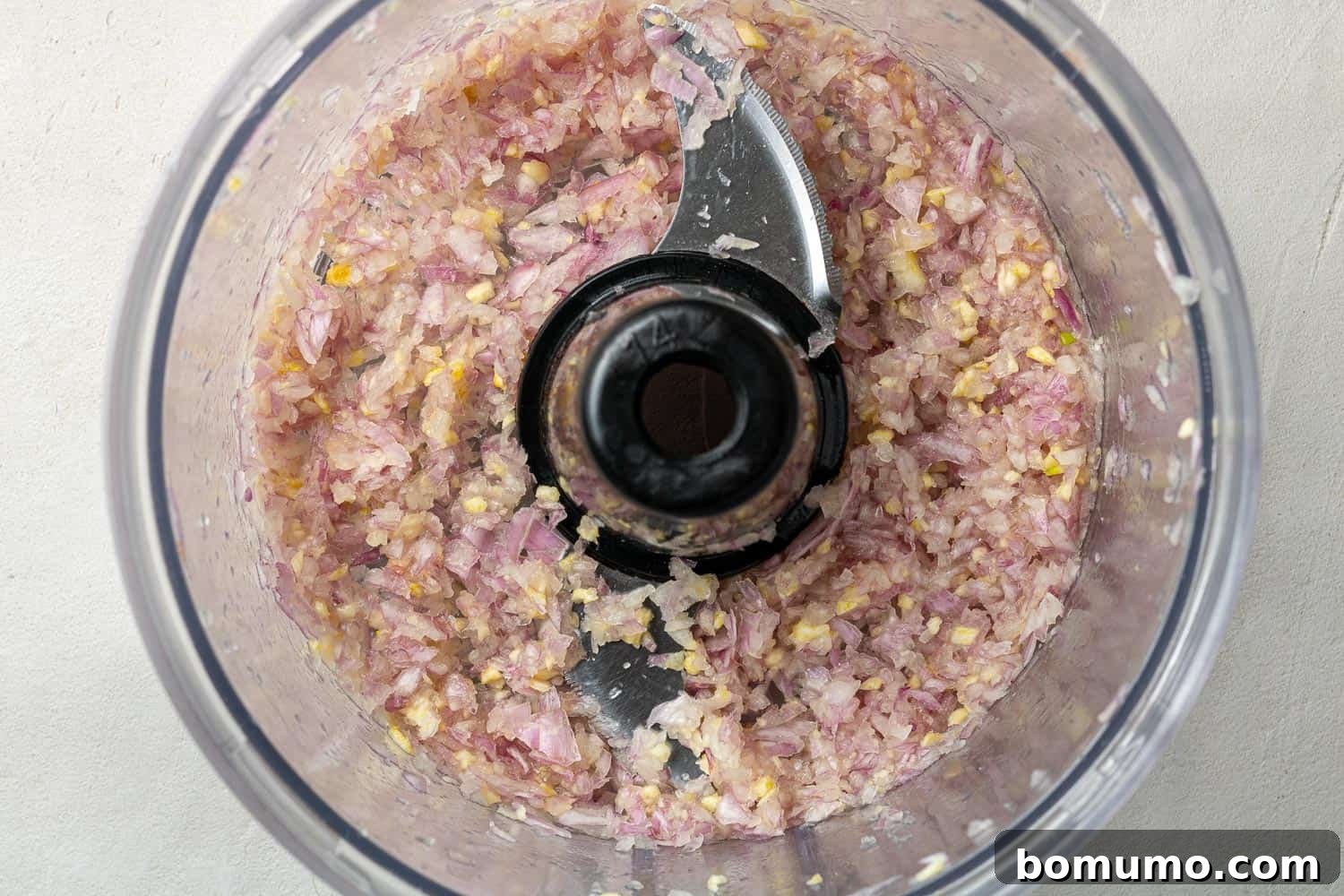
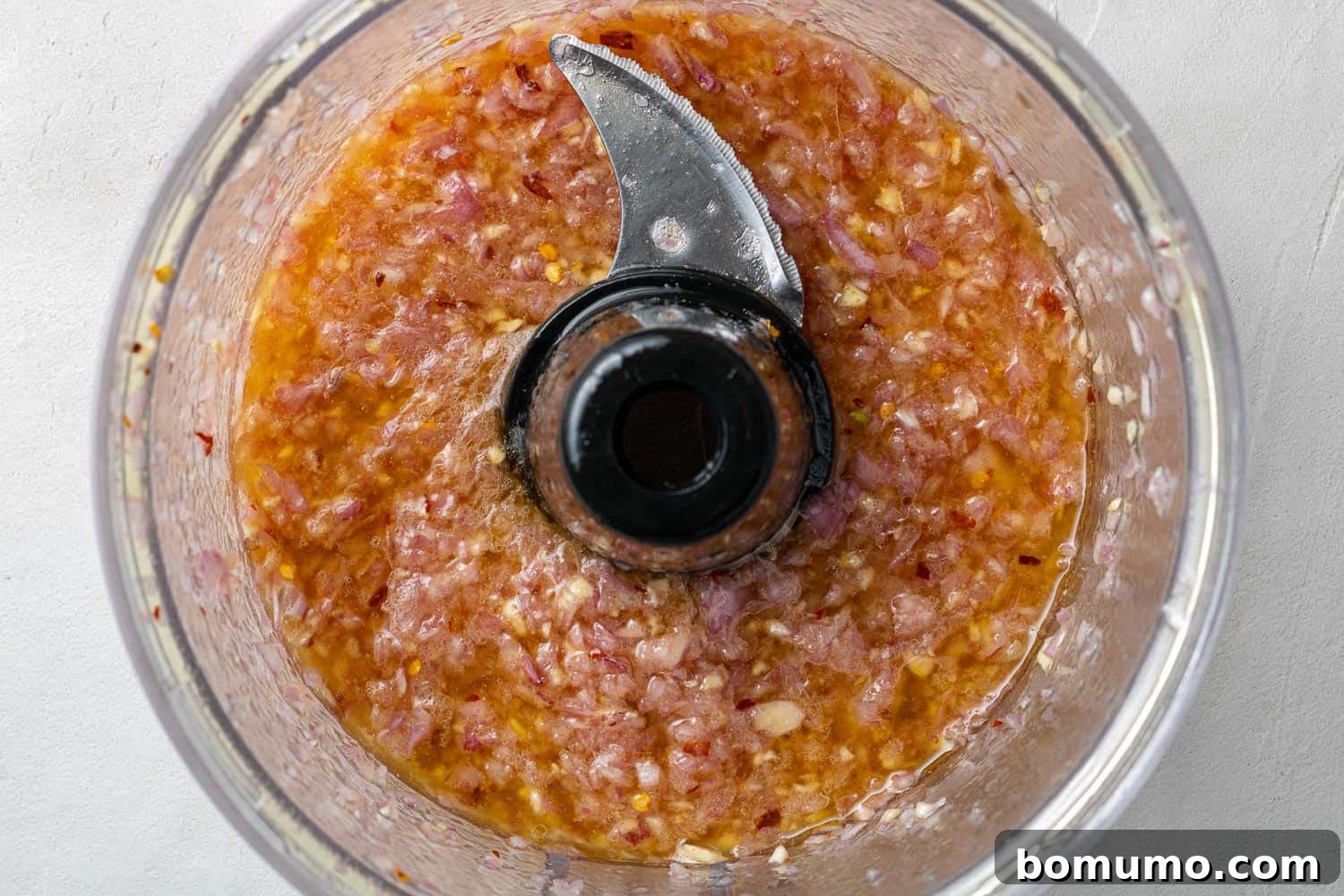
6. Incorporate the Liquids and Spices. To the processed shallot and garlic, add the extra virgin olive oil, red wine vinegar, kosher salt, and red pepper flakes. Give the mixture another couple of pulses to thoroughly blend these ingredients, creating a flavorful base that will soon embrace the fresh herbs.
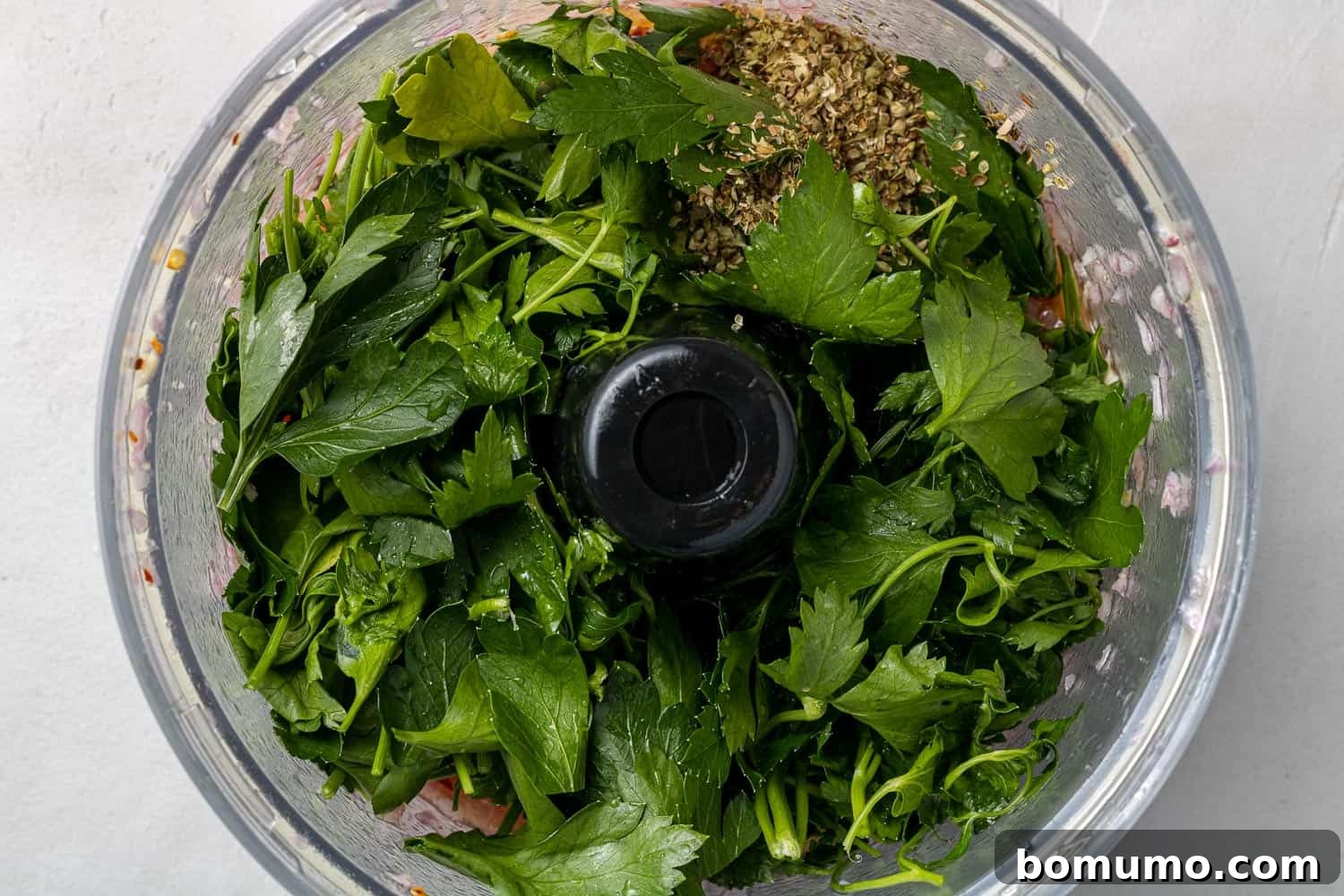
7. Add Parsley and Oregano. Now it’s time for the stars of the show! Add the measured parsley leaves and the dried (or fresh) oregano to the food processor. If your parsley leaves are particularly large, you might want to tear them into smaller pieces before adding them to help the processor work more efficiently.
Important Note on Batch Size
The images in this guide showcase a double batch of chimichurri being made. If you happen to be using a full-sized food processor, you might find that it works more effectively with a larger quantity of ingredients. In such a case, consider doubling the recipe. The good news is that chimichurri freezes exceptionally well, so you can easily store any extra for future use!
8. Pulse to Desired Consistency. Gently pack the parsley down into the food processor, secure the lid, and pulse a few more times. The goal is a chunky, textured sauce, not a smooth paste. Be careful not to over-process the chimichurri; its characteristic texture is coarser than that of pesto. You want to see distinct flecks of herbs, not a uniform purée. A few short pulses are usually all it takes.
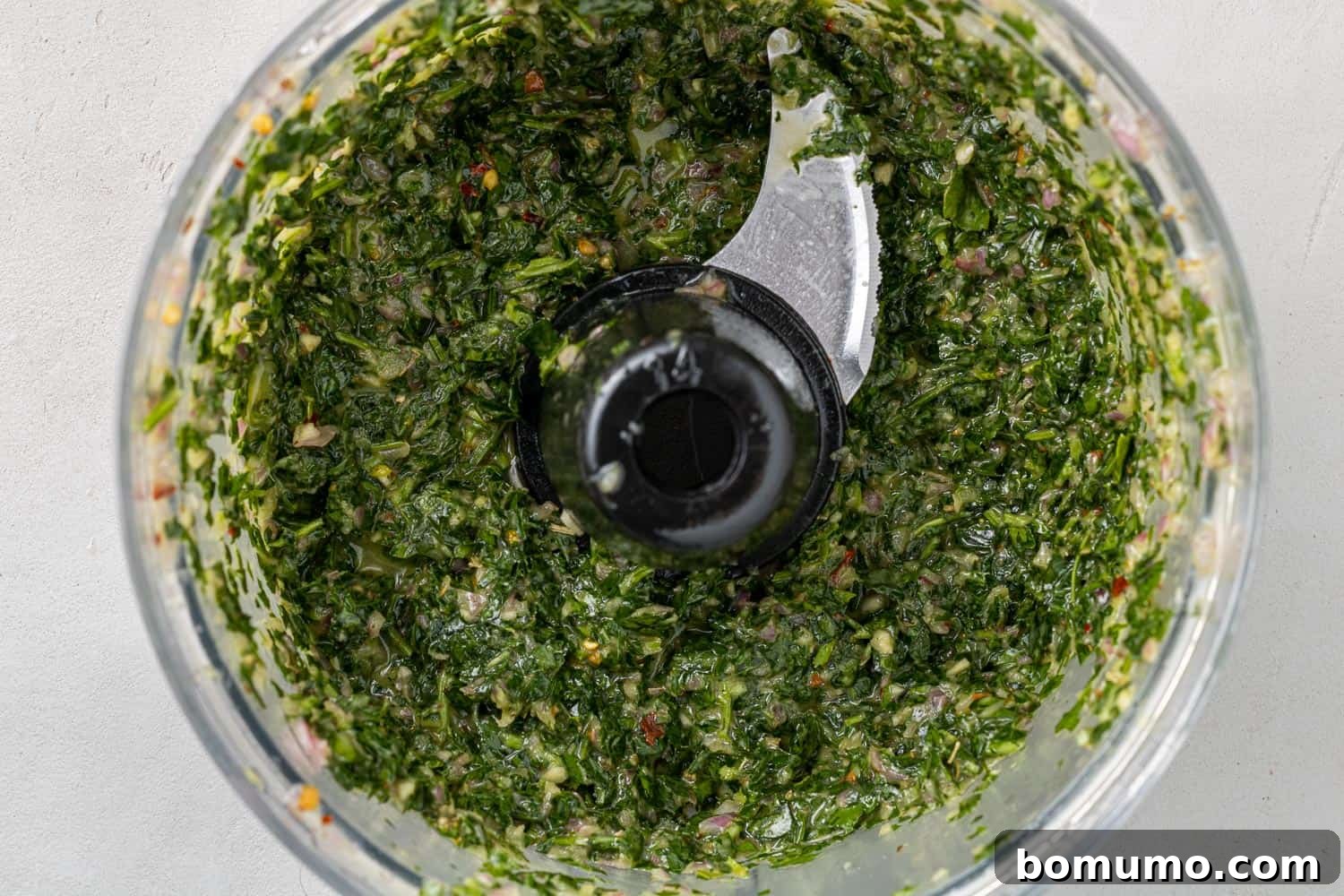
9. Serve and Enjoy! That’s all there is to it! Use a small silicone scraper to transfer your freshly made chimichurri to a serving bowl. Now, fire up the grill for your steaks, chicken, cauliflower, or any other culinary creation you have in mind. Get ready to experience some of the best flavors you’ve ever had. Continue reading to explore even more delightful ways to savor this popular and versatile condiment.
Frequently Asked Questions About Chimichurri
Chimichurri’s flavor profile is a delightful symphony of fresh, bright, pungent, and tangy notes. The dominant parsley provides a clean, green, almost grassy undertone, while the shallot and garlic deliver a robust, aromatic punch. Red wine vinegar introduces a crucial tangy and slightly sweet acidity that cuts through the richness, and the extra virgin olive oil binds everything together with its subtle fruity and peppery background harmony. Finally, the red pepper flakes offer a gentle, lingering heat that invigorates the palate, making each bite exciting.
Both pesto and chimichurri are exquisite uncooked green herb sauces, but they hail from different culinary traditions and possess distinct characteristics. Pesto, originating from Italy, primarily uses fresh basil as its main herb, complemented by pine nuts and Parmesan cheese, giving it a richer, nuttier, and sometimes creamier texture. Chimichurri, on the other hand, comes from Argentina and Uruguay, with fresh flat-leaf parsley as its star herb. While both share common elements like abundant garlic and quality olive oil, chimichurri omits nuts and cheese, resulting in a lighter, tangier, and more piquant flavor profile that truly highlights the vibrant freshness of parsley and vinegar.
Exciting Chimichurri Recipe Variations to Try
While the classic chimichurri is perfect as is, it’s also wonderfully adaptable. Don’t hesitate to experiment with these delicious variations to customize the flavor to your preference:
- Embrace Cilantro: For a twist that leans towards a Brazilian-inspired chimichurri, try substituting half of the fresh parsley with fresh cilantro. This adds a brighter, slightly citrusy, and uniquely aromatic dimension to the sauce, perfect for those who love cilantro’s distinctive flavor.
- Infuse with Citrus Zest: If you’re looking for an alternative to red wine vinegar, consider using fresh lemon juice or lime juice. This will give your chimichurri a wonderfully bright, zesty, and tangy flavor that’s different from the original but equally delicious, particularly with fish or chicken.
- Spice it Up with Fresh Peppers: For a more intense and complex heat, replace the red pepper flakes with finely minced fresh red chili pepper or a jalapeño pepper. You can remove the seeds for less heat or leave them in for a fiery kick. This adds a fresher, more immediate spice element.
The Health Benefits of Chimichurri
Beyond its incredible flavor, chimichurri is also remarkably good for you! With fresh parsley as its primary ingredient, it’s a powerhouse of essential vitamins, notably vitamins A and K, and a rich source of antioxidants that support overall health. Extra virgin olive oil contributes heart-healthy monounsaturated fats, while garlic and oregano offer their own array of beneficial compounds. Enjoying chimichurri means savoring a delicious condiment that nourishes your body too!
Smart Make-Ahead Strategies for Chimichurri
Chimichurri is an excellent candidate for make-ahead preparation, allowing you to enjoy its fresh flavors with minimal last-minute effort. You can prepare it entirely in advance and store it, or simply get a head start on the prep work. For instance, wash and thoroughly dry your parsley, then give it a rough chop. Similarly, peel and roughly chop the shallot and garlic. Store all these prepared ingredients in separate, tightly covered containers in the refrigerator. With this foundational prep completed, assembling your chimichurri in the food processor will take no more than five minutes when you’re ready to serve, making weeknight meals a breeze!
Optimal Storage and Freezing Tips for Fresh Chimichurri
Proper storage ensures you can enjoy your homemade chimichurri for an extended period:
Refrigerate: Store your freshly made chimichurri in an airtight container in the refrigerator for up to one week. It’s natural for the olive oil to solidify when chilled; simply let the sauce come to room temperature for about 30 minutes before serving, and stir well to restore its original consistency and vibrant flavor.
Freeze: Chimichurri freezes beautifully, making it perfect for batch cooking. For larger portions, freeze it in small, freezer-safe containers for up to a month. If you prefer more convenient, single-serving portions, an ice cube tray is your best friend! Spoon the chimichurri into the compartments, freeze until solid, then pop out the cubes and transfer them to a freezer bag. This method allows you to thaw just the right amount whenever you need a burst of fresh flavor. Always thaw frozen chimichurri completely before using, and stir well to reincorporate ingredients.
Unleash the Flavor: Countless Ways to Use Chimichurri
Beyond its traditional role as a condiment for grilled steak, chicken, or fish, chimichurri’s versatility knows no bounds. Get creative and integrate this flavorful sauce into a myriad of dishes. Here are just a few ideas to inspire you, but feel free to explore and discover your own favorite pairings:
- Potatoes: Elevate any potato dish! Drizzle it generously over perfectly grilled potatoes, fluffy baked potatoes, or crispy roasted potatoes for an instant flavor boost.
- Vegetables: Transform your veggies from good to gourmet. It’s spectacular on grilled zucchini, tender air fryer Brussels sprouts, or sweet oven-roasted sweet potatoes. Essentially, any vegetable that has been grilled, roasted, or air-fried will sing with a spoonful of chimichurri.
- Marinade or Salad Dressing: Chimichurri itself makes an incredible marinade for meats and vegetables, infusing them with its vibrant flavors. For a lighter salad dressing, simply thin it out by stirring in an extra tablespoon each of olive oil and red wine vinegar to achieve your desired consistency.
- Grains: Mix chimichurri into cooked grains like fluffy rice, light cauliflower rice, or nutritious quinoa for an incredibly flavorful and aromatic side dish that complements almost any main course.
- Sandwiches & Burgers: Spread a layer of chimichurri onto your next burger, whether it’s a classic beef patty or a savory black bean burger. It also adds a wonderful gourmet touch to any sandwich, wrap, or pita. For a creamier spread, blend a little chimichurri into your mayonnaise.
- Soups: Stir a dollop of chimichurri into your favorite hot soup just before serving for an unexpected burst of freshness and depth. It’s particularly fantastic in hearty soups like Instant Pot minestrone, creamy Instant Pot cauliflower potato soup, warming lentil soup with pasta, or a rustic homemade vegetable soup.
- Eggs: Elevate your breakfast or brunch! Drizzle a bit of chimichurri over scrambled eggs, fried eggs, or even an omelet for a bright, herbal kick. For an extra treat, add some diced avocado alongside.
- Tacos & Burritos: If your tacos or burritos are feeling a bit uninspired, a spoonful of chimichurri can completely liven them up. It makes a fantastic, fresh alternative to traditional salsa or hot sauce, adding a unique, zesty dimension.
- Featured Recipe: If you’re utterly captivated by the flavors of this chimichurri, you absolutely must try our delightful Shrimp with Chimichurri Rice – it’s a true culinary highlight!
Explore More Delicious Sauces
Effortless Blender Chipotle Salsa
Classic Homemade Tartar Sauce Recipe
Easy Homemade Barbecue Sauce Recipe
Authentic Homemade Tzatziki (Cucumber Yogurt Sauce)
Simple & Flavorful Chimichurri Recipe
To save this recipe and receive weekly new recipes, please sign up for our newsletter. (Form content removed for pure HTML output).
Ingredients
- 1 medium shallot
- 1 clove garlic, or more to taste (up to 6 cloves for extra garlicky flavor)
- ½ cup extra virgin olive oil
- 3 tablespoons red wine vinegar
- ¾ teaspoon kosher salt
- ¼ teaspoon red pepper flakes, or more to taste for extra heat
- 1 ½ cups firmly packed flat leaf parsley, thick stems removed
- 2 teaspoons dried oregano (or 1 tablespoon fresh oregano)
Instructions
-
In a mini food processor (see note on food processor use), add the peeled and roughly chopped shallot and garlic. Pulse until no large chunks remain and they are finely diced.1 medium shallot, 1 clove garlic, more to taste
-
Add the olive oil, red wine vinegar, kosher salt, and red pepper flakes to the food processor. Pulse 1 or 2 times briefly to combine these ingredients.½ cup extra virgin olive oil, 3 tablespoons red wine vinegar, ¾ teaspoon kosher salt, ¼ teaspoon red pepper flakes, more to taste
-
Add the thoroughly washed and dried parsley (tearing into smaller pieces if necessary) and the dried oregano to the food processor bowl.1 ½ cups firmly packed flat leaf parsley, thick stems removed, 2 teaspoons dried oregano
-
Pulse the mixture until all ingredients are finely chopped and well combined, but still maintain a chunky texture. Be careful not to over-process, as chimichurri should not be a smooth paste.
-
Transfer to a serving bowl and serve immediately over roasted vegetables, grilled fish, chicken, pork, steak, or potatoes. Enjoy your fresh homemade chimichurri!
Notes
- Preparing Without a Food Processor: If you don’t have a food processor or prefer a coarser texture, chimichurri can be made entirely by hand. Very finely chop the shallot, garlic, and parsley using a sharp knife. In a separate bowl, whisk together the olive oil, red wine vinegar, salt, and red pepper flakes until well-blended. Stir in the finely chopped shallot, garlic, parsley, and oregano. Your chimichurri will have a more rustic, chunky appearance.
- Storage and Freezing Instructions: Store leftover chimichurri in an airtight container in the refrigerator for up to one week. If the olive oil solidifies when cold, let it come to room temperature for about 30 minutes and stir before serving. For longer preservation, chimichurri freezes well. Freeze it in small, airtight containers for up to a month, or in ice cube trays for convenient single portions. Once frozen solid, transfer the cubes to a freezer bag. Thaw before using and stir thoroughly.
- Adjusting Garlic Intensity: Many traditional chimichurri recipes call for a more potent garlic flavor, often using up to 6 cloves. This recipe opts for a milder approach with 1 clove. If you are a devoted garlic lover, feel free to increase the amount to your preference – up to 6 cloves will provide a robustly garlicky sauce.
Video
Watch our video to see how easily this delicious chimichurri comes together!
Nutrition
Calories: 129 kcal,
Carbohydrates: 2 g,
Protein: 1 g,
Fat: 14 g,
Saturated Fat: 2 g,
Polyunsaturated Fat: 1 g,
Monounsaturated Fat: 10 g,
Sodium: 227 mg,
Potassium: 84 mg,
Fiber: 1 g,
Sugar: 1 g,
Vitamin A: 975 IU,
Vitamin C: 15 mg,
Calcium: 26 mg,
Iron: 1 mg
Nutrition information is automatically calculated and should be considered an approximation. Individual results may vary.
Did You Make This Recipe?
We’d love to hear from you! Share your thoughts and a rating below. Your feedback means the world to us!