
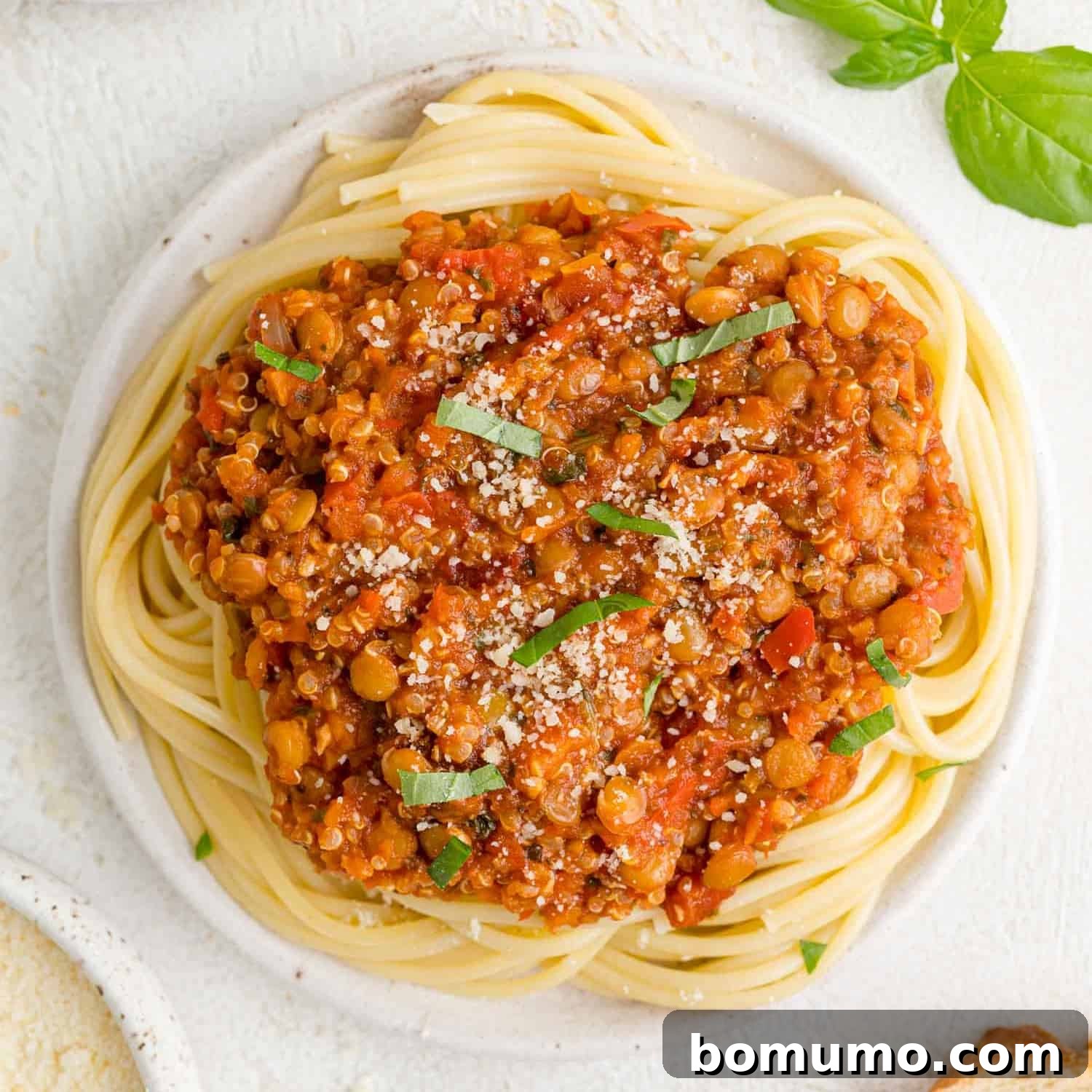
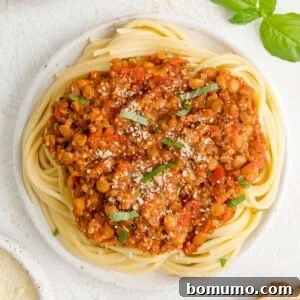
Experience the rich, hearty flavors of a classic Bolognese, reimagined for a vibrant plant-based diet. This incredibly satisfying vegan Bolognese, crafted with a clever blend of lentils and quinoa, offers a wonderfully meaty texture that will surprise and delight even the most dedicated meat-eaters. In fact, it’s so good, it has earned the seal of approval from my own meat-loving husband!
Recipe Overview
Why you’ll love it: This plant-based pasta sauce is a revelation. It’s bursting with rich, savory flavors and a wonderfully satisfying texture that rivals traditional Bolognese.
How long it takes: Approximately 30 minutes for active preparation, followed by an hour or more of gentle simmering to develop its deep flavors.
Equipment you’ll need: A large skillet or Dutch oven for simmering, a medium saucepan for lentils, and a blender or food processor to achieve a smooth sauce base.
Servings: 8 generous portions, perfect for family dinners or meal prepping.
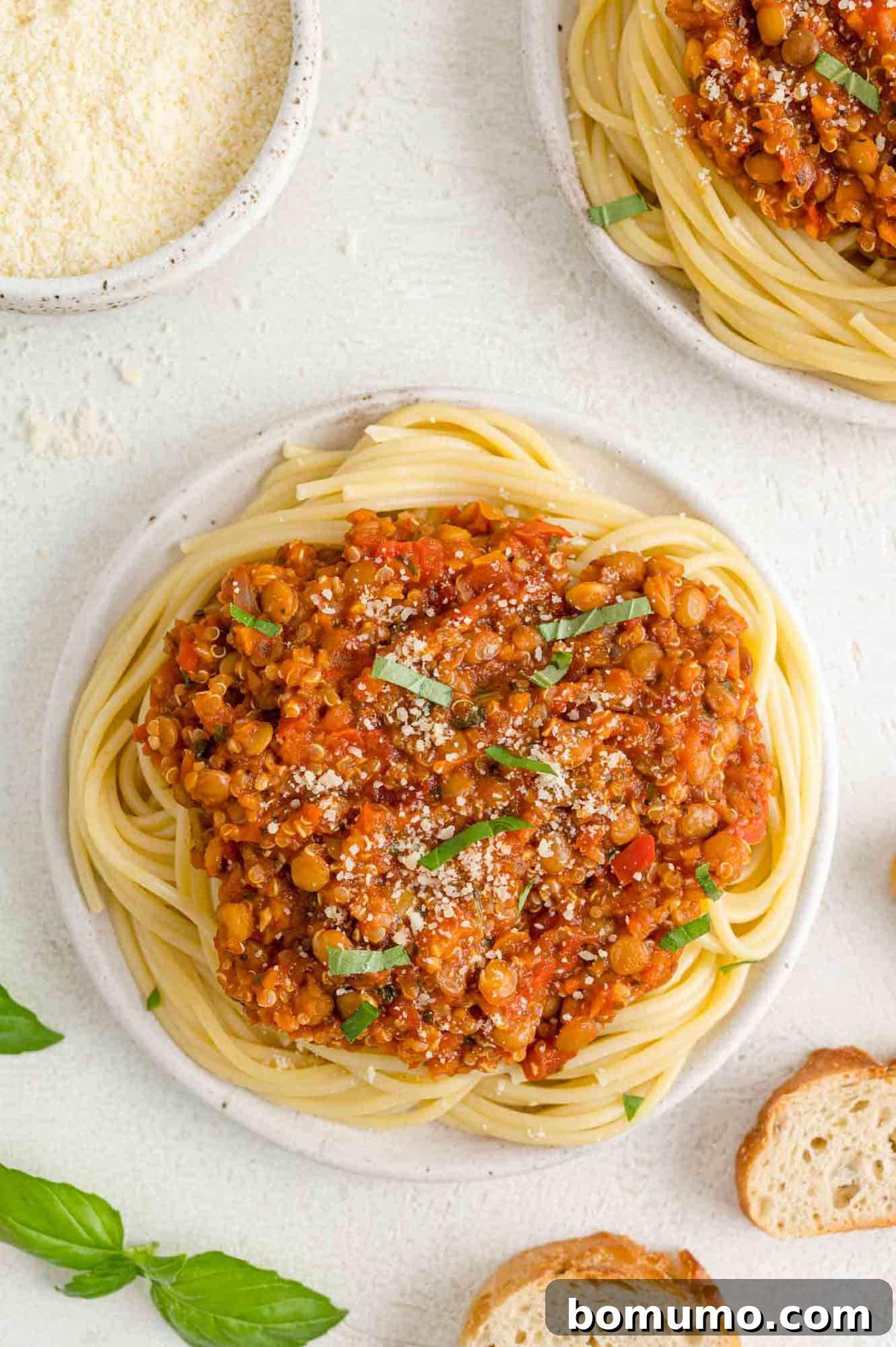
Why Embrace Plant-Based Meals?
In today’s world, choosing vegetarian or vegan meals, whether it’s for a single night or a lifetime, resonates with a variety of personal values and priorities. Many are motivated by a growing concern for the health of our planet, seeking to reduce their environmental footprint and support sustainable food systems. Others prioritize their personal health, recognizing the numerous benefits of a diet rich in whole, plant-based foods, including improved heart health, weight management, and increased energy levels. And for those mindful of their budget, meatless meals often prove to be a remarkably economical choice, utilizing affordable pantry staples that are both nutritious and delicious. Whatever your reason, incorporating plant-based options like this vegan Bolognese into your diet is a smart, satisfying decision that benefits everyone.
When I first introduced this vegan Bolognese to my husband, I admit I had my reservations. After all, it’s a dish where lentils and quinoa stand in for ground beef – not exactly what a traditional meat-eater might envision for a hearty pasta sauce. I genuinely wasn’t sure he would be convinced, let alone enjoy it.
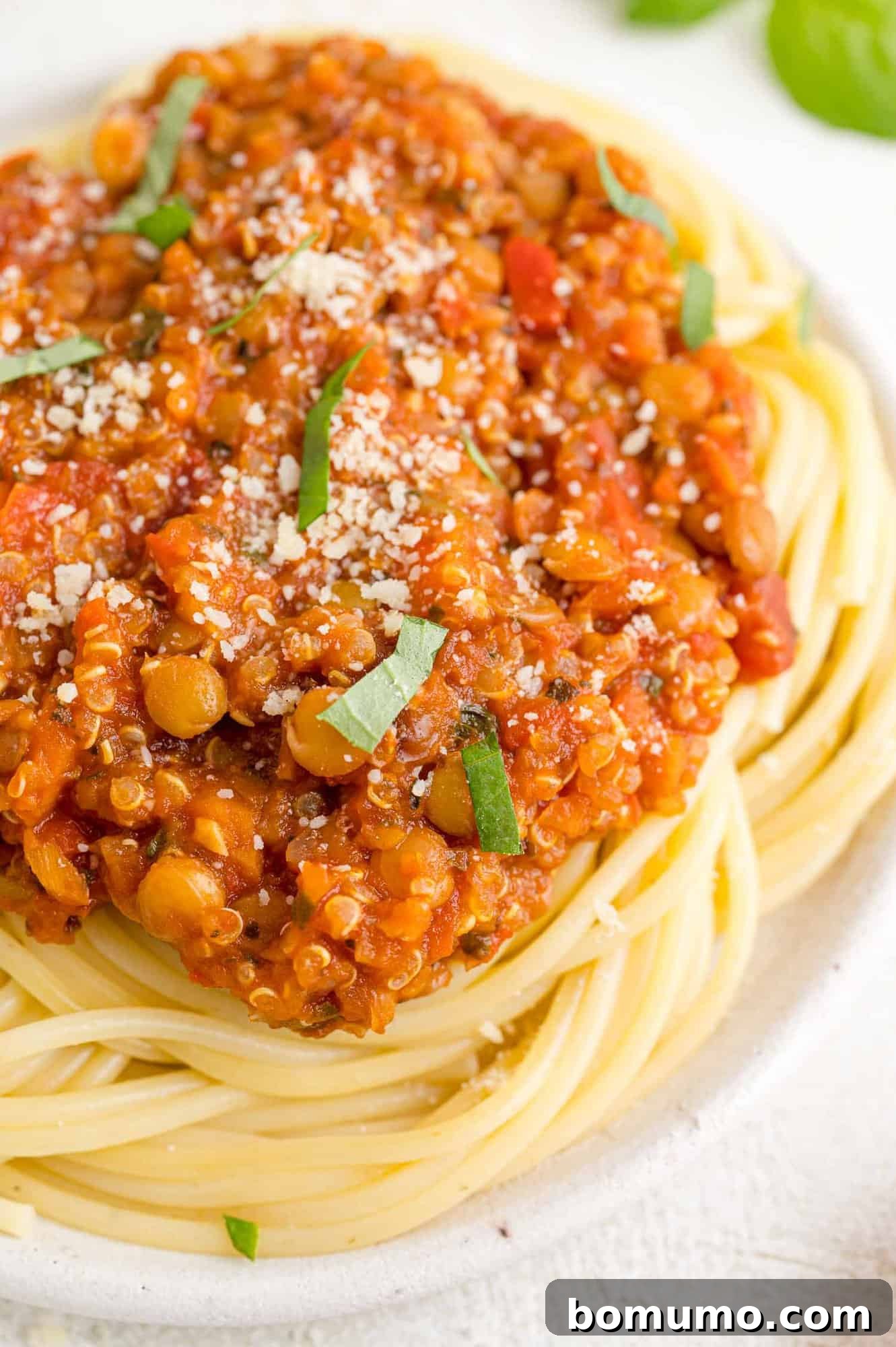
But to my surprise (and delight!), this recipe was an absolute hit! He was genuinely impressed, and his approval speaks volumes. The combined textures of the perfectly cooked lentils and fluffy quinoa create a remarkably substantial and satisfying mouthfeel, mimicking the texture of ground meat beautifully. The flavor profile of the sauce itself is truly exceptional, boasting a rich blend of robust tomatoes, aromatic herbs, warm spices, and a delicate splash of balsamic vinegar that adds a layer of sophisticated tang and depth. While a classic Bolognese often includes cream for richness, this plant-based version achieves a luxurious, dairy-free creaminess through careful simmering and blending, making it suitable for a wider range of dietary needs.
I am confident that this vegan pasta sauce will become a cherished recipe in your home. It’s wonderfully satisfying, incredibly flavorful, and provides a wholesome, healthy meal that you can feel great about serving to your loved ones.
About This Vegan Bolognese Recipe
This recipe isn’t just delicious; it’s also incredibly convenient and adaptable, designed to fit seamlessly into busy lifestyles while delivering maximum flavor.
Effortless Preparation: One of the greatest advantages of this vegan Bolognese is its simplicity. All the ingredients required can typically be found in any well-stocked pantry or easily purchased at your local grocery store. It’s a brilliant option for those evenings when you might not have fresh meat on hand, or when your frozen meat supply is depleted. This recipe ensures a delicious meal without a last-minute trip to the supermarket.
Pantry Powerhouse: Don’t let the ingredient list intimidate you; it features common, accessible items that are often on hand. Think canned tomatoes in various forms (crushed, diced, and paste for layering flavor), staple dried herbs and seasonings, and everyday vegetables like carrots and onions. Lentils and quinoa are fantastic pantry staples, known for their long shelf life, making them ideal for spontaneous cooking or emergency meal solutions.
Flexible Cooking Times: While the active cooking time is around an hour (not including initial prep), the beauty of this sauce lies in its flexibility. It thrives on a good simmer, allowing the flavors to meld and deepen over time. Once the initial preparation is complete, you can let it gently simmer on the stovetop for as long as your schedule permits, or even transfer it to a slow cooker for several hours, making it an ideal choice for busy weekdays or relaxed weekend cooking.
What You’ll Need: Essential Ingredients
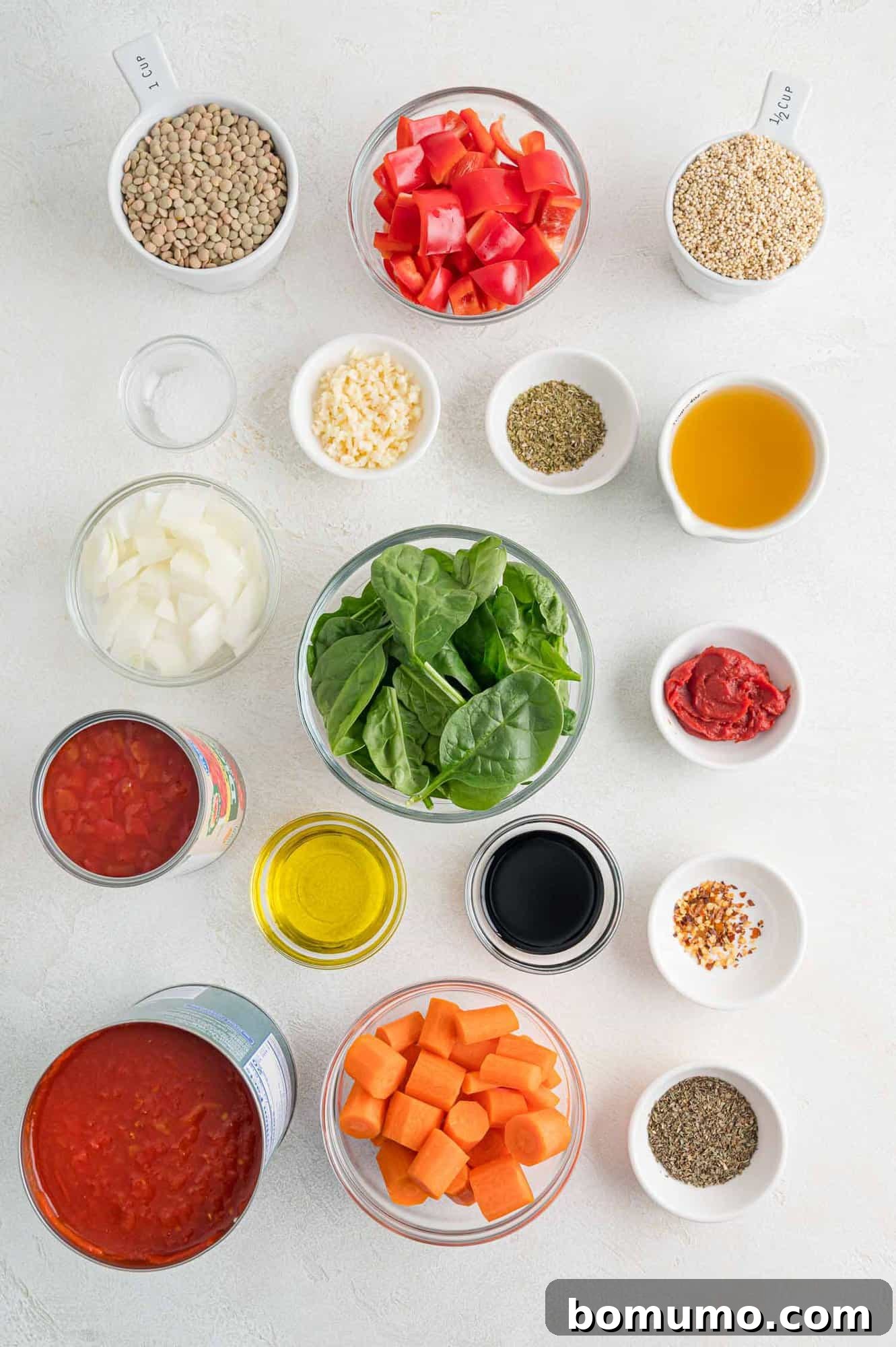
Crafting this flavorful vegan Bolognese requires a thoughtful selection of ingredients, each playing a crucial role in building its distinctive taste and texture:
- Brown or Green Lentils: These legumes are the cornerstone of our “meaty” texture. Known for their fast cooking time and robust flavor, lentils are an ancient food, packed with plant-based protein and fiber. Always remember to sort through them to remove any small debris and rinse them thoroughly under cool water before cooking.
- Quinoa: Technically a seed, quinoa is celebrated for its complete protein profile and gluten-free nature, often referred to as a “superfood” grain. It adds another layer of satisfying texture and nutritional boost to the sauce. While various colors exist, white quinoa is typically used for its mild flavor and quick cooking. Like lentils, quinoa benefits from a good rinse before use to remove saponins, which can give it a bitter taste.
- Aromatic Vegetables (Onion, Red Bell Pepper, Garlic, Carrots): These foundational vegetables create the aromatic base and contribute essential sweetness and depth of flavor to the sauce. Carrots add a natural sweetness, onions provide pungency, and bell peppers introduce a subtle fruitiness. Garlic, of course, is indispensable for its savory kick. Feel free to use any color bell pepper you prefer.
- Fresh Spinach Leaves: A fantastic way to boost the nutritional content of your meal without significantly altering the flavor. We artfully incorporate three cups of loosely packed spinach, which wilts down seamlessly into the sauce, making it virtually undetectable—a clever trick for increasing your green intake!
- Tomato Powerhouses (Crushed Tomatoes, Diced Tomatoes, and Tomato Paste): Tomatoes are the undisputed stars of any Bolognese. Crushed tomatoes provide the smooth, rich body, diced tomatoes add textural interest and fresh bursts of flavor, and tomato paste delivers concentrated umami and deepens the overall tomato flavor. This trio creates a complex and authentic tomato base.
- Herb & Spice Essentials (Red Pepper Flakes, Dried Basil, Dried Oregano, Salt): These pantry staples infuse the sauce with classic Italian flavors. Red pepper flakes offer a gentle warmth that can be adjusted to your liking, while basil and oregano provide that quintessential Mediterranean aroma. Kosher salt balances and enhances all the other flavors.
- Balsamic Vinegar: A crucial ingredient that acts as a flavor enhancer, a couple of tablespoons of tangy-sweet balsamic vinegar are pivotal. It rounds out the sauce, balancing the acidity of the tomatoes and adding a complex, rich note that beautifully substitutes the red wine traditionally found in Bolognese.
- Serving Accompaniments (Cooked Pasta, Optional Parmesan Cheese, Optional Fresh Basil): Choose your favorite pasta to carry this glorious sauce. While the recipe is vegan, a sprinkle of grated Parmesan (or a quality vegan cheese alternative) and a scattering of fresh basil leaves are wonderful optional garnishes for an extra flourish of flavor and freshness.
Benefits of Key Ingredients: Lentils and Quinoa
The success of this vegan Bolognese hinges on the incredible properties of lentils and quinoa, two nutritional powerhouses that provide both texture and a wealth of health benefits. Lentils, often praised as a humble superfood, are an excellent source of plant-based protein, making them a superb meat substitute. They are also rich in dietary fiber, which aids digestion, promotes satiety, and helps maintain stable blood sugar levels. Beyond protein and fiber, lentils offer a significant amount of iron, folate, and B vitamins, contributing to overall energy and well-being.
Quinoa complements lentils perfectly, adding a slightly different texture and further boosting the nutritional profile. It’s unique among plant foods for being a complete protein, meaning it contains all nine essential amino acids that our bodies cannot produce. Quinoa is naturally gluten-free, making this Bolognese suitable for those with gluten sensitivities. It’s also packed with magnesium, phosphorus, manganese, and zinc, and delivers even more fiber. Together, lentils and quinoa create a nutrient-dense, filling, and satisfying meal that will leave you feeling energized and nourished without the heaviness often associated with meat-based sauces. Their combined texture is key to the “meaty” feel, absorbing the rich flavors of the sauce beautifully.
How To Make This Vegan Bolognese Recipe
Let’s dive into the simple steps for creating this delightful vegan Bolognese. You’ll need a medium saucepan, a large heavy skillet with a cover, or a Dutch oven, and a food processor or blender to achieve the perfect consistency.
-
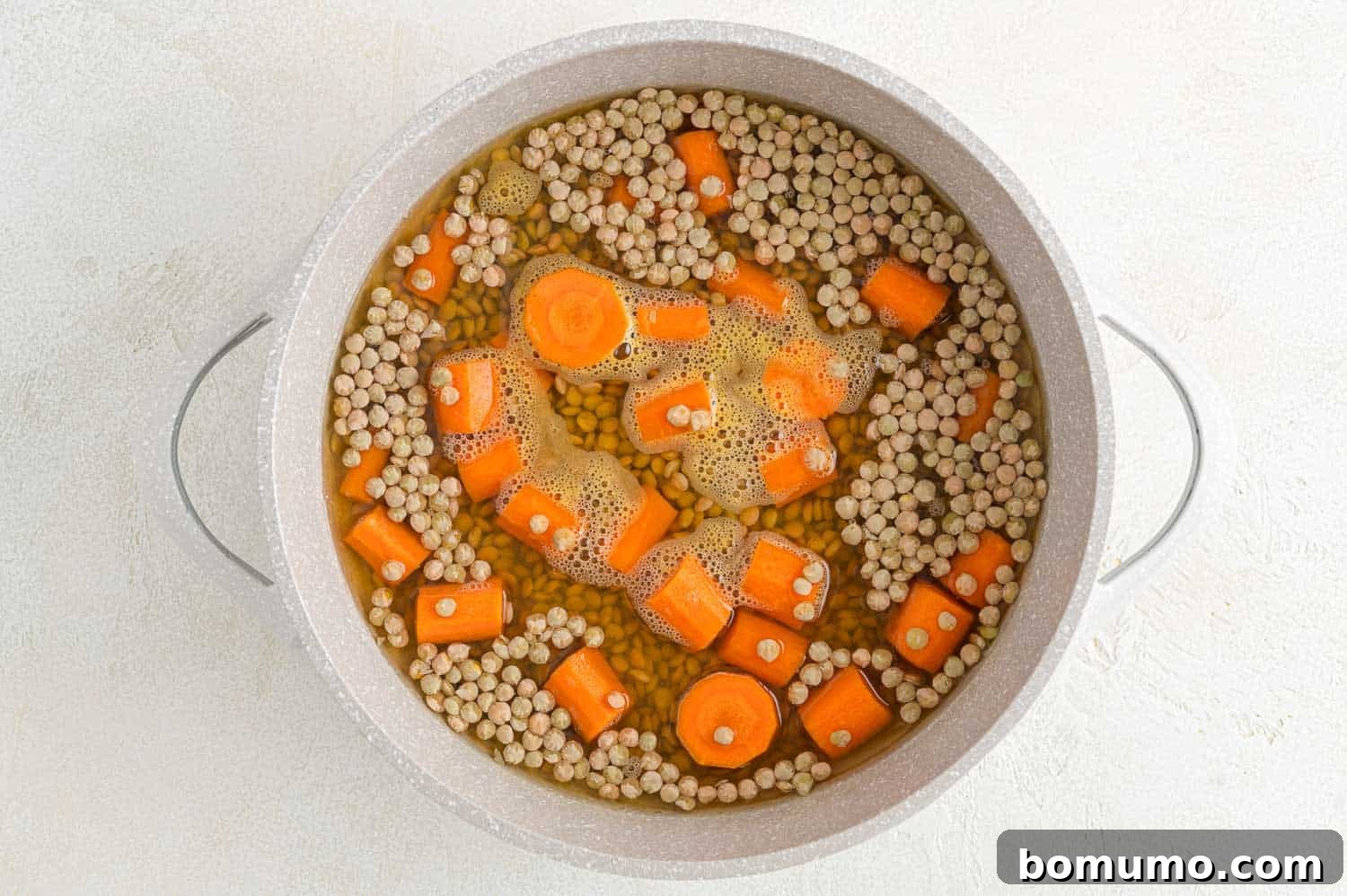
Prepare Carrots and Lentils: Begin by peeling or scrubbing your carrots and cutting them into approximately one-inch chunks. The size is important here, as you’ll be easily picking them out later. In a medium saucepan, combine the sorted and rinsed lentils with the chopped carrots and two cups of water or vegetable broth. If using water, add ½ teaspoon of kosher salt to season. Bring this mixture to a boil over high heat, then reduce the heat to a gentle simmer, cover the saucepan, and cook for about 20 minutes, or until both the carrots are fork-tender and the lentils are cooked through.

-
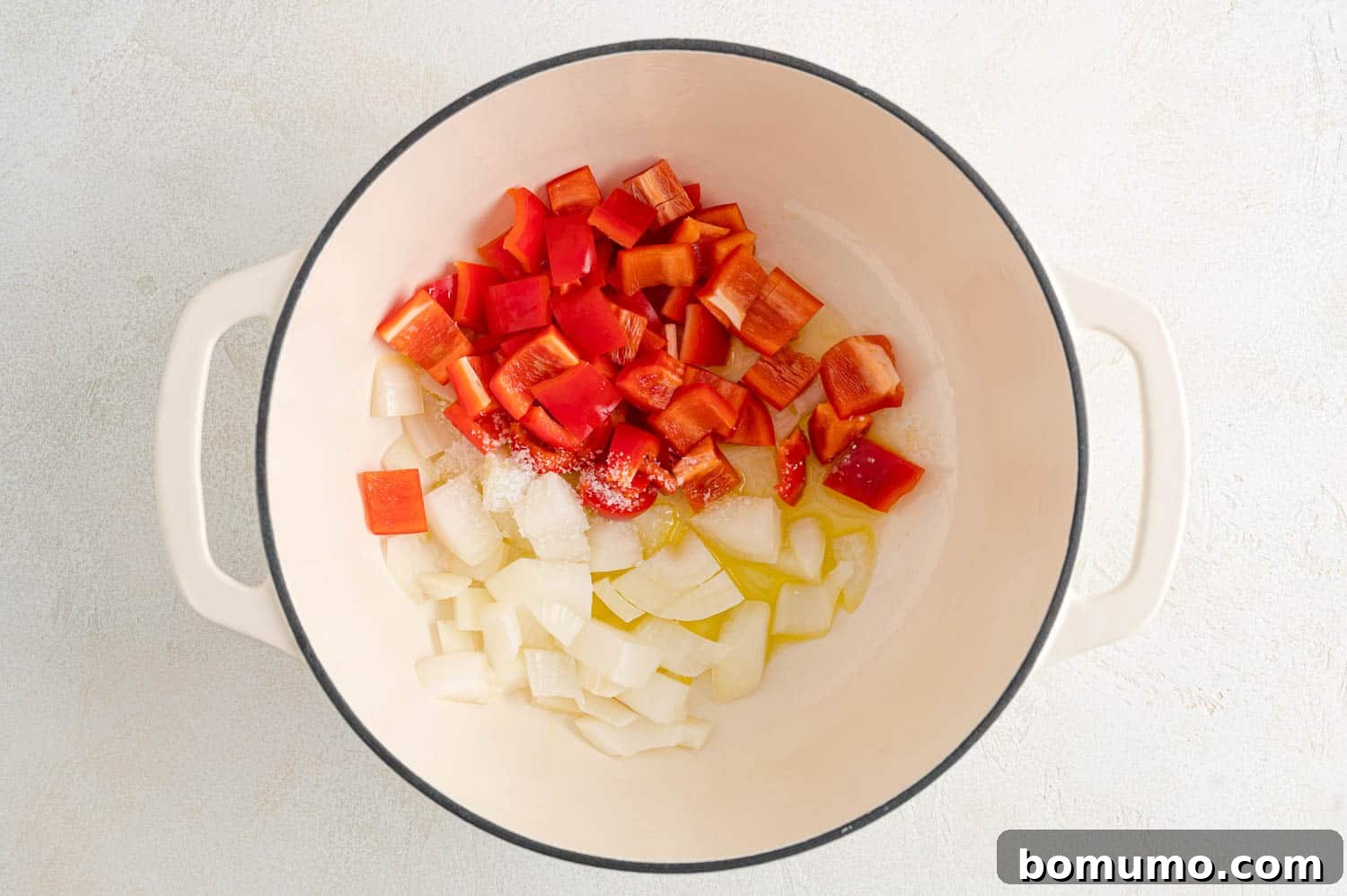
Sauté the Aromatic Vegetables: While the lentils and carrots are simmering, heat two tablespoons of olive oil in your large Dutch oven or skillet over medium heat. Add the roughly chopped onion and red bell pepper along with ½ teaspoon of kosher salt. Cook, stirring frequently, until the onions become translucent and the peppers have softened, which usually takes about 7 to 8 minutes.
-
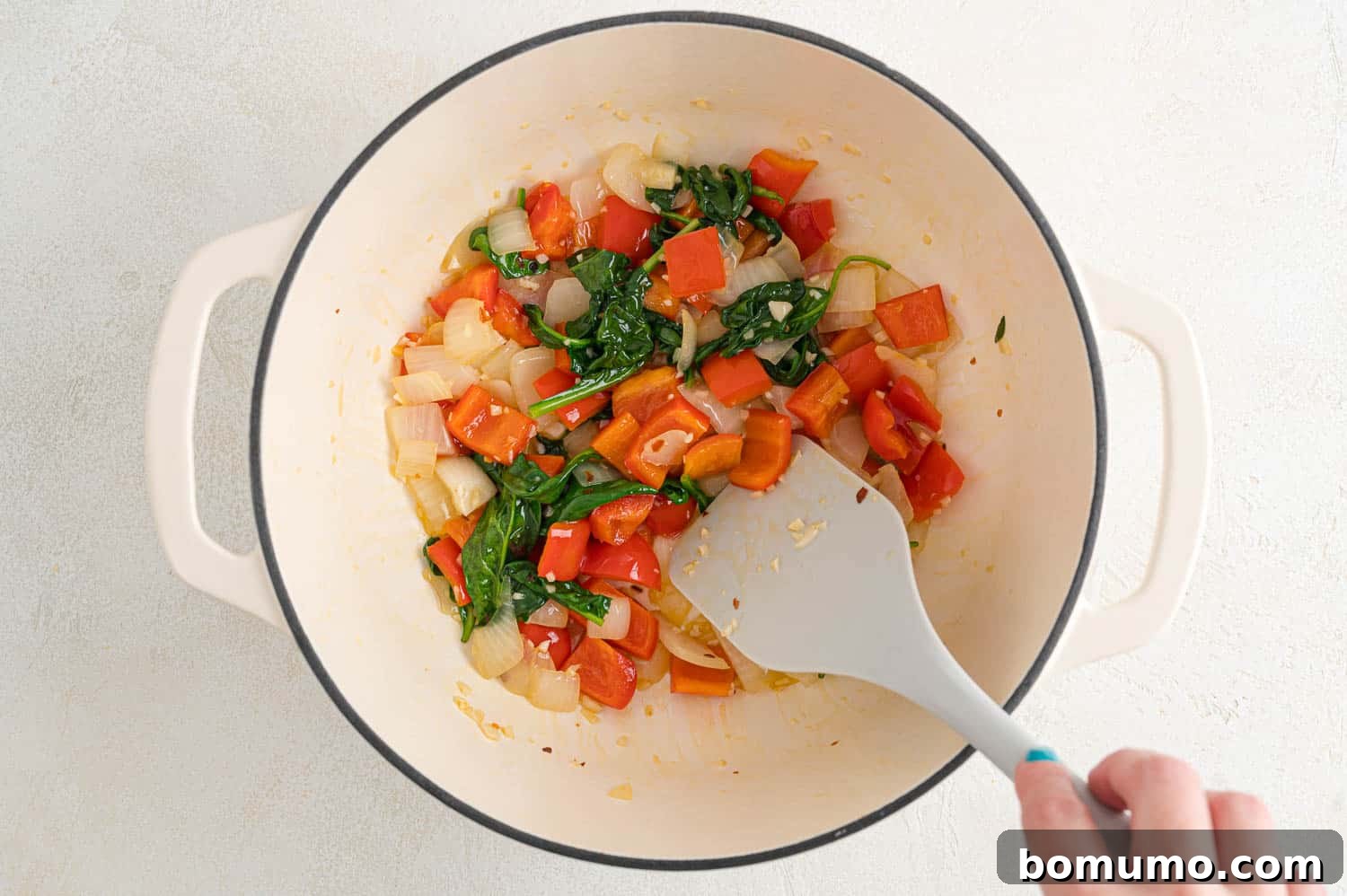
Wilt Spinach and Remove from Heat: Add the roughly chopped garlic, ¼ teaspoon of red pepper flakes (or more if you prefer extra heat), and the three cups of loosely packed spinach leaves to the sautéed vegetables. Stir continually for a minute or two, just until the garlic becomes fragrant and the spinach has completely wilted down. Remove the pan from the heat and set it aside.
-
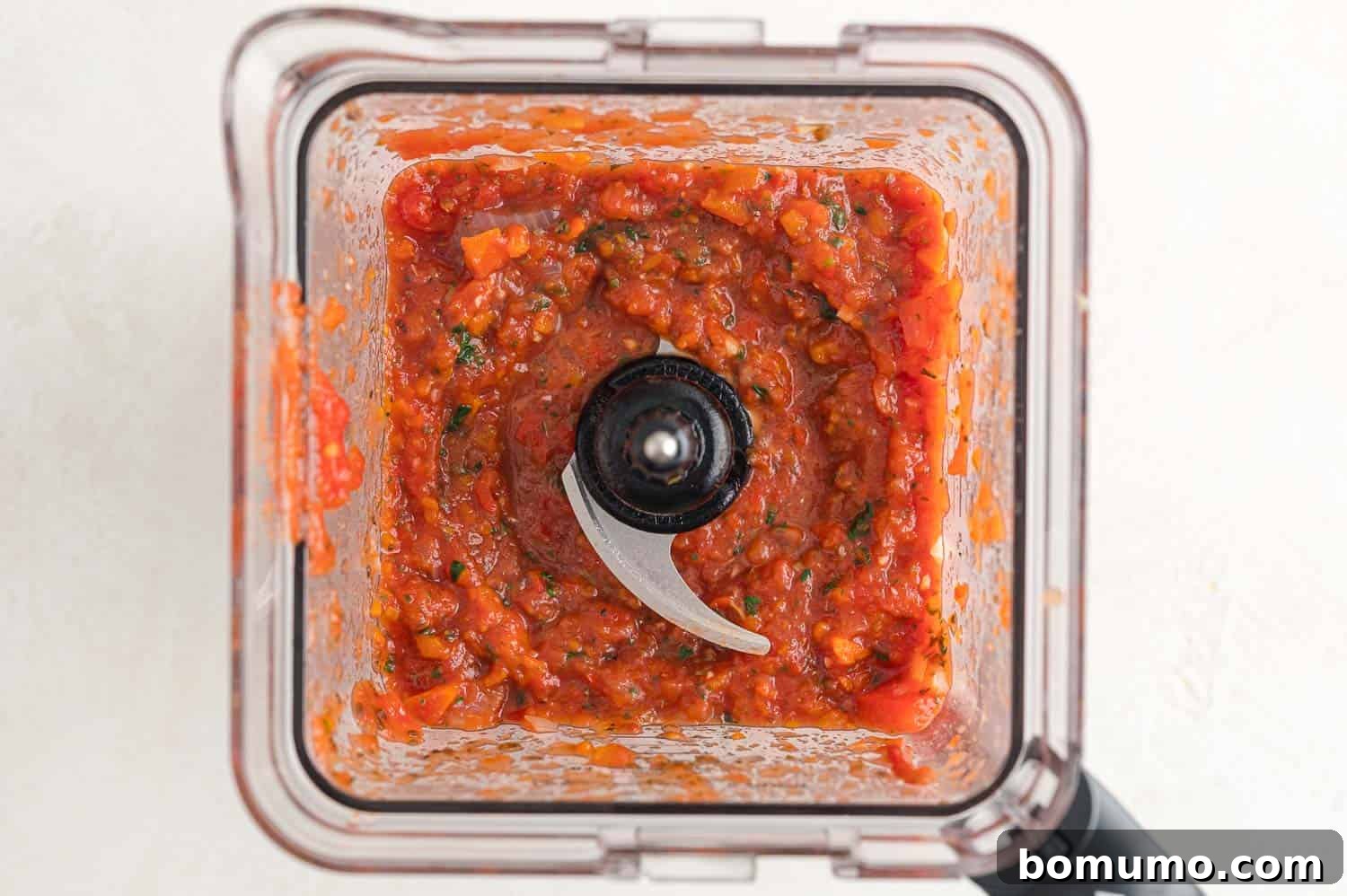
Create the Smooth Sauce Base: Transfer the crushed tomatoes, tomato paste, dried basil, dried oregano, the cooked spinach mixture from the skillet, and the cooked carrots (making sure to leave the cooked lentils in the saucepan for now) into a blender or food processor. Process until the mixture is completely smooth and creamy. This step is key to achieving that luxurious Bolognese texture.
-
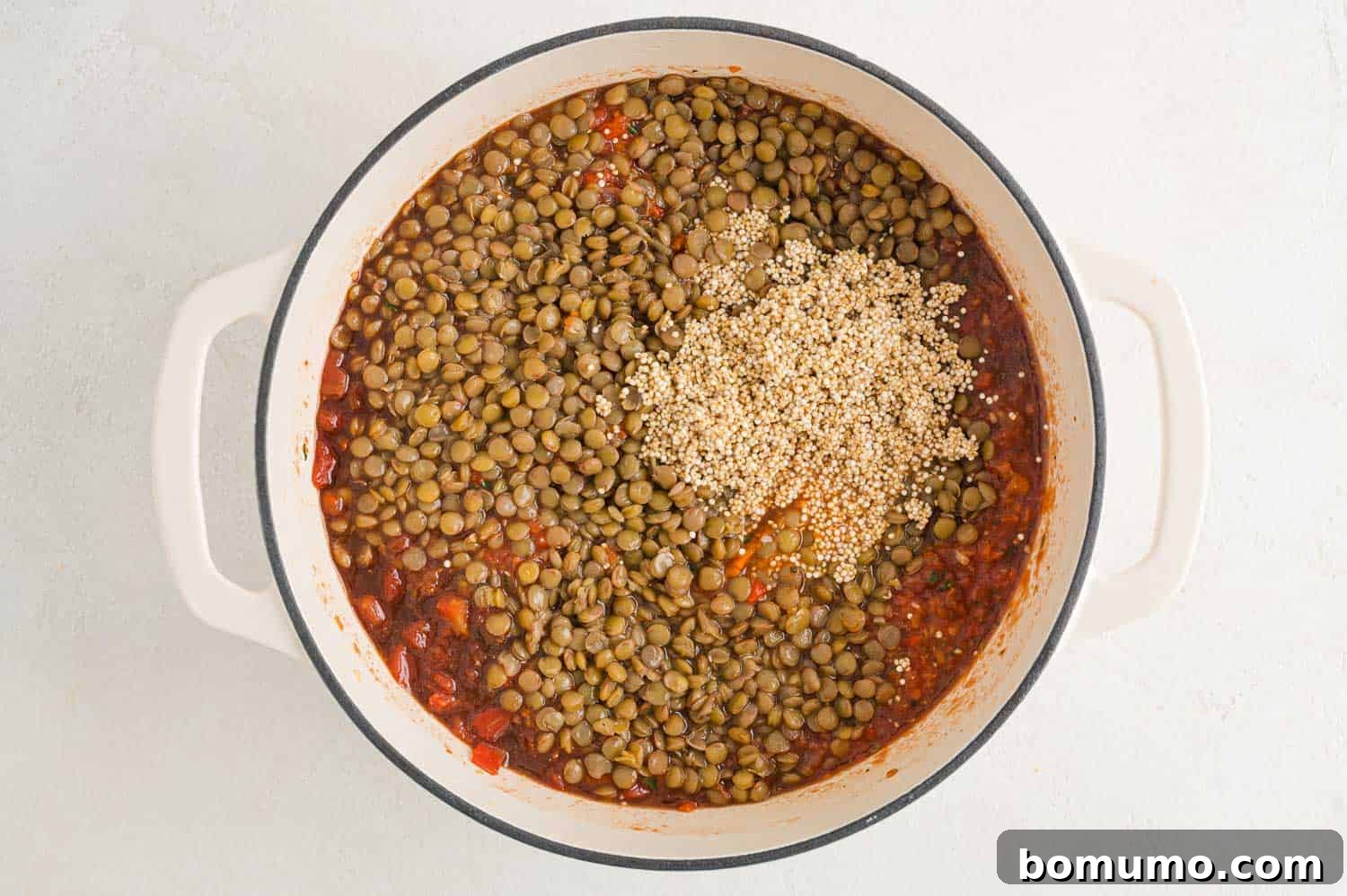
Combine and Simmer the Sauce: Return the same large skillet or Dutch oven to medium heat. Add the can of petite diced tomatoes and the two tablespoons of balsamic vinegar. Use a wooden spoon to scrape the bottom of the pan, loosening any delicious browned bits (this deglazing step adds wonderful flavor). Pour in the pureed tomato mixture from the blender, along with the uncooked quinoa and the cooked lentils. Stir everything together thoroughly, bring the sauce to a gentle simmer, then cover the pan and let it cook over low heat for 45 to 50 minutes, or even longer, stirring occasionally. This extended simmering time allows the quinoa to cook perfectly and the flavors to deepen and meld beautifully.
-
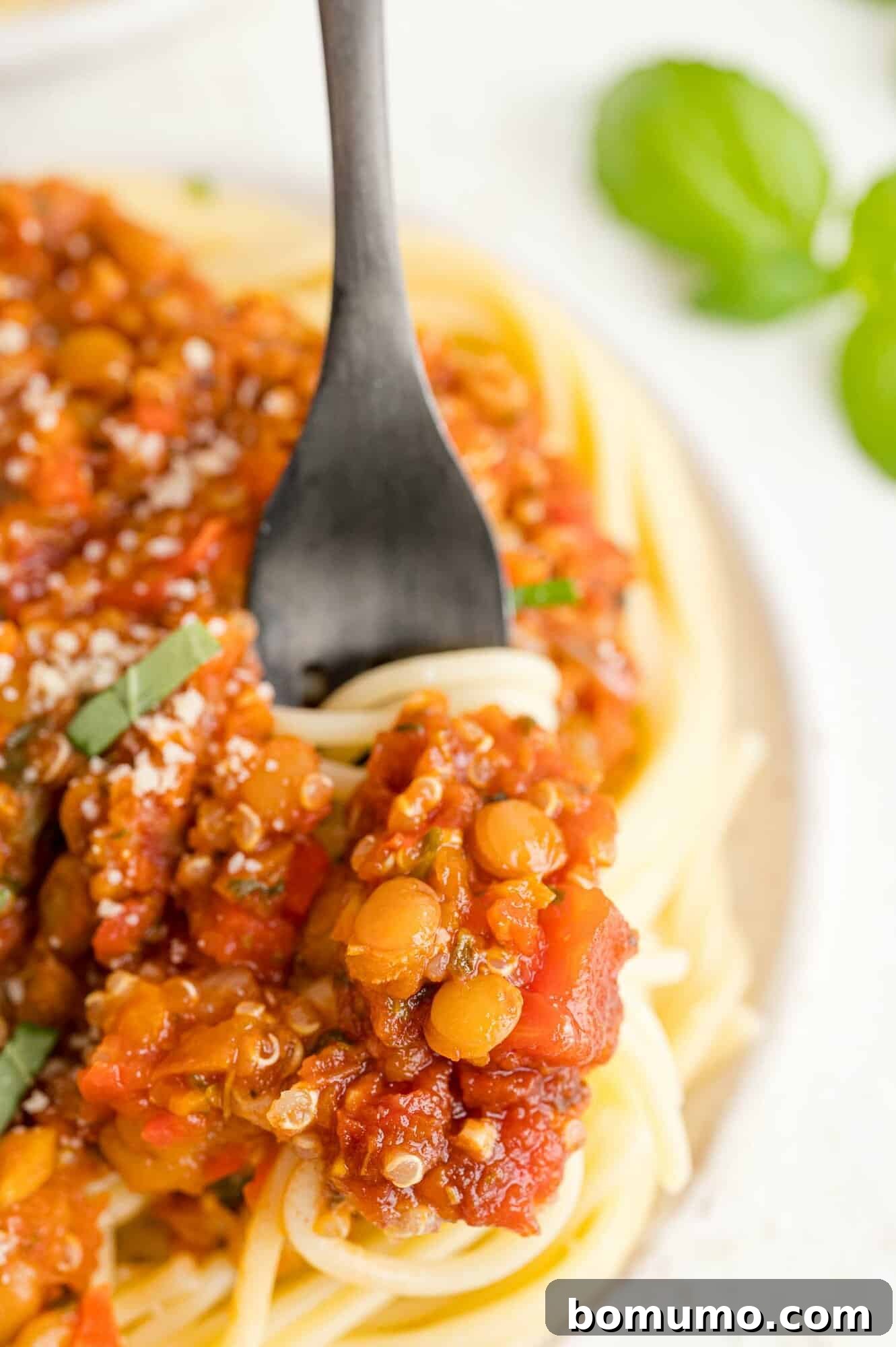
Cook Pasta and Serve: While the Bolognese sauce simmers, cook your preferred pasta according to the package directions. Before draining the pasta, remember to reserve about ½ cup of the starchy pasta water. This can be used to thin out the sauce later if you find it too thick, helping it cling perfectly to your noodles. Once the sauce has simmered to perfection, taste and adjust the seasoning with additional salt and pepper as needed. Serve the rich vegan Bolognese sauce generously over your cooked pasta, and garnish with fresh chopped basil and a sprinkle of grated Parmesan cheese (or a vegan alternative) if desired.
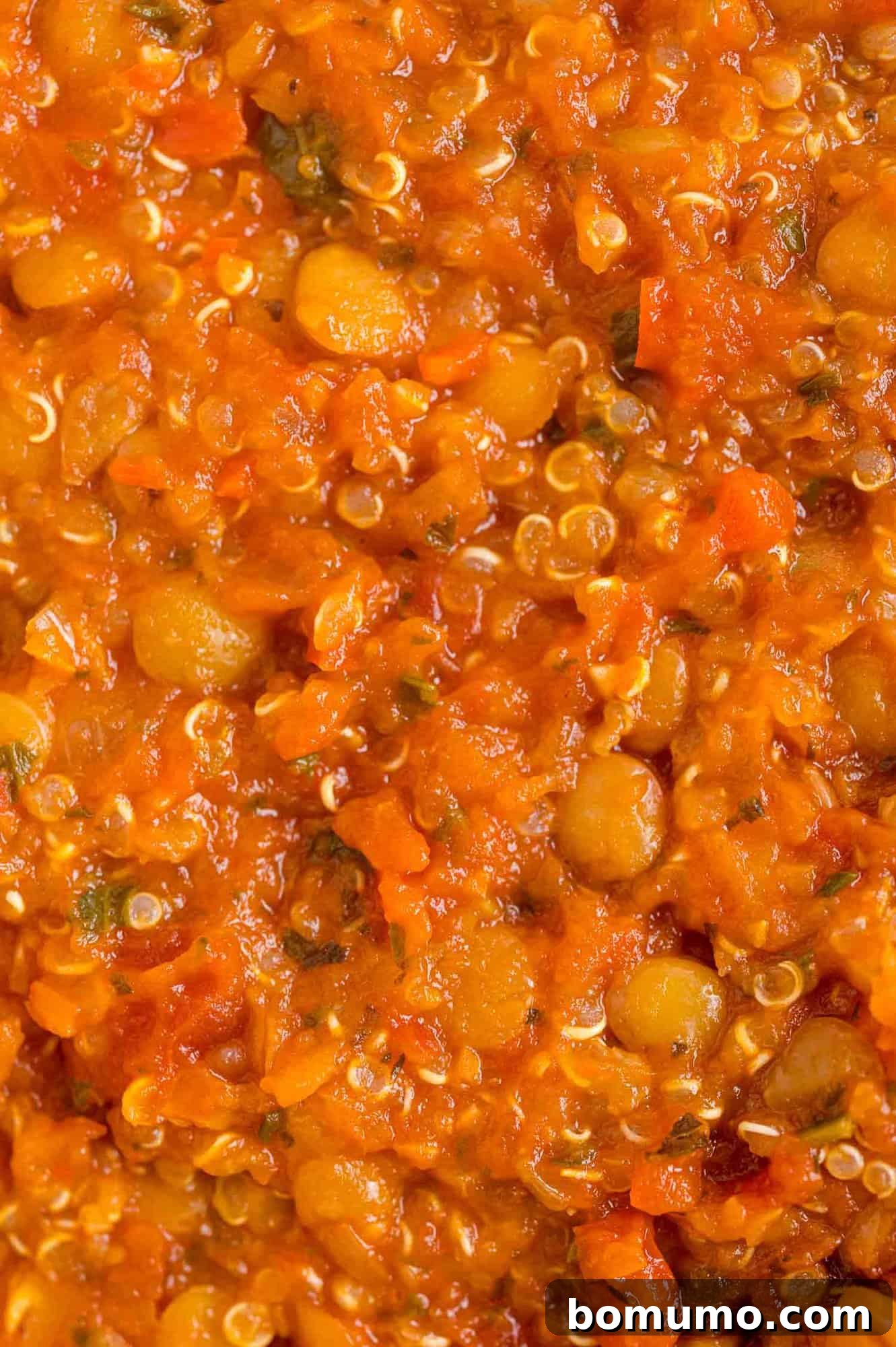
This vegan Bolognese sauce pairs beautifully with a variety of hearty pasta shapes such as rigatoni, penne, tagliatelle, or fettuccine, which are excellent for catching all the rich sauce. For an extra healthy twist, consider using whole wheat pasta or a gluten-free pasta option. If you are committed to a fully vegan meal, simply omit the Parmesan cheese or choose your favorite plant-based cheese alternative. As cheese lovers in this family, we often enjoy it with a sprinkle of dairy Parmesan!
Perfect Pairings & Serving Suggestions
Elevate your vegan Bolognese experience with these complementary dishes and drinks:
- Artisan Bread: A warm, crusty loaf of Dutch oven bread, perfect for soaking up every last drop of the luscious sauce.
- Gourmet Dipping Oil: Pair your bread with a rich restaurant-style bread dipping oil for an authentic Italian touch.
- Fresh Green Salad: A crisp, simple green salad tossed with homemade Italian dressing or a creamy creamy Italian dressing provides a refreshing contrast to the hearty pasta.
- Elegant Cocktail: For a special occasion or a festive touch, a light and refreshing Aperol Spritz cocktail is a fun and easy choice.
Make It Your Own: Delicious Variations
While this vegan Bolognese recipe is fantastic as is, don’t hesitate to customize it to your taste or dietary needs:
- Add More Vegetables: For an even richer sauce, consider adding finely diced mushrooms, zucchini, or eggplant along with the onions and bell peppers during the sautéing stage. These vegetables will absorb the sauce’s flavors beautifully and add more bulk.
- Spicy Kick: If you love heat, increase the amount of red pepper flakes or add a pinch of cayenne pepper during the sautéing process.
- Herbaceous Boost: Experiment with other dried or fresh herbs. A sprig of fresh rosemary or thyme added during the simmering stage can infuse the sauce with additional aromatic notes.
- Gluten-Free Option: This recipe is already gluten-free, provided you serve it with gluten-free pasta, making it a versatile choice for those with sensitivities.
- Creamy Indulgence (Vegan): For a creamier finish, stir in a splash of plant-based cream (like cashew cream or oat cream) during the last few minutes of simmering.
For those interested in exploring non-vegan Bolognese options, consider these popular recipes:
- Classic Bolognese Pasta Sauce: If you’re looking for a rich, creamy, meat-inclusive sauce, our Instant Pot Bolognese is a game-changer, ready in under an hour without sacrificing flavor.
- Healthier Turkey Bolognese: Try this lighter turkey Bolognese recipe, made on the stovetop with lean ground turkey and turkey sausage for a super flavorful, healthier alternative.
Make-Ahead & Freezing Solutions
Make-Ahead & Freezing Solutions
This recipe is perfect for meal prepping! It yields a generous batch of approximately 8 cups of sauce. You can enjoy half of it tonight and effortlessly store the other half for a quick and convenient meal later in the week or month.
Storage & Reheating Tips
Storage & Reheating Tips
- Refrigerate: Leftover sauce can be stored in an airtight container in the refrigerator for three to five days.
- Freeze: This sauce freezes exceptionally well. Transfer cooled sauce to freezer-safe containers or bags, ensuring enough headspace. It will keep beautifully for up to three months.
- Defrost: For best results, thaw frozen sauce overnight in the refrigerator before reheating.
- Reheat: Individual portions can be quickly reheated in the microwave until warmed through. For larger quantities, gently warm the sauce on the stovetop in a saucepan over medium-low heat, stirring occasionally, until it reaches your desired temperature. Add a splash of water or vegetable broth if the sauce has thickened too much during storage.
Discover Free Meal Plans
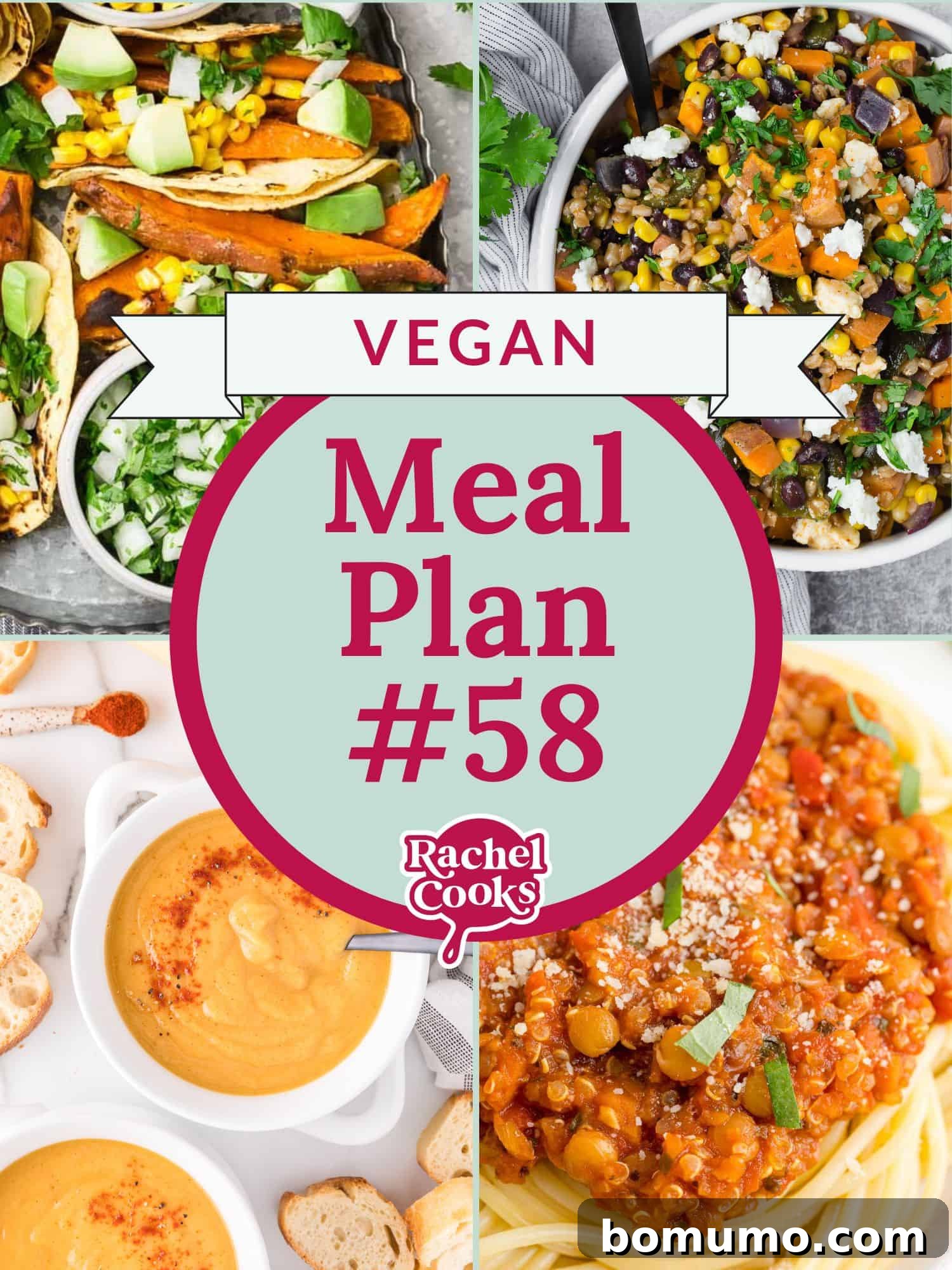
Interested in a weekly meal plan that thoughtfully incorporates delicious recipes like this vegan Bolognese? Explore Meal Plan #58. You’ll find a balanced, wholesome recipe for each weekday, complete with a convenient, categorized grocery list to simplify your shopping. We regularly update our collection with new meal plans to inspire your cooking!
Explore More Delicious Pasta Sauce Recipes
Spicy Arrabbiata Sauce
Crockpot Spaghetti Sauce (Meat or Vegetarian)
Vibrant Carrot Pasta Sauce
Classic Homemade Spaghetti Sauce Recipe
Hearty Lentil & Quinoa Vegan Bolognese
Rachel Gurk
15 minutes
1 hour
20 minutes
1 hour
35 minutes
8
servings
Print Recipe
Ingredients
-
1
cup
uncooked brown or green lentils, sorted and rinsed -
3
medium carrots, peeled, cut into 1-inch chunks -
2
cups
water or vegetable broth -
2
tablespoons
olive oil
-
½
small yellow onion, roughly chopped -
1
red bell pepper, roughly chopped -
½
teaspoon
kosher salt, more to taste -
3
cloves
garlic, roughly chopped -
¼
teaspoon
red pepper flakes
(more to taste) -
3
cups
loosely packed spinach leaves -
1
can
(28 ounces) crushed tomatoes -
2
tablespoons
tomato paste
-
1
tablespoon
dried basil
-
1 ½
teaspoons
dried oregano
-
1
can
(14.5 ounces) petite diced tomatoes -
2
tablespoons
balsamic vinegar -
½
cup
uncooked quinoa, rinsed - cooked pasta for serving
- grated Parmesan cheese for serving (optional — use a vegan cheese if desired)
- Fresh basil, chopped, for serving (optional)
Instructions
-
In a medium sized saucepan, stir together lentils, carrots, and water or broth (if using water, add ½ teaspoon kosher salt). Bring to a boil over high heat, then reduce to a simmer, cover, and cook for 20 minutes or until the carrots are fork tender and the lentils are cooked.
-
Meanwhile, in a deep skillet or Dutch oven, heat the olive oil over medium heat. Add the onions, red bell pepper, and salt and cook, stirring frequently, until onions become translucent (7 to 8 minutes). Add the garlic, red pepper flakes, and spinach and cook, stirring, until spinach is wilted (2 to 3 minutes). Remove from heat.
-
To a blender or food processor, add crushed tomatoes, tomato paste, the sautéed vegetables (keep the pan – you’ll be using it again), dried basil, and dried oregano. Once the lentils have cooked, remove the carrots from the saucepan and add them to the blender or food processor, as well. Puree/blend until smooth.
-
Place the skillet or Dutch oven back on medium heat. Add diced tomatoes and balsamic vinegar and scrape any brown bits off the bottom of the pan to deglaze. Add the pureed tomato mixture, uncooked quinoa, and the cooked lentils and bring to a simmer. Cover and cook over low heat for 45 to 50 minutes or until quinoa is cooked, stirring occasionally to prevent sticking.
-
Meanwhile, cook pasta as directed on the package. Before draining, reserve ½ cup pasta water to thin out the sauce, if necessary, and help it cling to the pasta.
-
Taste the sauce and season with additional salt and pepper as needed. Serve generously over cooked pasta, garnished with fresh basil and Parmesan cheese (or a vegan alternative), if desired.
Notes
- Nutrition information provided is for the sauce only and does not include pasta, cheese, or fresh basil added during serving.
- This recipe yields a substantial batch, approximately 8 cups, making it excellent for future meals. The sauce freezes beautifully and will maintain its quality for up to 3 months when stored in labeled freezer-safe containers. Always thaw overnight in the refrigerator before reheating.
- This recipe card was last updated on October 13, 2022, to ensure accuracy and freshness.
Video Overview
Watch how to make this delicious Vegan Bolognese!
Nutrition Information (per serving of sauce)
Serving:
1
cup
,
Calories:
209
kcal
,
Carbohydrates:
34
g
,
Protein:
10
g
,
Fat:
5
g
,
Saturated Fat:
1
g
,
Polyunsaturated Fat:
1
g
,
Monounsaturated Fat:
3
g
,
Sodium:
283
mg
,
Potassium:
782
mg
,
Fiber:
11
g
,
Sugar:
7
g
,
Vitamin A:
5613
IU
,
Vitamin C:
36
mg
,
Calcium:
97
mg
,
Iron:
5
mg
Nutrition information is automatically calculated, so should only be used as an approximation.
Did You Make This?
Share a comment and rating below! I love hearing what you think!