
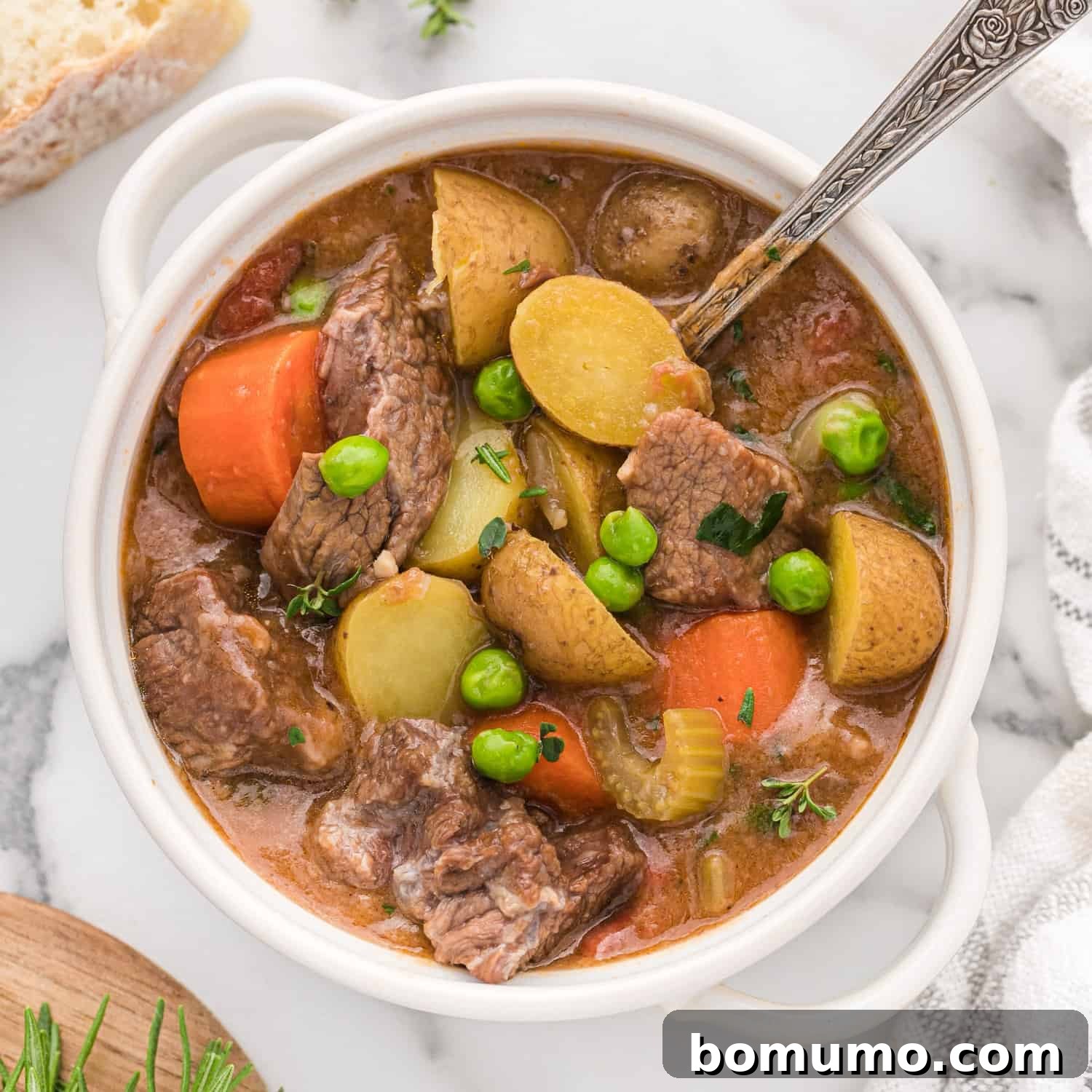
Crockpot Beef Stew: Your Guide to Ultimate Comfort Food
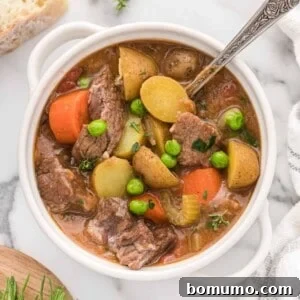
Why you’ll adore this recipe: This slow cooker beef stew is an absolute game-changer. It’s packed with incredibly tender beef, a medley of wholesome vegetables, and a rich, savory gravy that’s sure to satisfy. Imagine the ultimate comfort food, cooking all day in your slow cooker, filling your home with an irresistible aroma, and waiting for you when you’re ready.
Cooking Time: 4 to 8 hours, offering flexibility whether you cook on Low or High settings.
Essential Equipment: A large skillet for browning and, of course, your trusty slow cooker.
Yields: 8 generous servings, perfect for family dinners or meal prepping.
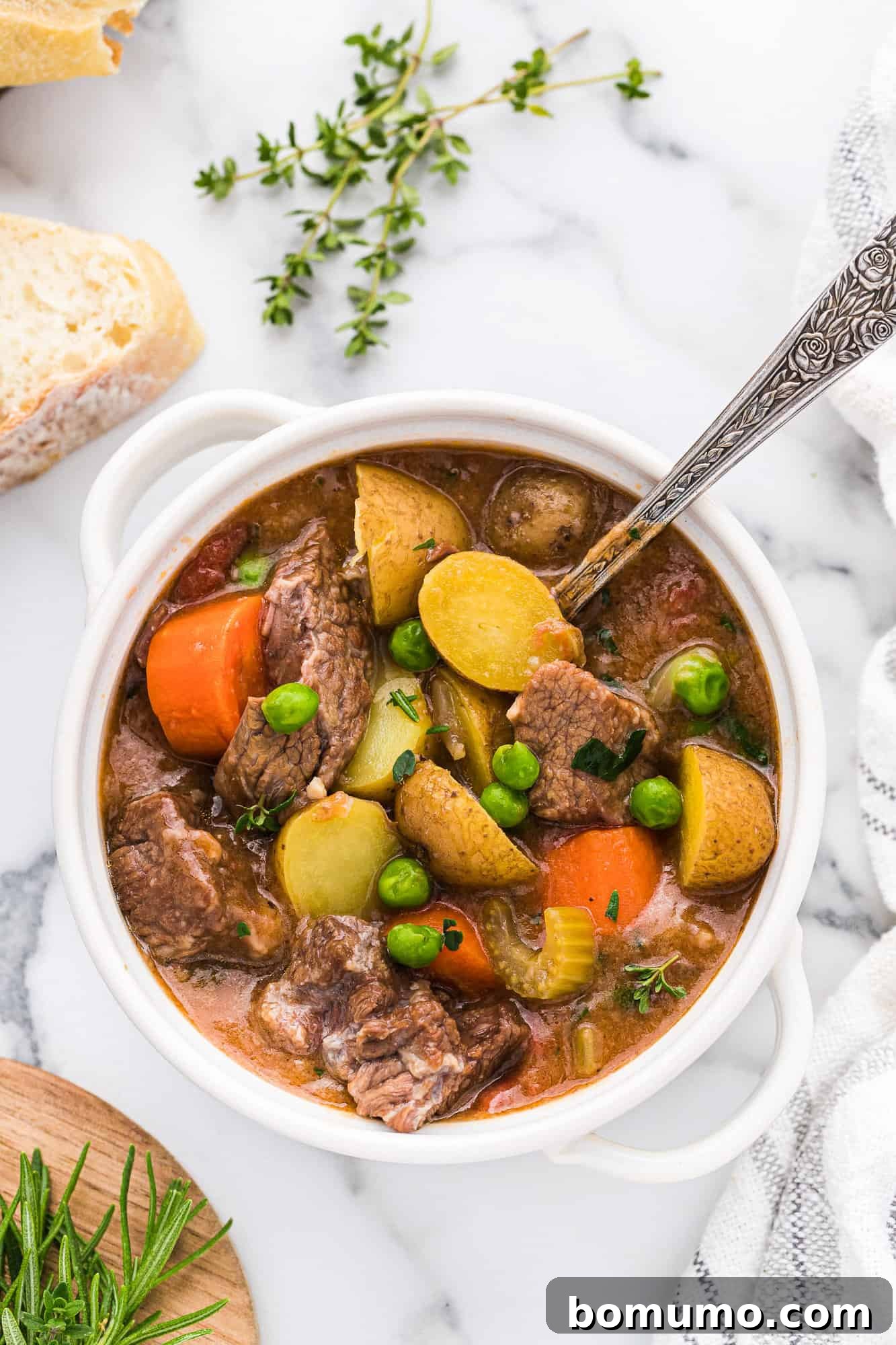
As the crisp autumn air settles in, signaling the change of seasons, our cravings naturally turn to warm, hearty meals that offer both comfort and sustenance. In many regions, like here in Michigan, the slight nip in the air makes cozy soups and stews a delightful and welcome change from the lighter fare of summer. Few dishes evoke that feeling of warmth and home quite like a classic beef stew, especially one that’s been slow-cooked to perfection.
This crockpot beef stew recipe is not just a meal; it’s an experience. It’s the perfect solution for busy weekends when you want to maximize your time outdoors, knowing that a delicious, wholesome dinner is simmering patiently at home. Imagine returning from a day of autumn adventures to be greeted by the comforting scent of a rich, savory stew – a truly effortless feast awaiting your arrival.
The Unbeatable Appeal of Hearty Slow Cooker Beef Stew
For those navigating a hectic schedule, especially during busy weeknights, a slow cooker beef stew stands out as an unparalleled culinary hero. This method transforms what might otherwise be a multi-hour active cooking process into an almost entirely hands-off experience. With just a little bit of morning preparation, you can set your crockpot, go about your day, and return home to the comforting aroma of a home-cooked meal. It’s truly a luxury to have a flavorful, old-fashioned stew ready and waiting, providing warmth and satisfaction without the evening rush.
Beyond convenience, slow cooking works wonders for the beef itself. The prolonged, gentle heat gradually breaks down the tougher connective tissues in the meat, resulting in incredibly tender, fall-apart chunks of beef that melt in your mouth. This isn’t just about making the meat edible; it’s about achieving that desirable succulence and deep flavor that is the hallmark of a truly great beef stew. The low and slow process ensures every piece is infused with the rich, savory flavors of the broth and vegetables.
One of the greatest advantages of beef stew is its completeness as a meal. It’s a culinary marvel that masterfully combines protein, carbohydrates from potatoes, and a bounty of vibrant vegetables all in one pot. This means you often won’t need to fret over elaborate side dishes. However, for those who appreciate a little extra, a warm, crusty bread is the perfect accompaniment to soak up every last drop of that glorious gravy. Consider serving your stew with a slice of rustic Dutch oven bread, soft Parker House rolls, or even this incredibly easy-to-make beer bread, which comes together in about 10 minutes and fills your kitchen with an intoxicating aroma as it bakes. To round off this comforting meal, a simple dessert like homemade vanilla pudding or classic oatmeal raisin cookies would be a delightful finish.
Mastering Your Stew: Essential Ingredient Notes
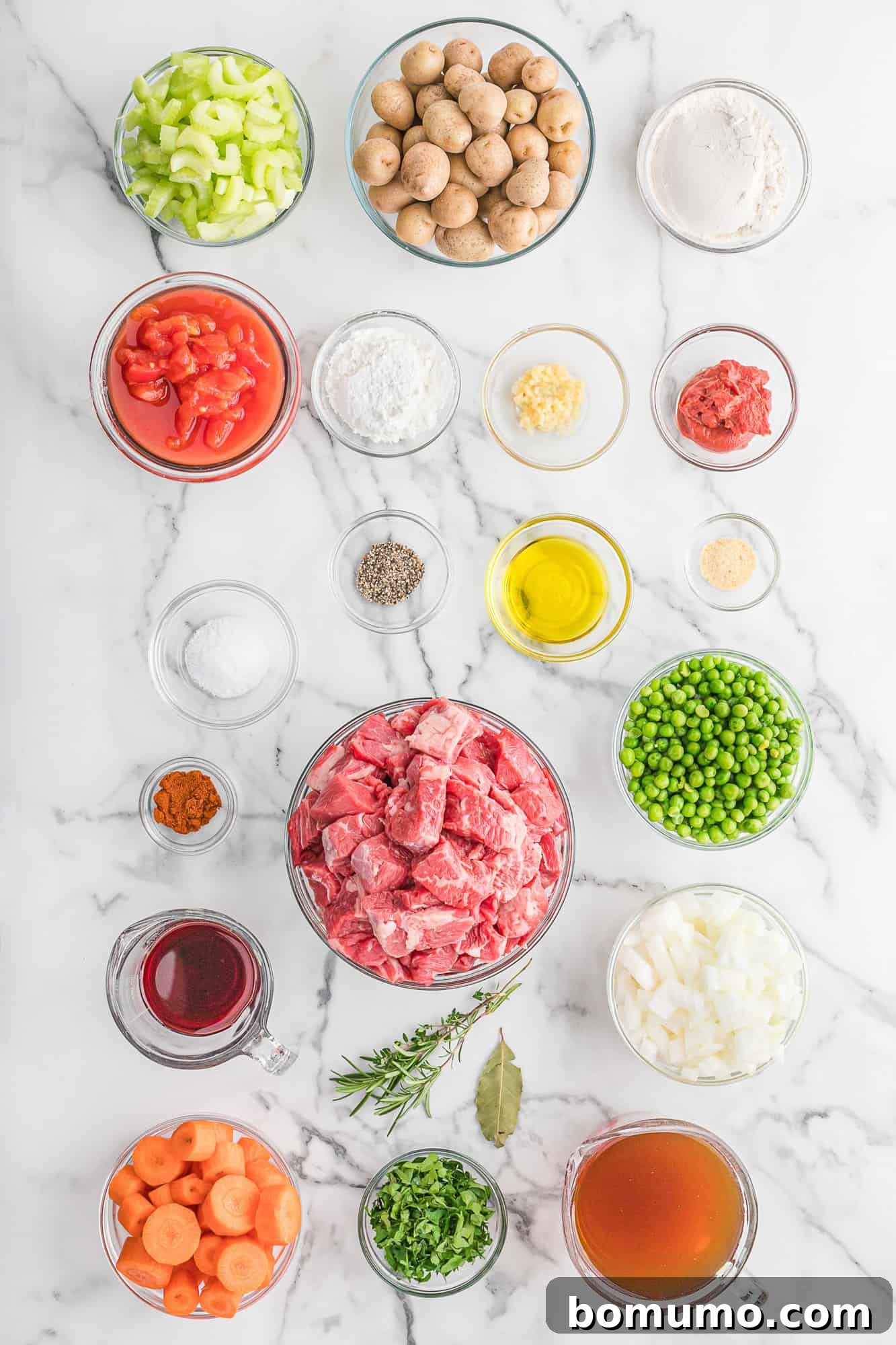
Crafting the perfect crockpot beef stew begins with selecting the right ingredients. Each component plays a crucial role in developing the rich flavor and satisfying texture that makes this dish so beloved. Here’s a closer look at the key players:
- Beef Chuck Roast: This is your secret weapon for tender, flavorful beef stew. Chuck roast, an economical cut, is rich in collagen and connective tissue, which, when subjected to low and slow cooking, breaks down beautifully into succulent, melt-in-your-mouth morsels. It’s ideal for braising and stewing, ensuring your beef is never dry or tough.
- Flour with Seasonings (Salt, Pepper, Paprika, Garlic Powder): This simple dredge for the beef cubes serves a dual purpose. Firstly, it infuses the meat with a foundational layer of flavor, ensuring every bite is seasoned from the inside out. Secondly, the flour, once browned and then incorporated into the liquid, acts as a natural thickener for the gravy, contributing to that luxurious, velvety consistency we all crave in a stew.
- Root Vegetables (Carrots, Celery, Onion, Potatoes): These classic stew vegetables are chosen not just for their flavor but also for their robust structure. They can withstand long cooking times without turning to mush, slowly releasing their earthy sweetness and aromatic notes into the broth. For potatoes, I often opt for whole baby potatoes as they maintain their shape wonderfully, adding a pleasant textural contrast.
- Tomato Paste: A small but mighty ingredient, tomato paste concentrates the umami flavor, adding depth, richness, and a subtle tang that balances the savory notes of the beef and broth. Don’t skip this concentrated burst of flavor!
- Dry Red Wine: While optional for some, a dry red wine elevates the stew to gourmet levels. It not only adds a sophisticated layer of flavor but also aids in deglazing the pan, incorporating all those delicious browned bits into your gravy. Choose a dry variety like Cabernet Sauvignon or Merlot to avoid unwanted sweetness.
- Beef Broth: For the most profound flavor, beef broth is paramount. While water can be used, a good quality beef broth amplifies the savory notes, creating a richer, more complex liquid base for your stew. Opt for low or no-sodium varieties to have better control over the overall saltiness.
- Canned Diced Tomatoes: These add a bright, fresh tomato flavor and a bit of acidity, cutting through the richness of the stew. As with the broth, look for no-salt-added canned tomatoes to manage seasoning precisely.
- Fresh Herbs (Rosemary, Thyme, Bay Leaf) & Fresh Parsley: Fresh herbs are transformative, infusing the stew with aromatic depth. Rosemary and thyme offer earthy, woodsy notes, while a bay leaf adds a subtle, almost medicinal counterpoint. Chopped fresh parsley, added at the end, provides a burst of fresh flavor and vibrant color. If using dried herbs, remember to use a smaller quantity as their flavor is more concentrated.
- Frozen Peas: These little green gems are best added near the end of the cooking process. Their quick cooking time means they retain their bright color and slightly sweet, fresh flavor, offering a beautiful pop against the rich backdrop of the stew.
- Cornstarch: Used to create a slurry with reserved broth, cornstarch is an excellent gluten-free thickening agent. It allows you to adjust the gravy’s consistency at the end, ensuring you achieve that perfect, Spoon-coating richness.
Effortless Perfection: How to Make Crockpot Beef Stew
Making a truly exceptional beef stew in your slow cooker is simpler than you might think, but there are a few key steps that elevate it from good to absolutely outstanding. The initial browning of the beef and sautéing of aromatics are crucial for developing deep, complex flavors. Don’t be tempted to skip these essential first stages!
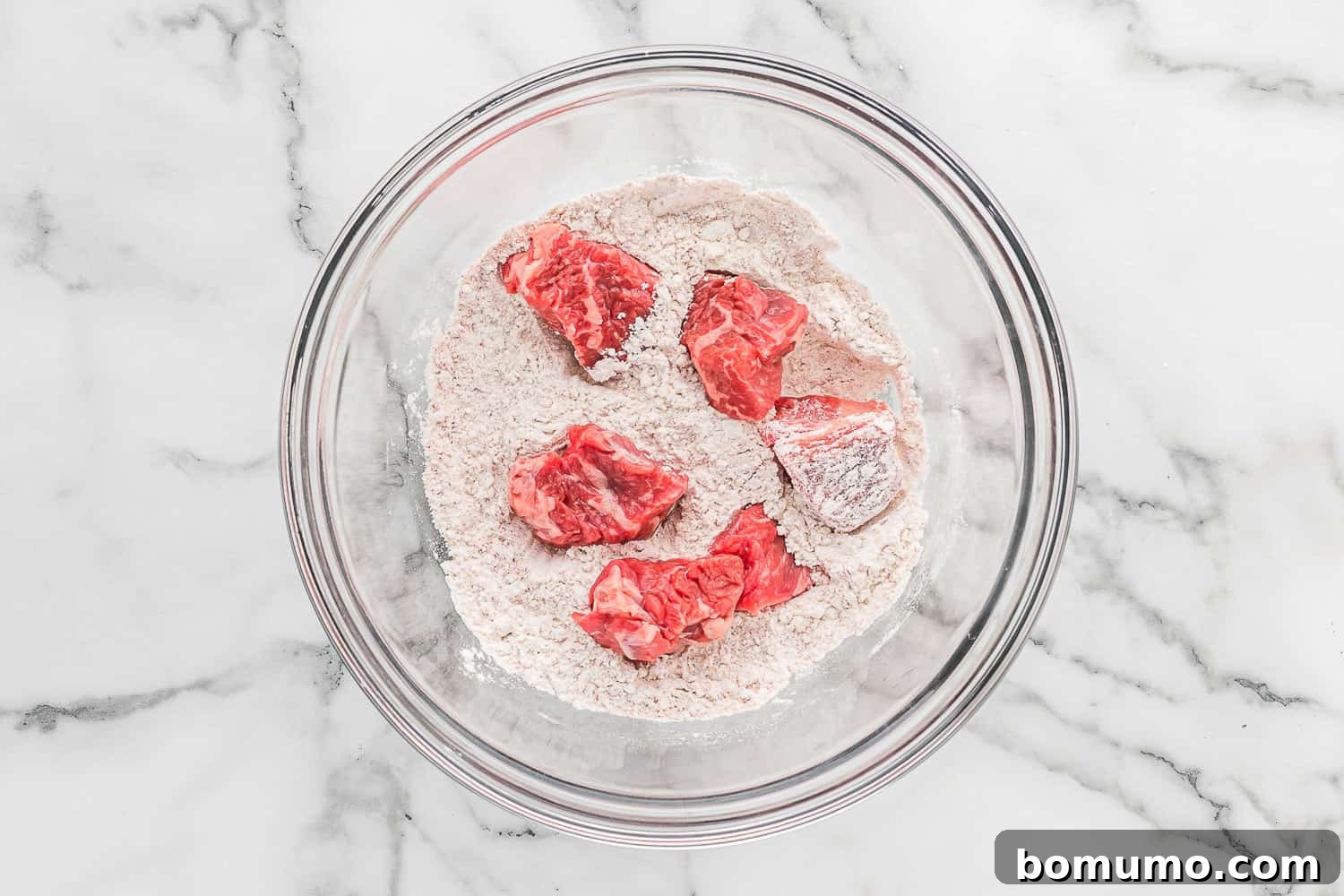
Step 1: Season and Dredge the Beef. Begin by thoroughly tossing your 1-inch beef chuck roast cubes in a mixture of all-purpose flour seasoned with salt, pepper, paprika, and garlic powder. Ensure each piece is evenly coated. This seasoned flour is not just for flavor; it will also contribute to the luxurious thickness of your stew’s gravy later on. Remember to reserve any excess flour mixture from the bowl – it will be used to enhance the richness of your sauce.
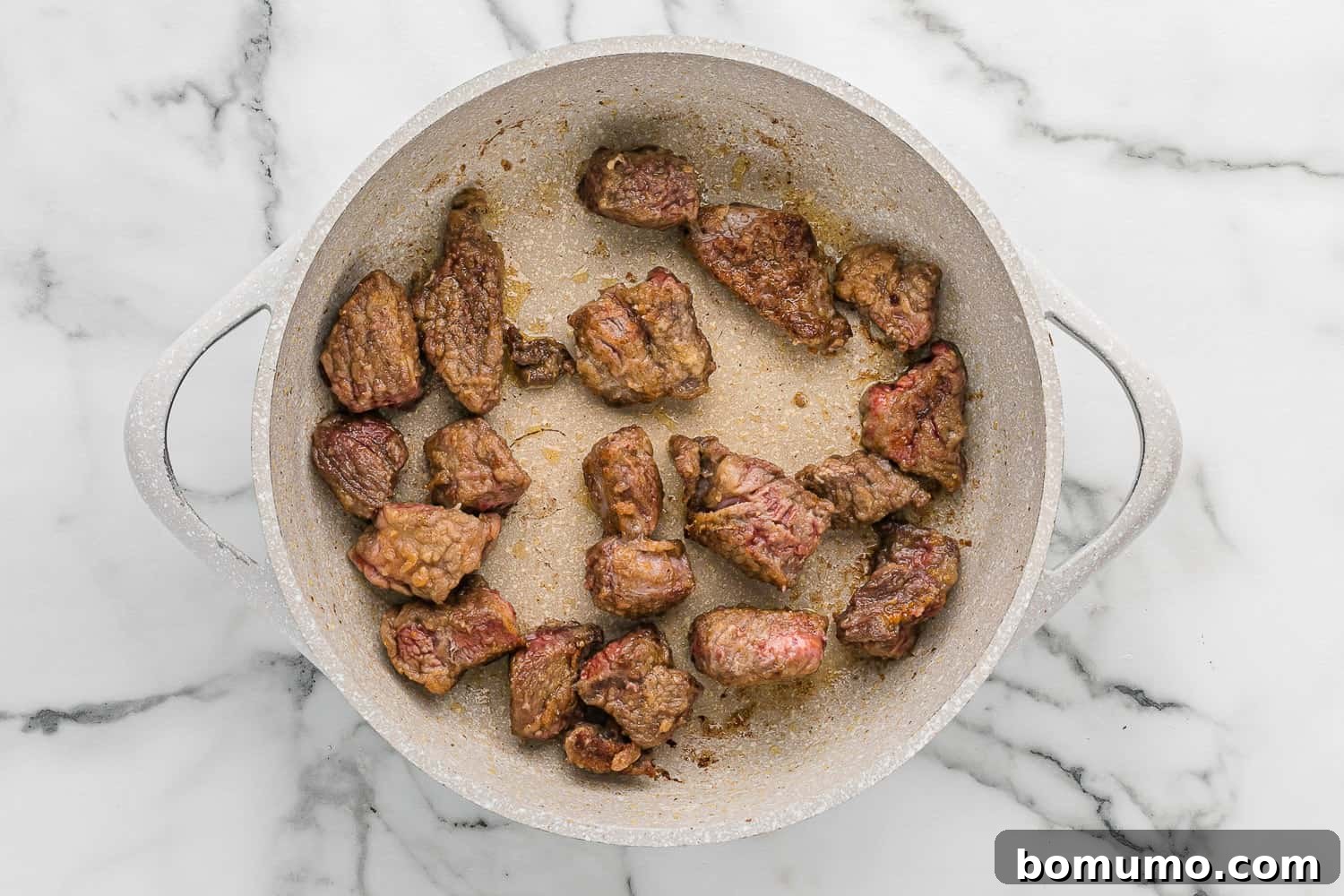
Step 2: Sear for Flavor. Heat the oil or ghee in a large skillet over medium-high heat until shimmering. Add the floured beef cubes in a single layer, making sure not to overcrowd the pan. Brown the beef on all sides, a process that usually takes about 5 minutes per batch. You’re not aiming to cook the meat through, but rather to develop a beautiful, deep brown crust, which adds incredible depth of flavor and visual appeal to the finished stew. Once browned, transfer the beef to your slow cooker. Repeat this process until all the beef is seared, adding more oil if necessary.
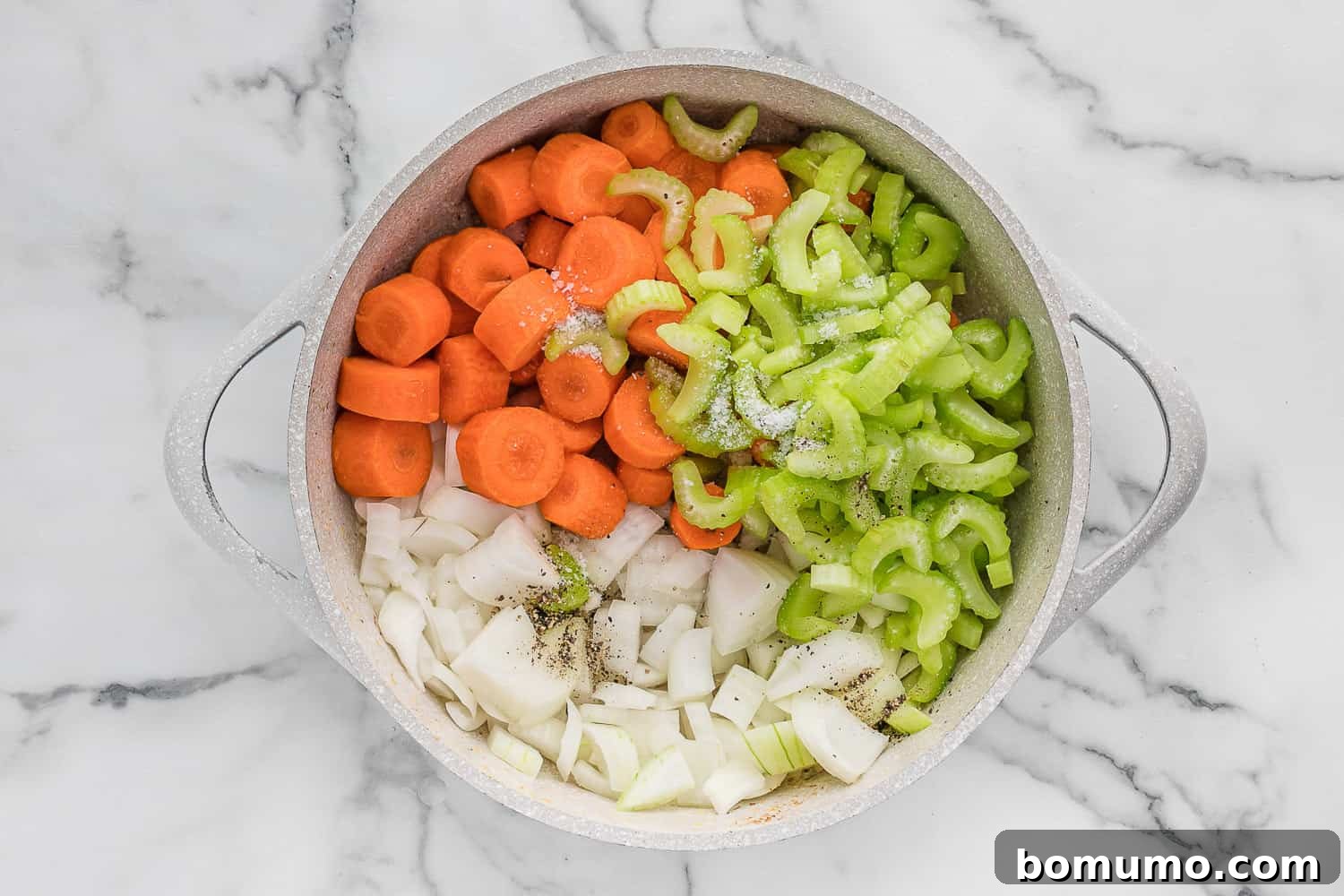
Step 3: Sauté the Aromatics. Without cleaning the skillet (those browned bits are flavor!), add the chopped carrots, celery, and onions. Sauté these vegetables over medium heat for 7 to 8 minutes, stirring occasionally, until the onions become translucent and softened. Next, stir in the minced garlic and cook for just one minute more, or until it becomes wonderfully fragrant. Then, incorporate the reserved excess flour mixture from the beef, stirring and cooking for another 1 to 2 minutes to create a roux-like base.
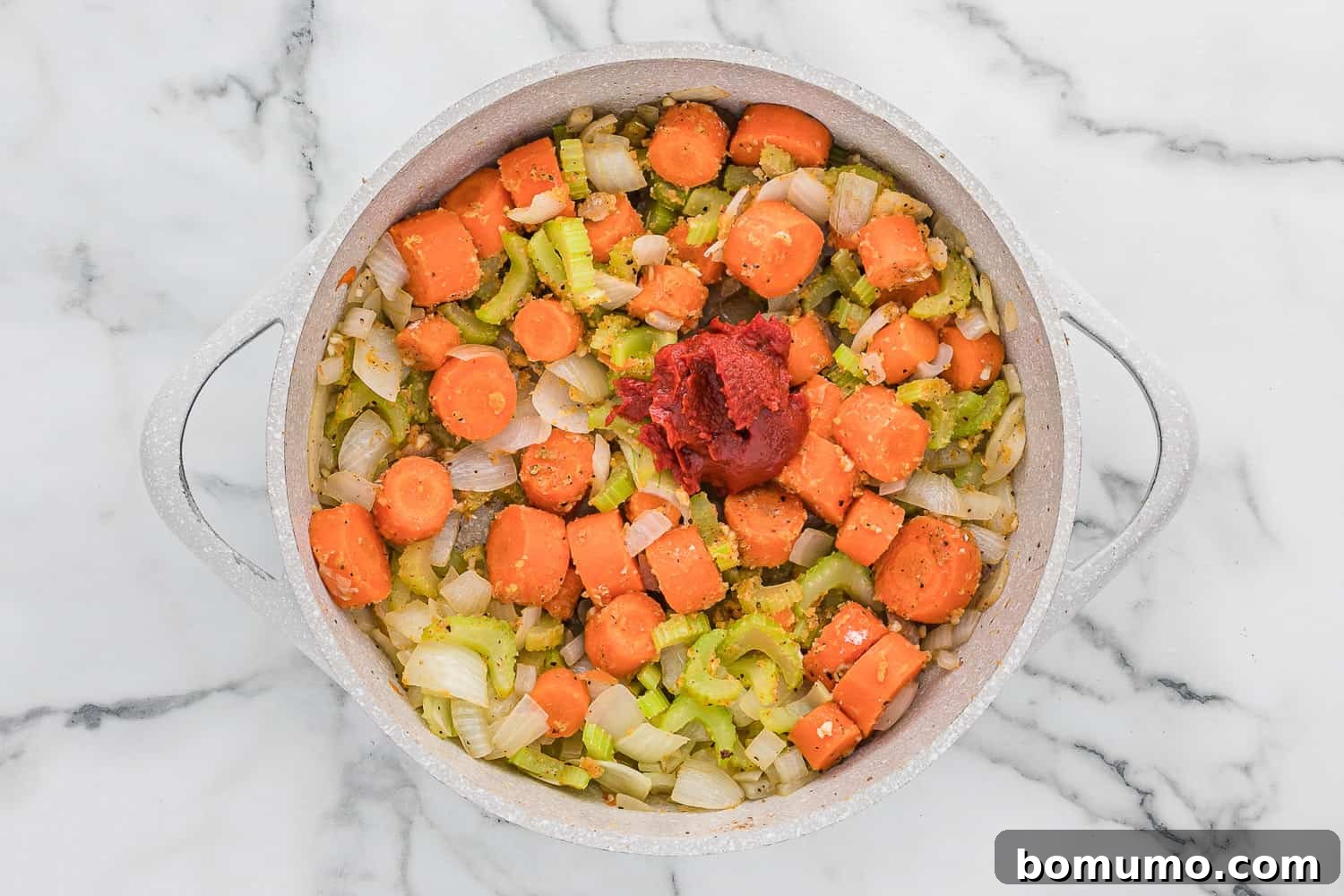
Step 4: Build the Sauce Base. Add the tomato paste to the skillet, stirring it into the vegetables for about a minute. Pour in the dry red wine and use a wooden spoon to vigorously scrape the bottom of the pan, loosening all those incredibly flavorful browned bits (this process is called deglazing). Simmer the mixture briefly for 1 to 2 minutes, allowing the wine to reduce slightly and its flavors to concentrate. Once reduced, transfer this rich vegetable mixture to the slow cooker with the browned beef.
Step 5: Combine and Cook. Now, add the potatoes, 2 cups of the beef broth, and the undrained diced tomatoes to the slow cooker. Nest the sprigs of fresh rosemary and thyme, along with the bay leaf, directly into the stew (these will be removed later). Stir everything gently to combine, ensuring all ingredients are well distributed. Remember to reserve the remaining ½ cup of beef broth and the cornstarch – these will be used later for thickening the stew.
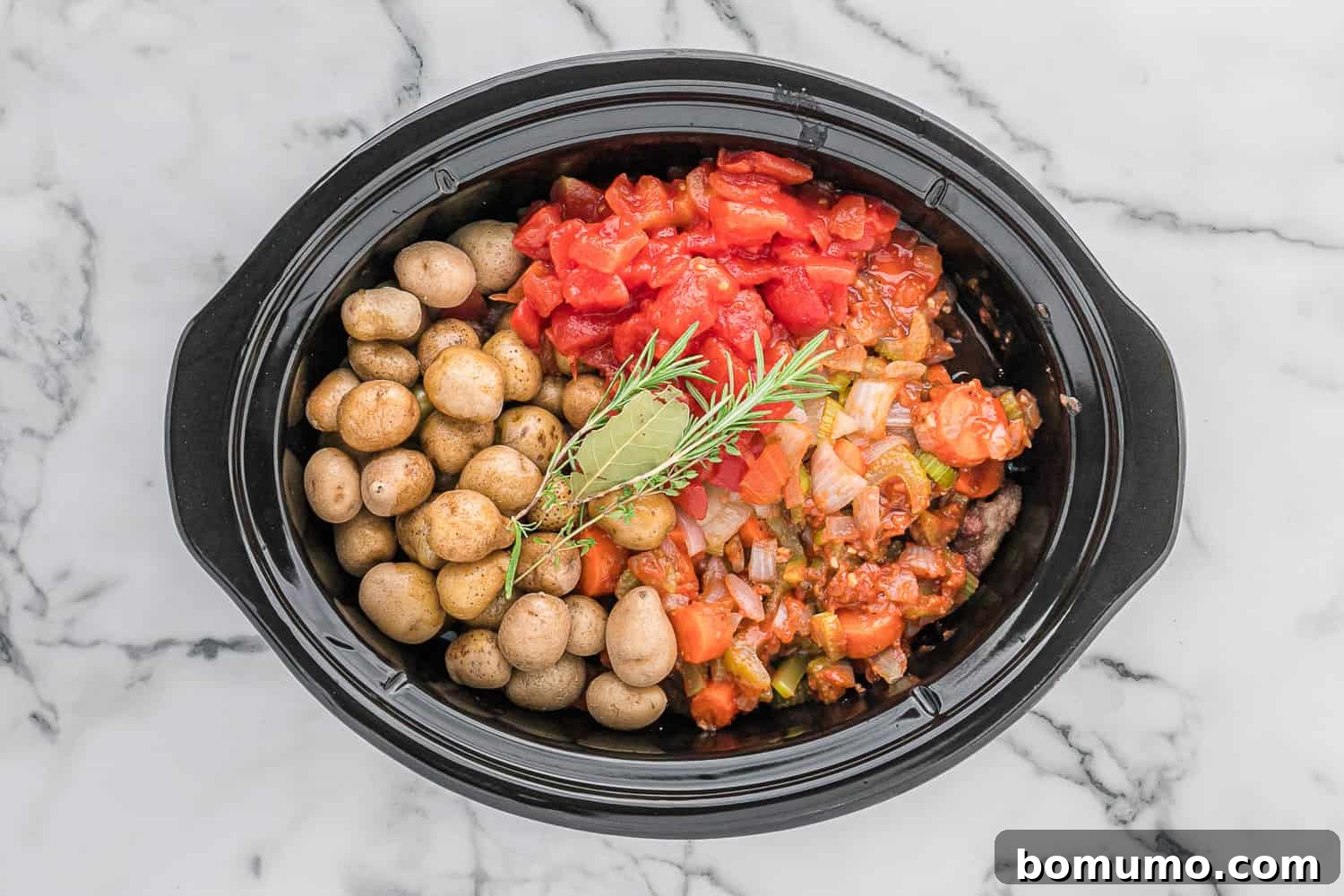
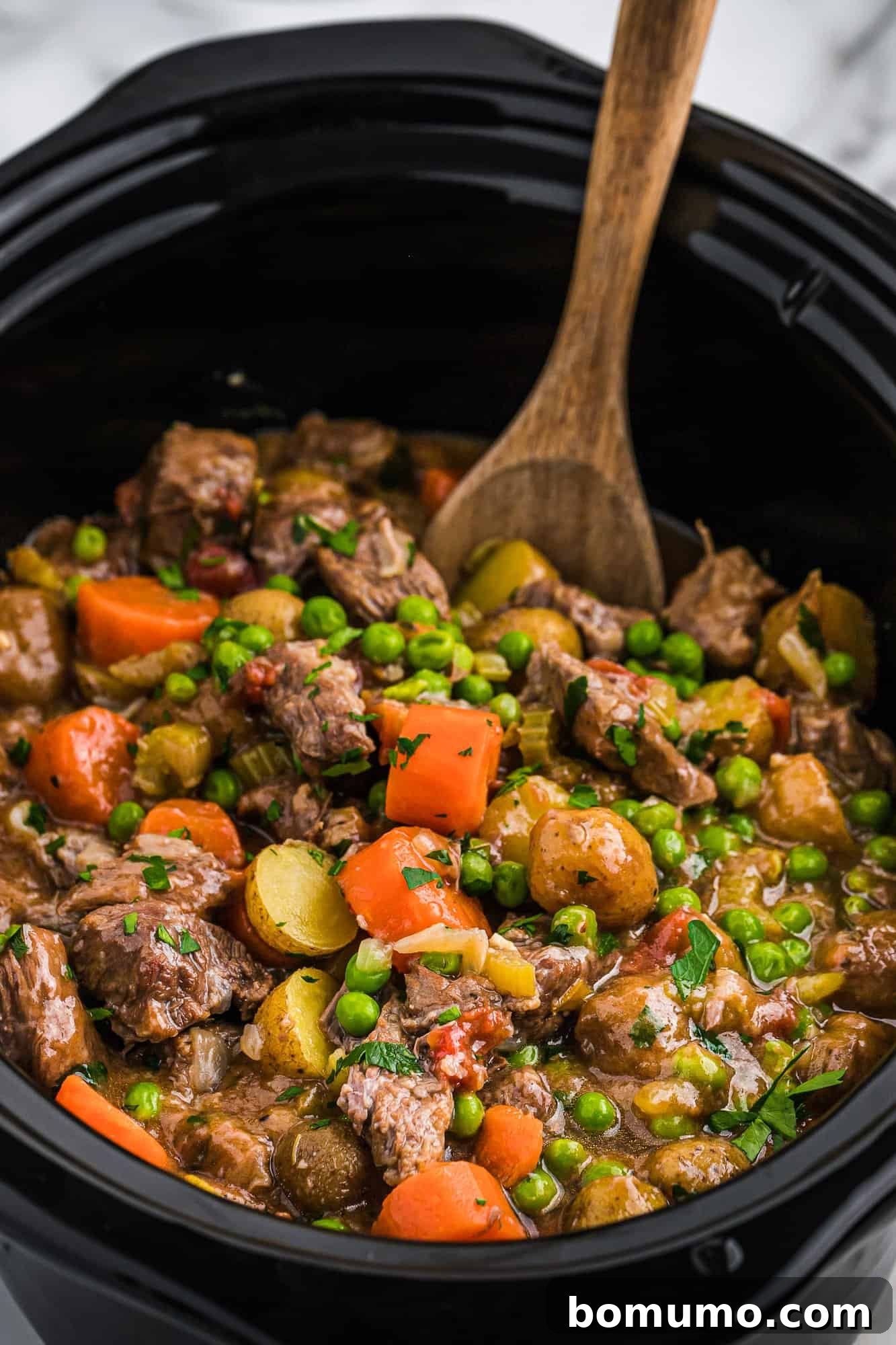
Step 6: Slow Cook to Perfection. Cover your slow cooker and let the magic happen. Cook the stew on the HIGH setting for 4 to 5 hours, or on the LOW setting for 8 to 9 hours, until the beef is incredibly tender and easily falls apart with a fork. Don’t worry if dinner time is a little delayed; this stew is remarkably forgiving and often tastes even better after a bit more simmering.
Step 7: Thicken the Gravy. Once the stew has cooked and the beef is tender, it’s time to create that perfect, rich gravy. In a small bowl, whisk together the reserved ½ cup of beef broth and the cornstarch until a smooth slurry forms. Slowly stir this cornstarch mixture into the hot stew. Re-cover the slow cooker and continue cooking for an additional 30 minutes. This will allow the cornstarch to fully activate and thicken the stew to your desired, luscious consistency.
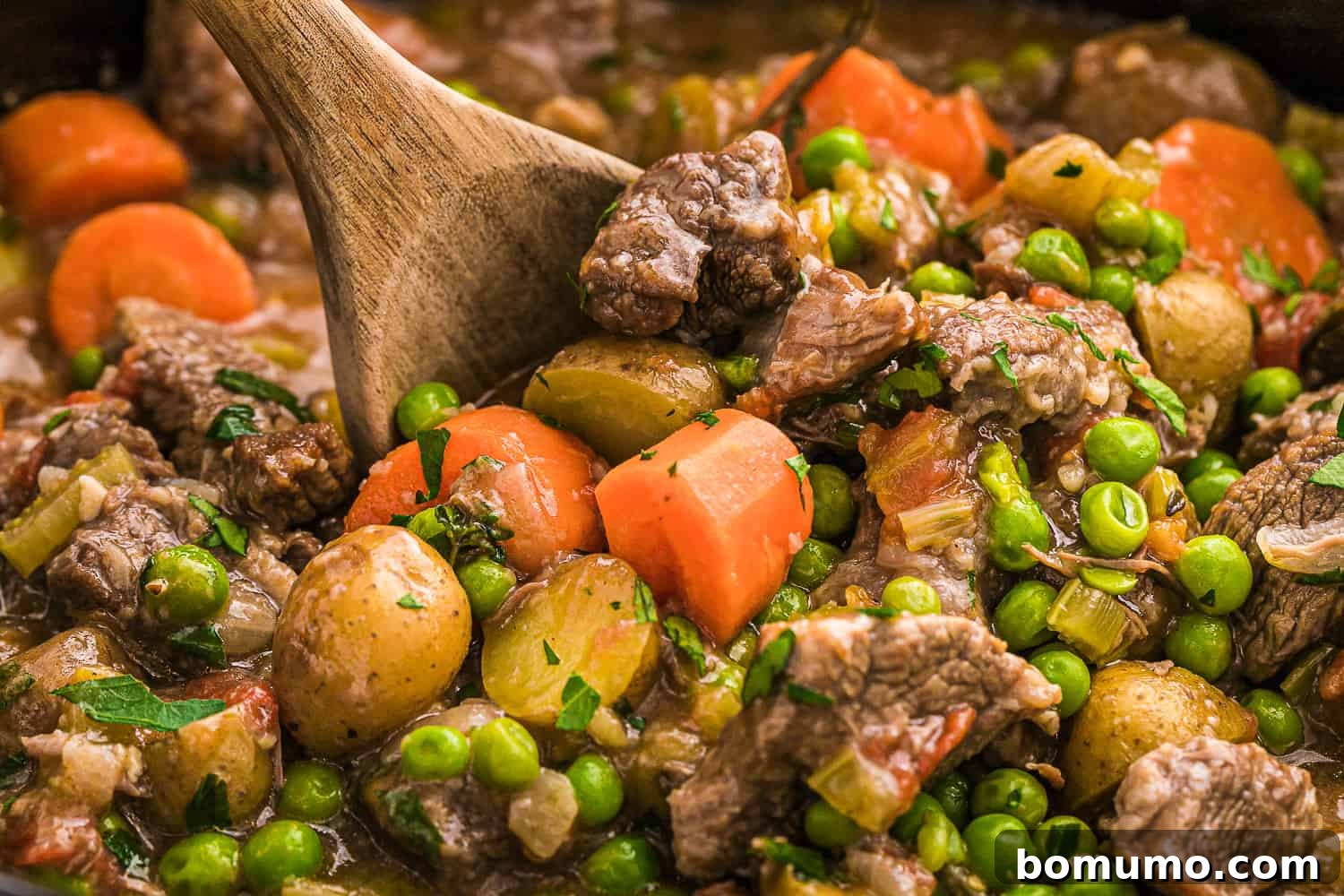
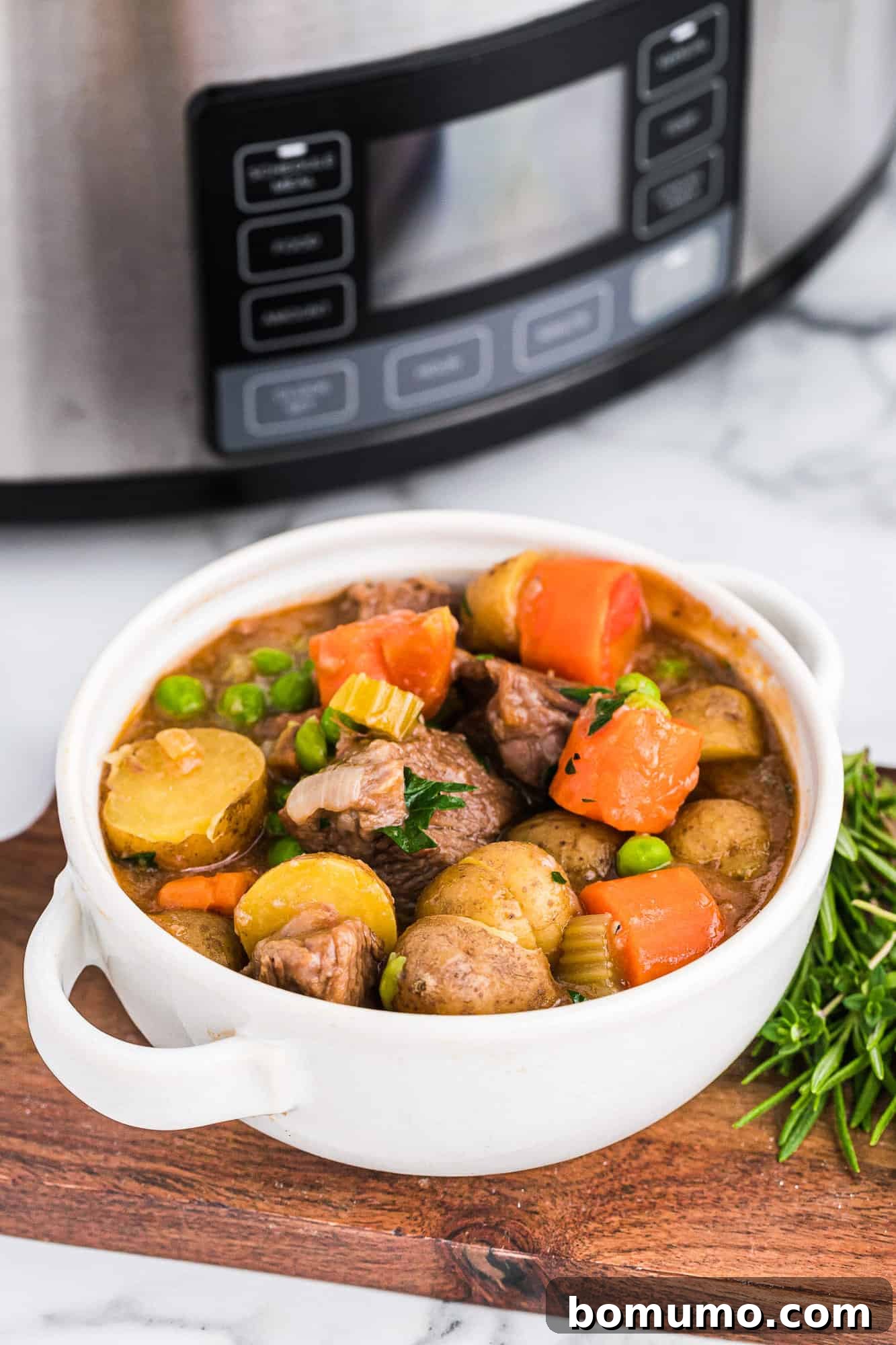
Step 8: Final Touches. After the stew has thickened, stir in the frozen peas (no need to thaw them beforehand!) and the freshly chopped parsley. Remove and discard the rosemary sprigs, thyme sprigs, and bay leaf. Taste the stew and adjust the seasoning with additional salt and pepper as needed. Your magnificent crockpot beef stew is now ready to be savored. Ladle it into bowls and dig in!
Essential Tips for Your Best Crockpot Beef Stew
To ensure your crockpot beef stew is nothing short of spectacular, consider these helpful tips:
- Selecting the Perfect Beef: The foundation of a great beef stew is the meat itself. Opt for a cut with good marbling of fat, such as a chuck roast. These cuts are less expensive than leaner options but transform beautifully with slow cooking, becoming incredibly tender and flavorful as the fat and connective tissue break down. You can purchase pre-cubed stew meat, but a whole chuck roast often offers better value and allows you to control the size of your cubes. For easier slicing, try chilling the beef in the freezer for about an hour before cutting it into 1-inch pieces.
- The Importance of Browning the Meat: While raw beef can safely cook in a slow cooker, browning the meat beforehand is a non-negotiable step for flavor development. Searing the beef at a high heat caramelizes its exterior, creating a rich, savory crust known as the Maillard reaction. This process locks in juices and builds complex, roasted flavors that simply cannot be achieved by skipping this step. It also gives the stew a more visually appealing depth of color.
- Understanding Slow Cooker Timings: Even with a slow cooker, timing is key. If your stew meat is still tough after the recommended cooking time, it likely needs more time. Connective tissue needs prolonged heat to fully break down into tender gelatin. However, it’s also possible to overcook stew. If cooked for too long, the meat can become dry and stringy, and the vegetables might turn mushy. While still edible, the texture won’t be ideal. Some people prefer the shorter cooking time on High for a quicker turnaround, while others swear by the all-day low and slow method. For a deeper dive into the “science of stew,” reliable culinary resources like Serious Eats offer excellent insights. Experiment to find the balance that works best for your slow cooker and desired texture.
Customize Your Stew: Delicious Recipe Variations
While this recipe provides a blueprint for a traditional, deeply satisfying beef stew, it’s also incredibly versatile. Feel free to unleash your creativity and tailor it to your personal taste or available ingredients:
- Shortcut with Beef Stew Seasoning: For a streamlined approach, you can swap out the individual spices (flour, salt, paprika, pepper, garlic powder, rosemary, and thyme) for about ½ cup of a high-quality homemade beef stew seasoning mix. This pantry staple can significantly simplify the preparation while still delivering robust flavor.
- Boost Flavor with Onion Soup Mix: An alternative to traditional beef stew seasonings is the use of onion soup mix. Its concentrated savory and aromatic qualities can add a unique and delicious twist. For an even better option, consider making your own homemade onion soup mix to control the ingredients and sodium content.
- Brighten with Acidity: If you find your stew needs a little something extra to make the flavors pop, a splash of balsamic vinegar added at the very end of cooking can be transformative. Its acidity will brighten and deepen all the existing flavors. Start with a tablespoon and adjust to your preference.
- Swap Wine for Beer: For a heartier, earthier flavor profile, especially perfect for a casual game day meal, consider substituting a dry red wine with a dark beer. Stouts, porters, or dark ales work wonderfully, lending a malty richness to the stew.
- No Slow Cooker? No Problem!: If you don’t own a slow cooker, or simply prefer other cooking methods, you can still enjoy a fantastic beef stew. Try an Instant Pot beef stew for a quicker cooking time, or simmer your beef stew on the stovetop, allowing it to gently bubble until tender.
Make-Ahead & Storage Solutions
Make-Ahead & Storage Solutions
Thoughtful meal preparation can make enjoying your delicious beef stew even easier, whether you’re planning for a busy week or want to save leftovers.
Get a Head Start on Prep
To save time on a busy morning, you can prepare most of your vegetables the day before. Chop the carrots, celery, and onions, then store them together in a zip-top bag in the refrigerator. For potatoes, cut them into 1-inch pieces and place them in a bowl submerged completely in water to prevent browning; cover the bowl and refrigerate. Remember to drain the water thoroughly before adding the potatoes to your stew.
Freezing Beef Stew Successfully
Beef stew is a fantastic freezer-friendly meal, though potatoes can sometimes become a bit mushy after freezing and thawing. If you plan to freeze this stew, you might consider omitting the potatoes during the initial cooking. Instead, you can add freshly boiled or roasted potatoes when reheating the stew, or serve it over creamy mashed potatoes for a delightful twist. Alternatively, if a potato-free, freezer-friendly stew is your goal, my beef barley soup recipe offers tender beef chunks and freezes beautifully without any textural concerns.
Storage & Reheating Tips
Storage & Reheating Tips
One of the many joys of beef stew is how wonderfully it holds up as leftovers, often tasting even better the next day as the flavors continue to meld and deepen. This makes it an ideal candidate for delicious, effortless meals throughout the week.
Refrigerate: Once cooled, transfer any leftover stew into an airtight container. It can be safely stored in the refrigerator for up to 4 days. Having this hearty, satisfying meal ready to go for lunch or another dinner is an absolute delight!
Reheat: To reheat, simply transfer the desired portion of stew to a saucepan or a large skillet and warm gently over medium-low heat on the stove, stirring occasionally until heated through. For individual servings, the microwave works perfectly; just heat in 30-second intervals, stirring in between, until piping hot.
Discover Our Free Weekly Meal Plans
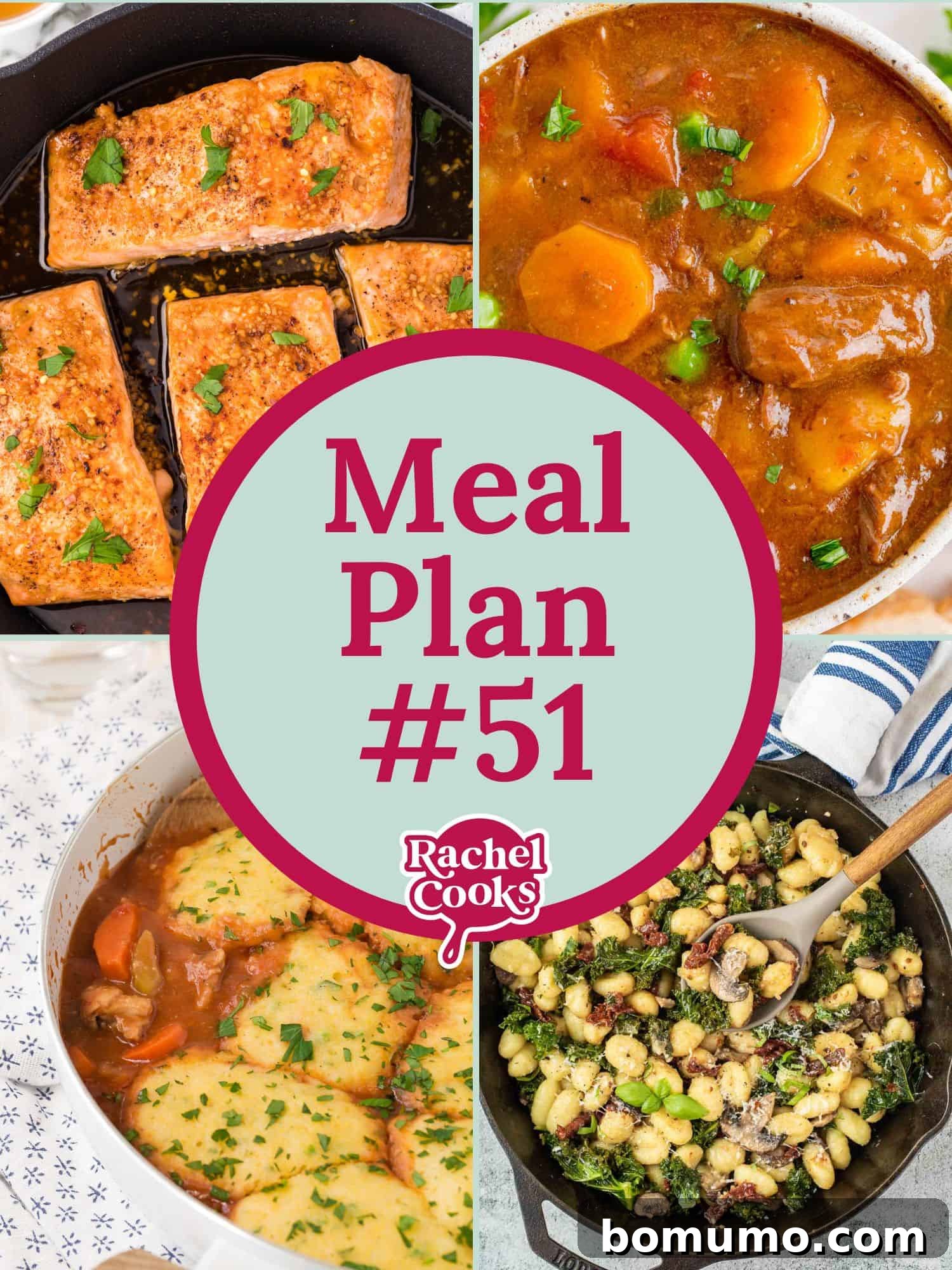
Planning your meals for the week just got easier! We offer free weekly meal plans designed to inspire and simplify your cooking. This delightful crockpot beef stew recipe is often featured, alongside a variety of other wholesome and delicious dishes.
Explore our recent plans like Meal Plan #51 or Meal Plan #84. Each plan includes a balanced recipe for every weekday, complete with a categorized grocery list to make your shopping a breeze. We continuously add new meal plans weekly, so there’s always fresh inspiration waiting for you!
More Irresistible Slow Cooker Recipes
Crock Pot Baked Beans
Crockpot Spaghetti Sauce (meat or vegetarian!)
Crockpot Ham with Maple Dijon Sauce
Slow Cooker Ribs – Fall-Off-The-Bone Tender!
Classic Crockpot Beef Stew Recipe
Rachel Gurk
30
6
6 30
8
Pin
Crockpot beef stew is chock-full of tender beef, vibrant vegetables, and a rich, flavorful gravy. It’s the ultimate comfort food for cozy evenings and busy days.
Sign up for our newsletter to receive this recipe and weekly updates straight to your inbox.
Ingredients
- 3 pounds beef chuck roast, cut into 1-inch pieces (see note)
- ½ cup all-purpose flour
- 1 ½ teaspoons kosher salt, divided
- 1 teaspoon paprika
- 1 teaspoon coarse ground black pepper, divided
- ½ teaspoon garlic powder
- 2 tablespoons oil or ghee
- 4 medium carrots, cut into ½ -inch slices (about 2 cups)
- 4 stalks celery, cut into ¼ -inch slices (about 2 cups)
- 1 large onion, chopped (about 3 cups)
- 2 cloves garlic, minced
- 2 tablespoons tomato paste
- ½ cup dry red wine
- 1 pound baby potatoes, or potatoes, cut into 1-inch pieces
- 2 ½ cups beef broth, divided (low sodium preferred)
- 1 can (14.5 ounces) diced tomatoes, undrained
- 1 sprig fresh rosemary
- 1 sprig fresh thyme
- 1 large bay leaf
- ¼ cup cornstarch
- 2 cups frozen peas
- ½ cup chopped fresh parsley
Instructions
-
In a large bowl, combine the all-purpose flour, 1 teaspoon of kosher salt, paprika, ½ teaspoon of black pepper, and garlic powder. Add the beef cubes and toss thoroughly to coat all sides with the flour mixture. Set aside any excess flour mixture remaining in the bowl; do not discard it.
-
Heat 2 tablespoons of oil or ghee in a large pot or skillet over medium-high heat. Place the floured beef into the pan in a single layer, ensuring you do not overcrowd the pan (work in batches if necessary). Sear the beef on all sides for about 5 minutes per batch until a rich brown crust forms. The meat will not be fully cooked through, just nicely browned. Remove the browned beef from the pan and place it into your slow cooker. Repeat this process until all beef is seared.
-
Add the sliced carrots, celery, and chopped onion to the same skillet (no need to clean it) along with the remaining ½ teaspoon of salt and ¼ teaspoon of pepper. Cook, stirring occasionally, for 7 to 8 minutes or until the onions become translucent and softened.
-
Stir in the minced garlic and cook for an additional minute until fragrant. Add any leftover flour mixture from dredging the beef and stir constantly for 1 to 2 minutes. Incorporate the tomato paste, stirring until well combined. Pour in the dry red wine and use a wooden spoon to scrape the bottom of the pan, releasing any browned bits. Cook for 1 to 2 minutes, allowing the wine to reduce slightly. Transfer this savory vegetable mixture to the slow cooker with the beef.
-
Add the baby potatoes (or cut potatoes), 2 cups of beef broth (reserving ½ cup for later), and the undrained diced tomatoes to the slow cooker. Tuck in the sprigs of fresh rosemary and thyme, along with the bay leaf. Stir gently to combine all ingredients.
-
Cover the slow cooker and cook on HIGH for 4 to 5 hours, or on LOW for 8 to 9 hours, until the beef is incredibly tender and easily shredded with a fork (see note on cooking times).
-
In a small bowl, whisk together the reserved ½ cup of beef broth and ¼ cup of cornstarch until the cornstarch is completely dissolved and the mixture is smooth. Slowly stir this cornstarch slurry into the hot stew. Cover the slow cooker again and continue to cook for an additional 30 minutes to allow the stew to thicken to a rich, gravy-like consistency.
-
After 30 minutes, remove and discard the rosemary, thyme, and bay leaf. Stir in the frozen peas (no need to thaw) and the chopped fresh parsley. Taste the stew and season with additional salt and pepper as needed to your preference. Serve hot and enjoy your homemade crockpot beef stew!
Notes
- Beef Preparation: For best results and easier handling, choose a good quality chuck roast. If you’re cutting your own beef, placing the roast in the freezer for about an hour before slicing can make it much easier to cut into uniform 1-inch pieces.
- Seasoning Shortcut: Streamline your preparation by substituting the flour, salt, paprika, pepper, garlic powder, rosemary, and thyme with approximately ½ cup of your homemade beef stew seasoning mix for a delicious and efficient alternative.
- Low Heat Cooking Option: If you prefer to cook your stew on a lower setting for an extended period, cook on LOW heat for 8 to 9 hours. After this time, switch the setting to HIGH when you add the cornstarch mixture, allowing it to thicken for about 30 minutes before serving.
- Stovetop Method: This hearty stew can also be prepared on the stovetop. After completing the browning of the beef and sautéing the vegetables, add the potatoes and broth to the pot. Bring the stew to a boil over high heat, then reduce the heat to low or medium-low to maintain a gentle simmer. Cover and cook for about 1 hour and 15 minutes, stirring occasionally. Ensure the stew is simmering gently, not rapidly boiling. Adjust heat as needed. Stir in the frozen peas approximately 10 minutes before serving.
Recipe Video
Watch how to make this delicious Crockpot Beef Stew for the perfect, comforting meal.
Video Credit: Rachel Cooks
Nutrition
Serving: 2cups
,
Calories: 580kcal
,
Carbohydrates: 38g
,
Protein: 45g
,
Fat: 27g
,
Saturated Fat: 10g
,
Polyunsaturated Fat: 3g
,
Monounsaturated Fat: 14g
,
Trans Fat: 1g
,
Cholesterol: 134mg
,
Sodium: 985mg
,
Potassium: 1587mg
,
Fiber: 7g
,
Sugar: 8g
,
Vitamin A: 6801IU
,
Vitamin C: 47mg
,
Calcium: 107mg
,
Iron: 7mg
Nutrition information is automatically calculated, so should only be used as an approximation.
Made this delicious stew?
We’d love to hear your thoughts! Please share a comment and rating below. Your feedback is truly appreciated!