
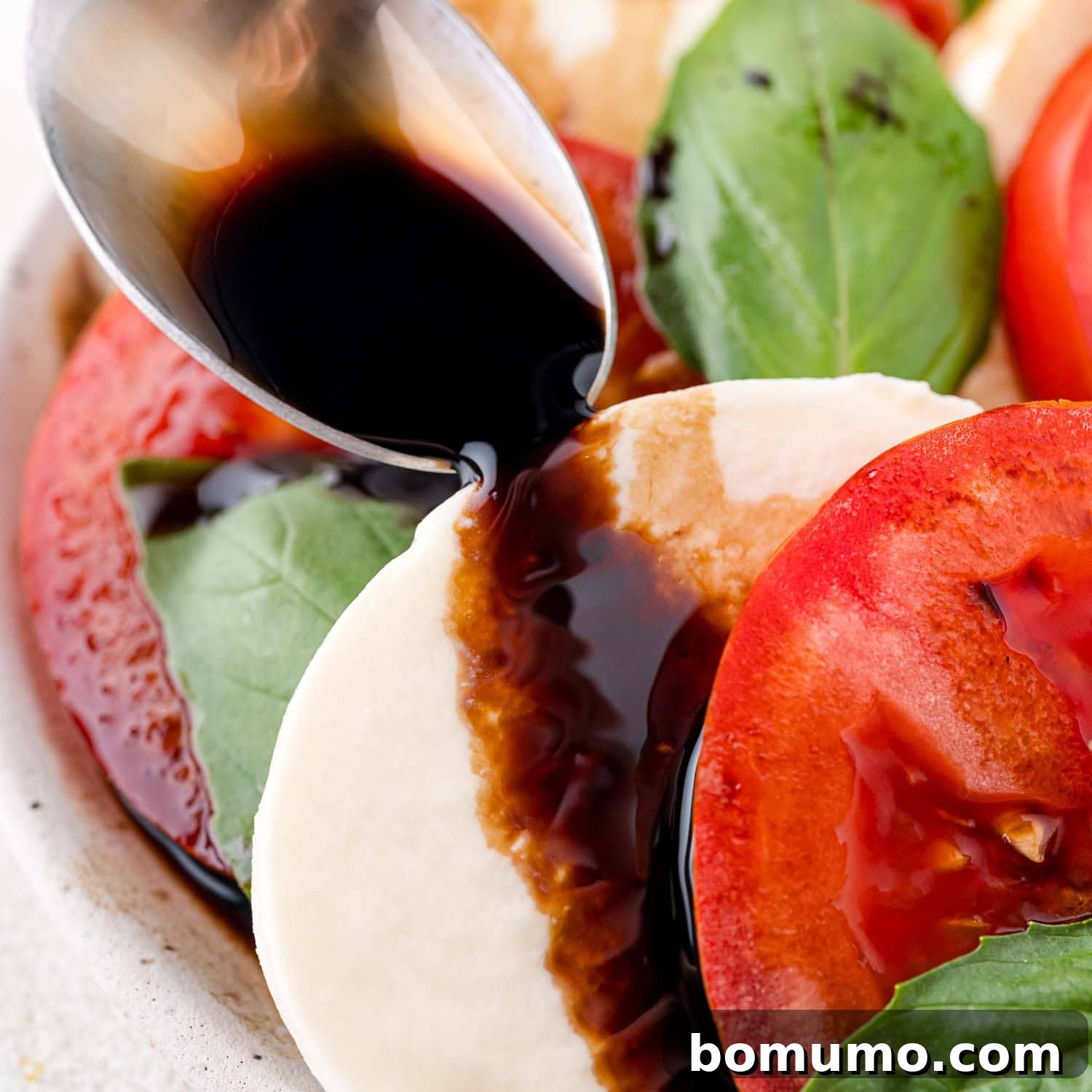
Recipe Overview: Homemade Balsamic Glaze
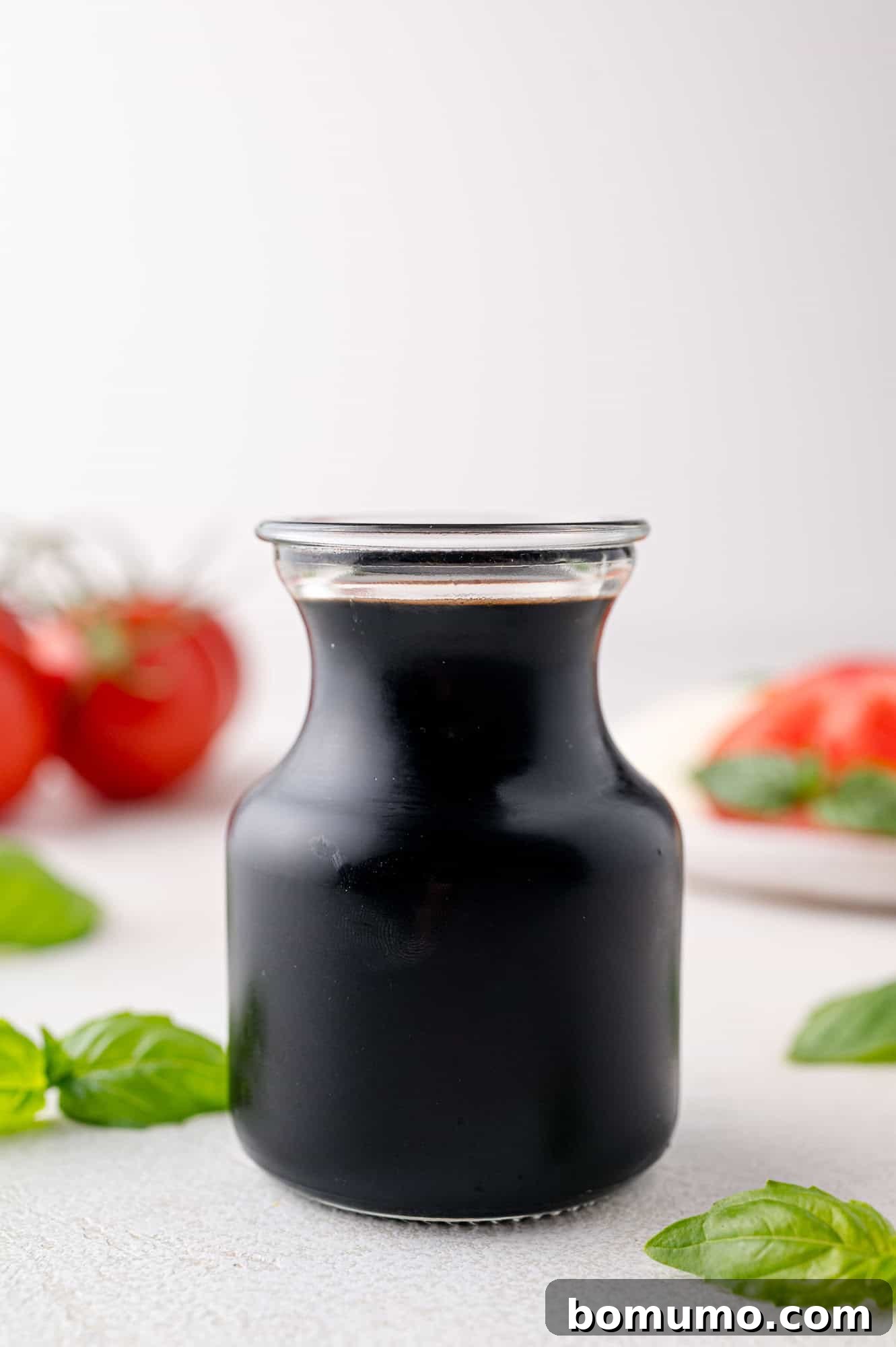
Why you’ll love it: This homemade balsamic reduction is a culinary secret weapon. It’s an incredibly simple, one-ingredient sauce that elevates everyday dishes to gourmet status. Forget artificial additives; crafting your own rich, sweet-tangy balsamic glaze at home is effortless and immensely rewarding.
How long it takes: Approximately 30 minutes
Equipment you’ll need: A small saucepan is all you need.
Servings: Yields about 1 cup (16 servings, 1 tablespoon each)
There’s an undeniable magic in the simple things, and Caprese salad perfectly embodies this philosophy. The refreshing trio of ripe tomatoes, fragrant basil, and creamy fresh mozzarella is a summer staple, a symphony of flavors that consistently delights. Whether it’s graced with a drizzle of premium olive oil, a luscious balsamic reduction, or a delightful combination of both, its appeal is timeless.
For those who share an adoration for Caprese, the journey doesn’t have to end there! Explore exciting variations like Caprese Turkey Burgers or a vibrant Caprese Pasta Salad for your next culinary adventure.
However, Caprese salad often serves as an exquisite introduction to the world of balsamic glaze. Once this versatile, deeply flavorful condiment enters your cooking repertoire, you’ll find yourself perpetually wanting a bottle in your fridge. Its excellent shelf life means you can prepare a generous batch, potentially lasting through the entire summer season. Or, if you’re like many enthusiasts, it might disappear in a mere couple of days – seriously, this homemade glaze is so good, you’ll be tempted to use it on almost everything!
The Unrivaled Excellence of Homemade Balsamic Reduction
Better Than Store-Bought Alternatives
While the convenience of store-bought balsamic glazes is undeniable, many fall short in delivering an authentic and balanced flavor profile. Commercial versions often lean towards being cloyingly sweet, lacking the intricate depth and tang that a homemade glaze, crafted from quality balsamic vinegar, provides. A quick glance at the ingredient list of popular brands frequently reveals undesirable additions such as artificial colors, modified starches, and thickening agents like xanthan gum. By making it yourself, you regain control over the ingredients, ensuring a pure, unadulterated flavor that is truly superior. We believe you’ll wholeheartedly agree that investing a little time in making your own is absolutely worth it for the remarkable difference in taste and quality.
Effortlessly Easy to Master
The beauty of homemade balsamic reduction lies in its sheer simplicity. It’s so straightforward to prepare that it’s almost effortless, making it an ideal project for even novice cooks. The process involves just one core ingredient: balsamic vinegar. You simply pour it into a saucepan and gently boil it down until it transforms into a rich, velvety syrup – a true balsamic reduction. This minimalist approach guarantees maximum flavor with minimal fuss, proving that gourmet results don’t always require complex techniques.
A Versatile Elevating Sauce for Countless Dishes
Balsamic glaze is far more than just a topping for Caprese salad; it’s a culinary enhancer with the power to transform a vast array of dishes. Its unique sweet and tangy profile adds a sophisticated touch that can elevate nearly any meal. Imagine it drizzled over perfectly grilled meats like succulent chicken or a juicy steak, bringing out their savory notes. It’s also phenomenal on fresh green salads, offering a brighter alternative to traditional dressings. Use it to dress up appetizers, or as a finishing touch for roasted or grilled vegetables, from asparagus to Brussels sprouts. The possibilities are truly endless, making balsamic glaze an indispensable condiment in any kitchen.
Beyond Savory: A Sweet Revelation
While balsamic glaze is most commonly associated with savory dishes – complementing vegetables, cheeses, and meats – don’t hesitate to explore its sweet side. Its rich, tangy sweetness makes it an incredible pairing for fresh fruit. Drizzle it generously over sliced peaches, ripe plums, juicy strawberries, or even a bowl of vanilla ice cream for an unexpected, yet delightful, dessert experience.
Ingredient Notes: The Heart of Your Glaze
Choosing the Right Balsamic Vinegar
The quality of your balsamic reduction hinges entirely on the quality of the balsamic vinegar you start with. When you reduce any liquid, you concentrate its flavors, intensifying both its good and bad characteristics. Therefore, a low-quality vinegar will only taste more acrid or unbalanced when boiled down, while a premium vinegar will yield a deeply complex and flavorful glaze.
To ensure a superior result, carefully check the ingredient list of your balsamic vinegar. Ideally, it should be made predominantly, if not exclusively, from grapes. Look for labels that mention “grape must” (in Italian, “mosto”), which is simply the juice of pressed grapes before fermentation. Avoid vinegars with added caramel coloring, artificial flavors, or excessive added sugar, as these indicate a lower-quality product designed to mimic genuine balsamic without the true depth of flavor. Investing in a good quality balsamic vinegar will make all the difference in achieving a truly exceptional homemade glaze.
Crafting Your Own Balsamic Glaze: A Simple Guide
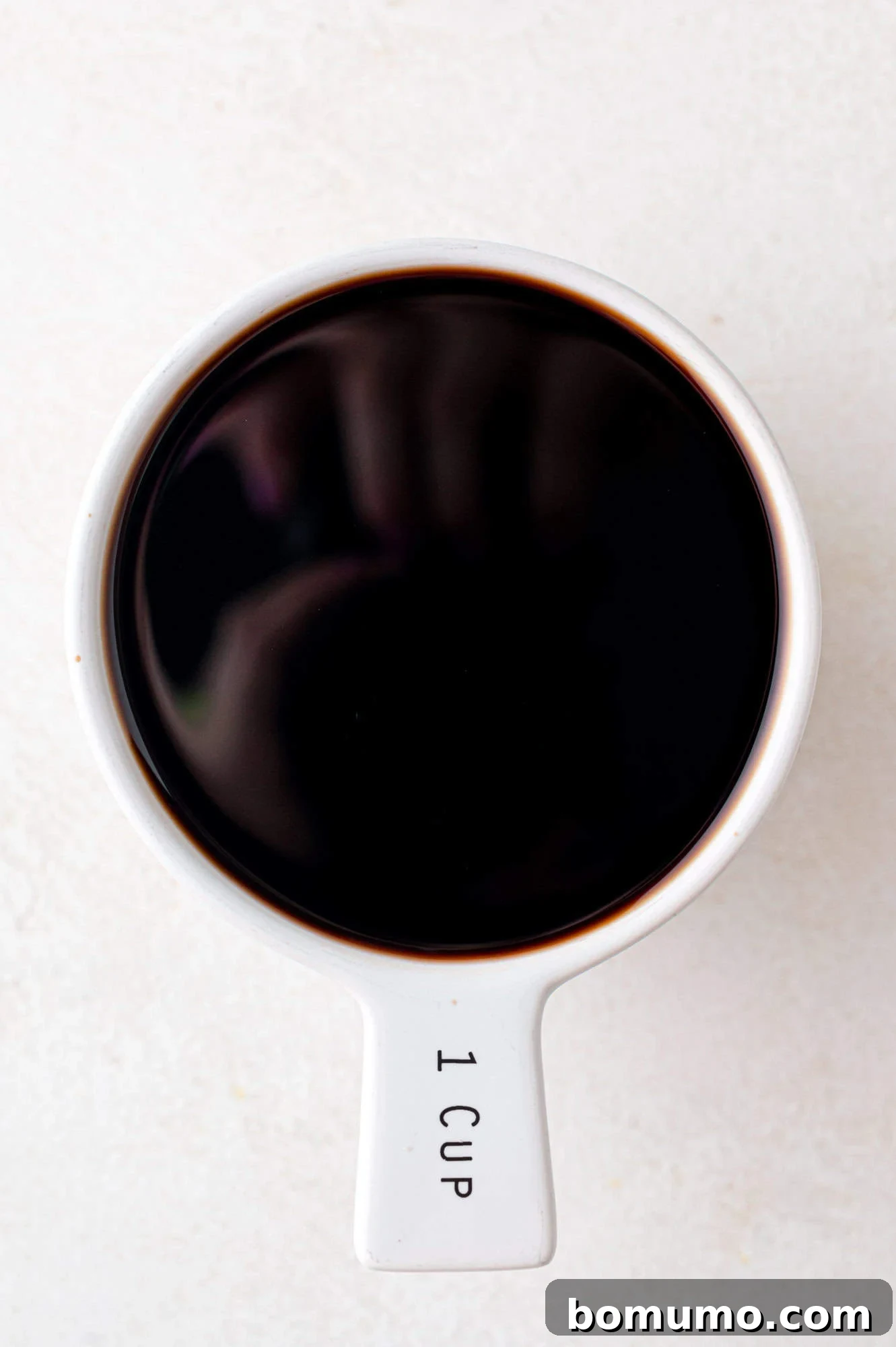
Step 1: Bring to a Gentle Simmer
Begin by pouring your chosen balsamic vinegar into a small, heavy-bottomed saucepan. Place the saucepan over medium heat. Allow the vinegar to gradually come to a simmer. You’ll know it’s simmering when you see small, consistent bubbles forming around the edges and gently rising to the surface, but it should not be boiling vigorously. If the aromatic vinegar vapor feels too strong for your kitchen, simply activate your exhaust fan or open a nearby window to ensure good ventilation. Many cooks, however, find the sweet and tangy aroma quite pleasant!
Step 2: The Art of Thickening and Reduction
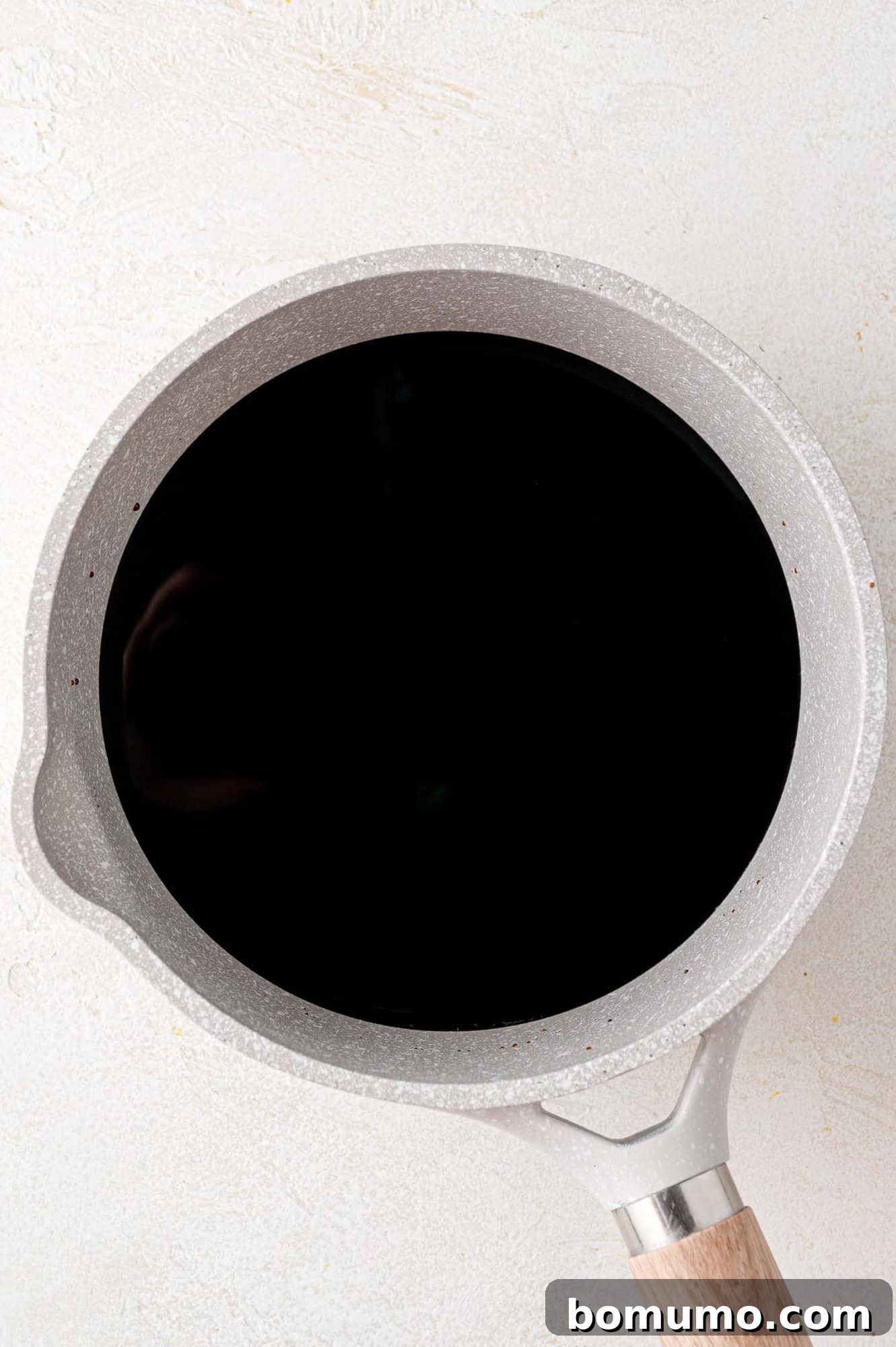
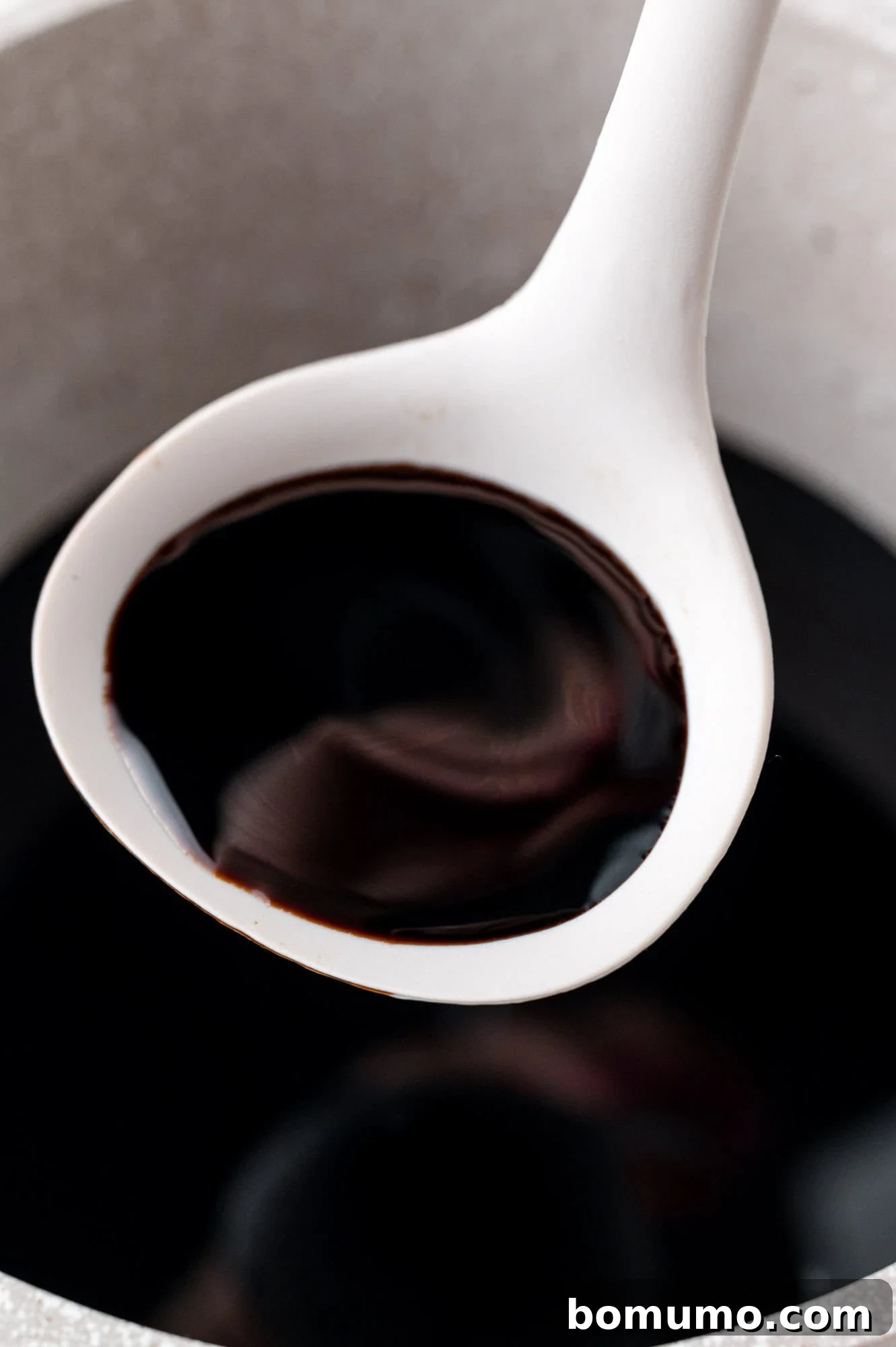
Once simmering, reduce the heat to medium-low. This controlled heat is crucial for a slow and even reduction. Continue to simmer the balsamic vinegar until its volume has visibly reduced by approximately half. This reduction process allows the water content to evaporate, concentrating the vinegar’s sugars and flavors, transforming it into a thicker, syrupy consistency. In the initial stages, the vinegar will require minimal attention, but as it begins to thicken, vigilance is key. It can transition from perfect to burnt very quickly, and once scorched, there’s unfortunately no salvaging its delicate flavor.
Step 3: Cool and Store
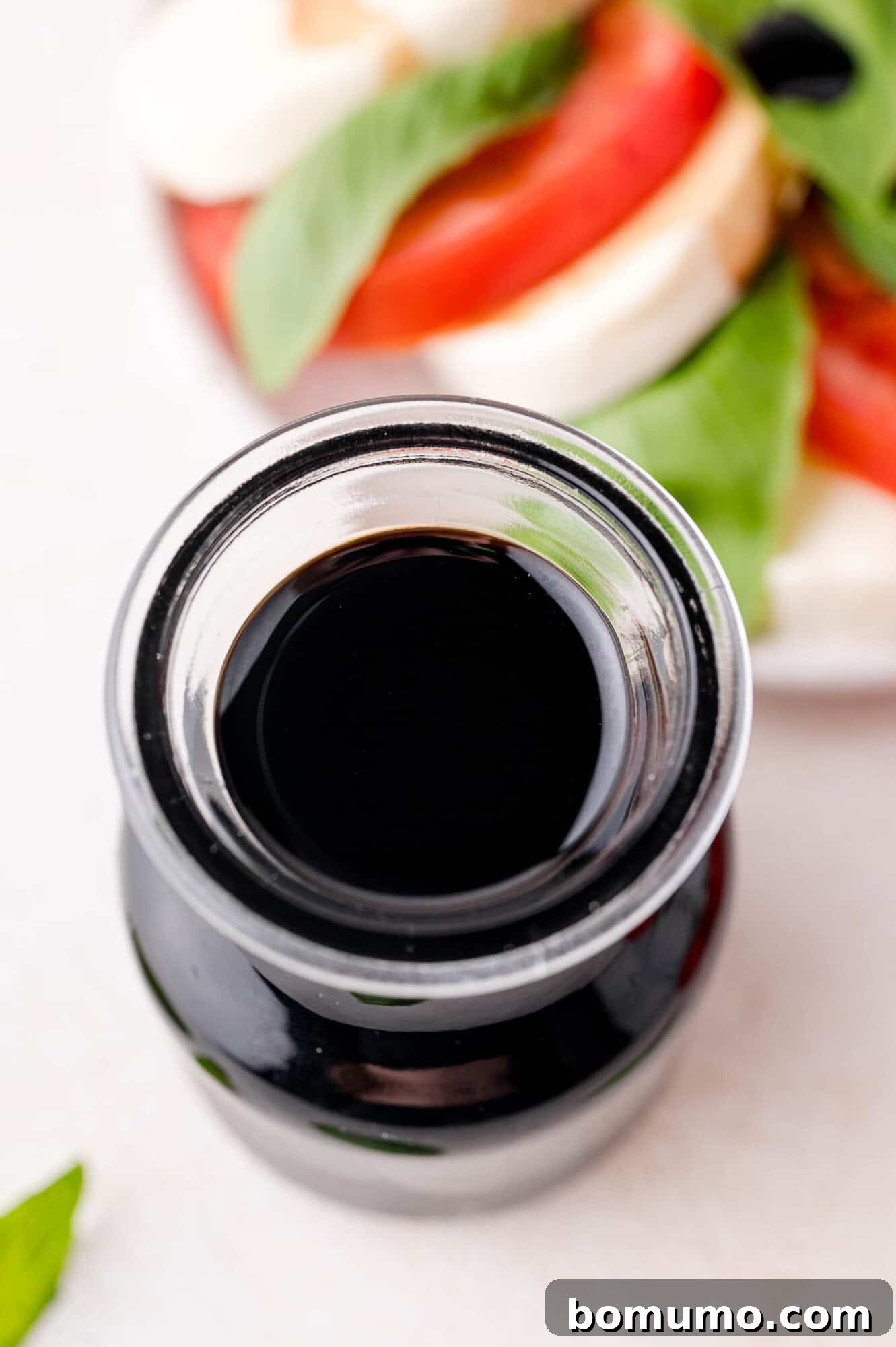
Once the balsamic glaze has reached your desired thickness, carefully remove the pan from the heat. It’s important to allow the glaze to cool completely to room temperature before using or storing. As it cools, the reduction will continue to thicken significantly, so don’t be alarmed if it still seems a bit thin when hot. Once cooled, you can use it immediately to enhance your dishes or transfer it into a clean, airtight small jar or container. Store it in the refrigerator until you are ready to enjoy its exquisite flavor.
Helpful Tips for Balsamic Glaze Perfection
- Remember the Cooling Factor: A common misconception is to over-reduce the glaze while it’s hot. Always remember that balsamic reduction will thicken considerably as it cools. If, after reaching room temperature, your glaze is still thinner than your preference, simply return it to the saucepan and bring it back to a gentle simmer. Continue to cook, stirring frequently, for a few more minutes until it achieves the desired syrupy consistency. Test by dipping a spoon; the glaze should coat the back of the spoon.
- Vigilance is Your Best Friend: This tip cannot be stressed enough – keep a very close eye on your balsamic reduction, especially during the final stages. Over-cooked balsamic glaze is not only prone to blackening and developing an unpleasant bitter flavor, but it also transforms into a stubborn, tar-like substance that can harden in your pan, making cleanup a nightmare. If, despite your best efforts, this unfortunate event does occur, don’t despair entirely. Pour water into the pan with the burnt residue and bring it to a boil on the stovetop. The boiling water will help soften and loosen the hardened glaze. Gently encourage the loosening with a wooden spoon while it boils. Remove as much as you can while the water is hot, then use a sturdy scouring pad or scrubber when washing the pan to remove any remaining stubborn bits.
- Customizing Sweetness: While a good quality balsamic vinegar naturally develops a pleasant sweetness as it reduces, some palates prefer an even stickier, sweeter glaze. To achieve this, you can enhance its sweetness by adding sugar or honey. Before you begin the boiling process, stir in a couple of tablespoons of granulated sugar, brown sugar, or honey into the balsamic vinegar. The added sweetener will dissolve and integrate beautifully as the reduction simmers, resulting in a more intensely sweet and syrupy glaze tailored to your taste.
Creative Culinary Applications for Balsamic Glaze
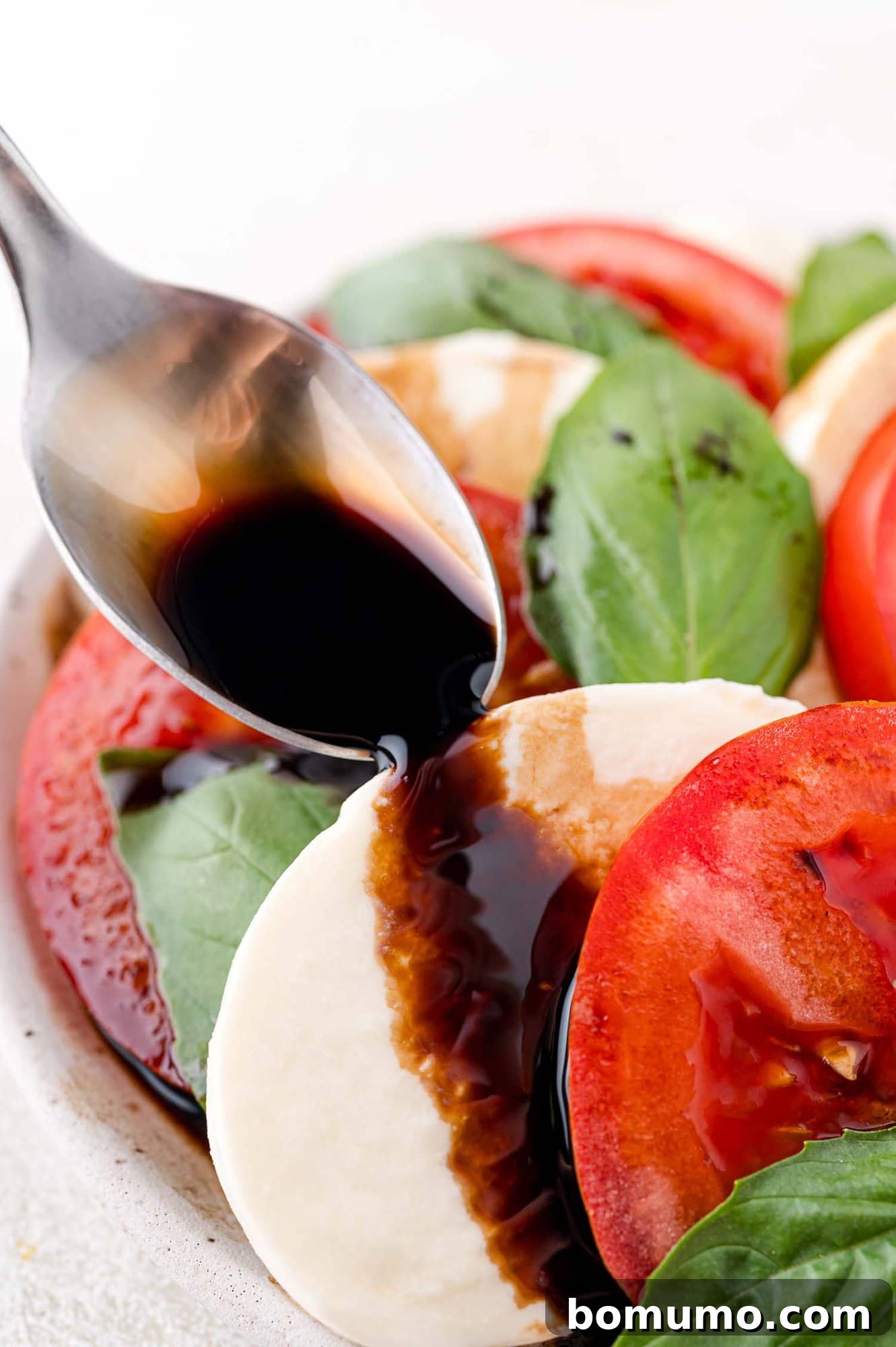
Balsamic glaze is a versatile condiment that transcends its classic role with Caprese salad, offering a spectrum of culinary applications. Its sweet-tangy profile makes it a superb enhancer for both savory and sweet dishes, adding a touch of gourmet flair with minimal effort. Here’s a detailed exploration of how you can integrate this magnificent glaze into your cooking:
Savory Delights:
- Meats and Poultry: Drizzle over grilled chicken, seared steak, roasted pork tenderloin, or even pan-fried salmon. It creates a beautiful caramelization and a burst of flavor.
- Salads: Beyond Caprese, it’s fantastic on nearly any salad, from a simple garden salad to more elaborate creations. Try it on a Grilled Peach Salad with Burrata for a delightful contrast.
- Appetizers & Crostini: Elevate simple appetizers like Easy Tomato Bruschetta, goat cheese crostini, or even a simple cheese board. Its visual appeal and taste make it a star.
- Roasted & Grilled Vegetables: Transform ordinary vegetables into extraordinary sides. It’s superb on Asparagus Gruyere Tart, Roasted Asparagus, or Easy Air Fryer Asparagus. It brings out the natural sweetness of Balsamic Roasted Vegetables like bell peppers, zucchini, onions, and carrots. Truly, it complements all roasted vegetables!
- Pasta Dishes: A swirl of balsamic glaze can add depth to light pasta dishes, especially those featuring fresh tomatoes, basil, and mozzarella.
- Grains and Bowls: Enhance healthy grain bowls, such as a Quinoa Bowl with Roasted Tomatoes and Ricotta, with a final elegant drizzle.
- Pizza and Flatbreads: Finish a gourmet pizza or flatbread with a zigzag of glaze for an added layer of flavor.
Sweet Endings:
- Fresh Fruit: As mentioned, it pairs wonderfully with berries (strawberries, raspberries), stone fruits (peaches, plums), and figs.
- Desserts: A unexpected but delicious addition to vanilla ice cream, panna cotta, or even chocolate desserts.
This list merely scratches the surface of balsamic glaze’s potential. Don’t be afraid to experiment and discover your own favorite pairings!
Storage Tips to Keep Your Glaze Fresh
To preserve the rich flavor and consistency of your homemade balsamic reduction, always allow it to cool completely to room temperature after cooking. Once cooled, carefully pour the glaze into a clean, airtight container or a small, recycled glass jar. Cover it tightly to prevent any air exposure. Stored this way in the refrigerator, your balsamic glaze will maintain its quality for an impressive two to three months. If you find that the glaze thickens too much during refrigeration, simply reheat it gently on the stovetop over low heat until it returns to your desired pourable consistency.
More Essential How-To Recipes
How to Boil Beets Perfectly
Effortless Ways to Freeze Bananas
The Simple Art of Roasting Garlic
Mastering the Lemon Twist Garnish
Pin this now to find it later
Pin It
Balsamic Reduction – The Ultimate Homemade Glaze
Rachel Gurk
30 mins
30 mins
16 servings (makes 1 cup)
Pin
Balsamic reduction is a simple sauce that can elevate a dish to the next level, and it’s so easy to make at home! It only takes one ingredient and just a little time to create this sweet, tangy, syrupy sauce.
Save this recipe!
Get this sent to your inbox, plus get new recipes from us every week!
Ingredients
- 2 cups balsamic vinegar (Choose a good quality vinegar for best results)
Instructions
- Simmer the vinegar: Add the balsamic vinegar to a small saucepan. Place it over medium heat and allow it to come to a gentle simmer. You should see small, consistent bubbles forming, but avoid a rapid boil.
- Reduce and thicken: Reduce the heat to medium-low. Continue simmering, stirring occasionally at first, then more frequently as it thickens. Cook until the vinegar has reduced by about half and coats the back of a spoon, forming a syrupy glaze. This typically takes 10 to 30 minutes, depending on the heat and saucepan size. Be vigilant in the final stages to prevent burning.
- Cool and store: Remove the pan from the heat and let the balsamic glaze cool completely to room temperature. It will thicken further as it cools. Serve immediately, or transfer to an airtight container or jar and refrigerate.
Notes
- Storage: Store your homemade balsamic reduction in a tightly covered container or jar in the refrigerator. It will keep well for two to three months. If it becomes too thick upon refrigeration, gently reheat it until it reaches the desired consistency.
- Make it sweeter: For a sweeter glaze, stir in 2 tablespoons of honey, brown sugar, or granulated sugar into the vinegar before simmering. Cook as directed.
- Smaller batch: To make a smaller quantity, simply use 1 cup of balsamic vinegar instead of 2. The cooking time will be shorter.
Video Guide
Watch our step-by-step video to easily master the art of making balsamic reduction at home.
Nutrition Information
Serving: 1 tablespoon,
Calories: 28 kcal,
Carbohydrates: 5 g,
Protein: 0.2 g,
Sodium: 7 mg,
Potassium: 36 mg,
Sugar: 5 g,
Calcium: 9 mg,
Iron: 0.2 mg
Nutrition information is automatically calculated and should only be used as an approximation.
Share a comment and rating below! We love hearing what you think!