
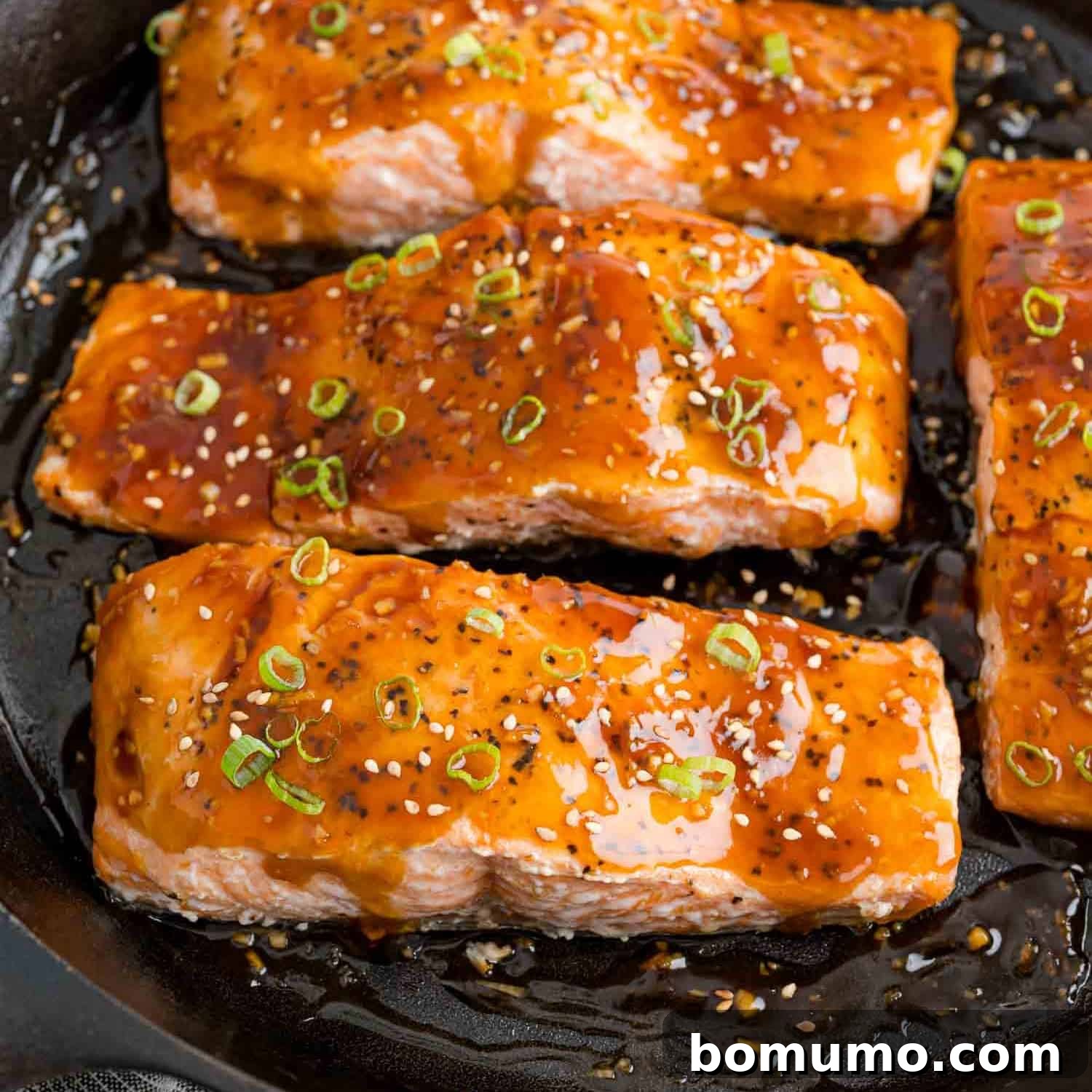
Teriyaki Salmon: Your Ultimate Weeknight Dinner Solution
Why You’ll Adore This Recipe: This teriyaki salmon offers an unparalleled symphony of sweet and savory notes, creating a deeply satisfying meal. It’s a healthy, flavorful, and incredibly quick dinner idea, making it ideal for bustling weeknights or when you need to impress guests with minimal effort.
Speed & Simplicity: Ready in under 30 minutes, this recipe proves that gourmet taste doesn’t require hours in the kitchen.
Essential Tool: An oven-proof skillet is all you need to achieve perfectly seared and flaky salmon.
Servings: This recipe graciously serves 4, making it perfect for family meals or a small gathering.
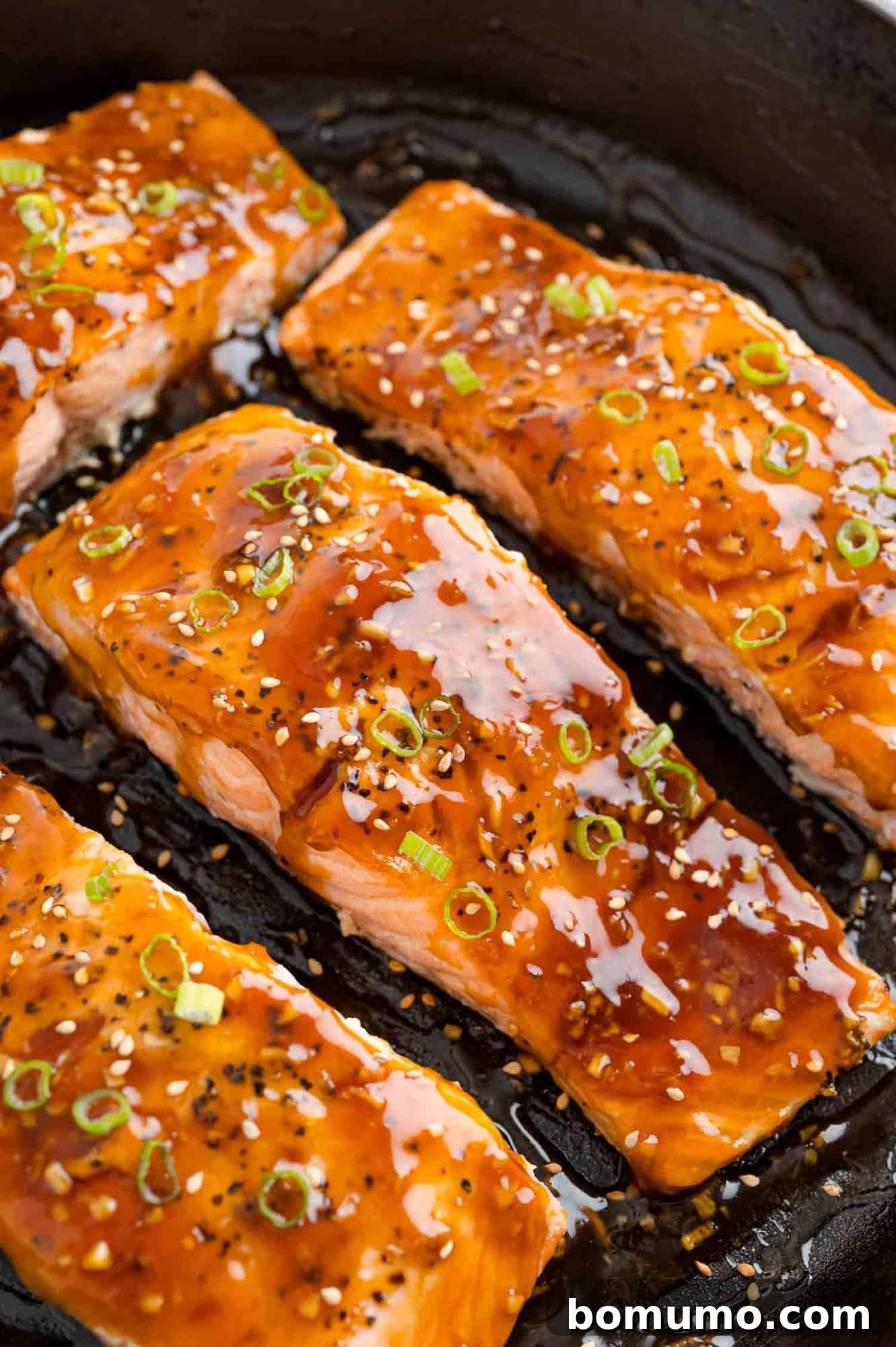
Teriyaki and salmon form a culinary partnership that’s truly exceptional. However, the secret to elevating this classic pairing lies in the sauce. Many mass-produced teriyaki sauces available in stores often disappoint, leaning too heavily on sweetness and lacking the complex umami depth, not to mention often being loaded with high-fructose corn syrup.
This recipe for teriyaki salmon distinguishes itself by featuring a homemade teriyaki sauce. Crafted from straightforward ingredients you likely already have in your pantry, preparing this sauce adds a mere 5 minutes to your cooking time. The reward is a sauce that’s not just sticky and glossy, but also a perfect blend of tangy, sweet, and savory, with a subtle warmth from fresh ginger. This homemade touch transforms the dish from ordinary to extraordinary, delivering a restaurant-quality experience right in your home.
Even if you’re typically hesitant about eating fish, this particular salmon recipe might just convert you. Salmon, by nature, has a mild and approachable flavor. When enveloped in this irresistible homemade teriyaki glaze, it becomes incredibly appealing, making it a fantastic gateway for those new to seafood or looking for a delicious and healthy addition to their diet.
Why This Teriyaki Salmon Recipe Stands Out
A Healthy and Quick Weeknight Dinner
Salmon is renowned as a nutritional powerhouse, often hailed as a superfood. It’s an excellent source of lean protein, rich in inflammation-fighting omega-3 fatty acids that support heart health, and packed with essential vitamins like A, B12, and D. By opting for a homemade teriyaki sauce, this recipe offers a significantly lower sugar content compared to most commercially prepared salmon dishes, making it a healthier choice without compromising on flavor. If you’re keen on exploring more healthy salmon dinner ideas, be sure to check out my Orange Glazed Salmon, vibrant Salmon Tacos, or my convenient Air Fryer Salmon recipes.
The Perfect Baked and Pan-Fried Technique
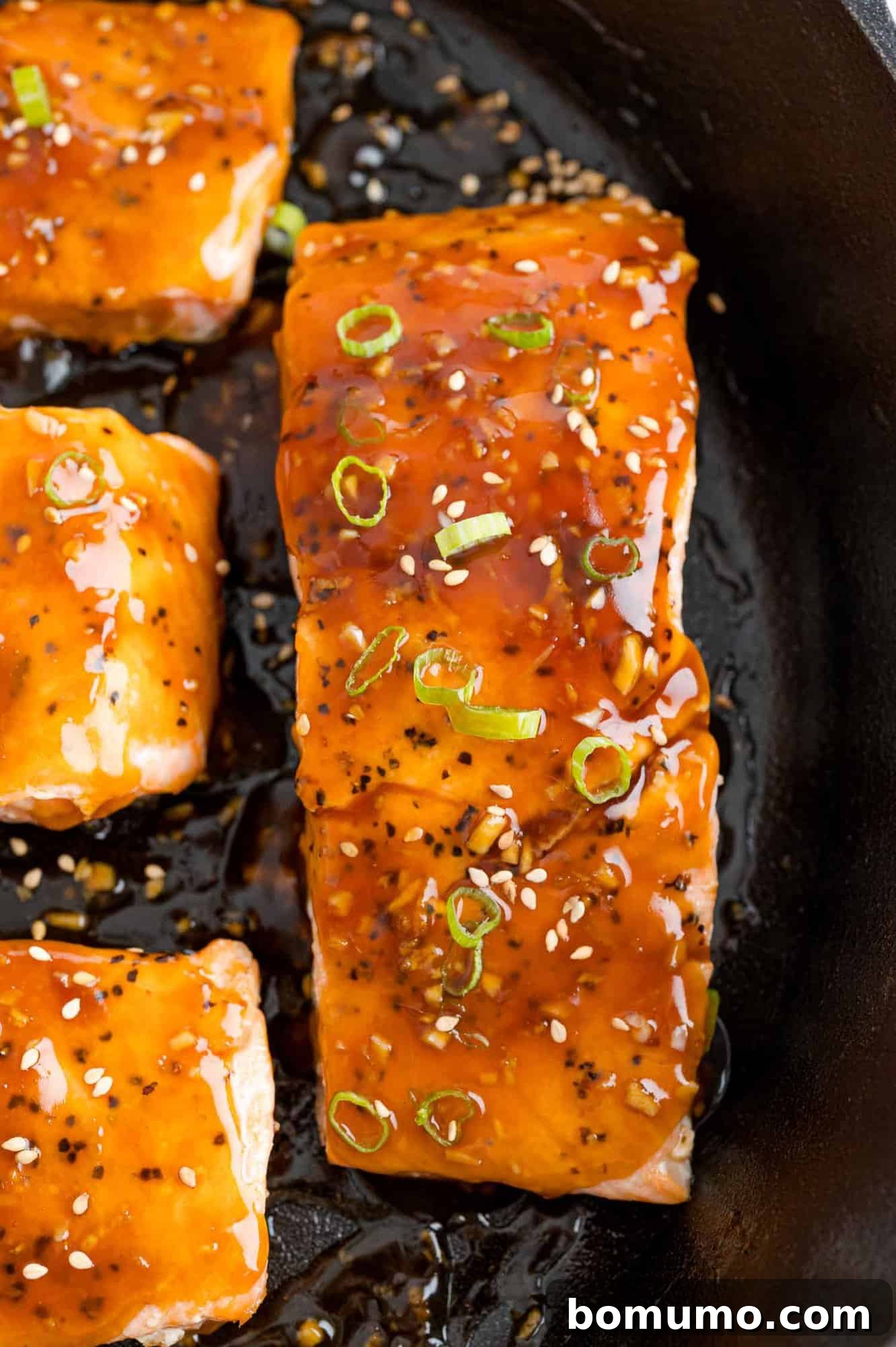
This recipe masterfully combines two cooking methods to achieve the best of both worlds: a crispy, golden sear and a tender, flaky interior. You begin by searing the salmon fillets on the stovetop, which locks in moisture and develops a beautiful crust. Then, the skillet is transferred to the oven, allowing the salmon to bake gently to perfect doneness. The final touch involves reducing the homemade teriyaki sauce in the same pan until it thickens into a glossy, sticky glaze, which is then spooned generously over the perfectly cooked salmon. This dual-method approach ensures maximum flavor and texture. I employ a similar technique for my popular Honey Garlic Salmon and smoky BBQ Salmon recipes, proving its versatility and effectiveness.
Exquisitely Balanced Flavor
What truly sets this dish apart is its harmonious flavor profile. Each ingredient plays a crucial role, contributing to a complex yet perfectly balanced taste. No single flavor overpowers the others; instead, you’ll experience a delightful interplay of sweet, savory, and tangy notes, complemented by the warm undertones of ginger and the rich depth of umami. This thoughtful combination ensures every bite is a delightful experience, satisfying a wide range of palates.
Ingredient Notes for Perfect Teriyaki Salmon
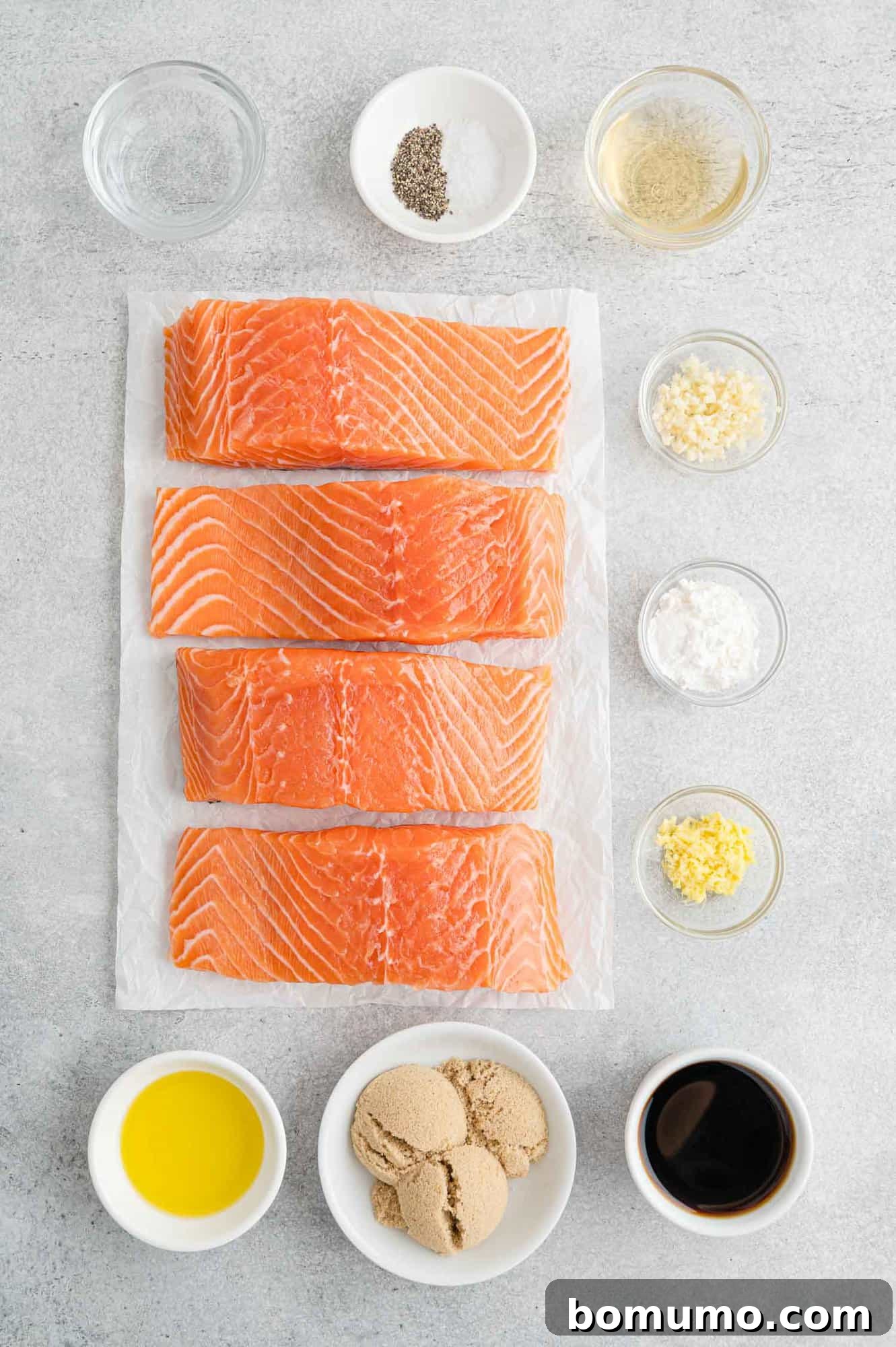
Crafting the perfect teriyaki salmon begins with selecting the right ingredients. Here’s a closer look at what you’ll need and why each component is vital:
- Salmon Fillets: For the best flavor and texture, choose high-quality salmon fillets. Varieties like King, Sockeye, and Coho salmon are generally considered superior in taste. Opting for wild-caught Pacific salmon not only offers a richer flavor but is also often cited as the healthiest choice due to its nutritional profile (source). The salmon is simply seasoned with salt and pepper to highlight its natural taste before being seared in olive oil.
- Soy Sauce: This forms the savory backbone of our homemade teriyaki sauce. For those managing sodium intake, low-sodium soy sauce is an excellent alternative. To make this teriyaki salmon gluten-free, substitute soy sauce with tamari, coconut aminos, or liquid aminos – each offers a similar depth of flavor without the gluten.
- Brown Sugar: Brown sugar lends sweetness and a rich, caramelized depth to the teriyaki sauce. Dark brown sugar will impart a more pronounced molasses-like flavor, while light brown sugar offers a milder sweetness. Feel free to choose based on your preference for intensity.
- Rice Vinegar: Essential for balancing the sweetness in the teriyaki sauce, rice vinegar introduces a subtle tang. It’s crucial to use unseasoned rice vinegar, as seasoned varieties often contain added sugar and higher sodium levels, which could throw off the sauce’s delicate balance.
- Fresh Ginger: Fresh ginger root is a game-changer, providing a vibrant, spicy punch that dried ground ginger simply can’t match. When grating, there’s no need to peel it – just give it a good scrub to remove any dirt. The fresh zest adds an invigorating warmth to the sauce.
- Garlic: Two finely minced fresh garlic cloves are integral to flavoring the teriyaki sauce. Garlic adds an aromatic and pungent depth that complements the other ingredients beautifully. Adjust the quantity to your taste; you can use more or less depending on how much garlic flavor you desire.
- Cornstarch: This unassuming ingredient is key to achieving that signature sticky, thick teriyaki glaze. Cornstarch acts as a thickening agent, ensuring the sauce clings beautifully to the salmon fillets rather than running off, providing a luscious coating with every bite.
- Green Onion (Scallions): Sliced green onions serve as a vibrant and fresh garnish, adding a mild, oniony flavor and a pop of color. For a gentler taste, use only the green tops. If you prefer a more assertive flavor and a slight crunch, include the white parts as well.
- Sesame Seeds: An optional but highly recommended garnish, sesame seeds add a delightful nutty flavor and textural contrast. You can use white sesame seeds, black sesame seeds, or a combination of both for visual appeal.

The Instant-Read Thermometer: Your Kitchen Essential
Achieving perfectly cooked salmon is simple with an instant-read thermometer. According to USDA recommendations, salmon should reach an internal temperature of 145ºF. At this temperature, the salmon will flake effortlessly with a fork, remaining moist and tender—never dry or overcooked.
An instant-read thermometer is an invaluable tool for any home cook, ensuring your proteins are cooked safely and to your desired doneness every time. It eliminates guesswork and guarantees consistent, delicious results.
How to Make Irresistible Teriyaki Salmon
Follow these simple steps to create a show-stopping teriyaki salmon that will become a regular in your meal rotation:
Step 1: Prepare the Homemade Teriyaki Sauce
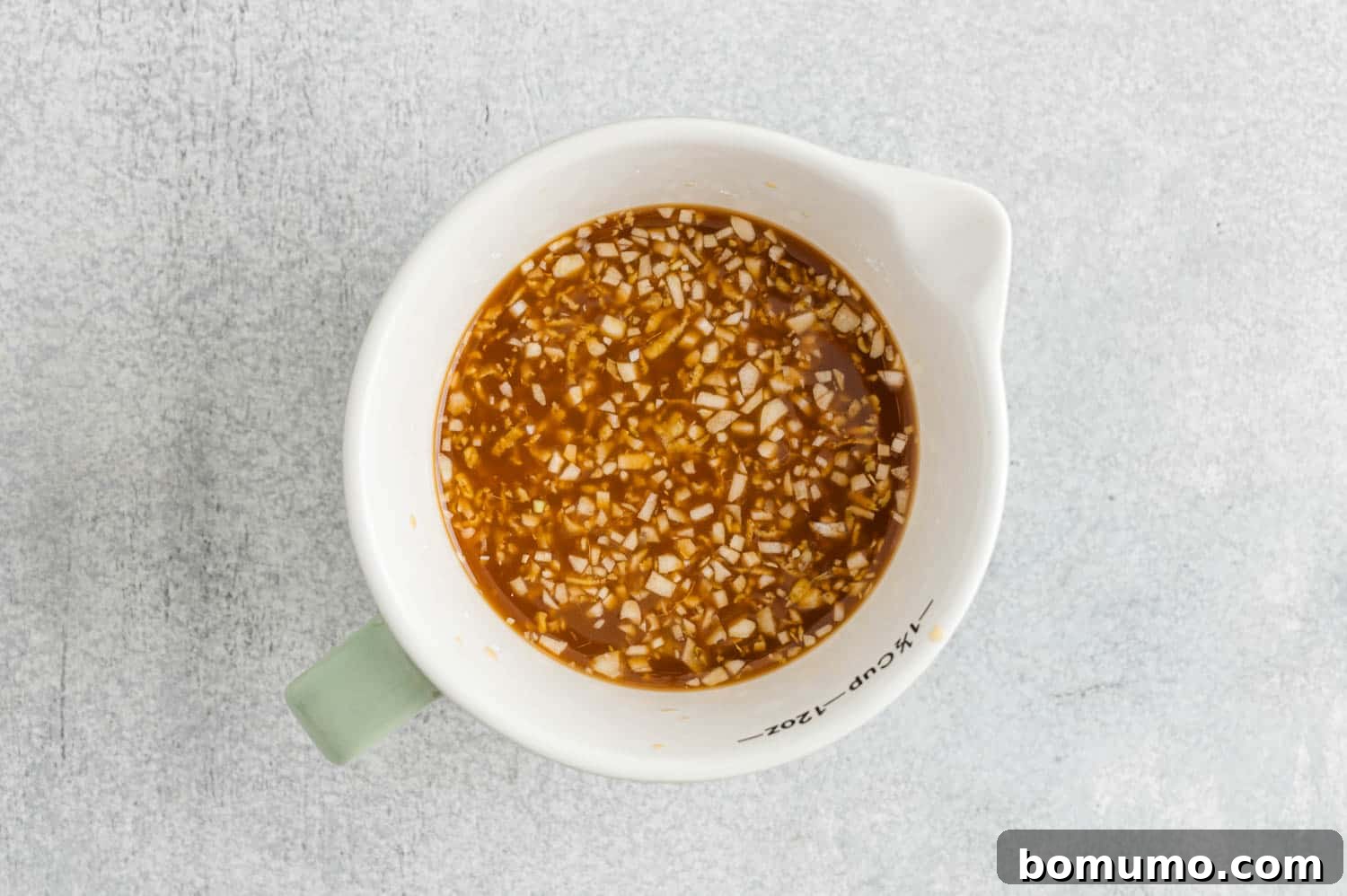
In a small bowl, whisk together all the ingredients for the teriyaki sauce: soy sauce, brown sugar, rice vinegar, water, grated fresh ginger, minced garlic, and cornstarch. Whisk vigorously to ensure the cornstarch is fully dissolved and there are no lumps. Set this flavorful mixture aside; it will be thickened later.
Step 2: Prepare Your Salmon and Oven
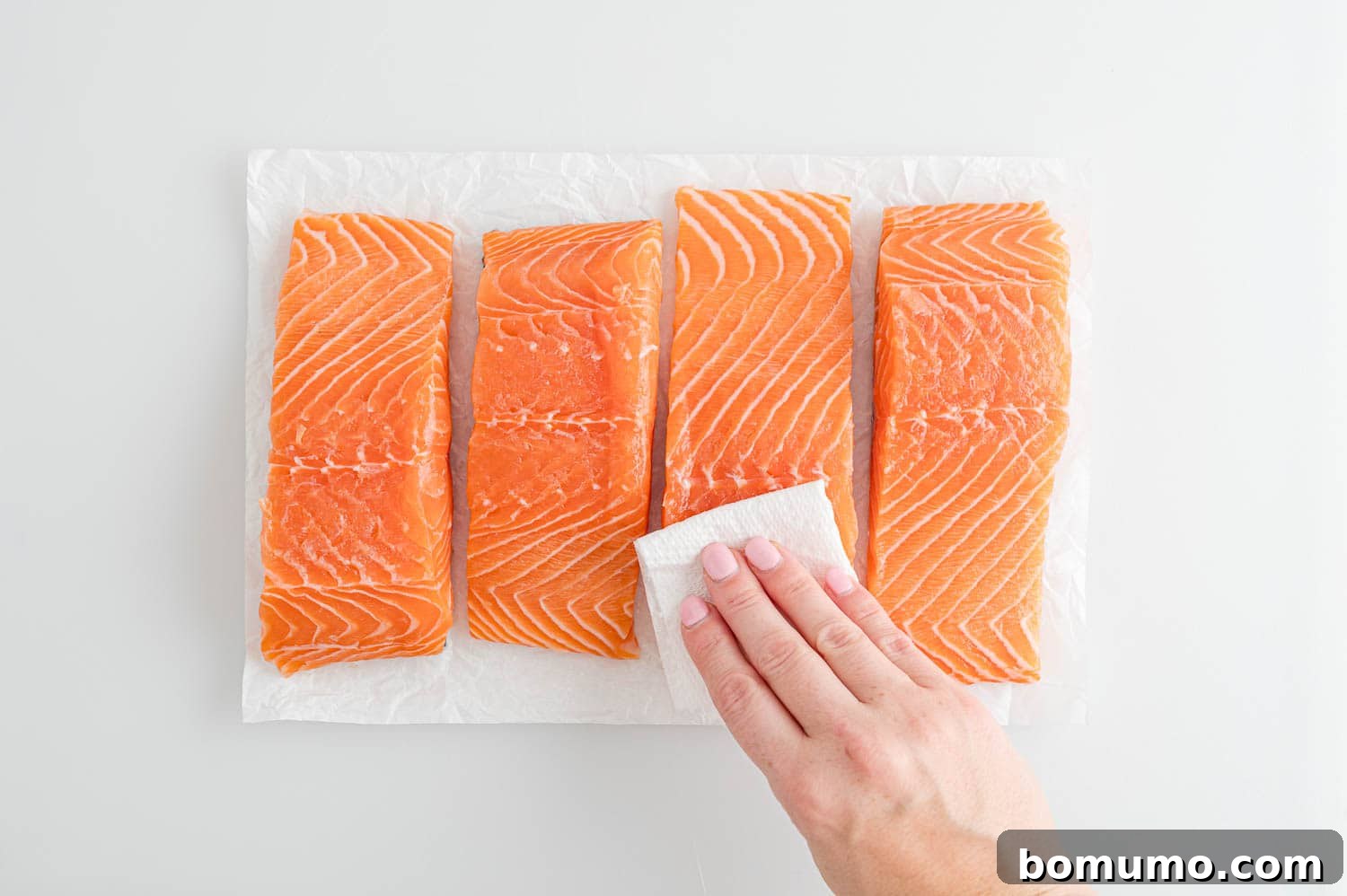
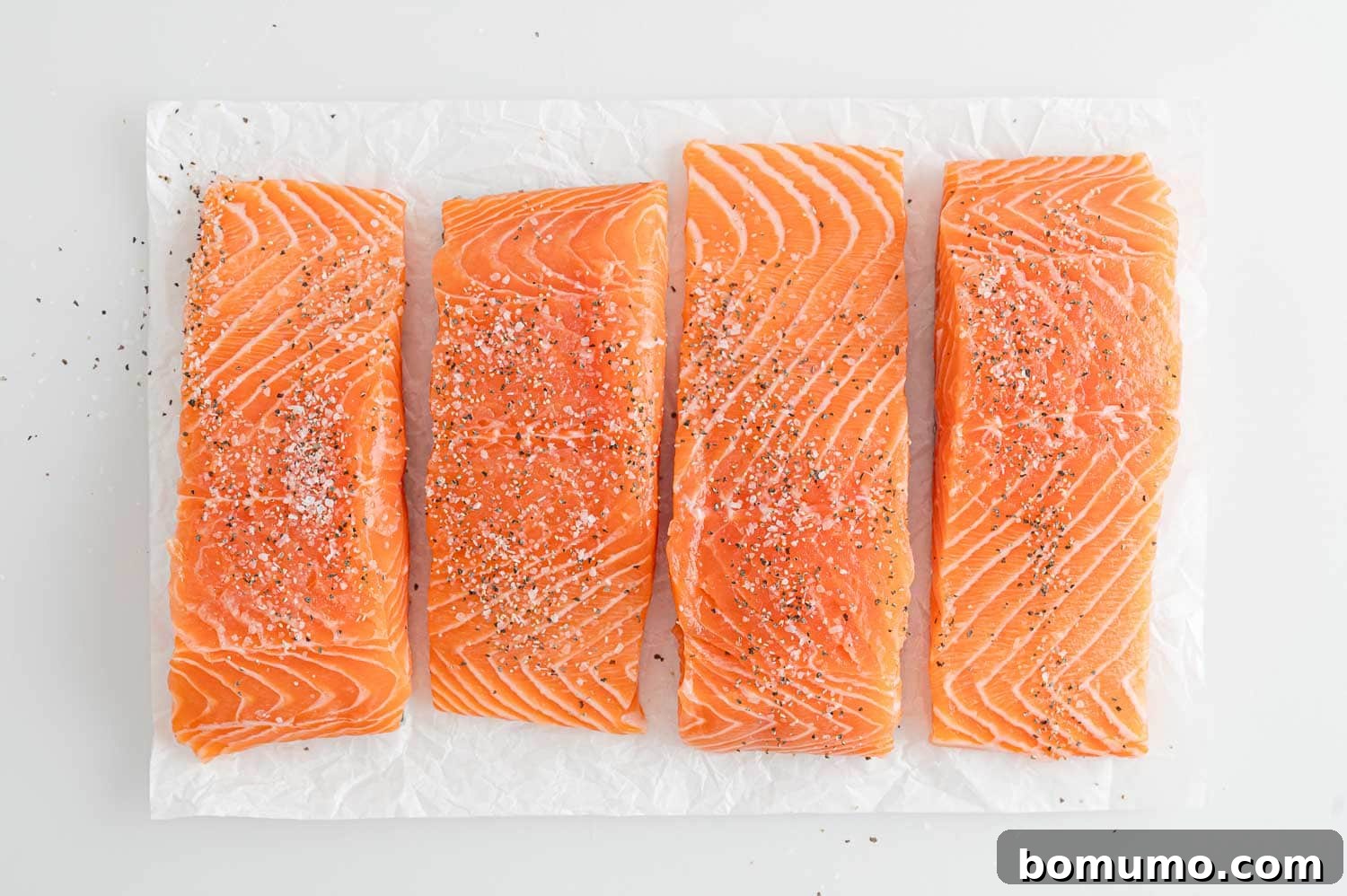
Preheat your oven to a precise 400°F (200°C). While the oven heats, carefully pat your salmon fillets completely dry with paper towels. This crucial step helps achieve a beautiful sear and crispy skin. Once dry, generously season both sides of the salmon with salt and freshly ground black pepper.
Cooking Tip: To Rinse or Not to Rinse Salmon?
You might wonder if you should rinse fresh salmon before cooking. The USDA strongly recommends against rinsing salmon or any other seafood. The primary concern is the potential spread of bacteria (like salmonella) from the fish to other foods, kitchen surfaces, and utensils through splashing water. The most effective way to eliminate any harmful bacteria is by cooking the salmon to a safe internal temperature of 145ºF (63°C), which will kill any pathogens. So, skip the rinse and simply pat dry!
Step 3: Sear the Salmon to Golden Perfection
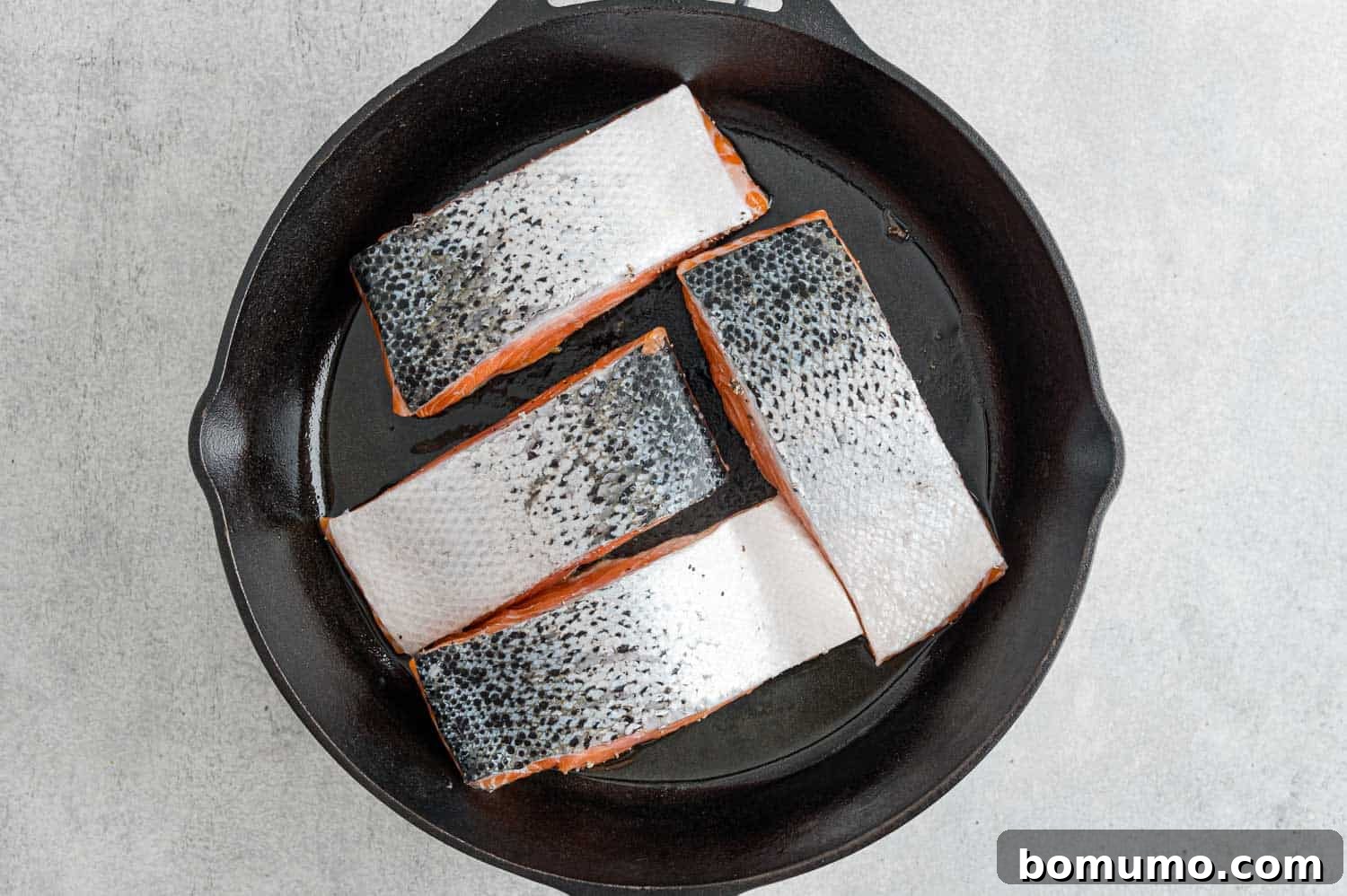
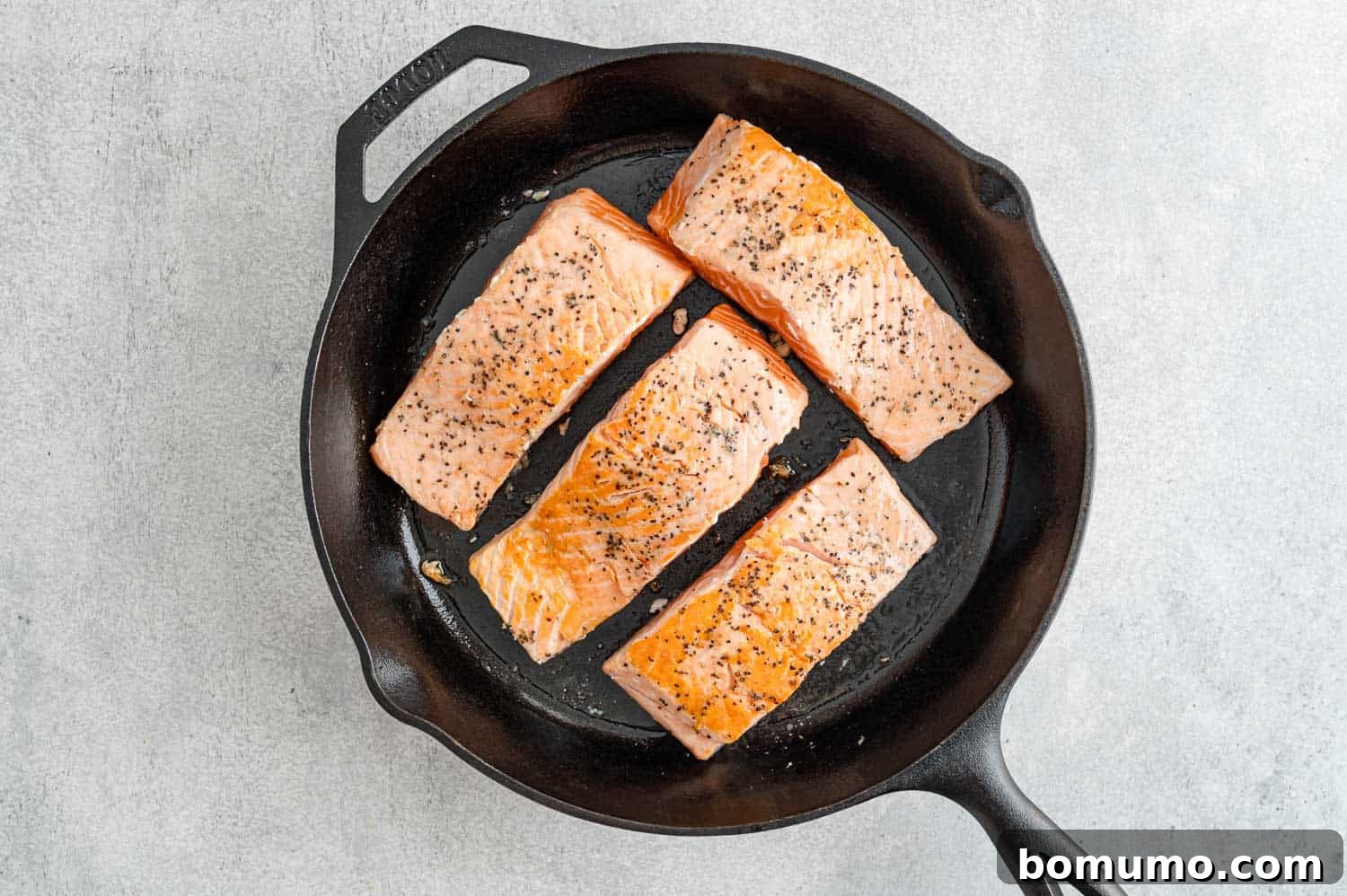
Place an oven-proof skillet (cast iron or stainless steel works wonderfully) over medium-high heat. Once hot, add about one tablespoon of olive oil, ensuring the bottom of the skillet is lightly coated. Carefully arrange the salmon fillets in the skillet in a single layer, placing them skin-side up. Sear for exactly 3 minutes. This initial sear develops a beautiful crust. After searing, remove the skillet from the heat and gently flip the fillets over. The salmon should release relatively easily; if not, allow it to cook for another minute or two before attempting to flip again.
Step 4: Bake to Flaky Perfection
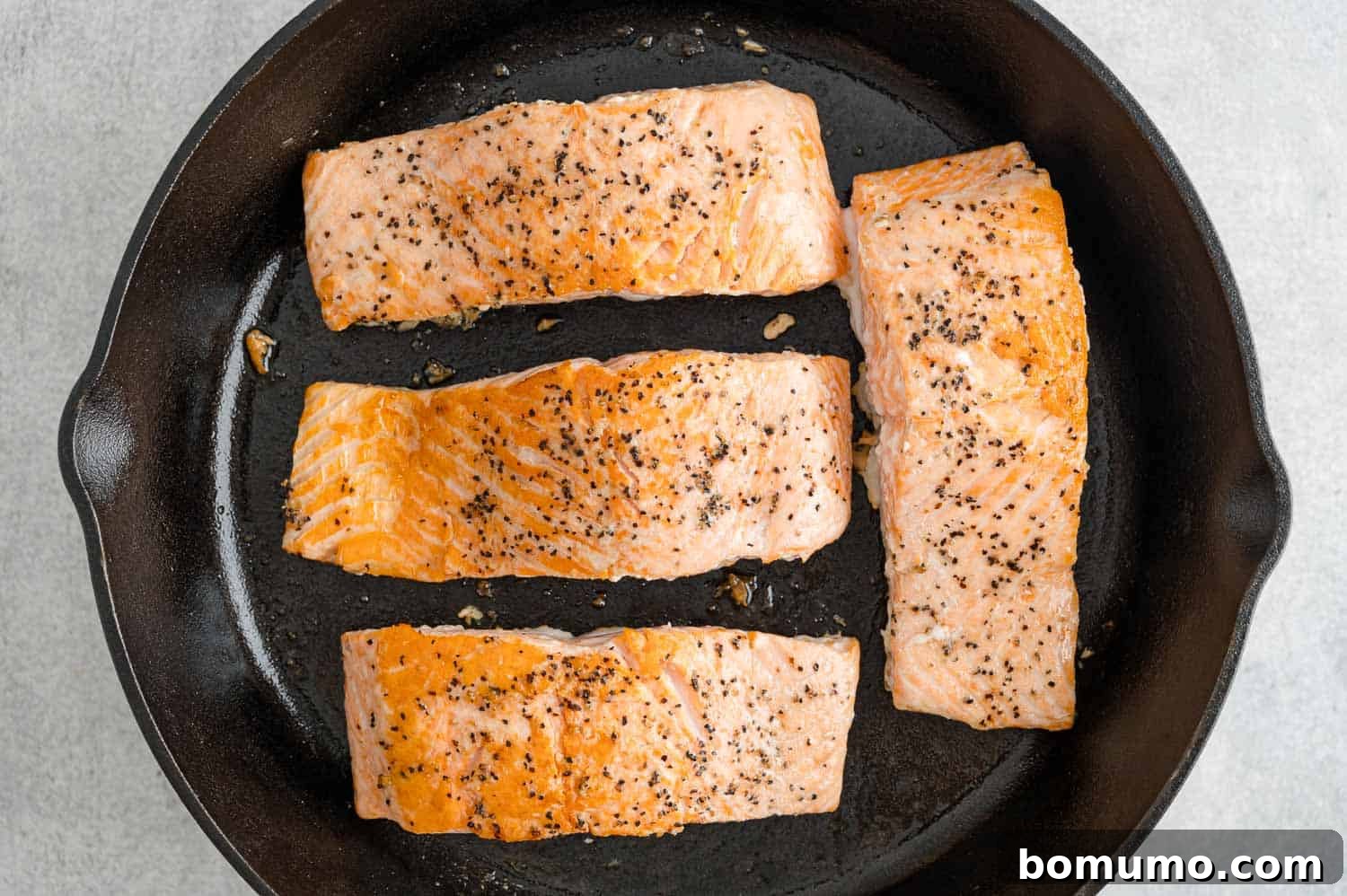
Carefully transfer the skillet, with the seared salmon fillets, into your preheated oven. Bake for approximately 8 to 12 minutes, or until the internal temperature of the salmon reaches 145ºF (63°C). The exact baking time will vary depending on the thickness of your salmon fillets, so using an instant-read thermometer is highly recommended for precision. Once cooked, carefully remove the hot pan from the oven – remember, the handle will be extremely hot! Transfer the perfectly cooked fillets to a serving platter. Before moving to the next step, use a few sheets of paper towel to absorb any excess oil remaining in the skillet, preparing it for the sauce.
Step 5: Thicken the Teriyaki Glaze
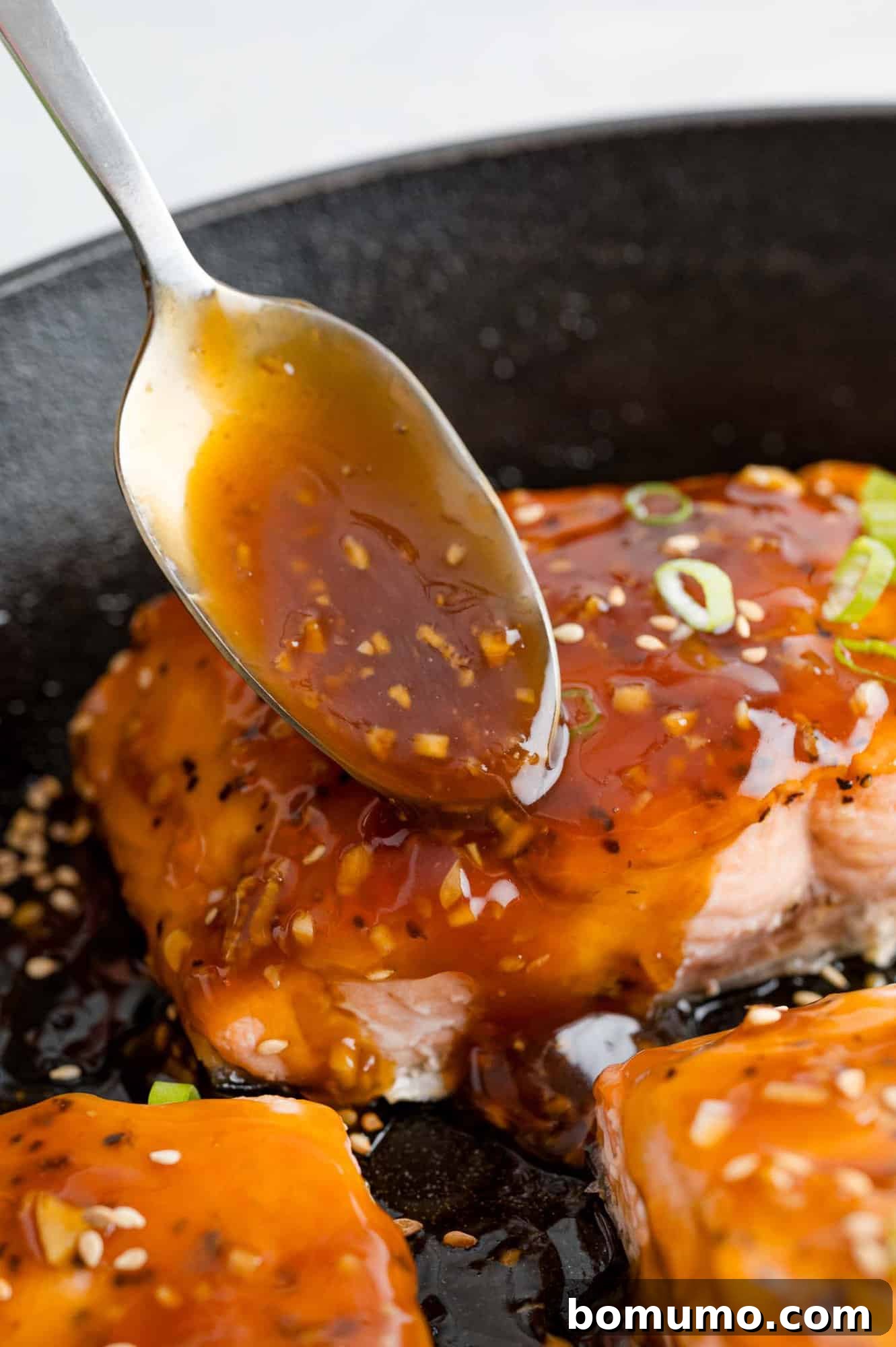
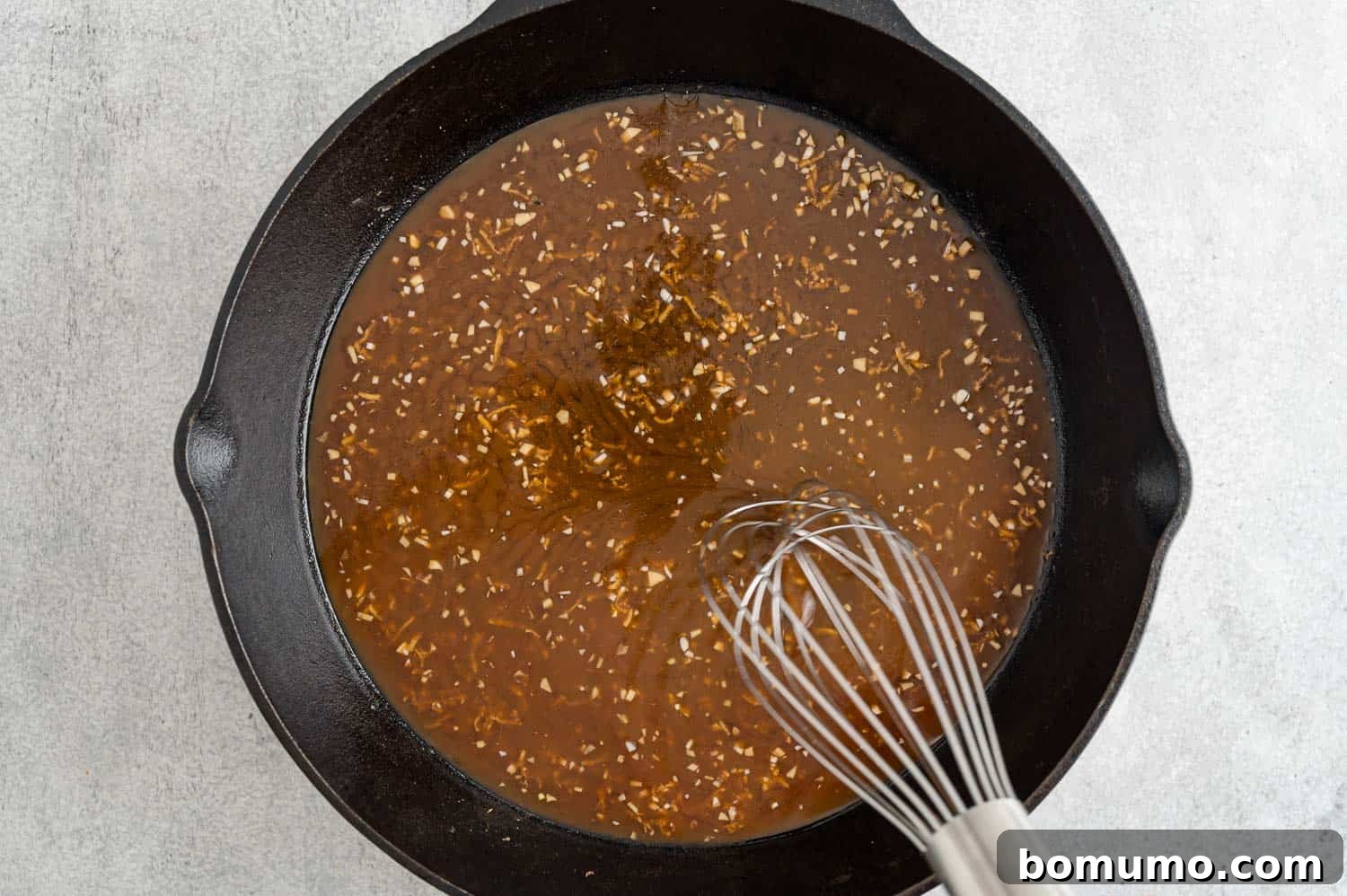
Before adding the sauce to the pan, give your reserved teriyaki sauce mixture another quick stir, as cornstarch tends to settle at the bottom. Pour the sauce into the skillet (the one you just used for the salmon). Cook the sauce over medium-low heat, stirring continuously with a whisk or spoon. The sauce will rapidly begin to thicken and become clear, usually within about 1 minute. Continue stirring until it reaches a beautiful, glossy, and sticky consistency.
Step 6: Serve and Garnish
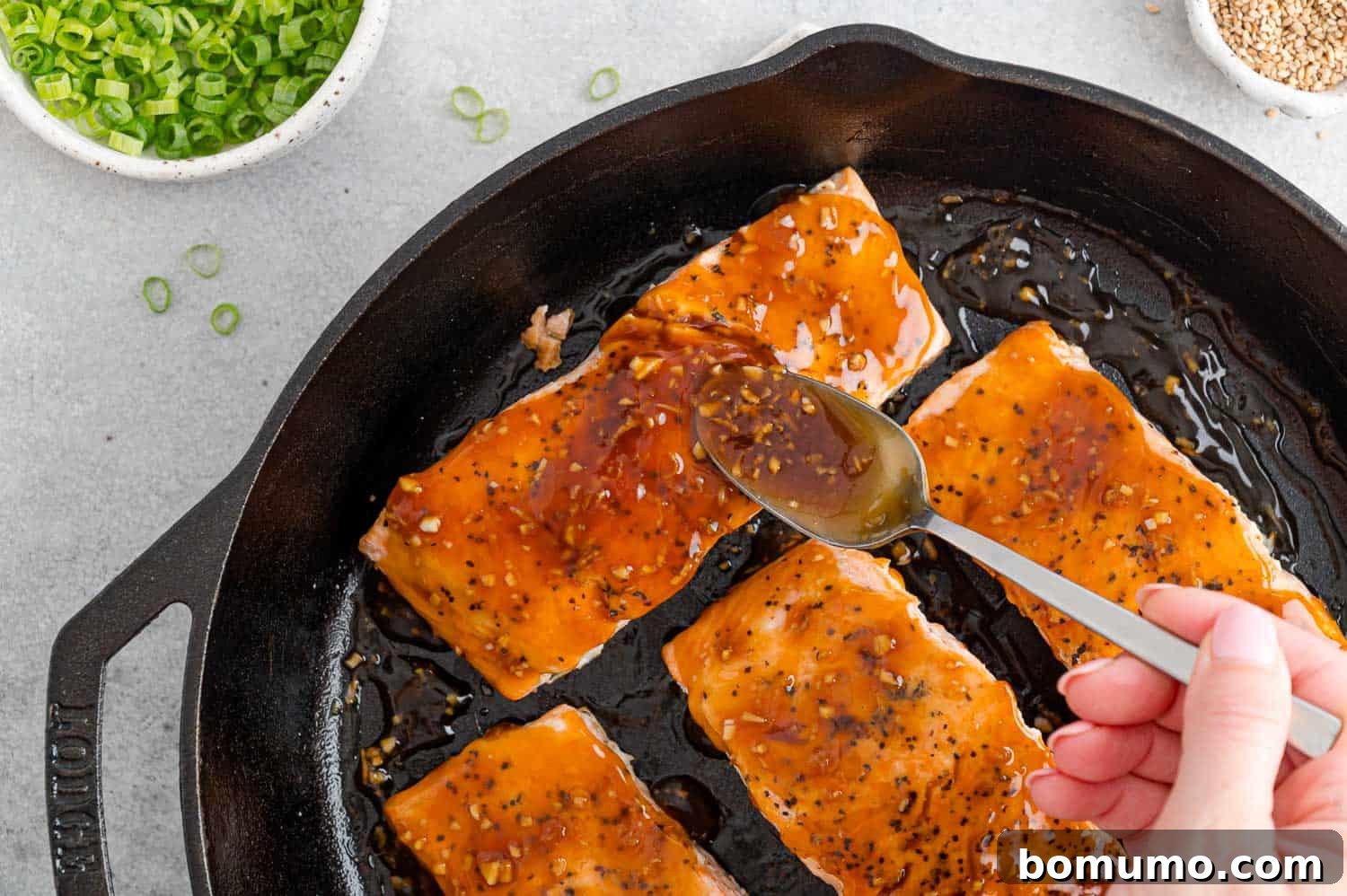
Generously spoon the warm, thickened teriyaki glaze evenly over the cooked salmon fillets on your serving platter. For an added touch of freshness and visual appeal, garnish with freshly sliced green onions and a sprinkle of sesame seeds. Serve immediately and prepare for an explosion of flavor!
Serving Suggestions for Teriyaki Salmon
This versatile teriyaki glazed salmon pairs wonderfully with a variety of side dishes, creating a complete and satisfying meal. Here are some ideas to complement your delicious main course:
- Rice & Grains: Serve it over fluffy white rice, wholesome Instant Pot brown rice, or protein-rich Instant Pot quinoa. The grains absorb the extra sauce beautifully, adding another layer of flavor.
- Roasted Vegetables: Since your oven is already on, maximize efficiency by roasting some vegetables alongside your salmon. Roasted broccoli or roasted green beans with Parmesan and basil are fantastic choices. Their slight char and tender-crisp texture offer a wonderful contrast to the salmon.
- Steamed Vegetables: For a lighter option, simple steamed vegetables like fresh broccoli florets or crisp sugar snap peas are quick and healthy go-alongs.
- Salads: Complement the Asian-inspired flavors with a refreshing Asian salad, featuring crisp greens and a bright dressing, or a crunchy cabbage salad with honey lime dressing.
Recipe Variations and Customization Tips
This teriyaki salmon recipe is wonderfully adaptable! Feel free to experiment with these variations to suit your taste and dietary needs:
- Alternative Sweeteners: While brown sugar provides a classic flavor, you can try using honey or maple syrup as alternatives. These natural sweeteners will impart a slightly different nuance to the sauce and may also subtly alter its consistency.
- Different Acids: Experiment with other vinegars for a distinct tang. White wine vinegar or apple cider vinegar can be used in place of rice vinegar. For a brighter, more zesty flavor, freshly squeezed lime juice is an excellent substitute, adding a refreshing citrus note.
- Toasted Sesame Oil Drizzle: For an extra layer of nutty aroma and deep flavor, finish your teriyaki salmon with a delicate drizzle of toasted sesame oil just before serving. A little goes a long way to enhance the Asian-inspired profile.
- Air Fryer Salmon Adaptation: If you prefer the convenience of an air fryer, follow my recipe for air fryer salmon for cooking the fish. Prepare the homemade teriyaki glaze separately in a small saucepan on the stovetop and then spoon it over the air-fried salmon.
- Explore Other Proteins: If you’re in the mood for something different, this versatile teriyaki sauce is fantastic with other proteins. Try my crockpot teriyaki chicken or Instant Pot teriyaki chicken. The glaze is also exceptional on plain air fryer chicken breasts, crispy chicken wings, and juicy drumsticks. Don’t limit yourself to poultry; it can also dress up pork chops or a grilled steak, transforming them into a delightful Asian-inspired dish.
- Elevate Your Vegetables: Don’t forget your greens! Roasted or steamed vegetables like broccoli, bell peppers, or carrots can be taken up several notches by tossing them in this savory teriyaki sauce. It’s a simple way to add immense flavor to healthy sides.
Homemade Teriyaki Sauce: The Key to Flavor
The beauty of this recipe truly lies in its homemade teriyaki sauce. Moving beyond the variations mentioned, it’s worth reiterating how this simple sauce can become a staple in your kitchen. Its sweet, savory, and tangy profile makes it incredibly versatile. Beyond salmon, consider using it as a marinade or glaze for:
- Chicken: Brush it over grilled chicken skewers, baked chicken thighs, or pan-fried chicken breasts.
- Pork: A fantastic glaze for pork tenderloin, grilled pork chops, or even shredded pork in a slow cooker.
- Beef: Use it to marinate thin slices of beef for stir-fries or as a basting sauce for grilled steak.
- Tofu/Tempeh: For a plant-based option, this sauce works wonders on crispy baked or pan-fried tofu and tempeh.
- Stir-fries: Add it as the finishing sauce to any vegetable or protein stir-fry for a quick and flavorful meal.
Having a batch of this homemade teriyaki sauce ready in your fridge can significantly streamline your meal prep and elevate everyday dishes with minimal effort.
Make-Ahead Ideas
Make-Ahead Ideas
Streamline your cooking process with these helpful make-ahead tips:
- Prepare the Sauce in Advance: One of the easiest ways to get a head start is to whisk together all the teriyaki sauce ingredients a day or two before you plan to cook. Store the sauce in an airtight container in the refrigerator. When you’re ready to use it, give the ingredients a good stir or shake, as the cornstarch tends to settle at the bottom. This small step ensures a smooth, lump-free sauce that’s ready to thicken in minutes.
Storage & Reheating Tips
Storage & Reheating Tips
Make the most of your delicious teriyaki salmon with these storage and reheating recommendations:
- Refrigerate: Any leftover teriyaki salmon should be stored promptly in an airtight container in the refrigerator. It will maintain its quality and flavor for up to 2 days.
- Reheat Gently: To reheat leftover salmon without drying it out, place it in a skillet over medium heat. For added moisture and to prevent it from becoming tough, add a small splash of vegetable broth or water to the pan and cover it. Alternatively, you can gently warm it in the microwave using short intervals until heated through. Avoid aggressive reheating to preserve its tender texture.
Unlock Your Free Meal Plan
Planning nutritious and delicious meals each week can be a challenge. That’s why we create comprehensive weekly meal plans to simplify your life!
Interested in a curated weekly meal plan that thoughtfully incorporates recipes like this Teriyaki Salmon? Explore our popular Meal Plan #45 or our latest Meal Plan #90. Each plan provides a wholesome recipe for every weekday, along with a categorized grocery list to make shopping a breeze. Let us take the stress out of meal planning for you this week! We consistently add new, fresh meal plans on a weekly basis, ensuring you always have new inspiration.
Discover More Salmon Recipes
Baked Salmon with Lemon and Chives
Grilled Salmon in Foil with Garlic Butter
Pesto Salmon in Parchment Paper (Full Meal)
Salmon Tacos
Teriyaki Salmon
Pin
Ingredients
Sauce
- ¼ cup soy sauce (low sodium preferred)
- 3 tablespoons brown sugar
- 2 tablespoons rice vinegar
- 2 tablespoons water
- 1 teaspoon grated fresh ginger root (or ¼ teaspoon ground ginger)
- 2 cloves garlic, minced
- 2 teaspoons cornstarch
Salmon
- 4 salmon fillets (about 6 oz. each)
- ¼ teaspoon kosher salt
- ¼ teaspoon coarse ground black pepper
- 1 tablespoon olive oil
Garnishes (optional)
- 1 green onion, sliced (for garnish)
- sesame seeds (for garnish)
Instructions
-
In a small bowl, combine soy sauce, brown sugar, rice vinegar, water, ginger, garlic, and cornstarch. Whisk well until all ingredients are thoroughly mixed and the cornstarch is dissolved. Set aside.¼ cup soy sauce, 3 tablespoons brown sugar, 2 tablespoons rice vinegar, 2 tablespoons water, 1 teaspoon grated fresh ginger root, 2 cloves garlic, minced, 2 teaspoons cornstarch
-
Preheat your oven to 400°F (200°C). Thoroughly pat the salmon fillets dry with paper towels to ensure a crisp sear. Season both sides with kosher salt and coarse ground black pepper.4 salmon fillets, ¼ teaspoon kosher salt, ¼ teaspoon coarse ground black pepper
-
Heat an oven-proof skillet (such as cast iron or stainless steel) over medium-high heat. Add 1 tablespoon of olive oil, ensuring the bottom of the skillet is lightly coated. Place the salmon fillets in the skillet, skin side up, and sear for 3 minutes until a golden crust forms. Remove the skillet from heat and carefully flip the fillets over. The salmon should release easily from the pan; if not, allow it to cook for an additional minute or two.1 tablespoon olive oil
-
Transfer the skillet with the salmon to the preheated oven. Bake for 8 to 12 minutes, or until the internal temperature reaches 145°F (63°C). Baking time can vary based on the thickness of your fillets, so use an instant-read thermometer for accuracy.
-
Carefully remove the hot skillet from the oven (remembering the handle will be very hot!). Transfer the cooked salmon fillets to a serving platter. Using paper towels, carefully wipe any excess oil from the skillet, preparing it for the sauce.
-
Stir the reserved sauce ingredients again to reincorporate the cornstarch, then pour the mixture into the cleaned skillet. Cook the sauce over medium-low heat, stirring constantly, until it thickens and becomes clear and glossy, typically in about 1 minute.
-
Generously spoon the warm teriyaki sauce over the salmon fillets. Serve immediately, garnished with freshly sliced green onions and a sprinkle of sesame seeds for extra flavor and visual appeal. Enjoy your perfectly cooked teriyaki salmon!
Notes
- Storing & Reheating: Store any leftover salmon in a covered container in the refrigerator for up to 2 days. Reheat gently in a skillet over medium heat (adding a splash of broth or water for moisture) or in the microwave.
- Teriyaki Sauce Versatility: The homemade teriyaki sauce from this recipe is incredibly versatile. Don’t hesitate to use it in other dishes! It’s fantastic on a variety of proteins like chicken, pork, or beef, and also works wonderfully to elevate roasted or steamed vegetables.
Video Overview
Watch a quick video guide on how to prepare this delicious Teriyaki Salmon!
Click here to watch the Teriyaki Salmon recipe video!

Nutrition Information
Calories: 324kcal,
Carbohydrates: 11g,
Protein: 35g,
Fat: 14g,
Saturated Fat: 2g,
Polyunsaturated Fat: 5g,
Monounsaturated Fat: 6g,
Cholesterol: 94mg,
Sodium: 797mg,
Potassium: 912mg,
Fiber: 0.2g,
Sugar: 9g,
Vitamin A: 69IU,
Vitamin C: 0.5mg,
Calcium: 37mg,
Iron: 2mg
Nutrition information is automatically calculated and is provided as an estimate. It should be used as an approximation only.
Did You Make This?We’d love to hear your thoughts! Share a comment and rating below!