

Easy Homemade Rhubarb Sauce: A Sweet & Tangy Taste of Spring
Recipe Highlights
Why you’ll love this Rhubarb Sauce: This incredibly simple rhubarb sauce recipe is a delightful departure from traditional applesauce, offering a unique tart-sweet flavor that brightens any meal. It’s wonderfully versatile, serving equally well as a standalone light dessert or a vibrant topping for your favorite breakfast and brunch dishes like pancakes, waffles, or creamy yogurt. Its minimal ingredient list and quick preparation time make it a perfect spring treat, harnessing the fresh bounty of the season.
Preparation Time: Approximately 20 minutes from start to finish. This includes about 5 minutes of active preparation and 15 minutes of gentle simmering.
Essential Equipment: You’ll only need a sharp knife for chopping and a sturdy saucepan for cooking. No fancy gadgets required!
Yields: This recipe makes enough for 4 generous servings, easily scalable for larger batches.
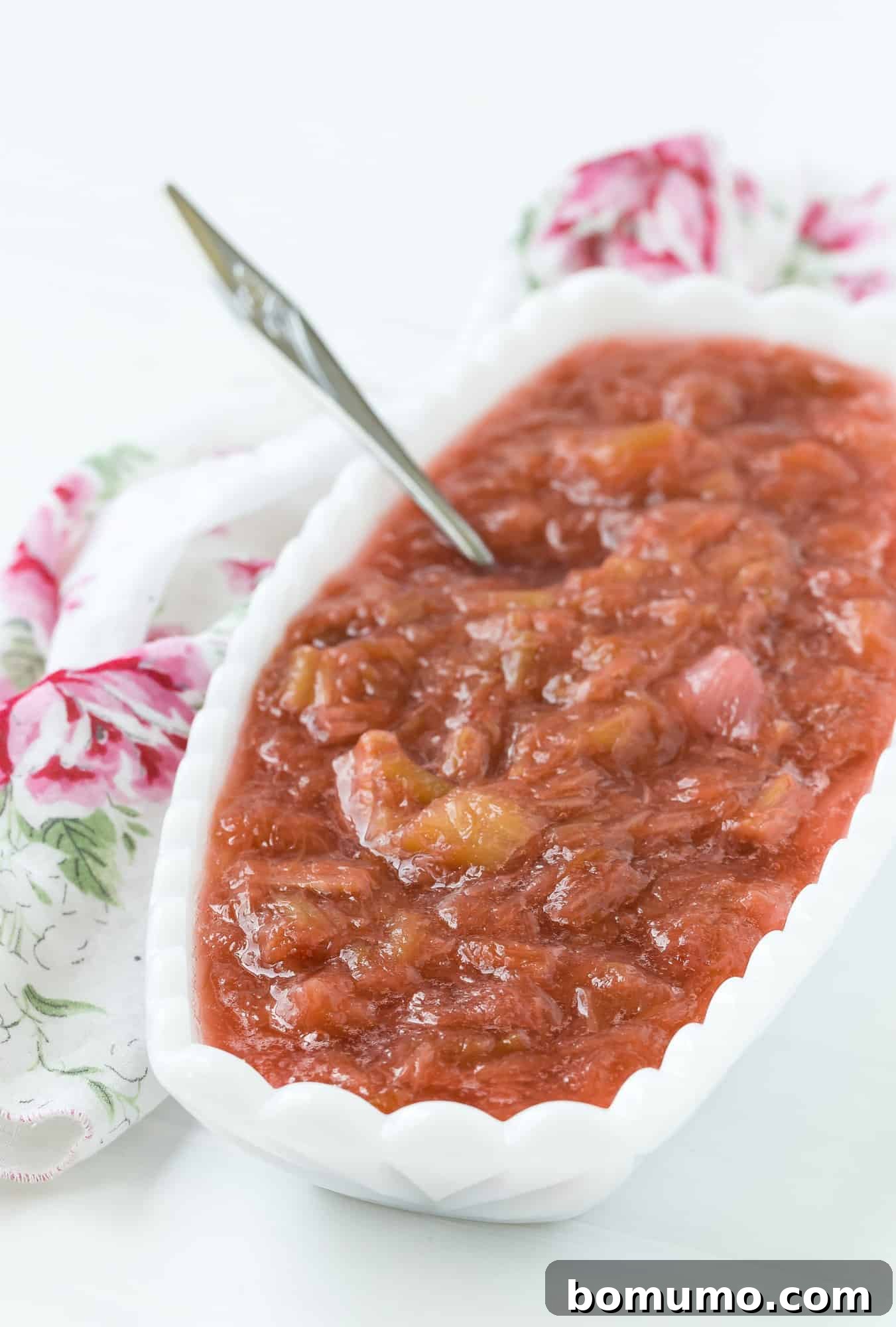
Rhubarb: The Unsung Hero of Spring (The “Pie Plant”)
Often debated as a fruit or a vegetable, rhubarb unequivocally signals the arrival of spring. Known affectionately in many regions as the “pie plant” due to its starring role in classic desserts, rhubarb is experiencing a well-deserved culinary resurgence. This robust perennial is a true garden workhorse, famous for its resilience and abundant yields. Once established, a rhubarb plant can thrive for decades, providing a seemingly endless supply of its distinctive stalks.
In colder climates, like my home state of Michigan, rhubarb is celebrated as one of the very first crops to emerge after a long winter. Just as the last vestiges of snow melt away and the ground begins to thaw, delicate pink knobs of rhubarb bravely push through the earth. These vibrant stalks grow with astonishing speed, sometimes visibly changing overnight as they stretch towards the warming sun. Their long, often reddish-green stalks, topped with expansive, sculptural leaves, are a welcome sight, beckoning gardeners and cooks alike to transform them into delicious springtime treats.
My mother, a dedicated gardener, always made the most wonderful rhubarb sauce with fresh stalks from her own garden. It’s a simple preparation that truly lets the unique flavor of rhubarb shine. Rhubarb on its own is quite tart – a characteristic that is both its charm and its challenge. To achieve a palatable balance of sweet and tangy, a generous amount of sugar is essential. This allows you to customize the sauce to your preferred taste, creating a perfect symphony of flavors that is both refreshing and comforting.
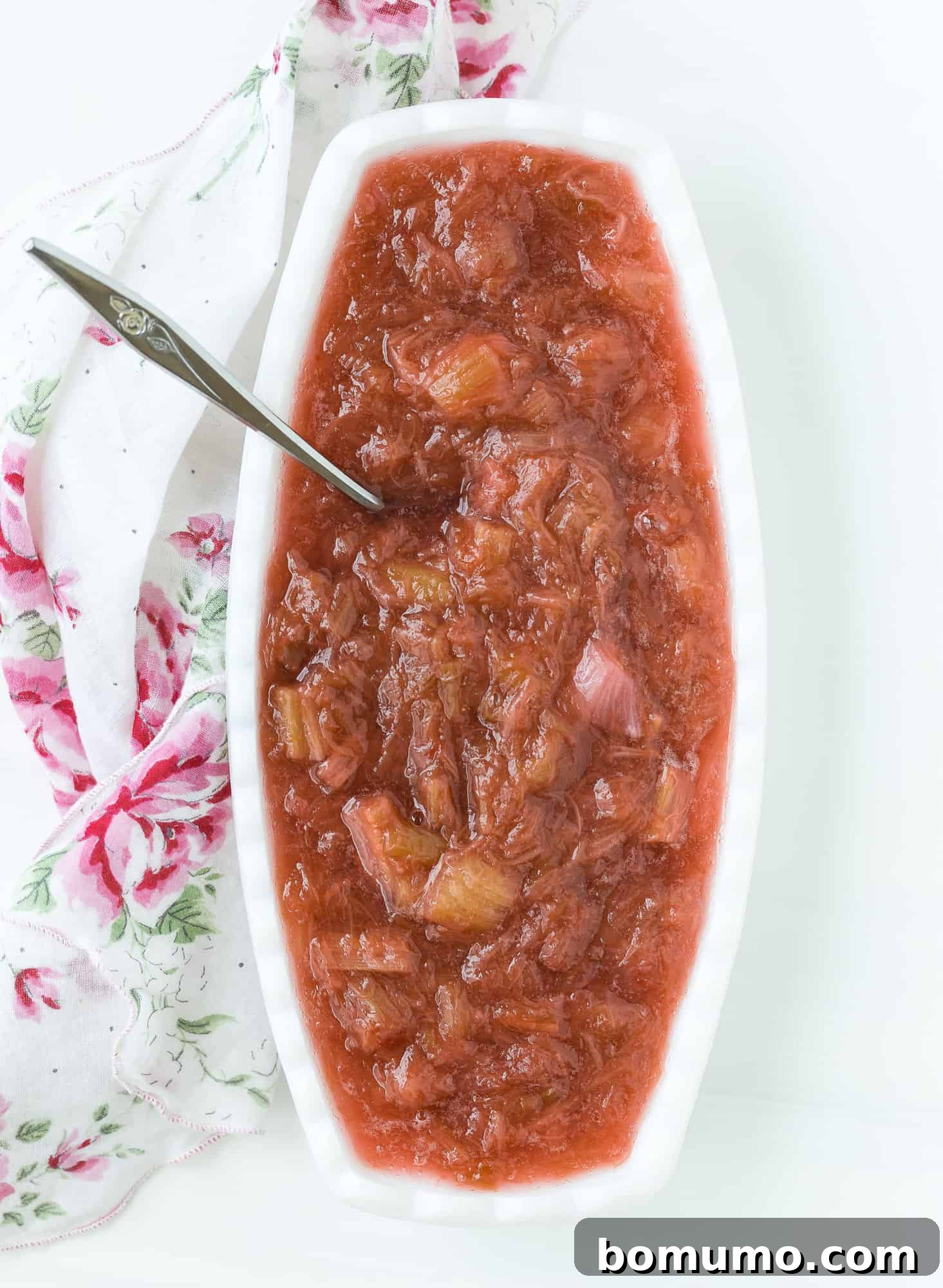
Understanding Rhubarb: Key Facts & Tips
Rhubarb is botanically classified as a vegetable, though its culinary application often places it in the fruit category. Its distinct tartness makes it an exceptional ingredient for pies, crumbles, sauces, cakes, bars, and jams, where it pairs beautifully with sweeteners and other fruits.
Do you need to peel rhubarb? One of the best things about cooking with rhubarb is that there’s absolutely no need to peel the stalks. While they might appear somewhat stringy when raw, the fibers break down beautifully during cooking, resulting in a perfectly tender and edible sauce. This saves valuable time and minimizes food waste.
A crucial safety note: Never consume rhubarb leaves. The leaves contain high levels of oxalic acid, a toxic substance that can be harmful if ingested in significant quantities. Always trim and discard the leaves before cooking the stalks.
Can you eat rhubarb raw? Yes, you can! However, be prepared for an intensely tart flavor. For an adventurous twist, try thinly slicing raw rhubarb stalks and adding them to fresh salads. They offer a delightful crunch and a vibrant, zesty burst of flavor that can surprise and refresh your palate.
Crafting Your Homemade Rhubarb Sauce: A Step-by-Step Guide
Making rhubarb sauce is remarkably similar to preparing other fruit sauces like applesauce or peach sauce. It primarily involves cooking down the main ingredient with a touch of sweetener, in this case, granulated sugar, to create a smooth, flavorful consistency. The process is straightforward, yielding delicious results with minimal effort.
1. Preparing the Rhubarb Stalks
Proper preparation of rhubarb is key to both safety and flavor. Begin by cutting off and discarding the large leaves from the stalks; remember, they are toxic. Thoroughly wash the rhubarb stalks under cool running water to remove any dirt or debris. Once clean, use a sharp knife to chop the stalks into approximately one-inch pieces. Uniform pieces ensure even cooking, leading to a consistently smooth sauce.
2. Gentle Simmering on the Stove
Transfer your chopped rhubarb to a large, heavy-bottomed saucepan. Add a splash of water – just enough to get the cooking process started without burning, as rhubarb releases a good amount of its own juice as it cooks. Stir in your sugar. Begin cooking over medium to low heat, allowing the rhubarb to soften gradually. Stir frequently to prevent sticking and ensure even cooking. Continue to cook until the rhubarb chunks have completely broken down and transformed into a thick, saucy consistency. The duration typically ranges from 15 to 20 minutes, depending on the heat and the tenderness of your rhubarb.
3. Customizing Your Batch and Flavor
This recipe is incredibly forgiving and easily adaptable. If you’re fortunate enough to have an abundance of rhubarb, feel free to double or even triple the recipe without needing to adjust cooking times significantly; simply use a larger pot. Don’t hesitate to experiment with flavor variations as well. For a classic pairing, consider adding an equal amount of sliced strawberries along with the rhubarb for a delightful strawberry-rhubarb sauce. The beauty of this recipe lies in its flexibility, allowing you to tailor it to your preferences and the ingredients you have on hand.
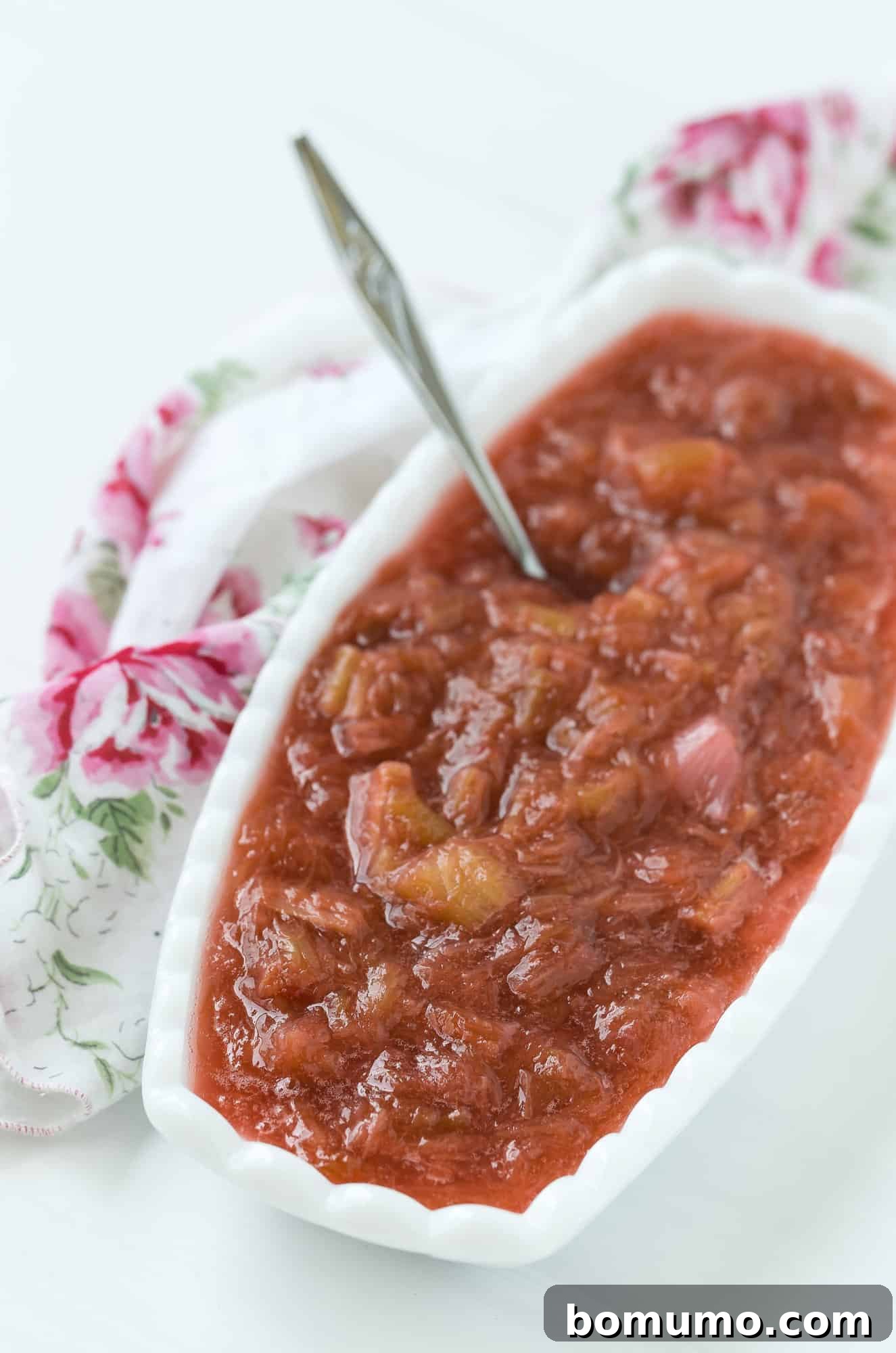
Delightful Ways to Serve Your Rhubarb Sauce
One of the many charms of homemade rhubarb sauce is its versatility. It can be served at room temperature or chilled, making it a perfect make-ahead component for various meals. Prepare a large batch and store it in your refrigerator for up to a week, ensuring a ready-to-eat treat whenever a craving strikes.
Enjoy a bowl of rhubarb sauce for any meal of the day! For breakfast, it makes a wonderfully tangy and sweet topping for fluffy pancakes or crispy waffles. Stir it into a plain Greek yogurt for an instant flavor boost and added freshness. As a simple yet elegant dessert, spoon it over creamy vanilla bean ice cream or a slice of rich pound cake. You can also get creative by incorporating it into oatmeals, tarts, or even savory dishes where a touch of sweet-tartness is desired.
More Inspiring Rhubarb Creations
If you’ve fallen in love with rhubarb sauce, you’ll be thrilled to explore the many other delicious ways to enjoy this unique ingredient. Here are some fantastic rhubarb recipes to expand your culinary repertoire:
- Strawberry Rhubarb Crisp: A classic combination, offering warm, tender fruit with a buttery, crunchy oat topping.
- Rhubarb Bars: Perfect for picnics or parties, these bars feature a shortbread crust and a delightful rhubarb filling.
- Rhubarb Instant Pot Cake (Rhubarb Upside Down Cake): A moist and flavorful cake, made easy with the convenience of an Instant Pot.
- Rhubarb Cake: Often a comforting coffee cake, crowned with a sweet streusel topping that perfectly complements the tart rhubarb.
- Roasted Rhubarb: A simple yet elegant preparation, bringing out a deeper, caramelized sweetness from the stalks.
- Rhubarb Custard Pie: A beloved dessert that pairs the tang of rhubarb with a creamy, smooth custard filling.
- Rhubarb Barbecue Sauce: For those seeking a unique savory twist, this sauce offers a surprising and delicious balance to grilled meats.
- Rhubarb Jam: Preserve the taste of spring all year long with a vibrant, homemade rhubarb jam.
Storage and Freezing Guidelines
Storage and Freezing Guidelines
Refrigerate: Your freshly made rhubarb sauce can be stored in the refrigerator for up to one week. Ensure it is kept in a tightly covered, airtight container to maintain its freshness and flavor.
Freeze: Rhubarb sauce freezes exceptionally well, making it ideal for enjoying this seasonal treat long after spring has passed. Transfer the cooled sauce into freezer-safe containers or heavy-duty freezer bags, leaving a little headspace for expansion. It can be frozen for up to 6 months. For best results and to preserve texture, thaw frozen rhubarb sauce overnight in the refrigerator before serving. If you’re in a hurry, you can gently reheat it on the stovetop from frozen, stirring occasionally.
How To Freeze Fresh Rhubarb for Later Use
If you’ve harvested or acquired a large quantity of fresh rhubarb and want to preserve its vibrant flavor for future recipes, freezing it is incredibly simple. Begin by washing the stalks thoroughly and patting them completely dry. Then, cut the rhubarb into small, uniform pieces, about one inch in length. This size is ideal for most recipes and helps with even freezing.
To prevent the pieces from sticking together in a large frozen block, employ the “flash freezing” method: spread the chopped rhubarb in a single layer on a parchment-lined baking sheet. Place the baking sheet in the freezer for approximately one hour, or until the pieces are solid. Once frozen, transfer the individual rhubarb pieces into an airtight freezer bag or a rigid freezer-safe container. This method ensures that you can easily scoop out exactly how much rhubarb you need for a recipe, without having to thaw an entire block. Frozen rhubarb can be stored for up to 6 months, perfect for extending the season of this delightful “pie plant.”
Simple Rhubarb Sauce
Rachel Gurk
5 mins
15 mins
20 mins
4
Print Recipe
Ingredients
- 4 cups roughly chopped rhubarb (about 1-inch pieces)
- ½ cup granulated sugar, or more to taste
- ¼ cup water
Instructions
-
Combine all ingredients (chopped rhubarb, sugar, and water) in a large saucepan.
-
Cook over medium-low heat for 15 to 20 minutes, stirring frequently. Continue cooking until the rhubarb chunks are soft and have broken down into your desired sauce consistency.
-
Taste the sauce and adjust the sweetness as needed by adding more sugar, a tablespoon at a time, until you reach your preferred balance. Serve warm, at room temperature, or chilled.
Notes
- Increase Yield: This recipe can easily be doubled or tripled to make a larger batch, depending on the amount of fresh rhubarb you have on hand. Adjust saucepan size accordingly.
- Storage: Store leftover rhubarb sauce in an airtight container in the refrigerator for up to one week. For longer storage, freeze the sauce in freezer-safe containers for up to six months. Thaw overnight in the refrigerator before using.
- Optional Color Enhancement: If your rhubarb is more green than red (which varies by variety and harvest time), you can add a couple of drops of red food coloring to enhance its visual appeal. This will not affect the flavor.
- Strawberry-Rhubarb Sauce Variation: For a popular twist, substitute 2 cups of the chopped rhubarb with 2 cups of sliced fresh strawberries. Cook as instructed, enjoying the classic flavor pairing.
Nutrition
Calories: 122 kcal
Carbohydrates: 30g
Protein: 1g
Fat: 0.3g
Saturated Fat: 0.1g
Polyunsaturated Fat: 0.1g
Monounsaturated Fat: 0.05g
Sodium: 6mg
Potassium: 352mg
Fiber: 2g
Sugar: 26g
Vitamin A: 124 IU
Vitamin C: 10mg
Calcium: 106mg
Iron: 0.3mg
Nutrition information is automatically calculated and should be used as an approximation. Actual values may vary based on ingredients and preparation methods.
Did You Try This Recipe?
Share your thoughts and a rating below! I love hearing about your experience!