
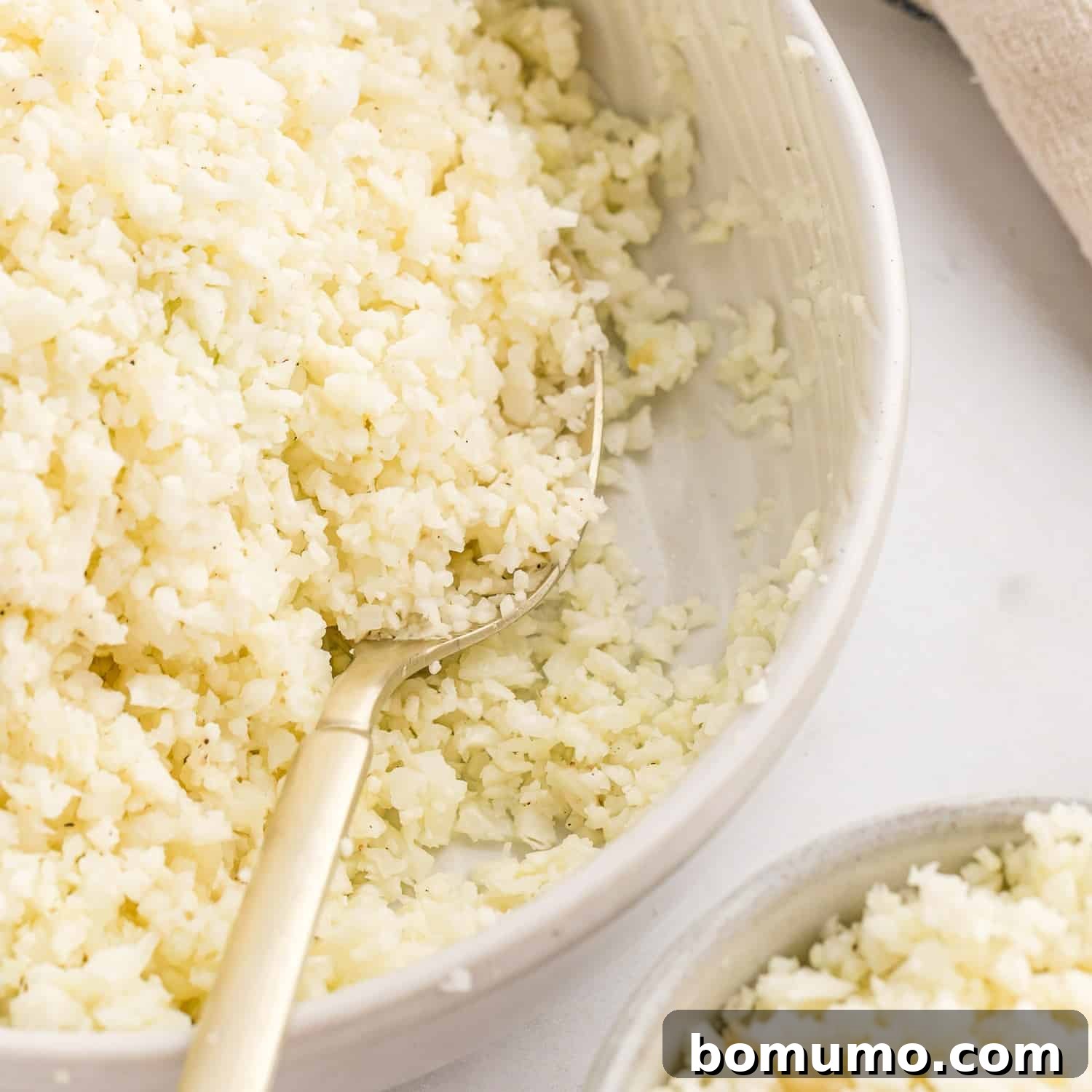
Cauliflower rice has emerged as a revolutionary ingredient for those looking to reduce carbohydrates and enrich their diet with nutritious vegetables. This versatile “grain” alternative offers a healthy eating solution that seamlessly fits into a variety of meal plans, making it a favorite for many health-conscious individuals and culinary enthusiasts alike. Prepare to discover a simple yet impactful trick that transforms a common vegetable into an extraordinary culinary staple.
Recipe Overview
Why you’ll love it: Cauliflower rice is incredibly versatile, serving as a delicious side dish, a perfect substitute for traditional rice in stir-fries, or even transformed into surprisingly creative dishes like low-carb tortillas or crispy pizza crusts. Its mild flavor makes it an excellent canvas for various seasonings and culinary explorations.
How long it takes: Approximately 25 minutes to cook, with minimal prep time.
Equipment you’ll need: A food processor for efficient ricing, and a large skillet for sautéing.
Servings: This recipe comfortably yields 4 servings, making it ideal for a family meal or meal prepping.
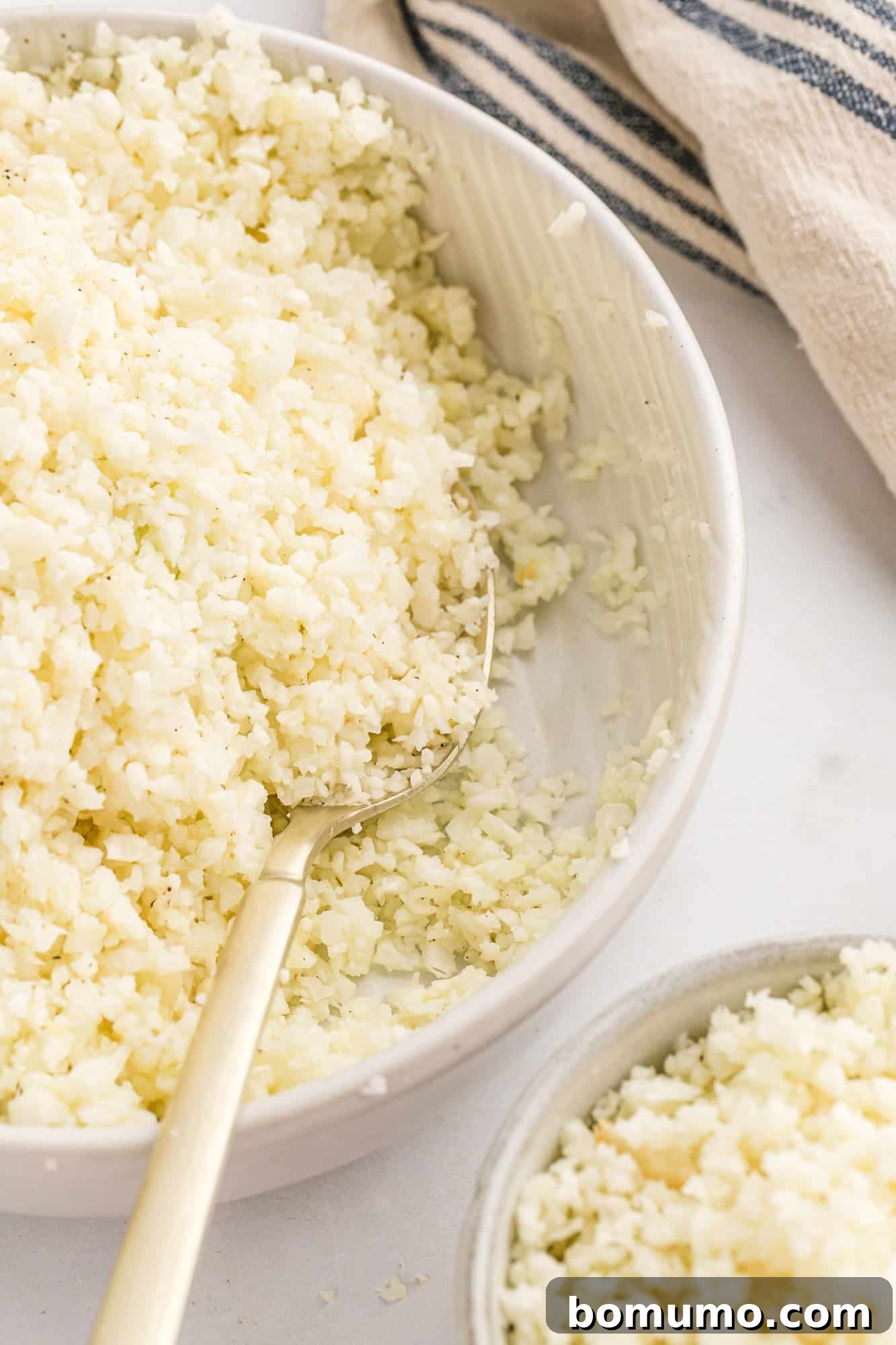
Cauliflower rice has become a culinary sensation, captivating kitchens worldwide with its impressive adaptability and health benefits. Whether you view it as a passing trend or a definitive shift towards more nutritious eating habits, its rise in popularity is undeniable. For anyone seeking innovative ways to incorporate more vegetables into their diet, cauliflower stands out as a superb choice. It’s not only a low-carb option but also remarkably low in calories, making it a powerful ally in weight management and healthy living.
Beyond its simple “rice” form, cauliflower proves its worth in numerous other recipes. For instance, it can be artfully blended into a creamy, guilt-free cauliflower alfredo sauce or a comforting Instant Pot cauliflower potato soup. In both these preparations, puréed cauliflower cleverly replaces heavy cream, delivering a rich and velvety texture without the added calories or dairy. This demonstrates just how versatile and transformative this humble vegetable can be in creating healthier versions of classic dishes.
Unveiling the Magic: All About This Cauliflower Rice Recipe
Mastering cauliflower rice involves understanding two distinct stages, each opening up a world of culinary possibilities. The initial stage focuses on the fundamental technique: transforming a whole head of cauliflower into its raw, “riced” form. This uncooked cauliflower rice serves as a foundational ingredient for a myriad of dishes, ranging from innovative pizza crusts and flexible tortillas to healthy additions in hearty soups and refreshing salads. To streamline your meal preparation, this raw cauliflower rice can be conveniently frozen, eliminating the need for thawing before its next use, making healthy eating effortlessly accessible.
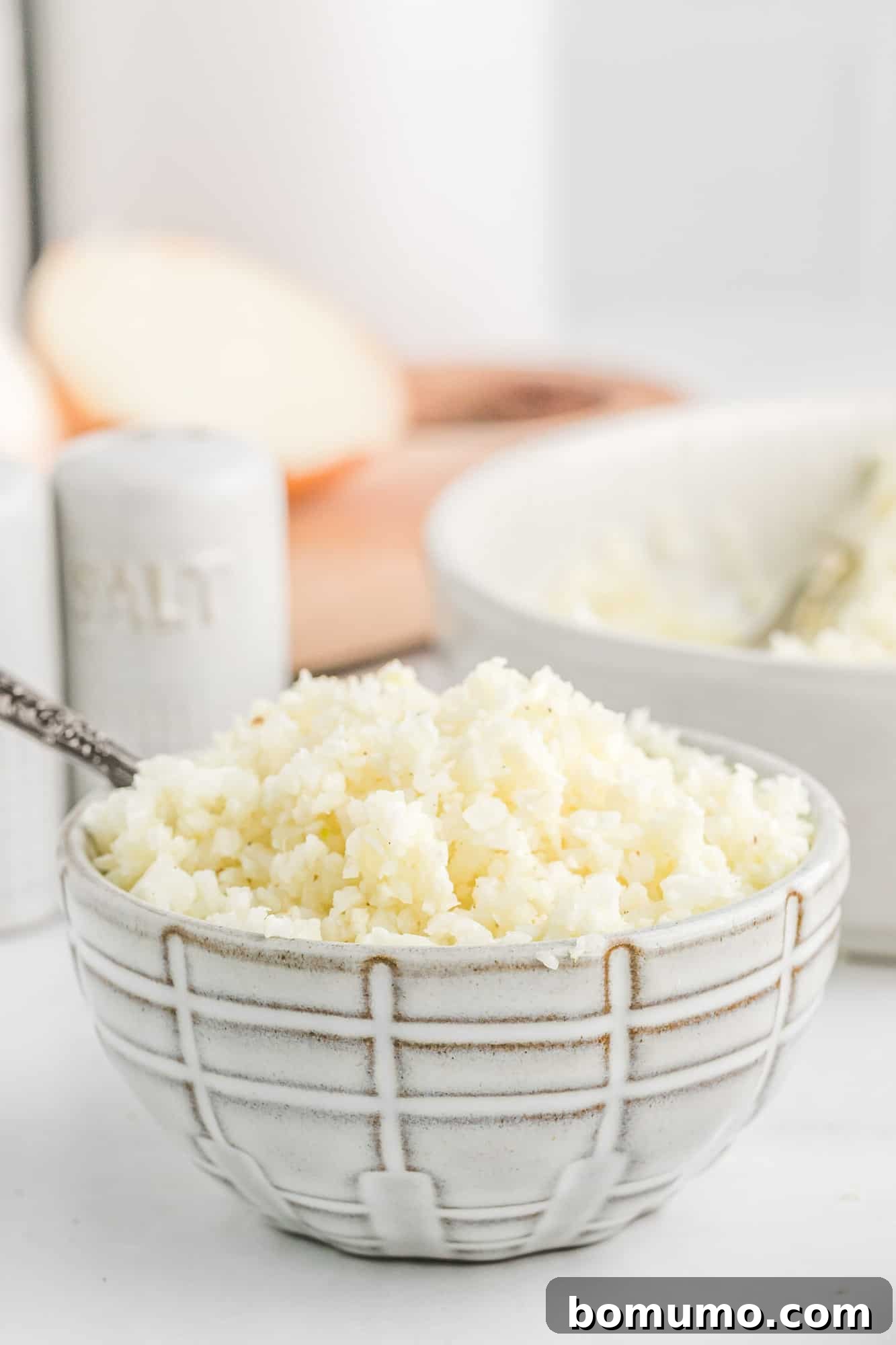
The second stage of this recipe guides you through the process of cooking the riced cauliflower. This transforms it into a delightful side dish, perfectly suited to accompany stir-fries, grilled meats, or any meal where traditional rice would typically be served. Alternatively, you can elevate its flavor profile by seasoning it with aromatic garlic, savory onions, and a touch of butter, creating a wonderfully tasty and wholesome accompaniment that will impress even the most discerning palates. This dual approach ensures you’re equipped to enjoy cauliflower rice in its simplest form or as a richly flavored side.
Essential Ingredients for Your Cauliflower Rice
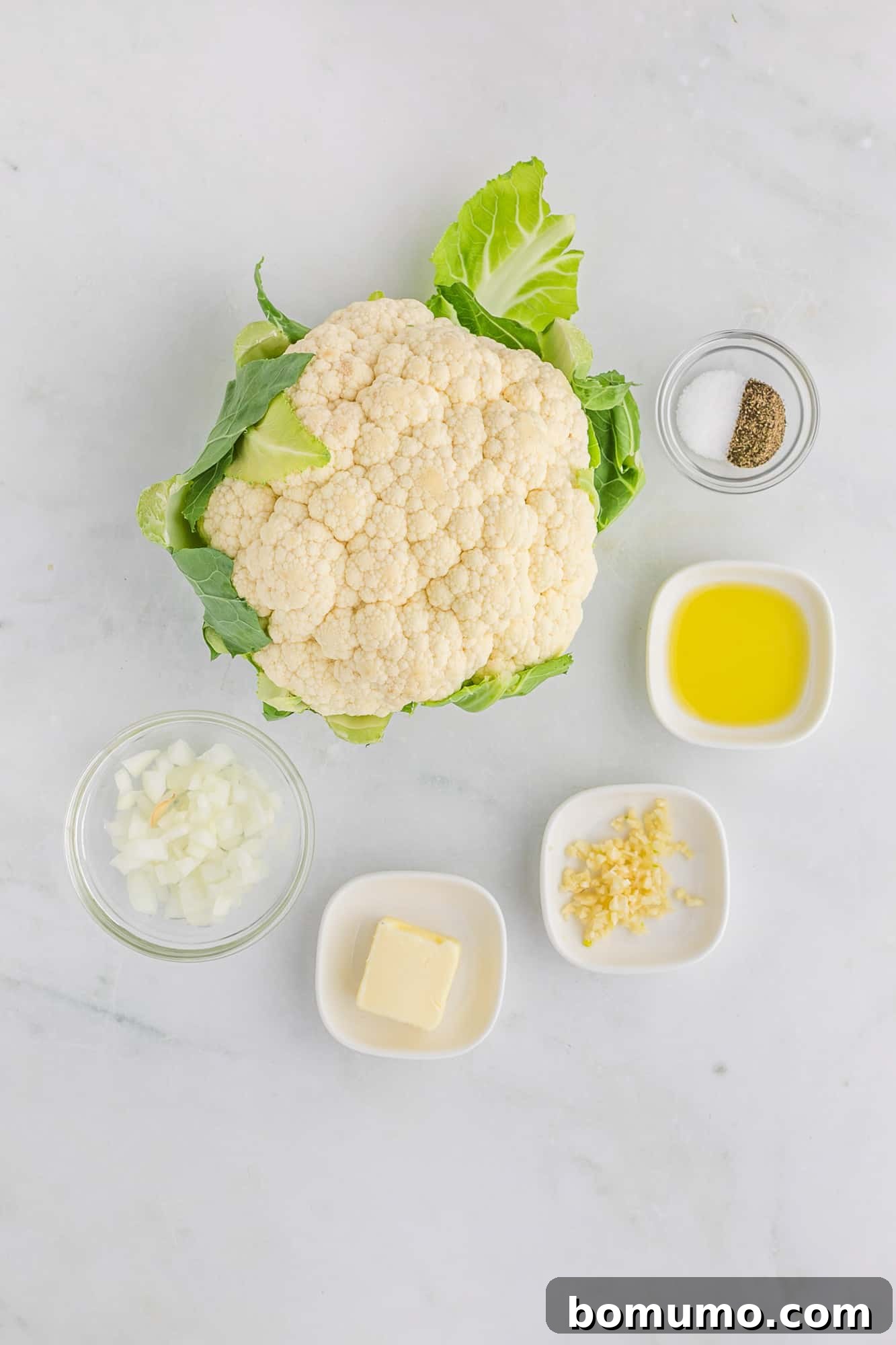
Creating delicious cauliflower rice requires only a handful of simple ingredients, most of which you likely already have in your pantry. Each component plays a vital role in enhancing the flavor and texture of this healthy dish. Here’s a closer look at what you’ll need:
- Cauliflower: The star of our dish! When selecting cauliflower, look for a head that is firm, unblemished, and uniformly white. The florets should be tightly packed, and the outer leaves should appear fresh and green. A larger cauliflower head will naturally yield more “rice,” so choose according to your serving needs.
- Garlic: Just one clove of minced garlic is enough to infuse the cauliflower rice with a subtle yet impactful savory aroma. Garlic provides a foundational layer of flavor that complements the mildness of the cauliflower beautifully.
- Onion: While optional, a small amount of diced onion adds a wonderful depth of flavor and a pleasing textural contrast to the riced cauliflower. It caramelizes slightly during cooking, bringing a touch of sweetness and complexity.
- Butter: A tablespoon of unsalted butter is key to achieving a rich, comforting flavor in your cauliflower rice. It helps the cauliflower cook evenly and adds a luxurious mouthfeel.
- Olive Oil: A touch of heart-healthy extra virgin olive oil is typically combined with the butter for sautéing. This blend helps prevent the butter from burning and adds a nuanced flavor. If you prefer a dairy-free option, feel free to use all olive oil or another cooking oil of your choice, such as avocado oil.
- Salt and Pepper: These fundamental seasonings are crucial for bringing out the natural flavors of the cauliflower and other ingredients. Always season to taste. Don’t hesitate to experiment with other herbs and spices you enjoy, such as dried oregano, thyme, or a pinch of paprika, for an extra layer of flavor.
The Simple Steps: How to Make Cauliflower Rice
Transforming a whole head of cauliflower into a rice-like texture might seem daunting, but it’s surprisingly simple and quick. The goal is to achieve a consistency similar to white rice or couscous, offering a fantastic base for countless recipes.
Begin by preparing your cauliflower. Carefully cut the cauliflower into manageable florets. You can include a good portion of the stems, as they also rice beautifully and contribute to the overall yield. Just be sure to discard any overly woody or tough parts right at the bottom of the stem.
A (Fun) Way to Prep Cauliflower
Here’s a clever trick to make floretting cauliflower even easier! Keep the cauliflower head in its original plastic wrapper. Then, simply give it a few sharp raps, stem-side down, on a sturdy counter. The florets will naturally break apart within the wrapper, making cleanup a breeze and saving you time and effort.
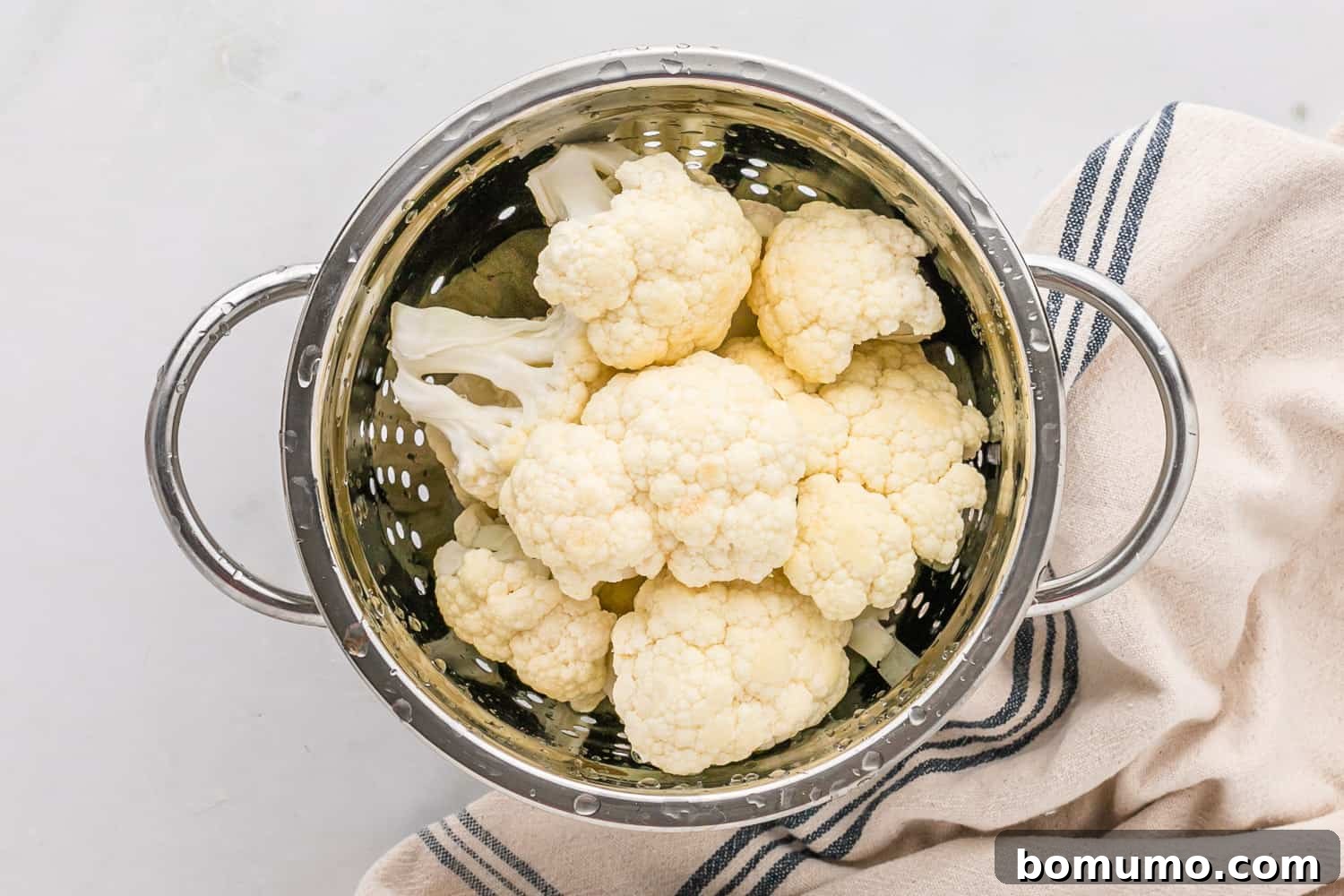
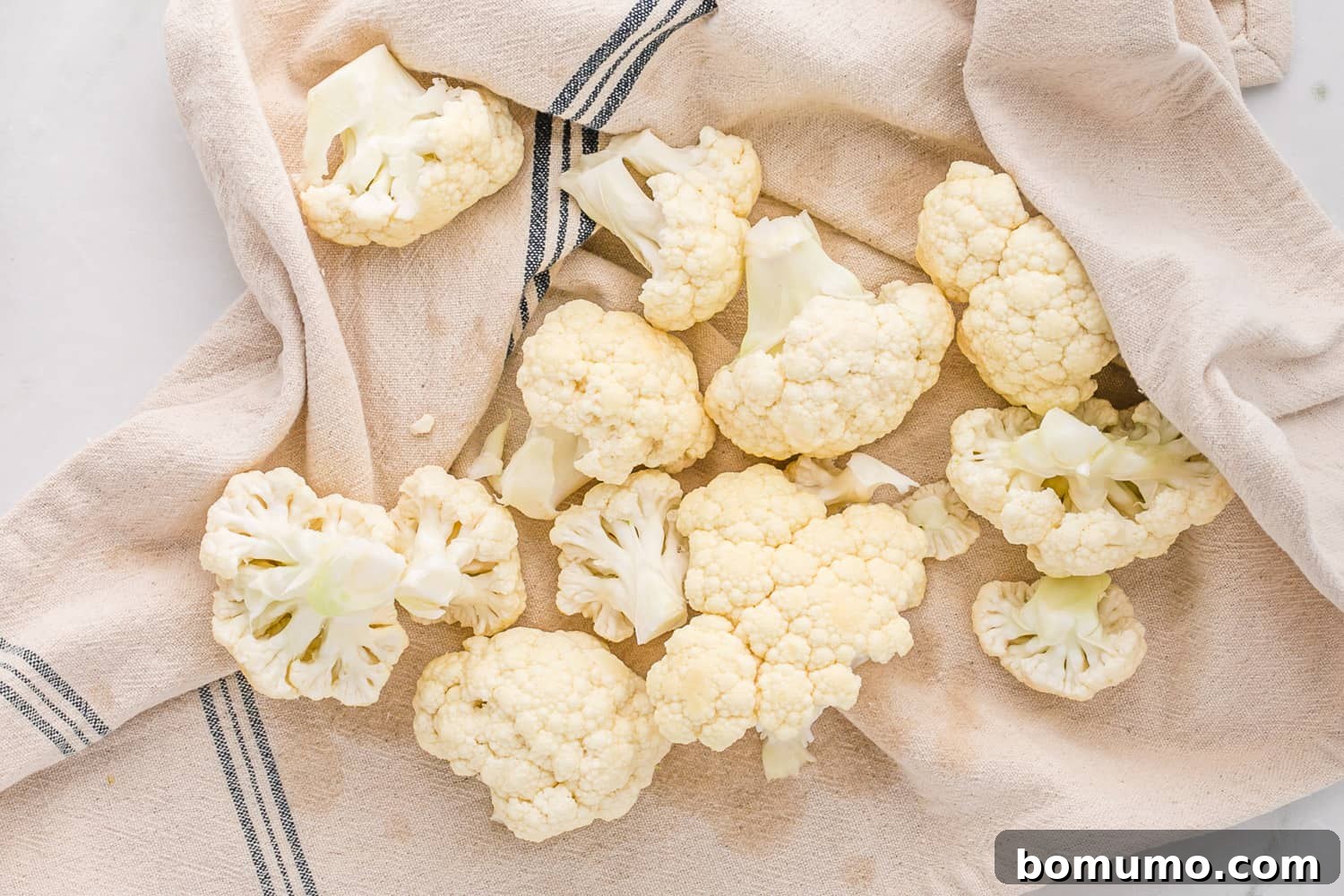
Once you have your florets, rinse them thoroughly under cold water. It’s crucial to drain them exceptionally well to prevent soggy cauliflower rice. For best results, I highly recommend using a salad spinner to remove any excess moisture. A drier cauliflower will rice more effectively and yield a better texture when cooked.
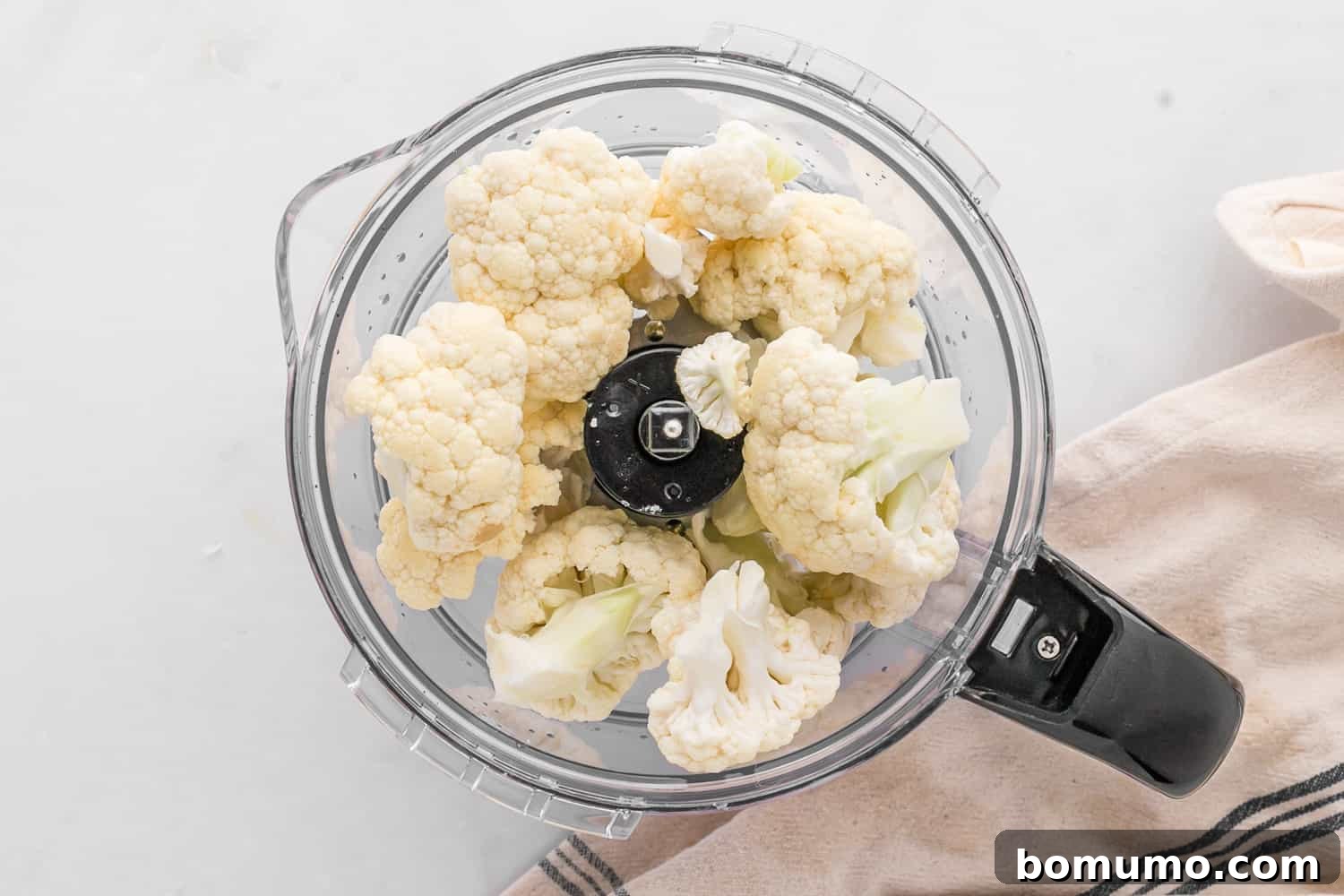
Next, it’s time to use your food processor. Place the dried cauliflower florets into the bowl of your food processor, fitted with the S-blade. It’s important not to overload the processor; you’ll likely need to work in batches to achieve an even texture. Overstuffing can lead to uneven ricing, with some pieces turning to mush while others remain too large.
Pulse the food processor in short bursts until the cauliflower transforms into a texture resembling rice or couscous. Be attentive during this step. You want to avoid over-processing, which can quickly turn the cauliflower into a mushy paste. Keep an eye on the consistency.
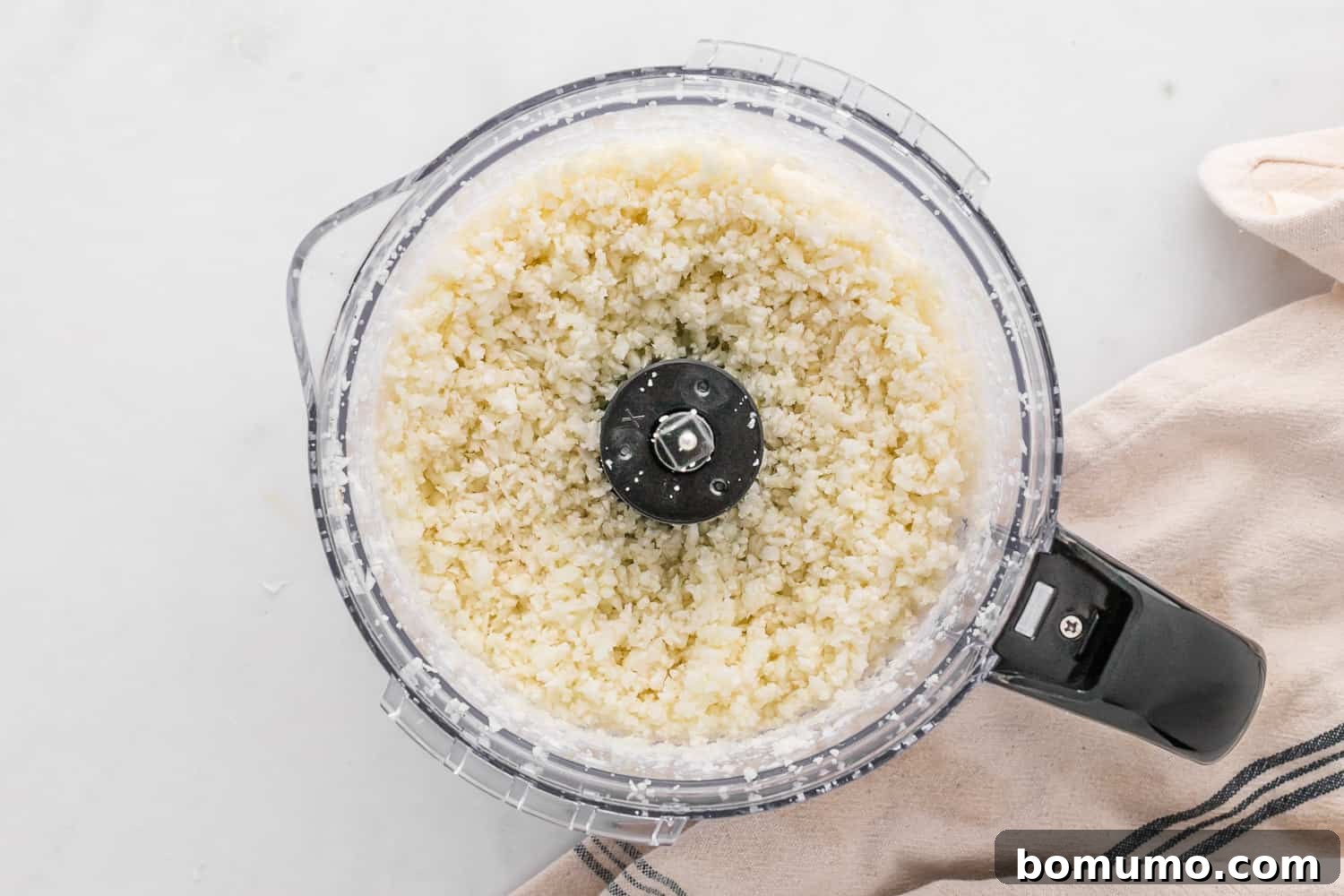
A key tip for perfect cauliflower rice: once most of the cauliflower has achieved the desired rice-like texture, but you still spot a few larger pieces, stop processing. Carefully remove these larger pieces, scrape the already riced cauliflower into a large bowl, and then add the remaining larger pieces to the next batch for processing. This method ensures uniform texture and prevents any part from becoming over-processed. Remember, the goal is small, grain-like pieces, not a purée.
At this stage, your raw cauliflower rice is incredibly versatile. It can be used immediately in a variety of dishes or frozen raw for future use. For inspiration on its many applications, explore resources like the Academy of Culinary Nutrition’s “10 Awesome Uses for Cauliflower Rice”. You’ll find creative ideas for everything from low-carb pizza crusts and sushi to flavorful stuffed peppers and healthy fried rice alternatives, showcasing the incredible potential of this simple ingredient.
If your intention is to serve the cauliflower rice as a delightful side dish, continue with the cooking steps outlined below. Begin by sautéing diced onions and minced garlic in a harmonious blend of olive oil and butter. Once fragrant and softened, add your freshly riced cauliflower, allowing it to absorb these savory flavors. This simple cooking method brings out the best in cauliflower rice, transforming it into a flavorful and tender accompaniment.
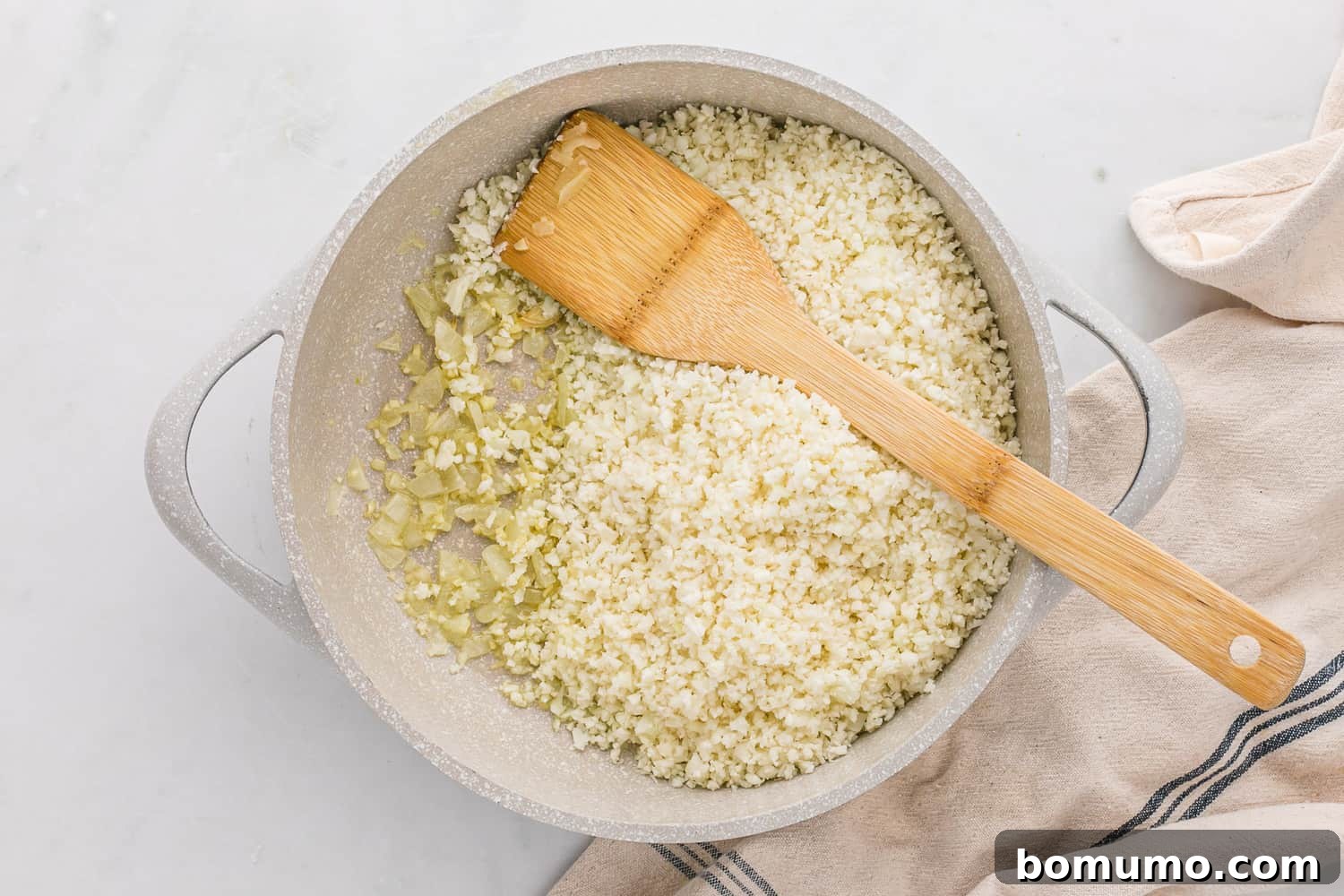
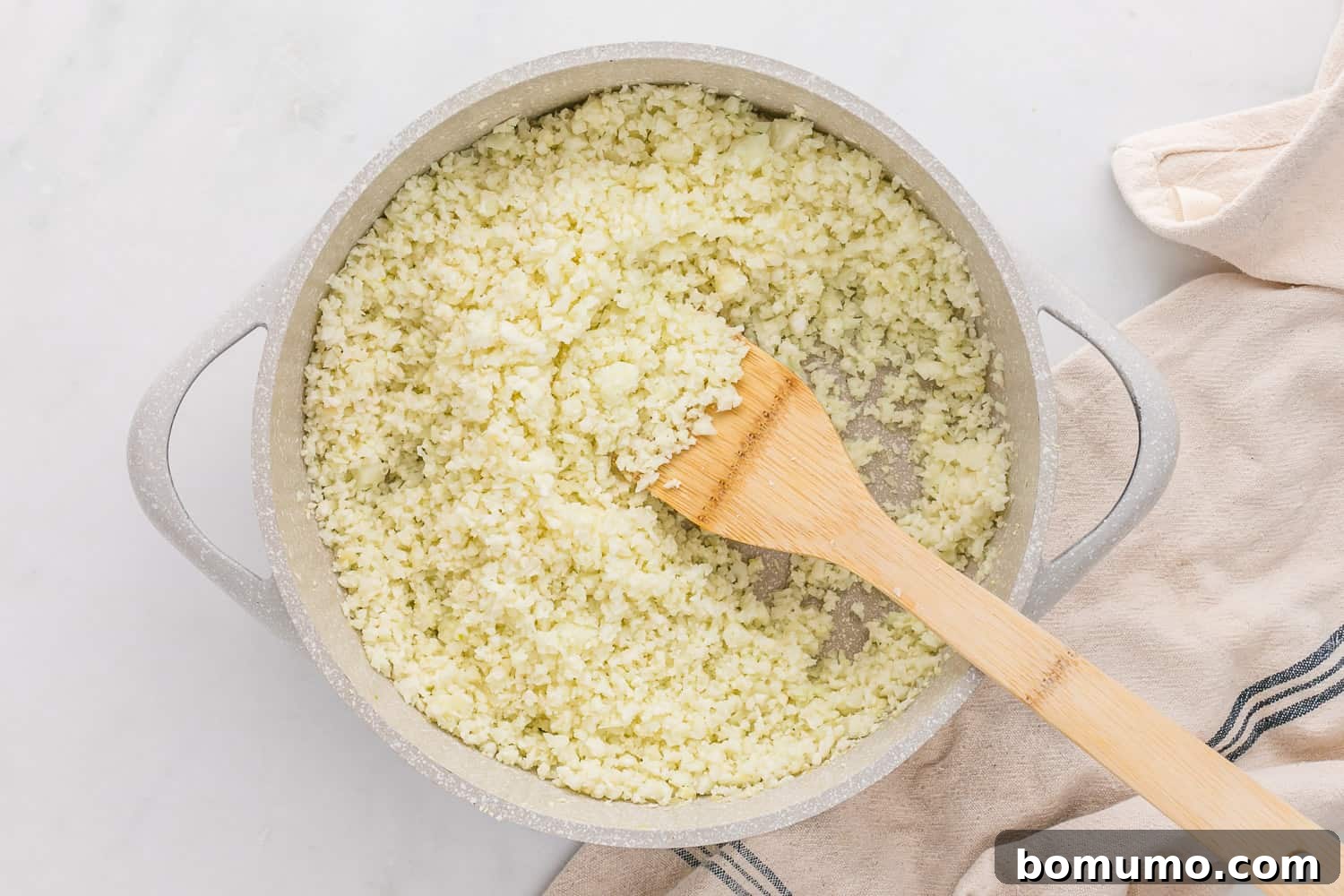
Cover the skillet and allow the cauliflower rice to steam and tenderize for a few minutes. This initial covered cooking helps to lock in moisture and ensures even cooking. After this initial period, uncover the skillet and continue to cook for a few more minutes, stirring occasionally. Cauliflower rice cooks surprisingly quickly, becoming tender and ready to serve in approximately 10 minutes from when it hits the pan. Its mild flavor readily absorbs the seasonings, resulting in a wonderfully aromatic and satisfying side.
Frequently Asked Questions
While cauliflower rice is an excellent substitute, it retains the distinct, subtle flavor of cauliflower. It doesn’t taste exactly like white rice. However, when prepared with savory additions like onion and garlic, as in this recipe, its flavor profile becomes wonderfully robust and satisfying. Many find its texture more akin to couscous than traditional fluffy rice, leading some to affectionately call it “cauliflower couscous.” It’s important to note that cauliflower rice serves as a healthy and delicious alternative, rather than a perfect clone, allowing you to enjoy a similar dish experience with significantly fewer carbs. In our home, while we adore real rice, cauliflower rice offers a fantastic and guilt-free alternative for a lighter meal.
Cauliflower rice is fundamentally a **very low-carb vegetable**. It’s celebrated precisely for this characteristic, making it an ideal alternative to higher-carb staples such as pasta, white rice, or potatoes. Because cauliflower possesses a relatively mild and neutral flavor, as well as a pale color, it acts as a versatile canvas. This allows it to beautifully absorb the flavors of sauces, spices, and other embellishments you choose to pair it with, enhancing its appeal across various cuisines and dietary preferences, especially for those following keto, paleo, or Whole30 diets.
Cauliflower rice is indeed exceptionally healthy! It’s a highly popular choice for individuals adhering to low-carb diets, but its benefits extend far beyond that. Incorporating more vegetables into your diet is always a positive step, and cauliflower makes it delicious. According to Healthline, cauliflower is considered an almost perfect source of numerous essential vitamins and minerals, including a high concentration of Vitamin C and K. Furthermore, it’s rich in fiber, which supports digestive health, powerful antioxidants that combat cellular damage, and choline, an important nutrient many people are deficient in, vital for brain health and metabolism. Choosing cauliflower rice is an excellent way to boost your nutrient intake while enjoying satisfying meals.
Personalize Your Cauliflower Rice: Tips and Variations
One of the best aspects of cauliflower rice is its incredible flexibility. It’s easy to adapt the basic recipe to suit your taste preferences or dietary needs, making every meal a unique culinary experience. Here are some ideas to make it truly your own:
- No Food Processor? No Problem!: If you don’t own a food processor, a box grater is a perfectly viable alternative. While it might take a bit more effort and create a slightly messier workstation, it effectively turns florets into “rice.” For safety, hold the florets as large as possible to keep your fingers away from the grater blades. Alternatively, many grocery stores now offer pre-riced cauliflower, which is a convenient time-saver.
- Flavorful Seasoning Combinations: When cooking your cauliflower rice as a side dish, the seasoning possibilities are endless. Just like traditional white rice, it can be transformed into a vibrant pilaf with toasted nuts and dried fruit, seasoned with zesty Southwestern spices like cumin and chili powder, or infused with Mediterranean herbs such as oregano and mint. Consider adding a squeeze of lemon juice or a sprinkle of fresh cilantro for a bright finish, or a dash of soy sauce and sesame oil for an Asian-inspired twist.
- Explore Other Low-Carb Alternatives: If you’re looking to diversify your low-carb vegetable options beyond cauliflower, consider roasted radishes. When roasted, radishes lose their sharp, peppery bite and develop a mellow, earthy flavor and tender texture, making them an excellent stand-in for potatoes in many recipes. You can also experiment with finely shredded cabbage or broccoli florets for different flavor profiles and nutritional benefits.
- Adding a Pop of Color and Nutrients: Enhance your cauliflower rice by stirring in other finely chopped vegetables towards the end of cooking. Diced carrots, peas, bell peppers, or even a handful of spinach can add vibrant color, extra nutrients, and delightful textures. This is a great way to sneak in more veggies for picky eaters or to simply boost the overall health profile of your meal.
Effortless Meal Prep: Make-Ahead Ideas
One of the many advantages of cauliflower rice is how well it lends itself to make-ahead preparation, significantly reducing weeknight cooking stress. While processing a whole head of cauliflower yields a generous amount, the good news is that you can easily preserve the raw cauliflower rice for future meals. Simply transfer the uncooked riced cauliflower into labeled freezer-safe bags, ensuring to remove as much air as possible before sealing. Stored properly, it will maintain its quality in the freezer for an impressive period of **up to six months**.
For added convenience, there’s no need to thaw frozen cauliflower rice before you plan to cook it. You can transfer it directly from the freezer to your skillet. Keep in mind that you might need to extend the cooking time by a few extra minutes to account for its frozen state, but this minimal adjustment still makes it a quick and healthy option for any meal.
Storage & Reheating Tips
Proper storage is essential to enjoy your cooked cauliflower rice throughout the week. Once prepared, any leftovers should be stored in an airtight container in the refrigerator, where it will remain fresh and delicious for **up to four days**. This makes it an ideal component for healthy lunch meal prep or quick dinner sides.
When you’re ready to enjoy it again, reheating cauliflower rice is straightforward. For best results, warm individual portions in a skillet over medium heat, stirring occasionally until heated through. This method helps to restore some of its original texture. Alternatively, for a quicker option, you can reheat it in the microwave; simply place it in a microwave-safe bowl and heat in 30-second intervals, stirring in between, until it’s hot throughout. Avoid over-reheating, as this can make the cauliflower soggy.
Explore More Delicious Cauliflower Recipes
If you’ve fallen in love with the versatility and health benefits of cauliflower, you’re in luck! This incredible vegetable can be transformed into a wide array of delicious dishes beyond just rice. Here are some more fantastic cauliflower recipes to inspire your culinary adventures:
- Perfectly Roasted Cauliflower
- Hearty Cauliflower Steaks with vibrant Chimichurri Sauce
- Creamy Roasted Cauliflower Soup with Cheddar
- Crispy Air Fryer Buffalo Cauliflower Bites
- Flavorful Vegetarian Curry with Cauliflower & Chickpeas
- Tangy Pickled Cauliflower (refrigerator pickles)
- Comforting Cauliflower, Cheddar and Potato Bake
- The Best Cauliflower Nachos
- Delightful Vegetarian Tacos with Cauliflower
Cauliflower Rice Recipe
Ingredients
- 1 head cauliflower, cut into large chunks
- 1 tablespoon unsalted butter
- 1 teaspoon extra virgin olive oil
- ½ diced onion (optional)
- 1 clove garlic, minced
- ½ teaspoon kosher salt, or to taste
- ½ teaspoon ground black pepper, or to taste
Instructions
Cauliflower Rice (Raw)
-
Wash cauliflower thoroughly and dry well. A salad spinner is highly recommended for efficient drying.
-
Using a food processor equipped with an S-blade, pulse the cauliflower florets until they reach your desired rice-like texture. You will likely need to process in batches to ensure even ricing. If the cauliflower begins to get trapped at the bottom, stop, redistribute, or remove some and continue pulsing to avoid over-processing into a purée.
Cauliflower Rice Side Dish (Cooked)
-
Heat the butter and olive oil in a large skillet over medium heat until the butter is melted and shimmering.
-
Add the diced onion (if using) to the skillet and sauté for 6-7 minutes, or until the onion becomes translucent and tender.
-
Stir in the minced garlic and continue to sauté for approximately 1 minute, until it becomes fragrant. Be careful not to burn the garlic.
-
Add the prepared cauliflower rice to the skillet. Stir well to combine all ingredients, then cover the skillet and cook for 3 minutes. Uncover and continue to sauté for an additional 3-4 minutes, or until the cauliflower rice is tender-crisp.
-
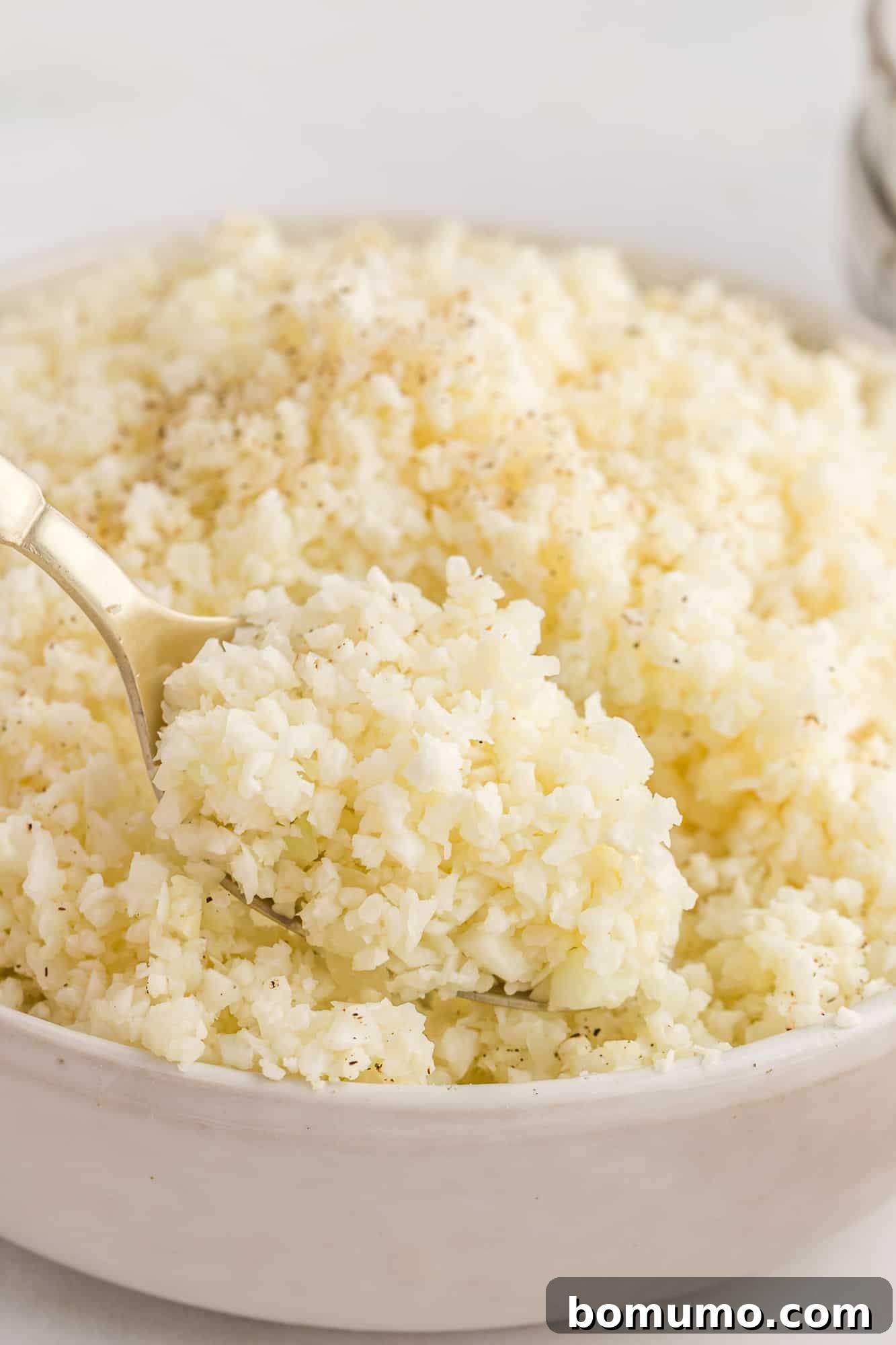
Season generously with kosher salt and ground black pepper to taste. Serve immediately as a flavorful and healthy side dish.
Notes
- The provided nutrition information is for the cooked cauliflower rice side dish, which includes the oil, butter, onion, garlic, and seasonings.
- To make this recipe vegan, dairy-free, paleo, or Whole30 compliant, simply substitute the butter with an equal amount of your preferred cooking oil, such as avocado oil or coconut oil.
- Raw cauliflower rice can be effectively frozen for up to 6 months. Store it in a zip-top freezer bag, removing as much air as possible. There’s no need to thaw it before cooking; simply add it frozen to the skillet and cook as directed, adding a little extra cooking time if necessary to ensure it’s tender.
Video
For a visual guide on how to prepare this delicious cauliflower rice, please refer to the video demonstration typically embedded here.
Nutrition
Serving: 1 cup, Calories: 77kcal, Carbohydrates: 9g, Protein: 3g, Fat: 4g, Saturated Fat: 2g, Polyunsaturated Fat: 1g, Monounsaturated Fat: 1g, Trans Fat: 1g, Cholesterol: 8mg, Sodium: 335mg, Potassium: 457mg, Fiber: 3g, Sugar: 3g, Vitamin A: 89IU, Vitamin C: 71mg, Calcium: 38mg, Iron: 1mg
Nutrition information is automatically calculated, so should only be used as an approximation.