
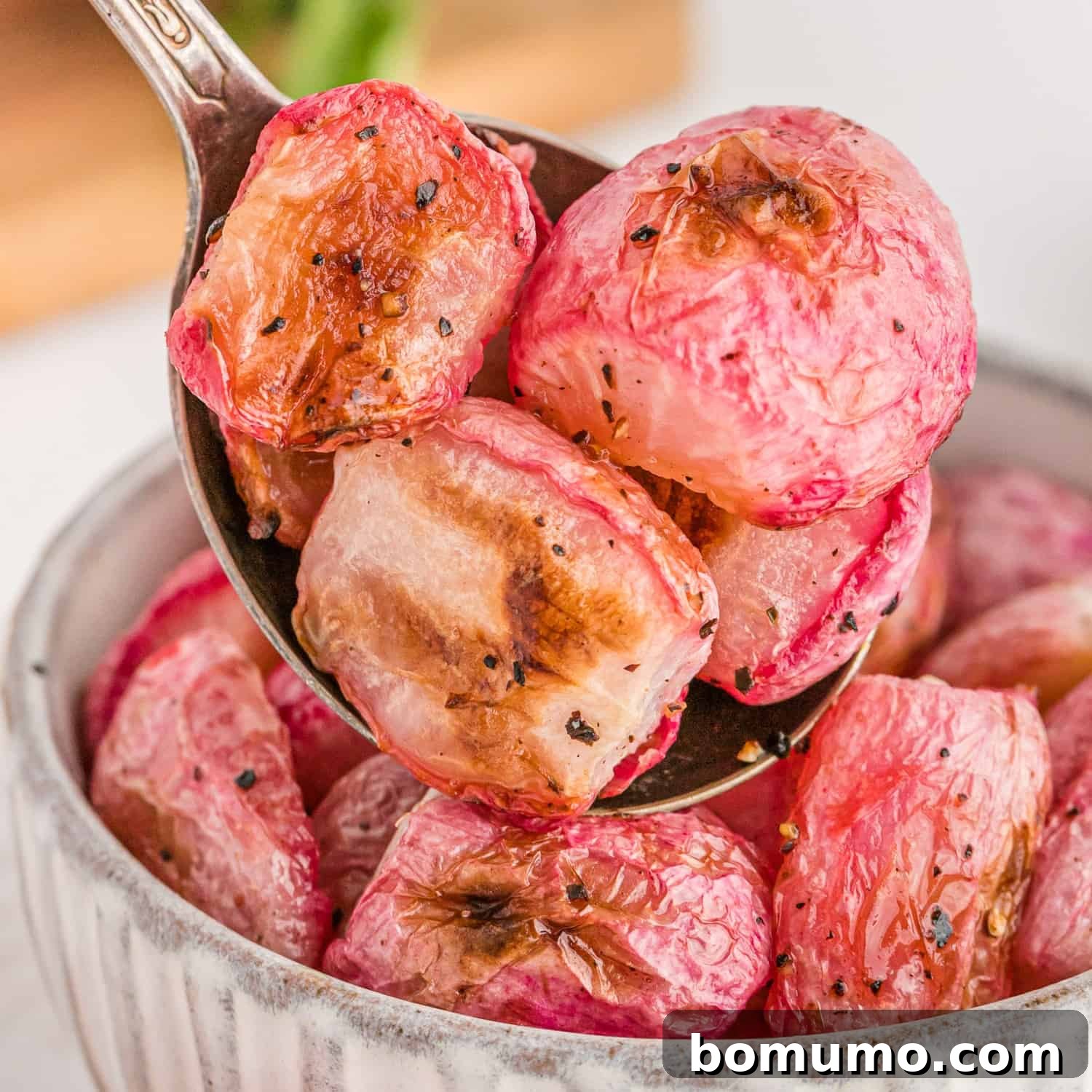
Unlock the surprising deliciousness of roasted radishes – an incredibly easy-to-make side dish that will captivate even the most skeptical palates. Prepare to transform these vibrant roots into a tender, sweet, and utterly addictive culinary delight!
Recipe Overview
Why you’ll love it: Roasting miraculously transforms radishes from crisp and peppery to mellow, sweet, and tender. They emerge as a unique, versatile, and satisfying low-carb side dish.
How long it takes: Approximately 35 minutes, including prep and cook time.
Equipment you’ll need: A sturdy baking sheet and a reliable oven.
Servings: Yields 4 delightful servings.
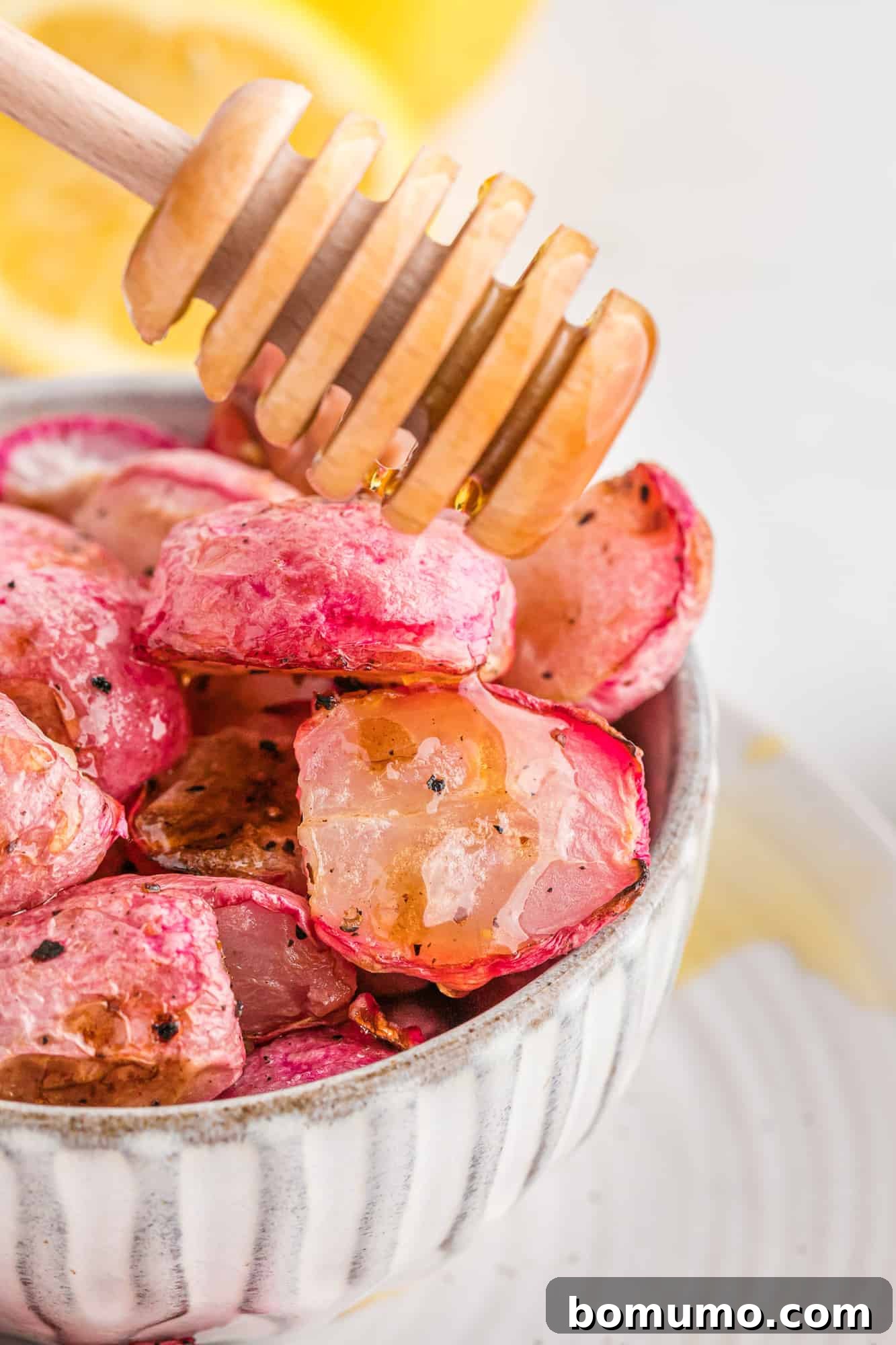
Continuing our culinary journey through the world of perfectly roasted vegetables, we arrive at a truly remarkable transformation: roasted radishes. You might find yourself in one of three distinct camps upon hearing this:
1) The Radish Skeptic: “I dislike radishes; this isn’t for me.”
2) The Roasted Radish Enthusiast: “Ah, a fellow aficionado! Roasted radishes are indeed wonderful.”
3) The Curious Cook: “Roast radishes? That sounds incredibly intriguing and unusual!”
Regardless of your initial reaction, I have something important to share with each of you.
To the Radish Skeptics: Please, don’t leave just yet! Many, including my own husband who typically avoids raw radishes, have been genuinely surprised and converted by the sweet, mild flavor of their roasted counterparts. Give them a chance – you might just discover a new favorite.
To the Roasted Radish Enthusiasts: Welcome! It’s fantastic to connect with someone who appreciates this culinary secret. Share your tips and tricks; I’m always eager to learn how others perfect their roasted radishes!
To the Curious Cooks: You’ve stumbled upon a delightful revelation! Keep reading, as your perception of this humble root vegetable is about to be utterly transformed. Get ready to have your culinary world expanded.
About These Roasted Radishes: A Culinary Revelation
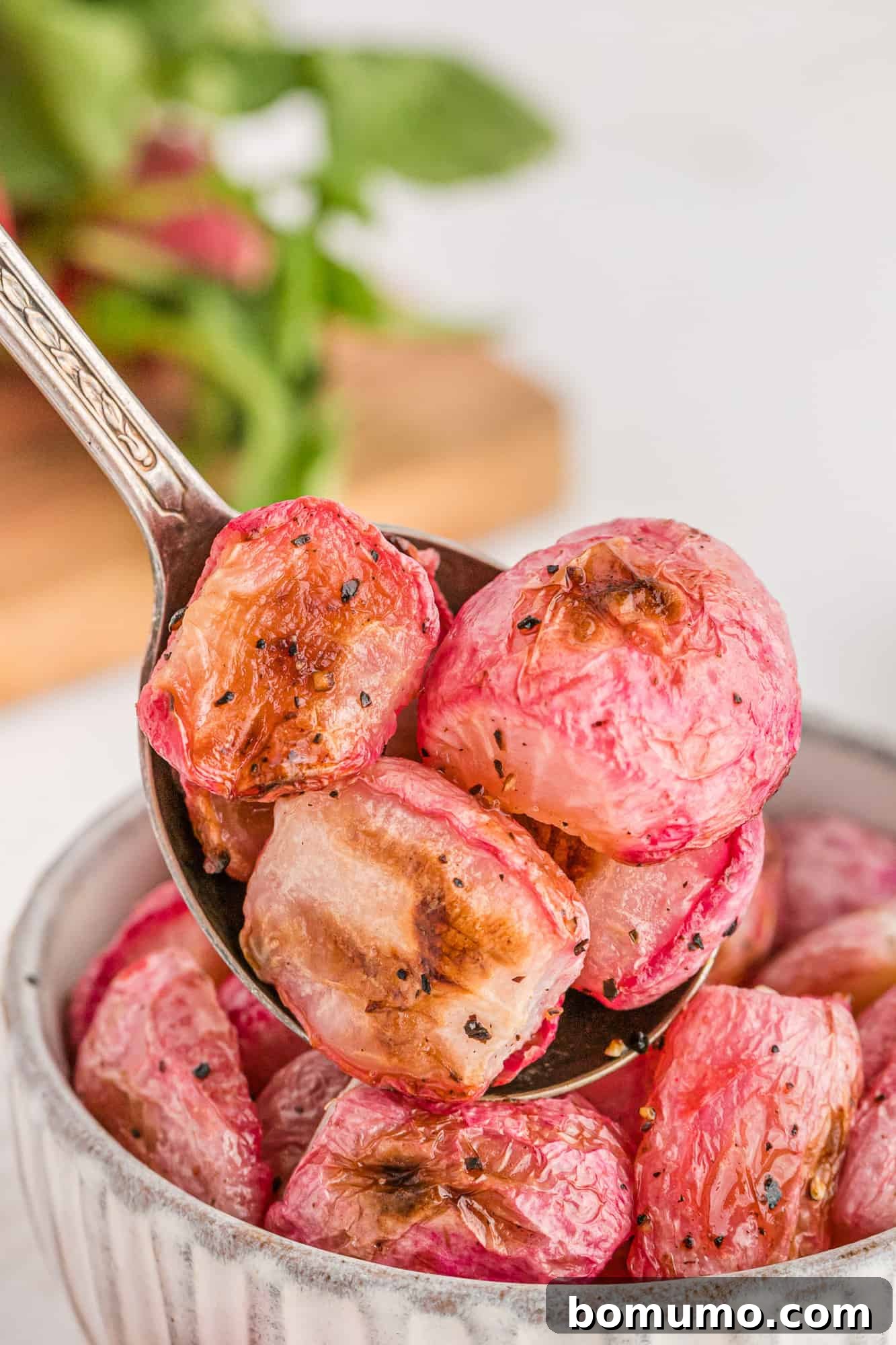
Imagine radishes, typically known for their crisp texture and peppery bite, undergoing a complete metamorphosis. When tossed with a delicate coating of olive oil, a sprinkle of salt, and a dash of pepper, then subjected to the intense heat of a hot oven, they emerge as incredibly tender, subtly sweet, and wonderfully earthy morsels. This transformation is not just surprising; it’s genuinely delightful.
It’s no secret that I hold a deep appreciation for all roasted vegetables. The magic of high heat caramelization brings out inherent sweetness and complexity that raw vegetables often hide. Consider the humble broccoli: roasted broccoli, with its slightly charred edges and tender florets, becomes a weekly staple in many homes. And the same goes for other versatile vegetables. I don’t discriminate against cauliflower, carrots (whose natural sugars shine), beets (deepening their earthy sweetness), sweet potatoes, mushrooms (umami-rich and tender), squash, or even the often-maligned Brussels sprouts. They are all fair game for this cooking method, consistently delivering exceptional flavor. More recently, we’ve fallen in love with roasted turnips – a truly delightful surprise! For a comprehensive guide, be sure to explore my full list of roasted vegetables.
Radishes, like these other fantastic vegetables, undergo the same astonishing transformation when exposed to high heat. The naturally occurring sugars within the radish caramelize, and the characteristic peppery notes mellow considerably. This process not only sweetens the vegetable but also creates a more nuanced, earthy flavor profile. The texture shifts from a sharp crunch to a tender, almost chewy bite, making them incredibly satisfying and surprisingly addicting. With only around 33 calories per serving (without toppings), they are a guilt-free pleasure.
For those adhering to a low-carb diet, roasted radishes present an excellent alternative to roasted potatoes. While not identical, they offer a similar textural experience and absorb flavors beautifully, making them a fantastic and healthy substitute for starchy side dishes.
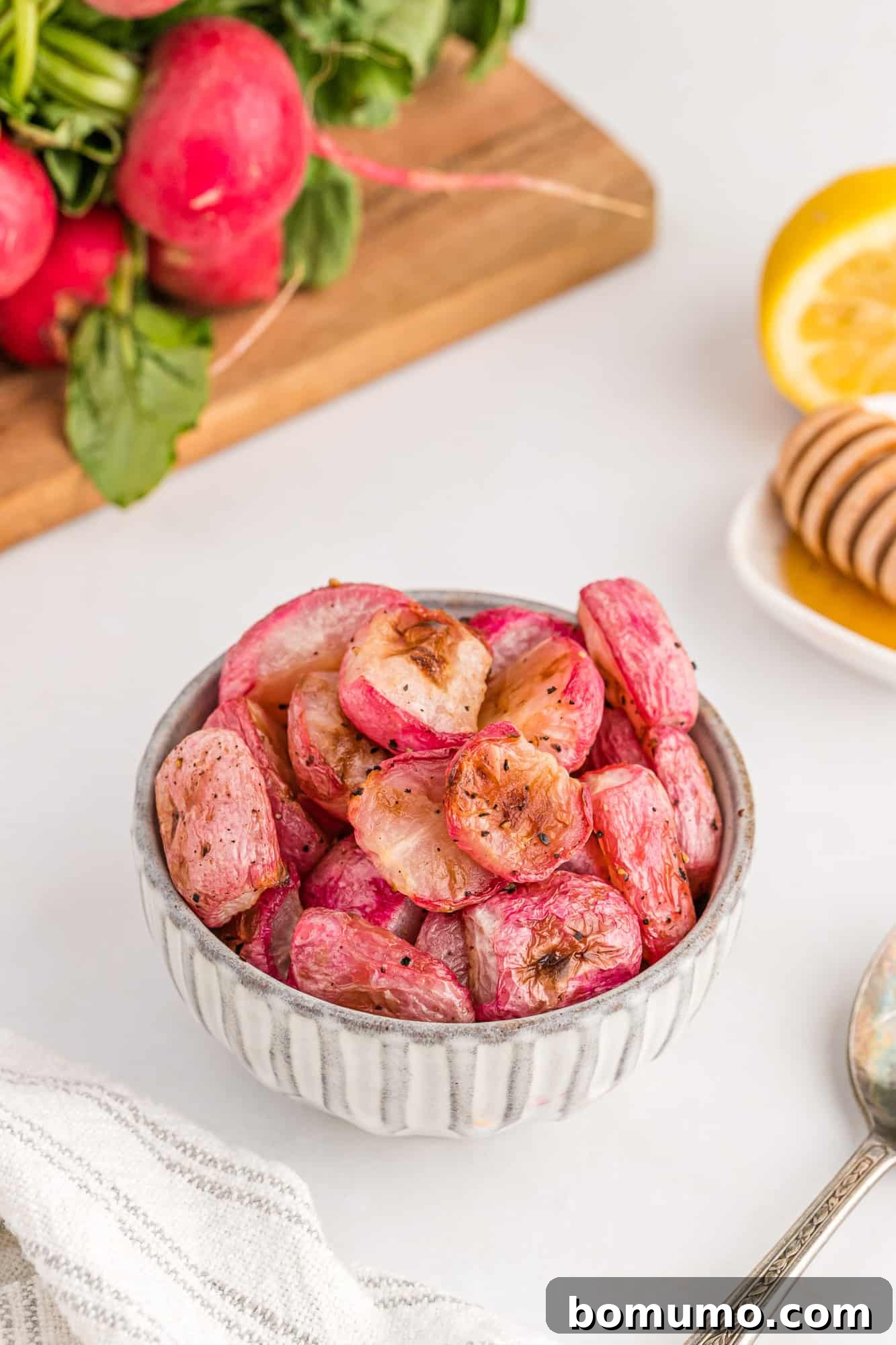
Essential Ingredients for Perfect Roasted Radishes
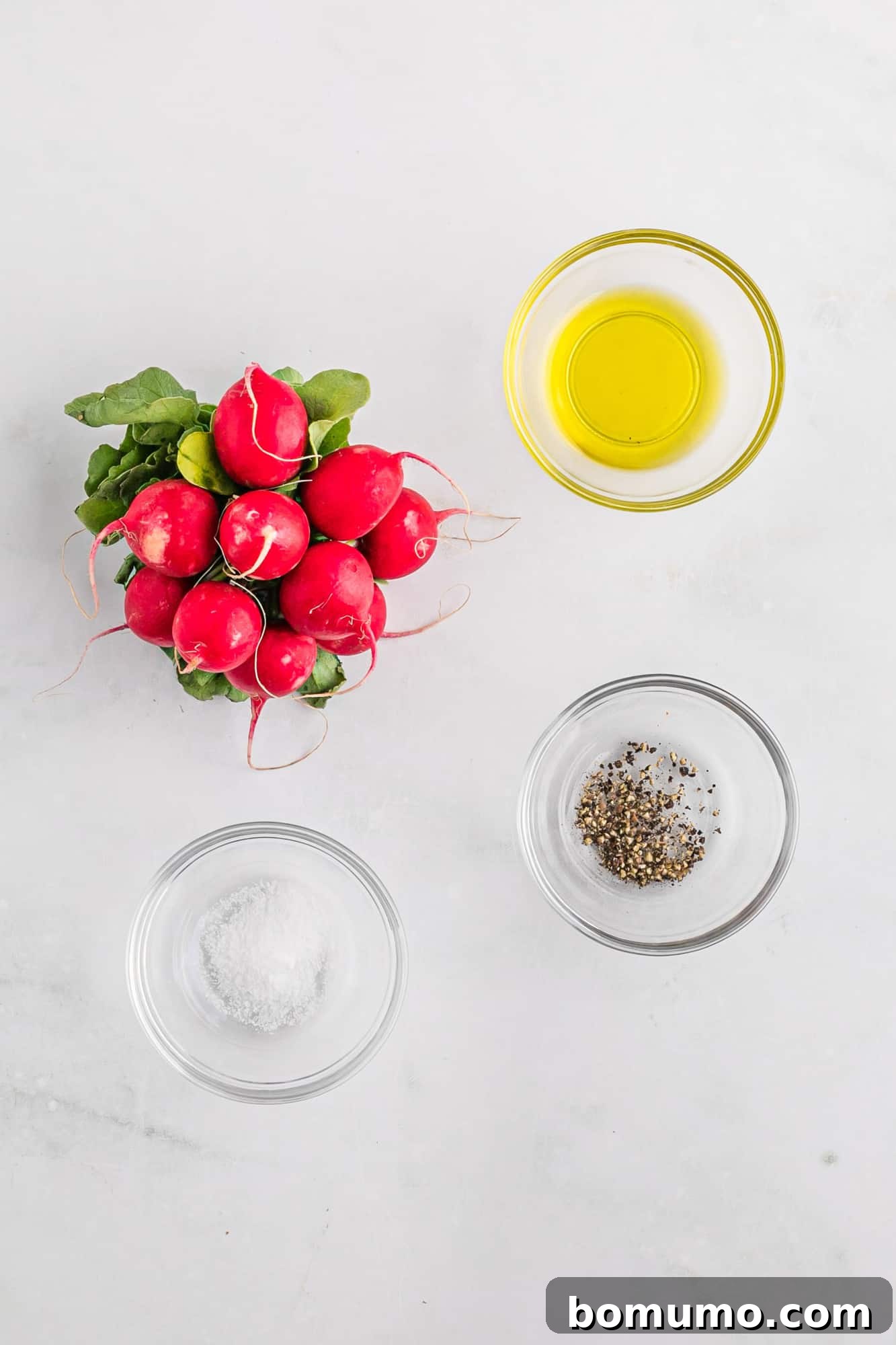
Crafting perfect roasted radishes requires just a few simple, high-quality ingredients. Here’s a closer look at what you’ll need and why each component is important:
- Fresh Radishes: The foundation of this dish. Seek out firm, bright-colored radishes that are roughly uniform in size. This ensures even cooking. If you’re a gardener, radishes are incredibly rewarding and fast-growing, often ready for harvest in just three to five weeks, offering the freshest possible flavor. Any variety, from the common red globe to French breakfast or even a milder daikon, can be roasted with delicious results.
- Olive Oil: A drizzle of good quality olive oil is key for flavor and achieving that desirable crisp-tender exterior. Its heart-healthy properties are an added bonus. When selecting an oil, consider its smoke point. While extra virgin olive oil provides robust flavor, for very high heat roasting, a lighter olive oil or other high smoke point oils like avocado oil or grapeseed oil can be excellent alternatives to prevent scorching.
- Kosher Salt: We specifically recommend kosher salt for roasting. Its coarser texture adheres well to the vegetables and provides satisfying pockets of flavor, rather than dissolving instantly like fine table salt. This coarser grind also gives you better control over seasoning.
- Coarse Black Pepper: Similar to salt, freshly coarse-ground black pepper offers a more impactful flavor. The larger flakes provide a gentle kick and aromatic depth that finely ground pepper often lacks. If you only have finely ground pepper, simply use a slightly smaller amount to avoid overpowering the delicate radish flavor.
- Optional Dressing Enhancements: While roasted radishes are fantastic on their own, a light, bright dressing can elevate them further. A simple mixture of honey and fresh lemon juice adds a wonderful sweet-tart glaze. For those who enjoy a bit of heat, a drizzle of hot honey introduces a spicy-sweet kick. Alternatively, a rich balsamic reduction offers a tangy, savory counterpoint that beautifully complements the earthy radishes.
Mastering the Art: A Step-by-Step Guide to Roasting Radishes
Achieving perfectly roasted radishes is straightforward, much like preparing any other roasted vegetable. However, adhering to a few fundamental principles will guarantee the best results: beautifully browned, tender, and flavorful radishes every time.
1. Preheat Your Oven Thoroughly: This is a critical first step for any successful roasting endeavor. Your oven needs to be adequately hot, typically around 400-425°F (200-220°C). High heat is essential for quickly searing the exterior of the radishes, promoting caramelization, and preventing them from simply steaming and becoming soggy. For many vegetables, I often preheat the baking sheet inside the oven as well, but for radishes, I often skip this. The reason? Arranging small, round radishes cut-side down on a smoking hot pan can be challenging and risk burning your fingers. It’s more practical to place them on a cool sheet pan.
2. Prepare and Dry Your Radishes Meticulously: Start by thoroughly washing your radishes under cold running water. Since they grow underground, they can often have lingering dirt. Trim off the leafy green tops and the thin root tail. Whether you snip off the entire root end is largely an aesthetic choice; some prefer a clean cut, while others don’t mind the small appendage. The most crucial part of this step is to dry the radishes completely. Use a clean kitchen towel or paper towels to remove all surface moisture. Any residual water will cause the radishes to steam in the oven rather than roast, resulting in a soft, rather than delightfully browned, texture. Once dry, halve or quarter the radishes, aiming for pieces of roughly similar size to ensure even cooking.
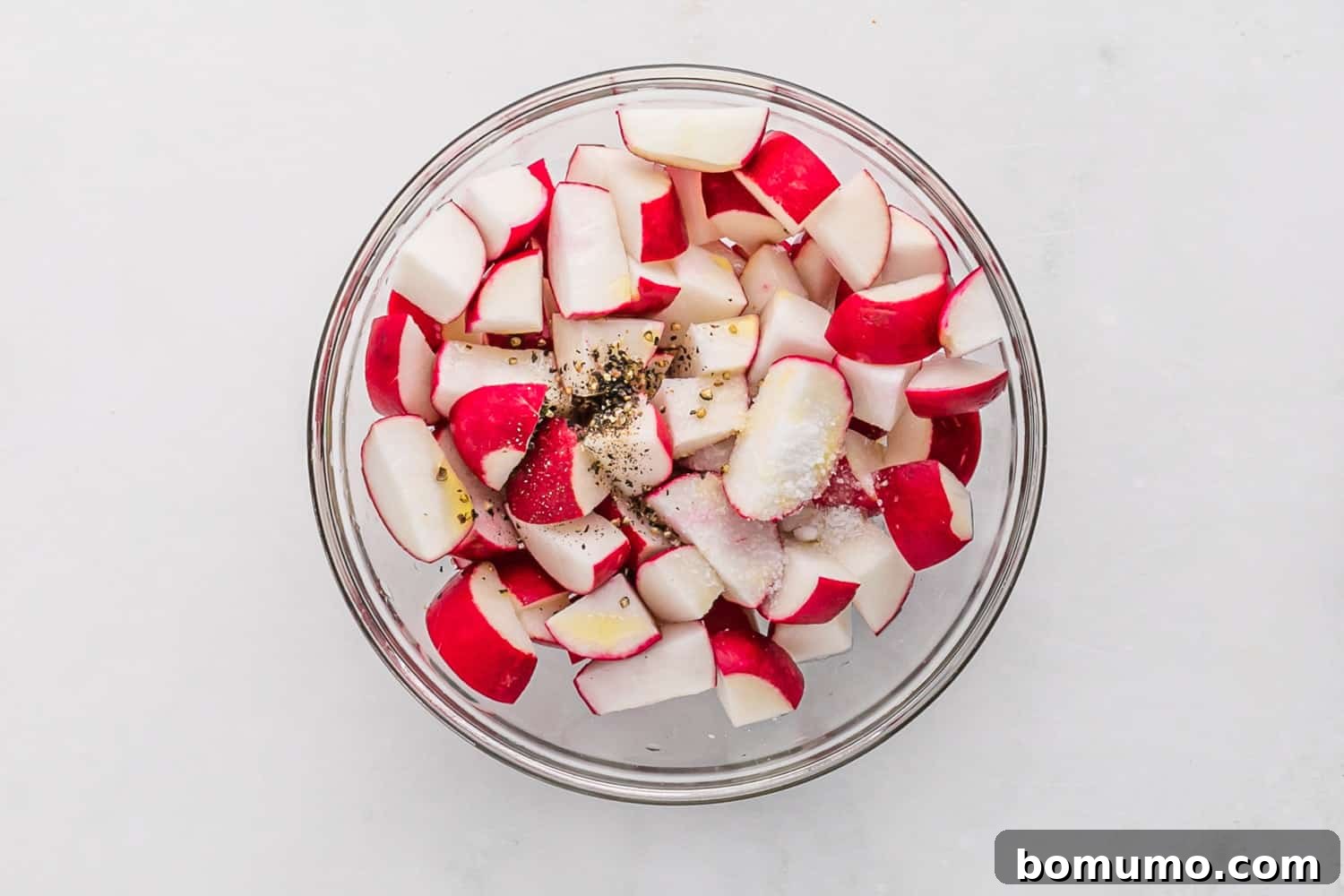
3. Toss with Olive Oil, Salt, and Pepper: Once prepped, transfer your dry, cut radishes to a mixing bowl. Drizzle them with olive oil, then sprinkle generously with kosher salt and coarse black pepper. Use your hands or a spatula to toss them thoroughly, ensuring each radish piece is evenly coated. You don’t need excessive oil; just enough to facilitate seasoning adhesion and promote browning. Seasoning to taste is important here. It’s best to perform this step just before roasting, as the salt can begin to draw out moisture from the radishes if left to sit for too long, counteracting your earlier drying efforts.
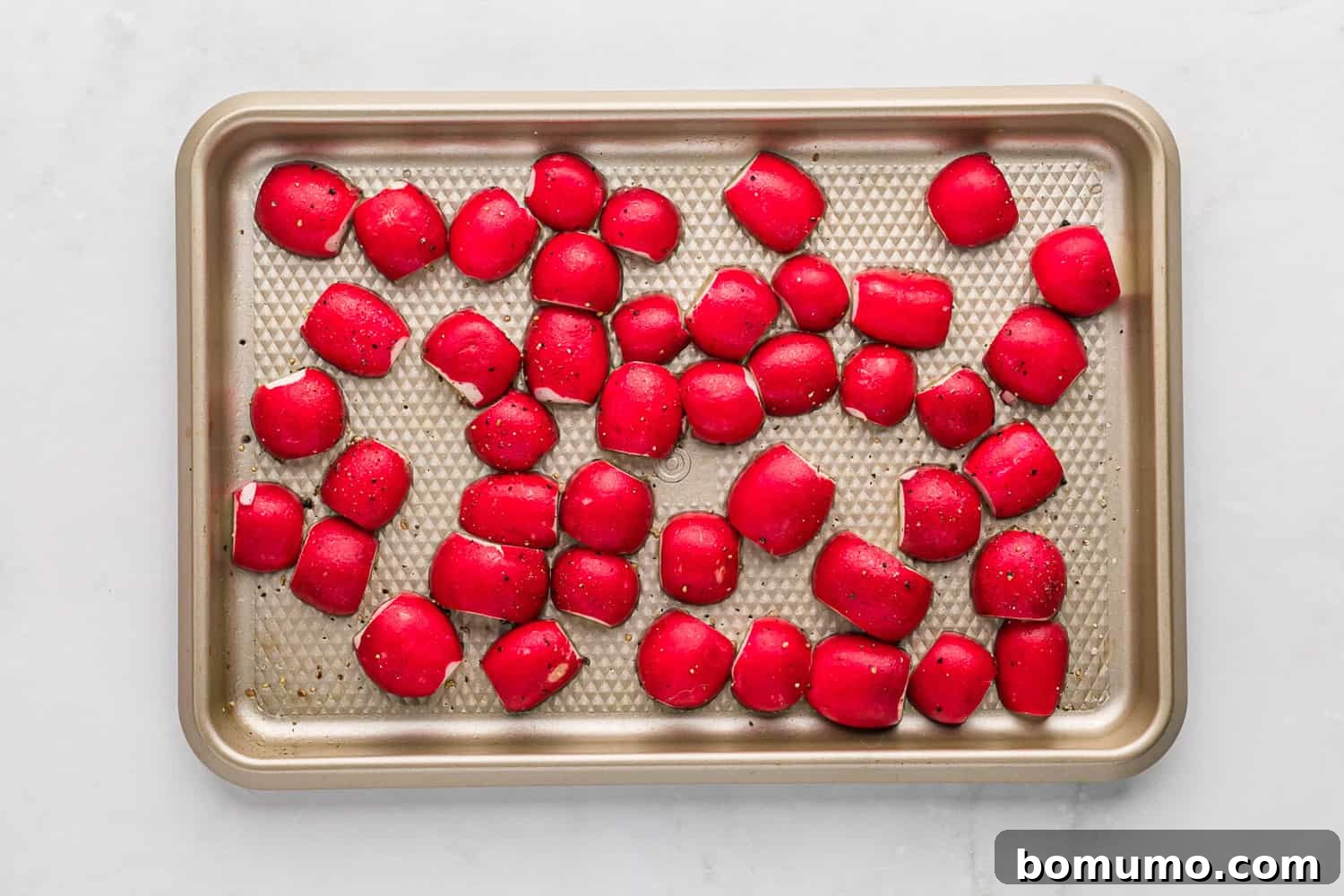
4. Arrange on Baking Sheet, Cut Sides Down: Transfer the seasoned radishes to your baking sheet. This step is more important for some vegetables than others, and radishes truly benefit from it. Arrange the radish halves or quarters with their cut sides facing directly down onto the baking pan. Since radishes are naturally round, placing them cut-side down maximizes the surface area that makes contact with the hot pan. This direct contact is vital for achieving optimal browning and developing those coveted caramelized, flavorful edges through the Maillard reaction. Avoid overcrowding the pan; leave a little space between each piece to allow for air circulation, which also prevents steaming. If your pan is too crowded, use two pans and rotate them halfway through cooking.
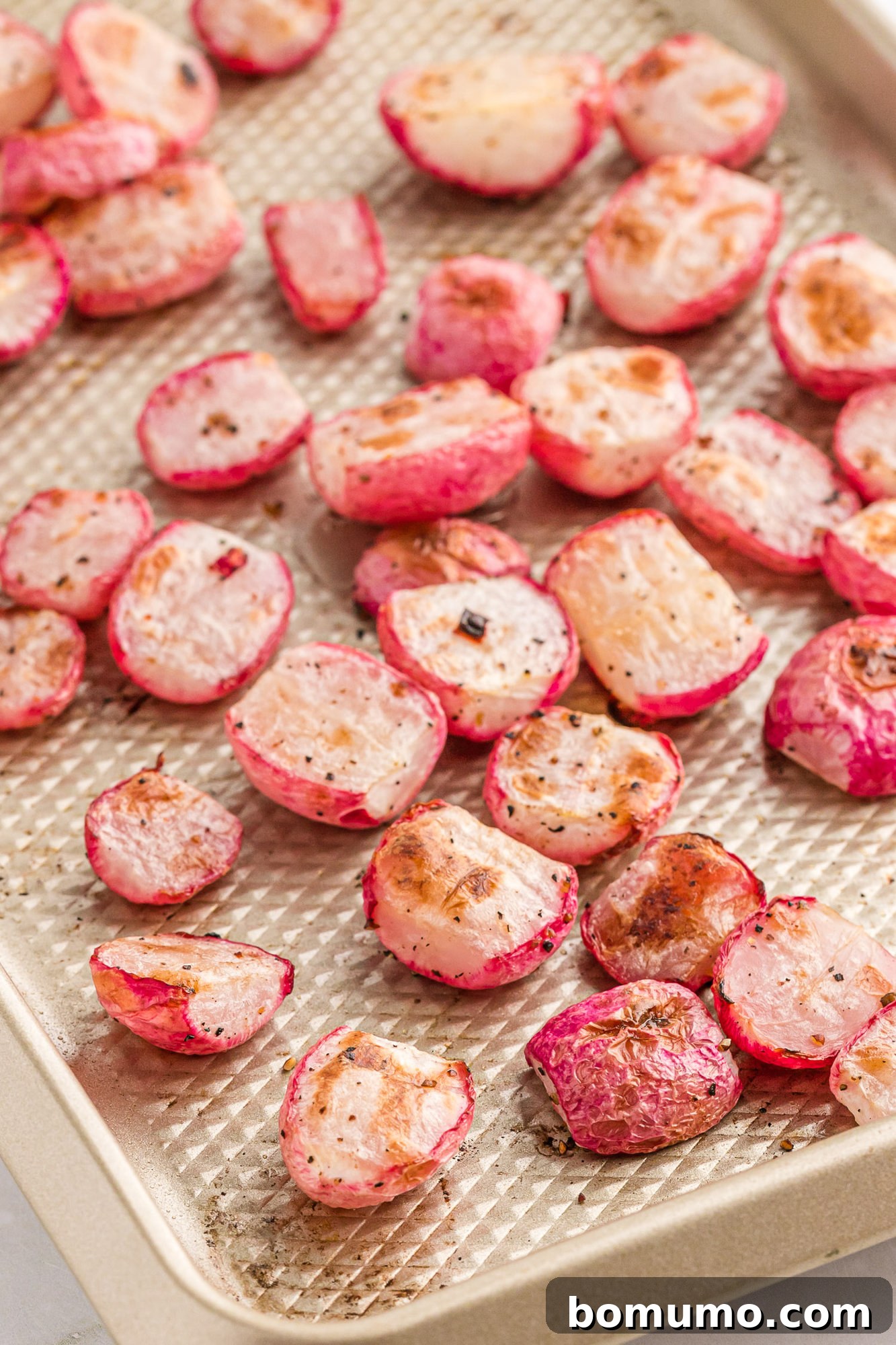
5. Roast Until Tender and Browned, Flipping Occasionally: Place the baking sheet in your preheated oven. Roast for approximately 20-30 minutes, depending on your oven and the size of your radishes. During this time, flip the radishes once or twice (around the 10-15 minute mark) to ensure even cooking and browning on all sides. You’re looking for radishes that are fork-tender and have developed beautiful golden-brown, slightly charred edges. This indicates that their sugars have caramelized and their peppery notes have mellowed. Once they reach this stage, they are ready to be enjoyed immediately. This basic method is a versatile technique that works wonders for nearly any root vegetable!
Nutritional Powerhouse: Are Radishes Good For You?
Beyond their delightful flavor transformation, radishes are also incredibly beneficial for your health. They proudly belong to the Brassica family, a group of vegetables renowned for their nutritional density, which includes powerhouses like broccoli, cabbage, and turnips. This lineage means radishes are packed with many of the same healthy properties.
Radishes are an excellent source of essential vitamins and minerals. They are particularly rich in Vitamin C, a powerful antioxidant that supports immune function, skin health, and collagen production. They also contain decent amounts of B vitamins, including folate, and minerals like potassium, which is crucial for blood pressure regulation and nerve function. Furthermore, radishes are a good source of dietary fiber, aiding in digestive health and promoting a feeling of fullness. Historically, radishes have also been recognized for their natural anti-fungal properties.
One of their most appealing attributes for many is their very low calorie and carbohydrate count. This makes them a fantastic choice for a variety of dietary preferences and needs.
Roasted radishes fit seamlessly into most dietary lifestyles. When prepared without the optional honey dressing (or substituting with a sugar-free alternative), they are perfectly low-carb and keto-friendly. They are naturally vegan (if you omit the honey or use maple syrup), vegetarian, Whole30 compliant, and paleo-friendly. Moreover, this recipe is inherently dairy-free, gluten-free, and nut-free. This remarkable versatility truly makes them a perfect side dish for just about anyone, accommodating a wide array of nutritional requirements and preferences!
What to Serve with Roasted Radishes: Versatile Pairings
Once you’ve experienced the magic of roasted radishes, you might wonder how best to incorporate these little gems into your meals. Their tender texture and mellowed, sweet-earthy flavor make them incredibly versatile. They are a delicious side dish straight out of the oven, pairing beautifully with a variety of main courses, much like any other roasted vegetable.
- Main Course Companions: Serve them alongside lean proteins for a balanced meal. They are exceptional with lemon salmon with dill, where their earthiness complements the bright flavors of the fish. They also shine with Parmesan and almond-crusted salmon, providing a delightful contrast in texture and taste. Consider pairing them with roasted chicken (like a crispy herb-roasted chicken), pork loin, or even a hearty vegetarian steak like grilled portobello mushrooms.
- Elevate Your Salads: Roasted radishes add a warm, tender, and flavorful element to both green and grain salads. Toss them into fresh, leafy green salads with a light, zesty vinaigrette for an unexpected burst of flavor. They also integrate wonderfully into more substantial grain salads, such as a hearty farro salad with butternut squash, bacon, and cranberries, or this vibrant vegan quinoa salad featuring Brussels sprouts and pepitas. Their unique texture provides an interesting counterpoint to the grains and fresh greens.
- Creative Additions: Don’t limit them to just side dishes or salads. Roasted radishes can be a fantastic topping for tacos, tostadas, or nachos, adding an unexpected layer of flavor and slight sweetness. They’re a wonderful inclusion in dishes like cauliflower nachos or vegetarian nachos, and we frequently add them to our sheet pan breakfast tostadas for a gourmet touch. They can even be chopped and stirred into scrambled eggs or frittatas for an early morning treat.
Frequently Asked Questions (FAQs)
The flavor profile of radishes undergoes a dramatic and delightful shift when cooked. The sharp, peppery heat that characterizes raw radishes almost entirely disappears, replaced by a much milder, sweeter, and earthier taste. Many describe their flavor as surprisingly reminiscent of roasted potatoes, but with a more distinct, nuanced sweetness and a hint of that radish earthiness without the spice. The texture also transforms from crisp and firm to tender and creamy, making them incredibly palatable and often surprising to those who typically dislike radishes.
Radishes are remarkably versatile beyond just roasting! Here are several other unique and delicious ways to enjoy them:
- Pickled Radishes: For a tangy, crisp alternative, try making pickled radishes. This quick refrigerator pickle method requires no complicated canning and yields vibrant, flavorful additions to sandwiches, salads, or grain bowls.
- Fresh in Salads: Of course, thinly sliced radishes are a classic addition to green salads for their crisp texture and peppery kick. They’re excellent in hearty salads like a refreshing fattoush salad, and even a familiar potato salad can benefit from their crunch.
- Southwestern Flair: The spicy notes of raw radishes pair exceptionally well with southwestern-inspired dishes. Slice them thinly and use them as a crunchy, zesty topping for tacos, burritos, or nachos. They add a fresh element to dishes like our beloved cauliflower nachos, vegetarian nachos, and these satisfying sheet pan breakfast tostadas.
- Radish Butter or Tartines: Blend finely chopped radishes with softened butter and herbs for a delicious radish butter, perfect for spreading on crusty bread or serving with steak. Or, simply slice radishes thinly and arrange them on buttered toast with a sprinkle of flaky sea salt for a classic French breakfast.
- Sautéed or Stir-fried: While roasting is ideal, radishes can also be briefly sautéed or stir-fried. They retain a bit more of their peppery essence this way but still soften and sweeten.
Absolutely! Don’t discard those vibrant radish greens. They are not only edible but also highly nutritious, packed with vitamins and minerals. You can use them much like you would spinach or kale: sauté them with a little garlic and olive oil, add them to soups or stews, or even blend them into a vibrant pesto. They have a slightly peppery flavor similar to arugula, which can add a wonderful dimension to many dishes. Just be sure to wash them thoroughly before cooking.
Make It Your Own: Customizing Your Roasted Radishes
While the basic roasted radish recipe is undeniably delicious, there’s ample room for creativity and customization. Experiment with these ideas to tailor the dish to your personal taste and dietary preferences:
- Transform into a Complete Sheet Pan Dinner: Simplify meal prep by turning roasted radishes into part of a wholesome sheet pan dinner. Combine them with other quick-cooking proteins and vegetables. For instance, try this amazing crispy chicken thigh sheet pan dinner, roasting breaded chicken, radishes, and green beans all together on a single pan for a convenient and flavorful meal.
- Amplify with More Seasonings: The classic salt and pepper is just a starting point. Garlic powder is almost always a welcome addition to roasted vegetables, lending a savory depth. Explore other dried herbs and spices that complement earthy flavors: smoked paprika for a smoky warmth, dried oregano or basil for a Mediterranean twist, or onion powder for an extra layer of savory aroma. A pinch of chili flakes can also add a subtle, pleasant heat.
- Introduce Whole Spices: For an aromatic adventure, consider adding whole cumin seeds or fennel seeds to your radishes before roasting. As they toast alongside the radishes, their warm, earthy, and slightly licorice-like flavors infuse the dish, creating a wonderfully complex profile that is truly super good.
- Garnish with Fresh Herbs: Once your radishes are roasted and hot out of the oven, a sprinkle of fresh herbs can brighten the entire dish. Fresh dill is exceptionally good, pairing beautifully with the mellowed radish flavor. Other excellent choices include fresh parsley, basil, chives, or cilantro, each offering a distinct fresh note. For an ambitious touch, whip up a homemade pesto or a zesty chimichurri to dress them up – these vibrant sauces offer an explosion of fresh flavor.
- Elevate with a Light Dressing: Beyond the included honey and lemon dressing, the possibilities are vast. Almost any vinaigrette can serve as a fabulous topping for roasted radishes. Consider a balsamic vinaigrette, a bright apple cider vinaigrette, or even a creamy tahini-based dressing. In fact, why not add them to a full salad? Roasted radishes are a truly wonderful addition to a wide range of salads, offering warmth and tender texture.
- Cook in Your Air Fryer: For a quicker cooking time and even crispier results, your air fryer is an excellent tool. Follow the same preparation instructions (trimming, washing, drying, seasoning). Then, air fry the radishes at 375-400°F (190-200°C) for approximately 10-15 minutes, shaking the basket a couple of times during cooking. Keep a close eye on them, especially towards the end, as air fryers can cook quickly and vary by model.
Make-Ahead & Meal Prep Ideas
Preparing roasted radishes can be easily integrated into your meal prep routine, saving you valuable time on busy weeknights. Thoughtful preparation can ensure you have this delicious side dish ready to go whenever hunger strikes.
To save time on cooking day, prep your radishes in advance. They can be trimmed, thoroughly washed, meticulously dried, and then halved or quartered at least a day ahead of when you plan to roast them. After preparation, store the radishes in an airtight container or a resealable bag in the refrigerator. This allows you to quickly toss and roast them when you’re ready to cook.
Important Note: Avoid adding the oil and seasonings to the radishes too far in advance. This is a crucial tip for achieving the best texture. Radishes, like many vegetables, tend to release moisture once exposed to salt. If you mix them with oil and seasonings too far before roasting, they can become watery, which can lead to steaming rather than optimal browning in the oven. For the crispiest results, only toss the radishes with oil, salt, and pepper just before you place them on the baking sheet and into the preheated oven.
Storage & Reheating Tips
Maximizing the enjoyment and longevity of your roasted radishes involves proper storage and reheating techniques. While best enjoyed fresh, leftovers can certainly be salvaged to maintain their delicious qualities.
Refrigerate: Should you find yourself with any leftover roasted radishes, they can be stored quite effectively in the refrigerator. Allow them to cool completely to room temperature before transferring them to an airtight container. Stored properly, they will maintain their quality and flavor for up to 5 days. This makes them excellent for meal prepping or adding to subsequent meals.
Freezing: Freezing roasted radishes is generally not recommended. The high water content in radishes means that freezing and thawing can significantly alter their texture, often resulting in a mushy or watery consistency that lacks the crisp-tender quality of freshly roasted radishes. I haven’t personally tried freezing them for this reason, but if you do experiment, I would be interested to hear about your results!
Reheat: To bring leftover roasted radishes back to their best, choose a reheating method that prioritizes crispness. For optimal results, reheat them in a toaster oven, a conventional oven, or an air fryer. Preheat your chosen appliance to about 350-375°F (175-190°C) and spread the radishes in a single layer. Reheat for 5-10 minutes, or until they are warmed through and the edges have crisped up again. This dry heat method is the best way to refresh them and restore some of their original texture. For single portions or when you’re short on time, a quick stint in the microwave is acceptable. However, be aware that microwaved radishes will be softer and will not regain the same satisfying crispness as those reheated with dry heat.
Roasted Radishes – A Simple Guide to Roasting Radishes
Rachel Gurk
10
25
35
4 servings

Ingredients
- 1 bunch radishes (about 10 oz. with tops removed, halved or quartered)
- 1 tablespoon olive oil
- ¼ teaspoon kosher salt
- ⅛ teaspoon coarse ground black pepper
Optional: Honey Lemon Glaze
- 1 tablespoon freshly squeezed lemon juice
- 1 tablespoon honey
Instructions
-
Preheat your oven to 425°F (220°C).
-
Thoroughly wash the radishes, remove the leafy greens, and trim the root ends if desired. Halve or quarter the radishes so they are roughly the same size for even cooking. Ensure they are completely dry before proceeding.
-
On a small rimmed baking sheet, toss the prepared radishes with olive oil, kosher salt, and coarse black pepper until each piece is evenly coated. Spread them in a single layer, ensuring most of the cut sides are down. Avoid overcrowding the pan.
-
Bake for 20-25 minutes, stirring or flipping the radishes once or twice during cooking, until they are tender and beautifully golden brown with caramelized edges. The radishes are delightful as is, or you can add a topping of your choice (see notes below for ideas).
-
Optional Honey Lemon Glaze: In a small bowl, whisk together the lemon juice and honey. Once you remove the hot radishes from the oven, pour this mixture over them and stir lightly to coat. Serve immediately for the best flavor and texture.
Notes
- The provided nutrition information is for the roasted radishes only and does not include any optional toppings or dressings.
- Store any leftover roasted radishes in an airtight container in the refrigerator for up to five days. Reheat in the oven or air fryer for best results.
- Consider these additional optional toppings to enhance your radishes: fresh chopped dill, a drizzle of hot honey for a sweet and spicy kick, a splash of balsamic vinegar, or a rich balsamic glaze.
- For Air Fryer Method: Prepare radishes as instructed. Air fry at 375-400°F (190-200°C) for approximately 10-15 minutes, shaking the basket a couple of times. Watch them closely towards the end of the cooking time to prevent overcooking.
Video
Watch a video tutorial on how to make roasted radishes: Roasted Radishes Video

Nutrition
Carbohydrates: 1g,
Protein: 1g,
Fat: 4g,
Saturated Fat: 1g,
Polyunsaturated Fat: 1g,
Monounsaturated Fat: 3g,
Sodium: 150mg,
Potassium: 30mg,
Fiber: 1g,
Sugar: 1g,
Vitamin A: 1IU,
Vitamin C: 2mg,
Calcium: 4mg,
Iron: 1mg
Nutrition information is automatically calculated and should be used as an approximation.
Did You Make This?
Share a comment and rating below! I love hearing what you think!