
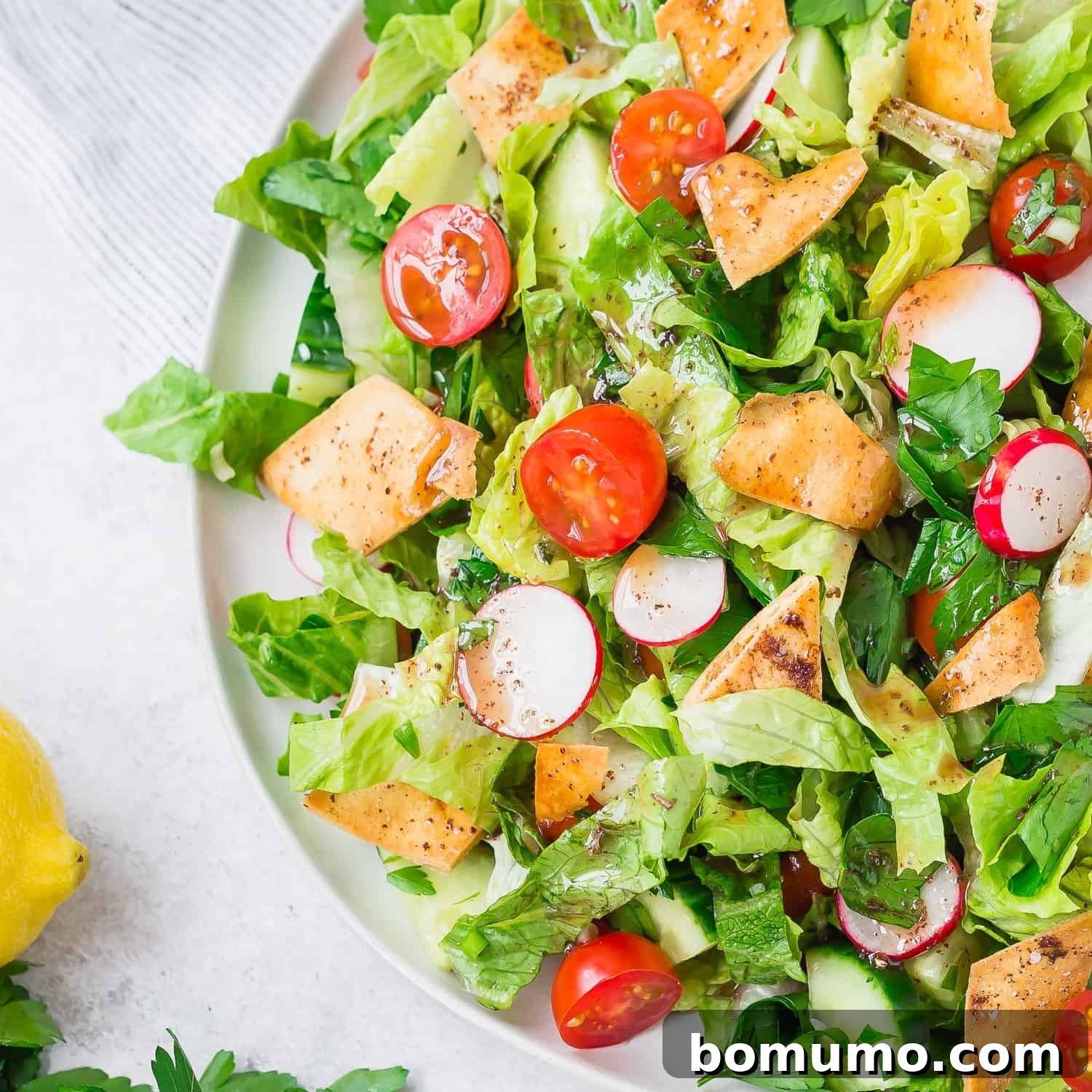
Authentic Fattoush Salad Recipe: Your New Favorite Mediterranean Dish
Prepare to fall in love with this incredible Fattoush salad. A true jewel of Middle Eastern cuisine, this vibrant salad brings together a symphony of textures and flavors that will quickly make it your go-to dish. With its perfectly crispy pita bread, an irresistibly tangy sumac dressing, and an abundance of fresh, aromatic herbs, every bite is a burst of Mediterranean sunshine. It’s not just a salad; it’s an experience that’s both refreshing and deeply satisfying, embodying the rich culinary heritage of the Levant.
Recipe Overview
Why you’ll love it: This Fattoush salad recipe yields a generous batch, making it ideal for entertaining guests or enjoying multiple delicious meals throughout the week. It’s incredibly versatile, satisfying, and packed with fresh, healthy ingredients, making healthy eating both easy and enjoyable.
How long it takes: Approximately 1 hour from start to finish, including active preparation and baking time for the perfectly crispy pita crisps.
Equipment you’ll need: You’ll need a baking sheet for toasting the pita, a spacious large mixing bowl to comfortably toss all the salad components, and a small bowl or jar for whisking together the vibrant dressing.
Servings: This robust recipe is designed to serve a crowd, comfortably yielding 10 satisfying portions. It’s perfect for family gatherings, potlucks, or simply ensuring you have ample leftovers.
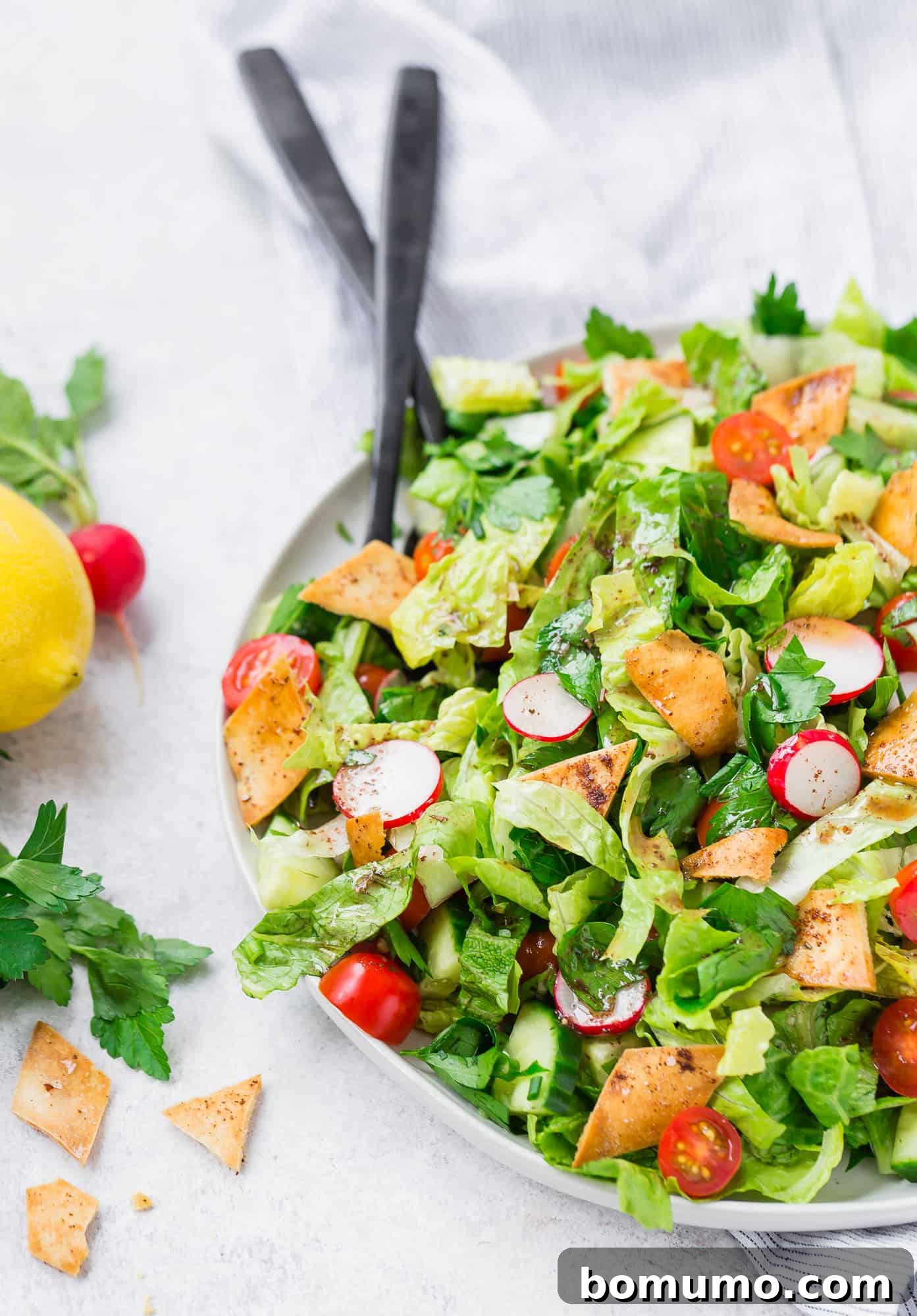
I’m genuinely thrilled to share this recipe with you all. It has become, without a doubt, my absolute favorite salad. Initially, I considered separating the dressing recipe from the salad itself, thinking it might be useful to offer them individually. However, upon reflection, I realized two crucial things:
- You simply need both components in your life, and you need them now. This salad offers a delightful escape from routine meals and promises an explosion of flavor.
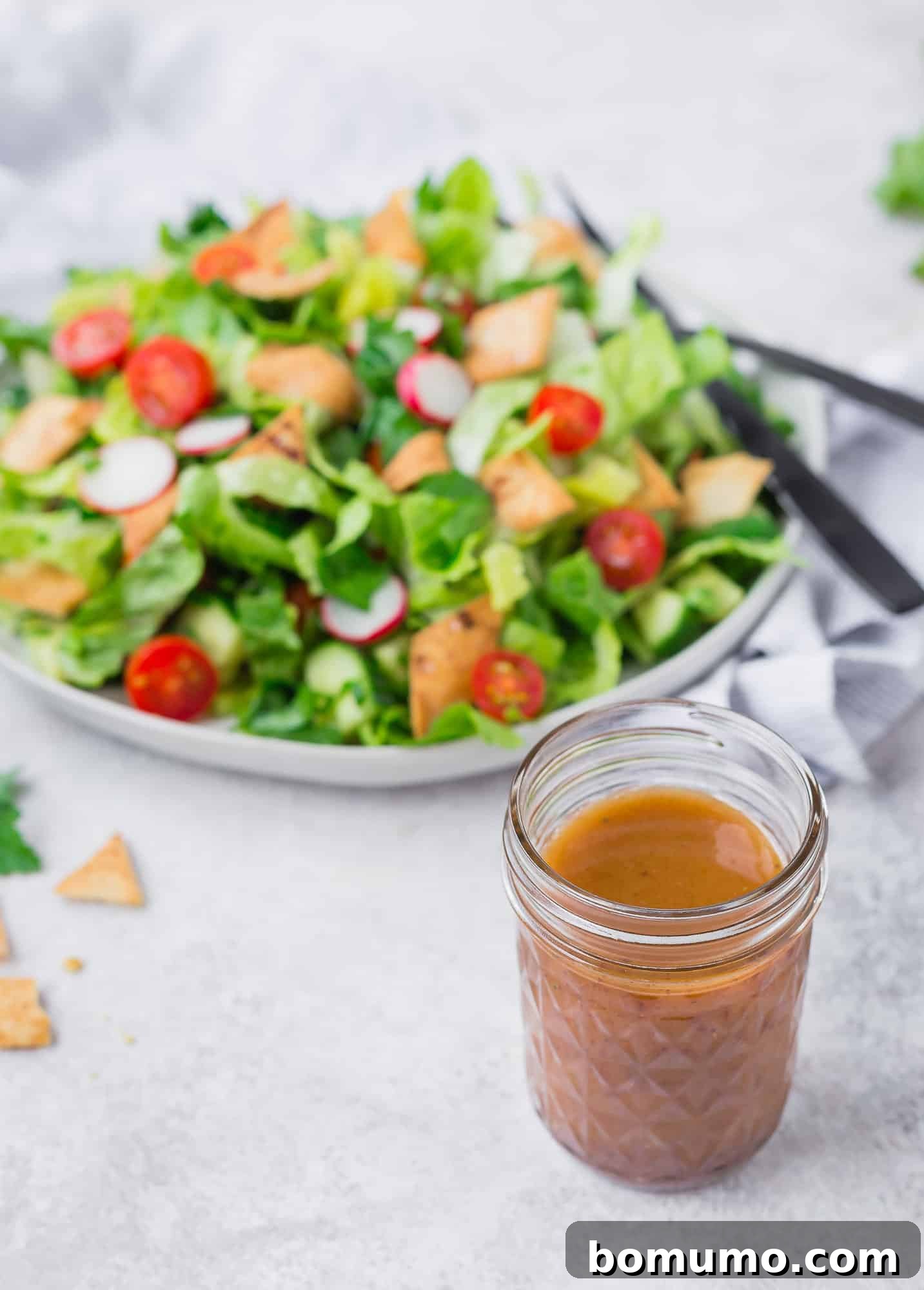
- They are unequivocally best when enjoyed together. Think of them as culinary soulmates, a match made in heaven. They complement each other so perfectly—the crisp textures, the fresh vegetables, and the unparalleled tang of the dressing—that it would be a disservice to present them apart. Their combined synergy creates a harmonious blend that is truly unforgettable.
This dynamic duo creates a harmonious blend of textures and tastes that is truly unforgettable. The crispiness of the pita, the vibrant freshness of the vegetables, and the unparalleled tang of the dressing are designed to be experienced as one cohesive dish, delivering maximum enjoyment in every forkful.
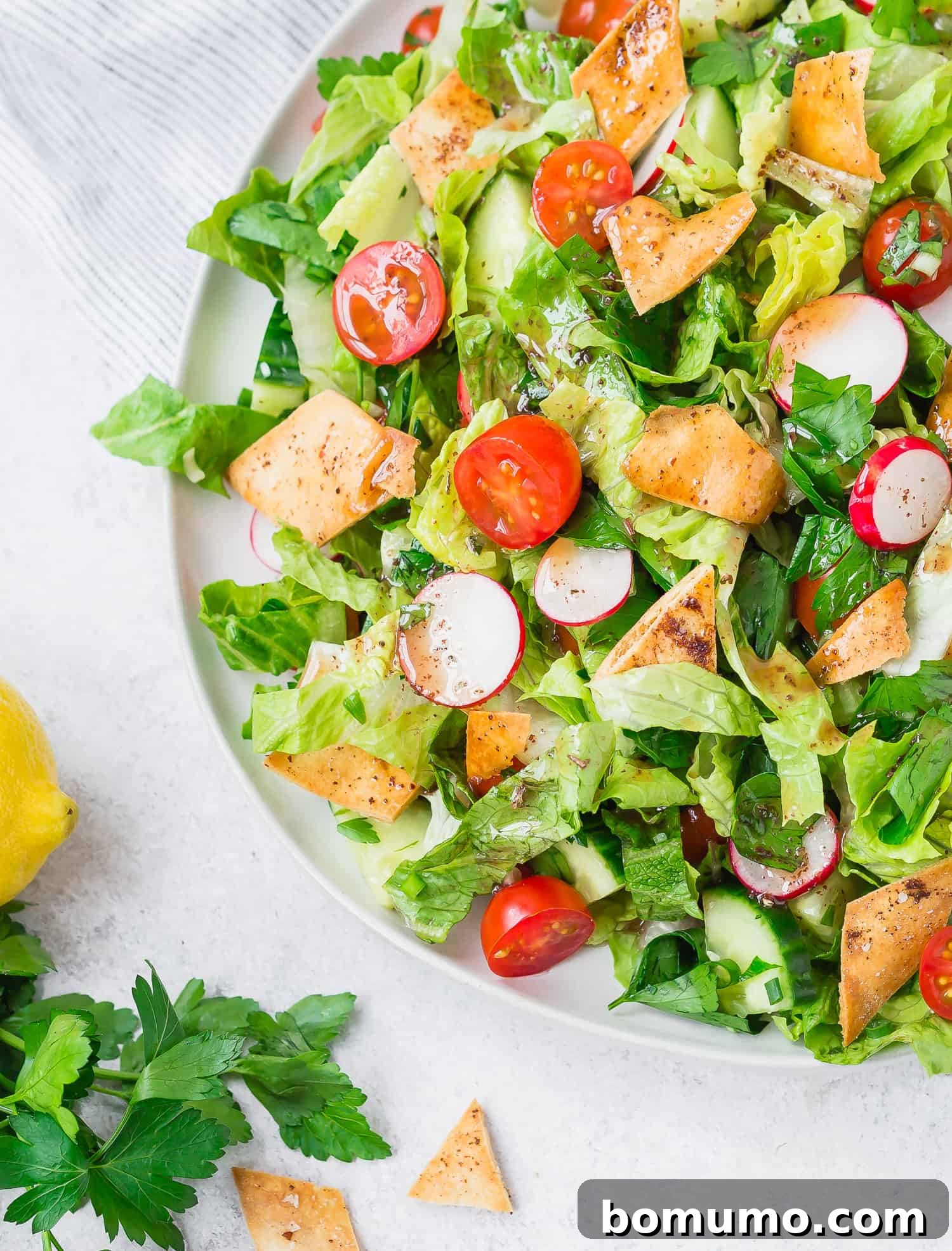
My love affair with Fattoush salad began over a decade ago, approximately twelve years back, when I first tasted it at a local Middle Eastern restaurant. From that moment, it became a beloved restaurant and carryout staple, a dish I’d regularly crave. The quest to recreate this authentic flavor profile at home, however, has been a gradual journey, marked by trial and error, and a deep appreciation for the original. For a long time, we were fortunate to live in an area on the west side of Michigan where genuinely authentic Fattoush was readily available around almost every corner. The sheer convenience of having such delicious, high-quality options meant there wasn’t a strong immediate impetus to develop my own recipe from scratch; the local offerings satisfied my cravings perfectly.
Then came a significant change in our lives: we moved. Our new location presented a considerable challenge in finding truly authentic Middle Eastern cuisine, especially the specific, nuanced flavors of Fattoush we had grown to love. While we did find establishments offering “Fattoush,” they often lacked the distinctive, vibrant tastes and essential textures that defined what we considered “real Fattoush.” It simply didn’t measure up to our high expectations. After much searching and a few disappointing culinary adventures, we finally discovered one restaurant that comes quite close to our ideal, but it’s a considerable thirty-minute drive from our home. This made satisfying casual cravings a much less convenient affair and sparked a renewed determination.
This culinary dilemma propelled the simple idea for a Fattoush recipe, previously noted in my recipe notebook, to the forefront of my cooking priorities. What was once a casual entry quickly became a priority project, demanding immediate and dedicated development. I was determined to bring the authentic taste of this beloved salad right into our kitchen, making it accessible whenever the craving struck, without the long drive or the compromise on flavor. This mission led to countless experiments, and eventually, to the perfected recipe I am now delighted to share.
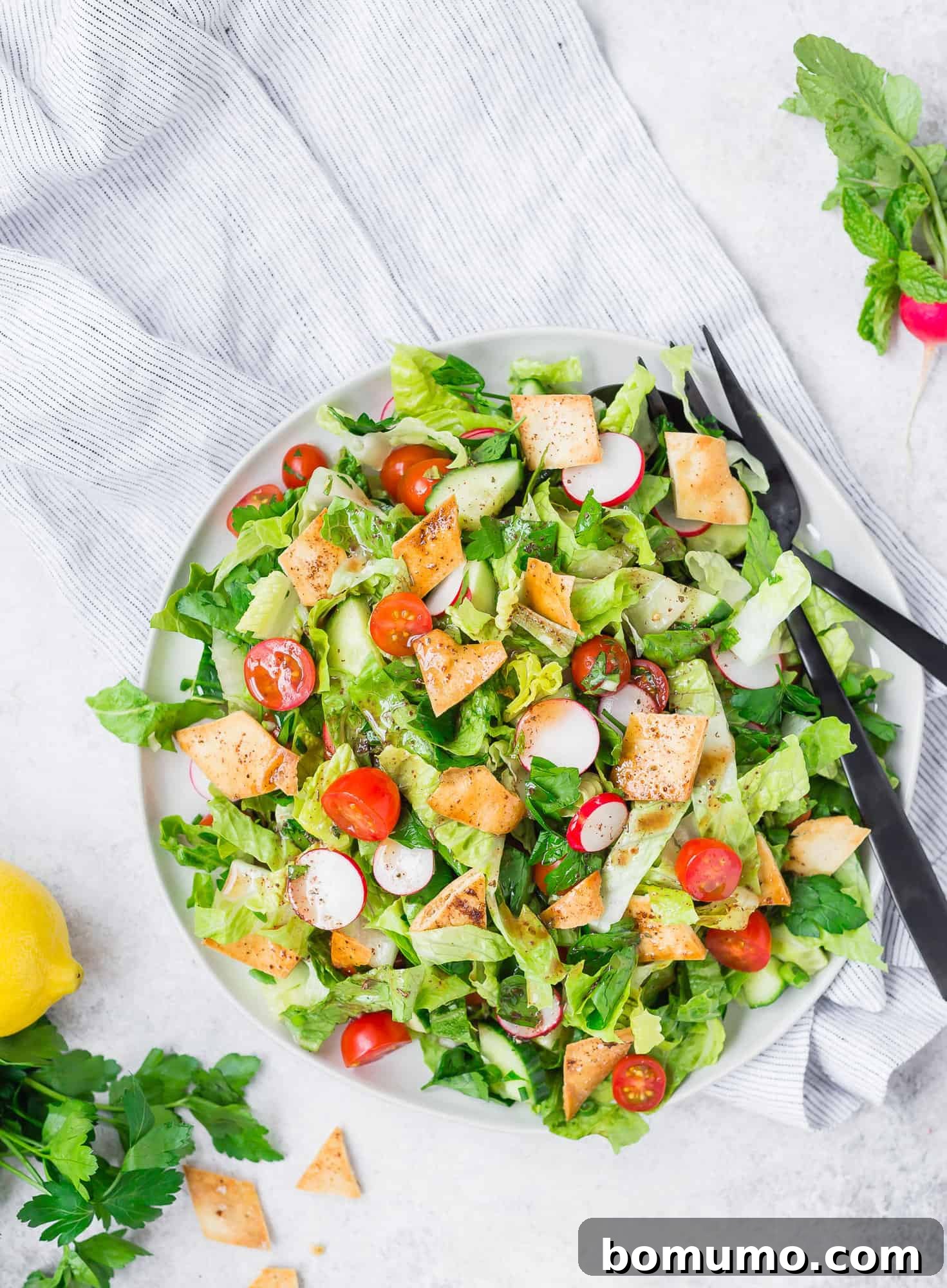
I am absolutely delighted with the outcome of this recipe. The countless hours spent experimenting and refining the flavors have paid off beautifully. Even better, my husband, Ben, who has an even more discerning palate for Fattoush—largely because he grew up enjoying it regularly and knows exactly what authentic should taste like—gave it his enthusiastic approval. His seal of authenticity means the world to me and validates all the effort. Since perfecting this recipe, I’ve made this vibrant salad countless times, serving it as a main dish, a side, and even for meal prep, and I see no reason to stop anytime soon. It’s become a regular, cherished feature in our meal rotation, consistently bringing the authentic, fresh taste of our favorite Middle Eastern flavors right to our table.
About Fattoush Salad: A Culinary Journey from the Levant
Fattoush is more than just a salad; it’s a refreshing and vibrant bread salad that stands as a cornerstone of Levantine cuisine, cherished across the Middle East. Its defining characteristic, and what truly sets it apart from other salads, are the delightful pieces of crispy, toasted or fried pita bread. These golden shards add an essential textural contrast that elevates the entire dish. While traditional methods often involve frying the pita for a quick crisp, my preferred approach involves baking it. This technique delivers the same satisfying crunch and delightful texture without the added oiliness or heavier taste associated with deep-frying, resulting in a lighter yet equally delicious and wholesome salad component. It’s a healthier choice that doesn’t compromise on flavor or texture.
The salad base typically features a lively medley of crisp, fresh vegetables, each contributing its unique flavor and crunch. Essential ingredients usually include fresh romaine lettuce, which provides a sturdy and crisp foundation; juicy ripe cherry tomatoes, bursting with sweet acidity; and refreshing cucumbers, offering a cool and hydrating counterpoint. Depending on regional variations or personal preference, you might also find thinly sliced radishes, which add a peppery bite and vibrant pink hue; a hint of pungent onion for a deeper flavor; or even vibrant red cabbage, contributing both color and crunch. In my version, I wholeheartedly embrace these traditional elements, ensuring a classic flavor profile. However, I sometimes add a non-traditional touch: finely chopped celery. While not authentic to every Fattoush recipe, I find its crisp texture and subtle, earthy flavor a welcome addition, especially when radishes aren’t readily available, offering an alternative layer of crunch.
Each component plays a crucial role in creating the layered experience of Fattoush. The crispness of the romaine provides the perfect canvas, the tomatoes burst with natural sweetness, and the cucumbers offer a refreshing coolness. The radishes introduce a delightful peppery kick and visual appeal, while fresh herbs like parsley and mint tie everything together with their invigorating aromas and bright flavors. It’s a symphony of fresh produce, thoughtfully combined and designed to delight the senses and invigorate the palate.
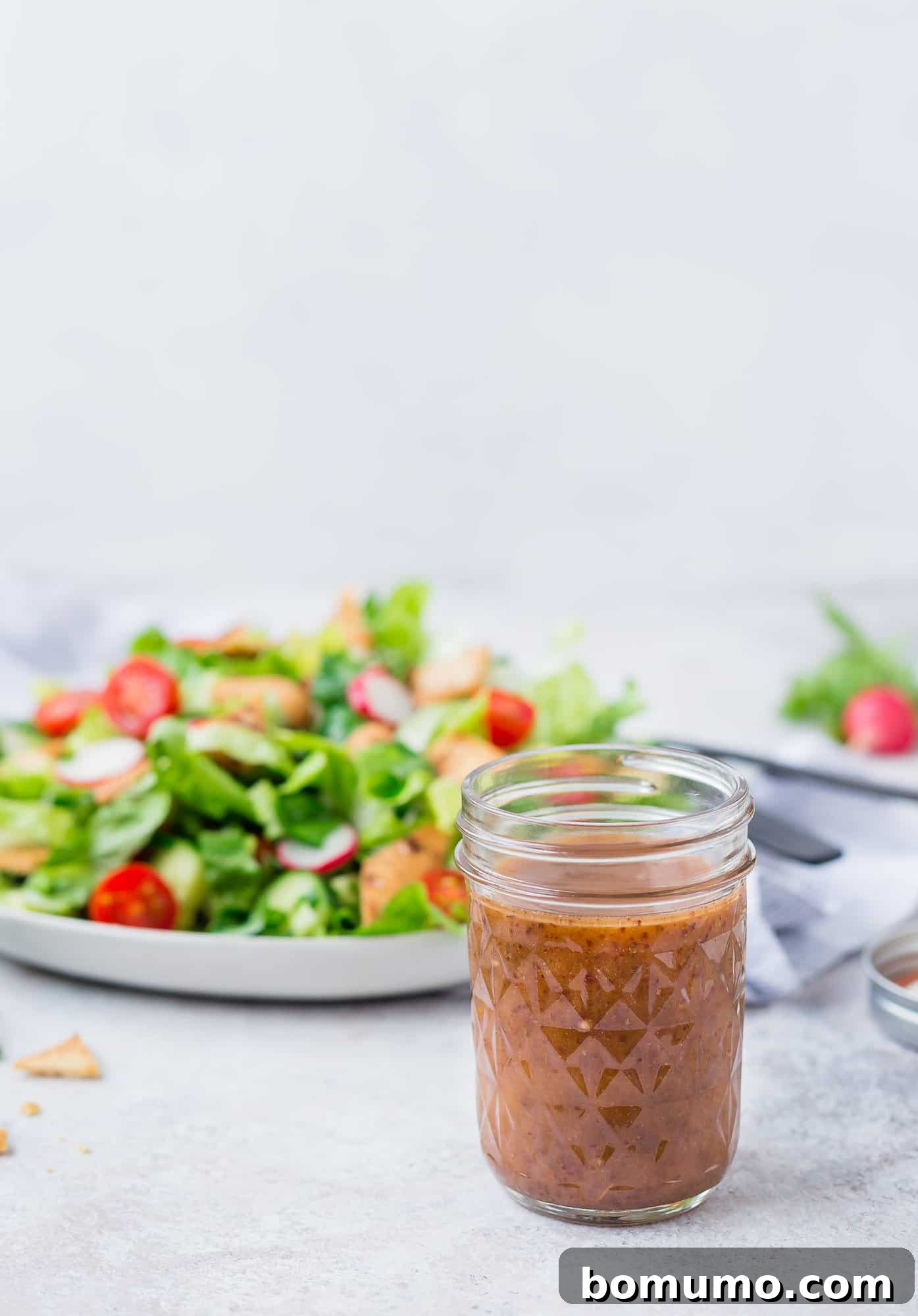
The Star of the Show: Crafting the Perfect Fattoush Dressing
The dressing is arguably the heart and soul of Fattoush, imparting its signature tangy, bright, and exquisitely complex flavor profile. A truly authentic and memorable Fattoush dressing hinges on a few key ingredients, each contributing distinct and indispensable notes to the overall harmony, creating a dressing that’s both invigorating and deeply satisfying:
- Sumac: This vibrant, reddish-purple spice is an absolute game-changer and the defining flavor of authentic Fattoush. Derived from dried and ground sumac berries, it offers a distinct lemony, tart, and slightly fruity flavor that is irreplaceable. If you’ve never cooked with sumac before, prepare for a delightful culinary discovery; its unique tang awakens the palate.
- Pomegranate Molasses: A thick, dark, and intensely flavored syrup made from reduced pomegranate juice, it adds a unique sweet-tart depth that cannot be fully replicated by any other ingredient. Its complex fruity acidity beautifully balances the richness of the olive oil and enhances the overall tanginess of the dressing, contributing a luscious, almost syrupy quality.
- Fresh Lemon Juice: Essential for a burst of sharp, natural acidity, the freshly squeezed juice brightens all the other flavors in the dressing, providing a lively zest that cuts through the richness.
- Garlic: A small amount of freshly minced garlic provides a foundational aromatic warmth and a subtle pungency that complements the other strong flavors without overpowering them.
- Extra Virgin Olive Oil: As the base of any good Mediterranean dressing, high-quality extra virgin olive oil lends a smooth, rich texture and contributes its own fruity, peppery notes, binding all the ingredients together harmoniously.
- Dried Mint: Adds a subtle yet crucial refreshing coolness and an herbaceous depth that is characteristic of many Middle Eastern dishes. It provides an aromatic lift that makes the dressing truly special.
- White Wine Vinegar: Contributes another layer of clean, sharp tang and acidity, ensuring the dressing is perfectly balanced, zesty, and refreshing, enhancing the overall brightness.
We personally adore our dressing to be wonderfully tangy and zesty, packed with bright, invigorating flavors. However, it’s worth noting that you might encounter some creamier variations of Fattoush dressing in certain regions or restaurants, which often incorporate dairy like milk or yogurt for a richer, more subdued consistency. For this particular recipe, we purposefully stick to the traditional, invigoratingly tart and bright profile that truly makes the salad sing and provides that authentic Levantine experience.
Key Tips for Making Your Best Fattoush Salad
- Generous Portions for All Occasions: This Fattoush recipe is designed to produce a substantial and satisfying salad, making it fantastic for entertaining a crowd, serving as a vibrant main course, or simply ensuring you have delicious leftovers for convenient meal prepping throughout the week. You can easily serve half for a satisfying dinner tonight and save the remainder for vibrant, healthy lunches or another dinner later in the week. Fattoush makes for wonderfully fresh and satisfying lunches that stay delicious!
- The Unmissable Magic of Sumac: You might be tempted to skip this ingredient if it’s unfamiliar, but trust me, you absolutely shouldn’t. Sumac is 100% what gives authentic Fattoush its distinctive, zesty, slightly fruity, and irreplaceable tartness, elevating it far beyond a regular garden salad. You can typically find high-quality ground sumac at specialty grocery stores, Middle Eastern markets, or conveniently online through popular retailers like Amazon. Its unique flavor profile is truly indispensable for achieving that authentic taste.
- Pomegranate Molasses: A Highly Recommended Addition: While I strongly advise against omitting any key ingredient for the most authentic flavor, if you find yourself entirely unable to source pomegranate molasses, honey can serve as a suitable, albeit slightly different, substitute. Pomegranate molasses provides a deep, tangy sweetness with a unique fruitiness that honey can’t fully replicate, but honey will still offer a balancing sweetness. For the best and most authentic result, make an effort to find pomegranate molasses; it’s a pantry staple in Middle Eastern cooking.
- Crispy Pita Perfection: Achieving the ideal crispy pita bread is absolutely crucial for the signature texture of Fattoush. While some traditional recipes call for frying, baking offers a much healthier alternative while still delivering that essential, satisfying crunch. Ensure your pita pieces are spread in a single layer on the baking sheet to allow for even browning and crispiness. Overcrowding the pan will lead to steamed, not crisp, pita.
- Timing is Everything for Freshness: To keep your Fattoush salad at its peak freshness, with perfectly crisp components and vibrant greens, always toss it with the dressing and add the crispy pita immediately before serving. This crucial step prevents the pita from becoming soggy and the delicate salad greens from wilting, ensuring every bite is a delightful combination of fresh, tangy, and crunchy textures.
Perfect Pairings: What To Serve With Fattoush
Fattoush salad, with its bright, tangy, and refreshing profile, makes an excellent and versatile accompaniment to a wide variety of main courses, particularly those with Mediterranean or Middle Eastern flavors. Its zesty dressing and crisp textures beautifully complement rich meats, grilled dishes, and even other vegetarian options. Here are some fantastic suggestions to create a complete and delicious meal:
- Grilled Marinated Chicken: A classic pairing! This Greek-style chicken marinade, with its robust herbs and lemon, pairs exquisitely with the tanginess of the Fattoush, creating a balanced and flavorful meal.
- Shish Tawook: Tender, yogurt-marinated Lebanese chicken skewers are a classic Middle Eastern match, offering a succulent and aromatic contrast to the crisp, fresh salad.
- Chicken Kofta: Flavorful ground chicken skewers or patties, seasoned with traditional Middle Eastern spices, provide a hearty and aromatic protein option that complements the salad’s zest.
- Lamb Kofta: (recipe by Gordon Ramsey) Rich and aromatic lamb kofta, especially when paired with a cool mint and yogurt dressing, offers a hearty and deeply satisfying counterpoint to the light and fresh Fattoush.
- Marinated Lamb Chops with Garlic and Herbs: The robust and savory flavors of perfectly grilled lamb chops are wonderfully balanced and brightened by the fresh, herbaceous, and tangy Fattoush salad.
- Hummus and Baba Ghanoush: For a complete and authentic mezze platter experience, serve Fattoush alongside creamy hummus and smoky baba ghanoush, accompanied by warm, freshly baked pita bread.
- Falafel: Crispy, fried chickpea patties are another excellent vegetarian option that perfectly complements the salad’s flavors and textures, making for a satisfying plant-based meal.
Storage Tips
Storage Tips
To ensure your Fattoush salad remains as fresh, crisp, and delicious as possible, proper storage is absolutely key. The goal is to keep components separate until just before serving:
- Dressing: Always store the prepared Fattoush dressing separately in the refrigerator. A small jar with a tight-fitting lid or an airtight container works perfectly for this purpose. Storing it separately preserves its vibrant flavor and, crucially, prevents the salad greens from becoming soggy and limp.
- Crispy Pita: Keep the toasted pita pieces in a separate airtight container or a clean ziploc bag at room temperature. This method is vital for maintaining their delightful crunch. Storing them in the refrigerator, or mixing them into the salad too early, can cause them to become stale or soggy.
- Tomatoes: It is highly recommended to add the cherry tomatoes (halved) to the main salad mixture just before you are ready to serve. Tomatoes tend to lose their fresh flavor, firm texture, and overall appeal when refrigerated for extended periods, making them less enjoyable in a cold salad.
- Assembling: For optimal taste and texture, combine the greens and other core vegetables with the dressing, and then add the crispy pita and fresh tomatoes right before you’re ready to eat. This ensures every component is at its best, providing that signature Fattoush experience.
Fattoush Salad Recipe
4.86 from 14 votes
Rachel Gurk
30
14
15
59
10 servings
Pin
Ingredients
For Dressing:
- 4 teaspoons ground sumac
- 4 tablespoons freshly squeezed lemon juice (1 or 2 lemons)
- 1 tablespoon pomegranate molasses (can substitute honey)
- 1 small garlic clove, minced
- 2 teaspoons white wine vinegar
- ¼ teaspoon dried mint
- ½ teaspoon kosher salt
- ¾ cup extra virgin olive oil
For Crispy Pita:
- 2 pita bread rounds (8-inch diameter)
- 1 tablespoon extra virgin olive oil
- ¼ teaspoon kosher salt
- ½ teaspoon sumac
For Salad:
- 1 head romaine lettuce, trimmed, cut crosswise into ½-inch strips (8 to 10 cups chopped lettuce)
- 3 cups cherry tomatoes, halved
- 10 radishes, thinly sliced or chopped (or up to 15, depending on size)
- 1 English hothouse cucumber, quartered lengthwise, thinly sliced crosswise
- 2 cups loosely packed flat leaf parsley leaves, roughly chopped
- 5 scallions, thinly sliced (green onions)
- ½ cup fresh mint leaves, roughly chopped
Instructions
-
Begin by combining 4 teaspoons of ground sumac with 4 teaspoons of warm water in a small bowl. Stir them together and set aside for at least 15 minutes. This crucial step helps to “bloom” the sumac, allowing it to release its full, vibrant, lemony flavor into the water, which will then infuse your dressing.
-
Preheat your oven to 350°F (175°C). Take your pita bread rounds and lightly brush both sides generously with extra virgin olive oil. Evenly sprinkle both sides with ¼ teaspoon of kosher salt and ½ teaspoon of ground sumac. Once seasoned, cut the pita into bite-sized pieces (about 1-inch squares or triangles) and spread them into a single layer on a baking sheet. Avoid overcrowding for optimal crispiness.
-
Bake the pita pieces for 12 to 14 minutes, or until they are beautifully golden brown, perfectly crispy, and firm to the touch. Keep a close eye on them towards the end of the baking time, as they can burn quickly. While your pita crisps are baking to perfection, you can efficiently work on preparing the rest of the salad ingredients and the dressing!
-
Prepare the dressing: In a small jar with a tight-fitting lid (or a measuring cup), combine the bloomed sumac (including the water it soaked in), freshly squeezed lemon juice, pomegranate molasses, minced garlic, white wine vinegar, dried mint, and the remaining ½ teaspoon of kosher salt. Gradually add the ¾ cup of extra virgin olive oil while whisking vigorously until all ingredients are well combined and emulsified. If using a jar, simply pour in the olive oil, cover tightly, and give it a good shake. Taste the dressing and adjust seasoning (salt, lemon juice, or even a touch more pomegranate molasses) as needed to achieve your preferred tanginess and flavor balance.
-
Assemble the main salad base: In a really large mixing bowl (ensure it’s big enough to comfortably toss all the ingredients), combine the chopped romaine lettuce, halved cherry tomatoes, thinly sliced radishes, thinly sliced English hothouse cucumber, roughly chopped flat-leaf parsley leaves, thinly sliced scallions (green onions), and roughly chopped fresh mint leaves. This creates a vibrant and fresh foundation for your Fattoush.
-
Just before serving, pour the prepared dressing over the vibrant salad mixture in the large bowl. Toss gently but thoroughly to ensure all the fresh ingredients are evenly coated with the tangy dressing. You might not need all the dressing; add gradually and taste as you go to achieve your desired flavor intensity.
-
To finish, sprinkle the perfectly crispy baked pita pieces generously over the top of the dressed salad. Serve immediately to enjoy the ultimate combination of fresh, tangy, and crunchy textures that define an authentic Fattoush salad. The quick serving ensures the pita remains wonderfully crisp.
Notes
- Storage: For best results and to maintain freshness, always refrigerate the dressing separately in a small, covered jar or container. Store the crispy pita pieces in a separate airtight container at room temperature to preserve their delightful crunch. Crucially, add both the dressing and the fresh tomatoes to the main salad mixture right before serving to prevent sogginess and maintain optimal flavor and texture.
- Dressing Customization: If you’re short on time, or if you prefer a different flavor profile, you can replace the homemade dressing with your favorite commercially made vinaigrette. However, for the most authentic and distinctive Fattoush experience, the homemade sumac and pomegranate molasses dressing is highly recommended.
- Recipe Inspiration: This particular recipe has been thoughtfully adapted and perfected from an original concept found on Epicurious, with personal touches and enhancements added to further boost its flavor and texture profile, making it truly standout.
Nutrition Information
Calories: 199kcal,
Carbohydrates: 9g,
Protein: 2g,
Fat: 18g,
Saturated Fat: 3g,
Polyunsaturated Fat: 2g,
Monounsaturated Fat: 13g,
Sodium: 206mg,
Potassium: 412mg,
Fiber: 3g,
Sugar: 4g,
Vitamin A: 6871IU,
Vitamin C: 34mg,
Calcium: 61mg,
Iron: 2mg
Nutrition information is automatically calculated and should be considered an approximation. For precise dietary needs and personalized advice, always consult a qualified nutritionist or healthcare professional.
Did You Make This?
We’d love to hear from you! Please share your experience and rating below. Your feedback helps us grow and inspires other home cooks!
We truly hope this detailed guide encourages you to try making this exquisite Fattoush salad at home. Its balanced flavors, delightful textures, and refreshing qualities make it a truly rewarding and impressive dish to prepare and share with family and friends. Embrace the authentic taste of the Middle East from your own kitchen, and let this Fattoush recipe become a cherished part of your culinary repertoire. Enjoy every vibrant, crunchy bite!