
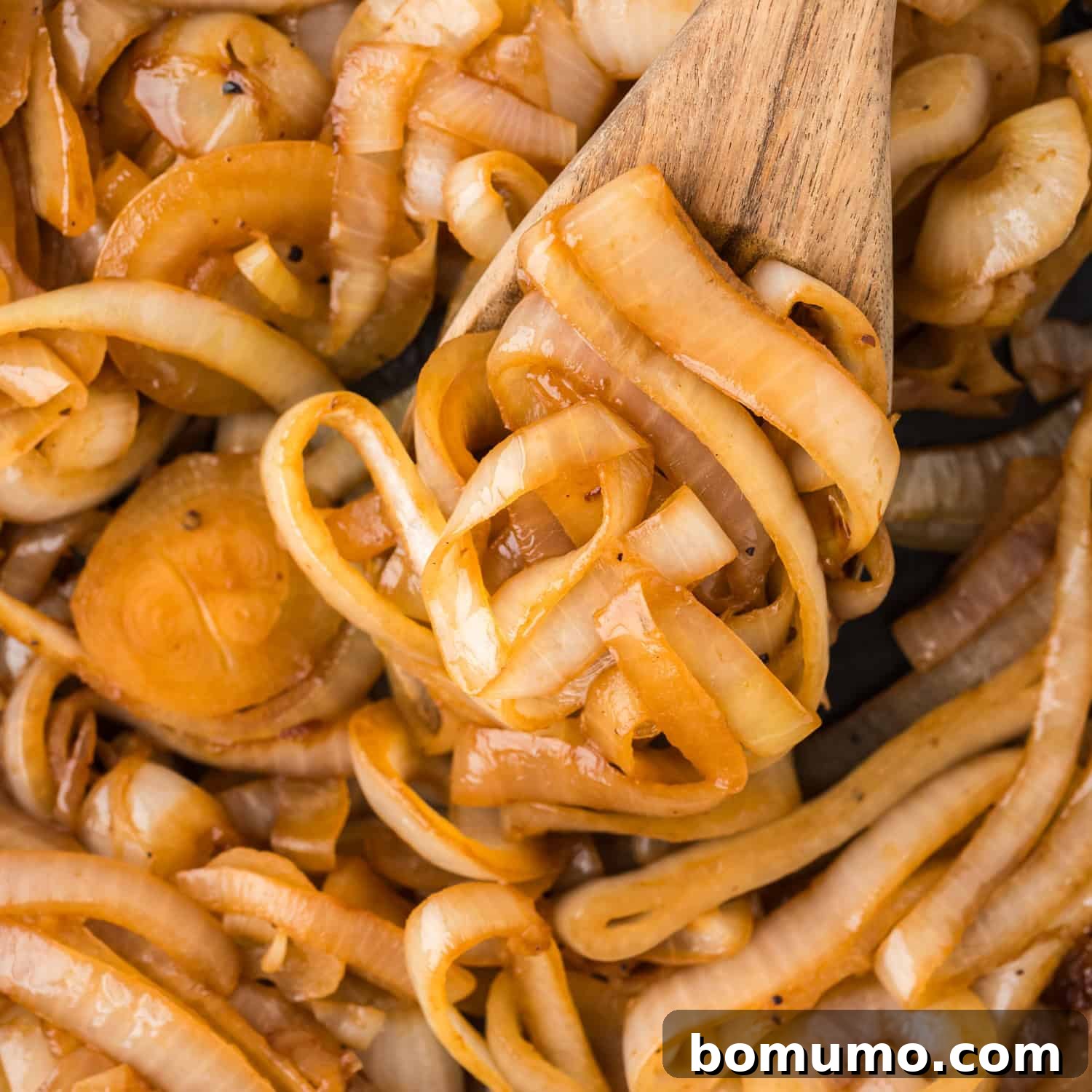
Recipe Highlights
Why You’ll Love It: An effortless and economical way to infuse incredible flavor into countless dishes, elevating your home cooking with minimal effort.
Preparation & Cook Time: Approximately 25 minutes
Essential Equipment: One large skillet
Yields: 8 generous servings

Mastering Sautéed Onions: Elevate Your Meals with This Simple Essential
Sautéed onions are a culinary secret weapon, a humble ingredient that possesses the power to transform ordinary dishes into extraordinary ones. While you might not typically serve a batch of sautéed onions as a standalone side dish, like sautéed Brussels sprouts or sautéed cabbage (unless you possess an exceptionally deep love for onions!), they are best appreciated as a versatile accompaniment. Think of them in the same vein as vibrant marinated tomatoes or zesty Korean pickles – a small addition that makes a huge impact.
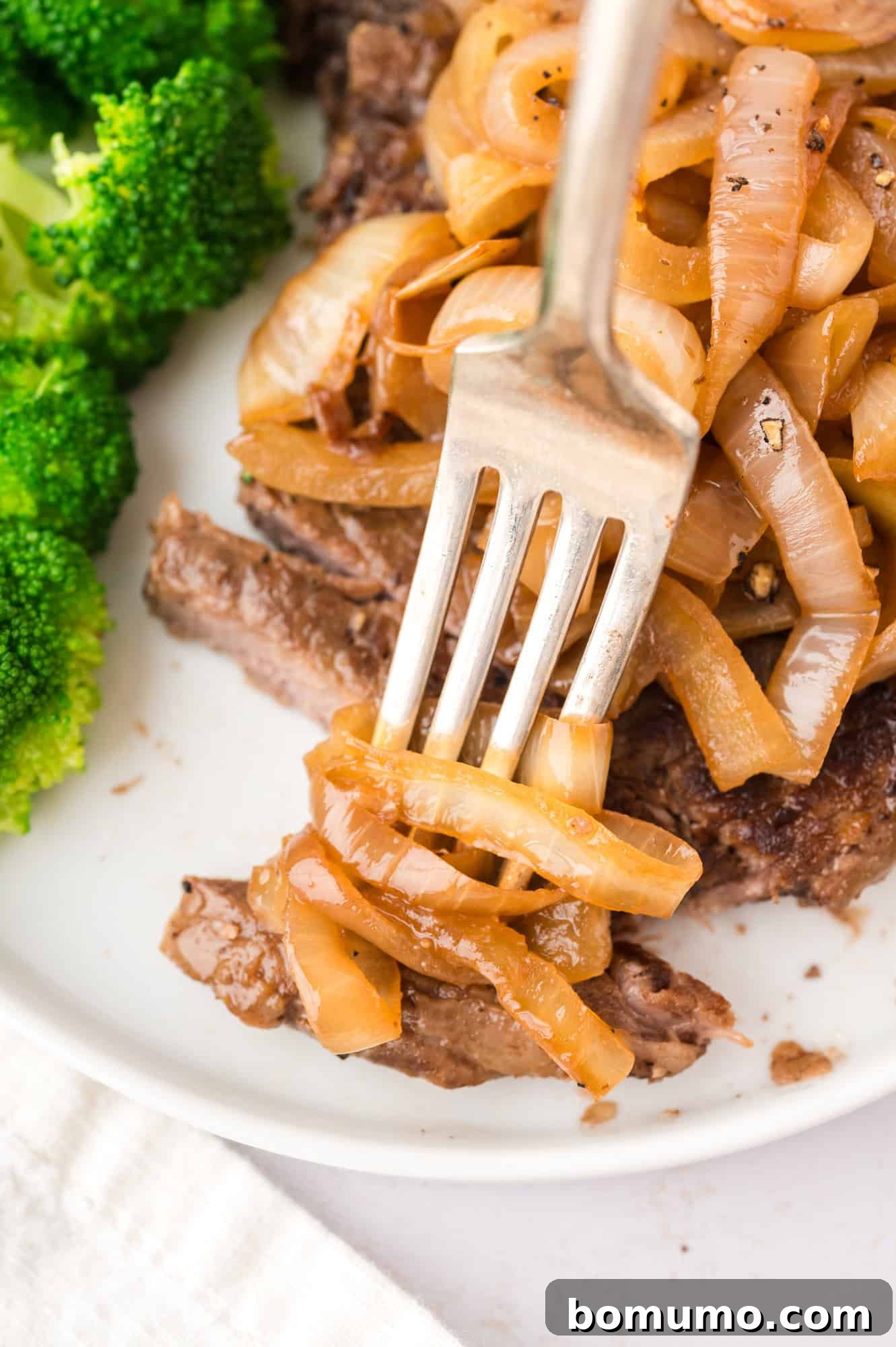
Imagine a perfectly cooked steak or tender pork chops, instantly elevated with a generous topping of soft, sweet, and lightly browned sautéed onions. This simple enhancement requires just one core ingredient to achieve such a remarkable upgrade! (We’re not counting the olive oil, salt, and pepper, as these are kitchen staples you likely already have on hand.)
This comprehensive guide will walk you through the process of making flawless sautéed onions, suitable for any type of onion and easily customizable to fit various culinary preferences. We’ll explore different ways to personalize this basic recipe, sharing exciting ideas and practical tips to ensure your sautéed onions turn out perfectly every time.
The Allure of Sautéed Onions: More Than Just a Garnish
Sautéed onions are a true culinary gem, offering a myriad of benefits that make them a staple in any kitchen. They’re not just a topping; they’re a fundamental flavor builder that can dramatically improve the taste and texture of your meals.
-
A Flavor Transformer for Any Dinner
I often find myself preparing a batch of sautéed onions once or twice a week, simply because they add an incredible “oomph” to virtually any meal. Whether paired with grilled meats, tucked into sandwiches, or even enhancing a classic grilled cheese, these onions contribute a layer of complex sweetness and savory depth that makes dishes more satisfying and memorable. Beyond flavor, incorporating onions also boosts the nutritional value of your meal, adding another healthy vegetable to your plate.
-
Sautéed vs. Caramelized: The Time-Saving Difference
While we all adore the rich, deeply sweet intensity of caramelized onions, the truth is, they demand considerable time and patience – often an hour or more of slow cooking. Sautéed onions offer the perfect weeknight alternative! They deliver a similar soft texture and nuanced sweetness in a fraction of the time, typically ready in just 10-15 minutes. This makes them incredibly practical for elevating everyday dinners without a significant time commitment.
-
An Excellent Way to Reduce Food Waste
Do you ever buy a large bag of onions for a recipe that only calls for one or two, leaving you with an abundance of leftovers? (A common predicament, especially when some grocery stores don’t offer single onions!) Sautéing is an ideal method to utilize those extra onions before they go bad. It’s a fantastic way to prevent food waste and always have a delicious flavor booster on hand. For another great way to use up extra onions, consider making quick pickled red onions.
Essential Ingredients for Perfect Sautéed Onions
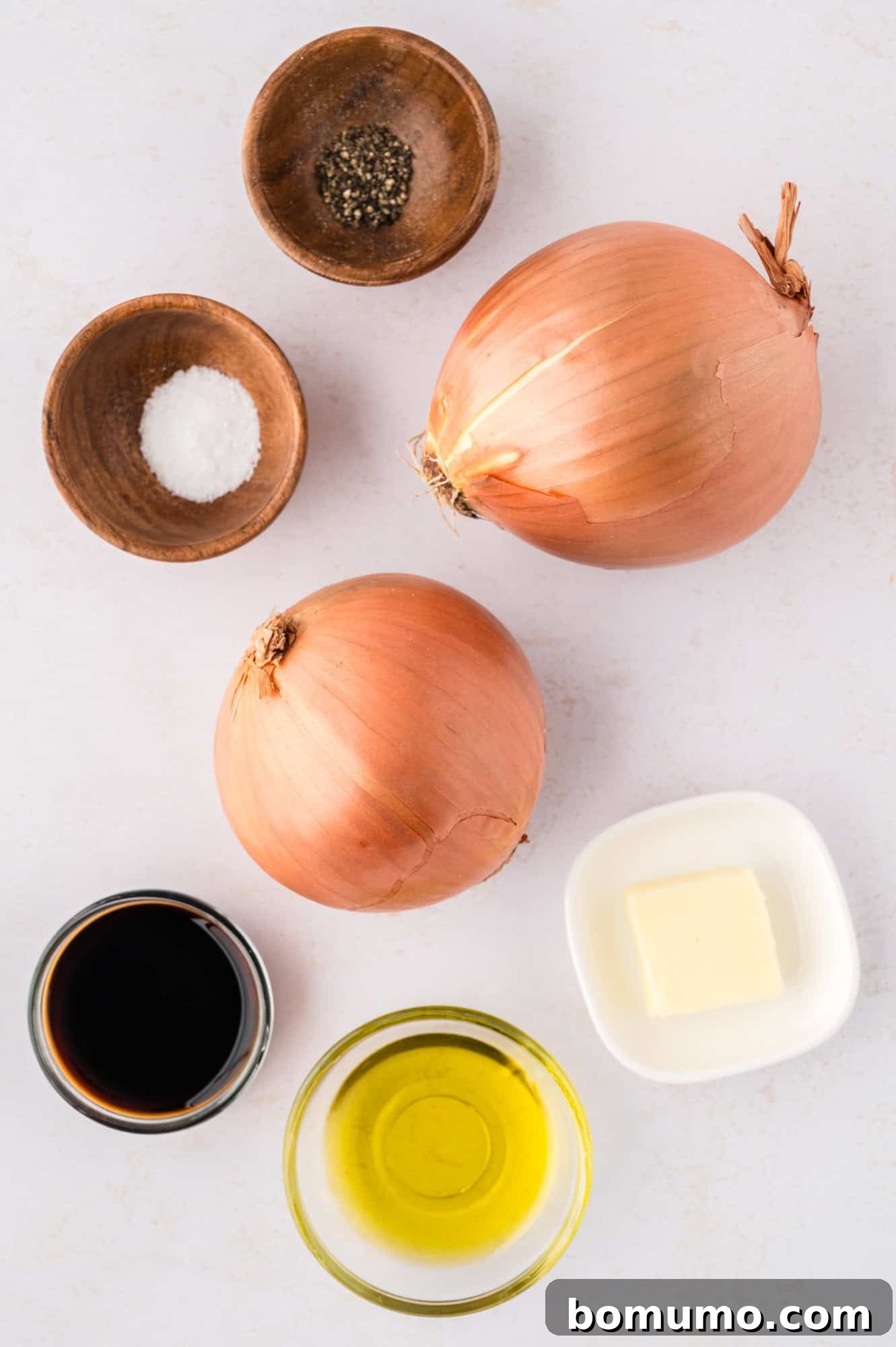
Crafting delicious sautéed onions requires just a few basic ingredients. The key lies in selecting quality components and understanding their role in the cooking process.
-
Onions: The Versatile Star
The beauty of this recipe is its adaptability to almost any variety of bulb onion. Whether you prefer the mild sweetness of Vidalia or sweet onions, the balanced flavor of yellow onions, the crispness of white onions, or the vibrant color of red onions, they all work wonderfully. Each type will offer a slightly different flavor profile and color when cooked. (We’ll save green onions for dishes like loaded mashed potato casserole!) This technique is also perfect for sautéing shallots, which offer a more delicate, garlicky-onion flavor.
-
Olive Oil or Unsalted Butter: The Flavor Base
The choice of fat significantly influences the final taste. You can use extra virgin olive oil for a fruity, slightly peppery note, or unsalted butter for a rich, creamy flavor. Many culinary enthusiasts, myself included, prefer a combination of both. Olive oil helps prevent butter from burning at higher temperatures, while butter adds an unparalleled depth of flavor and a beautiful golden color to the onions.
-
Kosher Salt and Coarsely Ground Black Pepper: The Seasoning Duo
Proper seasoning is crucial. Kosher salt provides a clean, distinct salty taste and helps draw out moisture from the onions, aiding in the sautéing process. Freshly and coarsely ground black pepper adds a wonderful aromatic kick and depth of flavor. Don’t be shy with the pepper; it complements the sweetness of the cooked onions beautifully. Always season to taste, adjusting as needed.
-
Balsamic Vinegar: An Optional, Yet Highly Recommended, Flavor Enhancer
A splash of balsamic vinegar towards the end of the cooking process is completely optional, but it adds a fantastic tangy-sweet complexity, particularly when serving the onions with steak or other rich meats. It provides a beautiful glaze and a delightful counterpoint to the onions’ natural sweetness.
Step-by-Step Guide: How to Sauté Onions to Perfection
Creating perfectly sautéed onions is a straightforward process that yields incredibly delicious results. Follow these simple steps for success:
Preparation is Key
-
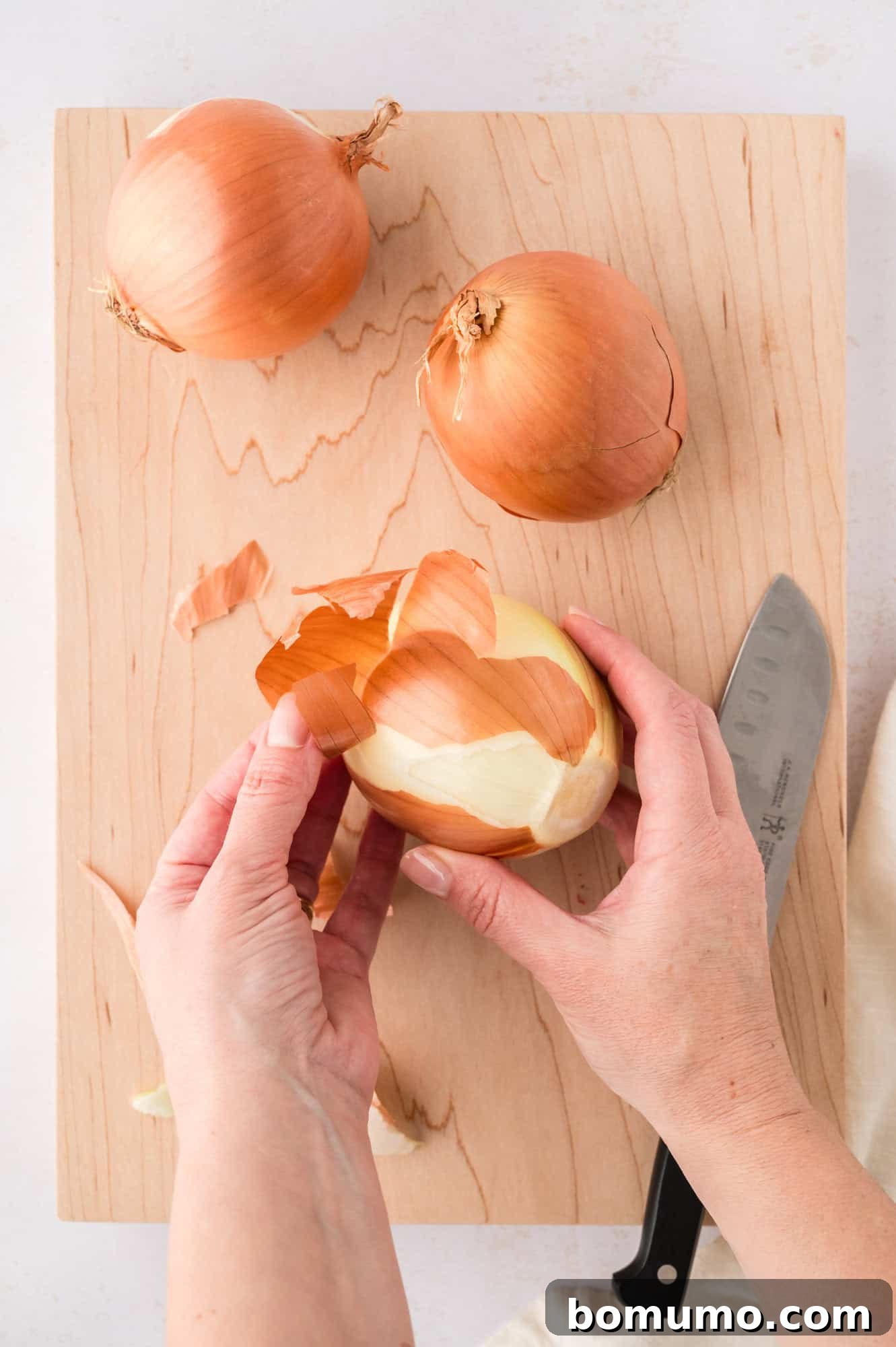
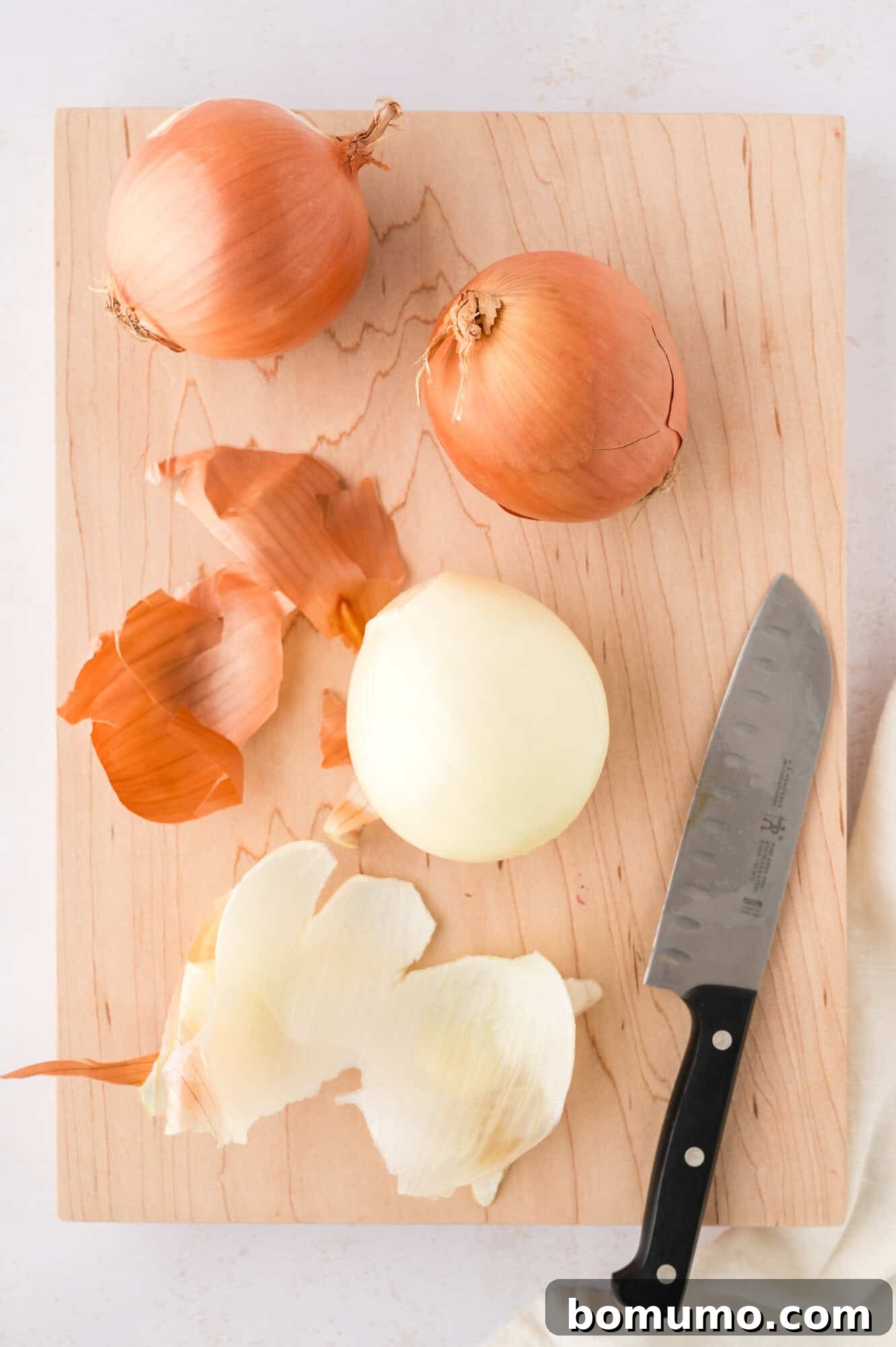
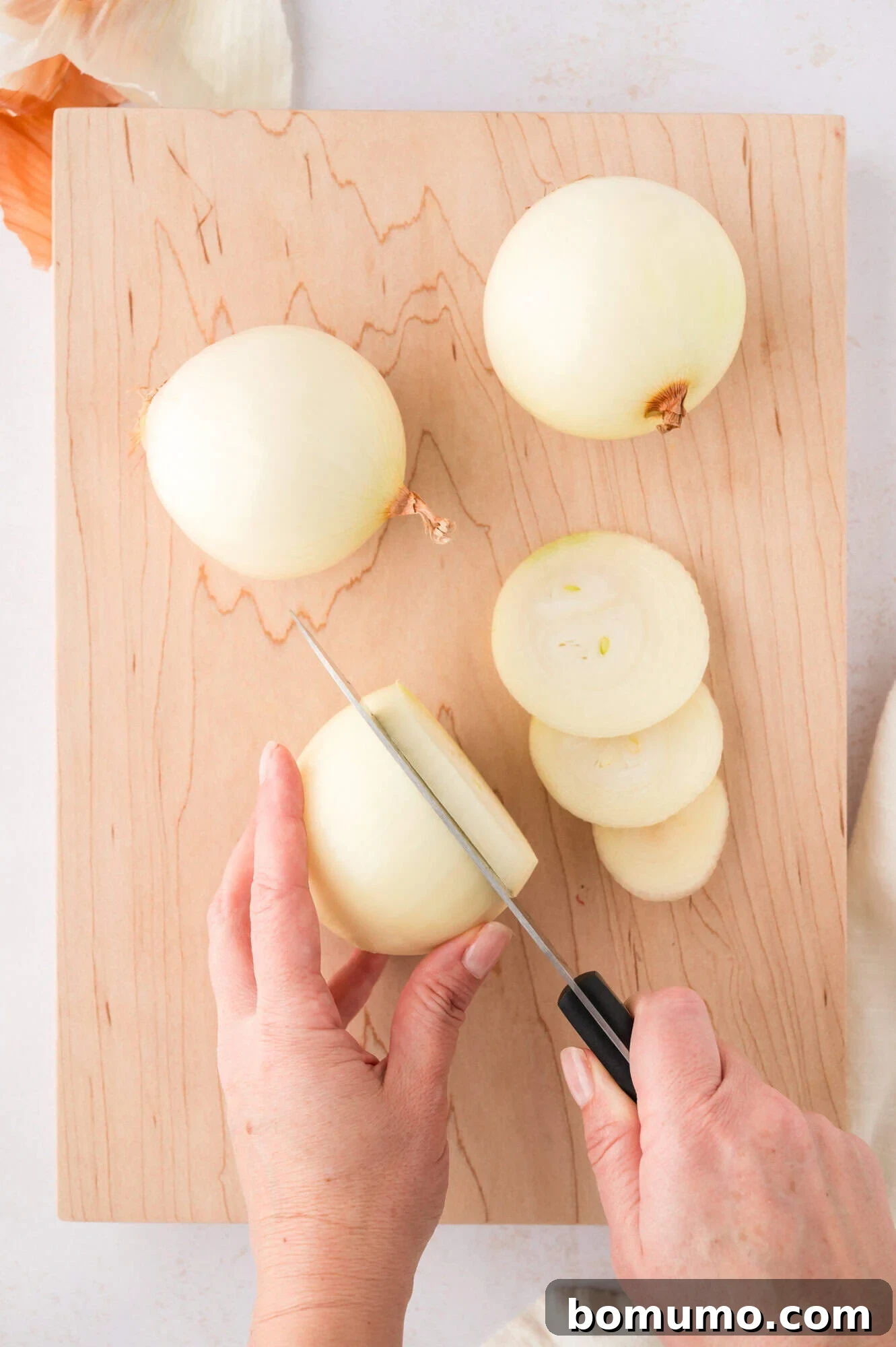
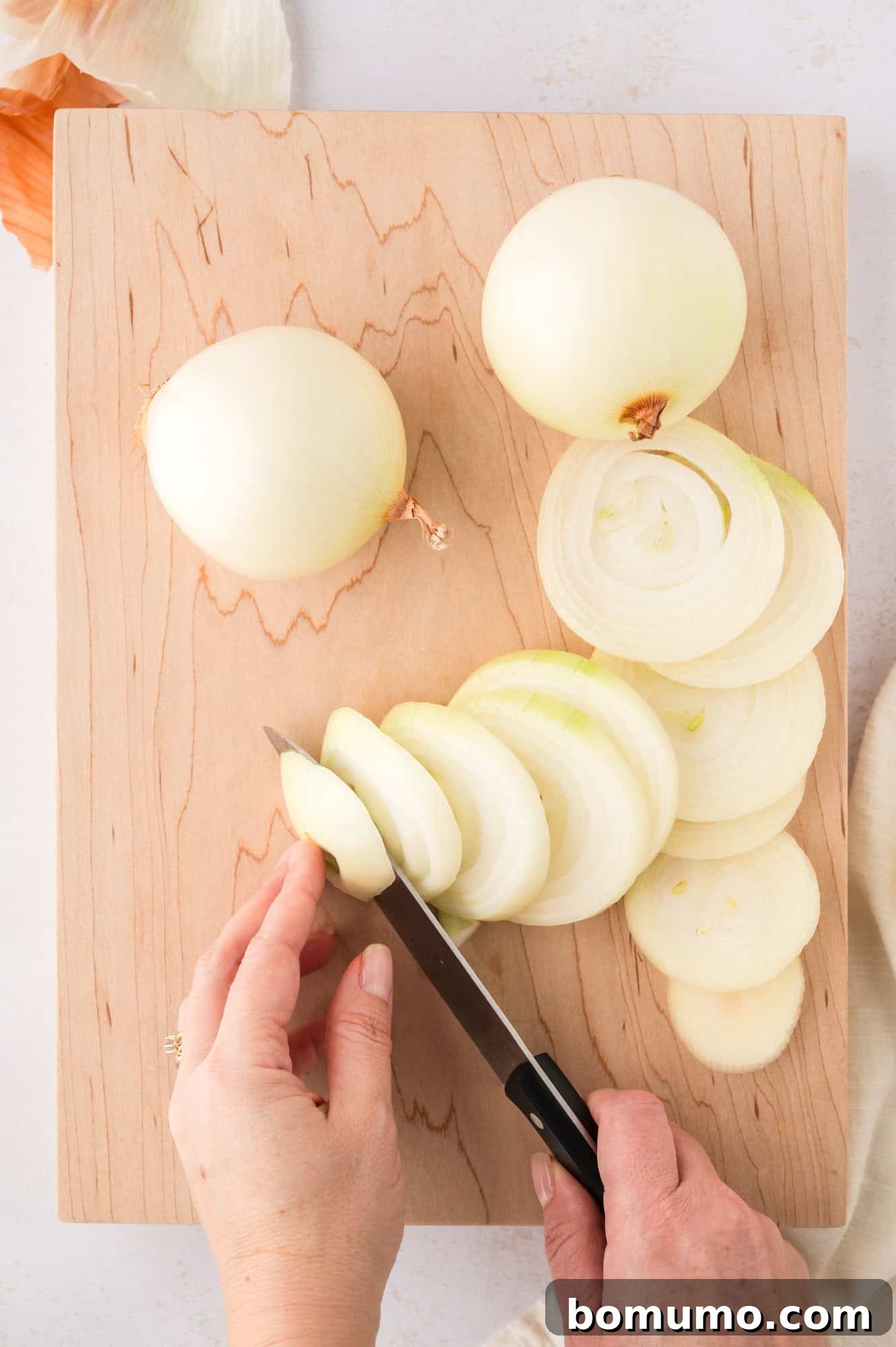
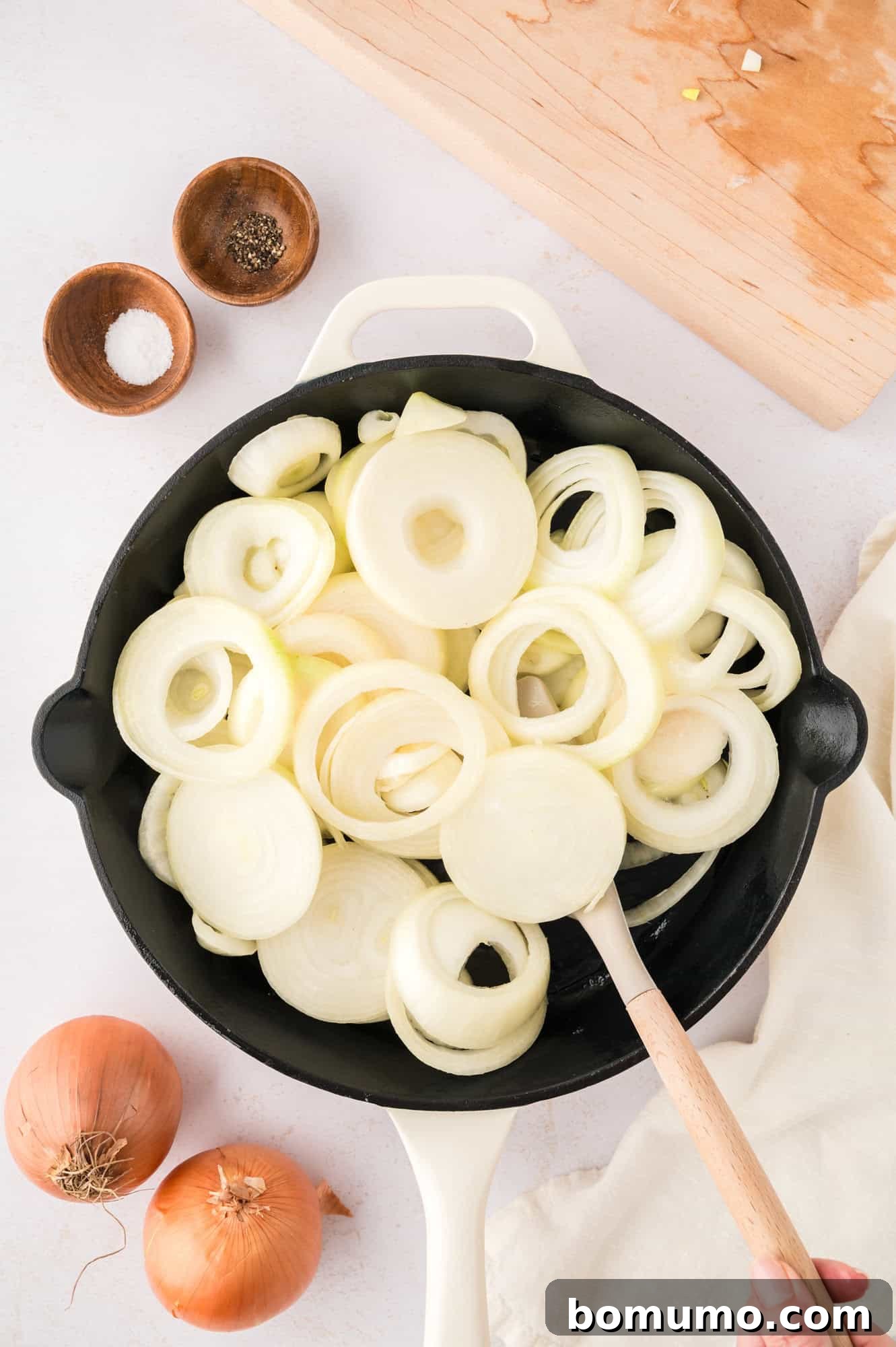
Prep the Onions: Begin by carefully peeling your chosen onions. A handy trick is to trim off both ends first, which makes the peeling process much easier. Once peeled, cut the onions into uniform ¼-inch thick rings. For added safety and stability, you can slice the onion in half first, creating a flat surface to work with, and then slice into half-moon shapes. If you prefer a finer texture or want them to cook even faster, dicing the onions is also an excellent option.
The Cooking Process
-
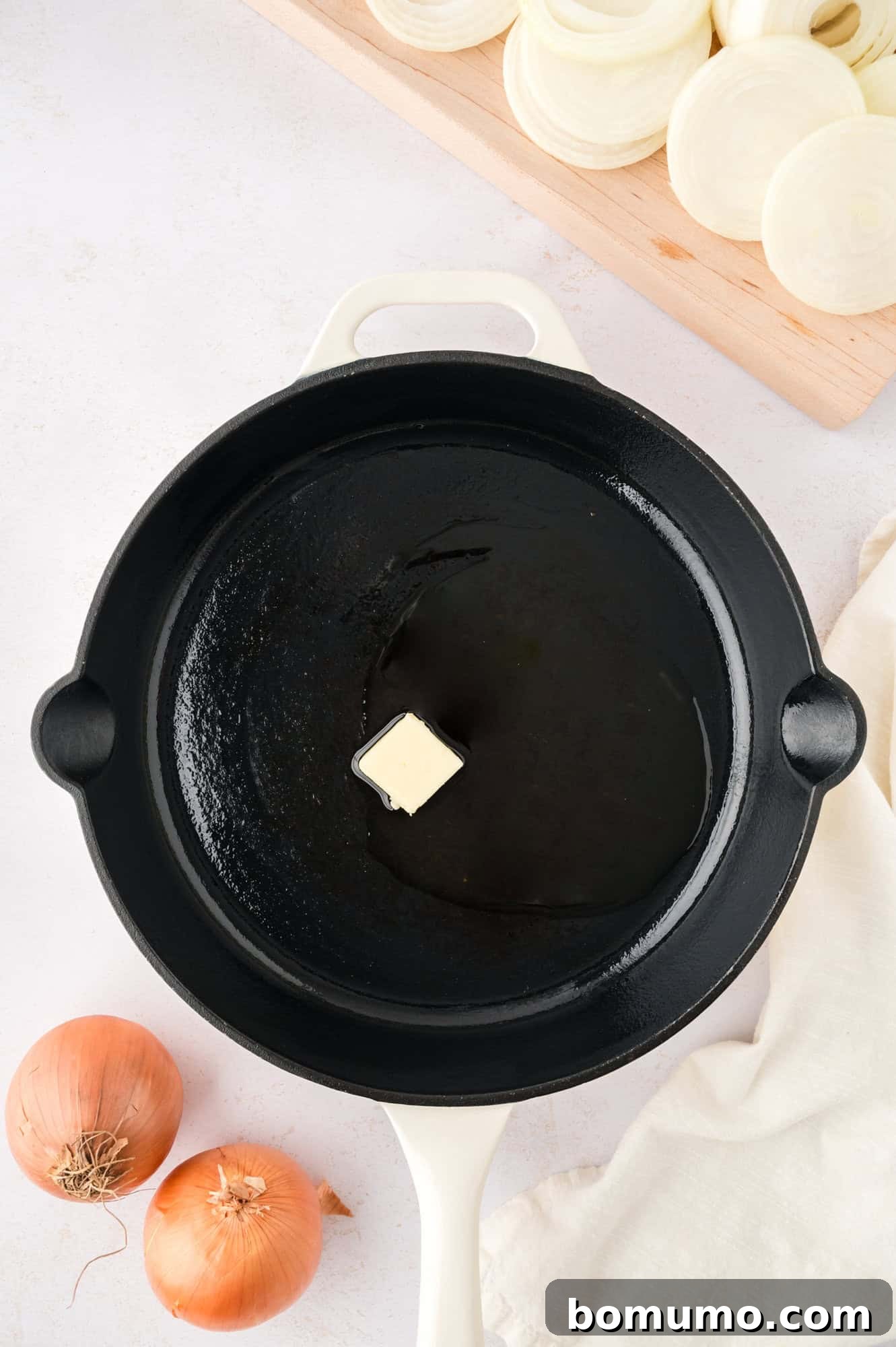
Heat the Skillet: Place a large skillet over medium heat. Add your olive oil, butter, or a combination of both to the pan. Allow the fat to melt and shimmer (if using oil) or foam (if using butter) before adding the onions. This indicates the pan is at the correct temperature for sautéing.
-
Cook the Onions & Season: Add all of your sliced onions to the hot skillet. Stir them gently but thoroughly to ensure each piece is evenly coated with the oil and/or butter. Immediately sprinkle in the kosher salt and coarse ground black pepper. The salt will help draw out moisture, preventing them from steaming, and allowing them to soften and brown beautifully.
-
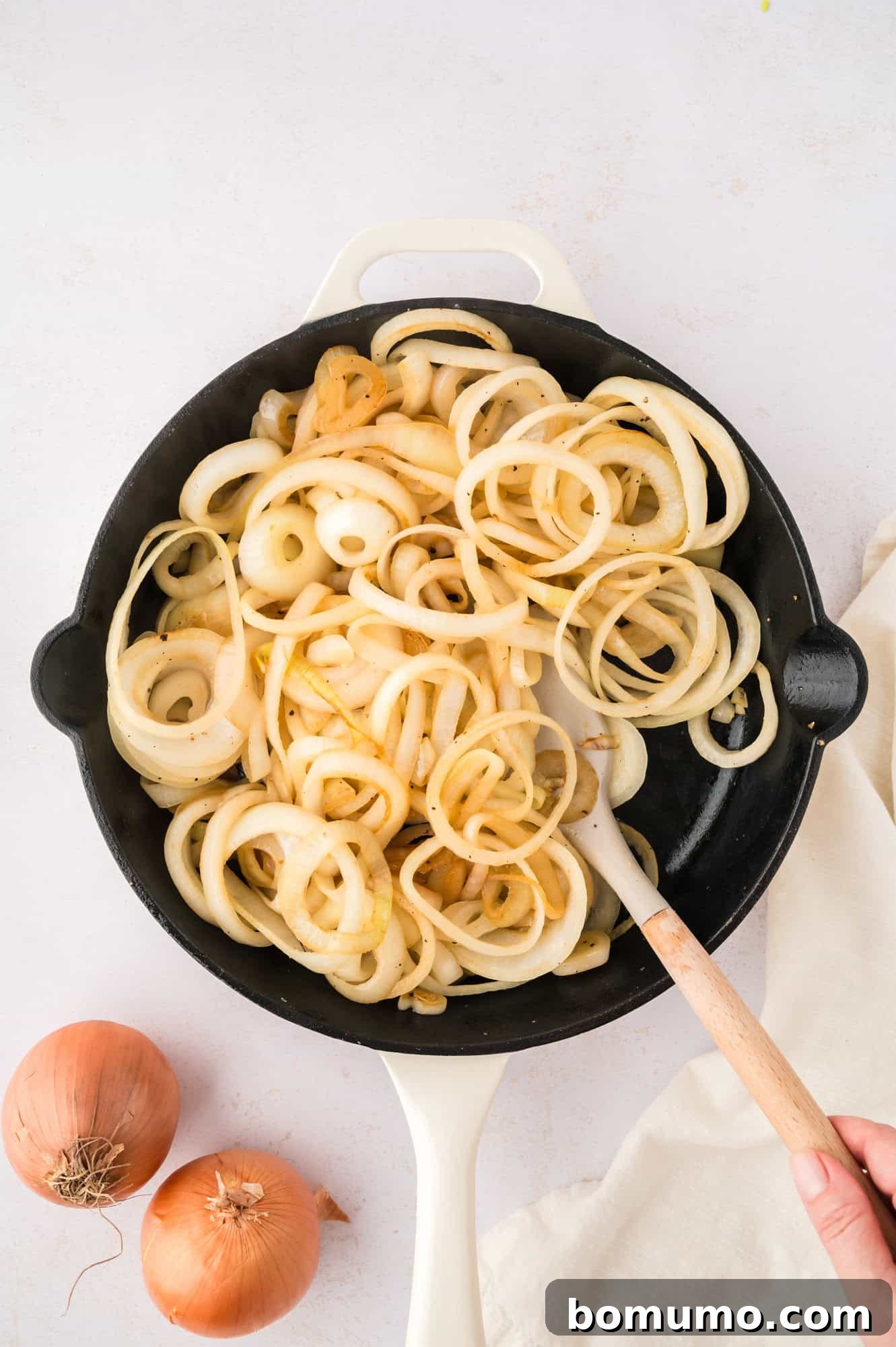
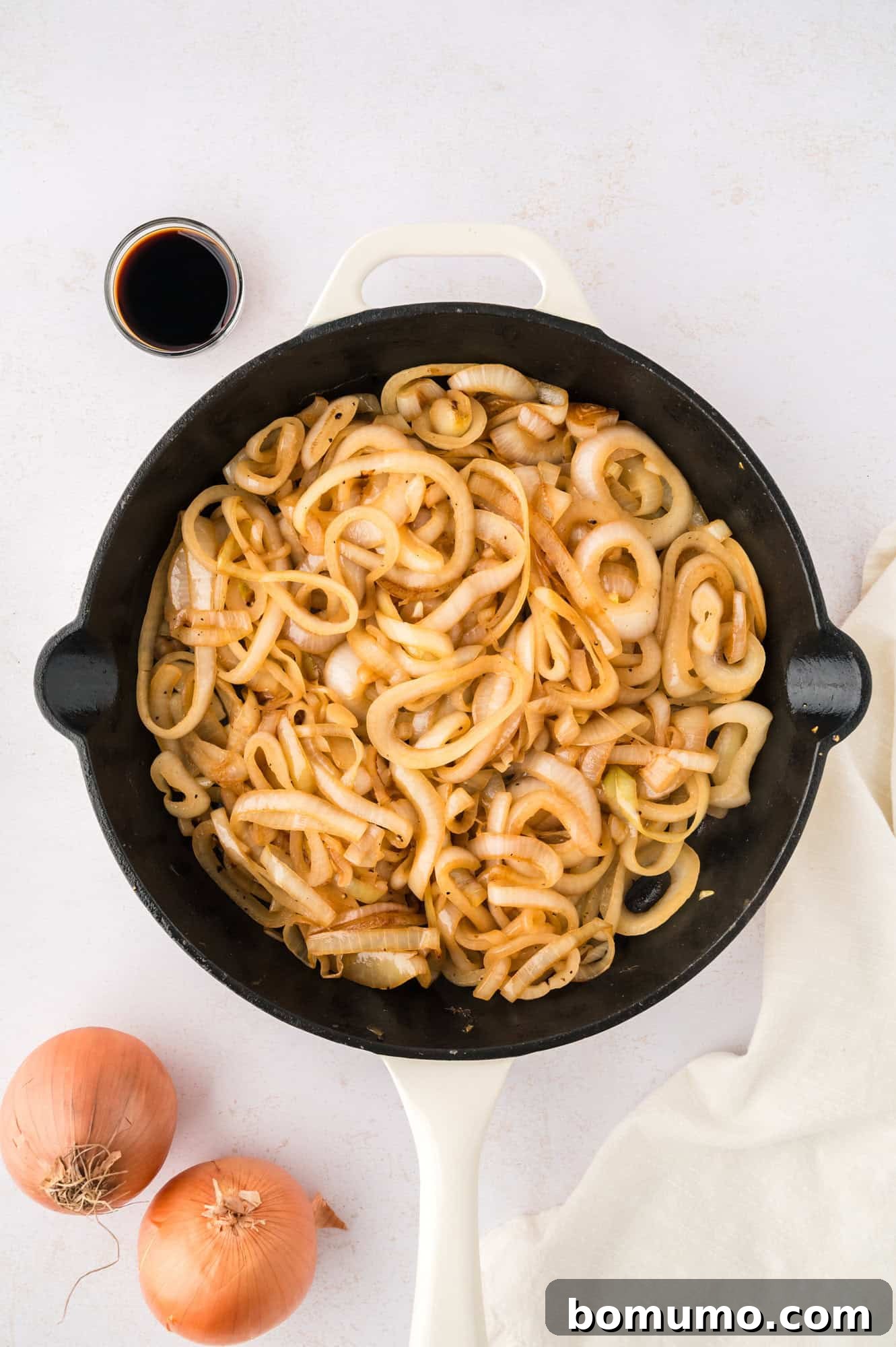
Sauté Until Tender and Lightly Browned: Continue to cook the onions over medium heat for approximately 10 to 15 minutes. Stir them frequently to prevent sticking and ensure even cooking. The goal is for the onions to become soft, translucent, and develop a delicate, lightly browned edge. If you notice them browning too quickly, reduce the heat slightly to medium-low to allow them to soften without burning. Conversely, if you desire a deeper golden brown color, you can increase the heat slightly towards the end, while continuing to stir actively.
Finishing Touches
-
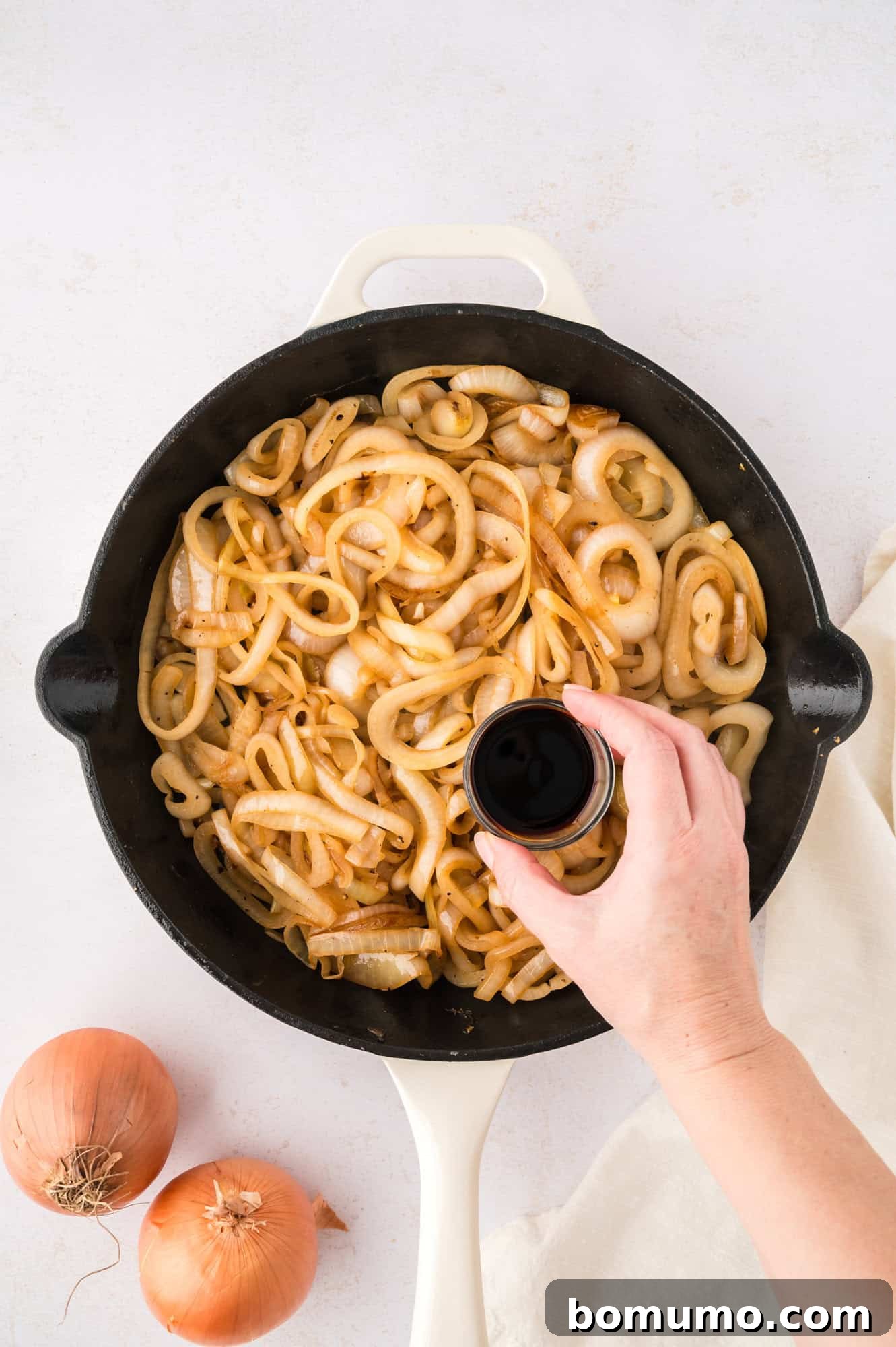
Optional Balsamic Glaze: If you’re opting for a flavor boost with balsamic vinegar, now is the time. Stir in 1 tablespoon of balsamic vinegar during the last minute or two of cooking. Allow it to reduce slightly and coat the onions, adding a beautiful sheen and a tangy-sweet depth.
-
Serve and Adjust Seasoning: Once the onions have reached your desired tenderness and color, remove them from the heat. Taste them and adjust the seasoning with additional salt and pepper as needed. Serve your perfectly sautéed onions immediately as a delightful accompaniment to your chosen dish.
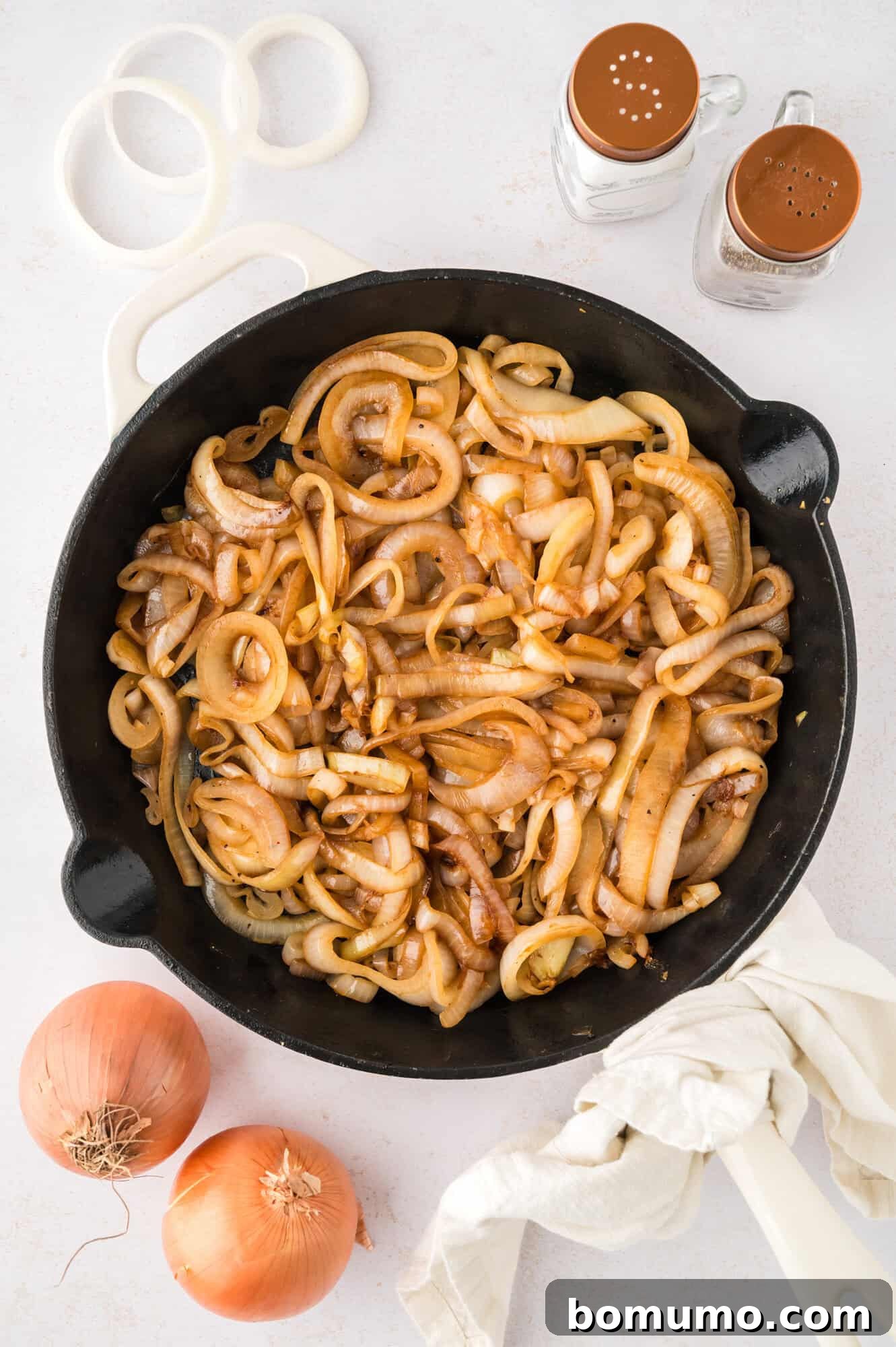
Achieving Sautéed Onion Excellence: Expert Tips
While sautéing onions is relatively simple, a few expert tips can elevate your results from good to truly exceptional.
-
Cut the Onions Evenly for Uniform Texture
Consistency in slicing is paramount. If you have a mix of thick and thin slices, the thinner pieces will overcook and become mushy while the thicker ones remain firm or even crunchy. Aim for uniform ¼-inch thick slices. A mandoline slicer can achieve this precision effortlessly, but a sharp chef’s knife and careful technique work just as well, if not better for control.
-
Lower the Heat as Needed to Prevent Burning
Heat management is key to perfect sautéed onions. While you start on medium heat to get things going, if you notice the onions browning too quickly before they’ve had a chance to soften thoroughly, don’t hesitate to reduce the heat to medium-low. This allows the onions to slowly release their moisture and become tender all the way through without scorching the exterior. Patience here ensures a sweet, soft, and uniformly cooked product.
-
Avoid Overcrowding the Skillet
Resist the urge to cram too many onions into your pan. An overcrowded skillet lowers the temperature significantly and traps moisture, causing the onions to steam rather than sauté. This results in limp, colorless onions instead of beautifully browned and flavorful ones. If you have a large batch, cook the onions in two separate batches to ensure proper browning and tenderness.
-
Choose the Right Skillet
A large, heavy-bottomed skillet is your best friend for sautéing onions. Cast iron, stainless steel, or enameled cast iron skillets retain heat well and distribute it evenly, which is crucial for consistent cooking. Ensure your pan is wide enough so the onions can spread out in a single layer (or close to it) without piling up too high.
Creative Variations for Sautéed Onions
The basic sautéed onion recipe is a fantastic starting point, but its versatility truly shines when you begin to experiment with variations. Here are some ideas to customize your onions for different dishes and palates:
-
Cook Longer for Caramelized Goodness
Want to take your sautéed onions to the next level of rich, deep sweetness? Simply extend the cooking time! By continuing to cook them slowly over low to medium-low heat for 30-60 minutes (or even longer), stirring occasionally, they will gradually transform into jammy, deeply browned, and intensely sweet caramelized onions. This process evaporates more moisture and concentrates their natural sugars, making them perfect for gourmet sandwiches, dips, or topping fine cuts of meat.
-
Explore Different Vinegars for Diverse Flavors
While balsamic vinegar adds a wonderful complexity, don’t limit yourself! Experiment with other vinegars to match your dish:
- Sherry Vinegar: Offers a nutty, slightly sweet, and complex profile, excellent for Mediterranean or Spanish-inspired dishes.
- Apple Cider Vinegar: Provides a crisp, fruity tang that can lighten heavier meals or complement pork dishes.
- Red Wine Vinegar: Adds a sharp, robust acidity, perfect for beef or heartier vegetable preparations.
- White Wine Vinegar: A lighter, more delicate acidity suitable for chicken or fish.
-
Infuse Flavor with Herbs and Spices
Enhance your sautéed onions with aromatic herbs and spices to complement your main course:
- Dried Herbs: Add dried herbs like rosemary, thyme, oregano, or a touch of bay leaf at the beginning of the cooking process. The heat helps release their essential oils, infusing the onions with their robust flavors.
- Fresh Herbs: Stir in fresh chopped herbs such as parsley, chives, tarragon, or cilantro near the very end of cooking to preserve their vibrant flavor and color.
- Spices:
- Smoked Paprika: Excellent for adding a smoky depth, especially if your sautéed onions are destined for burgers, sausages, or grilled chicken.
- Chili Powder or Cumin: Perfect for a Tex-Mex or taco night, bringing warmth and a hint of spice (like with these mushroom tacos).
- Garlic Powder or Granulated Garlic: For an extra savory kick, add a pinch during the last few minutes of cooking to avoid burning the garlic.
- Curry Powder: For an unexpected, aromatic twist, great with chicken or lentil dishes.
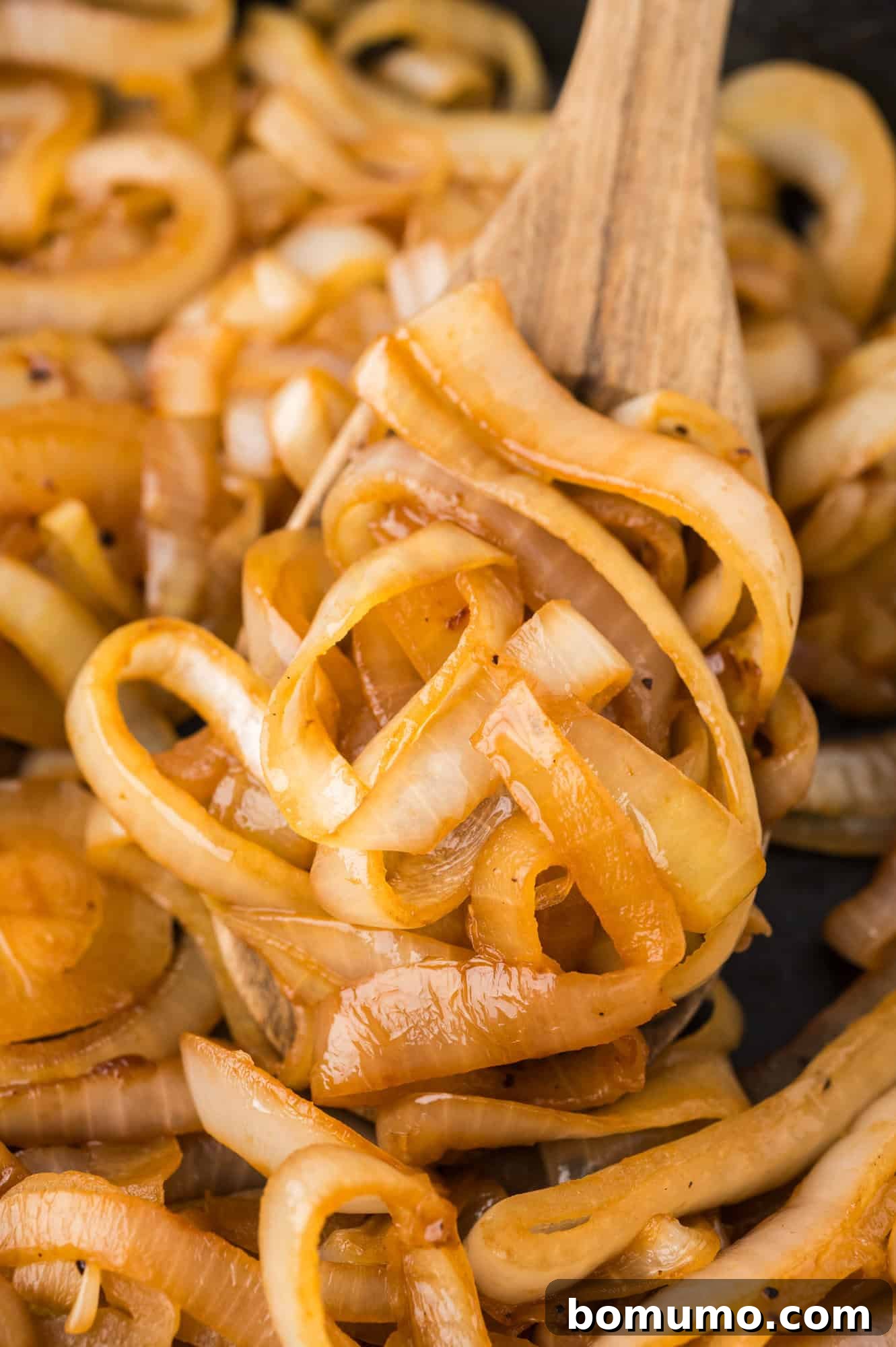
Unleashing the Potential: How to Serve Sautéed Onions
Sautéed onions are incredibly versatile and can be used to enhance almost any meal. Their sweet, savory, and slightly tangy flavor profile makes them a welcome addition to a wide array of dishes.
-
Elevating Main Proteins
Transform your protein dishes with a simple topping of sautéed onions. They pair exceptionally well with:
- Pork: Add them to pork chops with balsamic caramelized onions or use them to jazz up air fryer pork tenderloin.
- Chicken: A fantastic topping for roasted bone-in chicken breasts, grilled chicken, or even simple pan-seared chicken cutlets.
- Beef: Perfect alongside garlic butter steak bites, grilled steaks, prime rib, or even as a filling for beef tacos.
- Fish: A surprising, yet delicious, accompaniment to flaky white fish or salmon, especially with a touch of lemon.
-
Burgers and Sandwiches
Sautéed onions are a game-changer for casual meals, adding gourmet flair to everyday favorites:
- Burgers: Whether it’s air fryer hamburgers, black bean burgers, or turkey burgers, a pile of sautéed onions makes them infinitely more delicious.
- Sandwiches: Elevate a simple grilled cheese, a turkey club, or a hearty Reuben. They are also incredible in pizza panini sandwiches or classic Philly cheesesteaks.
- Hot Dogs & Sausages: A classic pairing that brings depth and sweetness to grilled hot dogs or Italian sausages.
-
Vegetable Side Dishes
Boost the flavor of your vegetable sides with sautéed onions:
- Roasted Vegetables: Spoon them over cauliflower steaks, roasted carrots, or potatoes.
- Steamed or Air-Fried Greens: Stir them into a batch of air fryer Brussels sprouts, green beans, or asparagus for added complexity.
- Mashed Potatoes: Fold them into creamy mashed potatoes for an instant flavor upgrade.
-
Beyond the Basics: Everything Else!
The possibilities are truly endless. Get creative and add sautéed onions to:
- Pizza: As a flavorful topping for any homemade or store-bought pizza.
- Tacos & Quesadillas: An excellent filling or topping for vegetarian options like mushroom tacos, or any meat-filled taco.
- Meal Bowls & Grain Bowls: Integrate them into healthy grain bowls with roasted vegetables, protein, and a vibrant sauce.
- Pasta Dishes: Add them to a simple pasta primavera, a rich bolognese, or a creamy Alfredo for an extra layer of flavor.
- Scrambled Eggs & Omelets: Start your day with a flavor boost by incorporating sautéed onions into your breakfast.
- Stir-fries: A quick and easy addition to any stir-fry for added sweetness and texture.
Make Ahead & Storage Tips
One of the best features of sautéed onions is how well they store, making them an ideal meal-prep component. I love to prepare a larger batch and keep them on hand in the fridge, ready to effortlessly enhance meals throughout the week.
To store, simply transfer the cooled sautéed onions to an airtight container. They will keep beautifully in the refrigerator for up to 5 days, maintaining their flavor and texture. For longer storage, you can freeze them for up to 3 months. When ready to use, thaw them in the refrigerator overnight (if frozen) and then reheat gently in the microwave or in a skillet set over medium heat until warmed through.
Discover More How-To Recipes
How to Make Perfect Baked Potatoes
How to Toast Pecans – Three Essential Methods!
The Ultimate Guide to Cooking Jasmine Rice
How To Make Irresistible Deviled Eggs
Recipe
Sautéed Onions
By Rachel Gurk
Prep Time:
10 mins
Cook Time:
15 mins
Total Time:
25 mins
Servings:
8 servings
Sautéed onions are a versatile and easy-to-make kitchen trick that can jazz up everything from burgers and steaks to salads and other side dishes.
Ingredients
- 2 pounds onions (approximately 3 medium or 2 large onions)
- 2 tablespoons olive oil or unsalted butter (or preferably, 1 tablespoon of each)
- ½ teaspoon kosher salt, more to taste
- ¼ teaspoon coarse ground black pepper, more to taste
- 1 tablespoon balsamic vinegar, optional
Instructions
- Peel the onions and thinly slice them into ¼-inch thick rings. You can cut them into full rings or half-moons, depending on your preference. Dicing is also an option for faster cooking.
- In a large skillet or pan, heat the olive oil and/or unsalted butter over medium heat until shimmering or foaming.
- Add the sliced onions to the skillet. Stir thoroughly to coat the onions evenly with the oil or butter. Sprinkle with salt and black pepper.
- Cook the onions over medium heat for 10 to 15 minutes, stirring frequently, until they are soft and translucent with light browning. If onions are browning too quickly, reduce heat to medium-low. If you prefer a deeper brown color, you may slightly increase heat toward the end, stirring constantly.
- If desired, stir in 1 tablespoon of balsamic vinegar during the last minute of cooking time to glaze the onions.
- Taste the sautéed onions and adjust the seasoning with more salt and pepper if needed before serving.
Notes
- If you prefer, you can chop or dice the onions instead of slicing. This will slightly decrease the cooking time.
- Onion varieties: This recipe is flexible! Any type of bulb onion will work well, including red, sweet, yellow, or Vidalia onions. Choose your favorite or whatever you have on hand.
- Serving ideas: These delicious sautéed onions are incredibly versatile. Serve them as a flavorful topping for burgers, sandwiches, steaks, chicken, or salads. They also make a fantastic simple side dish.
- Storage: Cooked sautéed onions can be stored in an airtight container in the refrigerator for up to 5 days. For longer preservation, they can be frozen for up to 3 months.
Nutrition
Serving: 1 serving
Calories: 78 kcal
Carbohydrates: 11 g
Protein: 1 g
Fat: 4 g
Saturated Fat: 1 g
Polyunsaturated Fat: 0.4 g
Monounsaturated Fat: 3 g
Sodium: 150 mg
Potassium: 169 mg
Fiber: 2 g
Sugar: 5 g
Vitamin A: 3 IU
Vitamin C: 8 mg
Calcium: 27 mg
Iron: 0.3 mg
Nutrition information is automatically calculated and should only be used as an approximation.