
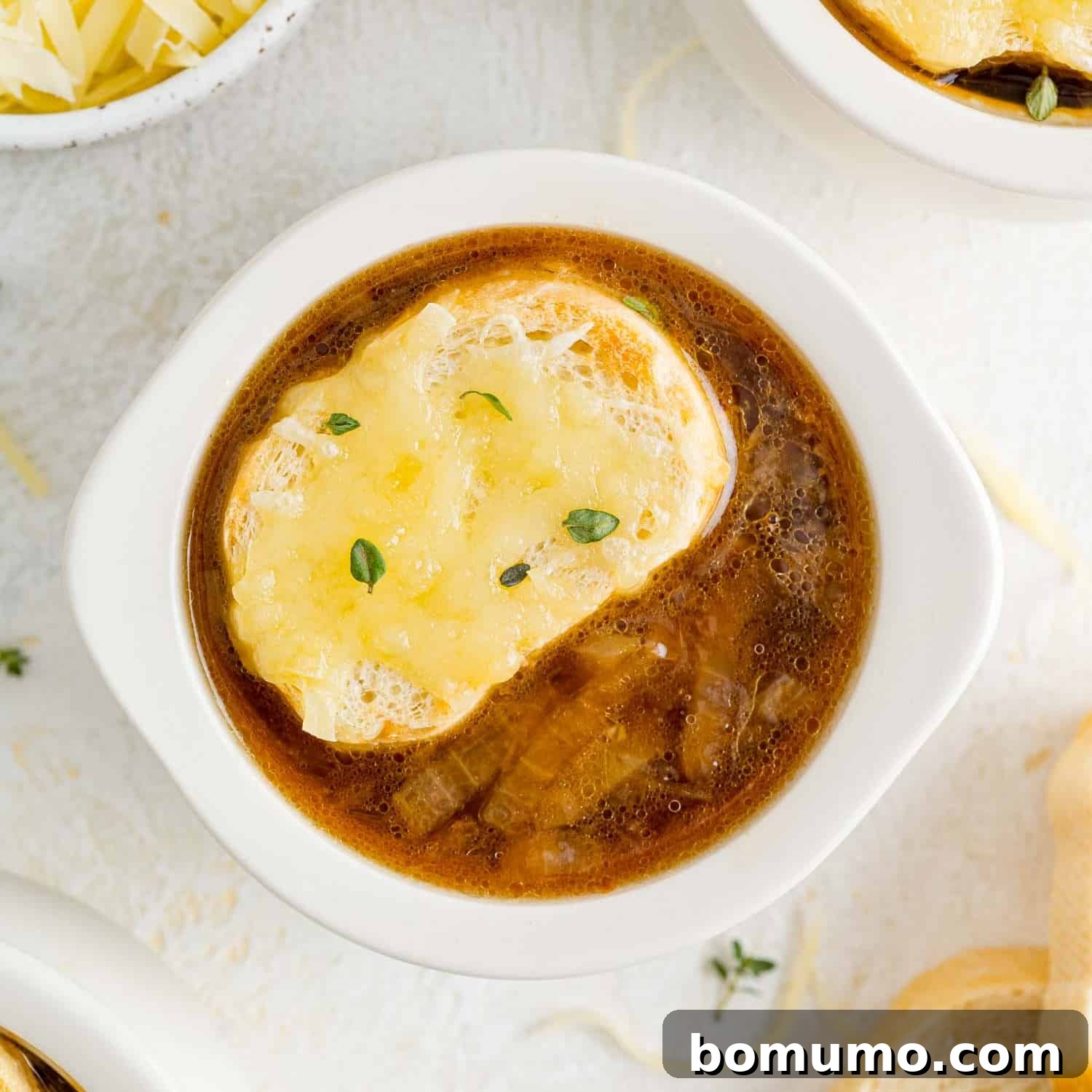
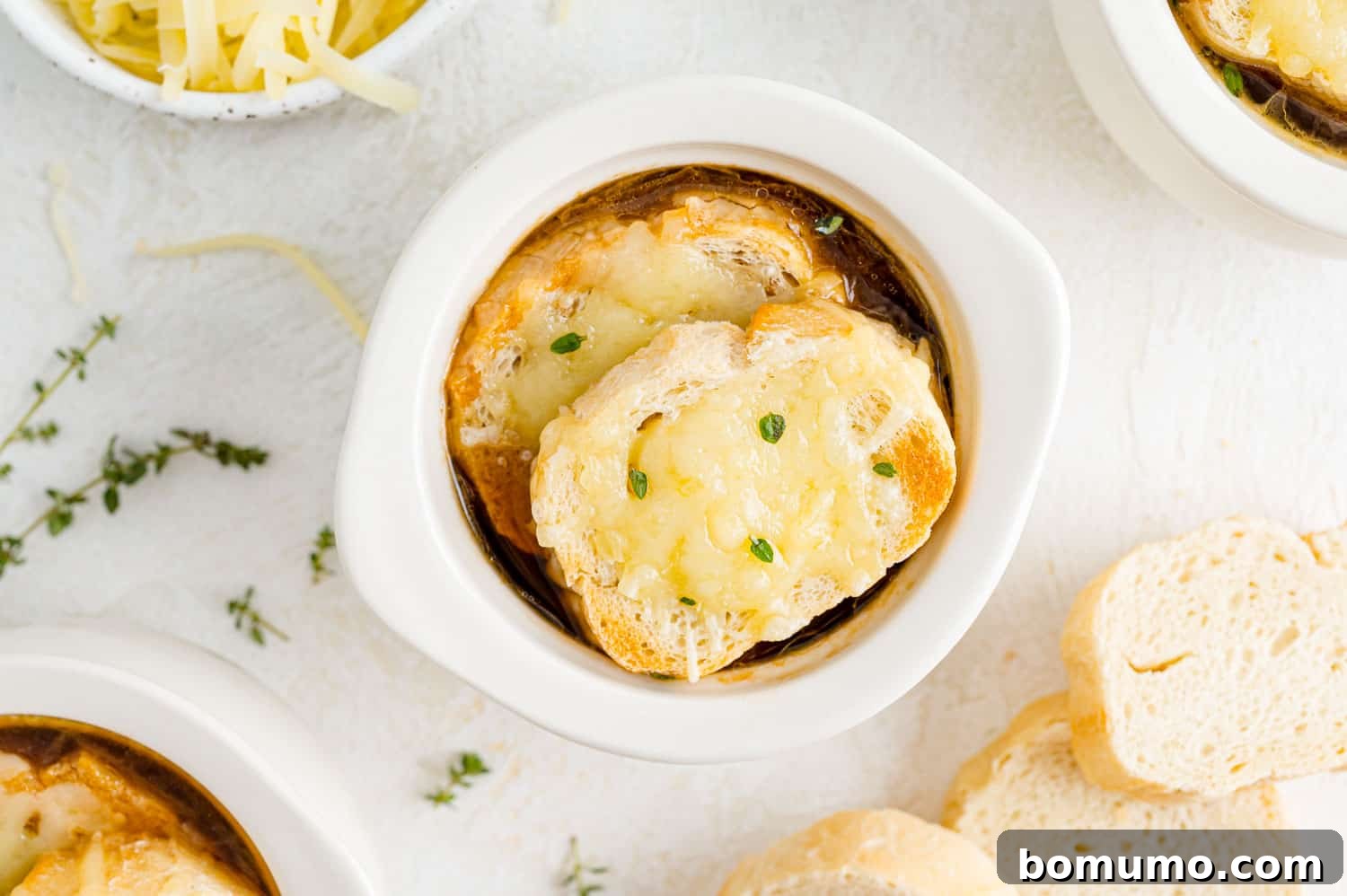
Welcome to the ultimate guide for crafting a truly exceptional Classic French Onion Soup. This timeless culinary masterpiece, originating from the heart of France, transforms humble ingredients into a symphony of rich, savory flavors. Imagine deeply caramelized onions, simmered in a robust beef broth, then crowned with a crusty slice of artisanal bread smothered in a thick layer of bubbling, golden Gruyère cheese. This isn’t just soup; it’s an experience, a journey into warmth and comfort that has captivated palates for centuries.
Recipe Overview: Why This French Onion Soup Shines
Why you’ll love it: The depth of flavor is simply unparalleled! There’s truly nothing quite as satisfying and comforting as a bowl of homemade French onion soup, especially when prepared with care and attention to detail. This recipe delivers that authentic bistro taste right to your dining table.
How long it takes: The secret to its incredible taste lies in patience. Allow about 90 minutes for the magical transformation of onions into sweet, golden caramel, followed by an additional 20-30 minutes for the soup to simmer and meld its flavors.
Equipment you’ll need: A large, heavy-bottomed pan with a lid, such as a Dutch oven, is essential for optimal caramelization and even cooking.
Servings: This recipe yields 8 generous servings, perfect for a family meal or entertaining guests.
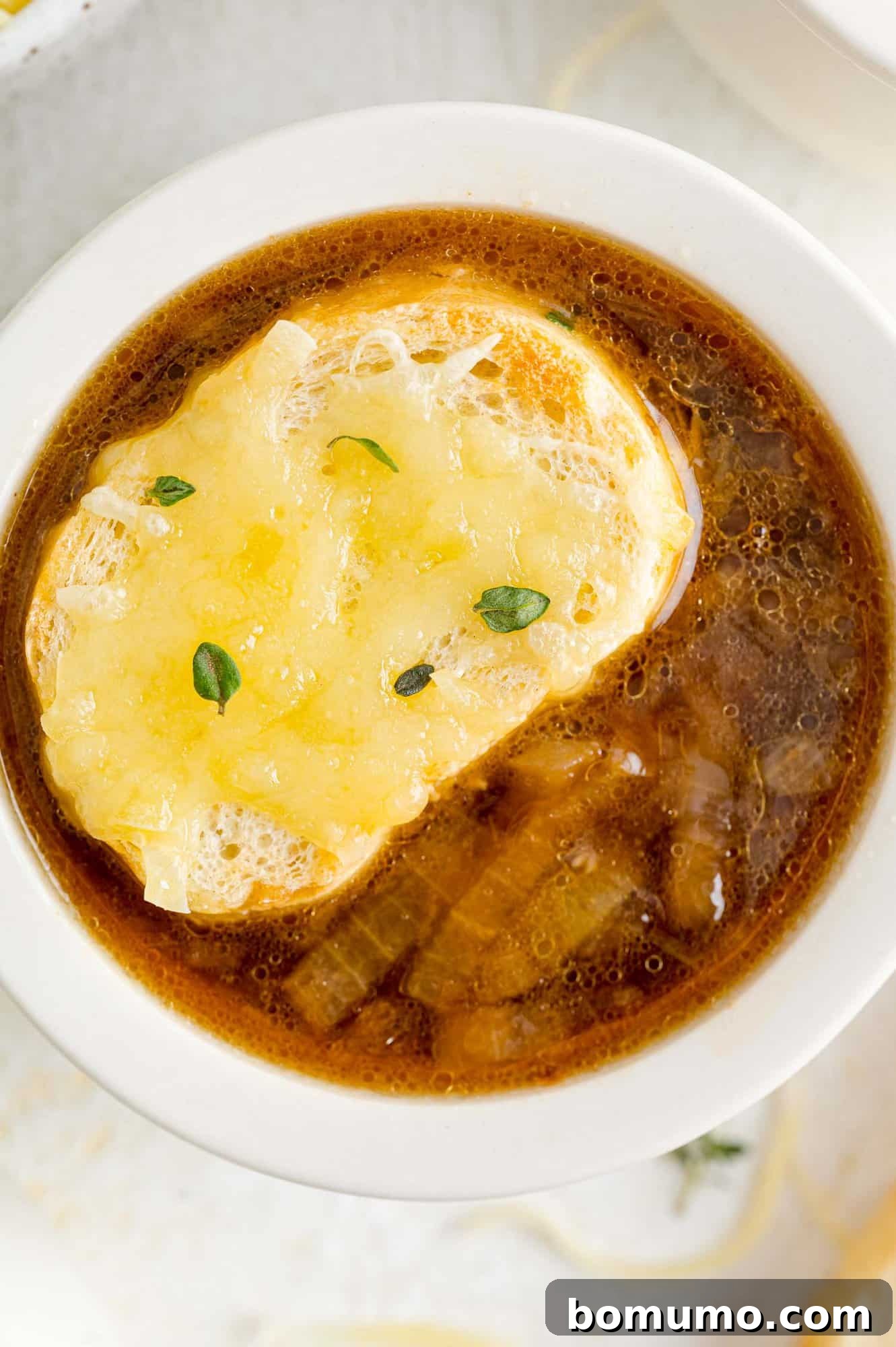
Embarking on the journey of making French onion soup naturally begins with mastering the art of caramelizing onions. As shared in our guide on how to make caramelized onions, this crucial first step lays the foundation for the soup’s incredible depth. While French onion soup appears and tastes remarkably impressive, its core ingredients are surprisingly humble: sweet onions, robust beef broth, flavorful cheese, and crusty bread. It’s the alchemy of these simple components, combined with patient cooking, that creates such an extraordinary dish.
We genuinely encourage you to try this authentic French onion soup recipe. The idea of perfectly caramelized onions might seem like a luxurious extra, but in reality, they are straightforward to prepare and profoundly elevate the flavor profile. The rich, nuanced sweetness they bring to the broth simply cannot be replicated by any shortcut. And then, of course, there’s that irresistible blanket of cheesy bread, a golden, molten crown floating atop the savory broth… Pure culinary bliss!
P.S. If you find yourself captivated by all things French onion, don’t stop here! Be sure to explore our homemade French onion dip, a perfect companion for potato chips. For a truly natural and preservative-free alternative to store-bought packets, try our versatile onion soup mix, ideal for enhancing everything from meatloaf and dips to burgers and other hearty soups.
Unveiling the Magic of French Onion Soup: It’s All About the Caramelized Onions
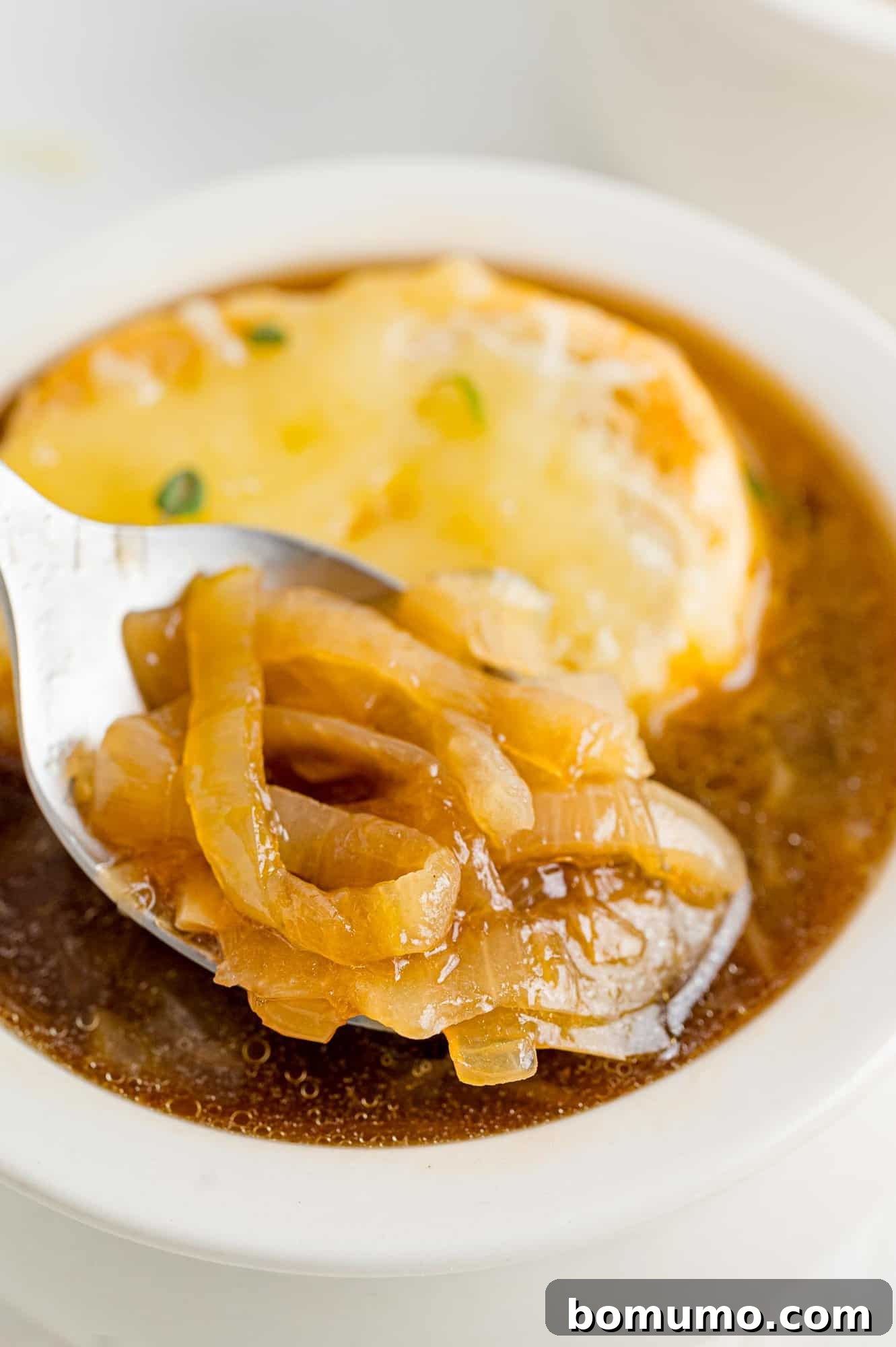
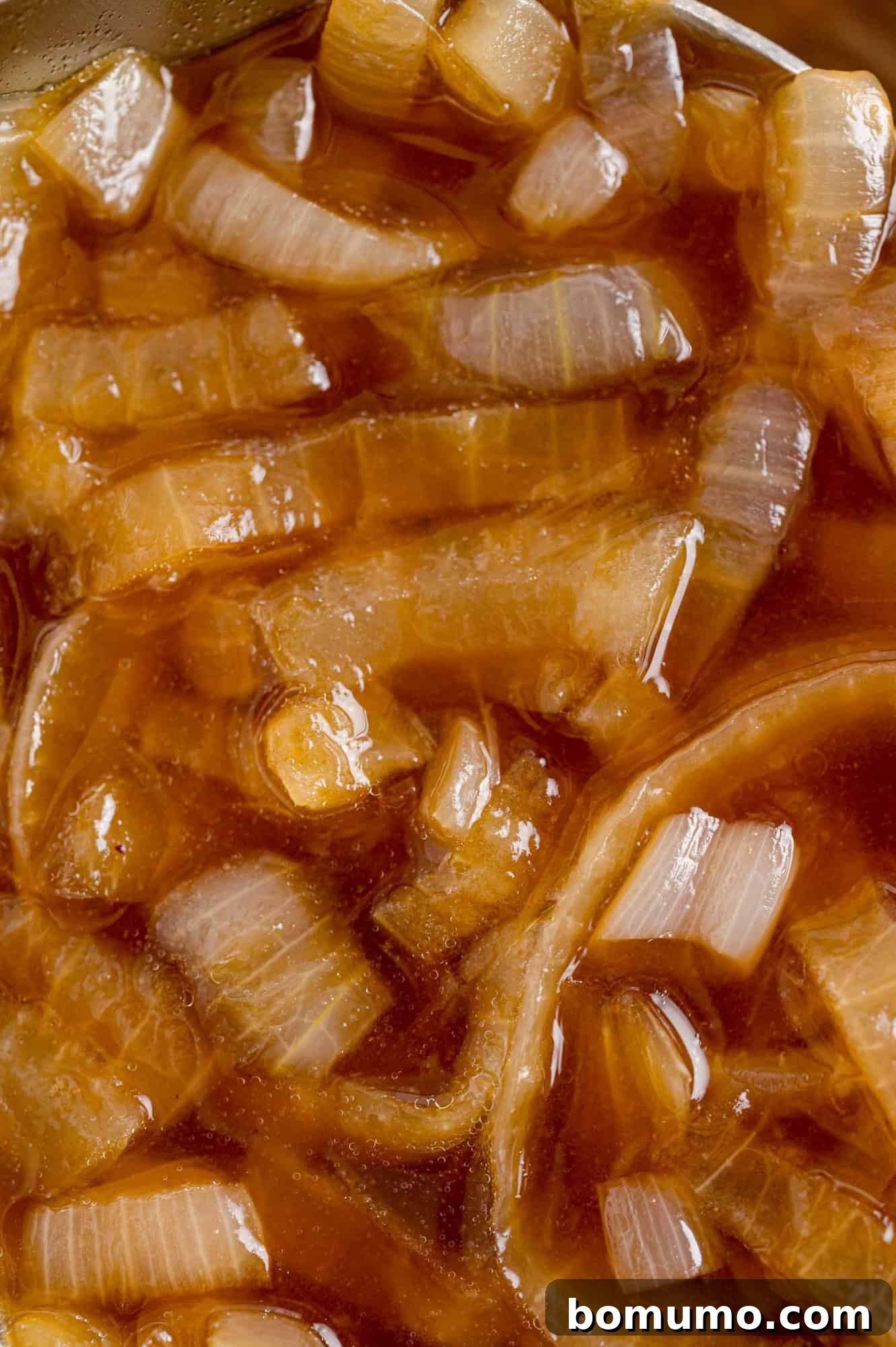
The heart and soul of an authentic French onion soup lie undeniably in its caramelized onions. This transformative process takes sweet yellow onions, a touch of butter, and olive oil, and through slow, steady heat, turns them into a deep, mahogany-brown delicacy bursting with intense, sugary notes. While the process itself is simple, it requires patience. You’ll need a large, heavy-bottomed pan with a lid – a Dutch oven is ideal – and approximately an hour and a half of gentle simmering. Caramelization is a beautiful chemical reaction that cannot be rushed; the sugars in the onions slowly break down and brown, developing layers of complex flavor that are essential for a truly outstanding soup.
The good news is that much of this cooking time for the onions is hands-off. You don’t need to hover over the stove constantly. Simply give them an occasional stir to ensure even cooking and prevent sticking. This allows you to tackle other kitchen tasks or simply relax while the onions work their magic. This patient approach is what sets truly exceptional French onion soup apart, creating a foundation of rich sweetness that complements the robust beef broth perfectly.
Essential Ingredients for Your Perfect French Onion Soup
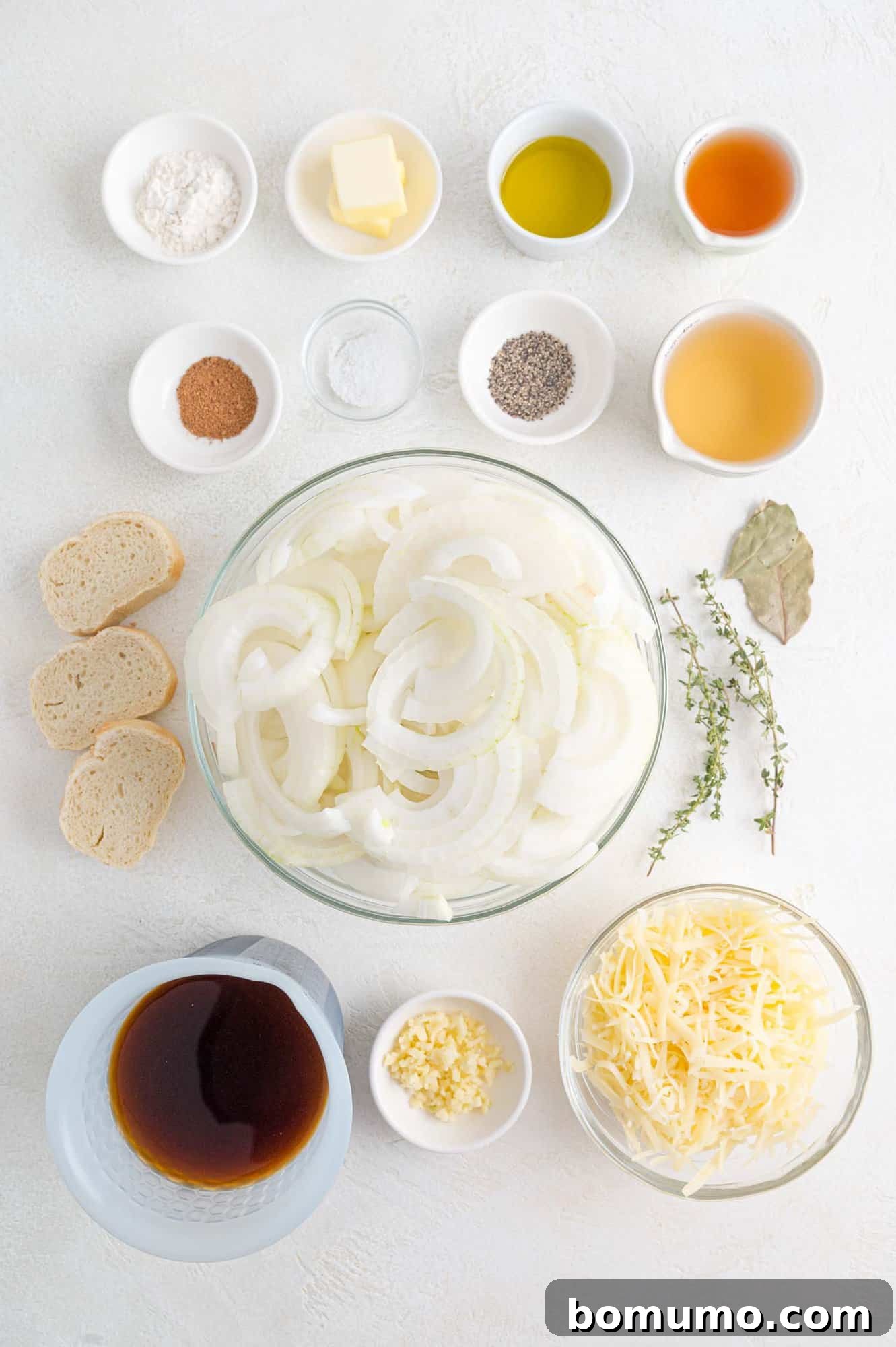
Crafting the best French onion soup starts with selecting the right, high-quality ingredients. Here’s a breakdown of what you’ll need and why each component is vital:
- Onions: The star of the show! Opt for large sweet or yellow onions, roughly 12 to 14 ounces each. You’ll need about six of them, aiming for a total weight between 4½ and 5¼ pounds. This might seem like a substantial quantity, but rest assured, they cook down significantly during the caramelization process, losing much of their volume while concentrating their sweetness. Sweet onions like Vidalia or Walla Walla are excellent choices for their naturally mild flavor that caramelizes beautifully.
- Olive Oil & Butter: A combination of these two fats provides the best of both worlds. Olive oil offers a slightly higher smoke point, while butter infuses the onions with a rich, creamy depth of flavor that is quintessential to French cooking.
- Garlic: Just a couple of minced fresh garlic cloves are needed to add a subtle, aromatic background note that enhances the savory profile of the soup without overpowering the delicate onion flavor.
- All-Purpose Flour: A single tablespoon of flour acts as a thickener, creating a silken texture for the broth and helping the flavors meld together beautifully. It forms a light roux with the caramelized onions before the liquid is added.
- Dry White Wine: Choose a dry white wine that you enjoy drinking, but it doesn’t need to be your most expensive bottle. A good Chardonnay, especially one aged in oak, can truly elevate the flavor of the caramelized onions, adding a layer of sophisticated acidity and fruitiness that balances the richness of the soup.
- Dry Sherry or Brandy: This is often considered the “secret ingredient” that truly makes this soup shine. Used to deglaze the pan, dry sherry or brandy adds an incredible depth and complexity, enriching the overall flavor profile alongside the white wine. It contributes a subtle nuttiness and warmth that is hard to replicate.
Understanding Dry Sherry for French Onion Soup
When selecting sherry, it’s important to distinguish between the various types. For this recipe, dry sherry is the ideal choice. It contains very little residual sugar and has a relatively high alcohol content (typically 15% to 22%), which helps deglaze the pan effectively and concentrate flavors. Sweet sherries, such as Harvey’s Bristol Cream, would impart an undesirable sweetness to your savory soup. It is also crucial to avoid “cooking sherry” often found in supermarkets, as it typically contains added salt, preservatives, and other ingredients that can negatively impact the flavor of your dish.
While much of the alcohol will cook off during the simmering process, not all of it will evaporate. If alcohol content is a concern for you or your guests, a suitable non-alcoholic substitute would be sherry vinegar or a good quality white wine vinegar. Simply substitute the liquid measure with your chosen vinegar combined with beef broth, as detailed in our “Make It Your Own” section.
- Beef Stock: The quality of your beef stock is paramount. Seek out the best beef stock you can find, ideally low-sodium or unsalted, to control the seasoning of your soup. While making homemade beef stock offers the deepest flavor, it can be time-consuming; a high-quality store-bought broth is perfectly acceptable and will still yield a fantastic soup. Avoid overly salty broths, as the concentration of flavors during cooking can make the final dish too saline.
- Nutmeg: Freshly grated nutmeg makes an astonishing difference compared to pre-ground varieties. Its warm, subtle spice perfectly complements the rich flavors of the onions and beef. Once you experience the vibrant aroma and taste of fresh nutmeg, you’ll never go back!
- Fresh Thyme: This woody herb is a classic pairing with onions and beef, lending an earthy, aromatic note to the soup. You’ll need three sprigs. A “sprig” is a somewhat subjective measurement, but generally refers to a small branch about 4 to 5 inches long, which may have a few smaller branches attached. If stripped of its leaves, it would typically yield about one teaspoon. When in doubt, it’s better to use slightly less if you’re unfamiliar with its potency to ensure the flavor remains balanced.
- Bay Leaves: Two medium-sized dried bay leaves are added to infuse a subtle, herbal aroma that deepens the overall complexity of the broth. Remember to remove them before serving, as they are not meant for consumption.
- Crusty Bread: A good quality French baguette or another crusty artisan bread is essential. Ensure that each slice is substantial enough to comfortably float within your chosen soup bowls, providing a sturdy base for the melting cheese. The texture contrast of the soaked bread with the crispy top is delightful.
- Gruyère Cheese: This Swiss cheese is the traditional choice for French onion soup, celebrated for its mild, nutty flavor and its exceptional melting properties. For the best, most even melt and a beautiful golden crust, it’s highly recommended to shred your own Gruyère from a block rather than using pre-shredded varieties, which often contain anti-caking agents.
Crafting the Perfect Bowl: Step-by-Step French Onion Soup
Let’s dive into the detailed steps for preparing this iconic, heartwarming soup. Follow these instructions and tips for a truly unforgettable culinary experience.
1. Prepare the Onions
Begin by peeling and rinsing your six large onions. Cut each onion in half lengthwise, then slice each half into uniform quarter-inch thick half-moons. This meticulous slicing ensures even caramelization. You’ll notice a seemingly enormous pile of onions, and it is! But don’t be alarmed; they will cook down dramatically. A large, heavy-bottomed pan, such as a Dutch oven, is crucial here. Heavy pans distribute heat more evenly, preventing the onions from burning quickly, a common issue with lightweight pans that require constant vigilance.
Clever Tips for Tear-Free Onion Slicing
Slicing a large quantity of onions can bring tears to your eyes, but here are some tricks to minimize the sting. If you wear contact lenses, keep them in; they often create a protective barrier. For non-contact wearers, positioning a small fan to blow air across your cutting board and away from your face can effectively dissipate the irritating fumes. Always use a very sharp knife; a clean cut minimizes the release of the tear-inducing compounds, whereas a dull knife crushes the cells. Some home cooks also find relief by soaking peeled and halved onions in ice water for about 30 minutes before slicing.
2. Begin Caramelizing the Onions
In your chosen heavy-bottomed pan, melt the butter and olive oil together over medium heat. Once the butter is fully melted and shimmering, add all of the sliced onions. Season them generously with about half a teaspoon of kosher salt, which helps draw out moisture and aids in the caramelization process, then stir well to ensure every onion slice is coated in the fat.
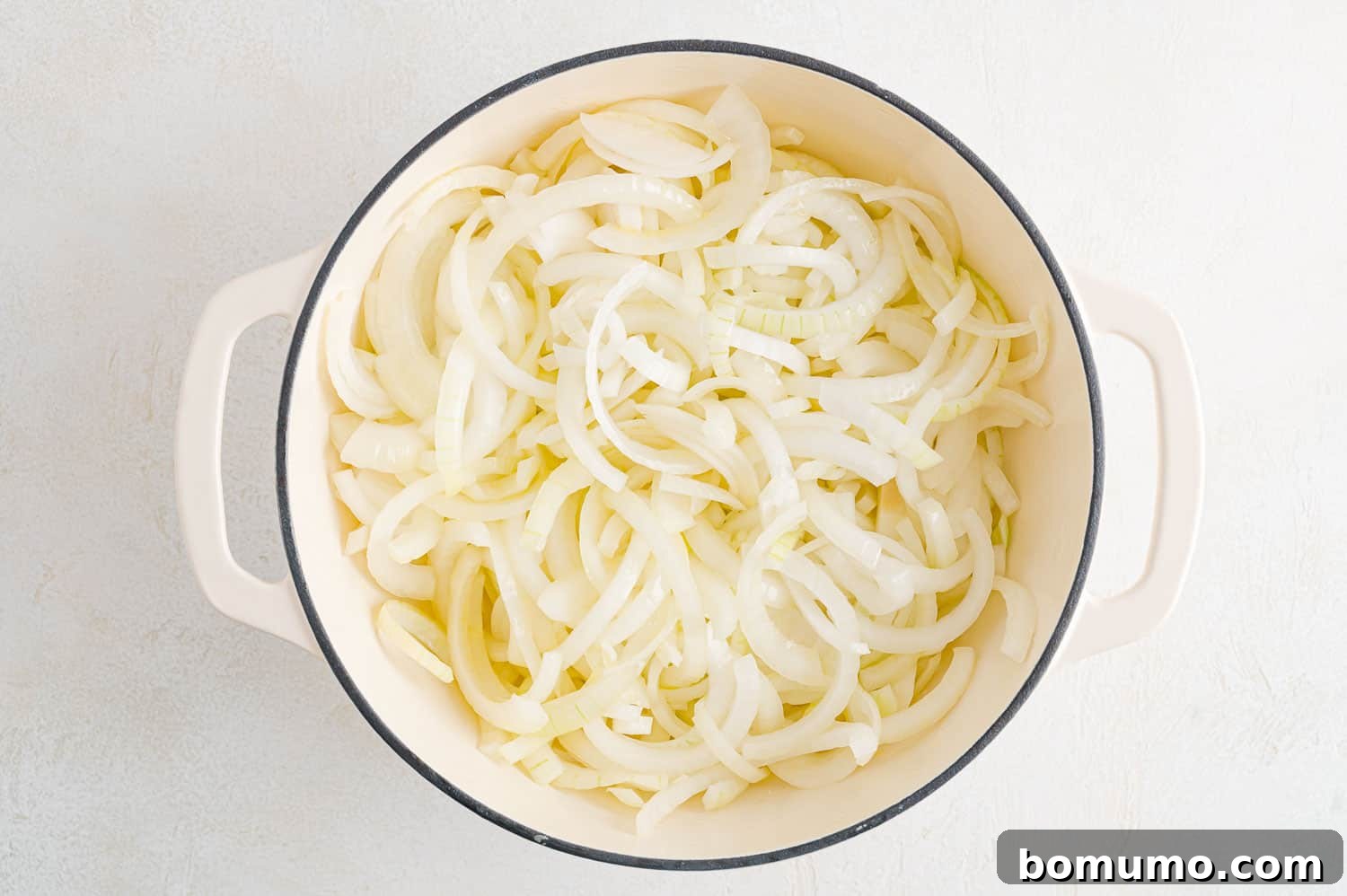
Cover the pan and allow the onions to cook for an initial 10 minutes. This steaming period helps soften the onions and creates moisture, jump-starting the cooking process.
After 10 minutes, uncover the pan, give the onions a good stir, and reduce the heat to medium-low. This is where the magic truly happens.
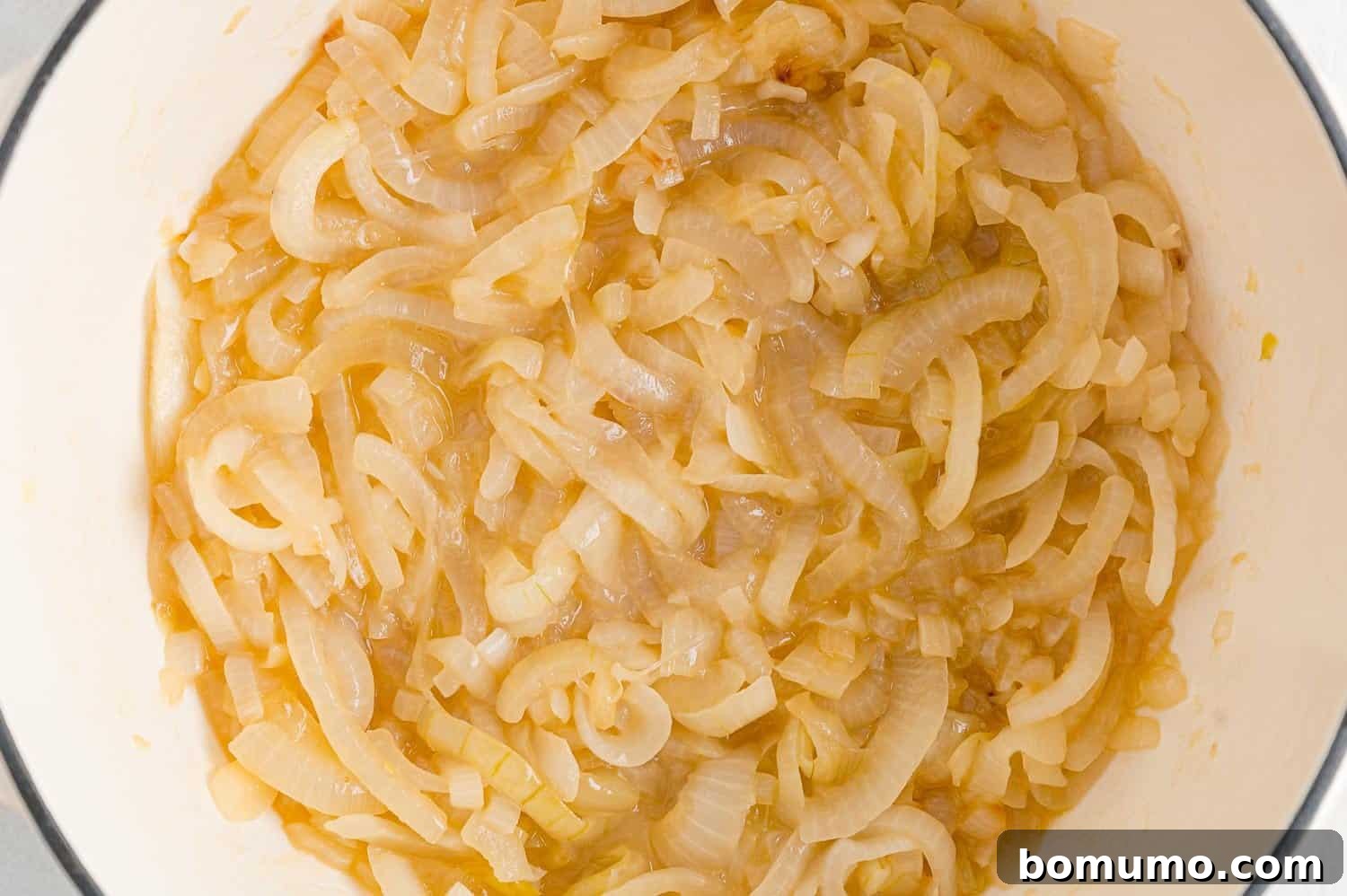
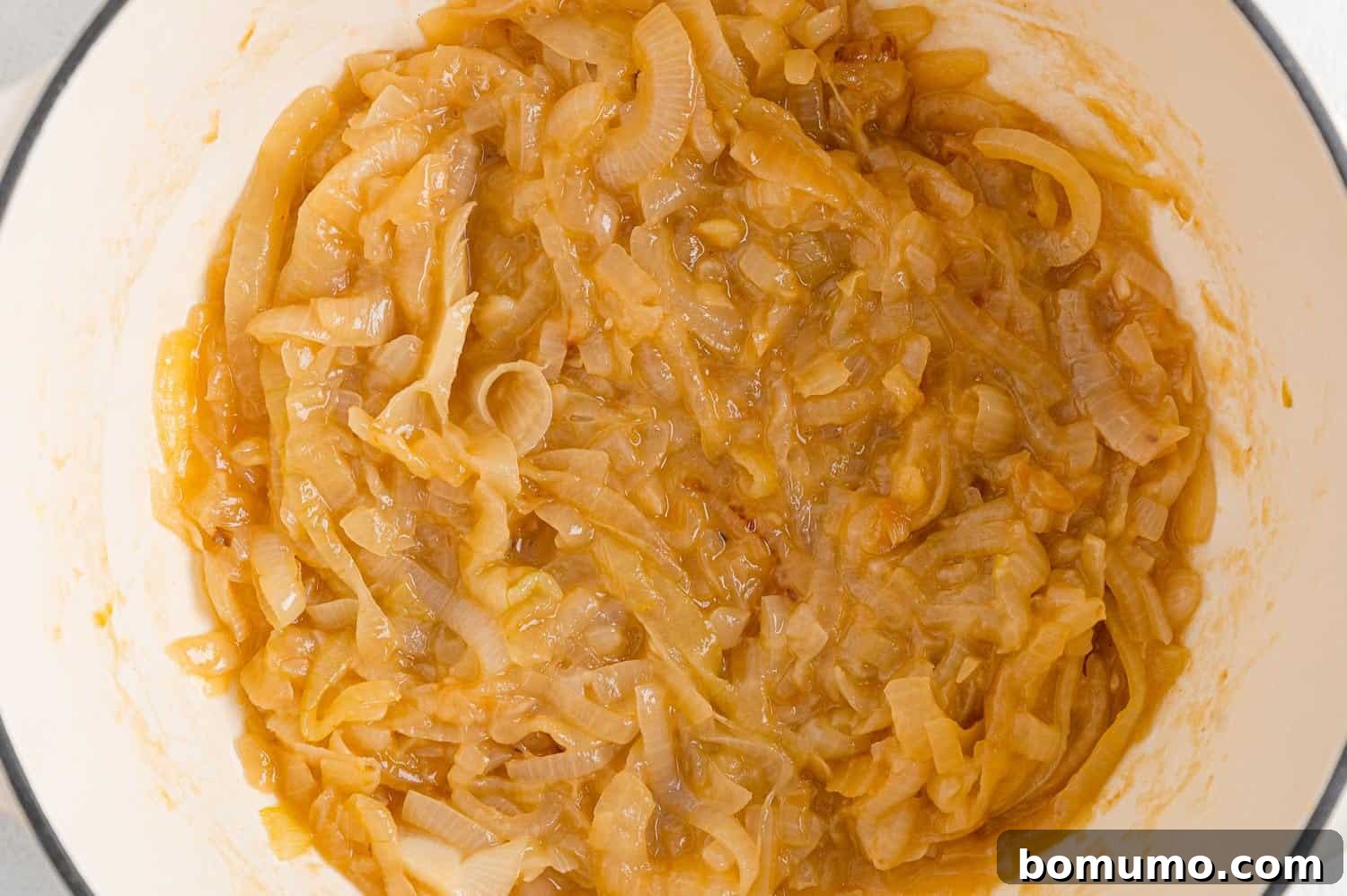
Continue cooking the onions slowly, uncovered, over low to medium-low heat for 60 to 90 minutes. Yes, this is a significant amount of time, but patience is a virtue in French cooking, and the resulting flavor is well worth it! Stir the onions occasionally to prevent sticking and ensure uniform browning. As they cook, they’ll soften, shrink, and gradually transform from pale white to a beautiful, deep golden brown, releasing their natural sugars and developing incredible sweetness. If you notice them browning too quickly or sticking to the bottom, simply reduce the heat further. Towards the end of the cooking time, as the moisture evaporates, you’ll need to stir them more frequently to achieve that perfect, jammy texture while retaining their distinct shape.
3. Build the Soup Base
Once your onions are perfectly caramelized to a rich, golden hue, it’s time to build the foundation of your soup. Add the minced garlic to the pan and sprinkle in the all-purpose flour. Cook for about one minute, stirring constantly, until the garlic is fragrant and the flour has lightly coated the onions, creating a subtle roux that will thicken the broth. Increase the heat back to medium, then pour in the dry white wine and dry sherry or brandy.
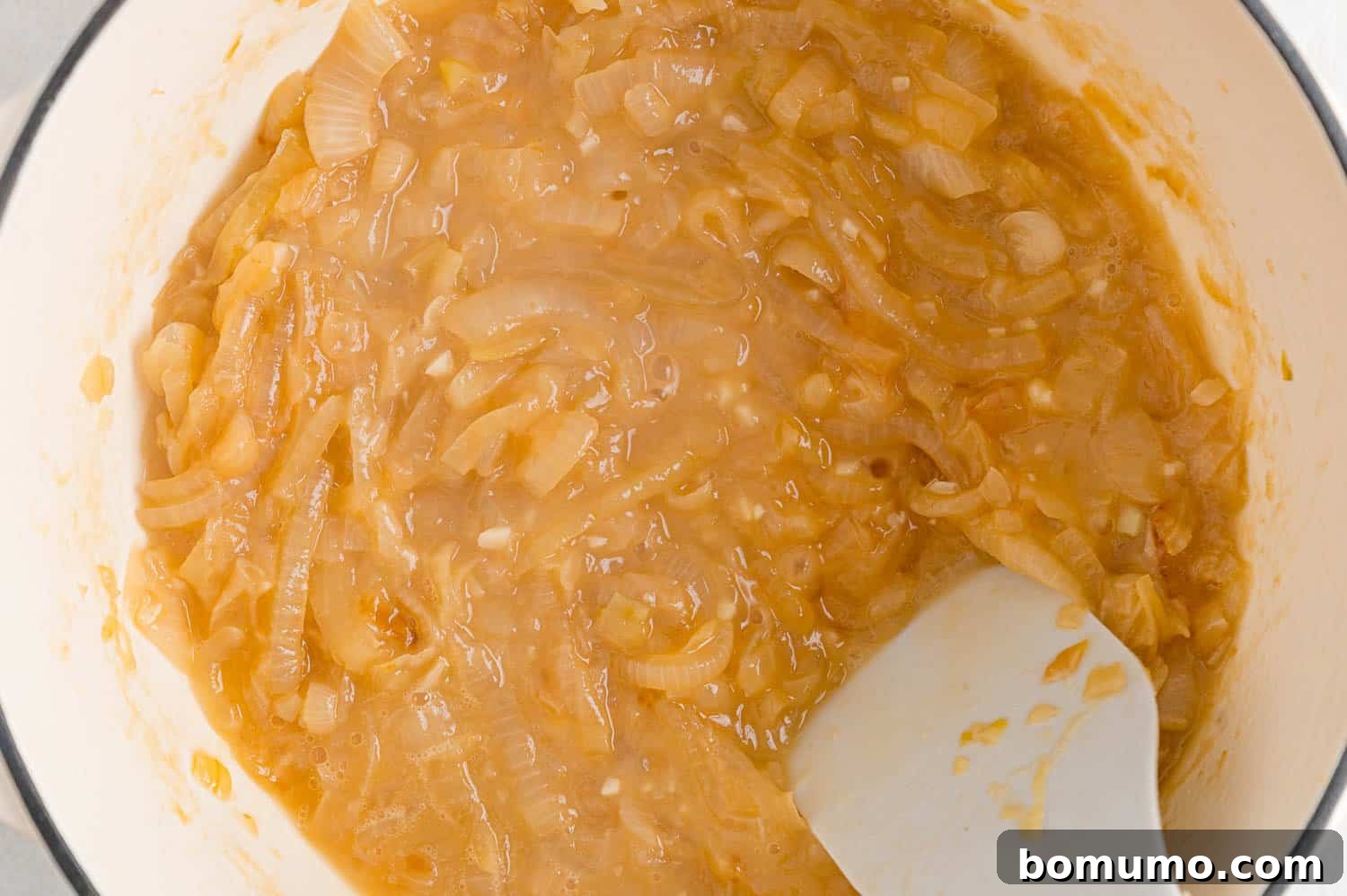
Cook for a few minutes, stirring continuously and making sure to scrape the bottom of the pan thoroughly with a wooden spoon or spatula. This crucial step is called “deglazing.” The liquid will help release all those flavorful browned bits (fond) that have accumulated on the bottom of the pan during caramelization, incorporating them back into the soup and adding immense depth. As the wine and sherry simmer, the liquid will reduce in volume, and a significant portion of the alcohol will cook off, leaving behind only their concentrated essence.
4. Simmer with Broth and Seasonings
Now, pour the beef stock into the pan. Add the freshly grated nutmeg, the sprigs of fresh thyme, the bay leaves, and the coarse ground black pepper. Give everything a good stir to combine.
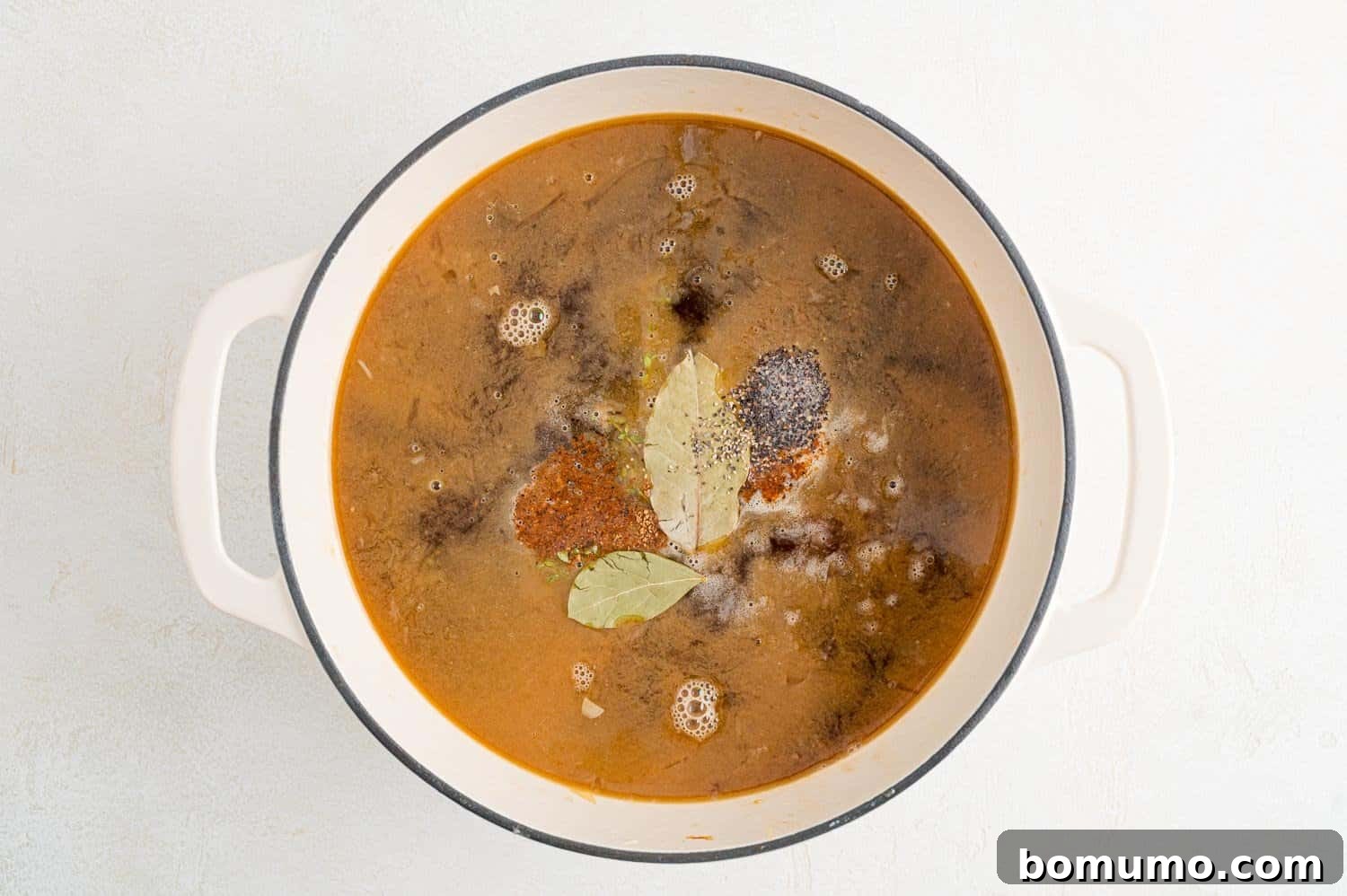
Bring the soup to a gentle simmer over low heat and let it cook for 10 to 15 minutes. This simmering time allows all the magnificent flavors to meld and deepen, creating a harmonious and robust broth. The soup should be steaming hot. If you’re not ready to serve immediately, you can keep the soup warm over very low heat, ensuring it doesn’t come to a rolling boil. If your soup appears thicker than desired, feel free to add an extra cup or two of beef broth to reach your preferred consistency.
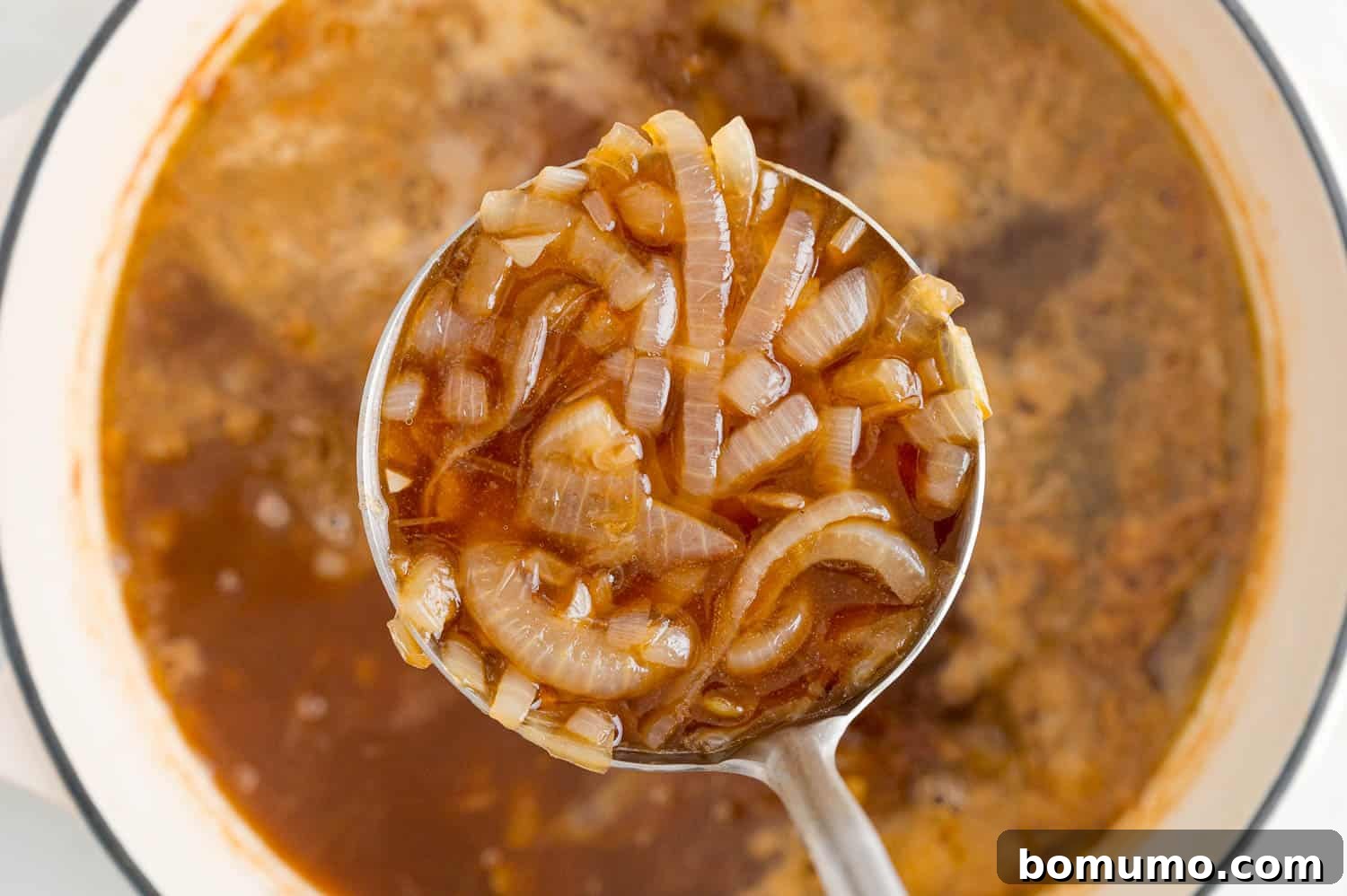
5. Prepare for Serving: The Cheesy Gratin Top
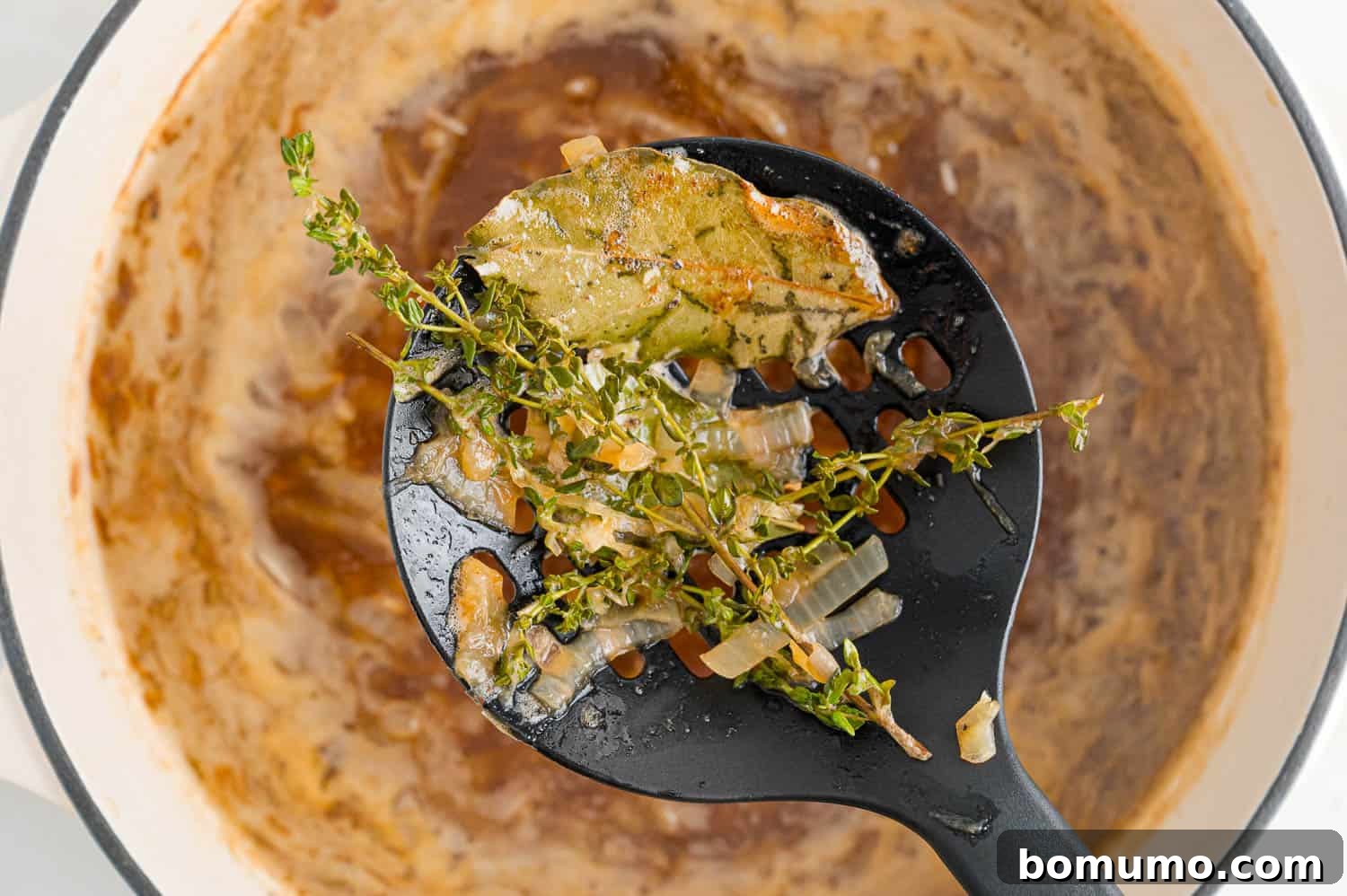
Before serving, turn on your broiler and remember a crucial step: carefully remove and discard the bay leaves and thyme sprigs from the soup. These have imparted their flavor and are not meant to be eaten.
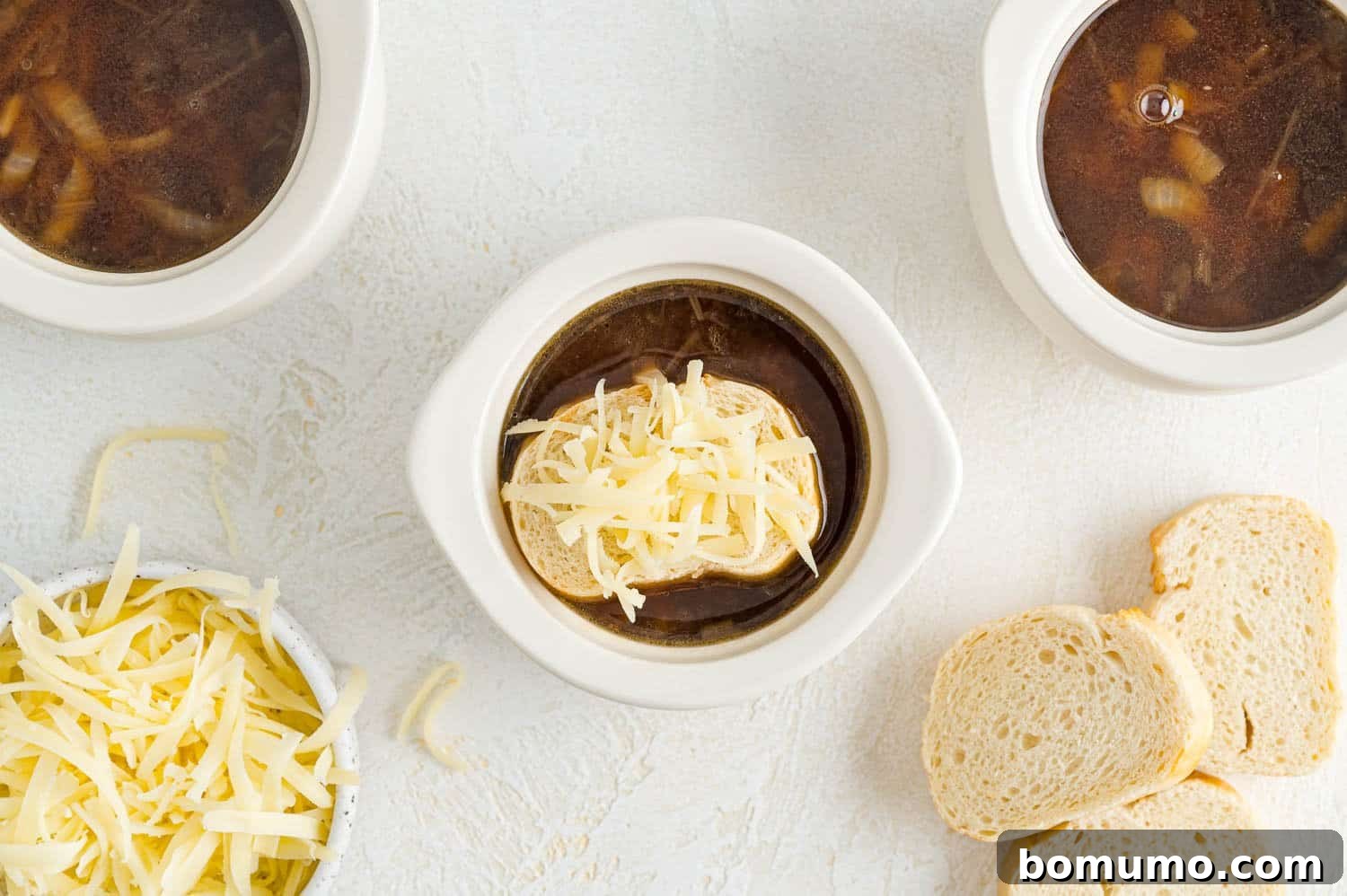
The presentation is a significant part of the allure of this classic soup. Ladle about one cup of the hot soup into each oven-safe bowl or ramekin. Place a thick slice of crusty French bread on top, allowing it to soak up some of the flavorful broth. Then, generously pile a handful of grated Gruyère cheese over the bread, ensuring full coverage. Carefully place the bowls under the broiler for a brief period, just until the cheese is beautifully melted, bubbly, and golden brown. Keep a very close eye on it, as cheese can go from perfectly melted to burnt in mere seconds!
Serve your magnificent French onion soup immediately, but be sure to issue a gentle warning to everyone: the bowls will be extremely hot from the broiler! For a perfectly balanced meal, complement this rich soup with a crisp green arugula salad dressed with a bright lemon vinaigrette, and perhaps a glass of the same Chardonnay you opened for the soup, if you wish.
Choosing the Right Soup Ramekins
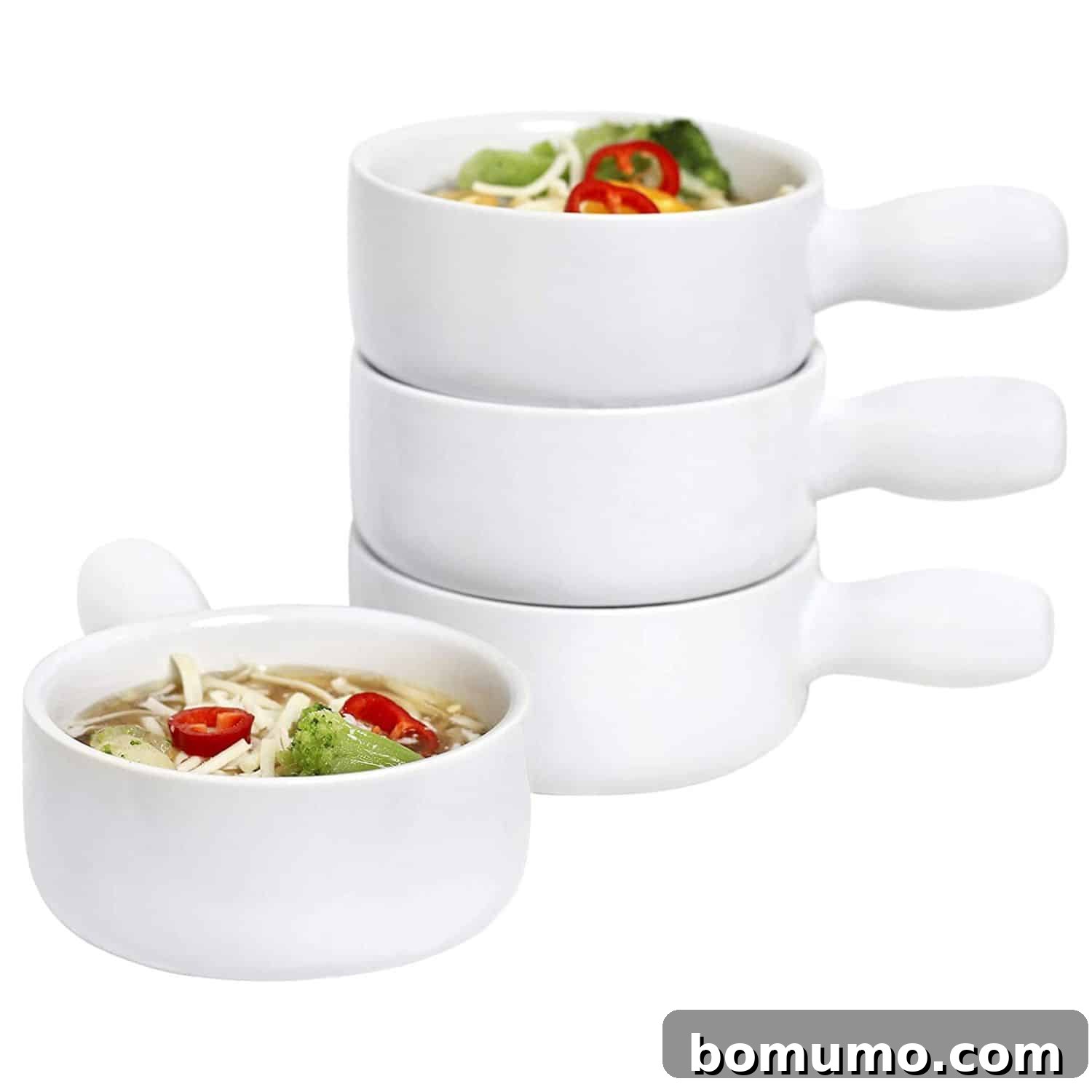
The sturdy, two-handled soup crocks aren’t just for an elegant presentation; they are highly functional. It’s crucial that your serving bowls are oven-safe, as they will go directly under the broiler to melt and brown the cheese. While a handle isn’t strictly necessary, it’s a very helpful feature, providing a secure grip when moving hot bowls with an oven mitt.
Frequently Asked Questions About French Onion Soup
Sweet yellow onions, such as Vidalia or Walla Walla, are undoubtedly the best choice for French onion soup. They offer the perfect balance of natural sweetness and mild pungency, which allows for deep caramelization without becoming overly sharp or bitter. Regular yellow cooking onions have a stronger, more assertive flavor, while green onions do not caramelize effectively. Red onions can be used in a pinch, but they will impart a reddish hue to your soup, altering its classic appearance.
The terms “onion soup” and “French onion soup” are often used interchangeably, but there’s a distinct difference. French onion soup is a very specific, classic preparation: it always features sweet yellow onions, a rich beef broth, and is traditionally topped with a slice of crusty French bread and melted Gruyère cheese, then broiled until golden. Onion soup, on the other hand, is a broader category. It can be made with various types of broths (chicken, vegetable, lamb, or beef) and may incorporate different varieties of onions, other vegetables, or seasonings. An “onion soup” may or may not include the signature bread and cheese topping, making French onion soup a specialized and iconic form within the larger onion soup family.
Absolutely! While traditionally made with beef broth, French onion soup can be adapted for vegetarians. Simply substitute the beef broth with a high-quality vegetable broth or a rich mushroom broth. Ensure your chosen broth has a robust flavor to stand up to the caramelized onions. All other ingredients in this recipe, such as onions, butter, flour, wine, and cheese, are suitable for a lacto-ovo vegetarian diet.
A large, heavy-bottomed pot, ideally a Dutch oven made of enameled cast iron or a similar heavy material, is best for caramelizing onions. The heavy construction provides excellent heat retention and even heat distribution, which is crucial for the slow, steady cooking required for perfect caramelization. This prevents hot spots that can cause onions to burn rather than slowly brown and sweeten.
Customize Your French Onion Soup: Creative Variations
While this classic recipe is truly exceptional, feel free to personalize your French onion soup with these delightful variations:
- No Heat-Proof Ramekins? No Problem! If you don’t possess oven-safe soup crocks, you can still achieve that glorious cheesy topping. Simply arrange your slices of crusty bread on a baking sheet, sprinkle generously with shredded Gruyère cheese, and broil until the cheese is melted and bubbly. Once the soup is ladled into regular serving bowls, carefully transfer these cheesy toasts onto the surface of each bowl.
- Opt for Cubed Bread or Croutons for Easier Eating: Let’s be honest, gracefully eating French onion soup with a full slice of cheesy bread can be a bit of a challenge! For a neater, yet equally delicious, experience, consider using cubed bread or homemade croutons (or try our quick air fryer croutons). Add a handful of these to the top of your soup just before broiling, sprinkle with cheese, and broil as directed. They’ll absorb the broth beautifully and offer a delightful texture.
- Experiment with Different Cheeses: While Gruyère is the traditional choice, other cheeses can offer fantastic results. Try a sharp cheddar for a bolder flavor, provolone for a milder melt, or even a blend of Swiss and Parmesan for added complexity. Each cheese will bring its unique character to the gratin.
- Make it Vegetarian-Friendly: To transform this hearty soup into a vegetarian delight, simply substitute the beef broth with an equal amount of high-quality vegetable broth or a rich mushroom broth. The deep umami of the caramelized onions will still shine through, creating a satisfying meat-free option.
- Prepare an Alcohol-Free Version: If you prefer to omit wine and spirits, you can still achieve a wonderful depth of flavor. To deglaze the pan, use a mixture of beef broth (or vegetable broth for a vegetarian option) and a good quality vinegar. For every ¾ cup of liquid called for (½ cup white wine + ¼ cup sherry/brandy), use three tablespoons of white wine vinegar or sherry vinegar, and fill the remainder of the ¾ cup with your chosen broth. This provides the necessary acidity and flavor complexity.
Smart Make-Ahead Strategies for French Onion Soup
French onion soup is a fantastic dish to prepare partially or fully in advance, making it ideal for entertaining or busy weeknights:
- Caramelized Onions: The most time-consuming step, caramelizing the onions, can be done up to 4 days ahead of time. Once cooled, transfer them to an airtight container and refrigerate. When you’re ready to make the soup, simply warm the caramelized onions gently in your soup pan, then continue with the recipe as directed from the point where you add the garlic and flour.
- Complete Soup (Without Topping): The entire soup (without the bread and cheese topping) can be prepared ahead of time. Once cooled, refrigerate it in an airtight container for up to 3-4 days. Alternatively, it freezes beautifully for up to three months. To serve, thaw overnight in the refrigerator (if frozen), then gently reheat the soup on the stove until simmering. Ladle into oven-safe ramekins and proceed with adding the bread and cheese topping, then broil.
Storage & Reheating Best Practices
To enjoy your delicious French onion soup beyond the initial serving, follow these storage and reheating guidelines:
- Refrigeration: Leftover French onion soup (without the cheesy bread topping) will keep well in an airtight container in the refrigerator for three to four days. The bread and cheese topping should always be added fresh just before serving.
- Freezing: French onion soup freezes exceptionally well. Allow the soup to cool completely, then transfer it to freezer-safe containers or bags, leaving a little headspace for expansion. It can be stored in the freezer for up to three months. Again, store the bread and cheese separately.
- Reheating:
- From Refrigerator: Reheat the soup gently on the stovetop over medium-low heat until it reaches a simmer and is steaming hot throughout.
- From Freezer: Thaw frozen soup in the refrigerator overnight. Once thawed, reheat on the stovetop as you would refrigerated soup. Avoid reheating in the microwave if you plan to add the cheesy topping, as direct stovetop heat provides a more consistent temperature.
Once the soup is hot, ladle it into oven-safe bowls, add your fresh bread and Gruyère, and broil until golden and bubbly for that perfect finish.
Explore More Hearty Soup Recipes
Smoky Roasted Tomato Soup
Easy Hamburger Soup Recipe
Easy Split Pea Soup
Chicken Corn Chowder (healthy!)
Classic French Onion Soup Recipe
Rachel Gurk
Print Recipe
In this classic French onion soup recipe, sweet caramelized onions and rich beef broth are topped with a crusty slice of bread smothered in melty Gruyère cheese.
Ingredients
- 2 tablespoons olive oil
- 2 tablespoons butter
- 6 large yellow or sweet onions (12-14 oz. each), sliced into ¼-inch thick half moons
- ½ teaspoon kosher salt
- 2 cloves garlic, minced
- 1 tablespoon all-purpose flour
- ½ cup dry white wine
- ¼ cup dry sherry or brandy
- 6 cups beef stock, up to 8 cups if desired (to reduce sodium, use low sodium or no salt added broth)
- ¼ teaspoon nutmeg (freshly grated preferred)
- 3 sprigs fresh thyme
- 2 bay leaves
- ½ teaspoon coarse ground black pepper
- 8 thick slices crusty bread, ½ -inch to ¾ -inch thick (French bread works well- see note)
- 1 ½ cups grated Gruyère cheese
Instructions
- In a very large covered pan (a Dutch oven works well), heat olive oil and butter over medium heat. Add onions and salt and toss to coat with oil.
- Cover and cook for 10 minutes, allowing the onions to soften through steaming.
- Uncover the pan, stir the onions, and reduce the heat to medium-low. Continue to cook, stirring occasionally (increasing frequency towards the end), until the onions are cooked down, very soft, and a deep golden brown, typically about 60 to 90 minutes. Adjust heat to low if they begin to brown too quickly or stick. If absolutely necessary to prevent drying out, add a splash of water to the pan.
- Once the onions are caramelized, add the minced garlic and flour to the pan. Cook for one minute, stirring constantly, until the garlic is fragrant and the flour has coated the onions.
- Increase the heat to medium. Add the dry white wine and dry sherry or brandy. Cook for 2 to 3 minutes, stirring constantly and scraping any browned bits from the bottom of the pan (deglazing) until the liquid has slightly reduced.
- Pour in the beef stock (starting with 6 cups, adding more later if a thinner soup is desired), then add the nutmeg, fresh thyme sprigs, bay leaves, and coarse ground black pepper. Bring the soup to a gentle simmer. Simmer for 10 to 15 minutes, allowing all the flavors to meld and the soup to heat through. Carefully remove and discard the bay leaves and thyme stems before serving.
- Spoon the hot soup into oven-safe ramekins or mini casserole dishes (refer to the note regarding oven-safe bowls). Top each bowl with a thick slice of crusty bread, followed by a generous handful of grated Gruyère cheese. Broil on high heat until the cheese is beautifully melted, bubbly, and golden brown. Watch closely to prevent burning! Serve immediately.
Notes
- If you don’t have oven-safe ramekins or mini casserole dishes, you can prepare the cheesy topping separately. Place bread slices on a sheet pan, sprinkle with cheese, and broil until melted. Add soup to regular bowls and top with these toasted cheesy bread slices just before serving.
- For a non-traditional but often easier-to-eat version of French onion soup, cut your crusty bread into bite-sized cubes instead of using full slices. Homemade croutons are also a fantastic alternative.
- Nutrition information provided is an approximation, calculated for one cup of soup topped with one slice of bread and the specified amount of shredded cheese.
Nutrition
Calories: 265kcal,
Carbohydrates: 23g,
Protein: 13g,
Fat: 12g,
Saturated Fat: 5g,
Polyunsaturated Fat: 1g,
Monounsaturated Fat: 5g,
Cholesterol: 28mg,
Sodium: 710mg,
Potassium: 679mg,
Fiber: 2g,
Sugar: 14g,
Vitamin A: 263IU,
Vitamin C: 13mg,
Calcium: 325mg,
Iron: 1mg
Nutrition information is automatically calculated, so should only be used as an approximation.
Did You Make This?
Share a comment and rating below! I love hearing what you think!