Breakfast
Buckwheat Pancakes
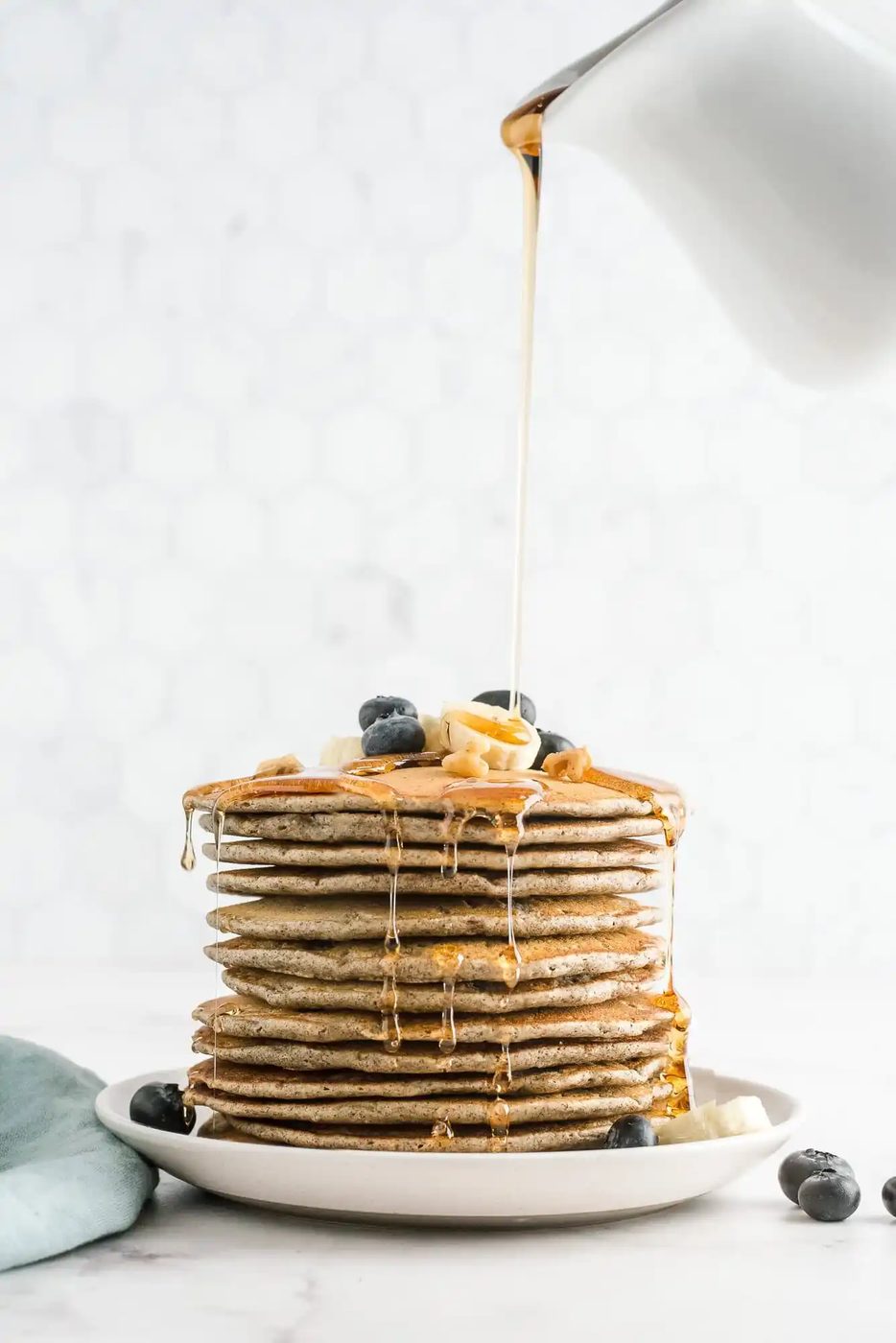
These buckwheat pancakes are made with buckwheat flour, resulting in a beautiful nutty flavor. They’re filling, lighter, and a great way to start the day.
At a glance
What stands out: Buckwheat pancakes are as light and fluffy as old-fashioned pancakes but darker in color with a slightly nutty flavor. Enjoy these lighter pancakes topped with fresh fruit, your favorite nut butter, or a drizzle of maple syrup!
How long it takes: 10 minutes to stir up the batter, 5 minutes to cook each batch
Equipment you’ll need: mixing bowl, griddle
Servings: 18 pancakes, or about 6 servings
Pin this now to find it later
Pin ItBuckwheat, despite its name, isn’t even wheat at all. It’s an ancient grain that is high in fiber and protein, and is gluten-free! Buckwheat pancakes pair nicely with all the same sorts of toppings you would add to a typical pancake and they’re a fantastic addition to any weekend brunch or speedy morning breakfast.
Serve the pancakes with from-scratch sausage patties or crisp bacon, fried eggs, and, if you’re a coffee drinker, lots of hot coffee!
About These Buckwheat Pancakes
Perfectly balanced. This recipe uses a combo of buckwheat flour and all-purpose flour for soft and fluffy pancakes. You can definitely use 100% buckwheat flour and omit the all-purpose flour but be aware that the texture won’t be as light. The nutty flavor will also be deeper. Blending flours is a standby way to make buckwheat pancakes with a subtle nutty flavor and the signature tender texture we all love. If you’ve never used buckwheat before, this pancake recipe is a great place to start.
Speedy and straightforward. This pancake recipe is as speedy and straightforward as your everyday pancakes with generally the same ingredients, other than the buckwheat flour, so there’s no hunting for anything you don’t already have!
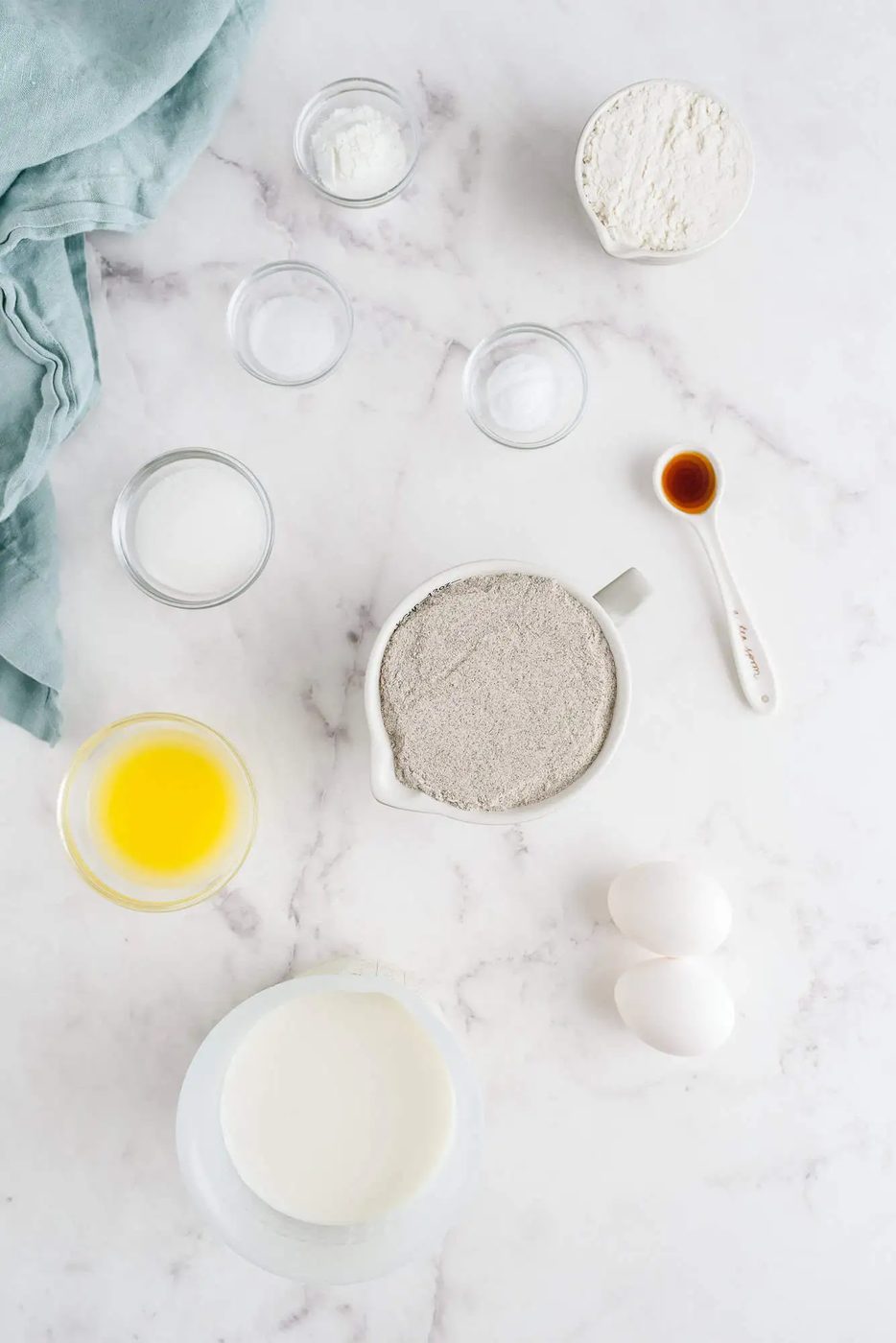
What goes in
- Buckwheat Flour: You’ll notice the difference right away when you look at the flour. It has a gray tint with tiny darker flecks. The most commonly used type of buckwheat flour is made from hulled buckwheat; it’s lighter than than the unhulled (whole grain) variety.
- All-Purpose Flour: We like to include a half-cup of all-purpose flour because it makes the pancakes a little lighter and fluffier than when you use all buckwheat flour.
- Sugar: Just a couple of tablespoons of granulated sugar are added to the batter to balance the flavors.
- Baking Powder, Baking Soda, Salt: This trio is commonly used to leaven pancakes (make them fluffy and light).
- Milk: We like whole milk for the most tender pancakes but if you prefer, substitute what you have in the fridge: nonfat, 2%, or unsweetened almond milk.
- Eggs: A couple of large eggs add protein and flavor.
- Pure Vanilla Extract: A baker’s friend, vanilla is added to many baked products, and you’ll find it in many of our pancake recipes.
- Butter: The butter is melted and added to the batter. You can also use butter to fry the pancakes. If you prefer, feel free to substitute canola oil, melted coconut oil, or grapeseed oil.
How it comes together
If you know how to make regular pancakes, these pancakes are made using exactly the same process.
Get started. Heat an electric griddle or a skillet over medium-high heat. Make sure you’ve melted the butter you’ll be adding to the pancake batter.
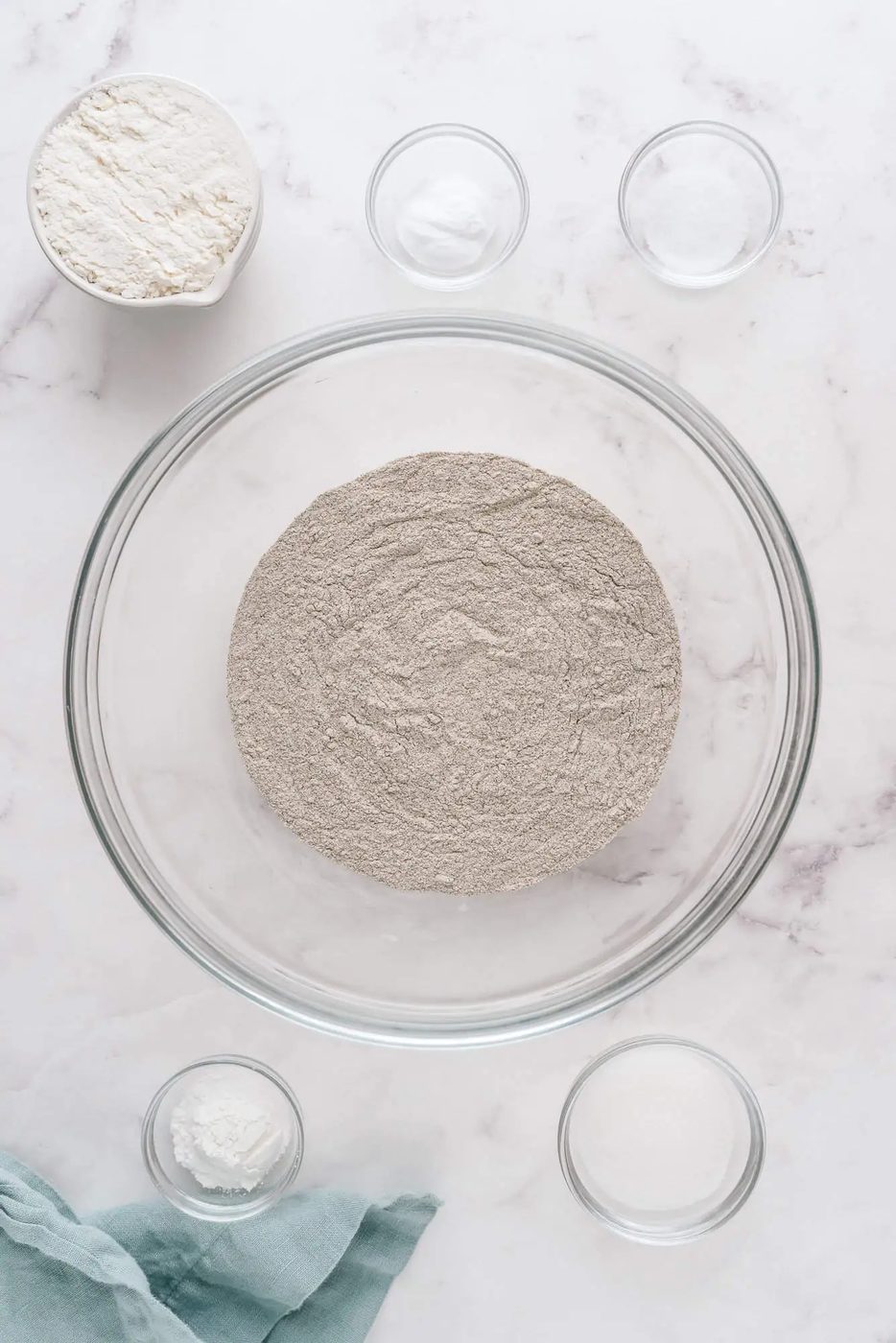
Mix dry ingredients. While the griddle is heating up, whisk together the buckwheat flour, all-purpose flour, sugar, baking powder, baking soda, and salt, in a large bowl. Set aside.
Mix wet ingredients. In another bowl, whisk together milk, eggs, and vanilla.
Combine. Slowly pour the wet ingredients and the melted butter into the larger bowl containing the flour mixture, stirring as you pour. Combine the wet ingredients with the dry ingredients until just combined. You may see some small lumps still remaining but you shouldn’t see lots of dry flour.
Cook. Place a bit of butter or oil onto the preheated griddle; use a spatula to quickly spread it around and coat the griddle. Scoop the pancake batter by about ¼ cupfuls onto the hot griddle, evenly spaced.
Cook the pancakes until bubbles form and do not disappear. Note that because buckwheat pancakes are darker in color. it may be harder to notice the browning around the edges. Carefully flip the pancakes and cook on the second side for about a minute longer or until pancakes are cooked through, and lightly browned.
Repeat with the rest of the pancake batter, adding more butter or oil to the griddle as needed.
Topping Ideas
- Protein-packed toppings: Almond butter, cashew butter, and even peanut butter are creamy spreads that are filling and so tasty. A spoonful of Greek yogurt is also great for added protein. (If you’re looking for more ways to add protein to breakfast pancakes, be sure to try our chocolate protein pancakes.)
- Fresh fruit: Adding sliced strawberries, blueberries or raspberries as a topping for pancakes is a lighter way to brighten up breakfast. We love sliced bananas, too.
- Fall vibes: From-scratch applesauce and cinnamon sugar is a great topping idea. We usually microwave the applesauce briefly so it’s warm. We call them apple pie pancakes!
- Summer-loving: Peach sauce or blueberry sauce are reliable in the summer, or anytime, because they can be made with either fresh or frozen fruit.
- Classics: Maple syrup or honey always taste great, too.
Ways to change it
- Buckwheat buttermilk pancakes: Use buttermilk in place of the regular milk for rich buttery flavored pancakes. The pancakes will be a bit lighter and fluffier, too, because the acid in buttermilk interacts with the baking soda. If the batter is too thick, add a splash of regular milk.
- Dairy-free: Omit the dairy completely and use almond milk and oil instead of butter for dairy-free pancakes.
- Add-ins: Mini chocolate chips, cacao nibs, or finely diced fruit, such as bananas or strawberries can be stirred into the batter.
- More multigrain pancakes: If you like the idea of adding whole grains to your pancakes, be sure to try our cornbread pancakes and quinoa pancakes, too. Our whole wheat pancake mix is straightforward to mix and nice to have on hand.
Make Ahead & Storage Tips
These pancakes will keep in the fridge in an airtight container for up to 4 days. They can be frozen for up to two months, which means you can make a big batch and freeze some for a later date. We always freeze pancakes for future breakfasts. While we’re getting ready in the morning, we can pop a few in the toaster oven and breakfast is ready!
- Yield: 6 servings
- Prep: 10 minutes
- Cook: 5 minutes
- Total: 15 minutes
Ingredients
- 1½ cups buckwheat flour
- ½ cup all-purpose flour
- 2 tablespoons granulated sugar
- 2 teaspoons baking powder
- ½ teaspoon baking soda
- ½ teaspoon salt
- 2 ¼ cups whole milk
- 2 large eggs
- 1 teaspoon pure vanilla extract
- 3 tablespoons butter, melted, plus more butter for frying
Method
- Heat an electric griddle to 375ºF or a skillet over medium-high heat.
- In a large bowl, whisk together buckwheat flour, all-purpose flour, sugar, baking powder, baking soda, and salt. Set aside.
- In a medium bowl, whisk together milk, eggs, and vanilla. While whisking, pour the wet ingredients and the melted butter into the dry ingredients and whisk until just combined.
- Place 1 teaspoon of butter or oil onto the preheated griddle; use a spatula to spread it around and coat the griddle. Scoop batter by about ¼ cup portions onto the hot griddle. Cook the pancakes for 3 to 4 minutes or until bubbles form and do not disappear. Flip the pancakes and cook the second side for about 1 minute or until pancakes are cooked through and lightly golden brown.
- Repeat with the rest of the pancake batter, adding more butter or oil to the griddle as needed.
Notes
Yield: Makes about 18 pancakes, depending on size.
Nutrition: Nutritional information does not include toppings.
Storage: Store in fridge for up to 4 days. They can be frozen for up to 2 months. Reheat on a griddle, toaster, or microwave.