
Recipe Overview
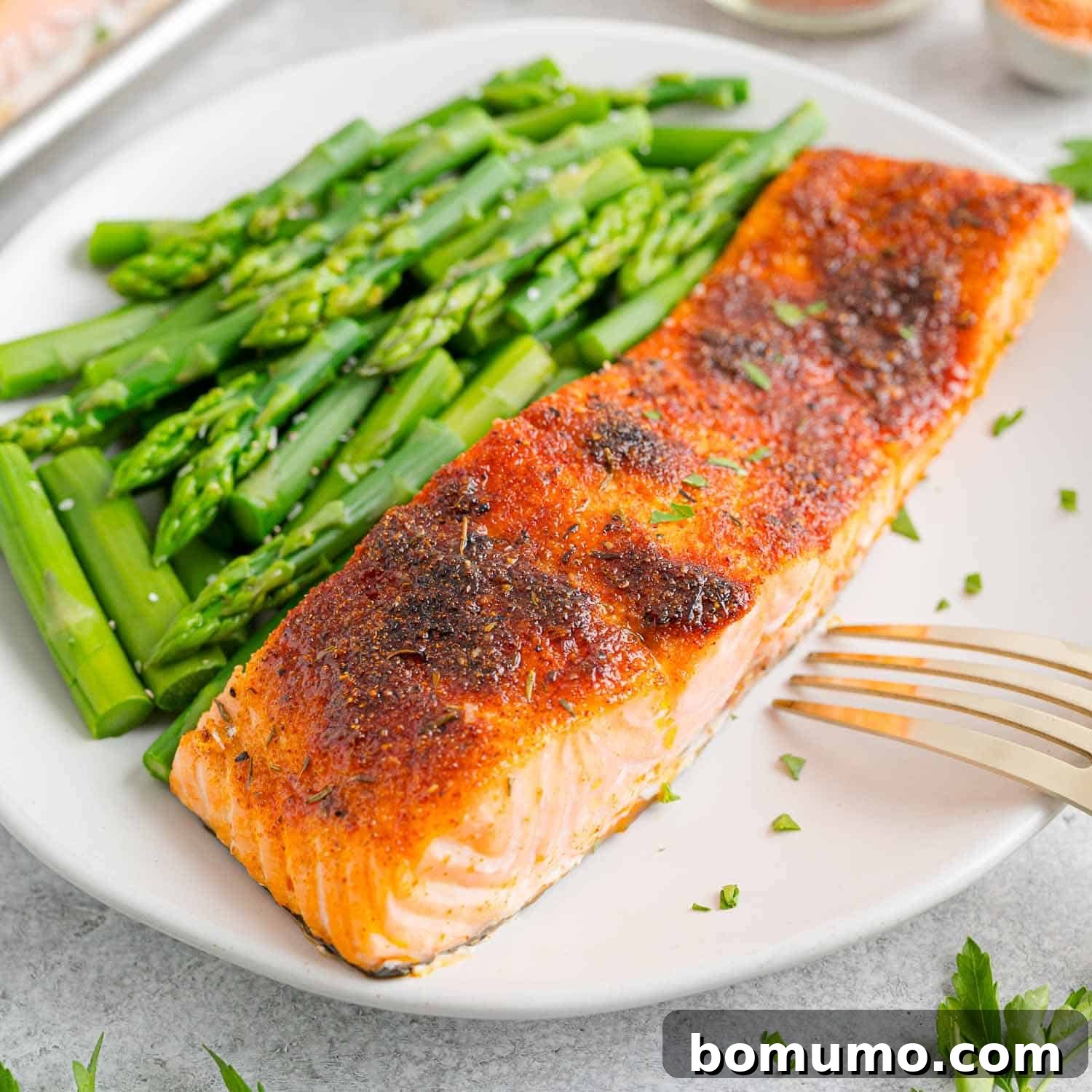
Why you’ll love it: Quick broiled salmon is crispy on the
outside and succulent and juicy on the inside. The salmon is ready to eat in
under 15 minutes so it’s perfect for weeknight dinners. This simple method for
broiling salmon filets is easy to customize, too.
How long it takes: 13 minutes
Equipment you’ll need: oven, a rimmed baking sheet, and foil
Servings: 4 servings
Easy Broiled Salmon Recipe
Salmon is a favorite protein because it’s incredibly versatile and delicious! From
grilled salmon
to baked
almond crusted salmon, there are countless ways to enjoy it.
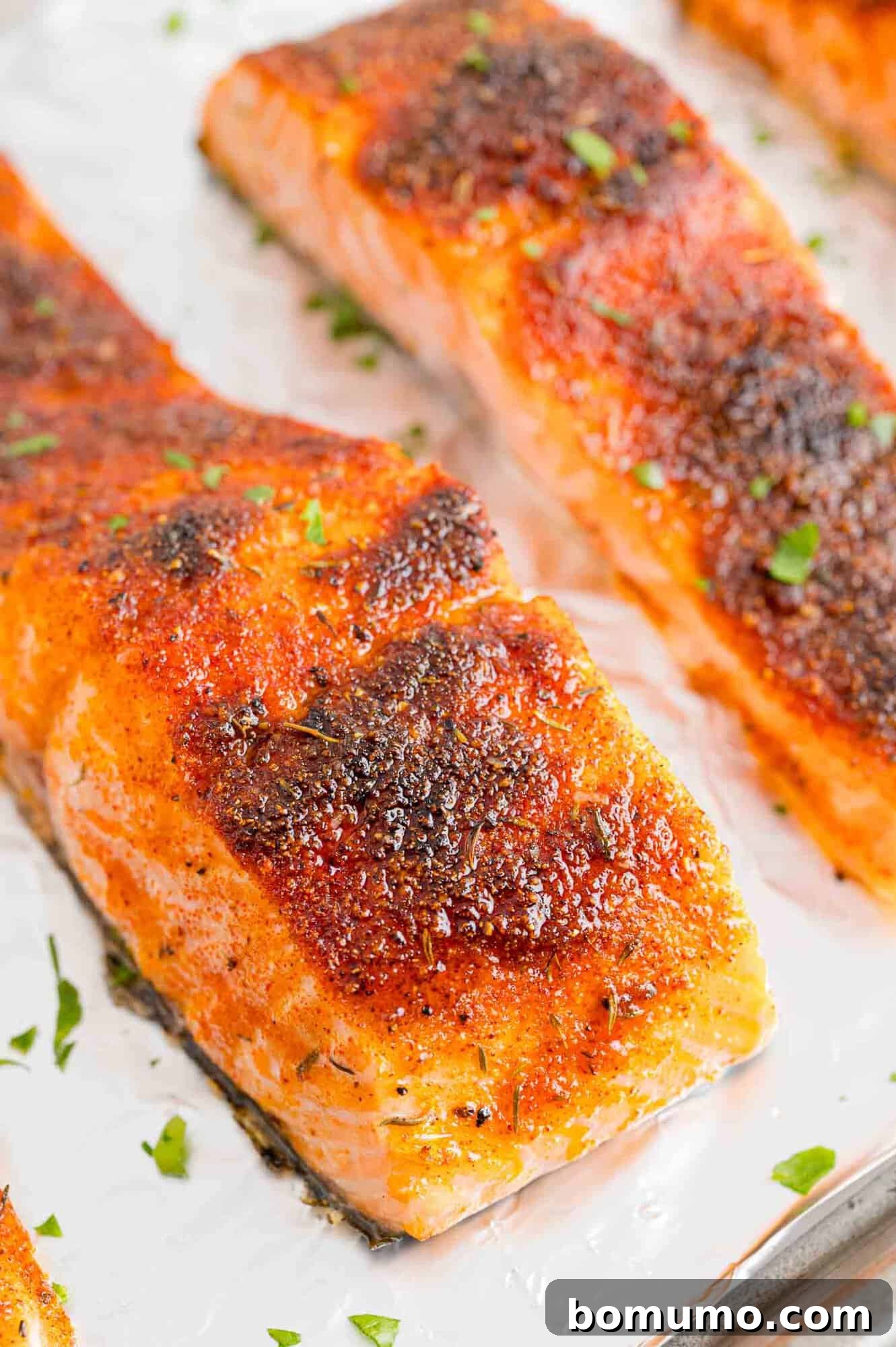
This recipe will guide you on how to make broiled salmon, a quick and easy
method for perfectly cooked salmon fillets. This is a go-to weeknight recipe
that consistently delivers crispy, caramelized tops and juicy interiors. It’s
simple to do in the oven, and you can easily customize the seasonings to your
preference.
Why You’ll Love Broiled Salmon
Healthy and Nutritious: Salmon is a nutritional powerhouse, rich
in omega-3 fatty acids, B vitamins, and potassium (
Healthline). Broiling is an excellent cooking method to retain these benefits with minimal
effort.
Quick and Easy: Broiled salmon is incredibly simple to make. It’s
the fastest way to cook salmon, with a 6-ounce fillet ready in just 6-8 minutes
under the broiler. The result is juicy, caramelized salmon, especially when
using a seasoning blend with a touch of brown sugar for enhanced caramelization.
Versatile: This simple recipe is highly adaptable. You can
customize it with various marinades, seasonings, sauces, and more. Scroll down
for some creative ideas!
Is It Better To Broil Or Bake Salmon?
Broiling involves cooking from above, with the salmon positioned closer to the
top heating element in your oven. This method uses intense heat to caramelize
the sugars on the salmon’s surface, resulting in a crispy top.
In contrast,
baked salmon
is cooked in the middle of the oven, with heat circulating from all sides. Baking
takes a bit longer and typically yields a less crispy top. Both methods are
healthy and delicious ways to prepare salmon at home.
Broiling is ideal for quickly cooking individual salmon portions. If you’re
cooking a larger piece, baking at 425ºF for a longer time ensures even
cooking. You can always finish baked salmon under the broiler to crisp the top.
Ingredient Notes
Below, you’ll find notes on the necessary ingredients.
For the full ingredient amounts, detailed instructions, and nutritional
information, please refer to the recipe card located at the bottom of this
post.
-
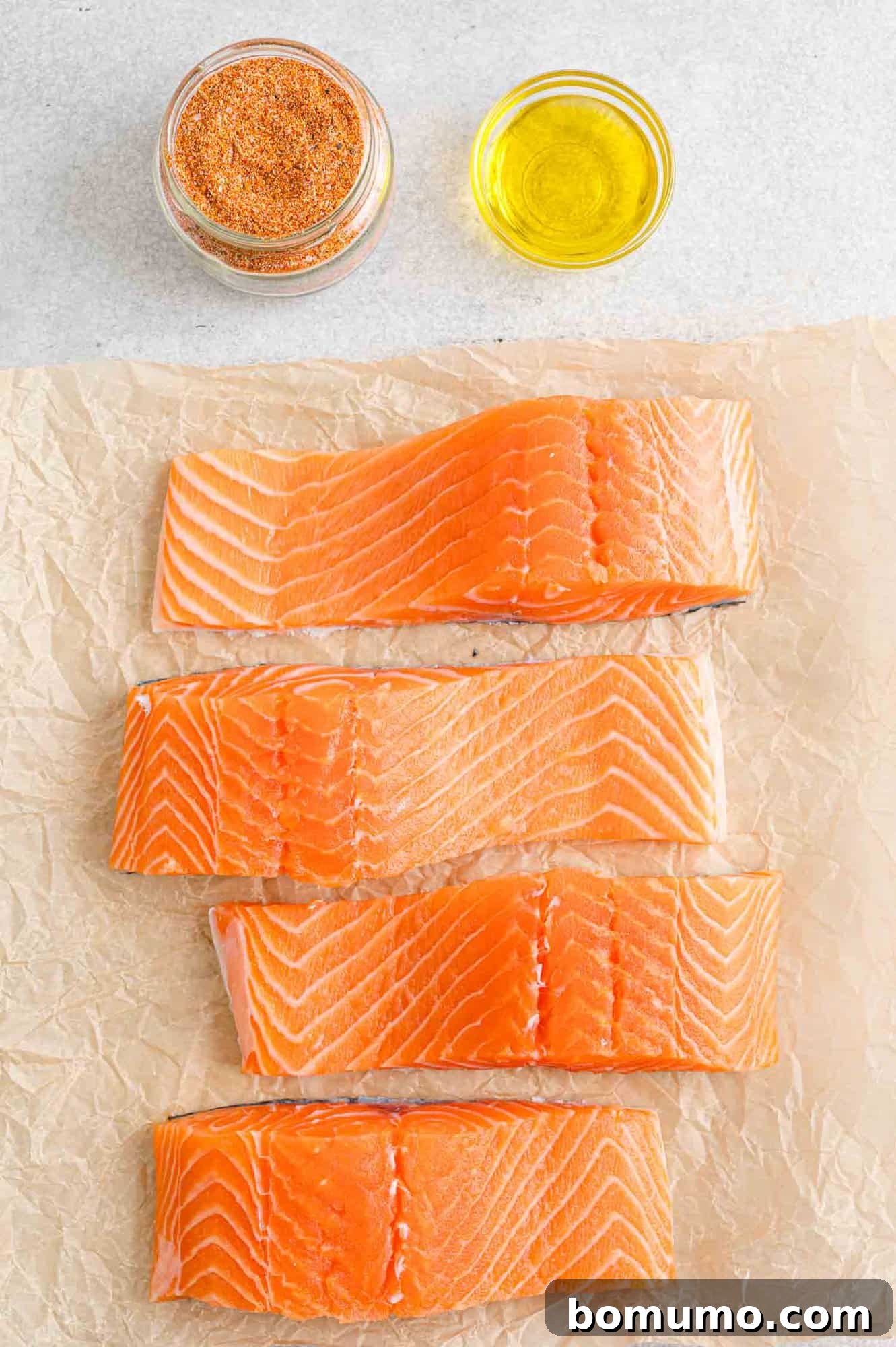
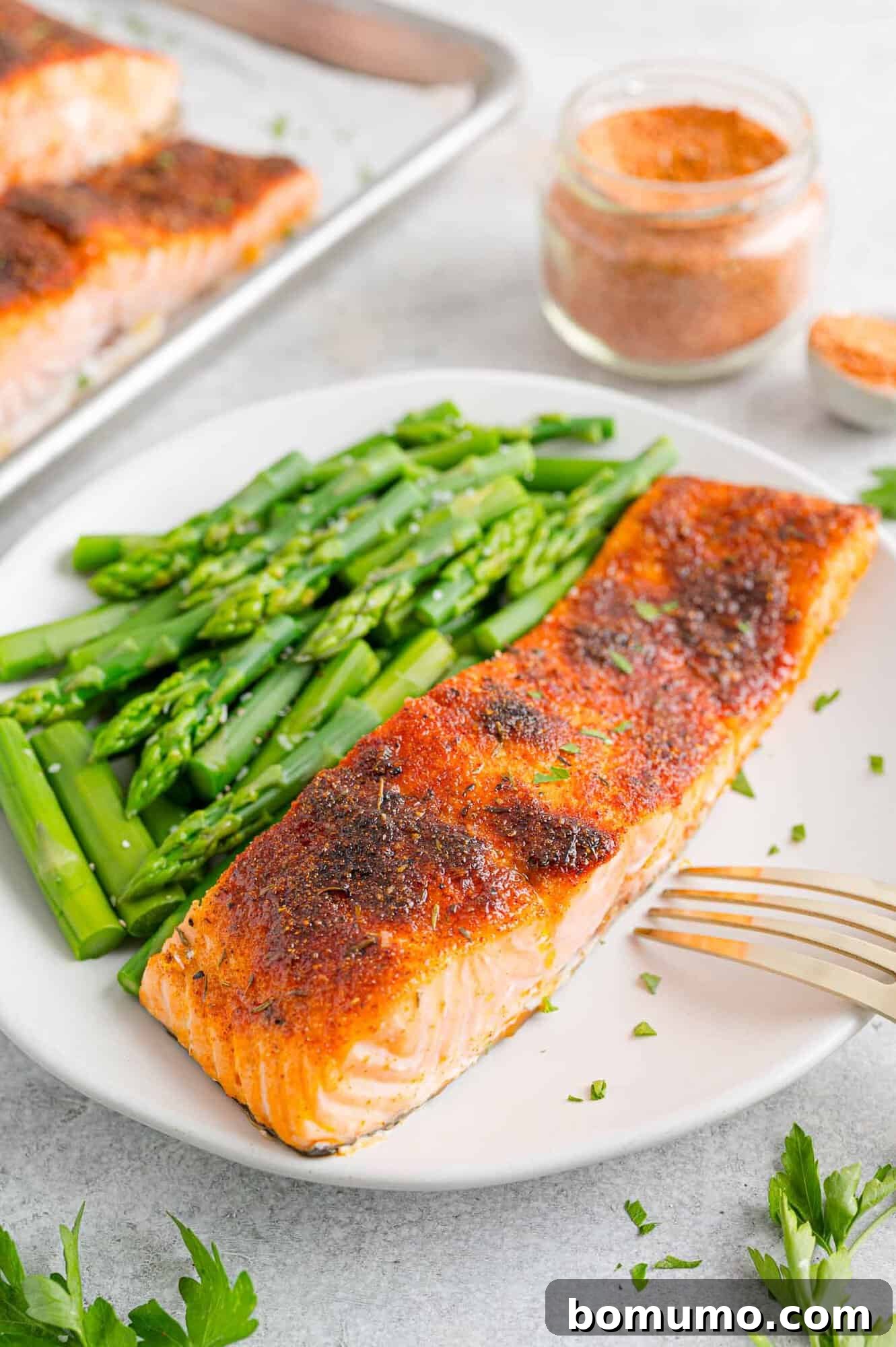
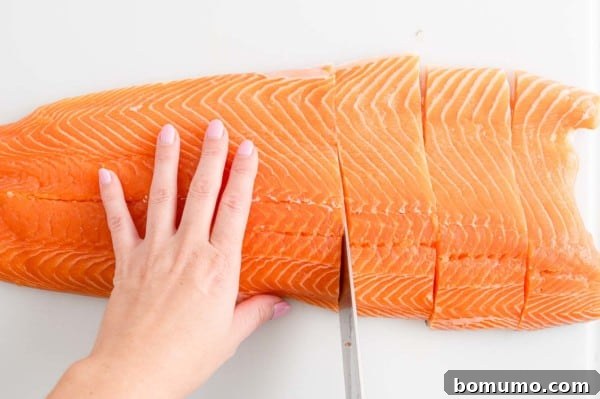
Salmon: Salmon fillets are the best choice for this recipe,
thanks to their quick cooking time and great flavor. I usually buy a whole
salmon side and cut it into 6-ounce fillets at home. You can also purchase
pre-portioned salmon fillets or ask your local fishmonger to prepare them for
you. -
Olive Oil: Use high-quality extra virgin olive oil to coat
your salmon fillets. This helps them cook up beautifully crispy without
burning. -
Seasoning: I prefer using a prepared
salmon seasoning
blend, but you can season your salmon any way you like. Use your favorite
store-bought blend or create your own homemade seasoning. See below for some
ideas.
Skin or No Skin?
I recommend leaving the skins on when broiling salmon. It helps hold the fish
together and traps moisture, preventing overcooking. In fact, I almost always
choose skin-on salmon for roasting, broiling, baking, grilling, or
pan-searing (the only exception is for poached salmon!).
Bonus: The salmon will easily separate from the skin once it’s cooked.
How to Broil Salmon In the Oven
Broiling salmon is incredibly simple. The key is high heat and close monitoring
during cooking. Let’s get started:
Preheat the broiler: Some ovens allow you to set the broiling
temperature, while others have a “broil” option, usually between 500 to
550ºF. Position the oven rack about 6 inches from the top element and set it to
broil. If needed, adjust the broil temperature to 550ºF.
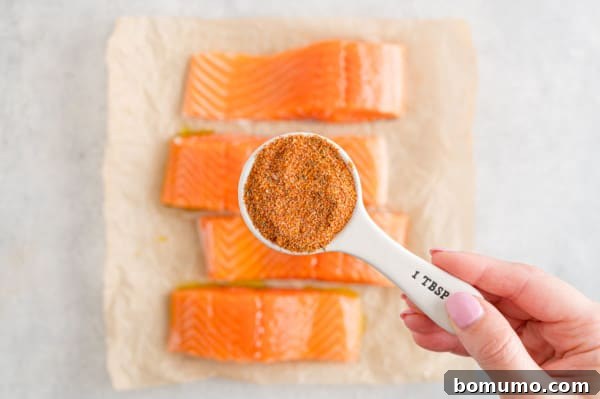
Prepare the salmon fillets: Arrange the salmon fillets on a
foil-lined baking sheet and pat them dry with paper towels. Next, coat each
fillet evenly with olive oil. Sprinkle your chosen seasoning generously over
the fish, pressing it gently to help it adhere.
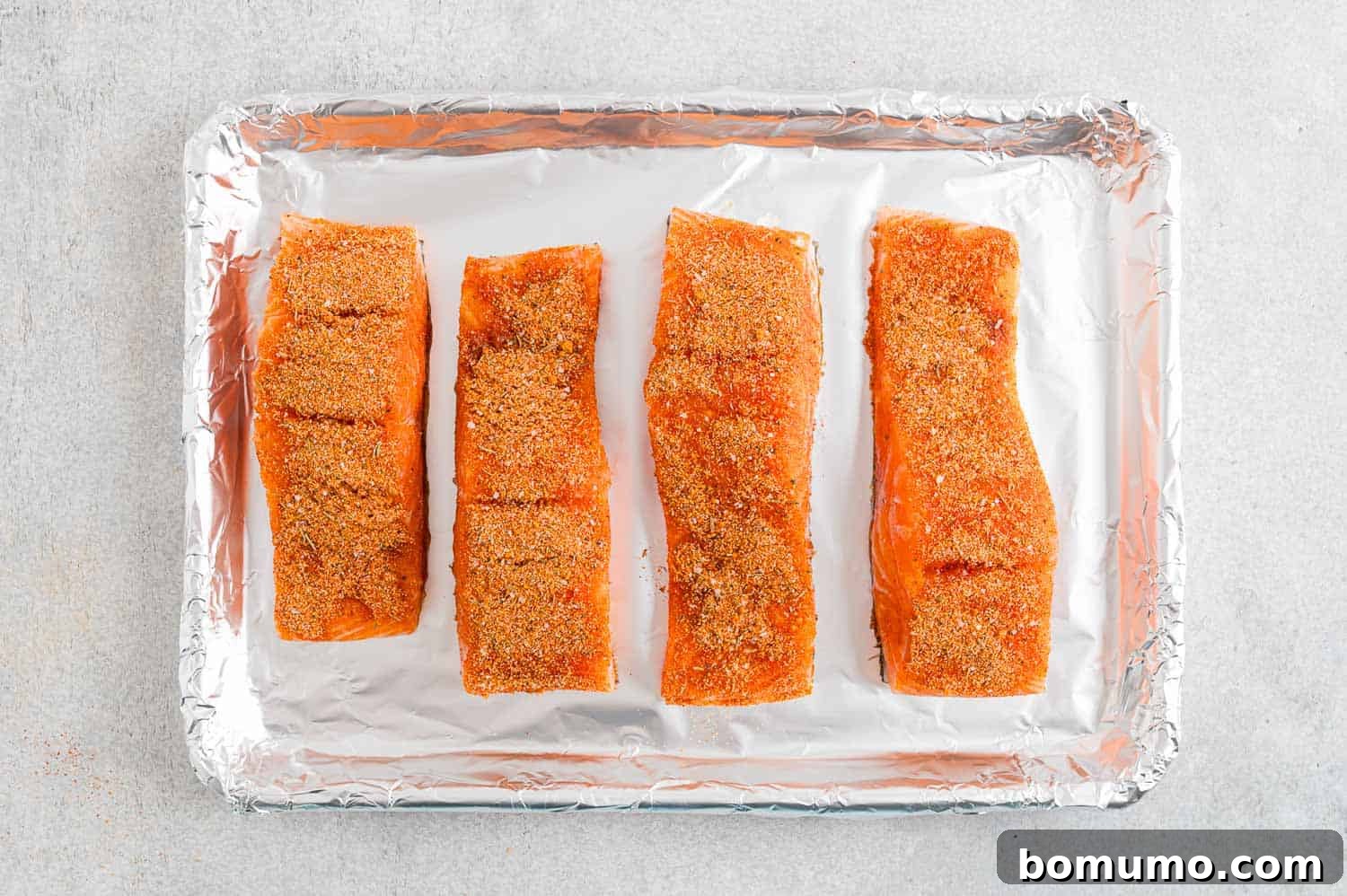
Broil: Place the fillets under the broiler for 6 to 9 minutes.
Keep an eye on the tops of the salmon, and remove it when it’s browned and
cooked through. Cooking time varies depending on the thickness of the salmon
fillets. Allow the salmon to rest on the baking sheet for a few minutes before
serving, as the internal temperature will continue to rise slightly.
How Do I Know When Broiled Salmon Is Done?
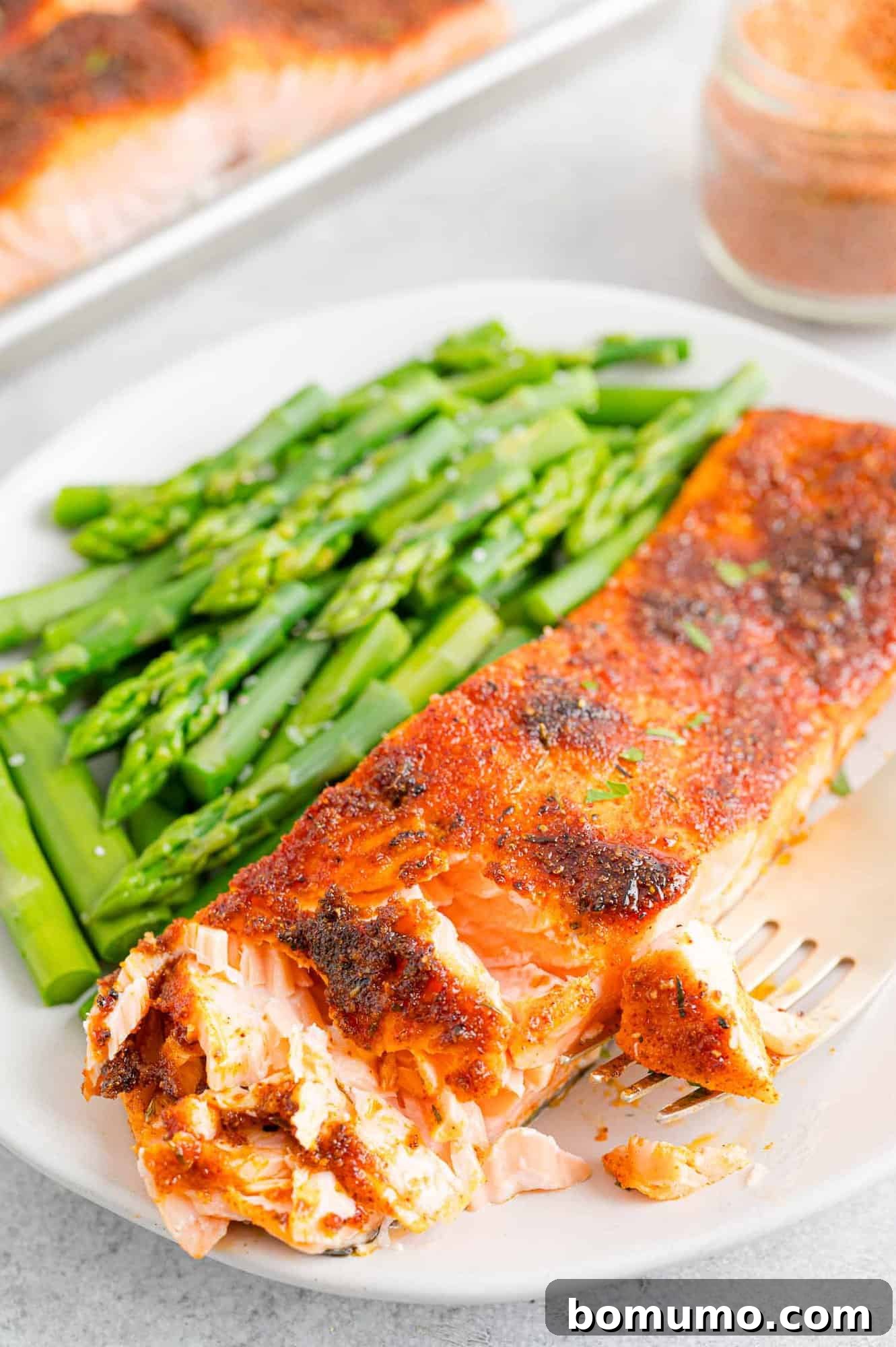
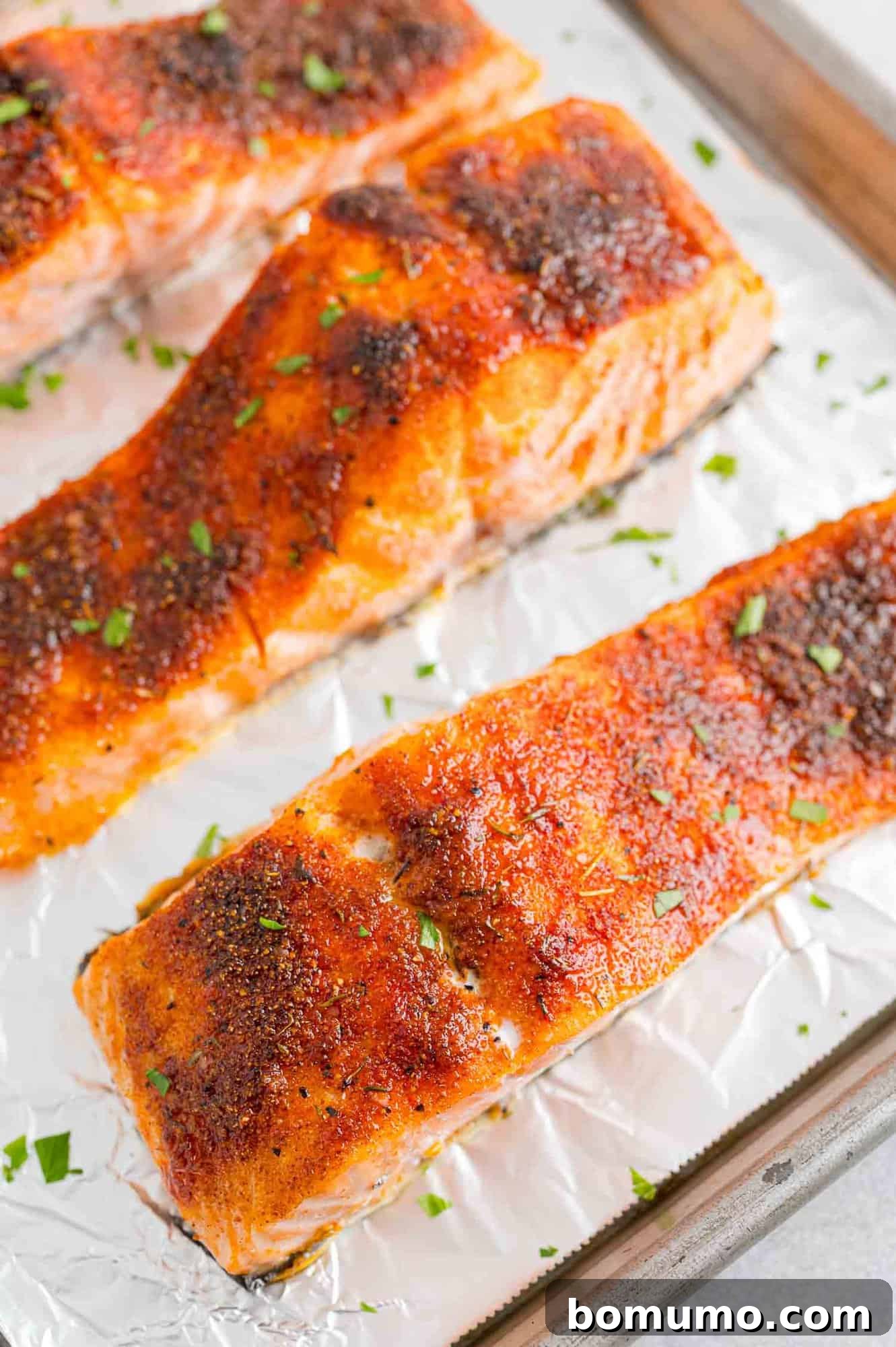
Broiled salmon is ready when the tops of the fillets are browned, and the
salmon flakes easily with a fork. You can also use an instant-read
thermometer to check the internal temperature. According to the
USDA, salmon is cooked when it reaches an internal temperature between 135ºF and
145ºF, depending on your preferred level of doneness.
Recipe Tips
Broiling is a fantastic way to enhance the flavors of simple salmon fillets.
Get ready to love this method! Here are some final tips for success:
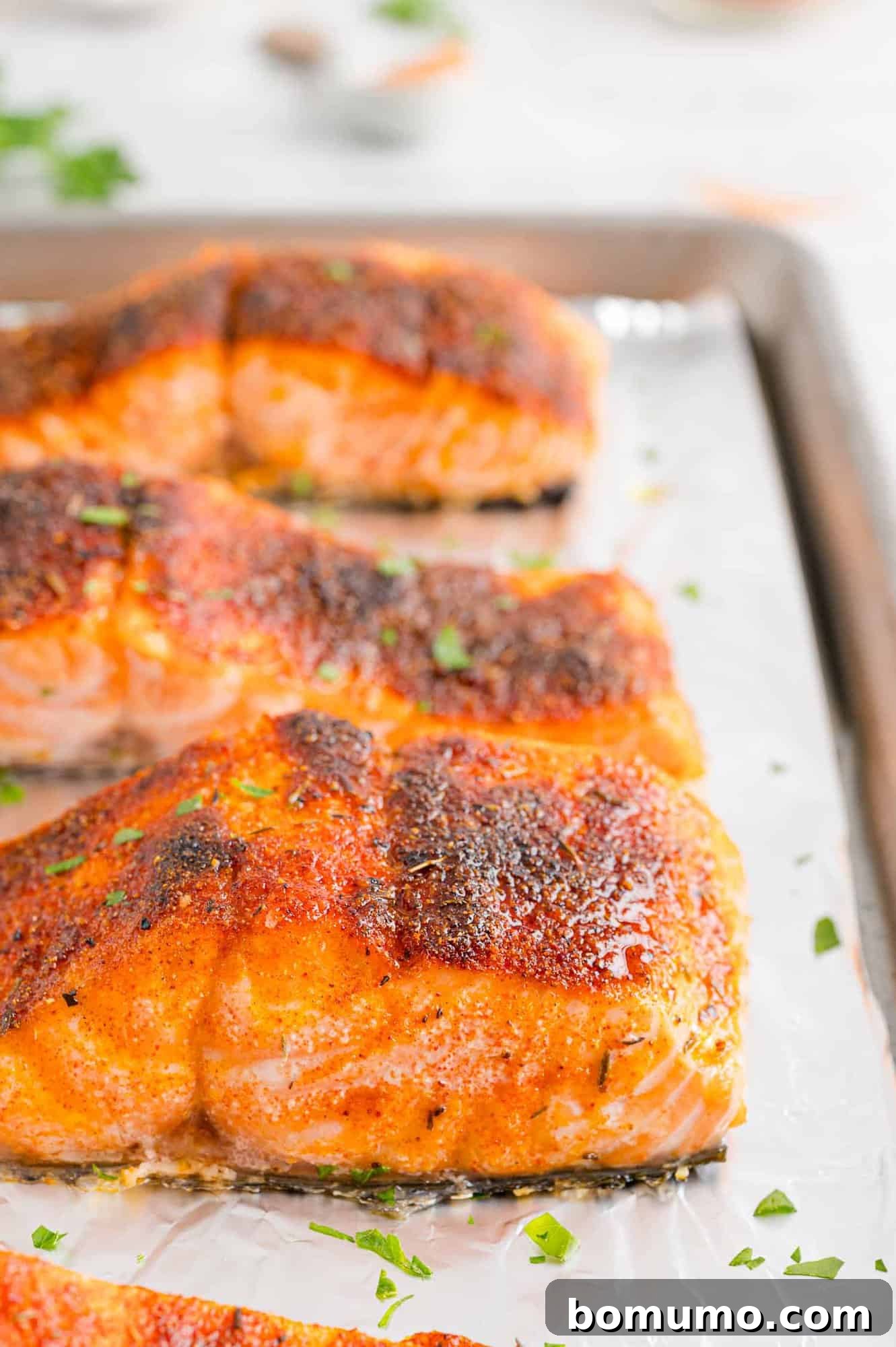
Watch your salmon closely as it cooks. Broiling uses high heat,
meaning your salmon can go from perfectly cooked to overdone in minutes. Always
stay near the oven while broiling.
High heat is essential for perfectly broiled salmon that’s
golden and crispy on top. You can broil salmon using your oven’s broil
setting, or set the temperature to 500 to 550ºF if needed. If your broiler
only goes up to 450ºF, that’s fine too. Always preheat your broiler first! Give
the oven 5 to 10 minutes to heat up before cooking the salmon.
If the salmon is browning too quickly, tent the fillets with
aluminum foil while they finish cooking.
Broiling time depends on the thickness of your fillets, but it
generally takes between 6 to 9 minutes at a broiling temperature of 500 to
550ºF.
Make This Broiled Salmon Recipe Your Own
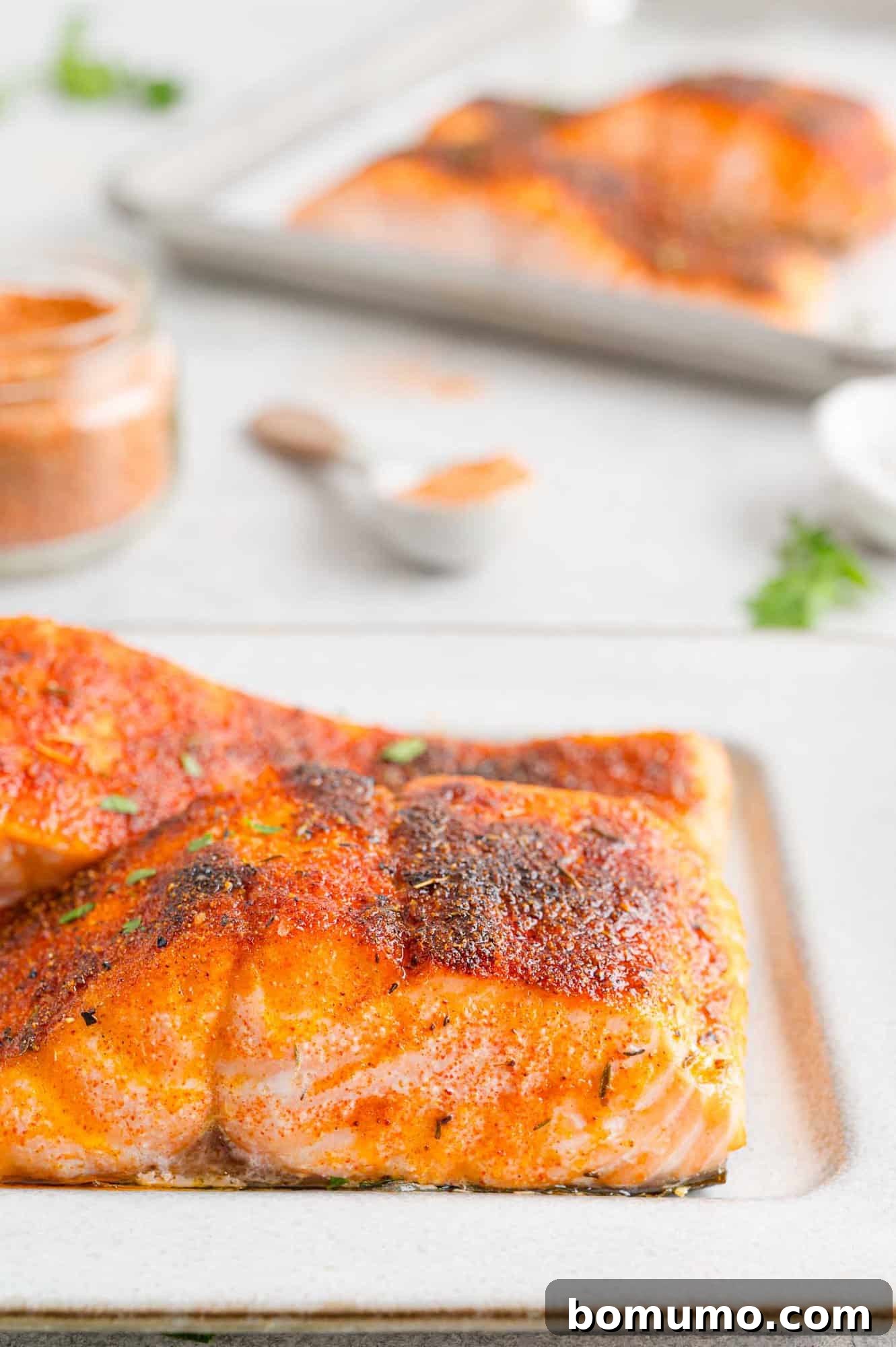
The simplicity of this broiled salmon recipe means you have plenty of room to
personalize it. Here are some of our favorite variation ideas:
-
Keep it simple with a
squeeze of fresh lemon juice. Or, borrow the dressing from my
baked salmon with lemon. -
Use another seasoning blend, such as
all-purpose seasoning. -
Use an herb blend, like
Herbes de Provence
or
Italian seasoning, or sprinkle with your choice of dried or fresh herbs. -
For a spicy kick, season your salmon with homemade
Cajun seasoning. -
Rub on
fajita seasoning
to give this salmon a Tex-Mex vibe. You can also add a squeeze of lime and
fresh chopped cilantro after broiling. -
For Asian-inspired broiled salmon, make
soy glazed salmon or
coat your salmon fillets in an
orange glaze. Broil,
then garnish with green onions and sesame seeds.
Serving Suggestions
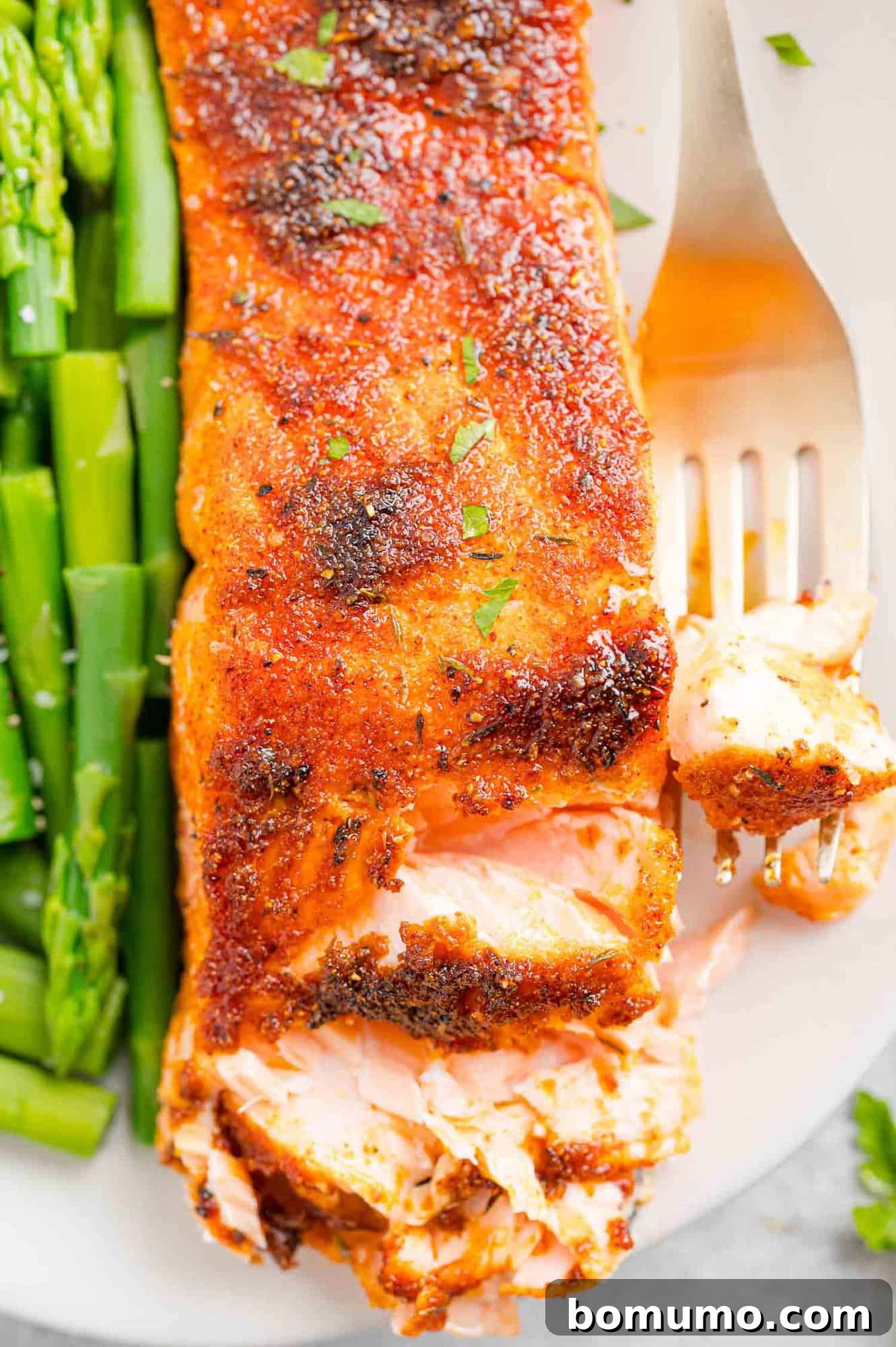
Salmon is a weeknight staple in our house, and this recipe is incredibly
versatile! We love pairing succulent broiled salmon fillets with fresh
vegetables for a healthy dinner. Our favorites include
roasted green beans,
roasted broccoli, or
sautéed Brussels sprouts.
Salmon also pairs perfectly with a side of
Mediterranean green bean salad,
panzanella salad, or
this crunchy
cabbage salad
with a zesty honey-lime dressing.
For a heartier meal, serve broiled salmon with
white rice or
pasta. Try it with one-pan recipes like
creamy lemon orzo with
greens. For a more luxurious touch, flaky salmon is delicious with easy
mushroom risotto,
parmesan potatoes, or
homemade
polenta.
Storing & Reheating Leftovers
Storing & Reheating Leftovers
-
Fridge: Store any leftover broiled salmon in a covered or
airtight container in the fridge for up to 2 to 3 days. Leftover salmon is
perfect for various uses, either cold or reheated. To reheat, place the
salmon in a skillet on the stovetop over medium-low heat or use the microwave. -
Freezer: Cooked salmon freezes very well. Store cooled
leftover salmon in a freezer-safe container and freeze for up to 3 months.
Thaw the salmon in the fridge overnight before reheating.